
 中文简体
 English


postmaster@goobagelfood.com
Content
- 1 A Distinctive Product Concept for the Contemporary Bagel Market
- 2 The Flavor Architecture of the Product
- 3 Advantages Compared with Conventional Filled Bagels
- 4 Manufacturing Strengths Behind the Product
- 5 Process Considerations for a Premium Frozen Bagel
- 6 Clean-Label Development and Consumer Expectations
- 7 Commercial Benefits for Different Customer Groups
- 8 How the Product Can Be Positioned Against Competitors
- 9 Serving, Pairing, and Merchandising Recommendations
- 10 Quality, Supply, and Partnership Considerations
- 11 Frequently Asked Questions
- 11.1 What is the main flavor of the New Zealand Cream Cheese Rose Cream Cheese Bagel?
- 11.2 Is the product suitable only for dessert menus?
- 11.3 What is the product size?
- 11.4 How does the product compare with a plain cream cheese bagel?
- 11.5 How does it compare with a strongly floral bakery product?
- 11.6 Can the bagel be served chilled?
- 11.7 What beverages pair well with the product?
- 11.8 Is the product available for wholesale purchasing?
- 11.9 Can the product be used for OEM or private-label programs?
- 11.10 What manufacturing strengths support the product?
- 11.11 Does the product contain allergens?
- 11.12 Are health or nutritional claims associated with the product?
- 12 Conclusion
- 13 References
- 14 Product: New Zealand Cream Cheese Rose Cream Cheese Bagel
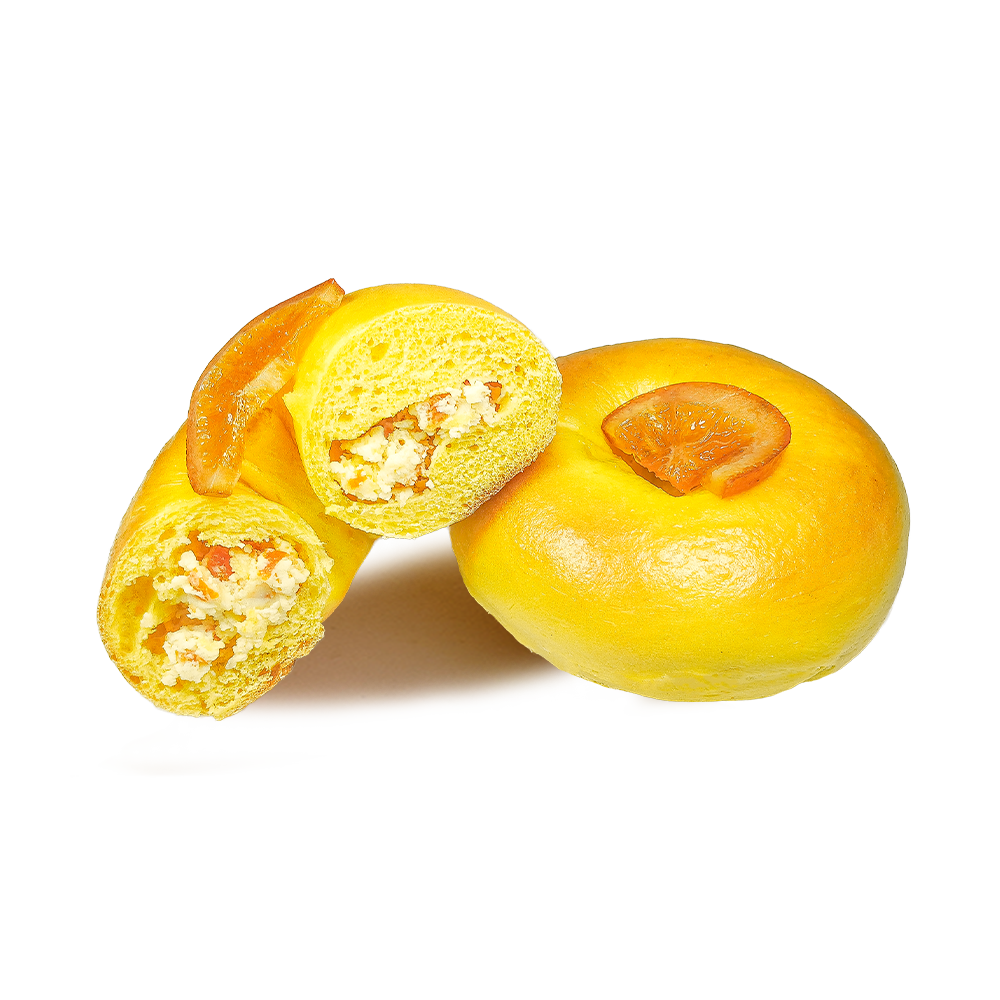
The modern bagel market is moving beyond traditional plain, sesame, and everything varieties. Consumers increasingly expect familiar bakery formats to deliver more distinctive flavors, better ingredients, and greater versatility across breakfast, snack, dessert, café, and tea-time occasions. The New Zealand Cream Cheese Rose Cream Cheese Bagel responds directly to this shift by combining a soft bagel format with a rich dairy filling and a refined floral note.
With a 100-gram specification, this product is designed to provide a substantial but manageable individual serving. Its flavor architecture is centered on New Zealand cream cheese and Yunnan double-petal red rose. The result is a product that brings together creamy dairy richness, gentle floral fragrance, and a subtle honey-like finish without becoming excessively sweet or perfumy.
For retailers, café chains, foodservice operators, bakery businesses, and private-label customers, the product offers more than an unusual flavor combination. It represents a commercially practical solution built around frozen bakery manufacturing, standardized production, product development experience, and supply-chain integration. These strengths help businesses introduce a differentiated item while maintaining consistency, operational efficiency, and dependable supply.

New Zealand Cream Cheese Rose Cream Cheese Bagel
A Distinctive Product Concept for the Contemporary Bagel Market
Bagels have traditionally been associated with hearty, chewy textures and familiar savory toppings. While those characteristics remain important, the category is expanding into more expressive flavor territories. Sweet cream cheese, fruit, tea, botanical, and dessert-inspired bagels are becoming increasingly relevant as consumers look for products that can be enjoyed at different times of day.
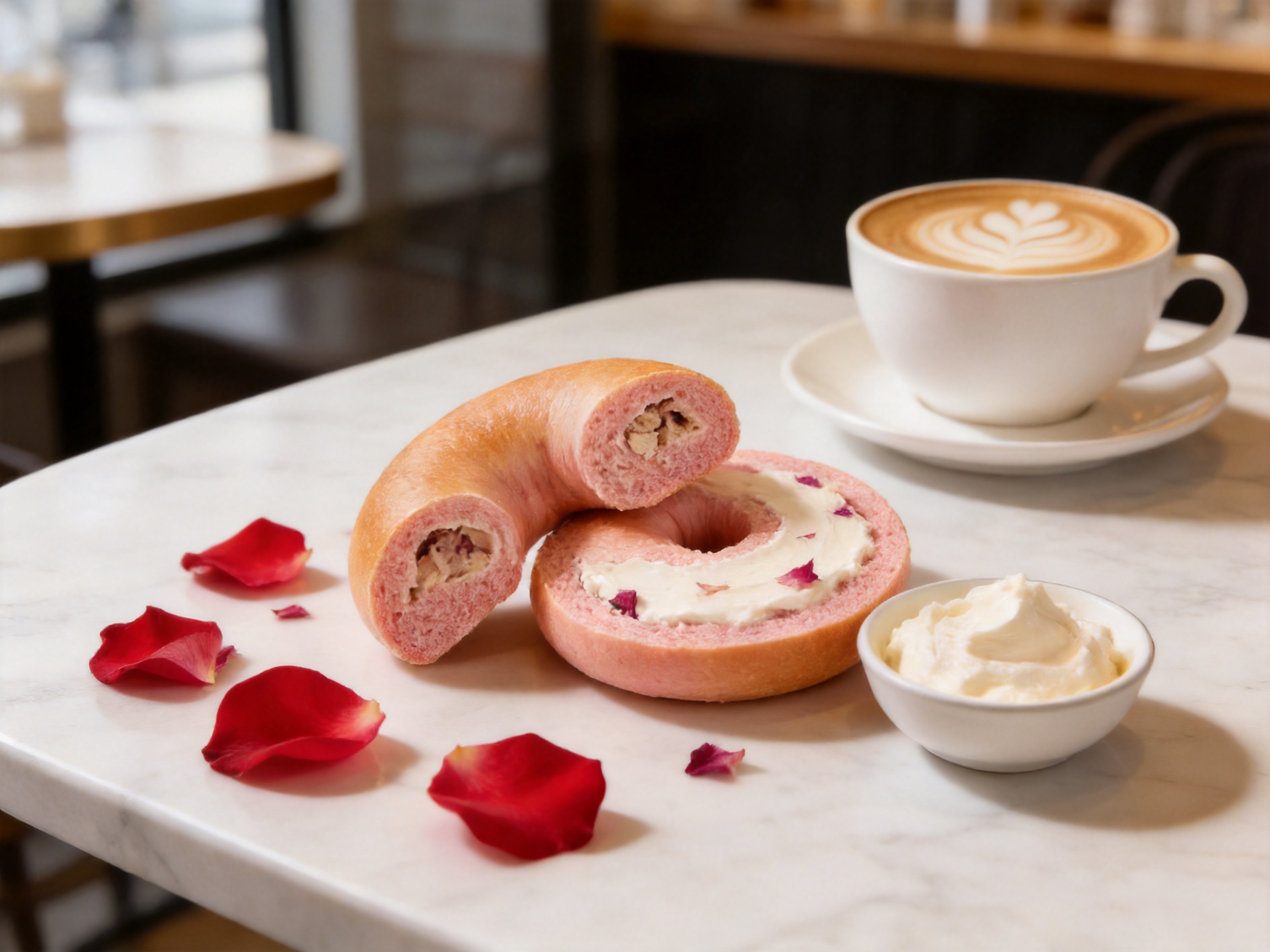
The New Zealand Cream Cheese Rose Cream Cheese Bagel is positioned within this premium and creative segment. It retains the recognizable convenience of a bagel while introducing a more elegant flavor profile. Cream cheese provides familiarity and indulgence, while rose contributes an aromatic identity that makes the product memorable.
This balance is important. A strongly perfumed product may appeal only to a narrow group of consumers, while a plain cream cheese bagel may struggle to stand out in a crowded display. The rose cream cheese concept creates a middle ground: familiar enough for first-time buyers, yet distinctive enough to encourage trial and repeat purchase.
The product is also suitable for several commercial positioning strategies. It can be presented as a premium breakfast item, a café accompaniment, an afternoon tea product, a seasonal specialty, or a modern floral dessert. This flexibility gives buyers more opportunities to integrate the product into different menus and retail environments.
Flavor Familiarity Combined with Novelty
New product development often succeeds when it combines one recognizable element with one more surprising element. In this case, cream cheese provides the familiar foundation. Consumers already understand its smooth, rich, mildly tangy character and its compatibility with bread and bagels.
Rose adds the novel dimension. Rather than replacing the dairy identity, the floral ingredient lifts it. The cream cheese remains the main body of the flavor, while the rose creates brightness, aroma, and a longer finish. This approach makes the product easier to introduce than an aggressively botanical bakery item.
The use of Yunnan double-petal red rose supports a more ingredient-focused story. Floral ingredients can vary considerably in intensity and character. A carefully selected rose profile can contribute authentic petal-like fragrance and a delicate sweetness without requiring the product to rely on heavy sugar or artificial-tasting flavor intensity.
A Product Designed for Multiple Eating Occasions
The 100-gram format supports portion control and convenient individual consumption. It can be sold as a single premium bakery item, included in a mixed bagel assortment, served with a beverage, or incorporated into a breakfast set.
At breakfast, the product can provide a more indulgent alternative to a plain bagel. It can be paired with black coffee, a latte, milk tea, or lightly sweetened hot beverages. During the afternoon, it can function as a tea-time item, particularly when served with floral tea, black tea, or a sparkling beverage.
The product may also fit dessert-oriented menus. When chilled, the cream cheese becomes firmer and the floral impression becomes more delicate. This creates a profile that can resemble a rose-infused dairy dessert while retaining the portability and structure of a bagel.
| Application | Consumer Appeal | Commercial Opportunity |
|---|---|---|
| Breakfast | Rich cream cheese with a distinctive floral note | Premium breakfast sets and café menus |
| Afternoon tea | Elegant aroma and mild honey-like finish | Tea shops, bakery counters, and gift assortments |
| Café pairing | Rose fragrance develops alongside warm coffee | Latte promotions and beverage pairing programs |
| Chilled snack | Firmer cream cheese and delicate floral character | Convenience retail and refrigerated display concepts |
| Foodservice | Individual 100-gram portion | Hotels, restaurants, catering, and institutional menus |
The Flavor Architecture of the Product
A premium filled bagel should offer a clear progression from first bite to finish. The New Zealand Cream Cheese Rose Cream Cheese Bagel is designed around three connected flavor stages: dairy foundation, floral lift, and lingering sweetness.
New Zealand Cream Cheese as the Foundation
The cream cheese serves as the central structural and sensory element. Its purpose is not simply to add richness. It establishes the product’s mouthfeel, helps carry the rose aroma, and gives the filling a rounded character.
A smooth cream cheese base can make the product feel soft and comforting. Its creamy texture contrasts with the bread structure of the bagel, creating a more indulgent eating experience. The dairy character also provides depth, preventing the rose from feeling isolated or superficial.
For commercial applications, cream cheese offers a strong flavor platform because it is familiar across multiple markets. Consumers do not need to learn how to interpret the ingredient. They can immediately recognize the creamy, mildly tangy profile, while the rose provides the product’s distinguishing feature.
Yunnan Double-Petal Red Rose as a Floral Layer
The rose component is intended to add brightness and length rather than dominate the complete product. Its role is similar to an aromatic layer in tea, confectionery, or specialty beverages. It should be noticeable, but it should remain integrated with the dairy base.
The use of Yunnan double-petal red rose provides a geographical and ingredient-specific point of differentiation. Yunnan is widely associated with diverse agricultural products and distinctive botanical materials. Referencing the rose origin can help communicate a more authentic and carefully considered flavor concept.
The intended sensory impression is closer to real petals than to strong perfume. A gentle floral aroma can make the bagel feel refined, while an overly intense aroma could reduce consumer acceptance. The product’s positioning therefore depends on restraint: the rose should lift the cream cheese and remain present through the finish without becoming heavy.
A Subtle Honey-Like Finish
The finish is described as subtle and honey-like rather than intensely sugary. This distinction is valuable for consumers who enjoy sweet flavor impressions but do not want an overly sweet bakery product.
A honey-like finish can also improve pairing flexibility. It can work with black coffee, whose roasted bitterness creates contrast, or with a warm latte, whose milkiness reinforces the dairy foundation. With floral tea, the finish can extend the aromatic experience without creating a conflict between the beverage and the food.
This profile may appeal to consumers who are interested in premium flavor combinations but are moving away from highly sweetened products. The product can be presented as elegant and aromatic rather than as a conventional dessert pastry.
Advantages Compared with Conventional Filled Bagels
Many filled bagels compete primarily through quantity, sweetness, or visual novelty. The New Zealand Cream Cheese Rose Cream Cheese Bagel offers a different set of advantages based on balance, versatility, and ingredient storytelling.
More Refined than a Heavily Sweetened Filling
Traditional sweet filled bakery products often depend on high sweetness to create immediate impact. Although this can be attractive to some consumers, it may limit the occasions on which the product is consumed. A very sweet item may be suitable mainly as a dessert or indulgent snack.
The rose cream cheese profile is more adaptable. Its richness comes from dairy, while the floral element contributes aroma and complexity. The resulting product can fit breakfast, afternoon tea, and café occasions as well as dessert menus.
More Memorable than a Standard Cream Cheese Bagel
A plain cream cheese bagel is familiar and dependable, but it can be difficult to differentiate in a competitive retail case. The addition of rose creates an immediate point of recognition. It gives sales teams, retailers, and café operators a clear story to communicate.
Consumers may be attracted by the visual and verbal promise of a floral cream cheese bagel, then retained by the approachable dairy base. This combination can support product trial without requiring an entirely unfamiliar flavor system.
More Flexible than a Strongly Botanical Product
Some floral bakery products can be challenging because their aroma is intense or their flavor is difficult to pair with beverages. The product described here is designed around a controlled floral layer. The cream cheese softens the botanical character, making it more suitable for general bakery consumption.
This flexibility is especially useful for café chains and foodservice customers. A product that can be paired with coffee, tea, milk-based beverages, or served on its own creates more menu possibilities than a narrowly specialized item.
Convenience of a Frozen Bakery Format
Frozen bakery products can help operators manage production and inventory more efficiently than products that must be prepared entirely on-site. A standardized frozen format may reduce the need for extensive in-store baking expertise while allowing businesses to serve a freshly prepared or freshly heated experience according to their operating model.
For buyers managing multiple outlets, frozen supply can support more consistent product availability across locations. It can also help simplify purchasing, portion planning, storage management, and menu rotation.
Manufacturing Strengths Behind the Product
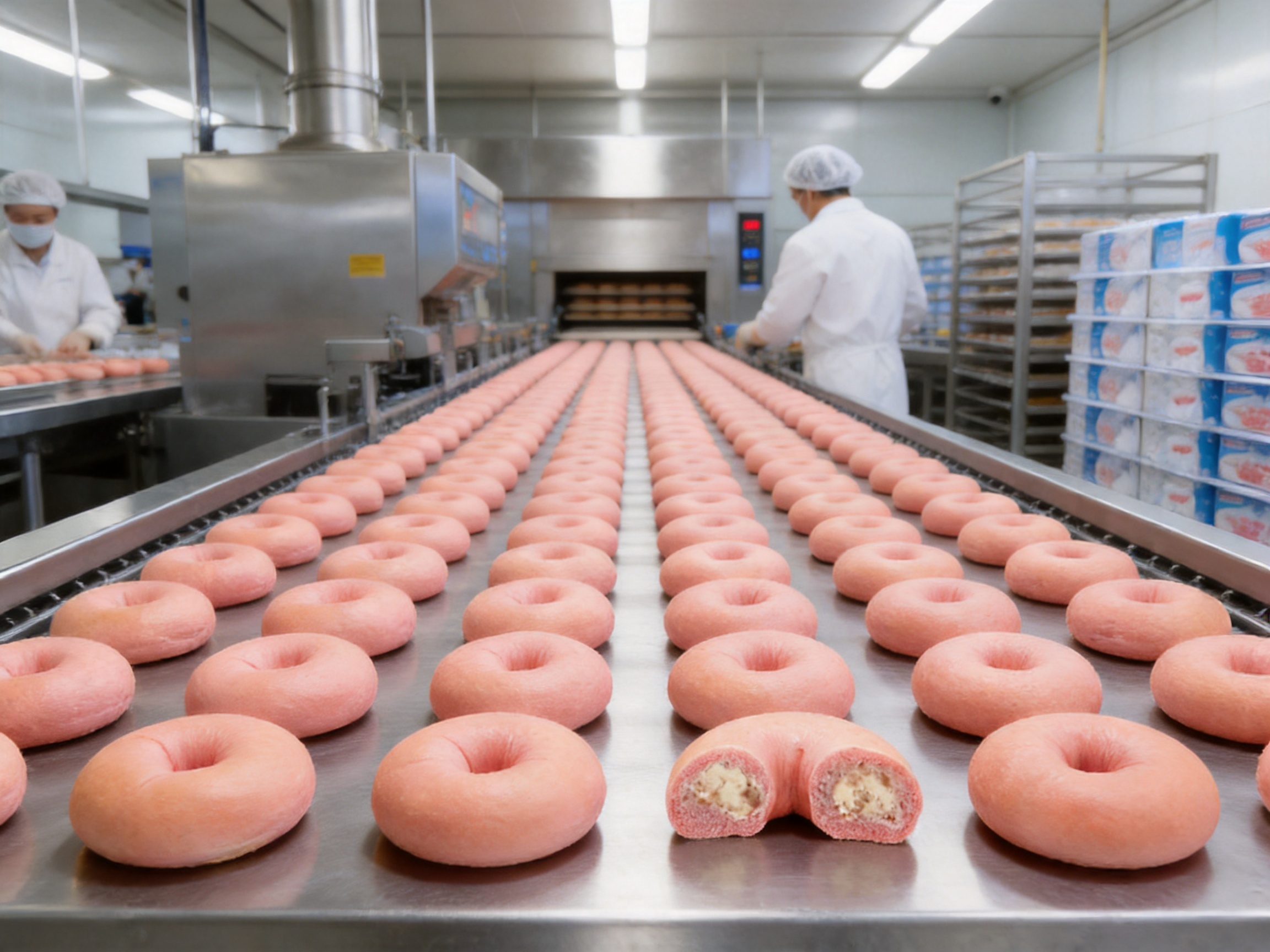
The product is manufactured by Jiangsu Goobagel Food Technology Co., Ltd., a Chinese frozen bakery producer specializing in bagel research and manufacturing since 2019. The company’s development is based on an integrated model that covers raw materials, research and development, production, and nationwide distribution.
This integrated structure is important for a product such as a filled floral bagel. The final consumer experience depends on multiple variables, including the consistency of the dough, the stability of the cream cheese filling, the integration of the rose flavor, the freezing process, packaging performance, and supply reliability.
When these functions are connected within one manufacturing organization, product development can be more coordinated. Adjustments to a formula can be considered alongside production capabilities, storage requirements, distribution conditions, and customer application needs.
Experience in Bagel Research and Manufacturing
Goobagel Food has specialized in bagel research and manufacturing since 2019. This focus allows the company to build product knowledge around a specific category rather than treating bagels as a minor extension of a broader bakery portfolio.
Bagel manufacturing requires attention to dough development, shaping, filling placement, baking behavior, texture, and post-baking handling. Filled bagels also require additional consideration because the filling must remain properly distributed and compatible with freezing, storage, reheating, and consumption.
Category specialization can support more efficient development of new flavors. Once the manufacturing team understands the base bagel system, it can explore different fillings and flavor combinations while maintaining the expected structural qualities of the product.
Integrated Raw Material Management
The company operates a supply chain covering raw materials, research and development, production, and distribution. This model can help connect ingredient selection with finished-product performance.
For the rose cream cheese bagel, raw materials are central to product quality. The cream cheese must deliver a smooth dairy foundation, while the rose component must contribute an appropriate aromatic profile. Ingredient compatibility matters because floral notes can become muted, overly sharp, or disconnected if they are not balanced with the dairy base.
An integrated raw material process allows the manufacturer to evaluate ingredients not only for flavor but also for processing behavior, consistency, storage performance, and suitability for commercial production. This is especially important for products intended for wholesale, private label, and multi-location foodservice programs.
Research and Development Capability
Goobagel Food has developed more than 100 clean-label bagel varieties for retail, foodservice, café chains, tea brands, and bakery operators. This breadth indicates an active product-development approach rather than a single-product manufacturing model.
A broad product portfolio can provide several advantages to commercial customers. Buyers may be able to select an existing product, request adjustments to a current formula, or develop a broader assortment around a common manufacturing platform. This can shorten the path from concept to market compared with starting from an entirely new production system.
Research and development is also important for balancing consumer appeal with manufacturing practicality. A flavor may sound attractive in concept but require adjustment to achieve the right texture, aroma release, portion size, and storage stability. Product development teams help translate a creative idea into a repeatable commercial item.

Process Considerations for a Premium Frozen Bagel
Although specific process parameters are proprietary and are not provided here, the product’s manufacturing model can be understood through the main technical stages required for a filled frozen bagel.
Formula Development
The first stage is the creation of a balanced formula. The dough must provide an appropriate foundation for the cream cheese filling, while the filling must provide enough flavor intensity to remain recognizable after baking, freezing, thawing, or reheating according to the customer’s operating instructions.
Formula development involves more than selecting attractive ingredients. The team must consider moisture, fat, acidity, sweetness, aroma, texture, and the interaction between the filling and the dough. A floral ingredient can be pleasant at one concentration and overwhelming at another, so sensory balance is essential.
Dough and Filling Compatibility
A successful filled bagel requires the dough and filling to function as one product. The dough should provide enough structure to protect the filling during handling while remaining pleasant to bite. The filling should remain in the intended location and avoid excessive leakage or uneven distribution.
Cream cheese can contribute a rich and smooth center, but its behavior is influenced by temperature and processing conditions. Proper formulation and production control help maintain a consistent eating experience from one unit to the next.
Portion and Weight Control
The 100-gram specification gives commercial customers a clear reference point for menu pricing, nutritional calculation, inventory planning, and portion management. Consistent product weight is particularly valuable for cafés, hotels, catering companies, and chain operators.
Standardized portioning can also improve the consumer experience. Customers who purchase the same item repeatedly expect similar size, filling presence, and eating satisfaction. Weight control supports that expectation while helping operators forecast food cost and yield.
Freezing and Storage Management
Frozen bakery production is designed to protect product availability over the distribution cycle. After production, frozen goods can be transported and stored before reaching retail, foodservice, or café customers.
For a cream cheese product, frozen storage management is especially important because the filling and dough must maintain acceptable quality through the intended handling period. Commercial customers should follow the manufacturer’s storage and preparation instructions to support the best final result.
Frozen distribution can also reduce waste when compared with highly perishable fresh products. Operators can plan usage more carefully and prepare products according to demand. This is useful for businesses with fluctuating traffic, multiple locations, seasonal menus, or limited on-site production capacity.
Consistency Across Production Runs
Consistency is one of the most important advantages of an organized manufacturing system. For a product with multiple sensory components, variation in cream cheese texture, rose intensity, dough structure, or portion weight could affect consumer acceptance.
A professional production operation uses standardized procedures, controlled ingredient handling, and repeatable production methods to reduce unnecessary variation. These systems are particularly valuable for private-label and chain customers that need the same product experience across different markets.
Clean-Label Development and Consumer Expectations
The company has created more than 100 clean-label bagel varieties. Clean-label expectations can vary by market and customer, so the precise ingredient declaration and regulatory compliance of each product should be confirmed directly during commercial discussions. Nevertheless, the development direction reflects an important trend in the bakery sector.
Consumers increasingly want to understand what they are eating. They may look for recognizable ingredients, straightforward flavor communication, and products that appear less dependent on excessive artificial intensity. A cream cheese and rose concept can support this communication when the ingredient story is presented clearly and accurately.
Ingredient-led positioning does not mean that a product should make unverified health claims. The strongest communication is often sensory and experiential: rich New Zealand cream cheese, authentic floral character, a subtle honey-like finish, and flexible serving occasions.
For buyers, this creates an opportunity to develop packaging and menu language that emphasizes taste, origin, craftsmanship, and usage. Any claims concerning nutrition, allergens, certifications, shelf life, or regulatory status should be verified according to the destination market and the final product specification.
Commercial Benefits for Different Customer Groups
Retailers
Retailers can use the product as a premium frozen bakery item or as part of a differentiated bagel assortment. Its unusual flavor may attract shoppers who are browsing for something new, while the cream cheese base gives it broad enough familiarity for mainstream bakery sections.
Retail presentation can emphasize the contrast between dairy richness and floral elegance. The item may work particularly well in seasonal displays, premium imported-food sections, café-style retail areas, or curated breakfast collections.
Café Chains
Café chains can pair the product with beverages and use it to create bundled promotions. A rose cream cheese bagel with a latte offers a familiar combination with a distinctive aroma. A pairing with black coffee highlights contrast, while pairing with floral tea reinforces the botanical character.
Because the flavor is more refined than a heavily sweetened pastry, it may help cafés expand their food menu without moving completely into dessert territory. The product can be offered during breakfast and remain relevant in the afternoon.
Tea Brands and Tea Shops
The rose element makes the product particularly suitable for tea-oriented businesses. It can accompany floral tea, black tea, green tea, or lightly oxidized specialty tea, depending on the desired pairing strategy.
Tea businesses may also use the product in afternoon tea sets, gift assortments, limited-time menus, and cross-promotional collaborations. The connection between rose and tea creates a coherent sensory narrative that can be communicated through menu descriptions and merchandising.
Hotels and Foodservice Operators
Hotels can serve the bagel at breakfast buffets, executive lounges, room-service menus, or afternoon refreshment stations. The individual 100-gram format supports portion consistency and simplified service planning.
Foodservice operators may appreciate the ability to maintain a premium offering without producing the complete item from raw ingredients on-site. Frozen supply can help standardize quality across shifts and locations, subject to the correct preparation procedures.
Private-Label Buyers
Private-label customers can use the product concept as a foundation for a branded bakery line. The combination of cream cheese and rose provides a strong identity that can be adapted to different packaging styles, retail channels, and market positioning strategies.
Before launch, private-label customers should confirm minimum order quantities, packaging formats, export requirements, product documentation, storage conditions, preparation instructions, lead times, and customization options. These commercial details determine how efficiently the product can be integrated into a customer’s supply chain.
How the Product Can Be Positioned Against Competitors
Competitive positioning should focus on meaningful differences rather than unsupported superiority claims. The product’s strongest differentiators are its specific flavor combination, ingredient story, flexible serving occasions, frozen bakery format, and access to an experienced bagel-focused manufacturer.
Against standard cream cheese bagels, it offers greater aromatic identity and a more premium narrative. Against fruit-filled bagels, it provides a less predictable but more elegant flavor direction. Against heavily sweetened dessert pastries, it offers a dairy-rich experience with a controlled floral finish.
Against strongly perfumed floral products, the cream cheese foundation can make the flavor more approachable. Against purely fresh local production, the frozen format can provide supply and portion advantages for customers that require broader distribution or standardized multi-site service.
| Competitive Dimension | Common Market Alternative | Rose Cream Cheese Bagel Advantage |
|---|---|---|
| Flavor identity | Plain or familiar savory bagel | Distinctive rose and cream cheese combination |
| Sweetness profile | High-sugar dessert bakery | Rich dairy character with restrained floral sweetness |
| Consumer familiarity | Highly unusual botanical product | Approachable cream cheese base with novel aroma |
| Menu versatility | Limited to breakfast or dessert | Suitable for breakfast, café, tea, and snack occasions |
| Supply model | Fresh production only | Frozen format for planned distribution and inventory |
| Customization potential | Finished consumer product only | Potential fit for OEM and private-label programs |
Serving, Pairing, and Merchandising Recommendations
The product’s serving temperature can influence its sensory character. Warm serving may allow the rose fragrance to become more expressive, particularly when paired with hot coffee or a latte. Chilled serving can make the cream cheese feel firmer and the floral note more delicate.
Retailers and foodservice operators should test the product under their actual preparation conditions. The ideal result can depend on equipment, heating time, storage handling, and local consumer preferences. Product instructions provided for the final commercial specification should take priority.
Pairing with Coffee
Black coffee can emphasize the contrast between roasted bitterness and the bagel’s creamy floral character. A latte or other milk-based coffee can create a smoother, more integrated pairing by reinforcing the dairy notes.
For café menus, a breakfast bundle could combine the bagel with a small latte. An afternoon promotion could pair it with a larger beverage or offer it as an alternative to a conventional sweet pastry.
Pairing with Tea
Floral tea can extend the rose theme and create a harmonious afternoon tea experience. Black tea can provide structure and astringency, helping balance the cream cheese richness. Green tea may offer a lighter pairing for consumers who prefer a more delicate flavor combination.
Tea shops can use the product in tasting sets to demonstrate how temperature and beverage aroma influence the bagel’s flavor. This type of presentation can make the product feel experiential rather than merely functional.
Packaging and Display
Packaging should communicate the product in a clear and restrained manner. Important elements may include the product name, 100-gram specification, cream cheese and rose flavor description, storage information, preparation guidance, allergen information, and applicable regulatory declarations.
Visual design can use soft botanical cues without making the product appear like a perfume or confectionery item. The strongest message is the connection between a substantial bagel, a rich dairy filling, and an elegant floral aroma.
Quality, Supply, and Partnership Considerations
For wholesale and OEM customers, product quality is only one part of the purchasing decision. Buyers also need confidence in supply continuity, communication, technical support, and the manufacturer’s ability to serve different commercial applications.
Goobagel Food’s integrated supply chain and nationwide distribution experience provide a foundation for these requirements. Its work with retail, foodservice, café chains, tea brands, and bakery operators indicates familiarity with different customer environments and product-use scenarios.
Stable Quality
Stable quality means that the product performs consistently in terms of size, filling distribution, flavor balance, texture, and preparation response. This is essential for businesses that build a menu or retail identity around the product.
Consistent quality also reduces staff training demands. When products behave predictably, operators can establish clearer preparation routines and reduce avoidable variation between locations.
Reliable Supply
A creative product has limited commercial value if it cannot be supplied reliably. Frozen bakery manufacturing can support planned inventory and distribution, while an integrated company structure can help coordinate production with customer demand.
Buyers should discuss forecast requirements, production schedules, delivery conditions, minimum order quantities, and contingency planning during the procurement process. These details are especially important for chain customers and export distributors.
Product Development Support
The manufacturer’s research and development experience can help customers evaluate whether the product is suitable for their target market. Different markets may have different preferences for sweetness, floral intensity, package size, preparation style, and product claims.
Development discussions may include sensory adjustments, portion formats, packaging requirements, private-label presentation, and assortment planning. Any modifications should be validated through formal samples, specifications, and approval procedures.
Frequently Asked Questions
What is the main flavor of the New Zealand Cream Cheese Rose Cream Cheese Bagel?
The main flavor is a rich and smooth cream cheese profile supported by a gentle rose aroma. The rose is intended to add brightness and length without overpowering the dairy foundation. The finish is subtly honey-like rather than aggressively sweet.
No. Its balanced profile allows it to be used for breakfast, café service, afternoon tea, snacks, and dessert-oriented occasions. Pairing it with black coffee, a latte, or floral tea can produce different sensory experiences.
What is the product size?
The listed product specification is 100 grams. This individual portion can support retail sales, café menu planning, hotel breakfast service, catering, and foodservice applications.
How does the product compare with a plain cream cheese bagel?
A plain cream cheese bagel offers familiar dairy richness, while this product adds a distinctive rose layer. The floral note gives the product stronger identity and may help retailers or cafés create a more memorable menu item.
How does it compare with a strongly floral bakery product?
The cream cheese foundation makes the product more approachable than a bakery item dominated by floral aroma. The rose is designed as an integrated flavor layer, allowing the dairy base and botanical character to remain balanced.
Can the bagel be served chilled?
Yes, chilled serving can make the cream cheese firmer and the floral character more delicate. The best serving method depends on the operating environment and should follow the manufacturer’s preparation guidance for the relevant product specification.
What beverages pair well with the product?
Black coffee, lattes, floral teas, black teas, and other moderately flavored beverages can pair well with the product. Coffee can deepen the rose fragrance, while tea can reinforce the product’s botanical character.
Is the product available for wholesale purchasing?
The product is presented as part of a frozen bakery manufacturing and wholesale-oriented portfolio. Commercial buyers should confirm current availability, packaging, minimum order quantities, delivery arrangements, and market-specific documentation directly with the manufacturer.
Can the product be used for OEM or private-label programs?
The manufacturer provides OEM and private-label bagel solutions. Customers should discuss branding, packaging, formula requirements, product specifications, order quantities, and regulatory needs before entering a commercial agreement.
What manufacturing strengths support the product?
The company has specialized in bagel research and manufacturing since 2019. It operates an integrated supply chain covering raw materials, research and development, production, and distribution, and has developed more than 100 clean-label bagel varieties for different commercial channels.
Does the product contain allergens?
Because the product is based on cream cheese and bakery ingredients, buyers should request the complete ingredient list and allergen declaration for the specific product batch and destination market. Final packaging and regulatory documentation should be used for consumer communication.
Are health or nutritional claims associated with the product?
The product should be positioned primarily through its flavor, ingredients, format, and commercial applications unless verified nutritional information supports additional claims. Any health, nutrition, clean-label, or certification statement should be confirmed against official documentation and local regulations.
Conclusion
The New Zealand Cream Cheese Rose Cream Cheese Bagel is a strong example of how a familiar bakery format can be transformed through thoughtful flavor development. Its New Zealand cream cheese base delivers comfort, richness, and familiarity, while Yunnan double-petal red rose creates a refined aromatic signature. The subtle honey-like finish adds length without pushing the product into excessive sweetness.
Its commercial value comes from the combination of sensory distinction and operational practicality. The 100-gram portion is suitable for individual service, while the frozen format can support planned storage, distribution, and multi-location use. The product can enter breakfast menus, café counters, tea programs, retail assortments, hotel service, and private-label portfolios.
Behind the product is a manufacturer focused on bagel research and production since 2019. Its integrated supply chain, broad product development capability, and experience serving retail, foodservice, café, tea, and bakery customers provide an important foundation for commercial cooperation.
For businesses seeking a bagel that stands apart from conventional flavors without becoming difficult to understand, the rose cream cheese concept offers a compelling balance. It is familiar enough to encourage trial, distinctive enough to generate interest, and flexible enough to support multiple product and menu strategies.
References
1. Product information supplied for the New Zealand Cream Cheese Rose Cream Cheese Bagel, including product description, flavor composition, portion specification, and suggested serving occasions.
2. Company information supplied for Jiangsu Goobagel Food Technology Co., Ltd., including manufacturing history, integrated supply-chain structure, research and development capabilities, and commercial applications.
3. General principles of frozen bakery manufacturing, including ingredient control, portion standardization, cold-chain management, storage planning, and foodservice application.
4. General sensory evaluation principles for bakery products, including flavor balance, aroma intensity, texture contrast, aftertaste, and beverage pairing.
5. General product-development principles for clean-label and premium bakery concepts, including ingredient communication, consumer familiarity, differentiation, and market-specific regulatory review.
