
 中文简体
 English




postmaster@goobagelfood.com
Content
- 1 A Distinctive Flavor Concept Built Around Contrast
- 2 Premium Topping: Thin Crispy Toasted Almond Flakes
- 3 Mango and Coconut: A Contemporary Fruit-Forward Combination
- 4 Soft Interior and Satisfying Exterior
- 5 Advantages Over Conventional Bagel Options
- 6 Frozen Bakery Convenience for Professional Operators
- 7 Integrated Manufacturing and Product Development Strengths
- 8 Clean-Label Product Development and Ingredient Transparency
- 9 Commercial Opportunities Across Multiple Channels
- 10 OEM and Private-Label Advantages
- 11 Recommended Preparation and Serving Concepts
- 12 Quality, Documentation, and Buyer Evaluation
- 13 Why This Product Fits the Future of Frozen Bakery
- 14 Q&A
- 14.1 What is the Toasted Almond Mango-Coconut Bagel?
- 14.2 What makes the flavor different from a standard fruit bagel?
- 14.3 Is the product suitable for cafés?
- 14.4 Can it be used by hotels and catering companies?
- 14.5 What are the main visual selling points?
- 14.6 What texture should customers expect?
- 14.7 Is the product available for OEM or private-label projects?
- 14.8 What manufacturing strengths support this product?
- 14.9 Which businesses can purchase the product?
- 14.10 Does the product contain allergens?
- 14.11 How should buyers assess the product before ordering?
- 14.12 Can the product be paired with beverages?
- 15 Conclusion
- 16 References
- 17 Product: Toasted Almond Mango-Coconut Bagel
In the rapidly evolving bakery market, consumers are looking for products that combine convenience, visual appeal, indulgent flavor, and a more distinctive eating experience. A successful bagel must do more than provide a familiar bread base. It should offer texture, aroma, filling, versatility, and reliable performance after preparation. The Toasted Almond Mango-Coconut Bagel answers these expectations with a layered product concept that brings together crisp toasted almond flakes, bright mango, silky coconut, cream cheese, and real dairy butter in one convenient frozen bakery item.
This product is designed for businesses that need a premium bagel with a recognizable format but a more contemporary flavor profile. Its tropical fruit character creates a point of difference from standard plain, sesame, blueberry, or savory bagels, while the toasted almond topping gives the product a refined appearance and an appealing first bite. The combination is suitable for cafés, bakery chains, breakfast programs, hotel buffets, retail bakeries, tea shops, foodservice distributors, and private-label product lines.
At 78 grams, the product offers a practical individual serving size for breakfast, snack, light meals, and grab-and-go occasions. It can be presented as a sweet breakfast item, paired with coffee or tea, incorporated into a dessert-style bakery display, or used as a premium menu component. Its balanced flavor structure helps it appeal to customers who want fruit-forward bakery products without an excessively heavy or overly sweet finish.
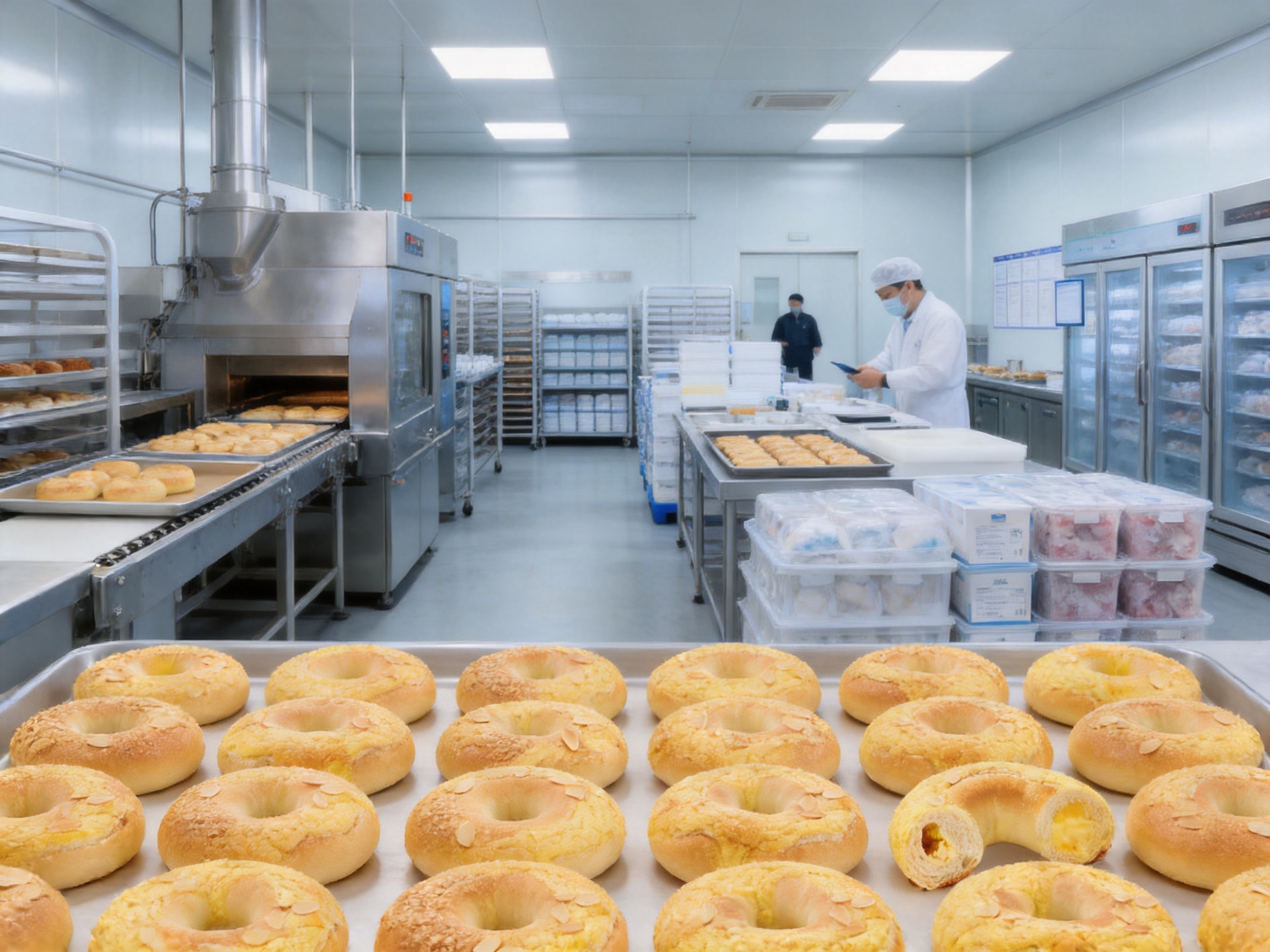
The product is manufactured by Jiangsu Goobagel Food Technology Co., Ltd., a specialized frozen bakery producer with experience in bagel research and manufacturing since 2019. The company’s integrated approach covers raw-material coordination, product research and development, production, and distribution. This structure allows commercial customers to work with a supplier capable of supporting not only individual product orders but also broader OEM, wholesale, and private-label requirements.

Toasted Almond Mango-Coconut Bagel
A Distinctive Flavor Concept Built Around Contrast
The most important advantage of the Toasted Almond Mango-Coconut Bagel is its deliberate contrast between textures and aromas. Many flavored bagels rely primarily on a single ingredient or a simple sweetener. This product instead creates a sequence that develops from the first visual impression through the final bite.
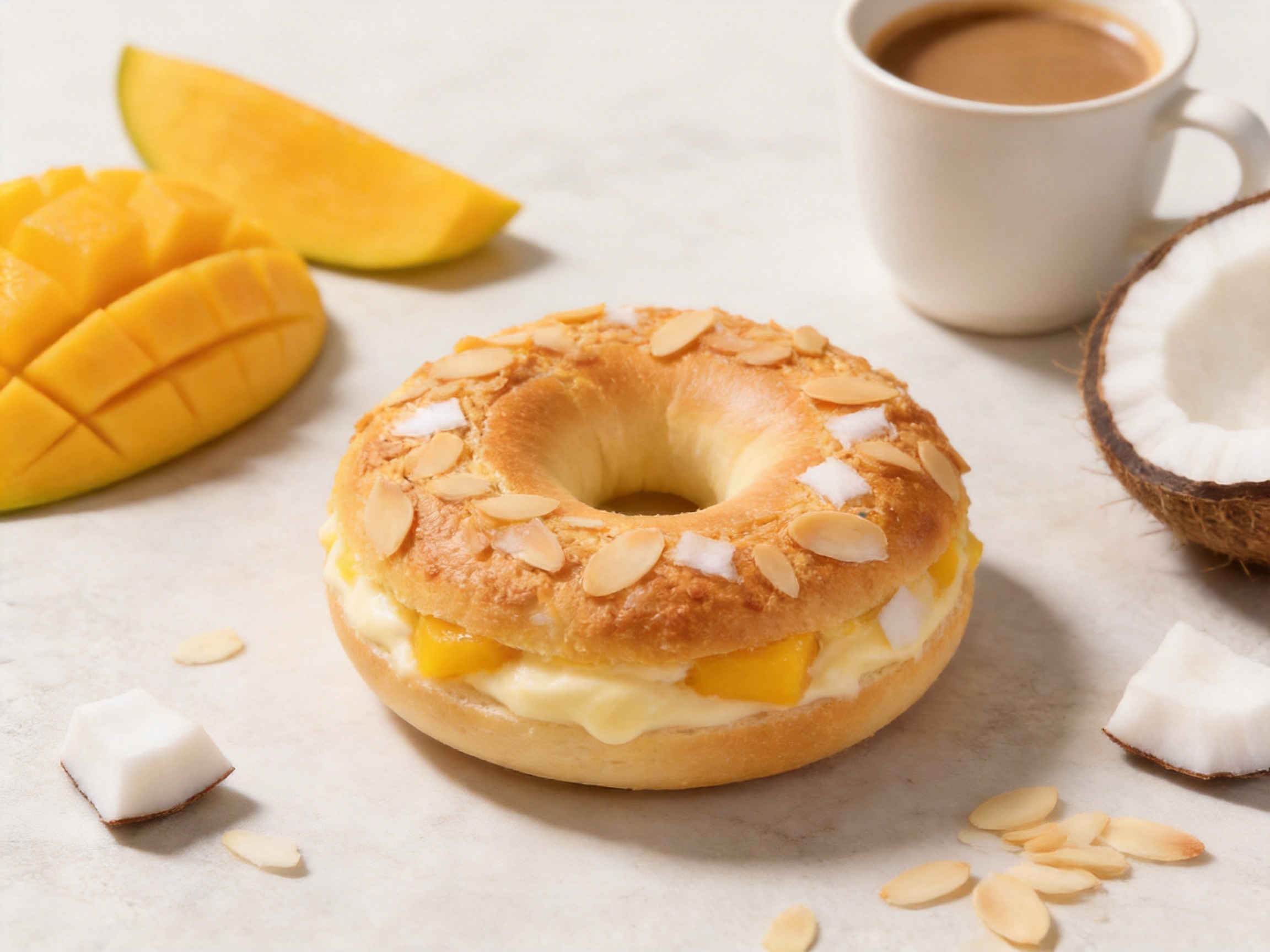
The first point of contact is the topping. Thin, crispy toasted almond flakes cover the surface and create a delicate crunch. Their lightly roasted aroma adds warmth and depth to the product, balancing the lively character of the fruit ingredients. Almond brings a familiar nutty note that many consumers associate with premium bakery products, while the thin flake format offers a more elegant eating experience than large, hard nut pieces.
After the initial crunch, the tropical profile becomes more noticeable. Mango contributes a bright, fruity character with a gentle sweet-tart lift. Coconut adds a soft, fragrant creaminess that rounds out the sharper fruit notes. Together, these ingredients create a flavor direction that is refreshing and indulgent at the same time.
The final layer comes from Anchor cream cheese and real dairy butter. These ingredients add a comforting dairy richness and help connect the toasted almond and tropical fruit components. Cream cheese contributes a mild tang and creamy body, while dairy butter provides a fuller, rounder mouthfeel. Rather than allowing the fruit flavor to become thin or one-dimensional, the dairy elements give the product a longer and more satisfying finish.
This sequence can be summarized as crisp followed by creamy, fragrant followed by sweet-tart, and bright followed by milky. Such a layered profile gives customers more reasons to return to the product. Each bite can reveal a slightly different balance of topping, fruit, bagel crumb, cream cheese, and butter.
Why Flavor Layering Matters in Commercial Bakery Products
Flavor layering is important because consumers increasingly evaluate food products through multiple sensory dimensions. Appearance influences the decision to purchase, aroma shapes expectations before eating, texture determines immediate satisfaction, and aftertaste affects the perception of quality. A product that performs well across all four stages can achieve stronger acceptance than one that depends on sweetness alone.
The Toasted Almond Mango-Coconut Bagel is structured around this multi-stage experience. The almond flakes create visual texture and audible crispness. The mango and coconut provide a recognizable flavor identity. The dairy ingredients create body and softness. The wheat-based bagel structure supports the ingredients and prevents the product from feeling like a simple sweet bun.
For cafés and bakery operators, this layered profile also creates a useful merchandising story. Staff can describe the product in a concise and appealing way: a toasted almond bagel with mango, coconut, cream cheese, and butter. The product is easy to understand, but its combination remains distinctive enough to stand out in a crowded bakery cabinet.
Premium Topping: Thin Crispy Toasted Almond Flakes
The toasted almond topping is one of the product’s most visible points of difference. A well-distributed topping can make a frozen bakery product look more handcrafted and premium after preparation. Thin almond flakes catch the light on the surface, add natural visual variation, and communicate the presence of real nutty ingredients before the first bite.
Texture is equally important. A soft bagel with no textural contrast can feel predictable, particularly when served as a sweet or fruit-flavored product. The almond flakes introduce a fragile crispness that contrasts with the tender interior. This difference creates a more dynamic eating experience and gives the product a clear identity beyond its flavor description.
The toasted character of the almonds also supports the wheat aroma of the bagel. Toasting develops warm, roasted notes that complement baked grain flavors. These notes help the product maintain balance when paired with sweet fruit ingredients. Instead of presenting a purely tropical or confectionery profile, the bagel remains grounded in the familiar sensory language of a baked grain product.
From a display perspective, almond flakes can help the item stand out in mixed assortments. Plain bagels and uniformly colored sweet breads may appear similar when arranged together. A textured almond surface creates a more premium visual signal, which can support higher-value positioning in cafés, specialty bakeries, and retail packs.
Balancing Crispness with Product Stability
For commercial frozen bakery products, the topping must be selected and applied with attention to handling, storage, preparation, and service. An attractive topping is valuable only when it remains sufficiently present and appealing throughout the product journey. This is why manufacturing control is essential.
Consistent topping distribution helps maintain a recognizable appearance across production batches. Controlled ingredient preparation and standardized processing can also help reduce excessive variation in surface coverage. For wholesale and private-label customers, this consistency is particularly important because the product must meet the same visual and sensory expectations across different stores, kitchens, and service occasions.
The product’s topping is not used merely as decoration. It is part of the eating architecture. It contributes aroma, crunch, and visual value, while also helping distinguish the product from ordinary fruit-filled or fruit-flavored bagels. This integrated approach is one reason the item can be positioned as a premium frozen bakery solution rather than a basic flavored bread.
Mango and Coconut: A Contemporary Fruit-Forward Combination
Mango and coconut are widely recognized flavors, but their combination continues to offer strong potential in modern bakery applications. Mango delivers a bright and energetic fruit impression, while coconut provides a smooth, aromatic, and gently creamy counterpoint. The two ingredients create a tropical direction without requiring an overly complex flavor description.
Mango is particularly valuable in bakery because its flavor can communicate freshness and visual vibrancy. Its sweet-tart character helps prevent the product from tasting flat. In this bagel, the mango component brings a lively center to the flavor profile and gives the product a clear reason to exist beyond the traditional bagel category.
Coconut helps soften and extend the mango experience. Its fragrance is naturally associated with creaminess and tropical indulgence. When paired with dairy ingredients, coconut can create a rounded impression that feels rich but not necessarily heavy. This makes the combination suitable for breakfast and snack occasions, where consumers may want something more interesting than a plain bread product but less intense than a dense dessert.
The product uses these flavors in a way that emphasizes balance. The goal is not to overwhelm the wheat base with sweetness. Instead, the tropical ingredients are integrated with the bagel’s baked grain character, toasted almond topping, cream cheese, and butter. The result is a layered product that can appeal to customers who enjoy fruit flavors as well as those who prefer richer bakery notes.
Broad Consumer and Menu Applications
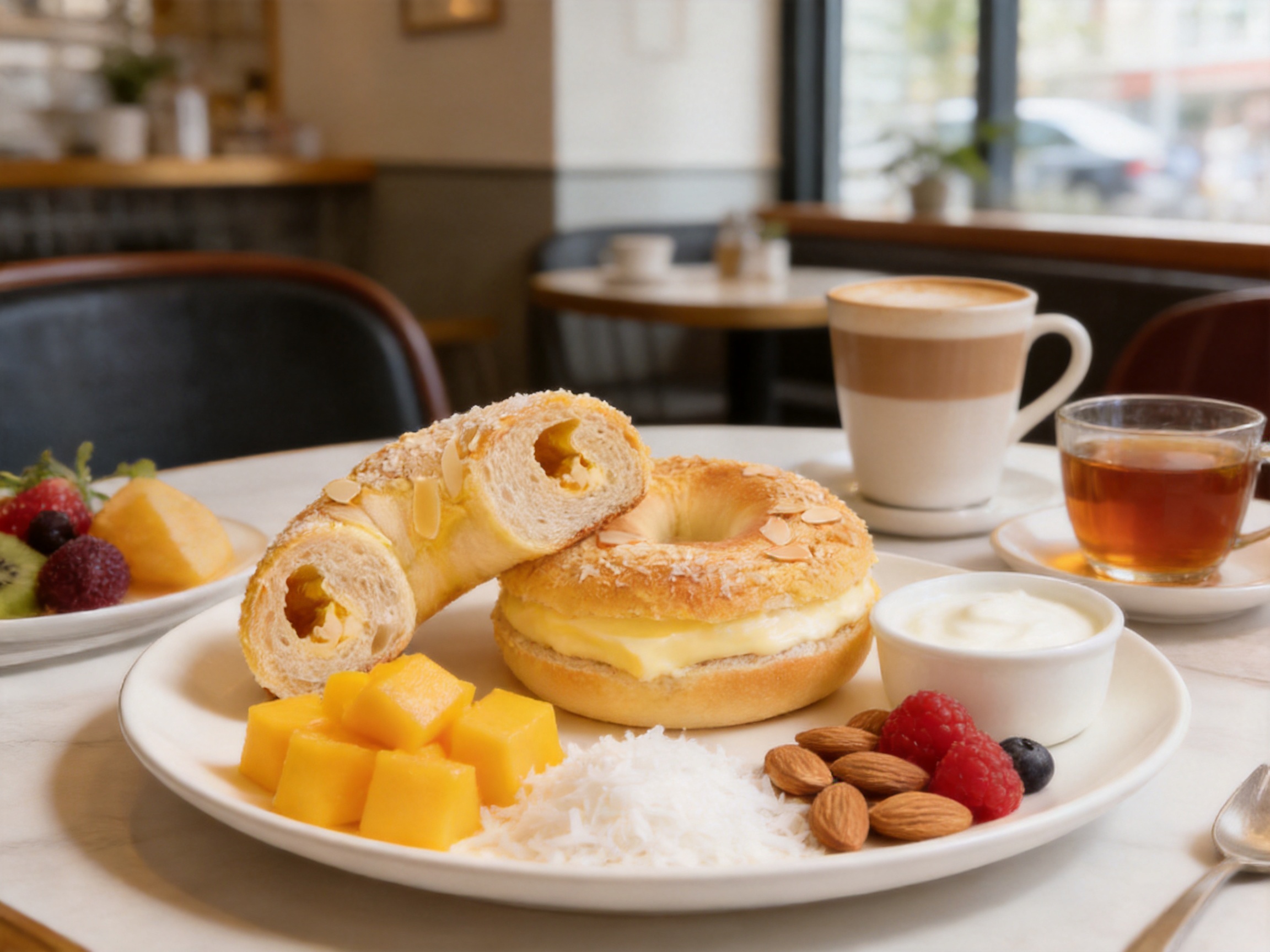
The flavor profile is flexible enough to support several menu positions. It can be served as a breakfast item with coffee, espresso, milk, or tea. It can be offered during afternoon tea as a sweet bakery accompaniment. It can also be included in a dessert-style display with fresh fruit, yogurt, whipped toppings, or a light dusting of powdered sugar, depending on the operator’s concept and preparation standards.
In hospitality settings, the bagel may add variety to breakfast buffets and room-service menus. In cafés, it can become a seasonal or signature item that differentiates the menu from competitors selling only conventional bagel flavors. In retail, the product can be positioned as a convenient premium breakfast or snack option for consumers who want bakery quality at home.
For tea brands and beverage chains, the mango-coconut profile offers natural pairing potential with milk tea, fruit tea, iced tea, and coffee-based beverages. The product’s tropical notes can complement fruit-forward drinks, while the almond and dairy elements can balance beverages with stronger acidity or bitterness.
Soft Interior and Satisfying Exterior
A premium bagel must achieve an appropriate relationship between the outer surface and the inner crumb. If the product is too hard, it may be difficult to enjoy and unsuitable for quick service. If it is too soft and cake-like, it may lose the characteristic identity of a bagel. The Toasted Almond Mango-Coconut Bagel is designed around a lightly crisp exterior and a soft, tender interior.
The exterior provides a satisfying baked finish and supports the toasted almond flakes. The interior remains more yielding, allowing the fruit, cream cheese, butter, and wheat aromas to develop gradually during chewing. This texture creates a sense of generosity without relying solely on a heavy filling or excessive sweetness.
The contrast between outer crispness and inner tenderness is useful in foodservice because it creates a fresh-prepared impression. When the product is properly handled and heated according to the operator’s process, the crust and crumb can offer a more appealing sensory result than a product that remains uniformly soft from surface to center.
Texture also affects portability. A well-structured bagel can be served as a handheld product, making it suitable for breakfast counters, takeaway programs, office catering, and convenience-focused retail. Its 78-gram format offers a practical balance between portion control and eating satisfaction.
| Product Feature | Consumer Benefit | Commercial Advantage |
|---|---|---|
| Thin toasted almond flakes | Delicate crunch and warm nutty aroma | Premium appearance and strong visual differentiation |
| Mango and coconut flavor pairing | Bright, fragrant, and layered tropical taste | Distinctive menu identity beyond traditional bagel flavors |
| Cream cheese and real dairy butter | Milky richness, gentle tang, and fuller mouthfeel | Supports indulgent positioning and repeat purchase appeal |
| Soft, tender interior | Comfortable eating texture | Suitable for breakfast, snack, café, and buffet applications |
| 78-gram serving size | Convenient individual portion | Practical for menu costing, packaging, and portion management |
| Frozen bakery format | Convenience and preparation flexibility | Helps operators manage inventory and serve consistent products |
Advantages Over Conventional Bagel Options
The bagel category includes many familiar products, including plain, sesame, onion, blueberry, cinnamon, and cheese varieties. These products remain important, but they often compete within established flavor expectations. A mango-coconut bagel with toasted almond flakes offers a more differentiated proposition.
Compared with a plain bagel, this product requires less additional customization to create a premium customer experience. The topping, fruit character, and dairy richness are already integrated into the product concept. An operator can serve it simply or add complementary garnishes without building the flavor profile from multiple components.
Compared with a basic fruit bagel, the toasted almond and dairy elements provide more complexity. The product is not limited to fruit sweetness. It includes roasted, creamy, tangy, and grain-based notes, giving consumers more sensory detail and creating a more sophisticated overall impression.
Compared with heavily sweetened bakery items, the mango and coconut profile can feel more balanced because the fruit’s gentle acidity and the almond’s roasted character help offset the creamy ingredients. This makes the product suitable for consumers who want indulgence but still appreciate a clean, layered finish.
Compared with filled pastries, a bagel format offers versatility. The product can be warmed, sliced, displayed whole, paired with beverages, or served as part of a breakfast plate. It can also be incorporated into different service formats without losing its identity.
Compared with products that depend on artificial-looking visual effects, the toasted almond surface provides a naturally premium appearance. Ingredient visibility matters in retail and foodservice because customers often use visual cues to estimate quality before purchase.
Product Differentiation for Private-Label Programs
Private-label customers need products that can support their own brand positioning. A distinctive flavor concept helps reduce direct price comparison with standard bakery products. Instead of competing only on unit cost, a retailer or café chain can build a product story around tropical fruit, toasted almond, and creamy dairy richness.
The bagel can be used as part of a premium breakfast range, a seasonal launch, a tropical-themed campaign, or a broader collection of innovative frozen bakery products. Its flavor is recognizable enough for consumers to understand quickly, yet different enough to create curiosity and trial.
OEM customers may also adapt the concept to their preferred pack sizes, labeling requirements, channel strategy, and product portfolio. The underlying product architecture offers a starting point for further development, whether the customer wants to emphasize fruit, nuts, indulgence, convenience, or café-style quality.
Frozen Bakery Convenience for Professional Operators
Frozen bakery products provide practical benefits for businesses that need quality, consistency, and flexible inventory management. A frozen bagel can be stored and scheduled according to demand, helping operators reduce the pressure associated with producing every item from scratch each day. This is valuable for cafés, hotels, bakeries, restaurants, and distributors with fluctuating sales patterns.
The frozen format can also support multi-location consistency. When the same product is delivered to different stores, operators can use standardized preparation procedures to offer a more uniform customer experience. This is especially important for chain businesses, where product variation can affect brand perception.
Frozen distribution expands the product’s commercial reach. A bakery item does not need to be produced and sold in the same location. It can be manufactured in a centralized facility, distributed through appropriate channels, and prepared closer to the point of sale. This structure supports wholesale, foodservice, retail, and private-label business models.
For inventory planning, a frozen product may provide greater flexibility than a short-shelf-life fresh item. Operators can plan stock around expected demand and use the product in different dayparts. Breakfast sales, afternoon snacks, beverage pairings, and catering orders can all be supported by the same core item.
However, frozen convenience should never replace sensory quality. The value of the format depends on the product retaining its intended appearance, texture, and flavor after preparation. This is why manufacturing controls, recipe development, freezing management, packaging, storage guidance, and distribution coordination all matter.
Integrated Manufacturing and Product Development Strengths
Jiangsu Goobagel Food Technology Co., Ltd. has specialized in bagel research and manufacturing since 2019. Its business model is centered on frozen bakery production, product development, and commercial supply. Rather than treating manufacturing as an isolated step, the company operates an integrated supply chain covering raw materials, research and development, production, and nationwide distribution.
This integrated structure creates several advantages for buyers. Product development can be connected more directly to production realities. Ingredient selection can be evaluated not only for flavor but also for processing compatibility, storage requirements, appearance, and final preparation. Manufacturing teams can use product feedback to improve consistency and commercial performance.
An integrated supply chain also helps support more reliable coordination. Customers often need information about product specifications, packaging, production schedules, delivery planning, and possible customization. A supplier with connected internal functions can respond more efficiently than a fragmented network of unrelated parties.
Research and Development Capacity
The company has developed more than 100 clean-label bagel varieties for different commercial applications. This product range demonstrates experience in developing multiple flavor directions, formats, and market solutions. It also indicates that the company understands bagels as a versatile product platform rather than a single standardized item.
Research and development is particularly important for a product such as the Toasted Almond Mango-Coconut Bagel. The formula must balance fruit flavor, coconut aroma, almond texture, dairy richness, bagel structure, and frozen product performance. Each element can influence the others. Too much moisture may affect texture, while insufficient flavor intensity may reduce the product’s identity after freezing and reheating. A successful product therefore depends on coordinated development rather than simply adding ingredients to a basic dough.
For OEM and private-label buyers, a strong development team can provide support during concept creation, sample evaluation, sensory adjustment, and commercial scale-up. Customers may have specific target markets, serving occasions, price positions, package formats, or ingredient preferences. Product development experience helps translate those commercial objectives into a manufacturable bakery product.
Production Consistency
Consistency is a central requirement in wholesale bakery. Customers expect the same product weight, shape, topping distribution, flavor balance, and texture across repeated orders. Consistency is also essential for menu costing and customer satisfaction.
The company’s focus on bagel specialization supports process familiarity and category expertise. Repeated production experience can help teams understand the details that influence finished products, including dough handling, ingredient incorporation, forming, topping application, baking, cooling, freezing, storage, and distribution preparation.
For buyers, this means the product can be evaluated as part of a reliable supply program rather than as a one-time novelty. A distinctive flavor is valuable only when it can be reproduced at commercial scale. The ability to combine innovation with repeatable production is one of the major strengths of an experienced frozen bakery manufacturer.
Clean-Label Product Development and Ingredient Transparency
Clean-label expectations continue to influence food purchasing decisions. Consumers often want simpler ingredient stories, recognizable components, and products that communicate quality clearly. The Toasted Almond Mango-Coconut Bagel is built around understandable flavor cues: toasted almond, mango, coconut, cream cheese, dairy butter, and a baked wheat base.
A clean-label approach does not mean that every customer has identical ingredient or regulatory requirements. Retailers, foodservice operators, and international buyers may have different standards relating to allergens, declarations, permitted ingredients, nutrition, packaging, and claims. These requirements should be reviewed for the relevant market before commercialization.
The product’s ingredient story can nevertheless support a premium presentation. Almond flakes are visible, mango and coconut establish a recognizable fruit profile, and Anchor cream cheese and real dairy butter provide a clear dairy component. These details help operators explain the product without relying on an overly technical description.
For private-label customers, ingredient communication may be incorporated into packaging, menu copy, product catalogs, and sales materials. Clear communication can help customers understand why the product is different from a standard sweet bread or ordinary bagel.
Managing Allergens and Market Requirements
Because the product contains almond, wheat, dairy ingredients, and potentially other regulated components depending on the final formula, allergen management is an important part of commercial planning. Buyers should request complete specifications, ingredient declarations, allergen statements, storage information, and preparation guidance before placing a market-specific order.
Professional manufacturing should support controlled handling and documentation suitable for the intended sales channel. Export customers may also require additional compliance review based on destination-country regulations. Packaging language, nutritional declarations, product claims, and shelf-life information should be finalized in cooperation with the manufacturer and the importing party.
These steps do not diminish the product’s appeal. Instead, they help ensure that a premium bagel can move responsibly from development to retail or foodservice launch. Strong technical coordination is an important part of a successful OEM relationship.
Commercial Opportunities Across Multiple Channels
The Toasted Almond Mango-Coconut Bagel can serve different types of customers because its format is both specialized and adaptable. Its premium flavor makes it appropriate for differentiated menus, while its frozen format supports larger-scale distribution.
Cafés and Coffee Shops
Cafés can use the product as a signature bakery item paired with coffee, cold brew, espresso drinks, milk tea, or fruit beverages. Its almond topping and tropical flavor provide easy talking points for counter staff. It can be served whole for takeaway or sliced and warmed for a more substantial presentation.
The product can also help cafés refresh their bakery selection without adding a complicated in-store recipe. A distinctive finished bagel may attract customers who already know the category but want a new flavor experience.
Hotels and Hospitality
Hotels can include the product in breakfast buffets, executive lounges, conference catering, or room-service selections. The individual portion size is practical for buffet presentation, while the flavor offers variety alongside plain and savory breakfast breads.
Because hospitality operators often serve international guests with varied preferences, a tropical fruit and almond profile can add a globally familiar yet distinctive option. It can be presented with butter, yogurt, fruit, coffee, or tea according to the property’s food concept.
Retail and Supermarket Bakery
Retailers can position the bagel in frozen bakery, premium breakfast, or specialty snack sections. The visual appeal of the almond topping can support product photography and package presentation. A clear name and concise description can help shoppers understand the product quickly.
Retail packs may be suitable for households that want convenient bakery products without purchasing a large range of ingredients. The product can also be marketed for weekend breakfasts, home brunch, afternoon snacks, or special occasions.
Tea and Beverage Chains
Tea brands and beverage chains can use the product to expand beyond drinks and create a complementary food category. Mango and coconut naturally connect with fruit teas and tropical beverage menus, while almond and dairy notes complement milk-based drinks.
A consistent bagel product can simplify food attachment sales. It offers an easy add-on recommendation, supports combo promotions, and gives customers a reason to spend more during a beverage purchase. The product may be particularly effective in locations seeking a compact, convenient food offering.
Foodservice Distribution
Distributors can offer the product to restaurants, cafés, bakeries, schools, offices, hotels, and catering companies seeking a differentiated frozen bakery item. A product with multiple applications can help distributors serve several customer segments from one stock-keeping concept.
Its practical size and broad serving potential also support menu flexibility. Customers can use it in breakfast sets, snack menus, catered events, and grab-and-go displays without developing a separate recipe for every occasion.
OEM and Private-Label Advantages
OEM and private-label customers generally need more than a finished product. They need a manufacturing partner that can understand market positioning, coordinate specifications, maintain stable production, and support long-term supply. The company’s product development experience and frozen bakery focus provide a foundation for these requirements.
A private-label program may begin with the existing Toasted Almond Mango-Coconut Bagel concept. The customer can then evaluate the product for flavor, size, appearance, packaging, preparation, and target market suitability. Depending on the project, further discussion may cover labeling, case configuration, order quantities, production scheduling, and distribution arrangements.
The product’s distinctive flavor gives private-label brands an opportunity to build a stronger identity. Instead of selling a generic bagel under a new package, the retailer or foodservice group can introduce a product with a clear sensory proposition. This can support seasonal campaigns, premium ranges, café exclusives, and innovation-focused product launches.
OEM development may also be useful for customers that want related products. The mango-coconut direction could inspire additional sizes, topping variations, fruit combinations, or complementary bagel products. An experienced manufacturer can help assess which ideas are most suitable for commercial production and frozen distribution.
Supply Reliability and Long-Term Partnership
Supply reliability is a major concern for food businesses. A product launch can be damaged by inconsistent availability, unexpected specification changes, or poor communication. A manufacturer with an integrated supply chain is better positioned to coordinate materials, production, quality requirements, and distribution planning.
Jiangsu Goobagel Food Technology Co., Ltd. serves customers across retail, foodservice, café chains, tea brands, and bakery operations. This broad experience supports an understanding of different purchasing cycles and application needs. Some customers may require regular wholesale supply, while others may need development support for a new private-label launch.
Long-term cooperation should be based on clear specifications, realistic forecasts, documented quality expectations, and regular communication. When these elements are established, a distinctive product such as the Toasted Almond Mango-Coconut Bagel can become a stable part of a customer’s product portfolio.
Recommended Preparation and Serving Concepts
The final serving method should follow the manufacturer’s technical instructions and the operator’s food-safety procedures. Within those requirements, the bagel offers several presentation possibilities.
For a simple breakfast service, the bagel can be heated and served whole with coffee, tea, yogurt, or fresh fruit. This approach highlights the product’s internal flavor and requires minimal assembly.
For café service, the bagel can be sliced after preparation and presented on a plate or in suitable takeaway packaging. A light accompaniment such as plain yogurt, mango pieces, coconut flakes, or a mild fruit preserve may reinforce the existing flavor without overwhelming it.
For brunch menus, the product can be combined with fresh fruit, dairy components, or a beverage pairing. The almond topping provides enough visual interest that the plate does not require excessive decoration.
For catering, the bagel can be included in individually packed breakfast sets or arranged in a mixed bakery selection. Its tropical profile creates variety when served alongside savory sandwiches, plain bagels, croissants, or muffins.
Operators should avoid adding excessive sweetness that masks the mango and coconut balance. The product is designed to provide layered flavor on its own. Complementary ingredients should support its aromatic profile rather than compete with the toasted almond, dairy richness, and gentle fruit acidity.
Quality, Documentation, and Buyer Evaluation
Before commercialization, buyers should evaluate the product through a structured process. Sensory testing should consider appearance, topping distribution, aroma, outer texture, inner crumb, fruit intensity, coconut fragrance, dairy richness, aftertaste, and overall balance.
Operational testing should examine preparation time, equipment compatibility, holding behavior, packaging performance, portion consistency, and suitability for the intended service environment. Retail customers may focus on freezer storage, pack presentation, and consumer preparation instructions, while cafés may focus more on speed of service and finished texture.
Commercial evaluation should also include product specifications, allergen information, shelf-life data, case configuration, minimum order requirements, production lead times, and delivery planning. These factors are essential for calculating total cost and establishing a sustainable supply arrangement.
Because the product includes almond and dairy ingredients, buyers should pay particular attention to allergen declarations and local regulatory requirements. Any claims relating to health, nutrition, ingredients, or clean-label positioning should be reviewed and approved for the target market.
A reliable manufacturer should be prepared to provide the technical information needed for responsible purchasing. Clear documentation reduces risk, improves internal approval processes, and helps ensure that sales, operations, quality, and marketing teams work from the same product information.
Why This Product Fits the Future of Frozen Bakery
The future of bakery is likely to be shaped by the intersection of convenience and experience. Consumers want products that are easy to purchase and prepare, but they also expect interesting flavors, appealing textures, and a sense of quality. Businesses need products that can be stored efficiently, served consistently, and differentiated in a competitive market.
The Toasted Almond Mango-Coconut Bagel addresses these needs through a balanced product architecture. It uses a familiar bagel format but introduces a more contemporary flavor combination. It offers a visual topping, a textural contrast, a fruit-forward identity, and a creamy dairy finish. It is convenient for frozen distribution but designed to deliver a premium eating experience after preparation.
Its commercial value is strengthened by the capabilities of the manufacturer behind it. Experience in bagel research and manufacturing, a portfolio of more than 100 clean-label varieties, integrated supply-chain management, and support for retail and foodservice customers create a solid foundation for wholesale, OEM, and private-label cooperation.
For businesses seeking a product that can stand out without becoming difficult to understand, this bagel is a practical option. The name communicates its main ingredients clearly, while the eating experience provides more complexity than a conventional fruit bagel. Its flavor can attract adventurous consumers, and its familiar format can reassure customers who already enjoy bagels.
Q&A
What is the Toasted Almond Mango-Coconut Bagel?
It is a 78-gram frozen bagel featuring thin crispy toasted almond flakes, mango and coconut flavor notes, Anchor cream cheese, and real dairy butter. The product is designed to provide a layered experience combining crunch, tropical fruit brightness, creaminess, and a soft bagel interior.
What makes the flavor different from a standard fruit bagel?
The product combines fruit with toasted almond and dairy ingredients. Mango provides a bright sweet-tart character, coconut contributes fragrance and softness, almond adds roasted crunch, and cream cheese and butter provide a fuller finish. This creates a more complex profile than a bagel based only on fruit sweetness.
Is the product suitable for cafés?
Yes. It can be used as a breakfast item, snack, takeaway product, or beverage accompaniment. Its distinctive flavor gives cafés a signature menu option, while the frozen format can support consistent preparation across locations.
Can it be used by hotels and catering companies?
Yes. The individual serving size and flexible presentation make it suitable for breakfast buffets, conference catering, hospitality menus, and individually packed breakfast sets. Buyers should confirm preparation and holding procedures for their specific operation.
What are the main visual selling points?
The thin toasted almond flakes create a textured, premium-looking surface. They provide visible ingredient appeal and help the product stand out from plain or uniformly finished bagels.
What texture should customers expect?
The product is designed to offer a lightly crisp exterior and a soft, tender interior. The almond topping adds a delicate crunch, creating contrast with the bagel crumb and creamy dairy elements.
Is the product available for OEM or private-label projects?
The manufacturer specializes in frozen bagel research and production and supports OEM and private-label business models. Specific customization, packaging, order quantities, and market requirements should be discussed during project evaluation.
What manufacturing strengths support this product?
The company operates an integrated supply chain covering raw materials, research and development, production, and distribution. It has specialized in bagel research and manufacturing since 2019 and has developed more than 100 clean-label bagel varieties for commercial customers.
Which businesses can purchase the product?
Potential customers include retail brands, foodservice distributors, cafés, café chains, tea brands, hotels, restaurants, bakeries, catering companies, and other bakery operators seeking a differentiated frozen bagel.
Does the product contain allergens?
The product includes almond, wheat-based ingredients, and dairy components such as cream cheese and butter. Buyers should request the complete ingredient declaration and allergen statement for the final commercial specification and target market.
How should buyers assess the product before ordering?
Buyers should review sensory quality, finished appearance, preparation performance, texture, flavor balance, packaging, storage requirements, technical documentation, production lead times, and supply terms. Market-specific labeling and regulatory requirements should also be confirmed.
Can the product be paired with beverages?
Yes. Its mango and coconut notes can pair with fruit tea and tropical beverages, while its almond and dairy flavors can complement coffee, milk tea, espresso drinks, and black tea.
Conclusion
The Toasted Almond Mango-Coconut Bagel is a premium frozen bakery product that combines a recognizable format with a distinctive sensory experience. Thin toasted almond flakes create the first impression through visual appeal and delicate crunch. Mango and coconut provide a bright, fragrant, fruit-forward center. Anchor cream cheese and real dairy butter add a slow-developing milky richness, while the soft interior and lightly crisp exterior complete the product’s texture.
Its advantages extend beyond flavor. The 78-gram format is practical for portion management, the frozen form supports flexible inventory and distribution, and the product can serve cafés, hotels, retail programs, beverage chains, catering companies, and private-label customers. Its clean-label product development orientation and recognizable ingredient story also support premium merchandising.
Behind the product is a specialized frozen bakery manufacturer with experience in bagel research, commercial production, integrated supply-chain management, and the development of more than 100 bagel varieties. These capabilities help connect innovation with reliable manufacturing, making the product suitable not only for individual wholesale purchasing but also for longer-term OEM and private-label cooperation.
For buyers seeking a bagel that can create menu interest, support premium positioning, and deliver convenience at commercial scale, the Toasted Almond Mango-Coconut Bagel offers a well-balanced solution. It transforms familiar bakery expectations through contrast: crisp and tender, bright and creamy, tropical and nutty, convenient and refined.
References
1. Jiangsu Goobagel Food Technology Co., Ltd. Product information for the Toasted Almond Mango-Coconut Bagel.
2. Jiangsu Goobagel Food Technology Co., Ltd. Company profile and manufacturing overview.
3. General principles of frozen bakery production, cold-chain management, and commercial foodservice distribution.
4. General sensory evaluation principles for bakery products, including appearance, aroma, texture, flavor, and aftertaste.
5. General guidance on allergen communication, ingredient declarations, and private-label food product development.
