
 中文简体
 English



postmaster@goobagelfood.com
Content
- 1 Introduction
- 2 Product Overview and Market Positioning
- 3 Malaysian-Imported Cocoa Kneaded into the Dough
- 4 Balanced Anchor Cream Cheese and Chocolate Filling
- 5 Advantages Over Conventional Competitor Products
- 6 Advanced Manufacturing and Product Development Strengths
- 7 Manufacturing Process Considerations
- 8 Advantages for Retailers and Foodservice Operators
- 9 OEM and Private-Label Potential
- 10 Quality, Consistency, and Commercial Reliability
- 11 Consumer Experience and Serving Occasions
- 12 Comparison Table
- 13 Why the Product Fits Current Bakery Trends
- 14 Q&A
- 14.1 What is the cocoa chocolate cream cheese bagel?
- 14.2 Does the bagel need to be reheated?
- 14.3 What makes the dough different from a conventional bagel?
- 14.4 What does the filling taste like?
- 14.5 What texture can consumers expect after thawing?
- 14.6 Who can use this product commercially?
- 14.7 What are the main retail selling points?
- 14.8 Can the product be used in a café beverage combination?
- 14.9 Why is the frozen format useful for operators?
- 14.10 Does the manufacturer support OEM or private-label projects?
- 14.11 How does the product compare with a standard chocolate bun?
- 14.12 What supports consistent commercial quality?
- 15 Conclusion
- 16 References
- 17 Product: Cocoa Chocolate Cream Cheese Bagel
Introduction
The cocoa chocolate cream cheese bagel represents a new generation of frozen bakery products designed to combine indulgent flavor, convenient preparation, stable quality, and commercial flexibility. Rather than relying on a plain bagel base with a sweet topping, this product builds its chocolate character directly into the dough and pairs it with a carefully balanced cream cheese and chocolate filling. The result is a soft, aromatic, ready-to-eat bagel that offers a more refined experience than many conventional frozen bagels.
Produced in a 90-gram format, the bagel is positioned within the cold sandwich bagel category while also appealing to consumers seeking a breakfast item, afternoon snack, dessert-style bakery product, or convenient small indulgence. Its most distinctive feature is the use of Malaysian-imported cocoa powder kneaded into premium wheat flour. This process allows the cocoa flavor to become an integrated part of the dough rather than a surface coating or afterthought. The bagel therefore delivers chocolate aroma from the first bite through the finish.
The filling adds another layer of differentiation. Anchor cream cheese is blended with chocolate in a carefully controlled ratio to create a creamy, milky, and gently tangy center. The chocolate contributes depth and fullness, while the cream cheese prevents the flavor from becoming excessively sweet or heavy. After thawing, the filling develops an exceptionally soft, smooth texture that resembles ice cream as it melts on the palate.
For retailers, cafés, foodservice operators, and private-label buyers, the product also offers practical advantages. Its frozen format supports inventory planning, reduces preparation complexity, and enables consistent serving quality across different locations. For manufacturers and brand partners, the product provides a platform for premium positioning, seasonal merchandising, café applications, dessert menus, and customized product programs.
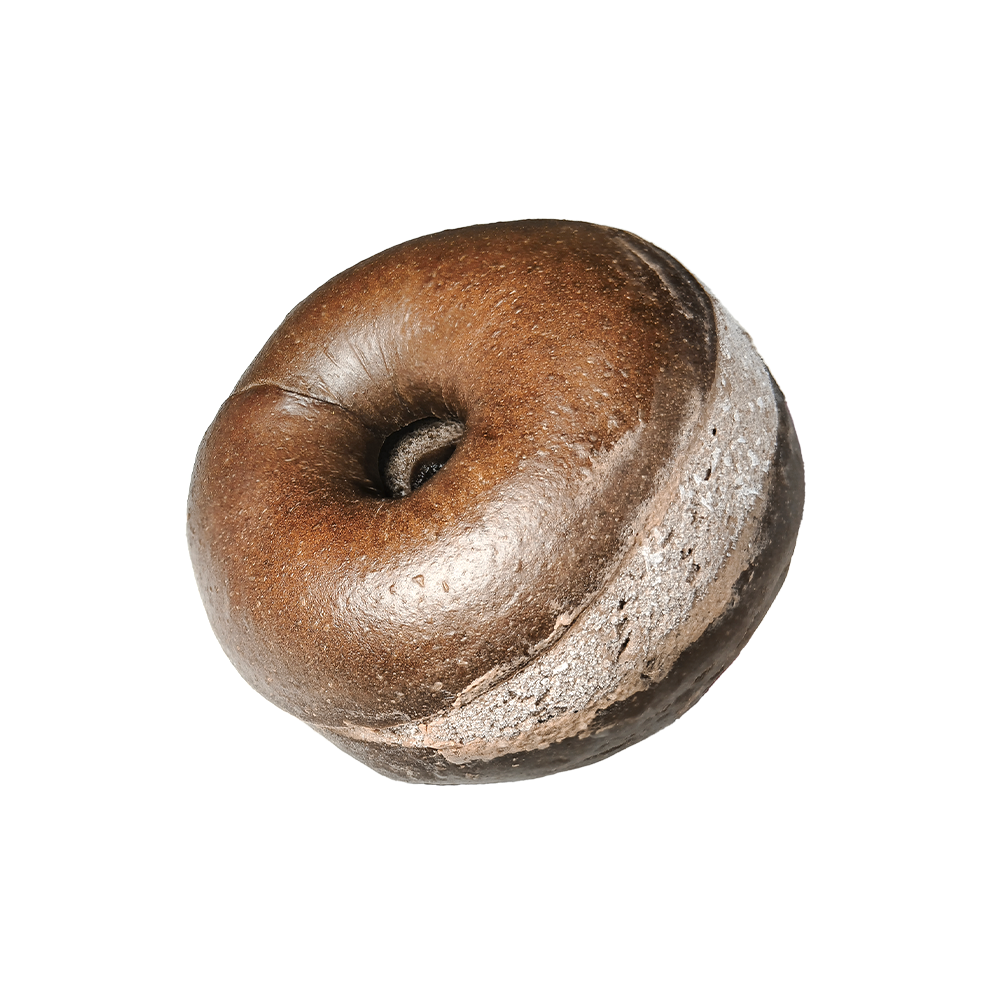
Cocoa Chocolate Cream Cheese Bagel
Product Overview and Market Positioning
Contemporary consumers increasingly expect bakery products to offer more than basic satiety. They look for distinctive flavors, appealing textures, convenience, and a sense of indulgence that can fit into a busy daily routine. The cocoa chocolate cream cheese bagel responds to these expectations through a combination of familiar ingredients and a carefully developed product structure.
At its foundation, the product remains a bagel. This gives it the recognizable shape, portability, and versatility associated with the category. However, its sensory profile moves beyond the traditional savory or plain bagel. Cocoa in the dough introduces a warm, aromatic chocolate identity, while the cream cheese and chocolate filling gives the product the richness of a filled pastry. The combination creates a hybrid bakery experience: part bagel, part dessert, and part convenient cold sandwich.
The 90-gram size is suitable for multiple consumption occasions. It can serve as a complete light breakfast, a packaged snack, a café counter item, or a dessert accompaniment. The portion is substantial enough to feel satisfying while remaining convenient for individual consumption. For foodservice operators, the standardized weight also supports menu costing, portion control, and consistent presentation.
Unlike products that depend on reheating to restore softness or release aroma, this bagel is designed for thaw-and-eat consumption. This characteristic is particularly valuable in retail and foodservice environments where ovens, toasters, or specialized equipment may not be available. The product can be prepared through controlled thawing and served cold, allowing operators to maintain a simple workflow while still offering a premium filled bakery item.
A Product Built Around Contrast
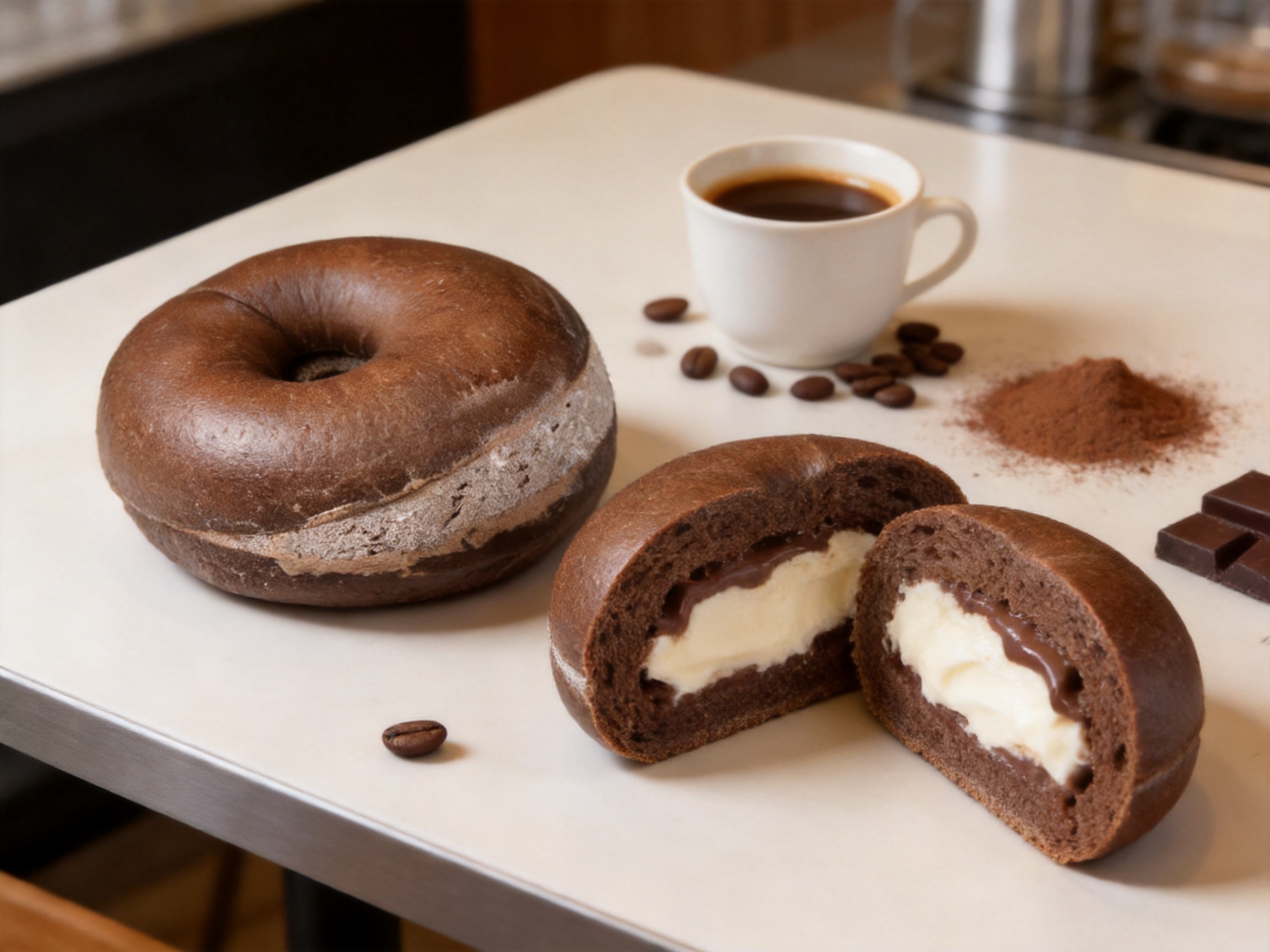
The appeal of the bagel comes from the contrast between its components. The dough provides a soft and fluffy cocoa base with a gently toasted sweetness. The filling contributes creaminess, richness, and a mild tang. The chocolate component links the two elements together, creating a cohesive flavor profile rather than two unrelated tastes.
This contrast is important because excessive sweetness can reduce repeat consumption. A product that is overwhelmingly sugary may be suitable for occasional dessert use but less appropriate for breakfast, café snacks, or everyday retail purchasing. By balancing chocolate with cream cheese, the product offers indulgence while preserving a clean and comfortable finish.
The cocoa flavor is also designed to be layered. The aroma appears early, followed by a rounded chocolate taste and a subtle pleasant bitterness. That bitterness helps create a more mature flavor impression and prevents the product from tasting one-dimensional. The cream cheese then softens the cocoa intensity with buttery dairy notes and a light tang.
Malaysian-Imported Cocoa Kneaded into the Dough
One of the most important product advantages is that cocoa is kneaded directly into the dough. This approach differs from adding chocolate flavor only through filling, glaze, coating, or post-baking decoration. When cocoa is integrated into the dough, the flavor becomes part of the bagel’s overall structure.
The use of Malaysian-imported cocoa powder contributes to the product’s aromatic identity. Cocoa sourcing influences aroma, color, bitterness, and overall flavor balance. In this application, the cocoa is intended to deliver a deep and aromatic character without making the dough harsh or overly bitter. This supports a more balanced product suitable for a broad consumer audience.
Kneading also helps distribute the cocoa more evenly throughout the dough. Even distribution supports consistent flavor from the outer surface to the inner crumb. Consumers are not dependent on reaching a particular area of filling or topping to experience the product’s chocolate character. Every section of the bagel contributes to the overall taste.
From a sensory perspective, integrated cocoa creates a more complete eating experience. The aroma is released as the product is handled and bitten, while the dough provides a warm, toasty background for the filling. The result is more sophisticated than a plain bagel filled with a strongly sweet chocolate cream because the base itself reinforces the center.
Softness Instead of Excessive Density
Traditional bagels are often associated with a firm, chewy texture. While chewiness can be desirable in certain applications, an overly dense structure may conflict with a cocoa cream cheese filling. A heavy dough can overpower the filling and make the product feel difficult to eat, particularly when served cold.
This product is developed to be softer and fluffier. The texture allows the bagel to remain approachable after thawing and helps the filling melt smoothly against the palate. The softer structure also makes the product more suitable for consumers who prefer tender bakery items rather than highly chewy bread.
Texture is especially important in frozen bakery products. Freezing and thawing can affect moisture distribution, crumb softness, and filling behavior. A successful frozen product must be formulated and processed with these conditions in mind. The cocoa dough is therefore not simply a fresh bagel recipe placed into a freezer; it is a product designed around frozen storage and thaw-and-eat performance.
Balanced Anchor Cream Cheese and Chocolate Filling
The filling is the product’s central indulgent element. It combines Anchor cream cheese with chocolate to create a layered profile that is rich but not excessively heavy. Cream cheese brings dairy richness, a buttery mouthfeel, and a mild tang. Chocolate adds depth, aroma, and a fuller finish. When the two are carefully proportioned, they complement each other rather than compete.
A common challenge in filled bakery development is maintaining ingredient clarity. If the chocolate level is too high, it may cover the dairy character and leave a dense, sugary impression. If the cream cheese is too strong, the product may taste overly tangy or savory for consumers expecting chocolate indulgence. The filling in this bagel is designed to occupy the middle ground.
The creamy center also helps create a clear textural contrast. The cocoa dough provides a soft bread structure, while the thawed filling becomes silky and delicate. This contrast improves the perceived premium quality of the product because the consumer experiences multiple textures within a single bite.
Ice-Cream-Like Softness After Thawing
The filling is designed for a thaw-and-eat format and develops an almost ice-cream-like softness after thawing. It melts quickly on the palate, giving the product a smooth and refreshing eating experience even though it is a bakery item.
This characteristic gives the bagel a significant advantage over many conventional filled breads. Some frozen bakery products require baking or microwaving before serving. Others become dry, firm, or uneven after thawing. By contrast, this bagel is intended to be enjoyed without reheating, allowing the filling to retain its delicate texture and allowing operators to reduce preparation steps.
The filling’s softness also supports different serving occasions. It can be offered as a chilled breakfast item, a grab-and-go snack, a dessert-style café product, or a sweet accompaniment to coffee and tea. The same product can therefore be merchandised in several sections of a retail or foodservice operation.
Advantages Over Conventional Competitor Products
The cocoa chocolate cream cheese bagel competes not only with other bagels but also with filled breads, sweet buns, pastries, frozen snacks, and café desserts. Its advantages come from the combination of flavor integration, texture, convenience, and operational consistency.
1. Chocolate Flavor in Both Dough and Filling
Many chocolate bakery products place the flavor in only one component. They may use a plain dough with chocolate filling or a cocoa dough with a neutral cream center. This product uses cocoa in the dough and chocolate in the cream cheese filling, producing a more complete flavor experience.
The layered structure means the product remains flavorful even if a bite contains a different ratio of dough to filling. The dough contributes cocoa aroma and toasted sweetness, while the center provides creamy chocolate richness. This reduces the risk of a flat or inconsistent eating experience.
2. More Balanced Sweetness
The combination of cream cheese and chocolate supports a more balanced sweetness level than products based entirely on sugar, chocolate syrup, or sweet cream. The natural tang of cream cheese adds complexity and helps prevent the finish from becoming cloying.
This balance broadens the product’s potential audience. It can appeal to consumers looking for an indulgent treat while also remaining suitable for morning consumption, café pairing, and repeat purchase. A product that can be consumed in more situations generally offers stronger merchandising flexibility.
3. Soft, Fluffy Dough
The product is designed to avoid an overly dense or hard-to-chew texture. Its softer and fluffier dough is especially appropriate for a cream-filled bagel served after thawing. This texture may also help differentiate it from traditional dense bagels and from frozen bakery products that lose softness during storage.
Softness improves accessibility for a wide range of consumers, including those who prefer tender bread products. It also makes the bagel easier to consume without cutting, toasting, or adding extra spreads.
4. No Reheating Required
The thaw-and-eat format is one of the product’s strongest operational benefits. Retailers can sell the bagel as a chilled or thawed grab-and-go item, while cafés can prepare it without dedicating oven capacity. Foodservice teams can simplify staff training because serving requires fewer preparation steps.
The absence of reheating also preserves the intended filling texture. Heating may cause cream cheese and chocolate fillings to soften excessively, leak, or change their sensory balance. Serving after controlled thawing keeps the product closer to its designed eating experience.
5. Multiple Consumption Occasions
Products that can serve only one occasion may face limited sales opportunities. This bagel can be positioned for breakfast, afternoon snacking, dessert, coffee pairing, school or office breaks, and convenient personal indulgence. Its flavor is distinctive enough for premium merchandising but familiar enough to be understood quickly by consumers.
6. Commercially Suitable Portioning
The 90-gram format offers a useful balance between satisfaction and portion control. It can be sold as an individual packaged item or included in a café combo with coffee, tea, milk, or a cold beverage. The standardized size supports inventory forecasting and consistent cost calculations.
Advanced Manufacturing and Product Development Strengths
A premium frozen bakery product depends on more than an appealing recipe. It requires coordinated work across ingredient selection, formulation, dough handling, filling technology, baking, freezing, storage, packaging, and distribution. The manufacturer behind this product has specialized in bagel research and manufacturing since 2019, building an integrated operation that covers raw materials, research and development, production, and nationwide distribution.
This integrated structure supports better communication between product developers and production teams. When a formulation is created with manufacturing conditions in mind, it is more likely to achieve stable performance at commercial scale. The company’s experience with more than 100 clean-label bagel varieties also provides a broad technical foundation for developing different textures, fillings, flavor profiles, and application formats.
Integrated Supply Chain Management
An integrated supply chain can improve control over product consistency. Raw material planning, formulation, production scheduling, frozen storage, and distribution can be coordinated as part of one system rather than handled as disconnected stages.
For buyers, this creates practical value. Stable sourcing and organized production planning can help support repeat orders, reduce unexpected variation, and improve supply reliability. For private-label customers and foodservice chains, consistency is particularly important because the same product must perform across multiple locations and sales periods.
Ingredient control is also important for a cocoa-filled product. Cocoa powder, wheat flour, cream cheese, chocolate ingredients, and other components must work together in terms of flavor, moisture, structure, and frozen stability. An experienced manufacturer can evaluate these elements as part of the complete product rather than optimizing each ingredient in isolation.
Research and Development Capability
The development of a filled cocoa bagel requires attention to both sensory and technical performance. The dough must be soft enough after thawing, but strong enough to hold the filling. The filling must remain stable during production, freezing, storage, and thawing. The final product must also deliver a consistent ratio between dough and cream center.
Research and development teams can address these requirements through controlled testing of ingredient ratios, mixing conditions, proofing, baking, freezing, and thawing. The company’s focus on bagel research allows it to develop products around the specific characteristics of bagel dough rather than adapting unrelated bakery formulas.
A portfolio exceeding 100 clean-label bagel varieties suggests experience across multiple product categories and flavor systems. This variety can support more efficient customization for buyers seeking different fillings, sizes, shapes, or flavor directions.
Frozen Bakery Manufacturing
Frozen bakery production offers important advantages for commercial customers. Freezing helps extend usable inventory life and allows products to be distributed beyond the immediate production area. It can also help maintain a consistent supply of specialty bakery items throughout the year.
However, freezing must be carefully managed. Product quality depends on the condition of the bagel before freezing, the freezing process, storage temperatures, packaging protection, and thawing instructions. A well-designed frozen bagel must retain its intended flavor, softness, filling structure, and appearance after the complete distribution cycle.
The cocoa chocolate cream cheese bagel is specifically developed for this type of system. Its formulation considers the final thawed experience rather than only the freshly produced product. This is a major distinction between a product designed for commercial frozen distribution and one created only for immediate sale.
Manufacturing Process Considerations
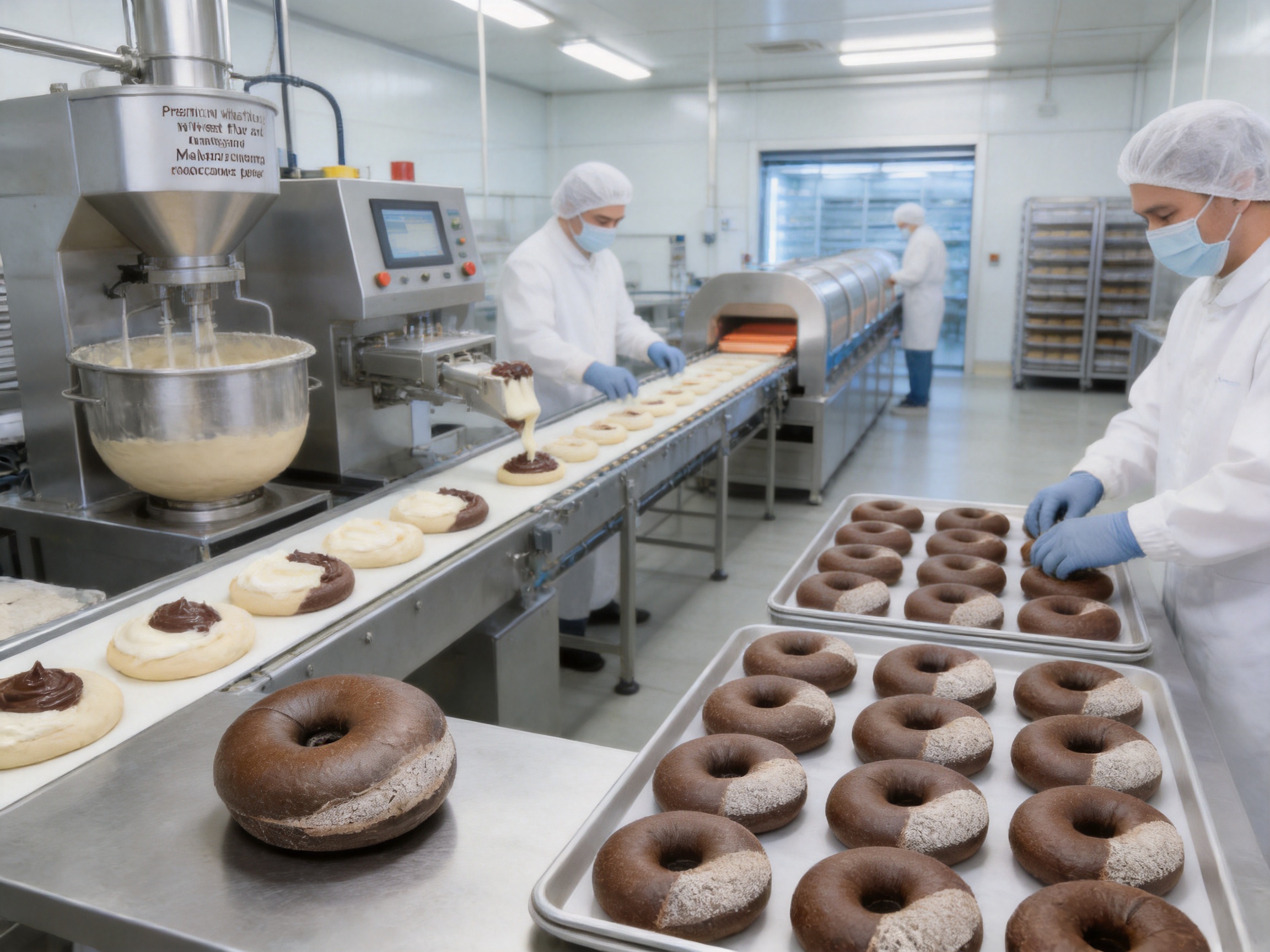
The exact production parameters may vary according to factory requirements, packaging formats, and customer specifications. Nevertheless, the product concept involves several important manufacturing stages that contribute to its quality and reliability.
Ingredient Preparation
Premium wheat flour, Malaysian-imported cocoa powder, cream cheese, chocolate components, yeast or leavening systems, water, and other recipe ingredients must be prepared according to controlled specifications. Proper weighing and batching are essential because small variations can affect dough softness, cocoa intensity, filling consistency, and final product weight.
Ingredient preparation also supports traceability. Commercial buyers increasingly require clear information about sourcing, production lots, and quality control. Organized raw material management helps manufacturers respond efficiently to customer requirements and maintain stable production records.
Dough Mixing and Cocoa Distribution
The cocoa powder is kneaded into the wheat flour-based dough so that the chocolate character is distributed throughout the dough matrix. Mixing must be sufficient to achieve uniform color and flavor while avoiding unnecessary overworking that could negatively affect the dough texture.
The objective is a dough that is cohesive, workable, and soft after baking and thawing. The manufacturer must balance flour strength, cocoa content, hydration, mixing energy, and fermentation behavior. Cocoa can influence dough handling and moisture absorption, so formulation and process control are especially important.
Forming and Filling
After dough preparation, the bagel structure and filling must be formed with accuracy. Consistent filling distribution is essential to ensure that consumers receive a similar experience from one unit to another. Uneven filling can create some bites that taste mostly like cocoa bread and others that are excessively rich.
Controlled forming also helps protect product appearance. The bagel must maintain an attractive shape while preventing filling leakage during subsequent processing. Commercial production equipment and standardized procedures support repeatability at higher volumes.
Baking and Texture Development
Baking must develop the cocoa aroma and set the dough structure without making the product dry or excessively firm. The correct balance is particularly important because the bagel will later be frozen and thawed. Overbaking can reduce softness, while underprocessing may affect structure and stability.
The desired result is a tender, fluffy cocoa bagel with enough strength to hold the cream cheese and chocolate center. A controlled baking profile helps create the warm, toasty notes described in the product concept while preserving a pleasant mouthfeel.
Freezing and Frozen Storage
Freezing is a critical step in preserving the product’s quality. Rapid and controlled freezing can help reduce the formation of large ice crystals, which may otherwise damage the dough structure or affect the texture of the filling. Consistent frozen storage helps protect the product during distribution and inventory holding.
Packaging also plays an important role. It must help protect the bagel from moisture loss, odor transfer, physical damage, and freezer-related quality changes. For commercial buyers, packaging formats can be evaluated according to retail display, bulk foodservice storage, transportation, and private-label requirements.
Advantages for Retailers and Foodservice Operators
The product’s commercial value extends beyond its taste. Retailers and foodservice operators need products that are easy to store, easy to serve, easy to explain to consumers, and capable of supporting attractive margins. The cocoa chocolate cream cheese bagel addresses each of these areas.
Retail Applications
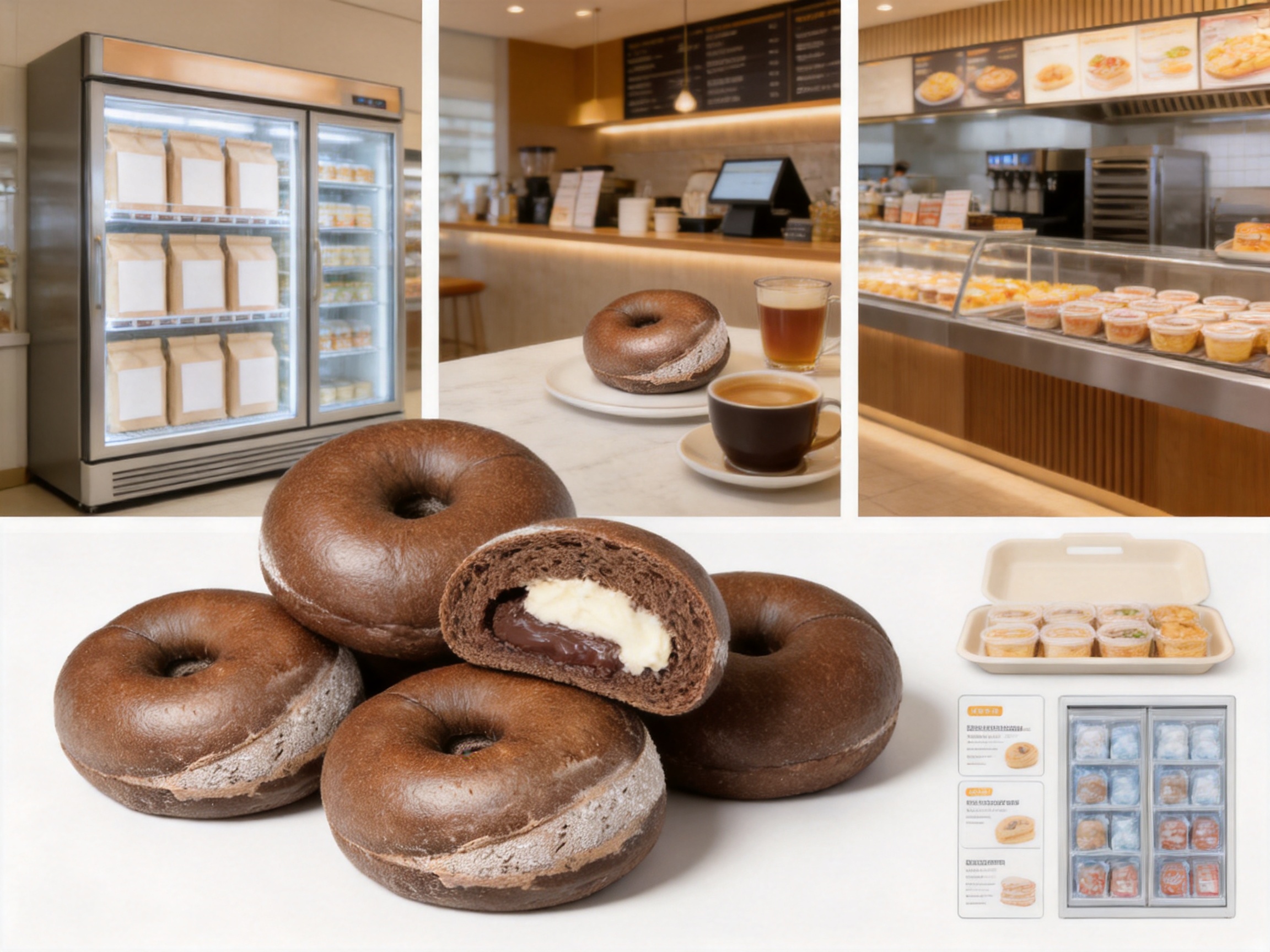
In retail, the product can be offered as an individual snack, a premium frozen bakery item, or a thawed grab-and-go product. Its chocolate appearance and filled format can attract attention in refrigerated displays, bakery sections, convenience stores, specialty food shops, and café-connected retail spaces.
Clear merchandising language can emphasize several selling points: cocoa dough, cream cheese and chocolate filling, soft texture, 90-gram portion, and no reheating required after thawing. These attributes help consumers understand both the flavor and the preparation method quickly.
The product can also support seasonal promotions. Chocolate-based bakery items are suitable for winter campaigns, holiday assortments, back-to-school snacks, café pairings, and limited-time dessert displays. Because the flavor is familiar, it can be marketed without extensive consumer education.
Café and Beverage Pairings
The cocoa profile pairs naturally with coffee, milk, tea, cocoa beverages, and cold dairy drinks. Cafés can serve the bagel as part of a breakfast combination, afternoon snack set, or dessert-style beverage pairing.
Because the product does not require reheating, cafés with limited kitchen space can add it to their menu without purchasing additional equipment. Staff can follow a straightforward thawing and display procedure, helping to reduce preparation time during busy periods.
Foodservice and Institutional Use
Foodservice operators may use the product in hotel breakfast programs, workplace cafeterias, school or university foodservice, catering, vending, and convenience dining. Its individual portion and frozen storage format support predictable planning in environments where demand may change from day to day.
The product can be served as a standalone bakery item or incorporated into a broader menu. It may be accompanied by fruit, yogurt, coffee, milk, or packaged beverages. Its dessert-like profile also allows it to function as a sweet course or afternoon refreshment.
OEM and Private-Label Potential
The manufacturer’s experience with bagel research, production, and commercial distribution creates opportunities for OEM and private-label cooperation. Buyers may seek a ready-made product under their own brand, a customized formulation, a different package size, or a product adapted to a specific sales channel.
A private-label program can use the cocoa chocolate cream cheese concept as a starting point while adjusting certain elements according to market requirements. Possible development areas may include portion size, packaging design, filling ratio, sweetness level, flavor intensity, labeling language, case configuration, or channel-specific presentation.
OEM cooperation is most effective when the manufacturer can connect product development with production capability. A concept must not only taste appealing; it must also be scalable, stable during freezing, compatible with packaging equipment, and suitable for the customer’s distribution system.
The company’s clean-label product development experience may also be valuable for buyers seeking products with a simpler ingredient positioning. Any specific labeling or ingredient claim should be confirmed through the appropriate formulation, regulatory, and market review process.
Support for Brand Differentiation
Private-label buyers often need products that stand apart from standard white bread or ordinary filled buns. The cocoa dough and cream cheese chocolate center provide a clear point of difference. The product can be positioned as a premium bagel rather than a generic frozen snack.
Its hybrid nature is also commercially useful. It can be described as a chocolate bagel, a filled bagel, a cold sandwich bagel, or a dessert-style bakery item depending on the channel. This flexibility helps brands test different merchandising approaches without changing the core product.
Quality, Consistency, and Commercial Reliability
For professional buyers, quality means more than an attractive first sample. It means that repeated orders perform in a consistent manner. Consumers should experience comparable flavor, texture, filling distribution, weight, and appearance each time they purchase the product.
Manufacturing consistency depends on standardized recipes, controlled processes, trained personnel, suitable equipment, and systematic quality checks. It also depends on effective communication between the manufacturer and the buyer regarding storage, thawing, packaging, delivery, and intended use.
The company’s integrated operations and experience in serving retail, foodservice, café chains, tea brands, and bakery operators provide a foundation for commercial reliability. Different customers may have different operational requirements, but all benefit from stable product performance and dependable supply planning.
For a frozen bagel, consistency should be evaluated across the full product life cycle. The bagel should maintain quality after production, frozen storage, transportation, thawing, display, and final consumption. This approach is essential for building trust with distributors and end users.
Consumer Experience and Serving Occasions
The product is designed to create a satisfying sensory sequence. The consumer first notices the cocoa aroma and dark, chocolate-inspired appearance. The soft dough then provides a gentle bite rather than a heavy chew. As the filling is reached, the experience becomes creamier and richer. The finish combines chocolate depth with a mild cream cheese tang.
For breakfast, the bagel can provide a convenient alternative to traditional sweet pastries. For an afternoon break, it offers a small indulgence that pairs well with hot or cold beverages. As a dessert, it provides a portion-controlled chocolate and dairy experience without requiring utensils or preparation.
The thaw-and-eat format is particularly suitable for busy lifestyles. Consumers can keep the product in frozen storage and prepare it according to their planned consumption. Retailers and foodservice operators can also manage servings more efficiently by thawing quantities according to expected demand.
Suggested Serving Guidance
The bagel should be thawed according to the operator’s validated handling instructions before consumption. Reheating is not required for the intended experience. Serving it chilled or at a controlled thawed temperature helps preserve the soft filling texture and the contrast between the cocoa dough and creamy center.
Operators may present the product whole, in a clear package, or with a simple beverage pairing. Cutting the bagel in half can display the filling and help communicate its premium character, especially in café and bakery cases.
Comparison Table
| Product Attribute | Cocoa Chocolate Cream Cheese Bagel | Conventional Plain Bagel | Typical Sweet Filled Bun |
|---|---|---|---|
| Flavor foundation | Cocoa integrated into the dough | Neutral wheat or malt profile | Usually sweet dough with filling or topping |
| Filling experience | Anchor cream cheese blended with chocolate | Usually no filling | May contain sweet cream, jam, or custard |
| Texture after thawing | Soft, fluffy dough with silky filling | May be firmer or chewier | Varies according to formula and storage |
| Preparation | Thaw and eat; no reheating required | Often toasted or warmed for best results | May be served thawed or reheated |
| Consumption occasions | Breakfast, snack, dessert, café pairing | Breakfast or sandwich use | Snack or dessert use |
| Commercial format | 90-gram individual portion | Various sizes | Various sizes and formats |
| Differentiation | Chocolate dough plus cream cheese chocolate center | Traditional bagel identity | Sweet bakery identity |
Why the Product Fits Current Bakery Trends
The product reflects several important directions in the modern bakery market. Consumers increasingly enjoy hybrid products that combine familiar formats with new flavor experiences. The bagel remains recognizable, while cocoa and cream cheese create a more indulgent and contemporary profile.
Convenience is another major trend. Frozen products that can be stored efficiently and consumed after thawing are useful for households, retailers, cafés, and foodservice operators. The absence of reheating requirements makes the product especially suitable for on-the-go consumption.
Portion awareness is also relevant. A 90-gram bagel provides a defined individual serving, allowing consumers to enjoy a premium treat without purchasing or preparing a large dessert. For operators, portion control can support predictable costing and simplified inventory management.
Finally, consumers are paying greater attention to texture. A product may have an appealing flavor but still fail if its mouthfeel is dry, dense, or inconsistent. The soft cocoa dough and ice-cream-like cream filling give this bagel a distinctive textural identity that can encourage trial and repeat purchase.
Q&A
What is the cocoa chocolate cream cheese bagel?
It is a 90-gram filled bagel made with cocoa kneaded directly into the dough and a center combining Anchor cream cheese with chocolate. It belongs to the cold sandwich bagel category and is designed to be eaten after thawing.
Does the bagel need to be reheated?
No. The product is developed for a thaw-and-eat experience. Reheating is not required, and serving it after thawing allows the filling to reach its intended soft, silky texture.
What makes the dough different from a conventional bagel?
The dough contains Malaysian-imported cocoa powder, which provides a deep aromatic chocolate character throughout the bagel. It is also designed to be softer and fluffier rather than excessively dense or chewy.
What does the filling taste like?
The filling combines the milky richness and gentle tang of cream cheese with the depth of chocolate. The ingredients are balanced so that the chocolate and dairy flavors complement rather than overpower each other.
What texture can consumers expect after thawing?
The dough is soft and tender, while the filling becomes silky and almost ice-cream-like. It melts quickly on the palate and creates a contrast with the cocoa bagel base.
Who can use this product commercially?
The product is suitable for retailers, cafés, foodservice operators, hotel breakfast programs, convenience stores, tea brands, bakery chains, catering businesses, and private-label buyers.
What are the main retail selling points?
The strongest selling points are the cocoa-infused dough, chocolate cream cheese center, soft texture, 90-gram portion, frozen storage format, and no-reheating preparation after thawing.
Can the product be used in a café beverage combination?
Yes. Its cocoa and cream cheese profile pairs well with coffee, milk, tea, hot cocoa, and cold dairy beverages. It can be offered as a breakfast combination, afternoon snack, or dessert-style pairing.
Why is the frozen format useful for operators?
Frozen storage helps operators manage inventory, maintain product availability, and plan servings according to demand. It can also reduce preparation complexity because the product is served after thawing rather than requiring full baking or cooking at the point of sale.
Does the manufacturer support OEM or private-label projects?
The company develops and manufactures bagels for retail, foodservice, café chains, tea brands, and bakery operators. Its research and production capabilities can support discussions about OEM and private-label requirements, subject to project specifications and technical review.
How does the product compare with a standard chocolate bun?
A standard chocolate bun may rely mainly on sweet dough, filling, or topping. This product builds cocoa flavor into the dough and combines it with a cream cheese chocolate center, creating a more layered bagel-based experience with a defined portion and thaw-and-eat format.
What supports consistent commercial quality?
Consistency is supported by integrated raw material management, bagel-focused research and development, controlled production, frozen bakery experience, standardized processing, and organized distribution. Buyers should also follow validated storage and thawing procedures.
Conclusion
The cocoa chocolate cream cheese bagel is a distinctive frozen bakery product that combines the familiarity of a bagel with the indulgence of a chocolate-filled dessert. Its key advantages come from the complete product design: Malaysian-imported cocoa kneaded into the dough, a soft and fluffy structure, a balanced Anchor cream cheese and chocolate filling, and a thaw-and-eat format that requires no reheating.
For consumers, the product offers a layered sensory experience with deep cocoa aroma, gentle toasted sweetness, creamy dairy richness, chocolate depth, and a pleasant tang at the finish. For retailers and foodservice operators, it offers flexible merchandising, easy preparation, controlled portioning, and broad suitability across breakfast, snack, café, and dessert occasions.
Its commercial strength is supported by a manufacturer specializing in bagel research and production since 2019. An integrated supply chain, more than 100 clean-label bagel varieties, frozen bakery expertise, and experience serving commercial partners provide a strong foundation for dependable supply and product development.
As the bakery market continues to move toward convenient, premium, and experience-driven products, this bagel is well positioned to meet demand for a product that is recognizable yet differentiated. It is not simply a cocoa-flavored bagel or a filled sweet bun. It is a carefully structured combination of soft cocoa dough and silky cream cheese chocolate filling, created for modern retail, foodservice, café, and private-label applications.
References
1. Product specification and sensory description for the cocoa chocolate cream cheese bagel, including portion size, flavor profile, filling concept, and thaw-and-eat preparation.
2. Manufacturer company information concerning bagel research, frozen bakery production, integrated supply chain management, and commercial distribution.
3. General principles of frozen bakery product development, including formulation, freezing, storage, thawing, texture preservation, and foodservice handling.
4. General bakery science references concerning wheat flour dough development, cocoa incorporation, mixing, baking, moisture management, and crumb texture.
5. General food manufacturing quality principles covering ingredient control, process standardization, traceability, packaging, and supply reliability.
