
 中文简体
 English

postmaster@goobagelfood.com
Content
- 1 A Distinctive Product Concept Built Around Citrus and Dairy
- 2 Why the Flavor Profile Stands Apart
- 3 The Bagel Foundation: Premium Flour and Japanese-Style Milling
- 4 Natural Yeast Fermentation and Flavor Development
- 5 Double-Citrus Layer: Calamansi Puree and Diced Lemon
- 6 Anchor Cream Cheese and Dairy Butter
- 7 Manufacturing Strengths Behind the Product
- 8 Advantages Over Conventional Bagel Alternatives
- 9 Frozen Bakery Format and Commercial Flexibility
- 10 Clean-Label-Oriented Product Development
- 11 A Product Story for Premium Marketing
- 12 Quality and Supply Considerations for Buyers
- 13 How the Product Can Support Assortment Strategy
- 14 Q&A: Understanding the Kumquat Lemon Butter-Cream Cheese Bagel
- 14.1 What type of product is this?
- 14.2 Why is the product associated with kumquat and lemon?
- 14.3 Is the product very sweet?
- 14.4 What makes the dough different from a standard bread product?
- 14.5 What role does the cream cheese play?
- 14.6 Why is dairy butter included with the cream cheese?
- 14.7 Who can purchase or use this product?
- 14.8 Can it be used in a private-label range?
- 14.9 What is the product weight?
- 14.10 Is it a frozen bakery product?
- 14.11 Does the manufacturer offer other bagel flavors?
- 14.12 What should buyers verify before placing a commercial order?
- 15 Conclusion
- 16 References
- 17 Product: Kumquat Lemon Butter-Cream Cheese Bagel
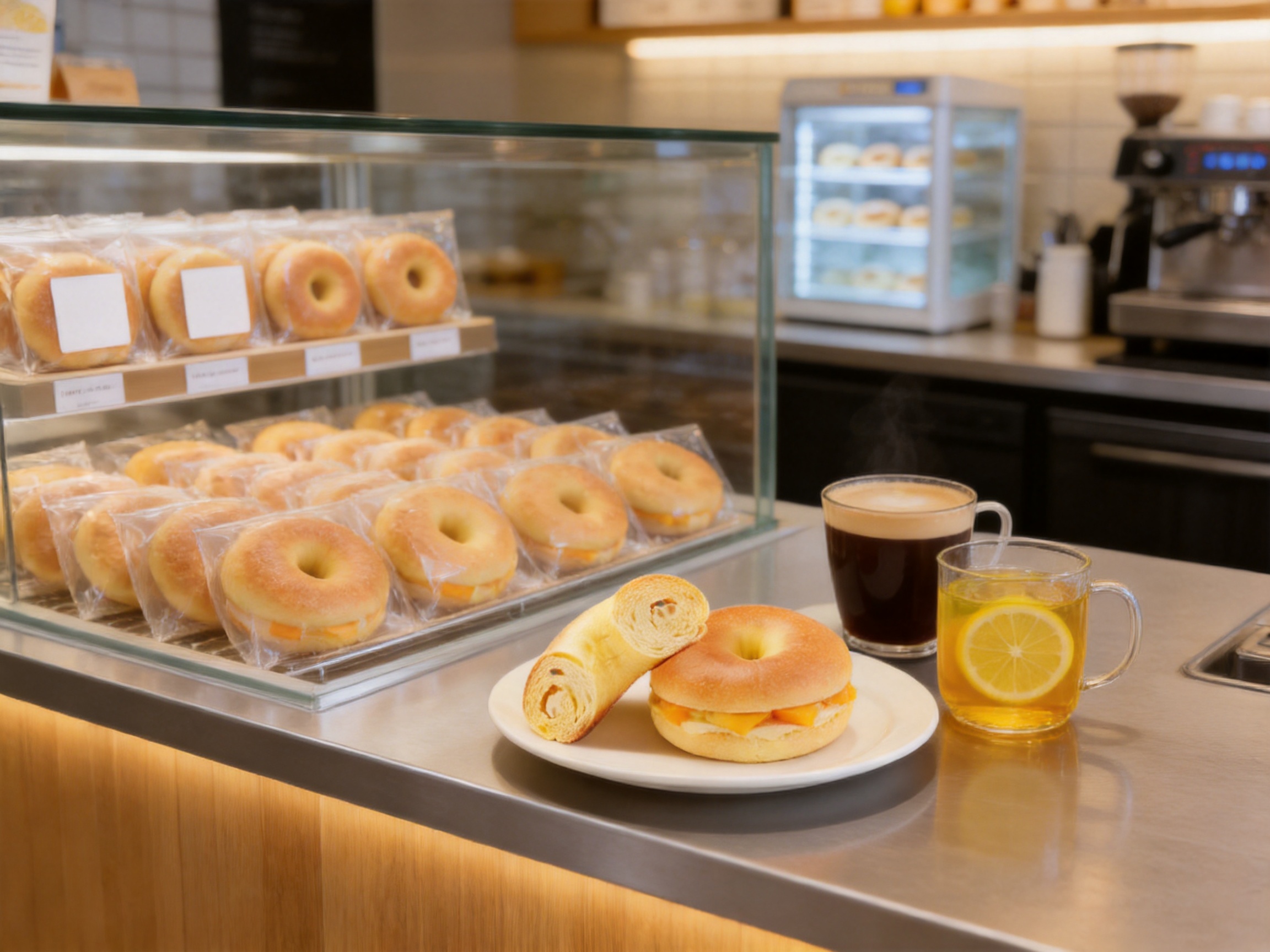
Bagels have evolved far beyond their traditional role as a simple breakfast bread. Today, they are used in cafés, bakery counters, hotel buffets, convenience retail, foodservice menus, tea shops, and branded frozen-food programs. Buyers increasingly look for products that combine recognizable quality with distinctive flavor, reliable preparation, and commercial flexibility. The Kumquat Lemon Butter-Cream Cheese Bagel responds to these expectations by bringing together a structured, chewy bagel base, a layered citrus filling, and a rich dairy cream component.
This product is designed for consumers who want more than a plain or heavily sweetened bakery item. Its profile is built around contrast: a firm yet tender fermented crumb against a smooth filling; lively citrus acidity against mellow dairy richness; and a refreshing finish against the satisfying density expected from a premium bagel. These contrasts give the product a clear identity in a crowded bakery market.
For wholesalers, café groups, retailers, bakery operators, and private-label buyers, the product also represents a commercially useful format. It can serve as a ready-to-prepare specialty bakery item, a seasonal citrus offering, or part of a wider frozen bagel assortment. Its clean flavor direction and distinctive filling make it suitable for customers who are seeking premium bakery experiences without excessive sweetness.
A Distinctive Product Concept Built Around Citrus and Dairy
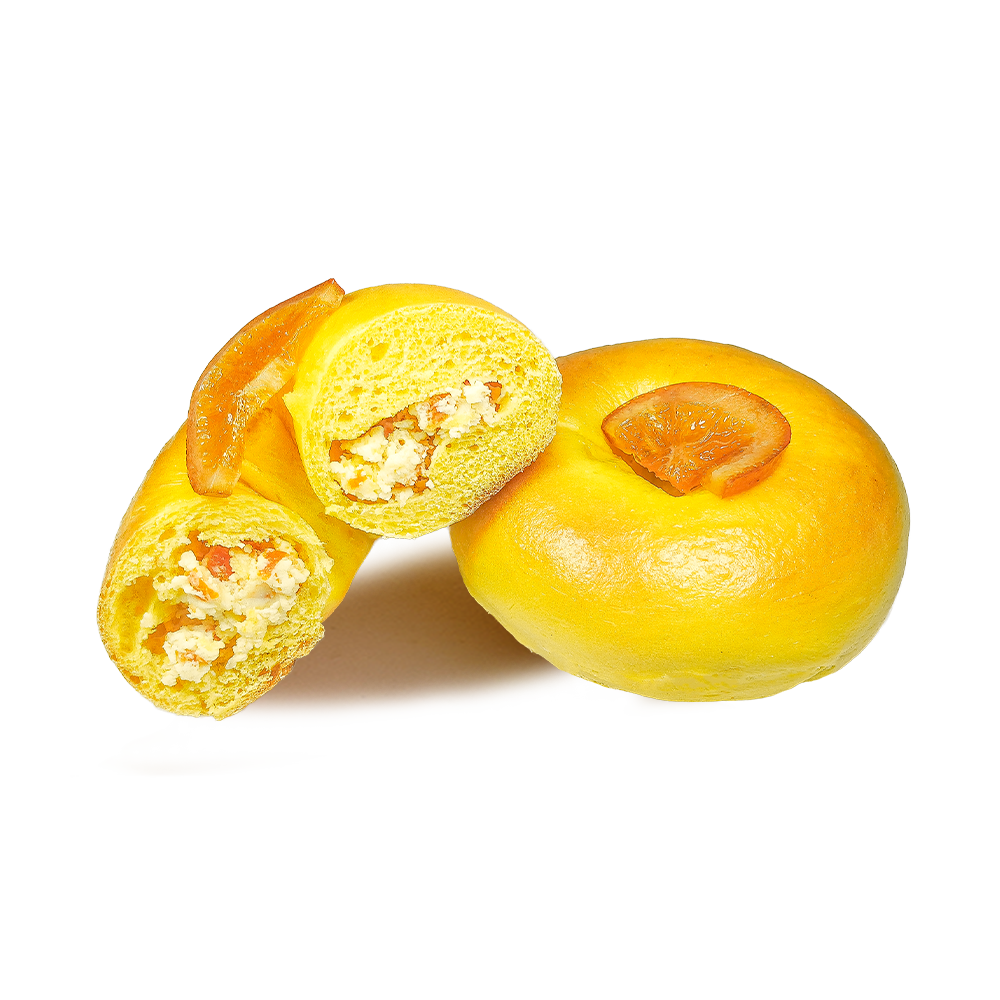
The Kumquat Lemon Butter-Cream Cheese Bagel is categorized as a fruit bagel, but its design is more sophisticated than a standard fruit-flavored bread. Rather than placing a single sweet fruit note into the dough, the product uses a layered approach. The formulation combines calamansi puree, diced lemon, Anchor cream cheese, and dairy butter. Together, these components create a profile that moves through acidity, citrus aroma, creamy richness, and a clean finish.
The product title highlights kumquat and lemon, while the supplied formulation emphasizes calamansi puree and diced lemon as the principal citrus elements. This combination supports a broad citrus character rather than a one-dimensional lemon taste. Calamansi contributes a bright and transparent acidity, while diced lemon adds peel-like bitterness, fruit texture, and a more recognizable citrus depth. The result is intended to taste fresh and lively rather than simply sweet and sour.
The cream component plays an important balancing role. Cream cheese contributes body, mild tang, and a smooth mouthfeel. Dairy butter adds warmth and fragrance, helping the filling feel rounded instead of sharply acidic. The citrus is therefore not covered by the dairy ingredients; it is framed and elevated by them. This balance is especially valuable in commercial bakery products, where excessive acidity can limit consumer appeal and excessive sweetness can create a heavy or tiring finish.
At 78 grams, the product offers a practical individual serving format. This size can support grab-and-go merchandising, café service, bundled meal offerings, retail multipacks, and portion-controlled foodservice applications. The format is substantial enough to feel satisfying while remaining convenient for customers who want a snack, breakfast item, or light meal component.
Why the Flavor Profile Stands Apart
Many flavored bagels rely on familiar inclusions such as raisins, blueberries, cinnamon, chocolate, or savory seasonings. These flavors have strong market recognition, but they can also make it difficult for a product to stand out. A citrus and cream cheese bagel offers a different route to differentiation. It combines the comfort of a bakery staple with the brightness of a fruit dessert and the richness of a dairy filling.
The product’s most important flavor advantage is its layered citrus construction. A single citrus flavor may become flat or overly sharp when used alone. In this product, the puree and diced fruit work in different ways. The puree distributes acidity and aroma throughout the filling, while the diced lemon contributes small textural and aromatic accents. The peel-like bitterness gives the profile greater complexity and helps prevent the sweetness from dominating.
The dairy ingredients provide a second layer of differentiation. Cream cheese is already associated with bagels, but the addition of pure dairy butter changes the character of the filling. The cream cheese brings familiar bagel-shop appeal, while the butter introduces a fuller, softer aroma. This creates a premium impression without requiring an excessively sweet formulation.
Compared with a conventional sweet bagel, the product offers a more refreshing finish. Compared with a plain cream cheese bagel, it delivers greater aroma, acidity, and visual interest. Compared with a fruit-filled pastry, it provides the chewy structure and portability associated with a bagel. These overlapping qualities allow it to occupy a flexible position between breakfast bread, snack bakery, and indulgent café product.
Flavor progression from first bite to finish
The first impression begins with the bagel’s wheat aroma and characteristic chew. As the filling becomes more prominent, the citrus note wakes up the palate. Calamansi-style acidity creates an immediate sense of brightness, while lemon pieces add a more developed fruit character. The cream cheese and butter then soften the sharp edges and extend the flavor. The finish remains clean, with enough dairy richness to feel satisfying but not so much sweetness that the product becomes cloying.
This progression is commercially important because it gives customers multiple sensory reasons to enjoy the product. Aroma creates anticipation, chew creates structure, citrus creates freshness, and dairy creates satisfaction. Products with several balanced sensory stages are more likely to be perceived as premium than products that deliver only sweetness.
The Bagel Foundation: Premium Flour and Japanese-Style Milling
The foundation of the product is its dough. A filled bagel cannot depend on its filling alone; the bread must provide enough structure to support the filling while retaining a pleasant texture after preparation. The supplied product description emphasizes premium flour and a Japanese-style milling approach. These choices are connected to the product’s fine-grained crumb, clean wheat aroma, and resilient chew.
Japanese-style milling is associated with careful attention to flour refinement and particle consistency. In practical product development, the purpose of such an approach is to create a dough with a more controlled texture and a smoother eating experience. A fine-grained crumb can make the bagel feel less coarse, while careful flour selection supports a clean cereal aroma that does not compete with the citrus and dairy filling.
The dough is described as firm yet tender. This distinction matters. A bagel should not resemble a soft, airy bun, because consumers expect a degree of resistance and chew. However, excessive toughness can make a filled product difficult to eat and can suppress the more delicate flavors inside. The target texture therefore needs to be resilient without becoming dry, dense, or tiring.
A well-structured crumb also helps the product perform across different serving situations. It can support warming or reheating while maintaining its identity as a bagel. It can be held for short periods in a café or display setting without immediately collapsing into a soft pastry texture. For foodservice buyers, this balance between chew and tenderness is a practical advantage because it improves the product’s versatility.
Texture as a competitive advantage
Texture is often one of the clearest ways for a premium bagel to distinguish itself from lower-cost alternatives. A basic mass-produced bread product may offer sweetness or strong flavor but lack the elastic bite associated with a well-made bagel. Conversely, an overly dense bagel may be authentic in structure but less approachable to consumers who prefer a tender eating experience.
The Kumquat Lemon Butter-Cream Cheese Bagel is positioned between these extremes. Its dough is intended to provide a satisfying bite while remaining accessible. The fine-grained structure supports the filling and gives the product a polished mouthfeel. This texture can reinforce the product’s premium positioning even before the customer evaluates the citrus and dairy notes.
For private-label buyers and foodservice operators, a consistent texture can also support repeat purchasing. When customers know what to expect from each serving, the item becomes easier to include in a regular menu rotation. Consistency is particularly important for chain cafés and multi-location retailers, where product performance needs to remain dependable across different preparation environments.

Kumquat Lemon Butter-Cream Cheese Bagel
Natural Yeast Fermentation and Flavor Development
The product description also highlights natural yeast fermentation. Fermentation is more than a technical step; it contributes to the sensory identity of the finished bagel. Time, yeast activity, and dough development influence aroma, crumb structure, and the overall impression of freshness. A properly managed fermentation process can help create a deeper wheat character and a more balanced texture.
Natural yeast fermentation is especially appropriate for a product that uses bright citrus and rich dairy ingredients. The dough should have enough character to remain present, but it should not be so strongly flavored that it overwhelms the filling. A clean fermented aroma provides a stable base for the fruit and cream components, allowing the product to taste composed rather than crowded.
The fermentation approach also supports the product’s claim of a fine-grained, chewy foundation. Fermentation affects the way the dough develops and holds its structure. When combined with premium flour and careful milling, it can produce a crumb that is resilient without feeling heavy. This is central to the eating experience because the filling needs a bread base that can hold its shape and deliver a clean bite.
From a manufacturing perspective, fermentation requires process discipline. Variations in flour, water, temperature, yeast activity, and timing can influence the final product. A modern frozen bakery producer must therefore coordinate formulation, production control, and distribution conditions to protect product consistency. The company’s integrated supply chain and experience in bagel research and manufacturing provide an organizational foundation for this type of control.
Balancing authenticity and modern convenience
Consumers often want traditional bakery qualities such as fermentation aroma and chewy texture, but commercial buyers also require convenience, repeatability, and supply reliability. A frozen bagel program can connect these two expectations. It allows foodservice and retail operators to offer a premium-style item without needing to build a complete bagel production line at every location.
This balance is one of the product’s strongest commercial propositions. The bagel is developed with attention to dough character and fermentation, while the finished format is suitable for a modern frozen bakery supply chain. Operators can focus on storage, preparation, merchandising, and service rather than managing all stages of dough production themselves.
Double-Citrus Layer: Calamansi Puree and Diced Lemon
The citrus filling is the defining feature of the product. Calamansi puree contributes a sharp but clean acidity, while diced lemon adds fruit texture and a subtle bitter note associated with citrus peel. This double-citrus structure gives the filling more depth than a basic lemon-flavored cream.
Calamansi is valued for its vivid aromatic character and energetic acidity. In a dairy-based filling, it can create a strong contrast that keeps the profile from feeling heavy. The citrus impression arrives quickly on the palate, making the product feel refreshing even though it contains cream cheese and butter.
Diced lemon serves a different purpose. Small fruit pieces can provide textural variation, and lemon’s natural peel character introduces a more complex aromatic layer. The slight bitterness is important because it gives the filling a more mature flavor direction. Without this element, a citrus filling may be perceived as simply sweet or candy-like.
The interaction between puree and diced fruit also improves the way the flavor develops over time. The puree creates a consistent background note, while the diced lemon creates intermittent accents. This can make each bite feel more interesting without relying on heavy decoration or a large amount of added sweetness.
Freshness without excessive sharpness
Acidity must be carefully managed in a filled bakery product. Too little acidity can make citrus flavor disappear beneath dairy richness. Too much acidity can create a harsh or sour impression. The product’s formulation addresses this issue by combining citrus with cream cheese and butter. The dairy ingredients soften the perception of acidity while preserving the sense of freshness.
This balance may be especially attractive to consumers who enjoy fruit-forward bakery items but do not want an aggressively sour product. The flavor remains lively, yet the cream component gives it a smoother finish. In menu language, the product can therefore be described as refreshing and indulgent at the same time.
Anchor Cream Cheese and Dairy Butter
The cream cheese filling is anchored by Anchor cream cheese, according to the supplied product information. Cream cheese is a natural partner for bagels, which means the product benefits from a familiar category association. Customers understand the combination immediately, but the citrus elements make it feel new and more contemporary.
Cream cheese contributes smoothness, mild tang, and body. Its flavor is sufficiently neutral to support fruit, while its texture creates a satisfying contrast with the chewy dough. It also helps connect the product to the established bagel-and-cream-cheese occasion, reducing the need for consumers to learn an entirely unfamiliar product concept.
Dairy butter adds a warmer aromatic note. It makes the filling feel more rounded and fragrant and helps extend the richness after the citrus has passed across the palate. This is a subtle but meaningful distinction. A filling based only on fruit and cream cheese may taste bright and clean, while the addition of butter gives the profile a more luxurious finish.
The filling is intended to elevate the citrus without dimming it. That balance is a key product advantage. The dairy component does not exist merely to add richness; it is used to shape the perception of the fruit. The citrus tastes clearer because the butter and cream cheese provide contrast, while the filling remains restrained enough to avoid becoming cloying.
Premium positioning without flavor overload
Premium bakery products are not necessarily those with the greatest number of ingredients or the strongest flavor intensity. They are often products in which each component has a clear role. In this bagel, the flour supports the crumb, fermentation supports the aroma, citrus creates brightness, cream cheese creates familiarity, and butter creates depth.
This role-based formulation gives the product a composed character. It avoids the common problem of competing flavors in which sweetness, fruit, and dairy all become equally dominant. Instead, the sensory hierarchy remains understandable: bagel first, citrus second, dairy richness in support.
Manufacturing Strengths Behind the Product
The product is developed by Jiangsu Goobagel Food Technology Co., Ltd., a modern frozen bakery producer based in Wuxi, Jiangsu Province, China. The company has specialized in bagel research and manufacturing since 2019. Its experience is focused specifically on bagel development rather than being a minor extension of an unrelated bakery business.
The company operates an integrated supply chain covering raw materials, research and development, production, and nationwide distribution. This structure allows product decisions to be coordinated across multiple stages. Ingredient selection can be connected to formulation work, formulation can be translated into production procedures, and finished goods can be supported through a distribution network.
For buyers, integration can reduce the complexity of supplier management. Instead of working with separate parties for product development, manufacturing, and distribution, customers can engage with a producer that has capabilities across the value chain. This is valuable when developing a customized or private-label product because communication between concept and production must be efficient.
The company has created more than 100 clean-label bagel varieties for retail, foodservice, café chains, tea brands, and bakery operators. This product-development experience indicates familiarity with different commercial requirements. Retail buyers may prioritize packaging and consumer appeal, café chains may prioritize preparation consistency, and foodservice operators may prioritize portioning and supply reliability. A broad product portfolio gives the manufacturer exposure to these varied needs.
Research and development capability
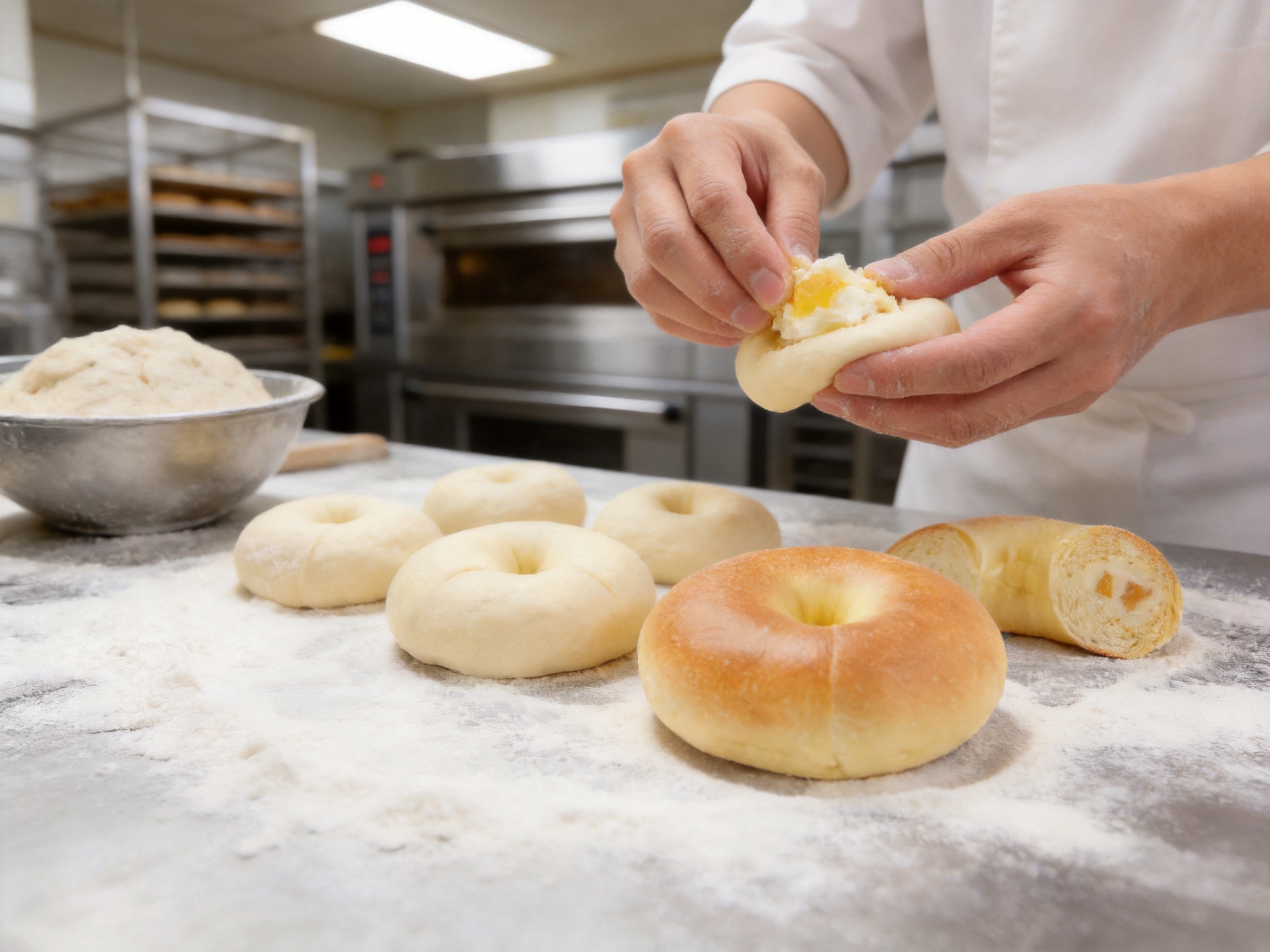
Bagel manufacturing requires more than reproducing a basic dough formula. Different fillings, inclusions, shapes, weights, and serving applications can alter dough behavior and product performance. A citrus-filled bagel, for example, requires attention to the relationship between the filling and the surrounding dough. The bread must support the filling, while the filling must retain its sensory identity within a fermented product.
A dedicated research and development function can help address these challenges through product trials, ingredient evaluation, process adjustment, and sensory review. The company’s focus on bagel research supports its ability to develop products with distinct flavor concepts rather than relying only on standard formulas.
Its portfolio of more than 100 varieties also suggests the ability to work across flavor categories. While the Kumquat Lemon Butter-Cream Cheese Bagel is fruit-forward and dairy-rich, the broader range can support customers seeking classic, savory, sweet, or specialty options. This creates opportunities for assortment planning and multi-SKU cooperation.
Consistency for commercial applications
Commercial buyers need more than an attractive sample. They need a product that can be supplied and prepared consistently. The company describes its products as offering stable quality, consistent performance, and reliable supply for a wide range of commercial applications.
Stable quality is relevant to the sensory experience: customers should receive a similar balance of chew, citrus, and creaminess from one purchase to the next. Consistent performance relates to how the bagel behaves during preparation, handling, and service. Reliable supply supports menu continuity and reduces the risk of frequent substitutions or availability gaps.
These factors can distinguish a specialist frozen bakery manufacturer from a small-scale producer that makes an appealing product but lacks the infrastructure for sustained commercial distribution. The difference becomes especially significant for chain accounts, national programs, and private-label projects.
Advantages Over Conventional Bagel Alternatives
The Kumquat Lemon Butter-Cream Cheese Bagel offers several advantages when compared with more conventional bagel products. These advantages are not based on a single feature; they come from the combination of dough quality, fermentation, filling architecture, flavor balance, and manufacturing support.
| Product dimension | Common conventional approach | Kumquat Lemon Butter-Cream Cheese Bagel advantage |
|---|---|---|
| Flavor direction | Single sweet, savory, or plain profile | Layered citrus, cream cheese, and butter profile with greater sensory development |
| Fruit character | One fruit flavor or artificial-tasting sweetness | Calamansi puree and diced lemon create acidity, aroma, texture, and citrus depth |
| Dairy component | Plain cream filling or no filling | Cream cheese and dairy butter provide smoothness, richness, and a warm finish |
| Dough texture | Soft bread texture or excessively dense chew | Fine-grained, resilient, chewy crumb designed to remain firm yet tender |
| Consumer occasion | Primarily breakfast or basic snack | Suitable for breakfast, café service, dessert-style snacking, and premium grab-and-go occasions |
| Commercial support | Limited product-development or supply capability | Supported by specialist bagel R&D, integrated production, and frozen bakery distribution |
Compared with a plain bagel, the product offers immediate differentiation through its filling. Compared with a sweet pastry, it provides a more substantial chewy base and a less dessert-heavy flavor direction. Compared with a standard fruit bread, it has a more recognizable bagel identity and a cream cheese association that consumers already understand.
Compared with highly sweetened filled bakery products, the restrained sweetness and citrus acidity may appeal to consumers who prefer balanced flavors. The product can be positioned as indulgent but not overwhelming, making it suitable for consumers who want a premium treat that remains refreshing.
Frozen Bakery Format and Commercial Flexibility
As a frozen bakery product, the bagel can support a range of commercial operating models. Frozen supply allows buyers to plan inventory, manage product availability, and prepare items closer to the point of sale. This can be useful for operators that want a specialty bagel without producing every component from scratch.
Frozen distribution is also compatible with multi-location businesses. A café group can use a common product across branches, while a retail buyer can incorporate the item into a frozen bakery assortment. The format supports a more standardized customer experience, provided that storage and preparation are managed according to the product’s required specifications.
The 78-gram portion creates additional flexibility. The bagel can be sold individually, included in a breakfast set, paired with coffee or tea, or placed in a multipack. It can also be used as part of a seasonal citrus promotion. The product’s flavor is distinctive enough to attract attention, while its bagel format remains familiar enough for everyday purchasing.
Applications for cafés and tea brands
Cafés can use the product as a premium counter item or a limited-time seasonal offering. Citrus flavors pair naturally with coffee, tea, sparkling beverages, and fruit-based drinks. The creamy filling also gives the product a satisfying role in breakfast and afternoon snack menus.
Tea brands may find the flavor especially compatible with beverages that emphasize freshness, fruit, or floral aroma. The citrus profile can echo lemon tea, fruit tea, and sparkling tea concepts, while the bagel format adds a more filling food component to the beverage occasion.
Applications for retail and foodservice
Retailers can position the product in frozen bakery, breakfast, specialty bread, or premium snack sections, depending on the assortment structure. Its distinctive name and filling concept can help create interest in a category where many products rely on familiar flavors.
Foodservice operators can use the bagel in buffets, staff dining, institutional breakfast programs, catered events, and prepared-food counters. Its individual size and specialty flavor may help add variety to a menu without requiring multiple preparation steps at the service location.
Applications for private label
Private-label buyers often seek products that can be differentiated through flavor and packaging rather than through price alone. This product offers a strong concept for a branded assortment because its combination of citrus and dairy is recognizable but not ordinary. Buyers may choose to position it as a premium breakfast bagel, a specialty seasonal item, or part of a broader clean-label-inspired bakery range.
The company’s experience in OEM and private-label bagel production can support conversations about product specifications, assortment planning, and commercial positioning. Any final private-label program would need to confirm packaging, labeling, storage, order quantities, and other requirements with the manufacturer.
Clean-Label-Oriented Product Development
The company describes its portfolio as including more than 100 clean-label bagel varieties. In today’s bakery market, clean-label positioning often refers to a desire for understandable ingredients, recognizable food qualities, and a product story that emphasizes craftsmanship and controlled formulation.
For this citrus bagel, the clean-label-oriented story is supported by recognizable sensory components: premium flour, natural yeast fermentation, citrus puree, diced lemon, cream cheese, and dairy butter. These ingredients help the product communicate a straightforward culinary idea. The product is not dependent on an overly complicated flavor architecture or a long list of novelty inclusions.
Clean-label expectations vary by market and customer. Buyers should verify the specific ingredient declaration, allergen information, claims, certifications, and regulatory documentation required for their target region. Nevertheless, the product’s emphasis on a carefully developed dough and clearly defined fruit and dairy elements can support a premium and transparent market narrative.
A Product Story for Premium Marketing
The Kumquat Lemon Butter-Cream Cheese Bagel has several strong storytelling points that can be used in sales materials, menus, and product presentations. The first is the contrast between a traditional chewy bagel base and a modern citrus filling. The second is the use of a double-citrus layer rather than a single fruit note. The third is the partnership between cream cheese and dairy butter, which creates richness without suppressing freshness.
A concise product message might emphasize a fine-grained chewy bagel, naturally fermented dough, bright citrus puree, diced lemon, and a silky cream cheese and butter filling. This description gives buyers and consumers a clear understanding of what makes the product different.
The product can also be presented through occasions. It is suitable for a bright morning start, a refined afternoon snack, a premium café pairing, or a seasonal citrus promotion. These occasions allow different buyers to interpret the product according to their own sales channels.
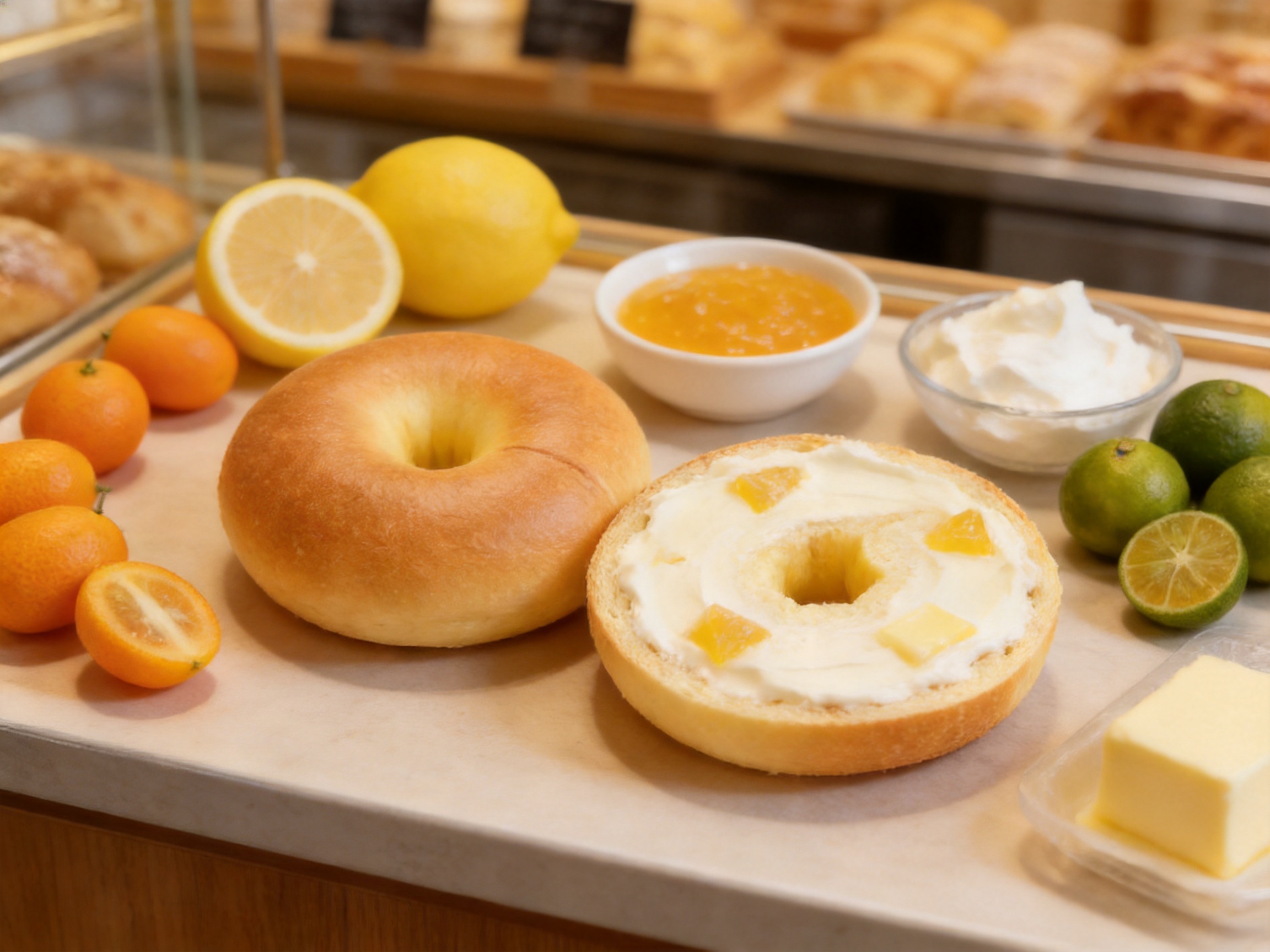
Visual merchandising can focus on the contrast between the golden-brown bagel exterior and the pale, creamy filling. Product photography and packaging can use citrus-inspired color cues, although the exact design would depend on the buyer’s brand guidelines. The key is to communicate freshness, richness, and specialty quality at the same time.
Quality and Supply Considerations for Buyers
When evaluating a frozen bagel supplier, buyers should assess more than the flavor sample. They should consider product specifications, ingredient documentation, allergen management, packaging format, storage conditions, minimum order quantities, lead times, delivery coverage, and the supplier’s ability to support future product development.
The manufacturer’s integrated supply chain is relevant because it connects raw materials, R&D, production, and distribution. This can help streamline discussions when a buyer needs adjustments to flavor, weight, packaging, or assortment. It may also support more efficient communication when scaling from a sample order to a larger commercial program.
Buyers should also evaluate how the bagel performs under their own operating conditions. Testing may include storage, thawing or heating procedures, display duration, handling, and pairing with beverages or other menu items. The product’s intended texture and filling balance should be confirmed within the buyer’s actual service environment.
Because the filling contains dairy ingredients, allergen and cold-chain requirements should be reviewed carefully. Product documentation should be obtained from the manufacturer before commercial launch. This is particularly important for international distribution, where labeling and food regulations may vary.
How the Product Can Support Assortment Strategy
A successful bakery assortment usually includes a balance of familiar and distinctive products. Familiar products create dependable volume, while innovative products generate trial and help refresh the range. The Kumquat Lemon Butter-Cream Cheese Bagel can occupy the innovation side of this balance without becoming inaccessible.
Its bagel format is familiar, its cream cheese component is recognizable, and its citrus flavor is easy to understand. The novelty comes from the specific combination and the layered execution. This makes it less risky than an entirely unfamiliar bakery format while still offering a reason for consumers to choose it over a plain or standard flavored bagel.
For a multi-SKU program, the product can serve as the fruit-forward member of an assortment that also includes classic, savory, chocolate, and vegetable-based varieties. This gives retailers and foodservice operators an opportunity to create a more complete bagel menu while maintaining a consistent product platform.
For seasonal programs, citrus can be associated with spring, summer, refreshing beverages, and lighter flavor trends. However, the dairy richness and chewy dough also allow the product to remain suitable for year-round sale. Its exact positioning can therefore be adapted to local consumer preferences and promotional calendars.
Q&A: Understanding the Kumquat Lemon Butter-Cream Cheese Bagel
What type of product is this?
It is a filled fruit bagel with a chewy fermented dough base and a citrus cream filling. The product combines calamansi puree, diced lemon, cream cheese, and dairy butter to create a bright but rounded flavor profile.
Why is the product associated with kumquat and lemon?
The product name communicates a layered citrus direction centered on kumquat and lemon. The supplied formulation specifically describes calamansi puree and diced lemon. Together, these citrus elements create a lively, nuanced profile with acidity, fruit aroma, peel-like bitterness, and textural variation.
Is the product very sweet?
The product is designed around balanced citrus and dairy richness rather than excessive sweetness. Its acidity helps keep the profile fresh, while cream cheese and butter soften the sharpness and provide a satisfying finish.
What makes the dough different from a standard bread product?
The dough is developed with premium flour, a Japanese-style milling approach, and natural yeast fermentation. It is intended to provide a fine-grained crumb, a clean wheat aroma, and a resilient chew that remains firm yet tender.
What role does the cream cheese play?
Cream cheese provides a familiar bagel pairing, smooth texture, mild tang, and body. It balances the citrus and helps connect the product to the traditional bagel-and-cream-cheese eating occasion.
Why is dairy butter included with the cream cheese?
Dairy butter adds warmth, fragrance, and a fuller sense of richness. It helps elevate the citrus while keeping the filling smooth and rounded rather than sharply sour or overly sweet.
Who can purchase or use this product?
The product is suitable for retail buyers, frozen bakery wholesalers, cafés, café chains, tea brands, foodservice operators, bakery businesses, and private-label programs. The appropriate sales format and specifications should be confirmed with the manufacturer.
Can it be used in a private-label range?
It can serve as a concept for an OEM or private-label bagel program. Buyers should discuss packaging, labeling, specifications, order requirements, and customization options directly with the manufacturer.
What is the product weight?
The supplied product information lists the product at 78 grams.
Is it a frozen bakery product?
The manufacturer is described as a modern frozen bakery producer, and the product is presented within its frozen bagel manufacturing business. Buyers should confirm the exact storage, handling, and preparation instructions for the intended commercial format.
Does the manufacturer offer other bagel flavors?
Yes. The company states that it has developed more than 100 clean-label bagel varieties for retail, foodservice, café chains, tea brands, and bakery operators.
What should buyers verify before placing a commercial order?
Buyers should verify the full ingredient list, allergen declaration, nutrition information, packaging, storage requirements, preparation method, minimum order quantity, lead time, delivery arrangements, certifications, and market-specific regulatory documentation.
Conclusion
The Kumquat Lemon Butter-Cream Cheese Bagel is a specialty bakery product built on contrast and balance. Its fine-grained, chewy dough provides the structure and authenticity expected from a premium bagel. Natural yeast fermentation supports a clean wheat aroma and a developed crumb. The citrus filling adds brightness through calamansi puree and diced lemon, while cream cheese and dairy butter contribute smoothness, warmth, and a restrained sense of indulgence.
Its advantages over conventional bagels come from the complete product architecture rather than from a single ingredient. It is more distinctive than a plain bagel, more substantial than a sweet pastry, and more layered than a basic fruit bread. The 78-gram format supports multiple sales occasions, including retail, cafés, tea brands, foodservice, and private-label programs.
The manufacturing foundation is equally important. Since 2019, Jiangsu Goobagel Food Technology Co., Ltd. has focused on bagel research and production, building an integrated supply chain that covers raw materials, R&D, manufacturing, and distribution. Its portfolio of more than 100 varieties and its emphasis on stable quality, consistent performance, and reliable supply position it as a capable partner for commercial bakery development.
For buyers seeking a product that combines familiar bagel culture with a modern fruit-forward flavor, this citrus cream cheese bagel offers a compelling option. It gives consumers a refreshing yet indulgent eating experience while giving commercial operators a product with clear differentiation, flexible positioning, and a strong foundation for premium bakery merchandising.
References
1. Product specification and sensory description supplied for the Kumquat Lemon Butter-Cream Cheese Bagel.
2. Company profile and manufacturing information supplied for Jiangsu Goobagel Food Technology Co., Ltd.
3. General principles of bread fermentation, dough structure, and bakery product development.
4. General commercial considerations for frozen bakery distribution, foodservice preparation, retail assortment planning, and private-label product development.
5. General sensory evaluation principles concerning the interaction of acidity, dairy richness, aroma, texture, and perceived sweetness in bakery products.
