
 中文简体
 English


postmaster@goobagelfood.com
Content
- 1 1. Product Overview and Market Positioning
- 2 2. The Flavor Architecture
- 3 3. Sensory Performance Across Serving Temperatures
- 4 4. Advantages Over Conventional and Competing Bagels
- 5 5. Manufacturing Strengths and Integrated Supply Capability
- 6 6. Frozen Bakery Advantages for Buyers
- 7 7. OEM and Private-Label Opportunities
- 8 8. Suggested Marketing and Merchandising Strategies
- 9 9. Quality, Documentation, and Buyer Considerations
- 10 10. Why Work with Jiangsu Goobagel Food Technology Co., Ltd.?
- 11 11. Frequently Asked Questions
- 11.1 Q1: What type of product is the New Zealand Cream Cheese Rose Cream Cheese Bagel?
- 11.2 Q2: Is the rose flavor very strong?
- 11.3 Q3: What is the main competitive advantage of this bagel?
- 11.4 Q4: How does the product change when served warm?
- 11.5 Q5: How does the product change when served chilled?
- 11.6 Q6: Which businesses can purchase this product?
- 11.7 Q7: Does the company offer other bagel products?
- 11.8 Q8: What manufacturing capabilities does Goobagel provide?
- 11.9 Q9: Can the product be used for a private-label brand?
- 11.10 Q10: What information should buyers request before ordering?
- 11.11 Q11: Is the product suitable for beverage pairing?
- 11.12 Q12: Why is a frozen format useful for commercial customers?
- 12 12. Conclusion
- 13 References
- 14 Product: New Zealand Cream Cheese Rose Cream Cheese Bagel
The bagel market continues to expand as consumers look for convenient foods that combine everyday practicality with distinctive flavor experiences. Classic plain bagels remain important, but retailers, cafés, tea shops, hotel breakfast programs, and foodservice operators increasingly need products that offer more than basic bread and cream cheese. They need products with a clear identity, dependable quality, flexible preparation, attractive positioning, and the ability to create a memorable eating occasion.
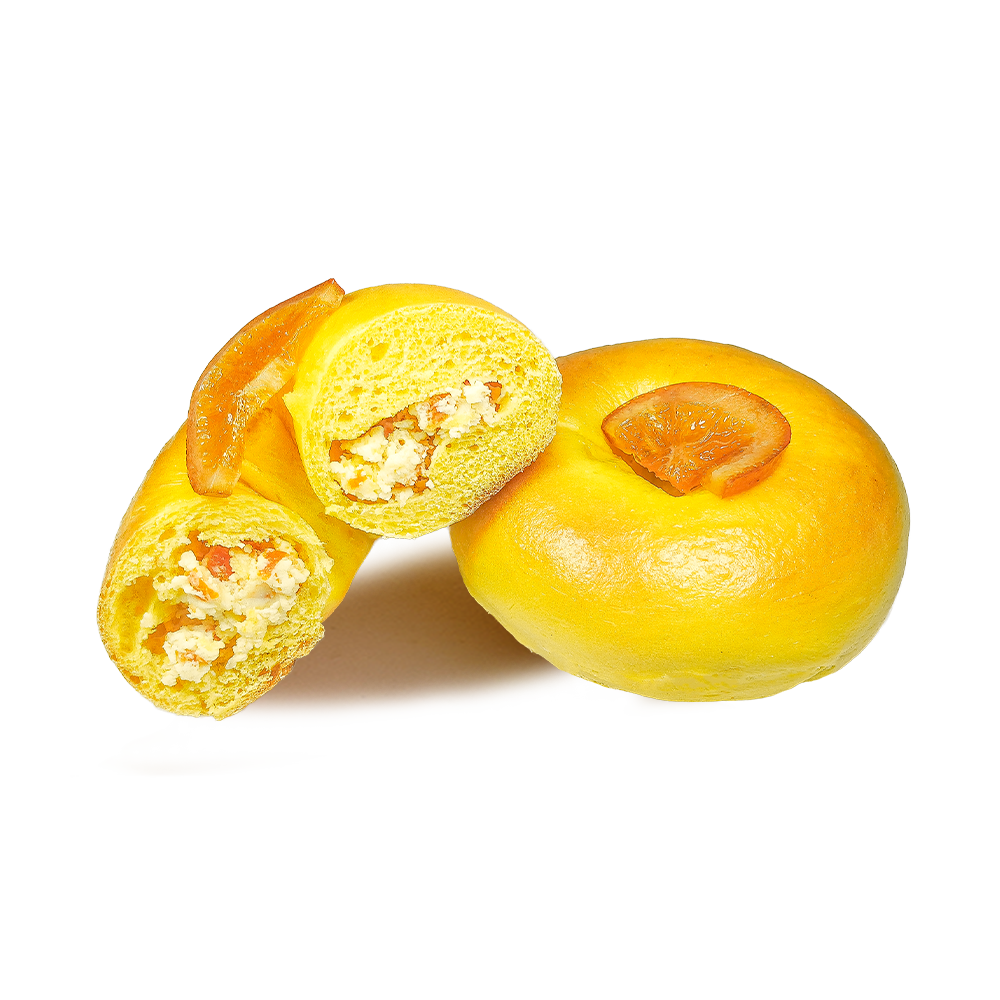
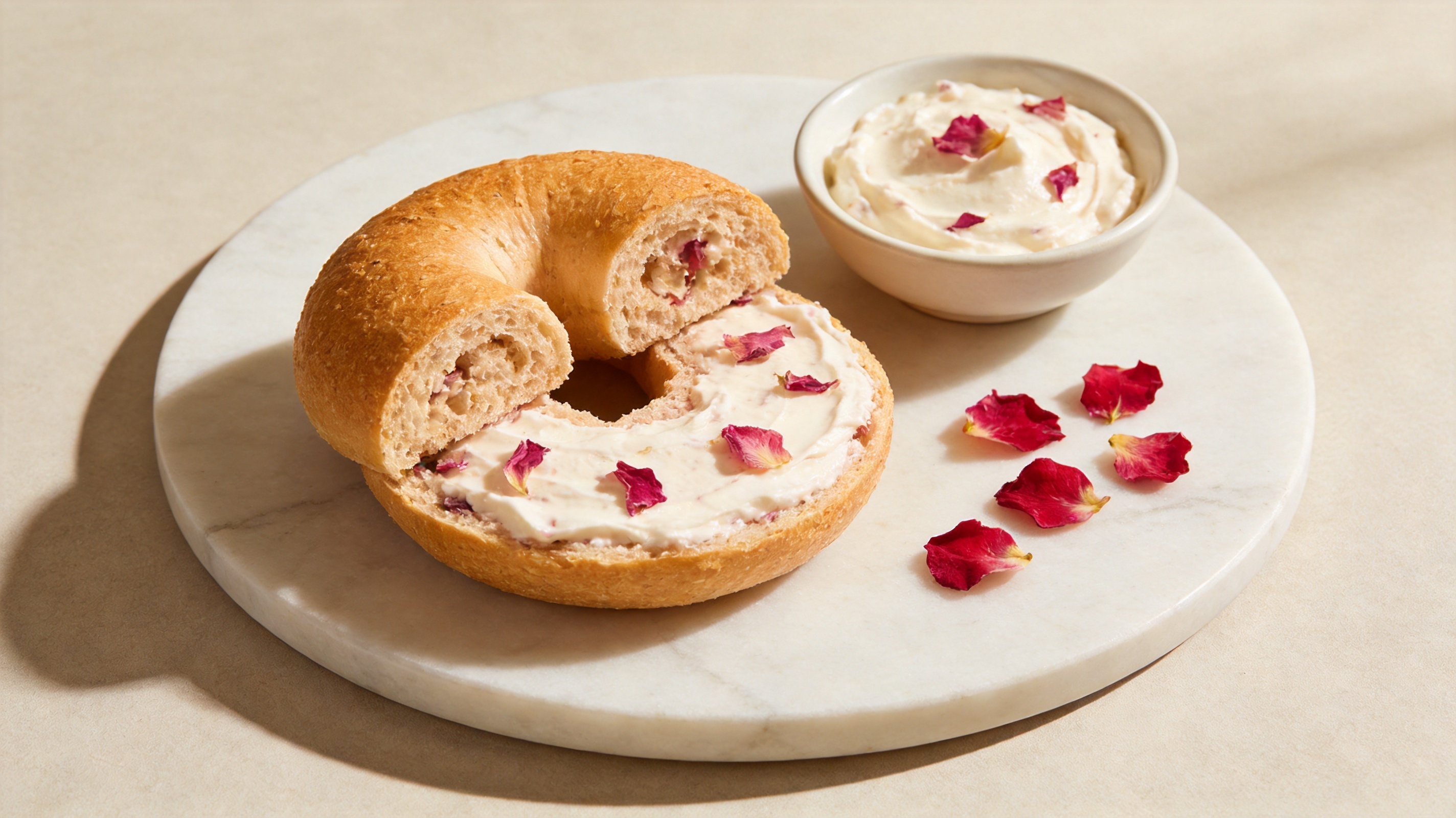
The New Zealand Cream Cheese Rose Cream Cheese Bagel responds to this demand with a refined combination of familiar dairy richness and delicate floral character. Weighing 100g, the product belongs to the cream cheese bagel category and can be positioned across several commercial applications, including breakfast menus, café displays, afternoon tea selections, retail freezer programs, and private-label bakery ranges. Its flavor concept is straightforward but distinctive: a soft, full-bodied New Zealand cream cheese foundation is combined with the elegant aroma of Yunnan double-petal red rose.
This combination gives the product an advantage in a crowded bagel market. It does not depend on excessive sweetness, intense perfume-like flavor, or complicated toppings to attract attention. Instead, it develops a balanced profile in which the creamy dairy base provides comfort and substance while the rose element contributes brightness, fragrance, and a gentle honey-like finish.
The product is manufactured by Jiangsu Goobagel Food Technology Co., Ltd., a Chinese frozen bakery producer specializing in bagel research, product development, manufacturing, and supply. Since 2019, the company has developed more than 100 clean-label bagel varieties for retail, foodservice, cafés, tea brands, and bakery operators. Its integrated business model supports product consistency, flexible development, and reliable commercial supply.

New Zealand Cream Cheese Rose Cream Cheese Bagel
1. Product Overview and Market Positioning
The New Zealand Cream Cheese Rose Cream Cheese Bagel is designed for customers who appreciate the recognizable appeal of a bagel but want a more sophisticated flavor direction. The product combines the chew and convenience associated with a bagel format with the smooth richness of cream cheese and the floral character of Yunnan roses.
At 100g, the bagel offers a practical single-serving format. It is substantial enough to function as a breakfast item or snack, while remaining convenient for café service, retail packaging, hotel breakfast buffets, and takeaway menus. The size also gives operators a consistent basis for portion control, pricing, inventory planning, and menu development.
The product may be used in several ways. It can be served as a finished cream cheese bagel, heated to enhance aroma and soften the dairy profile, or paired with beverages such as black coffee, a warm latte, or floral tea. It may also be incorporated into a more extensive menu concept, such as a premium breakfast set, afternoon tea combination, seasonal floral menu, or gift-oriented bakery assortment.
Unlike a heavily flavored dessert bread, this product is structured around ingredient balance. The cream cheese is not merely a filling or secondary accent. It forms the central dairy foundation of the product. The rose is introduced as a complementary layer that lifts the overall flavor and extends the finish without overwhelming the palate.
This positioning is especially relevant for operators seeking differentiated bakery products that remain approachable. Some consumers may be interested in floral flavors but hesitate to choose products that appear overly sweet or strongly perfumed. The rose cream cheese bagel offers a gentler entry point. It retains the familiar comfort of dairy and bread, then adds an aromatic detail that makes the product more distinctive.
1.1 A Product for Multiple Commercial Channels
The same bagel can support different sales channels without requiring a completely different product concept. In a café, it can be served warm with coffee. In a tea shop, it can accompany floral tea or a lightly sweet beverage. In a retail freezer, the product can be presented as a premium ready-to-prepare bakery item. In a hotel or restaurant, it can form part of a breakfast station or plated menu.
For private-label customers, the product can serve as a base for a differentiated bakery range. Packaging, naming, serving recommendations, and promotional language can be adapted to suit a retailer, café group, tea brand, or foodservice distributor while retaining the core product concept.
Its broad application is an important advantage over products that are designed only for one occasion. A plain bagel may lack uniqueness, while an intensely sweet pastry may be restricted to dessert or indulgence occasions. The rose cream cheese bagel occupies a flexible middle position: comforting enough for breakfast, refined enough for afternoon tea, and distinctive enough for promotional campaigns.
2. The Flavor Architecture
The product’s primary strength is its layered flavor structure. Each component performs a specific role, and the result is intended to develop progressively from the first bite through the finish.
2.1 New Zealand Cream Cheese as the Dairy Foundation
The flavor begins with a rich New Zealand cream cheese base. Its role is to provide smoothness, roundness, and a full-bodied dairy character. Instead of creating a sharp or aggressive cheese impression, the cream cheese is presented as soft and comforting.
This foundation is important because floral flavors require balance. Rose can become overly dominant if it is not supported by a substantial base. The cream cheese gives the product a stable center, allowing the floral component to appear elegant rather than artificial or excessive.
The dairy profile also contributes to the product’s familiarity. Consumers who may not regularly purchase floral bakery products can still recognize the creamy taste and soft texture associated with cream cheese. This makes the product easier to understand at the point of sale and easier to introduce through sampling or café recommendations.
From a menu-development perspective, the cream cheese base also creates pairing flexibility. It can work with coffee, tea, fruit, nuts, honey-inspired flavors, and other mild breakfast ingredients. Operators do not need to build an entirely new beverage program around the bagel. Existing drinks can be used to reinforce its flavor profile.
2.2 Yunnan Double-Petal Red Rose as a Floral Layer
The Yunnan double-petal red rose adds a second dimension to the product. Its purpose is not to dominate the cream cheese but to lift it. The floral element brings brightness and length to the flavor line, helping the product feel more refined and aromatic from the first bite to the final aftertaste.
The intended impression is closer to the scent of natural rose petals than to a strongly perfumed confection. This distinction is commercially valuable. A floral flavor that is too intense may limit repeat purchases, whereas a softer floral note can appeal to customers who want novelty without sacrificing comfort.
The rose character is described as having a subtle honey-like aftertaste. This creates a gentle bridge between the dairy richness and the floral aroma. The finish remains memorable, but it is not designed to become heavy or excessively sweet.
Yunnan’s association with flowers and tea also makes the ingredient particularly suitable for modern beverage and bakery pairings. The product can be introduced alongside floral tea, milk tea, coffee, or seasonal drinks with rose-inspired flavor cues. This makes it suitable for cross-category merchandising and collaborative menu campaigns.
2.3 A Balanced Relationship Between Cream and Rose
The most important feature of the flavor design is the relationship between the two main components. The cream cheese supplies depth, while the rose supplies lift. The cream cheese creates comfort, while the rose creates distinction. The dairy profile is rounded and substantial; the floral profile is lighter, brighter, and more aromatic.
This balance provides an advantage over competitors that rely on one-dimensional flavor strategies. A basic cheese bagel may offer familiarity but limited excitement. A heavily floral pastry may offer novelty but lack broad appeal. A very sweet filled bread may be attractive as an indulgence but less suitable for breakfast. The rose cream cheese bagel is intended to combine accessibility with a premium sensory identity.
| Product Feature | Consumer Benefit | Commercial Application |
|---|---|---|
| 100g serving format | Convenient portion for breakfast or snacking | Cafés, retail packs, hotels, and takeaway menus |
| New Zealand cream cheese base | Smooth, rich, and comforting dairy profile | Premium breakfast and bakery positioning |
| Yunnan double-petal red rose | Distinctive floral aroma with a gentle finish | Seasonal menus, tea pairings, and differentiated retail products |
| Balanced flavor intensity | Novel without becoming overly perfumed or sweet | Broader consumer appeal and repeat-purchase potential |
| Frozen bakery format | Supports inventory planning and convenient preparation | Foodservice, distribution, retail, and private-label supply |
| OEM and private-label suitability | Allows customers to build customized product ranges | Retail brands, café chains, tea brands, and distributors |
3. Sensory Performance Across Serving Temperatures
One of the product’s notable qualities is that its flavor changes according to serving temperature. This creates opportunities for operators to present the same product in multiple ways and to develop different consumption occasions around it.
3.1 Warm Serving with Coffee or Latte
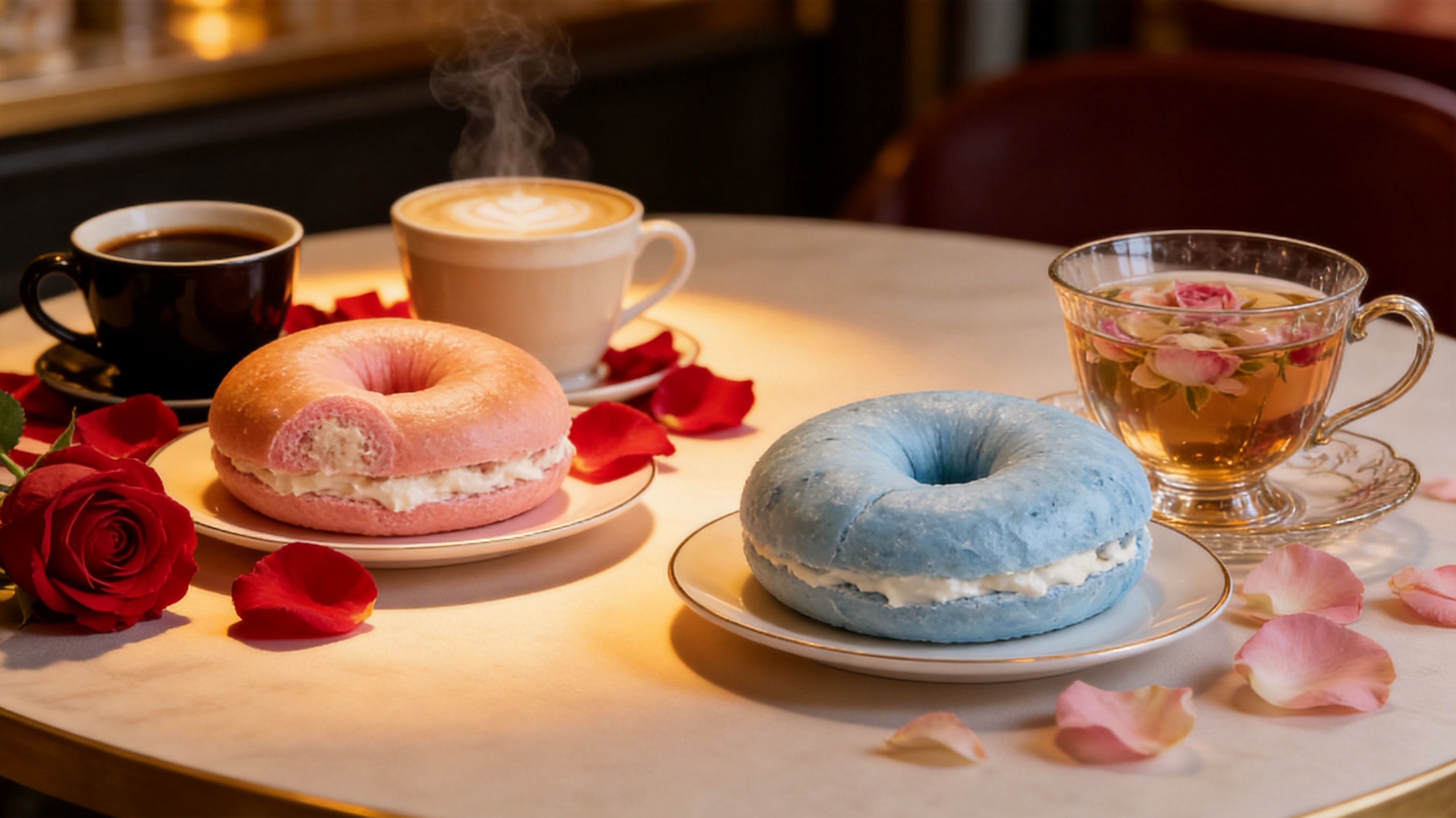
When served warm, the rose fragrance becomes more noticeable and expressive. Heat helps release aroma, allowing the floral notes to deepen and interact with the creamy dairy base. This makes the bagel a natural partner for black coffee, cappuccino, or a warm latte.
With black coffee, the rose can provide a bright contrast to roasted and bitter notes. The dairy richness softens the pairing and gives the consumer a rounded bite between sips. With a latte, the milk-based drink reinforces the cream cheese while the rose adds a fragrant top note, creating a layered café experience.
For foodservice operators, warm service can also improve the customer’s perception of freshness. A heated bagel releases aroma at the point of service and can support an appealing display or open-kitchen preparation process. Operators may use the product in breakfast combos, counter-service menus, or premium beverage pairings.
3.2 Chilled Serving with Floral Tea
When served chilled, the cream cheese firms up and the floral character becomes more delicate. The resulting experience is closer to a rose-infused dairy dessert, although the bagel format keeps it suitable for breakfast, snacking, and afternoon tea.
This temperature variation gives the product versatility. A café may serve it warm in the morning and chilled in an afternoon tea set. A retailer may recommend it as a ready-to-eat thawed product or provide preparation guidance for a softer, warmer texture. A tea brand may pair it with floral, lightly oxidized, or black tea selections.
The chilled presentation can also support seasonal merchandising. During spring or summer promotions, the rose identity can be connected with floral themes, elegant packaging, afternoon refreshments, and lighter snack occasions. During colder months, the warm version can be linked to coffee, breakfast, and comforting bakery consumption.
3.3 A Product with Multiple Sensory Touchpoints
The ability to change with temperature is more than a serving detail. It provides additional storytelling opportunities for sales teams and brand operators. Instead of presenting the product as having only one fixed taste, customers can be invited to explore how warmth changes aroma and how chilling changes texture and delicacy.
That type of sensory flexibility can be particularly useful for sampling. A distributor or retailer might offer small warm samples with coffee in one setting and chilled samples with tea in another. The underlying product remains consistent, but its presentation can be tailored to the audience and sales channel.
4. Advantages Over Conventional and Competing Bagels
The product competes not only with other cream cheese bagels but also with plain bagels, sweet pastries, filled breads, cookies, cakes, and other convenient bakery products. Its competitive advantages come from the combination of recognizable format, premium ingredients, distinctive flavor, and commercial flexibility.
4.1 More Distinctive Than a Plain Bagel
Plain bagels are versatile and widely accepted, but they often require toppings, spreads, or additional preparation to create a premium experience. The rose cream cheese bagel already contains a defined flavor concept. It can be served on its own or incorporated into a larger menu, reducing the need for complicated assembly.
This can help operators control labor and simplify service. A café can thaw or heat the product and serve it with a beverage. A retailer can sell it as a packaged specialty item. A hotel can include it in a breakfast assortment without requiring numerous additional ingredients.
4.2 More Balanced Than Heavily Sweet Bakery Products
Many premium bakery products depend on sugar, icing, chocolate, or rich fillings to communicate indulgence. While these products have a place in the market, they may not fit every breakfast or beverage occasion. The rose cream cheese bagel uses dairy richness and floral aroma to create interest without relying on an overtly sugary profile.
This makes it suitable for customers who prefer sophisticated, restrained flavors. It may appeal to consumers who want a treat that feels special but not excessively heavy, as well as to operators seeking products that can be served at different times of day.
4.3 More Approachable Than Strongly Floral Products
Floral bakery items can be memorable, but excessive rose intensity may reduce consumer acceptance. The product’s approach is to weave the rose into the cream cheese profile rather than allow it to dominate. This creates a more accessible floral experience for consumers who are curious about the flavor but may not choose a highly perfumed dessert.
4.4 More Flexible Than Single-Occasion Pastries
A cake or dessert may be primarily associated with celebrations or after-meal consumption. The rose cream cheese bagel has a broader use case. It can be a breakfast item, a snack, an afternoon tea component, a café side, or a retail bakery product. This flexibility can improve the number of potential sales occasions and help operators use one product across multiple menu periods.
4.5 More Suitable for Product Differentiation
In a crowded frozen bakery market, product differentiation is essential. A distinctive flavor combination gives distributors and private-label customers a clearer story to communicate. The product name, floral ingredient, dairy foundation, serving-temperature concept, and beverage pairing recommendations all provide usable marketing points.
The result is a product that can support premium positioning without requiring an overly complicated consumer explanation. The core message is easy to understand: a creamy bagel with the refined aroma of rose.
5. Manufacturing Strengths and Integrated Supply Capability
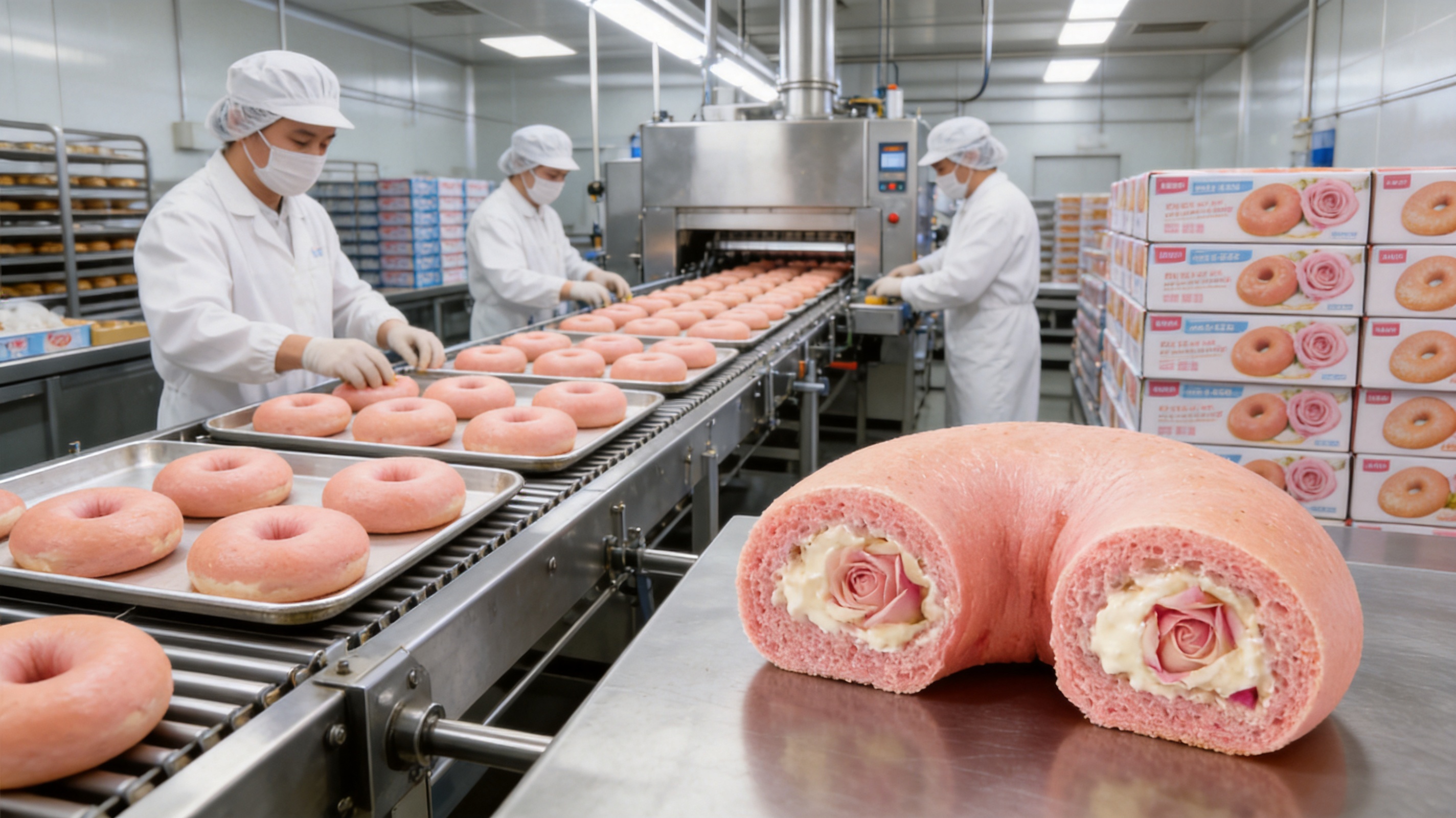
A successful specialty bagel requires more than an appealing flavor idea. Commercial customers also need stable production, repeatable quality, raw-material coordination, research and development support, and dependable distribution. Jiangsu Goobagel Food Technology Co., Ltd. has built its business around these requirements.
5.1 Experience in Bagel Research and Manufacturing
Goobagel Food has specialized in bagel research and manufacturing since 2019. This focused experience allows the company to concentrate on the technical and commercial requirements of the bagel category rather than treating bagels as a minor extension of a general bakery portfolio.
Specialization supports the development of different product types, including classic bagels, stuffed bagels, and bagel sandwiches. It also allows the company to address different customer needs, such as retail convenience, foodservice performance, café presentation, and private-label product differentiation.
5.2 An Integrated Supply Chain
The company operates a fully integrated supply chain covering raw materials, research and development, production, and nationwide distribution. This structure provides a coordinated framework for managing product development from concept to commercial delivery.
Raw-material integration is important for a product such as the rose cream cheese bagel because the flavor depends on the relationship between dairy and floral ingredients. Coordinated sourcing and development can help the production team evaluate the performance of the ingredients together rather than treating them as isolated components.
Research and development capability supports the creation of new flavors and formats. Production capability converts those concepts into repeatable products. Distribution capability helps customers receive supply through a practical commercial channel. The connection between these functions can reduce unnecessary delays and improve communication throughout the development process.
5.3 More Than 100 Clean-Label Bagel Varieties
Goobagel has created more than 100 clean-label bagel varieties for different commercial applications. This product-development depth demonstrates the company’s ability to work across flavor profiles, filling concepts, product formats, and customer requirements.
A broad product portfolio is valuable to buyers because it creates opportunities for assortment planning. A customer may begin with the rose cream cheese bagel and later develop a wider range that includes classic flavors, savory options, stuffed products, and sandwich formats. Working with one experienced supplier can simplify qualification, communication, packaging coordination, and supply management.
The term clean-label should always be evaluated according to the final formulation, market requirements, and applicable regulations. For commercial buyers, the important point is that the company develops products with attention to ingredient transparency and modern consumer expectations. Customers should confirm detailed ingredient declarations, allergen statements, nutrition information, and regulatory documentation for the specific product and destination market.
5.4 Stable Quality and Consistent Performance
Commercial bakery customers require consistency. A product must deliver a repeatable experience across batches, deliveries, stores, and service occasions. Goobagel emphasizes stable quality and consistent performance for retail, foodservice, café chains, tea brands, and bakery operators.
For the rose cream cheese bagel, consistency includes more than appearance. It includes the balance between cream cheese and rose, the texture of the bagel, the portion weight, the aroma after heating, and the product’s behavior during storage and preparation. These factors influence customer satisfaction and the operator’s ability to standardize menus.
Consistent performance also supports cost management. When a product is predictable, operators can plan preparation times, portion sizes, selling prices, and waste controls more effectively. This is especially important for café chains and distributors serving multiple locations.
5.5 National Distribution and Commercial Reach
The company’s nationwide distribution capability supports customers across a broad geographic market. For foodservice and retail buyers, distribution strength can be as important as product quality. A product concept has limited value if supply cannot be maintained after launch.
Reliable distribution helps customers build confidence when introducing a specialty item. It supports replenishment, regional expansion, and multi-location menu planning. It can also make the company a more practical partner for brands that need to scale from a trial program to a larger commercial rollout.
6. Frozen Bakery Advantages for Buyers
The frozen bakery format provides practical benefits for professional buyers. It allows operators to keep inventory available while managing demand across different days, locations, and sales periods. Instead of producing every item from scratch at each store, businesses can use a prepared product that supports more standardized operations.
6.1 Inventory Planning
Frozen products can help operators plan inventory around expected demand. Retailers may stock products in freezer sections, while cafés and restaurants may schedule deliveries according to projected sales. The 100g format also supports straightforward unit counting and stock control.
For seasonal products such as a rose-flavored bagel, frozen supply can reduce the pressure to manufacture large quantities immediately before a promotion. Buyers can plan a limited launch, evaluate consumer response, and adjust future orders according to demand.
6.2 Operational Convenience
A frozen bakery product can simplify preparation compared with fully scratch-made production. Operators may reduce the number of ingredients, utensils, and specialized labor required at the point of sale. This can be useful for cafés and foodservice sites that want to offer a distinctive bagel without establishing a complete bakery operation.
Preparation procedures should be confirmed with the supplier and adapted to the equipment and regulations of the destination market. Buyers should evaluate thawing, heating, holding, display, packaging, and food-safety requirements before commercial launch.
6.3 Consistent Customer Experience
Standardized frozen products can help multi-location businesses present the same flavor concept across different stores. This supports brand consistency and makes training easier. Staff can learn a defined preparation method, while customers can expect a similar product whether they visit one branch or another.
6.4 Reduced Menu Complexity
The rose cream cheese bagel provides a complete flavor concept, which can reduce the need for extensive topping combinations. Operators may serve it simply, pair it with a beverage, or add a small garnish according to their own menu strategy. This flexibility can help maintain a concise menu while still offering variety.
7. OEM and Private-Label Opportunities
The product is suitable for businesses that want to launch or expand a private-label frozen bakery range. OEM and private-label programs allow retailers, distributors, cafés, tea brands, and foodservice operators to create products aligned with their own commercial identity.
7.1 Retail Applications
Retailers can position the bagel as a premium freezer product, a floral-themed seasonal item, or part of a wider specialty bakery collection. Packaging may emphasize the combination of cream cheese and rose, the 100g serving size, and suggested serving occasions.
Retail buyers may also create a mixed assortment that combines the rose cream cheese bagel with classic and savory products. This approach allows consumers to choose between familiar and innovative flavors while encouraging trial of the specialty product.
7.2 Café Chain Applications
Café chains can use the product as a beverage companion or breakfast item. A warm rose cream cheese bagel paired with a latte can create a premium set, while a chilled version can accompany tea or a seasonal floral drink.
Because the product has a recognizable size and flavor identity, it can be incorporated into standardized menus. Operators can develop clear serving instructions, promotional photography, and staff recommendations without creating a complex preparation process.
7.3 Tea Brand Applications
The floral profile makes the bagel particularly relevant to tea brands. It can be presented with rose tea, black tea, milk tea, or other floral-inspired beverages. A tea brand may use the product in afternoon tea boxes, limited-edition gift sets, or co-branded food-and-beverage campaigns.
7.4 Foodservice and Hotel Applications
Hotels, restaurants, catering companies, and institutional foodservice operators can use the product in breakfast programs, snack stations, and buffet assortments. Its distinctive flavor can add variety to a bakery selection that might otherwise rely heavily on croissants, toast, muffins, and plain rolls.
For catering and hospitality buyers, the product’s portion format may support easier planning. It can be served individually, displayed in a basket, or included in a set meal. The final presentation should be adapted to the service environment and food-safety procedures of each operation.
7.5 Product Development Support
Goobagel’s research and development experience can support customers that require more than a standard catalog purchase. Buyers may seek changes to flavor balance, filling concepts, packaging format, portion specifications, or product assortment. Any customization would need to be evaluated according to technical feasibility, minimum order quantities, packaging requirements, lead times, and regulatory needs.
8. Suggested Marketing and Merchandising Strategies
The product’s marketing should communicate its balance rather than focusing only on its novelty. Consumers should understand that it is both approachable and distinctive: a creamy bagel with a delicate rose character.
8.1 Lead with the Ingredient Story
A simple ingredient-led message can be effective: rich New Zealand cream cheese forms the base, while Yunnan double-petal red rose adds a refined floral layer. This communicates quality and helps distinguish the product from generic flavored bakery items.
8.2 Promote Serving Temperature
Marketing materials can explain that the product develops differently when warm or chilled. Warm service highlights fragrance and works well with coffee. Chilled service firms the cream cheese and makes the floral profile more delicate, creating an afternoon tea or dessert-like experience.
8.3 Use Beverage Pairings
Pairing recommendations can make the product easier for consumers to try. Black coffee provides contrast, a latte reinforces the dairy character, and floral tea emphasizes the rose notes. Pairings also allow cafés and tea shops to increase average transaction value through set menus.
8.4 Build Seasonal Campaigns
Rose is naturally suitable for spring campaigns, floral promotions, afternoon tea events, gift boxes, and limited-time menus. However, the dairy and bread foundation also gives the product enough comfort for year-round use. Operators can change the campaign message by season while keeping the product available as a consistent menu item.
8.5 Encourage Sampling
Sampling is useful for products with a distinctive but approachable flavor. Small portions can demonstrate the balance between cream cheese and rose. Warm and chilled samples can show how temperature changes the sensory experience. Sampling can be especially effective in retail stores, café launches, trade events, and distributor presentations.
9. Quality, Documentation, and Buyer Considerations
Professional buyers should evaluate the product according to their own market requirements. Important considerations may include ingredient declarations, allergen information, nutritional labeling, storage conditions, shelf-life documentation, packaging specifications, preparation instructions, minimum order quantities, and delivery schedules.
Because the product contains cream cheese, dairy allergen management is an important part of commercial planning. Buyers should obtain the official specification and allergen statement for the intended product version. Importers and distributors should also confirm the documentation required by the destination market before placing a commercial order.
Packaging should protect the product during frozen storage and transportation while presenting the flavor concept clearly to the end consumer. For private-label projects, the buyer and manufacturer should coordinate artwork, case configuration, labeling language, product claims, and approval procedures.
Preparation performance should be tested in the actual equipment used by the customer. A product heated in a café oven, combi oven, bakery oven, or other foodservice appliance may present differently. Testing should evaluate texture, aroma, appearance, serving time, holding conditions, and customer acceptance.
These steps are not limitations of the product. They are normal requirements for responsible commercial bakery procurement. A qualified manufacturing partner can help customers organize the information and move from product selection to successful market launch.
10. Why Work with Jiangsu Goobagel Food Technology Co., Ltd.?
Jiangsu Goobagel Food Technology Co., Ltd. combines focused bagel experience with an integrated manufacturing and supply model. Its capabilities are relevant to customers that want to purchase a specialty product and to businesses that want to develop a broader bakery program.
The company’s experience since 2019 provides a foundation in bagel research and manufacturing. Its portfolio of more than 100 clean-label varieties demonstrates product-development breadth. Its supply chain covers raw materials, research and development, production, and distribution, supporting coordination from initial concept to commercial delivery.
Goobagel works with leading brands across China and provides solutions for retail, foodservice, café chains, tea brands, and bakery operators. This customer focus indicates an understanding that commercial buyers need more than a product sample. They need stable quality, consistent performance, reliable supply, and practical support for product development.
The company’s stated values—persistence, craftsmanship, respect, and science—also reflect the requirements of modern food manufacturing. Persistence supports continuous improvement. Craftsmanship supports attention to product quality. Respect supports cooperation with customers and partners. Science supports disciplined research, process control, and product development.
Its mission is to provide customers with high-quality and healthy products while providing partners with opportunities to realize their dreams. Its vision is to strive for a better life. These statements align with the broader purpose of developing bakery products that are convenient, appealing, and suitable for modern consumption habits.
11. Frequently Asked Questions
Q1: What type of product is the New Zealand Cream Cheese Rose Cream Cheese Bagel?
It is a 100g cream cheese bagel combining a smooth New Zealand cream cheese base with Yunnan double-petal red rose. It is suitable for breakfast, snacking, café service, afternoon tea, retail, and foodservice applications.
Q2: Is the rose flavor very strong?
The product is designed around a balanced floral profile rather than an overpowering perfume-like intensity. The rose is intended to add brightness, aroma, and a gentle honey-like aftertaste while allowing the creamy dairy base to remain prominent.
Q3: What is the main competitive advantage of this bagel?
Its main advantage is the combination of familiarity and differentiation. Consumers recognize the cream cheese and bagel format, while the rose creates a more distinctive premium experience. The flavor is also flexible enough for breakfast, coffee pairings, tea service, retail, and seasonal promotions.
Q4: How does the product change when served warm?
When served warm, the rose fragrance becomes deeper and more expressive. The warm version pairs particularly well with black coffee and lattes because heat enhances the aroma and allows the dairy and floral notes to develop together.
Q5: How does the product change when served chilled?
When chilled, the cream cheese firms up and the floral notes become more delicate. The result can resemble a rose-infused dairy dessert while retaining the convenient bagel format.
Q6: Which businesses can purchase this product?
The product can be considered by retailers, frozen food distributors, cafés, café chains, tea brands, hotels, restaurants, caterers, and bakery operators. It can also be developed for OEM and private-label programs, subject to commercial and technical requirements.
Q7: Does the company offer other bagel products?
Yes. Goobagel develops classic bagels, stuffed bagels, bagel sandwiches, and other specialty varieties. The company has created more than 100 clean-label bagel varieties for different retail and foodservice applications.
Q8: What manufacturing capabilities does Goobagel provide?
The company operates an integrated supply chain covering raw materials, research and development, production, and nationwide distribution. It specializes in bagel research and manufacturing and works with customers across several commercial channels.
Q9: Can the product be used for a private-label brand?
It may be suitable for private-label use. Buyers should discuss packaging, labeling, product specifications, order quantities, delivery schedules, and any desired customization directly with the manufacturer.
Q10: What information should buyers request before ordering?
Buyers should request the official product specification, ingredient declaration, allergen information, nutrition data, storage requirements, shelf-life information, packaging details, preparation guidance, minimum order quantity, and delivery terms applicable to their market.
Q11: Is the product suitable for beverage pairing?
Yes. Recommended pairings include black coffee, warm lattes, and floral teas. Beverage pairing is one of the product’s commercial strengths because the dairy and rose profile can be presented differently with roasted coffee, milk-based coffee, or tea.
Q12: Why is a frozen format useful for commercial customers?
A frozen format can support inventory planning, portion control, multi-location consistency, and convenient preparation. It may also help businesses introduce a specialty product without producing the bagel entirely from scratch at every store.
12. Conclusion
The New Zealand Cream Cheese Rose Cream Cheese Bagel is a differentiated frozen bakery product built around a clear and memorable flavor concept. Its 100g format is practical for individual consumption and commercial portioning. Its New Zealand cream cheese base provides a smooth, rich, and comforting foundation, while Yunnan double-petal red rose adds a bright floral layer and subtle honey-like finish.
The product offers advantages over plain bagels, heavily sweet pastries, and strongly perfumed floral bakery items. It is recognizable without being ordinary, distinctive without being difficult to understand, and flexible enough for warm breakfast service, chilled afternoon tea, café menus, retail programs, and private-label assortments.
Its commercial value is reinforced by the manufacturing strengths of Jiangsu Goobagel Food Technology Co., Ltd. Since 2019, the company has focused on bagel research and manufacturing, developed more than 100 clean-label varieties, and established an integrated supply chain covering raw materials, research and development, production, and distribution.
For buyers searching for a premium bagel with a differentiated sensory identity, the rose cream cheese concept offers a strong platform for product innovation. For operators, it can create new beverage pairings, seasonal campaigns, and multi-channel sales opportunities. For retailers and brands, it can become part of a broader private-label or specialty frozen bakery portfolio.
By combining a familiar bagel format with refined dairy richness and delicate floral aroma, this product demonstrates how focused ingredient development and modern frozen bakery manufacturing can create a more versatile experience for both consumers and commercial partners.
References
1. Jiangsu Goobagel Food Technology Co., Ltd. Product information for the New Zealand Cream Cheese Rose Cream Cheese Bagel.
2. Jiangsu Goobagel Food Technology Co., Ltd. Company information, manufacturing profile, and product-development overview.
3. General principles of bakery product development, sensory evaluation, ingredient pairing, and foodservice menu planning.
4. General considerations for frozen bakery procurement, storage, preparation, labeling, and commercial distribution.
5. General references on dairy-based flavor systems, floral ingredient applications, café beverage pairing, and retail bakery merchandising.
