
 中文简体
 English



postmaster@goobagelfood.com
Content
- 1 1. The Product Concept: Chocolate Indulgence in a Familiar Bagel Format
- 2 2. Cocoa Dough Built for Aroma and Softness
- 3 3. A Balanced Cream Cheese and Chocolate Filling
- 4 4. Thaw-and-Eat Convenience
- 5 5. Product Advantages Compared with Conventional Filled Bakery Products
- 6 6. Manufacturing Expertise Behind the Product
- 7 7. The Role of Process Control in Frozen Bagel Quality
- 8 8. Clean-Label Product Development and Commercial Flexibility
- 9 9. Applications Across Retail and Foodservice
- 10 10. Private-Label and OEM Potential
- 11 11. Why the Product Can Stand Out in a Competitive Market
- 12 12. Sensory Experience from First Bite to Finish
- 13 13. Quality and Supply Considerations for Buyers
- 14 14. Q&A: Common Questions About the Product
- 14.1 Q1: What is the Cocoa Chocolate Cream Cheese Bagel?
- 14.2 Q2: What makes the dough different from a traditional bagel?
- 14.3 Q3: Is the chocolate flavor only in the filling?
- 14.4 Q4: How does the cream cheese affect the flavor?
- 14.5 Q5: Does the product need to be heated?
- 14.6 Q6: What is the texture of the filling after thawing?
- 14.7 Q7: Who can use this product commercially?
- 14.8 Q8: Why is the 90-gram size useful?
- 14.9 Q9: What manufacturing experience supports the product?
- 14.10 Q10: Does the manufacturer offer other bagel varieties?
- 14.11 Q11: Is the product available for OEM or private-label cooperation?
- 14.12 Q12: What should buyers confirm before placing an order?
- 15 15. Conclusion
- 16 References
- 17 Product: Cocoa Chocolate Cream Cheese Bagel
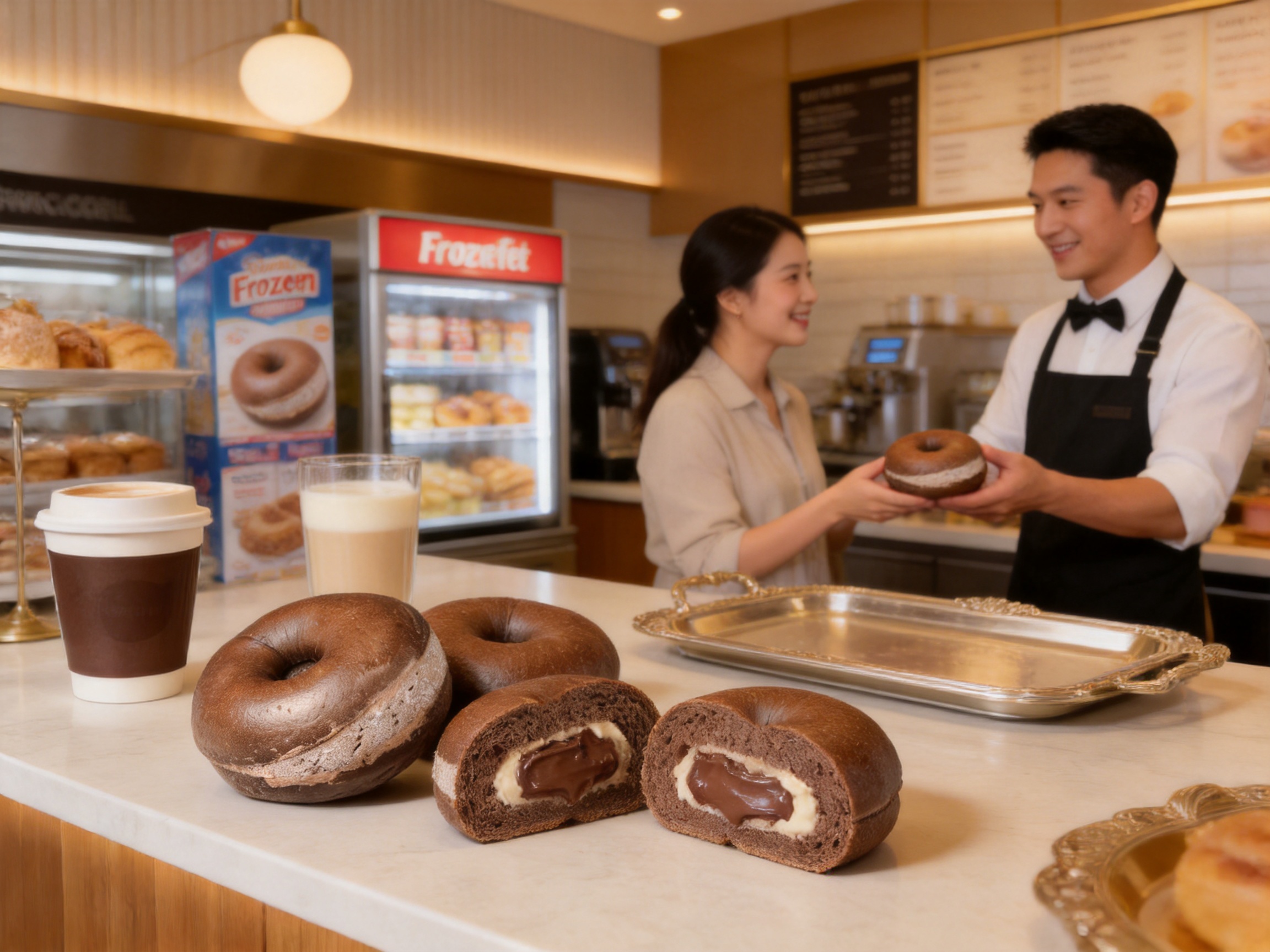
The Cocoa Chocolate Cream Cheese Bagel is a carefully developed 90-gram frozen bakery product designed for consumers who want a softer, more indulgent alternative to traditional bagels. It combines cocoa-infused dough, smooth cream cheese, and chocolate in a single portion-controlled product that can be thawed and enjoyed without reheating. The result is a convenient filled bagel with a layered flavor profile, a soft and fluffy texture, and broad potential for retail, café, foodservice, and private-label applications.
Unlike many conventional bagels that focus primarily on chewiness and a firm crust, this product is developed around softness, aroma, and filling performance. Malaysian-imported cocoa powder is kneaded directly into the dough, creating chocolate character throughout the base rather than relying only on an external coating or a sweet filling. Inside, Anchor cream cheese is blended with chocolate to create a balance between dairy richness, mild tang, cocoa depth, and comfortable sweetness.
The product also reflects a modern frozen bakery approach. It is designed to be stored in frozen form, thawed when needed, and served with minimal preparation. This model can help reduce preparation complexity for distributors, retailers, cafés, and foodservice operators. Because the product is portioned at 90 grams and is ready to eat after thawing, it can support consistent serving, straightforward inventory planning, and flexible menu development.
Behind the product is Jiangsu Goobagel Food Technology Co., Ltd., a Chinese frozen bakery manufacturer specializing in bagel research and production since 2019. The company operates an integrated supply chain that covers raw materials, research and development, manufacturing, and nationwide distribution. Its product development portfolio includes more than 100 bagel varieties intended for retail, foodservice, café chains, tea brands, and bakery operators.
1. The Product Concept: Chocolate Indulgence in a Familiar Bagel Format
The Cocoa Chocolate Cream Cheese Bagel brings together three familiar consumer preferences: chocolate flavor, cream cheese filling, and convenient handheld bakery formats. Each element is recognizable on its own, but the product is differentiated by the way these elements are combined.
Chocolate is incorporated into the dough instead of being used only as a topping or secondary filling. This creates a more complete sensory experience. Consumers encounter cocoa aroma as soon as the bagel is opened, and the chocolate character continues through the bread portion rather than appearing in only one concentrated center. This approach can make the flavor feel more integrated and less dependent on a high level of sugar.
Cream cheese contributes a smooth, buttery mouthfeel and a mild tang. Chocolate adds richness and depth, while the cocoa dough provides a warm, aromatic foundation. When these components are correctly balanced, the product avoids two common problems in sweet filled bakery products: excessive sweetness and a filling that feels disconnected from the bread.
The product is categorized as a cold sandwich bagel, reflecting its ready-to-eat positioning after thawing. This makes it suitable for occasions when consumers want a convenient snack or breakfast item without using an oven, toaster, or microwave. The product can be enjoyed directly once thawed, which is especially useful for retail grab-and-go, café service, office catering, and home consumption.
2. Cocoa Dough Built for Aroma and Softness
One of the product’s principal advantages is the use of Malaysian-imported cocoa powder in the dough. Premium wheat flour is kneaded together with cocoa powder so that the chocolate character becomes part of the base. This creates a more natural progression of flavor compared with products that use a plain bagel and rely exclusively on a sweet cream or chocolate center.
The cocoa contributes a deep, aromatic profile with warm roasted notes, gentle bitterness, and a clean chocolate finish. A small amount of pleasant bitterness is important in a product of this type because it helps prevent the overall experience from becoming flat or overly sugary. The result is a profile that can appeal not only to children and dessert-oriented consumers but also to adults who prefer more balanced chocolate flavors.
The dough is described as softer and fluffier than a dense, highly chewy bagel. This is a meaningful point of differentiation. Traditional bagels are often appreciated for their firm bite and dense crumb, but a dense structure is not always ideal for a filled chocolate product. A softer base allows the cream cheese filling to remain the center of attention while still providing enough structure for handheld consumption.
Texture plays a major role in consumer satisfaction. A product may have an appealing flavor but perform poorly if it is too dry, too tough, or difficult to bite. The Cocoa Chocolate Cream Cheese Bagel is developed to provide a more delicate bite, allowing the cocoa aroma to emerge gradually. Its fluffy texture also complements the soft filling, creating continuity between the outer dough and the interior cream.
The cocoa is not intended to overpower the product. Instead, it provides a foundational note that supports the cream cheese and chocolate filling. This layered design gives the bagel more complexity than a simple sweet bun, while maintaining the portability and recognizability of a bagel format.
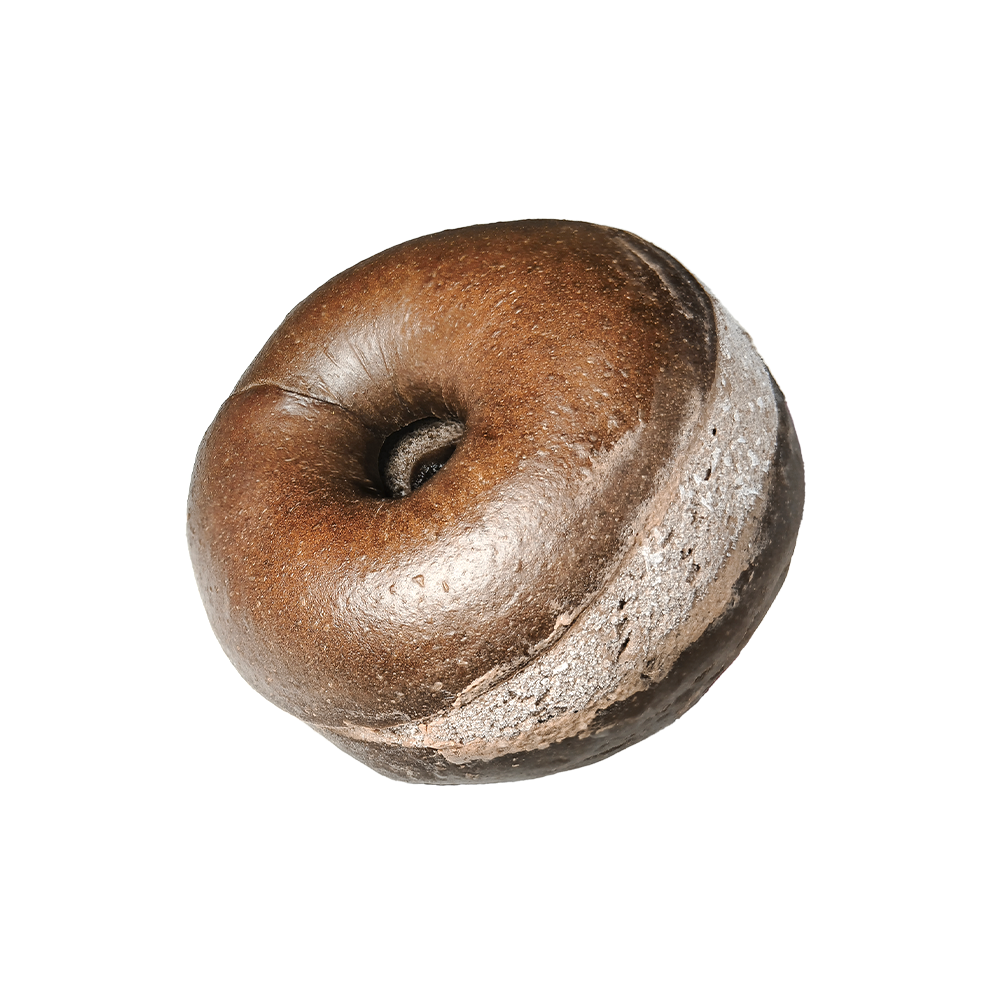
Cocoa Chocolate Cream Cheese Bagel
3. A Balanced Cream Cheese and Chocolate Filling
The interior filling combines Anchor cream cheese with chocolate in a carefully tuned ratio. The purpose of this balance is to ensure that the dairy and cocoa components complement one another instead of competing for attention.
Cream cheese brings a smooth and buttery richness, along with a subtle tang that appears toward the end of the bite. This tang is valuable in a sweet bakery product because it adds contrast and freshness. Without some acidity or tang, chocolate cream fillings can taste heavy. The cream cheese helps create a more rounded profile that remains enjoyable across multiple bites.
Chocolate contributes fullness, body, and depth. It reinforces the cocoa dough while adding a richer center. The combination is designed to feel creamy and indulgent without becoming aggressively sweet. This can make the bagel suitable for different consumption occasions, including breakfast, an afternoon snack, a dessert substitute, or a small personal treat.
The filling also contributes an important textural contrast. The outer bagel is soft and fluffy, while the thawed center becomes silky and delicate. This contrast gives the product a more premium sensory experience. Consumers can first notice the soft cocoa dough, followed by a smooth filling that melts quickly on the palate.
From a product development perspective, achieving this result requires more than simply adding chocolate to cream cheese. The ingredients must be balanced for flavor, texture, and frozen storage performance. The filling must remain stable during freezing, retain an appealing consistency after thawing, and pair with the dough without separating or becoming excessively firm.
The product’s filling concept is therefore both indulgent and practical. It offers a dessert-like experience while remaining easy to handle, portion, package, transport, and serve. For commercial buyers, this combination of sensory appeal and operational convenience can be especially valuable.
4. Thaw-and-Eat Convenience
The Cocoa Chocolate Cream Cheese Bagel is designed for a thaw-and-eat preparation model. After thawing, the product can be consumed without reheating. This is a key advantage for both consumers and commercial operators because it reduces the equipment and labor required before serving.
Many frozen bakery products require baking, toasting, or heating to deliver an acceptable eating experience. Such requirements can limit where and how products are sold. A thaw-and-eat bagel can be offered in more locations, including convenience retail, chilled displays, café counters, hotel breakfast areas, office pantries, and foodservice operations with limited kitchen capacity.
For consumers, the preparation process is simple. The product can be removed from frozen storage, thawed according to the operator’s handling procedure, and enjoyed when the filling reaches its intended soft consistency. The absence of a reheating requirement also helps preserve the delicate cream cheese and chocolate texture.
For retailers, thaw-and-eat positioning can simplify merchandising. Products may be prepared in controlled quantities based on expected demand, reducing the need for on-site baking. Staff can focus on stock rotation, presentation, and customer service rather than complex preparation steps.
For cafés and tea brands, the bagel can be used as a ready-to-serve food item alongside beverages. The cocoa and cream cheese flavor pairs naturally with coffee, milk tea, black tea, hot chocolate, and other drinks. It can be sold as an individual snack, included in a breakfast combination, or incorporated into a seasonal dessert menu.
The product also supports at-home convenience. Consumers increasingly value food formats that require minimal preparation and create less kitchen mess. A thaw-and-eat filled bagel responds to this demand while offering a more substantial eating experience than a small packaged dessert.
5. Product Advantages Compared with Conventional Filled Bakery Products
The Cocoa Chocolate Cream Cheese Bagel has several advantages when compared with ordinary sweet buns, plain bagels with spreads, and filled bakery products that depend on heavy sweetness.
First, the cocoa flavor is present in both the dough and the filling. A conventional plain bagel with chocolate spread may provide a strong center but little flavor in the bread. By contrast, this product creates continuity from the exterior to the interior. The consumer experiences cocoa aroma in the dough, chocolate depth in the filling, and cream cheese richness in the finish.
Second, the product offers a more balanced sweetness profile. The slight bitterness of cocoa and the tang of cream cheese create contrast. This may make the item more suitable for everyday eating than products that are designed solely as highly sweet desserts.
Third, the texture is intentionally softer and fluffier than a dense traditional bagel. This makes the product more approachable for consumers who enjoy the shape and portability of a bagel but do not prefer a very chewy or compact bite.
Fourth, the product is portioned at 90 grams. A defined portion can make pricing, packaging, nutritional planning, and inventory management more straightforward. It can also provide consumers with a satisfying yet clearly measured snack or breakfast serving.
Fifth, the thaw-and-eat format expands potential points of sale. The product does not depend on ovens or specialized preparation equipment, giving buyers more flexibility in how they distribute and serve it.
Finally, the bagel is suitable for customization through private-label packaging and channel-specific positioning. A retailer may present it as a premium frozen breakfast item, while a café may market it as a cocoa cream cheese snack. The core product can therefore support multiple commercial narratives without requiring a completely different manufacturing platform.
| Product Feature | Consumer Benefit | Commercial Benefit |
|---|---|---|
| Cocoa kneaded into the dough | Integrated chocolate aroma and flavor | Clear differentiation from plain filled bagels |
| Chocolate and cream cheese filling | Rich, smooth, layered taste | Premium positioning for retail and foodservice |
| Soft and fluffy texture | Gentler bite than dense traditional bagels | Broader consumer appeal |
| 90-gram portion | Convenient individual serving | Simple packaging and portion management |
| Thaw-and-eat preparation | No reheating required | Lower preparation complexity and wider sales channels |
| Frozen format | Availability beyond immediate bakery production | Improved distribution and inventory flexibility |
6. Manufacturing Expertise Behind the Product
The product is manufactured by Jiangsu Goobagel Food Technology Co., Ltd., a company that has specialized in bagel research and manufacturing since 2019. Its business model is focused on frozen bakery production, with bagels as a central area of expertise.
The company operates a fully integrated supply chain covering raw materials, research and development, production, and nationwide distribution. This type of integration can support better coordination between product design and manufacturing execution. When the same organization manages formulation, production planning, and distribution, it can respond more efficiently to customer requirements and product performance feedback.
For a specialized product such as a filled cocoa bagel, integration is particularly important. The company must coordinate flour and cocoa selection, dough mixing, filling preparation, forming, freezing, storage, and delivery. Each stage affects the final consumer experience. A change in dough hydration, filling ratio, freezing conditions, or handling procedure can influence softness, aroma, and filling texture.
Research and development is another important strength. The company has developed more than 100 clean-label bagel varieties for different commercial sectors. This breadth suggests experience with multiple flavor profiles, ingredient combinations, product formats, and market requirements. It also creates a foundation for developing customized products for different buyers.
A broad product portfolio can help a manufacturer understand how different ingredients perform in bagel systems. Cocoa, cream cheese, fruit, grains, savory fillings, and other components may require different formulation approaches. Experience across a wide range of products can support more effective development of new products and adaptations.
The company’s stated values include persistence, craftsmanship, respect, and science. These values are relevant to frozen bakery manufacturing because success depends on repeatable processes rather than one-time product creation. A product must be produced consistently across batches, transported reliably, and delivered with a stable eating experience.
The manufacturer also works with leading brands across China, supporting product development and commercial growth. This indicates experience in business-to-business collaboration, where buyers may require specific specifications, packaging arrangements, delivery plans, and private-label support.
7. The Role of Process Control in Frozen Bagel Quality
Frozen bakery quality depends on process control at every stage. The product must be formulated not only to taste good immediately after production but also to remain suitable after freezing, storage, distribution, thawing, and consumption.
Ingredient consistency is the first stage. Wheat flour must provide the appropriate structure for a soft bagel dough, while cocoa powder must contribute color and aroma without making the dough excessively dry or fragile. Cream cheese and chocolate must be combined in a way that produces a smooth filling with reliable performance under frozen conditions.
Dough mixing is also critical. The cocoa must be distributed evenly through the dough so that the product has a consistent appearance and flavor. Uneven mixing could create pale areas, concentrated cocoa pockets, or variation in aroma from one bite to another. A controlled mixing process helps create a stable base for subsequent forming and filling operations.
Filling placement requires precision. The filling must be distributed in a way that provides a satisfying center while maintaining the structural integrity of the dough. Too much filling may lead to leakage or difficulty during handling, while too little may reduce the premium eating experience. A suitable filling ratio helps achieve a balanced relationship between bread and cream.
Freezing is essential to the product’s commercial model. The frozen format must preserve the dough and filling until the product reaches the customer or point of sale. The product’s thaw-and-eat design places additional importance on texture recovery. The filling should become soft and creamy after thawing, while the dough should remain pleasant to bite.
Packaging and distribution also influence final quality. Products must be protected from physical damage and handled according to appropriate frozen bakery procedures. Maintaining stable storage and transport conditions helps reduce quality variation and supports reliable customer satisfaction.
Because Goobagel manages raw materials, R&D, production, and distribution within an integrated system, the company is positioned to coordinate these process requirements. This integrated structure can also help identify the source of any quality issue more quickly, whether it relates to ingredients, formulation, production, storage, or handling.
8. Clean-Label Product Development and Commercial Flexibility
The company describes its product portfolio as including more than 100 clean-label bagel varieties. Clean-label expectations vary by market and customer, but the general direction reflects demand for recognizable ingredients, clear product identity, and formulations that are easy for buyers to understand and communicate.
For a cocoa cream cheese product, clean-label development can support a more transparent consumer message. The product’s main components are easy to identify: wheat flour, cocoa, cream cheese, and chocolate. The flavor is created through a recognizable combination rather than an overly complicated concept.
Commercial buyers may also value clean-label positioning because it can support premium packaging, specialty retail placement, and modern café menus. A product that communicates its core ingredients clearly may be easier to introduce to consumers who are attentive to ingredient lists and product descriptions.
At the same time, frozen bakery manufacturing requires technical accuracy. Clean-label positioning must be supported by suitable production methods and stable formulations. The product still needs to maintain structure, flavor, texture, and storage performance. This is where research and manufacturing expertise become important.
Goobagel’s wide range of products can support customization for different markets. Buyers may request changes in packaging, serving size, flavor intensity, filling profile, or sales channel positioning. A manufacturer with experience across multiple bagel varieties may be better prepared to evaluate such requests and transform them into practical product specifications.
9. Applications Across Retail and Foodservice
The Cocoa Chocolate Cream Cheese Bagel can serve multiple commercial applications because it combines a familiar format with a distinctive flavor. In retail, it can be sold as a frozen individual bakery item or included in a multipack. Its 90-gram size is suitable for portion-based packaging and clear price communication.
In supermarkets, the product can be positioned in the frozen bakery section, alongside other ready-to-thaw breakfast products and snack items. Packaging can emphasize cocoa dough, cream cheese filling, chocolate flavor, and the convenience of preparation after thawing.
Convenience stores may use the product as a ready-to-eat or ready-to-thaw item, depending on their operating model. Its handheld format can appeal to commuters, students, office workers, and shoppers seeking a quick snack. The product can also be combined with coffee or other beverages to create a simple meal occasion.
Café chains can serve the bagel as a signature food pairing. Chocolate and cream cheese are naturally compatible with coffee-based beverages, while the product’s soft texture can distinguish it from harder toasted bakery items. It may be served whole, cut in half, or included in a set menu.
Tea brands and beverage shops can use the product to expand beyond drinks. The cocoa profile can pair with milk tea, fruit tea, roasted tea, or specialty beverages. A filled bagel can increase average order value while giving customers a more substantial food option.
Hotels, offices, schools, and catering operators may also benefit from the product’s portion control and simple preparation. The bagel can be used in breakfast assortments, snack boxes, meeting refreshments, or employee dining programs, subject to each operator’s storage and food-handling procedures.
Bakery operators can use the product as a ready-made component in a broader display. It can be offered alongside plain, savory, fruit, or other specialty bagels. This gives the bakery a way to expand flavor variety without developing every filled product from the beginning.
10. Private-Label and OEM Potential
The product is suitable for OEM and private-label cooperation because the manufacturer has experience serving commercial brands and developing a broad portfolio of bagel varieties. Private-label buyers can use the product as a foundation for a branded frozen bakery line.
A private-label program may involve packaging design, product naming, market-specific claims, case configuration, and distribution planning. The underlying product can be adapted to suit a retailer’s positioning while retaining its main sensory advantages: cocoa dough, cream cheese and chocolate filling, soft texture, and thaw-and-eat convenience.
For a buyer, working with an experienced manufacturer can reduce the development burden. Instead of building a complete bagel production system, the buyer can collaborate with an established producer that already understands the relevant dough, filling, freezing, and distribution requirements.
OEM cooperation can also support product line expansion. A customer may begin with the Cocoa Chocolate Cream Cheese Bagel and later introduce additional flavors, such as fruit-filled, savory, cheese-based, or grain-oriented varieties. A broad manufacturing platform makes it easier to build a coherent product family.
Private-label success depends on more than flavor. The manufacturer and buyer must align on specifications, packaging, storage, transportation, labeling, delivery schedules, and target markets. Goobagel’s integrated approach and experience with retail, foodservice, café chains, tea brands, and bakery operators provide a foundation for these discussions.
Because the product is already designed around a clear commercial proposition, it can be introduced with a focused marketing message. The buyer can emphasize cocoa aroma, creamy filling, soft texture, and simple preparation while adapting the visual identity to its own brand platform.
11. Why the Product Can Stand Out in a Competitive Market
The frozen bakery market includes many familiar products, so differentiation is essential. The Cocoa Chocolate Cream Cheese Bagel stands out through the combination of flavor architecture, texture, convenience, and manufacturing capability.
Its flavor architecture is more complete than a product that uses chocolate only as a topping. Cocoa is integrated into the dough, while the center combines cream cheese and chocolate. This creates multiple sensory layers and gives the product a stronger identity.
Its texture is also distinctive. Consumers who want a bagel experience may not always want a firm and chewy product. The softer and fluffier structure provides a more approachable eating experience, especially when combined with a delicate filling.
The product’s convenience supports modern consumption patterns. Thaw-and-eat preparation is suitable for busy households, retail operators, and foodservice environments that need flexible service with limited labor.
The 90-gram portion supports consistent presentation and commercial control. It is substantial enough to function as a snack or light breakfast while remaining easy to package and handle.
Finally, the manufacturer brings specialized bagel knowledge rather than general bakery production alone. Since the company has focused on bagel research and manufacturing since 2019, its development process is centered on the structure, texture, filling, and distribution requirements of bagel products.

12. Sensory Experience from First Bite to Finish
The consumer experience begins with the appearance and aroma of the product. The cocoa dough communicates its flavor visually, while the chocolate aroma creates anticipation. After thawing, the bagel is intended to feel soft rather than rigid or overly compact.
The first bite brings together the cocoa dough and cream cheese chocolate filling. The outer portion provides gentle structure and a warm cocoa note, while the filling adds creaminess and richness. As the product is chewed, the chocolate character becomes fuller, but the cream cheese contributes balance and a mild tang.
The finish is designed to be smooth and rounded. The product does not depend on intense sweetness to create satisfaction. Instead, it uses cocoa aroma, dairy richness, chocolate depth, and texture contrast to create a more complete experience.
The filling’s ice-cream-like softness after thawing is an important part of the product identity. This quality can create a sense of surprise for consumers who expect a conventional bread-based filling. The silky center makes the bagel feel more indulgent and dessert-like while preserving the convenience of a handheld bakery item.
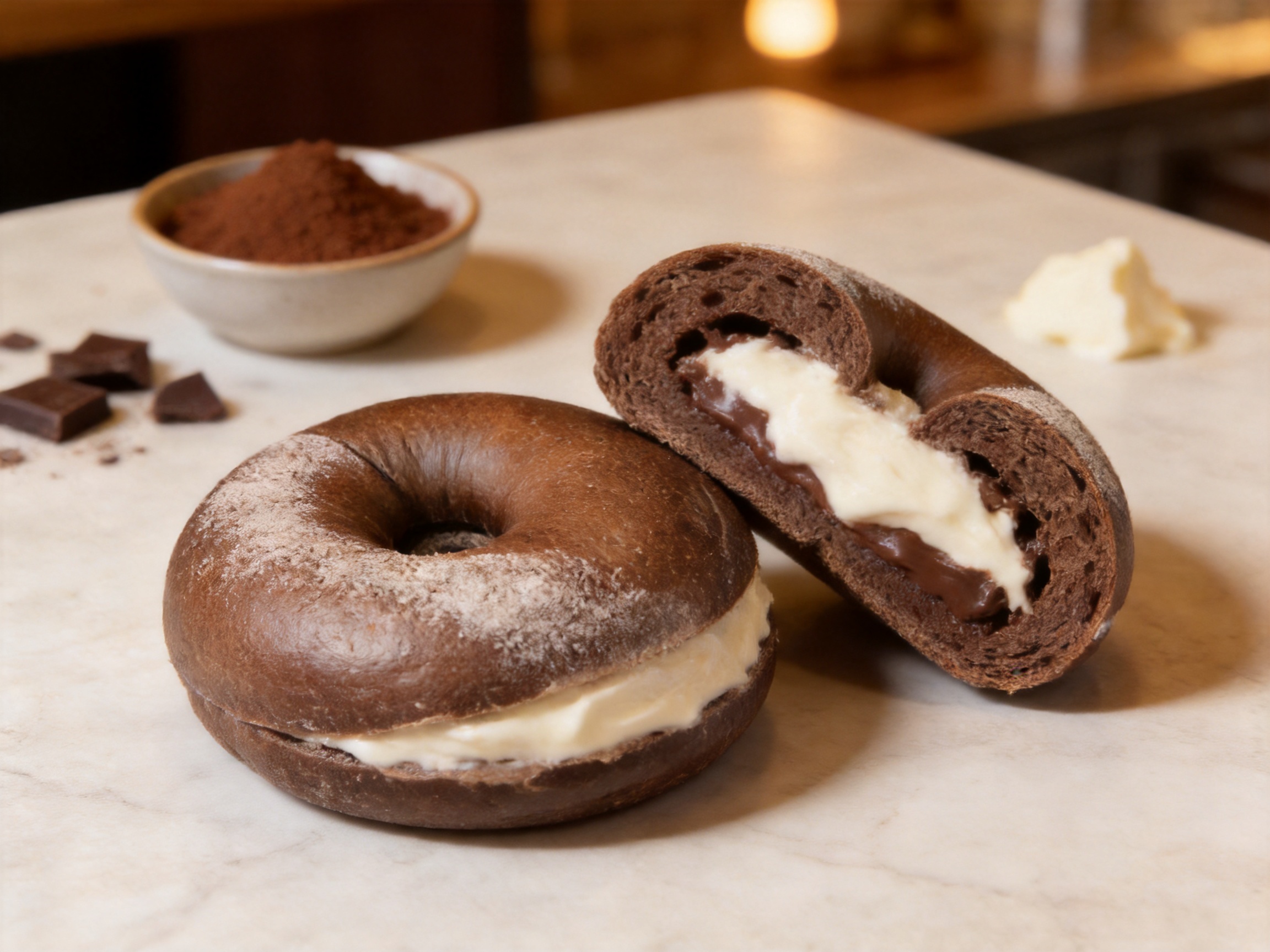
For product sampling, the bagel can be served as a chilled or room-temperature snack according to the operator’s handling procedure. Cutting it in half may help customers see the filling and understand the product concept before purchase. In a café setting, the visual contrast between cocoa dough and pale cream filling can also support attractive menu presentation.
13. Quality and Supply Considerations for Buyers
Commercial buyers evaluating a frozen bagel supplier generally consider more than taste. They also review consistency, supply capability, product development support, packaging, logistics, and communication. The company’s integrated business model addresses several of these priorities.
A stable raw material supply can support consistency in flavor and texture. Coordinating raw materials with production planning helps reduce unexpected variation and supports more reliable delivery schedules.
Research and development capability is valuable when a customer requires a new flavor, modified filling, different portion, or market-specific concept. The experience of developing more than 100 varieties can provide useful reference points for formulation and commercialization.
Production capability matters because retail and foodservice customers need repeatable performance. A product must maintain its intended characteristics across multiple production batches, not only during initial sampling.
Distribution knowledge is also important for frozen products. The manufacturer’s nationwide distribution experience indicates familiarity with the coordination required to move frozen bakery goods through commercial channels. For international buyers, specific export requirements would need to be discussed separately, including documentation, labeling, packaging, and destination-market regulations.
Communication between manufacturer and buyer should cover product specifications, storage conditions, thawing procedures, shelf-life expectations, order quantities, packaging formats, and delivery plans. Clear technical information helps ensure that the product performs as intended after leaving the factory.
14. Q&A: Common Questions About the Product
Q1: What is the Cocoa Chocolate Cream Cheese Bagel?
It is a 90-gram filled bagel made with cocoa-infused dough and a filling that combines cream cheese with chocolate. It is positioned as a cold sandwich bagel and is designed to be enjoyed after thawing without reheating.
Q2: What makes the dough different from a traditional bagel?
The dough contains Malaysian-imported cocoa powder kneaded directly into the wheat flour. It is developed to be softer and fluffier than a dense, highly chewy traditional bagel, allowing the cocoa aroma and filling to stand out.
Q3: Is the chocolate flavor only in the filling?
No. Cocoa is incorporated into the dough, and chocolate is also included in the cream cheese filling. This creates chocolate character throughout the product rather than concentrating it in one location.
Q4: How does the cream cheese affect the flavor?
The cream cheese provides smooth dairy richness and a subtle tang. These qualities balance the chocolate and cocoa, helping the product taste rounded rather than excessively sweet or heavy.
Q5: Does the product need to be heated?
The product is designed for thaw-and-eat consumption, so reheating is not required. The filling is intended to become soft and silky after thawing.
Q6: What is the texture of the filling after thawing?
After thawing, the filling is described as almost ice-cream-like, with a delicate and melting texture. This creates contrast with the soft cocoa bagel base.
Q7: Who can use this product commercially?
The product is suitable for supermarkets, convenience retailers, cafés, tea brands, foodservice operators, bakery businesses, hotels, catering companies, and private-label buyers.
Q8: Why is the 90-gram size useful?
A 90-gram portion provides a consistent individual serving. It can simplify packaging, pricing, menu planning, inventory control, and portion management for commercial operators.
Q9: What manufacturing experience supports the product?
Jiangsu Goobagel Food Technology Co., Ltd. has specialized in bagel research and manufacturing since 2019. The company operates an integrated supply chain covering raw materials, R&D, production, and distribution.
Q10: Does the manufacturer offer other bagel varieties?
Yes. The company has developed more than 100 bagel varieties for retail, foodservice, café chains, tea brands, and bakery operators. This portfolio supports product development and customization discussions.
Q11: Is the product available for OEM or private-label cooperation?
The company’s stated business scope includes OEM and private-label bagel support. Buyers can discuss product specifications, packaging, branding, order requirements, and market applications with the manufacturer.
Q12: What should buyers confirm before placing an order?
Buyers should confirm product specifications, packaging format, minimum order requirements, storage and thawing procedures, shelf-life information, labeling, delivery arrangements, and any destination-market compliance requirements.
15. Conclusion
The Cocoa Chocolate Cream Cheese Bagel is a differentiated frozen bakery product built around a clear and appealing concept: cocoa-infused dough, a balanced cream cheese and chocolate filling, a soft and fluffy bite, and convenient thaw-and-eat preparation.
Its advantages over conventional bagels and ordinary filled buns come from the integration of flavor and texture. Cocoa is present in the dough rather than being limited to the center. Cream cheese adds dairy richness and tang, while chocolate contributes depth. The filling becomes smooth and delicate after thawing, creating a dessert-like experience within a portable bagel format.
For commercial buyers, the product offers more than sensory appeal. Its 90-gram portion supports consistent serving and packaging. Its frozen format supports distribution and inventory planning. Its no-reheat preparation model can reduce operational complexity. Its flavor profile is suitable for retail, cafés, beverage brands, foodservice, and private-label programs.
The product is supported by a manufacturer focused on bagel research and production since 2019. Through integrated supply chain management, R&D capabilities, a portfolio of more than 100 varieties, and experience serving multiple commercial sectors, the company provides a practical foundation for both standard product supply and customized development.
As consumers continue to seek convenient foods that feel indulgent but remain suitable for everyday occasions, the Cocoa Chocolate Cream Cheese Bagel offers a strong combination of familiarity and novelty. It retains the recognizable format of a bagel while delivering the aroma, creaminess, and softness associated with a premium chocolate bakery dessert.
References
1. Product specification and description for the Cocoa Chocolate Cream Cheese Bagel, including product weight, category, ingredients concept, texture, and thaw-and-eat positioning.
2. Company information for Jiangsu Goobagel Food Technology Co., Ltd., including manufacturing history, integrated supply chain, product development portfolio, business sectors, vision, mission, and values.
3. General principles of frozen bakery product development, including formulation, filling stability, freezing, storage, thawing, packaging, and distribution considerations.
4. General bakery sensory evaluation principles concerning aroma, flavor balance, sweetness, acidity, mouthfeel, texture contrast, and consumer acceptance.
5. General foodservice and retail product development practices relating to portion control, ready-to-serve formats, OEM cooperation, private-label programs, and channel-specific merchandising.
