
 中文简体
中文简体
 English





postmaster@goobagelfood.com
Content
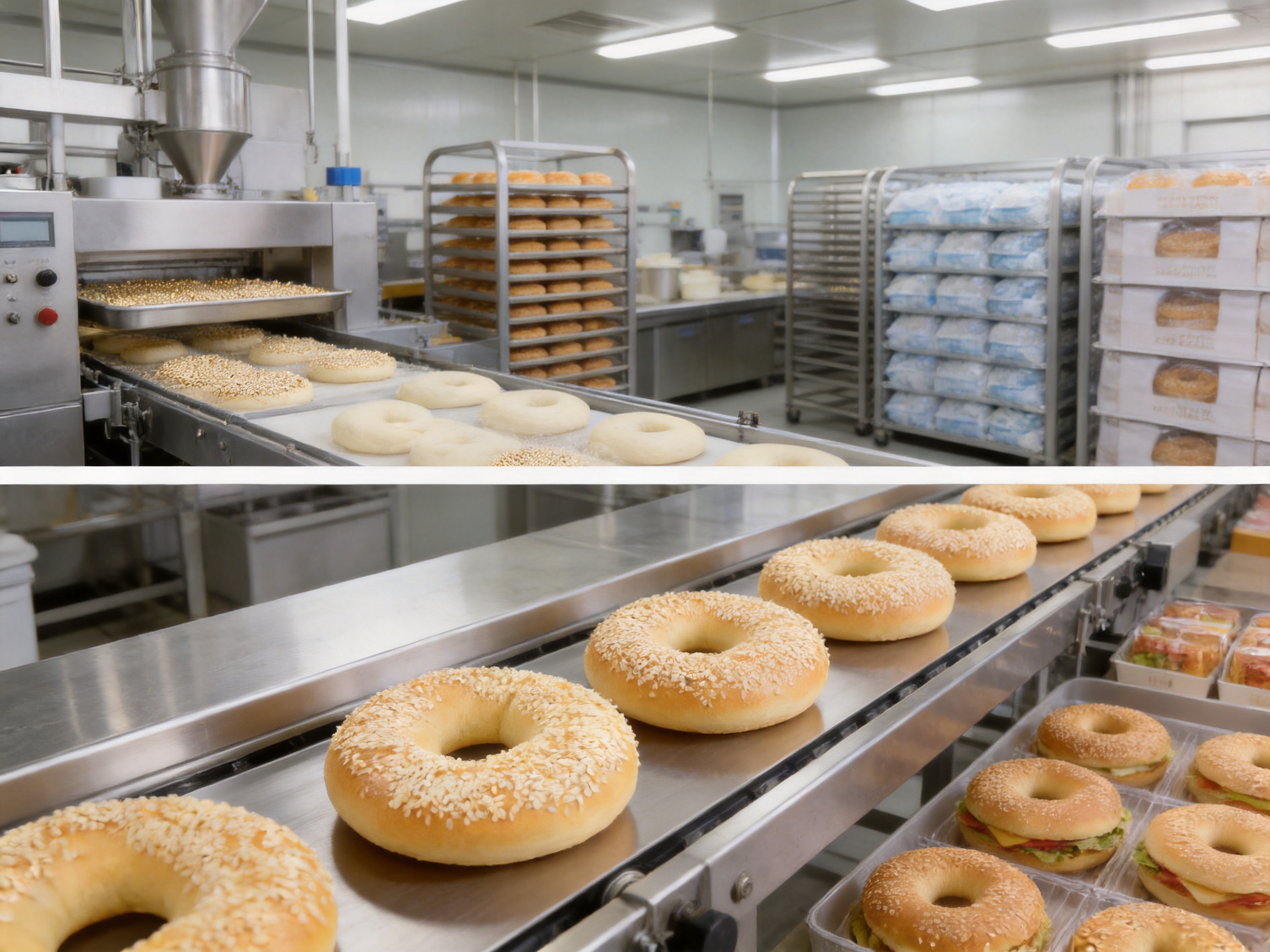
- 1 1. A Product Built Around Clear, Recognizable Flavor
- 2 2. The Role of Sesame in Aroma, Texture, and Visual Appeal
- 3 3. Firm Outside, Elastic Inside: The Importance of Texture
- 4 4. Advantages Compared with Ordinary Bagel Products
- 5 5. Manufacturing Strengths Behind the Product
- 6 6. The Value of Frozen Bakery Manufacturing
- 7 7. Commercial Applications Across Multiple Channels
- 8 8. Serving Ideas That Highlight the Product
- 9 9. Positioning and Marketing Opportunities
- 10 10. Quality, Clean-Label Development, and Product Trust
- 11 11. Why the Manufacturer Is a Suitable OEM and Private-Label Partner
- 12 12. Product Specification Overview
- 13 13. A Practical Evaluation Framework for Buyers
- 14 14. Frequently Asked Questions
- 14.1 Q1: What makes this bagel different from a standard sesame bagel?
- 14.2 Q2: What is the weight of one bagel?
- 14.3 Q3: Is the product suitable for sandwiches?
- 14.4 Q4: Can it be served with coffee or tea?
- 14.5 Q5: What role does the sesame topping play?
- 14.6 Q6: Is the product available for wholesale supply?
- 14.7 Q7: Can the product be developed under a private label?
- 14.8 Q8: Does the manufacturer offer other bagel varieties?
- 14.9 Q9: What should buyers confirm before placing an order?
- 14.10 Q10: Why is frozen supply useful for foodservice?
- 15 15. Conclusion
- 16 References
- 17 Product: High-Quality Wheat Source Salted Sesame Bagel
The modern bagel market is shaped by two competing expectations. Consumers want familiar, comforting bakery products, but they also expect stronger flavor, better texture, recognizable ingredients, and a quality experience that can be repeated every time they purchase the product. For retailers, cafés, foodservice operators, and private-label brands, the challenge is even greater: a bagel must appeal to consumers while also performing consistently in storage, preparation, display, and service.
The High-Quality Wheat Source Salted Sesame Bagel is designed to meet these expectations through a focused combination of carefully selected wheat flour, dairy butter, Morton sea salt, white sesame seeds, and a baking approach that emphasizes contrast. Its flavor begins with a clear savory butter profile, develops into warm toasted sesame, and finishes with a balanced salt note. Its texture combines a firm outer surface with an elastic, pleasantly chewy crumb.
At 110 grams, the product offers a substantial single-serving format suitable for breakfast, light meals, snacks, coffee pairings, and foodservice applications. It can be served on its own, sliced and filled, toasted for additional aroma, or incorporated into a broader menu program. Unlike products that depend on heavy fillings or highly sweetened flavor systems, this bagel is intended to create a satisfying experience through the quality and interaction of its core ingredients.
For commercial buyers, the product also benefits from the manufacturing capabilities of Jiangsu Goobagel Food Technology Co., Ltd., a frozen bakery producer specializing in bagel research and manufacturing since 2019. The company operates an integrated supply chain covering raw materials, product research and development, production, and distribution. Its development portfolio includes more than 100 clean-label bagel varieties for retail, foodservice, cafés, tea brands, and bakery operators.
This article examines the product’s flavor architecture, ingredient advantages, texture, production value, commercial applications, and differentiation from ordinary bagels. It also explains why a product with a simple ingredient identity can offer strong opportunities for OEM, wholesale, and private-label programs.

High-Quality Wheat Source Salted Sesame Bagel
1. A Product Built Around Clear, Recognizable Flavor
The strongest advantage of a premium bagel is often clarity. Consumers should be able to understand what they are eating from the first bite. The High-Quality Wheat Source Salted Sesame Bagel follows this principle by centering its flavor around three recognizable elements: wheat, butter, and sea salt, with sesame providing an aromatic and textural layer.
Many bagels are described as savory but deliver an indistinct taste once baked. Others rely on strong seasoning, processed fillings, or excessive sweetness to create immediate impact. This product takes a different approach. It develops a rounded savory profile in which dairy butter provides richness, sea salt sharpens the finish, and wheat flour supplies the familiar grain foundation.
The result is not simply a salty bagel. Salt is used as a defining accent rather than the entire flavor. The butter creates a soft, milky aroma and a fuller mouthfeel, while the wheat brings a mild cereal character that supports the rest of the profile. Sesame then adds a toasted note that arrives at the surface before the interior flavors fully develop.
This layered progression is valuable because it gives the product a more complete eating experience. The first impression is aromatic and slightly crunchy. The middle of the bite becomes chewy and buttery. The final impression is savory, clean, and lightly nutty. A product that evolves in this way can remain interesting even when served without a filling.
1.1 A Balanced Sea-Salt Butter Profile
The pairing of dairy butter and sea salt is familiar across bakery, breakfast, and snack categories. However, achieving a balanced profile requires more than adding salt to a butter-flavored dough. Salt must be controlled so that it enhances the grain and dairy notes rather than masking them. Butter must contribute richness without making the product feel greasy or heavy.
The product’s stated formulation emphasizes premium New Zealand dairy butter and Morton sea salt. These ingredients support a flavor direction that feels recognizable and premium. The butter contributes a natural milky aroma, while the salt helps define the flavor at the finish. Together, they create a profile that can be positioned as refined but accessible.
This balance can be especially useful for commercial customers. A bagel with a clear but moderate savory identity can be sold across several channels. It can appeal to consumers who prefer simple bakery flavors, while also serving as a versatile base for cream cheese, eggs, smoked proteins, vegetables, cheese, or spreads.
1.2 Wheat as the Structural and Flavor Foundation
Wheat flour is not merely a functional ingredient in a bagel. It determines much of the product’s structure, chew, aroma, and visual character. Carefully selected wheat flour supports dough development and helps create the elastic crumb associated with a well-made bagel.
The wheat foundation also gives the product a familiar bakery identity. Consumers may be drawn to innovative flavors, but they often return to products that retain the comforting taste of bread. By keeping wheat at the center of the recipe, the bagel avoids becoming overly complicated or dependent on novelty.
For foodservice operators, this familiar foundation is commercially valuable. It allows the product to fit breakfast menus, café displays, bakery shelves, and snack programs without requiring extensive consumer education. The sesame and butter elements create differentiation, but the overall product remains easy to understand.
2. The Role of Sesame in Aroma, Texture, and Visual Appeal
Sesame is one of the most effective toppings for a savory bagel because it contributes several benefits at once. It provides visual recognition, toasted aroma, a light crunch, and a subtle nutty flavor. In this product, white sesame seeds are generously applied to the surface, creating a more expressive first impression than a plain bagel.
The sesame layer is intended to produce a two-stage sensory experience. Before the product is even eaten, the toasted seeds contribute a warm bakery aroma. When the consumer bites into the bagel, the surface delivers a light crunch. The interior then follows with a softer but resilient chew. This contrast makes the product feel more dynamic than a uniformly soft or uniformly dense bakery item.
2.1 Surface Coverage and Adhesion
Sesame toppings can create quality problems if they are applied unevenly or fail to adhere during handling. Loose seeds may fall away during packaging, transport, thawing, slicing, or serving. Inconsistent coverage can also make different units look substantially different on the shelf.
The product description emphasizes attention to adhesion and toasting intensity. These two factors are important for commercial consistency. Proper adhesion helps maintain the intended appearance from production through final service. Controlled toasting helps prevent the sesame from becoming bitter, overly dark, or dry.
Consistent surface coverage also supports brand presentation for private-label customers. A bagel that looks attractive in a package or display case can communicate quality before the first bite. This is particularly important in cafés, retail bakeries, and foodservice counters where visual appeal influences purchase decisions.
2.2 A Nutty Note Without Overpowering the Bagel
Sesame has a distinctive flavor, but excessive sesame intensity can overwhelm delicate wheat and butter notes. The intended formulation uses sesame as a complementary layer rather than the sole identity of the product. The result is a warm nutty depth that works with the savory butter profile.
This balance gives buyers more serving flexibility. The bagel can be paired with mild spreads without losing its identity, but it can also support stronger fillings. Cream cheese, egg, turkey, smoked salmon, roasted vegetables, and cheese can all be used without creating an unnecessarily complicated flavor combination.
For consumers, the sesame provides an immediate point of difference from plain, onion, or sweet bagel varieties. For operators, it creates a reliable signature that can be incorporated into a menu description, a packaged product name, or a seasonal promotion.

3. Firm Outside, Elastic Inside: The Importance of Texture
Texture is one of the defining characteristics of a quality bagel. A product may have an appealing flavor, but if it is too soft, too dry, too dense, or too crumbly, the eating experience will be disappointing. The High-Quality Wheat Source Salted Sesame Bagel is designed around a firm outer surface and an elastic crumb.
The exterior provides resistance when bitten, while the interior remains resilient and pleasantly chewy. This structure creates the characteristic bagel experience that distinguishes the product from ordinary bread rolls. The crumb should feel cohesive rather than fragile, allowing the product to be sliced, filled, toasted, and handled in a foodservice environment.
3.1 Why Elastic Crumb Matters
An elastic crumb is important for both sensory quality and practical performance. It helps the bagel maintain its shape when cut in half. It also gives consumers a slower, more satisfying eating experience. Rather than disappearing immediately in the mouth, the crumb continues to release wheat and butter notes as it is chewed.
For cafés and restaurants, structural resilience reduces the risk of a product falling apart when filled. A bagel sandwich must support ingredients without collapsing excessively or becoming difficult to eat. The product’s firm exterior and elastic interior are therefore useful for both open-faced applications and fully assembled sandwiches.
For retail customers, texture affects perceived freshness and value. A 110-gram bagel with a substantial chew can feel more satisfying than a lighter, highly aerated product. This can support a premium positioning while still keeping the format familiar and convenient.
3.2 Butter That Develops Gradually
The product is designed so that butter richness develops gradually during chewing. This is different from a product in which a strong flavor appears immediately and then fades quickly. The gradual release of richness allows the wheat, butter, salt, and sesame to interact over time.
This sensory progression can be particularly noticeable when the bagel is lightly warmed or toasted. Heat may increase the butter aroma and deepen the toasted character of the sesame. However, the bagel is also intended to remain enjoyable as a breakfast staple or snack without requiring elaborate preparation.
The gradual character of the flavor makes the product suitable for repeated consumption. It is expressive enough to be memorable but balanced enough to avoid rapid flavor fatigue. This is an important distinction for products intended for regular retail or foodservice use.
4. Advantages Compared with Ordinary Bagel Products
The product competes not only with other sesame bagels but also with plain bagels, flavored bagels, bread rolls, filled bakery products, and breakfast sandwiches. Its advantages come from the combination of ingredients, sensory structure, and application flexibility.
| Product Attribute | High-Quality Wheat Source Salted Sesame Bagel | Common Basic Bagel | Commercial Benefit |
|---|---|---|---|
| Flavor identity | Wheat, dairy butter, sea salt, and toasted sesame | Often centered on plain dough or a single topping | Clearer differentiation and easier menu storytelling |
| Texture | Firm exterior with an elastic, chewy crumb | May be overly soft, dry, dense, or inconsistent | Better eating quality and stronger filling performance |
| Surface appeal | Generous white sesame coating with toasted aroma | Limited topping coverage or uneven appearance | More attractive retail and café presentation |
| Flavor development | Butter richness opens gradually during chewing | Flavor may be immediate but short-lived | More layered and satisfying consumer experience |
| Serving flexibility | Suitable for plain eating, toasting, spreads, and sandwiches | May be less distinctive or less structurally resilient | Supports multiple menu and packaging formats |
| Commercial format | 110-gram portion suitable for retail and foodservice | Portion and performance may vary by supplier | More predictable portion planning |
4.1 More Than a Topping-Driven Product
Some bagels use toppings to create the appearance of specialization while leaving the underlying dough relatively ordinary. In contrast, this product builds its identity through both the dough and the surface. The wheat and butter create a meaningful interior profile, while sesame and sea salt reinforce the exterior.
This gives the product an advantage in blind tasting and repeat consumption. A topping may attract the consumer initially, but the interior determines whether the product is purchased again. The combination of flavor and texture helps ensure that the sesame is not carrying the entire product.
4.2 A Premium Experience Without Excessive Complexity
Premium bakery products are not always defined by a long list of ingredients. In many cases, premium quality comes from selecting recognizable ingredients and using them in a balanced way. The product’s identity is easy to communicate: wheat, butter, sea salt, and sesame.
This simplicity can support transparent product communication. Retailers can describe the bagel in a concise way, while foodservice operators can create menu language that focuses on toasted sesame, savory butter, and chewy texture. The product can therefore feel premium without becoming difficult to explain.
4.3 A Stronger Base for Customization
A plain bagel offers versatility but may lack a distinctive selling point. A heavily flavored bagel may be memorable but difficult to pair with other ingredients. The Salted Sesame Bagel occupies a useful middle ground. It has its own flavor signature while remaining compatible with a wide range of fillings and toppings.
This makes it appropriate for different customer segments. A retailer can sell it as an individually packaged breakfast item. A café can toast it and add cream cheese. A restaurant can use it for a savory sandwich. A private-label brand can position it as a premium everyday bakery product.
5. Manufacturing Strengths Behind the Product
Product quality depends on more than a recipe. It also depends on sourcing, dough preparation, topping management, baking control, freezing, packaging, logistics, and repeatable production. Jiangsu Goobagel Food Technology Co., Ltd. has specialized in bagel research and manufacturing since 2019, building its business around frozen bakery production and product development.
The company operates a fully integrated supply chain that covers raw materials, research and development, production, and nationwide distribution. This integrated structure can help reduce communication gaps between product design and manufacturing execution. It also supports closer coordination when customers need adjustments for taste, portion, packaging, or application.
5.1 Integrated Raw Material Management
Ingredient selection is particularly important for a product whose identity depends on a small number of core components. Wheat flour affects dough strength and crumb structure. Butter affects aroma and richness. Sea salt affects flavor balance. Sesame affects surface appearance, aroma, and crunch.
An integrated supply chain gives the manufacturer a framework for managing these inputs as part of a complete product system rather than as isolated commodities. For commercial customers, this can support more stable product performance and help protect the intended flavor profile across production cycles.
Ingredient management also supports product development. When a manufacturer understands the behavior of its raw materials, it can make more informed adjustments to dough formulation, topping adhesion, baking intensity, and frozen product performance.
5.2 Research and Development Capability
Goobagel Food has developed more than 100 clean-label bagel varieties for different commercial segments. This breadth indicates experience in adapting bagel concepts to varied flavor, texture, and application requirements. A manufacturer with a broad development portfolio is better positioned to understand how one product category can serve different markets.
Research and development is not limited to creating unusual flavors. It also includes refining dough structure, improving topping distribution, balancing moisture, adapting products for reheating, and ensuring that a bagel performs after frozen storage. These technical considerations are essential for wholesale and private-label programs.
The Salted Sesame Bagel illustrates a focused development approach. Rather than combining many competing flavors, the product concentrates on the interaction among wheat, butter, sea salt, and sesame. This requires attention to proportion, surface treatment, baking, and texture so that no single element becomes excessive.
5.3 Production Consistency
Consistency is a decisive advantage in commercial bakery supply. Retailers need units that look and taste similar. Cafés need products that respond predictably to slicing and toasting. Foodservice buyers need portion and texture stability across deliveries.
A modern frozen bakery producer can support these requirements through standardized production procedures and coordinated quality control. While exact production parameters may vary by product and customer specification, the general objective is consistent dough development, uniform shaping, reliable topping coverage, controlled baking, and suitable frozen storage performance.
Consistency does not mean removing character from the product. Instead, it ensures that the intended character is present from one production run to the next. For the Salted Sesame Bagel, that means maintaining a recognizable butter aroma, balanced salt, attractive sesame coverage, firm exterior, and elastic crumb.

6. The Value of Frozen Bakery Manufacturing
Frozen bakery products provide practical advantages for modern food businesses. They can simplify inventory planning, extend distribution reach, support centralized production, and allow operators to prepare products closer to the point of sale. For bagels, frozen formats are especially useful because the product can be delivered in bulk and prepared according to the customer’s operating model.
A frozen bagel program can help cafés and restaurants maintain a consistent product without producing dough from scratch every day. Retailers can manage stock more flexibly, while private-label brands can offer a bakery-style product through established distribution channels.
6.1 Supply Stability
For wholesale buyers, supply reliability is often as important as flavor. A product that performs well but cannot be delivered consistently creates operational problems. The company’s integrated model, which includes raw materials, research and development, production, and distribution, is designed to support a dependable supply structure.
Nationwide distribution capability within China also provides a foundation for serving customers across multiple regions. This can be valuable for café chains, retail groups, foodservice distributors, and brands seeking a supplier capable of supporting expansion.
6.2 Operational Efficiency for Customers
Using a frozen bagel can reduce the need for extensive on-site preparation. Operators may focus on thawing, heating, slicing, filling, or display, depending on their chosen service method. This can make the product easier to introduce into locations with limited baking equipment or labor resources.
For a café, the product can become the basis of several menu items without requiring separate dough recipes. For a retailer, it can be packaged or sold through a bakery section. For a foodservice kitchen, it can serve as a standardized bread component for breakfast and lunch sandwiches.
6.3 Consistent Portion Control
The 110-gram format offers a clear reference point for portion planning. Consistent size can help operators estimate food costs, develop menu pricing, calculate filling quantities, and maintain a uniform customer experience.
Portion control is also useful for packaged retail. A standardized unit allows brands to create clear nutritional panels, pack counts, and promotional formats according to their own specifications. Exact packaging and labeling requirements should be confirmed for each market and customer project.
7. Commercial Applications Across Multiple Channels
The product’s flavor and structure make it suitable for more than one sales channel. Its savory identity allows it to function as a standalone bakery product, while its chewy structure supports fillings and toppings.
7.1 Retail and Supermarket Use
In retail, the bagel can be positioned as a premium breakfast or snack product. The sesame topping creates immediate shelf appeal, while the butter and sea-salt profile provide a clear reason to choose it over a plain alternative.
Retail packaging may emphasize the 110-gram portion, toasted sesame surface, chewy texture, and savory butter flavor. Depending on the customer’s positioning, the product can be presented as an everyday breakfast item, a café-style bakery experience at home, or a convenient base for sandwiches.
Retailers may also place the bagel near cream cheese, butter, sliced meats, eggs, coffee, or tea products. Its flavor is familiar enough for mainstream shoppers while still offering a more premium sensory experience.
7.2 Cafés and Coffee Shops
Cafés can use the product in both simple and customized formats. A lightly warmed bagel served with butter or cream cheese creates a straightforward breakfast option. A sliced and toasted bagel can become a more substantial menu item when paired with egg, cheese, turkey, chicken, vegetables, or smoked fish.
The toasted sesame aroma is especially appropriate for café environments because it complements coffee and tea. The product description specifically presents it as suitable alongside these beverages, and its savory profile can balance the bitterness of coffee or the clean aroma of tea.
7.3 Tea Brands and Beverage Chains
Tea brands and beverage chains increasingly benefit from small food items that extend the average transaction and encourage longer visits. A salted sesame bagel can provide a savory option alongside sweet pastries, cakes, and drinks.
Its 110-gram format is substantial enough to feel satisfying but compact enough for counter service and takeaway. It can be sold plain, warmed, or converted into a branded sandwich according to the operator’s menu strategy.
7.4 Hotels, Catering, and Institutional Foodservice
Hotels can include the product in breakfast buffets, room-service menus, or grab-and-go displays. Catering businesses can use it for breakfast boxes, meeting platters, and individually wrapped meal programs. Institutional foodservice operators may appreciate its consistent portion and flexible serving options.
In these environments, reliability and ease of preparation are important. A frozen supply format can help kitchens plan production while reducing the need to maintain a complete bagel-making operation on site.
7.5 Bakery Operators and Private-Label Brands
Bakery businesses can use the product as a ready-made item or as a base for their own finishing and filling concepts. Private-label brands can develop packaging and marketing around the product’s savory seed profile, premium butter positioning, and chewy texture.
Because the manufacturer has experience with OEM and private-label development, customers can discuss product specifications, packaging formats, flavor adjustments, and channel requirements. Any final customization should be evaluated through a formal product development and approval process.
8. Serving Ideas That Highlight the Product
The best serving methods are those that preserve the product’s central identity while adding value. The Salted Sesame Bagel can be enjoyed at room temperature, warmed, or toasted. Each method emphasizes a different aspect of its sensory profile.
8.1 Simple Butter Service
Serving the bagel with a small amount of butter highlights the dairy character already present in the product. This approach is suitable for breakfast menus and allows consumers to experience the wheat, sea salt, and sesame without additional strong flavors.
8.2 Cream Cheese and Fresh Ingredients
Cream cheese can add coolness and softness against the bagel’s firm surface and chewy crumb. Fresh tomato, cucumber, lettuce, or herbs can provide contrast, while the sesame and sea salt maintain a savory foundation.
8.3 Breakfast Sandwiches
Egg, cheese, and breakfast meats are natural pairings. The bagel’s structure helps support these fillings, and its butter and sesame notes provide more flavor than an ordinary white bread roll. Operators can create a compact breakfast sandwich that is suitable for takeaway or quick-service menus.
8.4 Smoked and Roasted Fillings
Smoked salmon, roasted turkey, grilled chicken, and roast beef can all work with the toasted sesame profile. The product has enough flavor to remain noticeable, but it does not need to compete with every filling. Sauces and spreads should be balanced so that the sea-salt butter character remains present.
8.5 Vegetarian and Plant-Forward Applications
Grilled vegetables, avocado, hummus, mushrooms, leafy greens, and plant-based proteins can be used to create vegetarian or plant-forward offerings. The bagel’s wheat and sesame foundation supports these combinations and can make a vegetable-focused sandwich feel substantial.
9. Positioning and Marketing Opportunities
A successful product requires more than a good recipe. It needs a clear commercial story. The Salted Sesame Bagel offers several positioning themes that can be adapted to different markets and customer strategies.
9.1 Premium Everyday Bakery
The product can be positioned as an elevated everyday bagel. Its ingredients are familiar, but the use of dairy butter, sea salt, generous sesame, and controlled baking creates a more refined experience than a basic bagel.
9.2 Savory Breakfast Convenience
Many consumers want a breakfast product that is quick but not bland. A frozen bagel can support convenient preparation at home or in foodservice while delivering a more satisfying flavor and texture than an ordinary packaged bread product.
9.3 Café-Style Experience at Home
The product can also be marketed as a café-inspired item for home consumption. Toasting it and adding a preferred spread allows consumers to create a simple breakfast or snack with minimal preparation.
9.4 Sensory-Led Communication
Marketing content can focus on the sequence of the eating experience: toasted sesame aroma, a light surface crunch, elastic chew, gradual butter richness, and a clean sea-salt finish. This type of sensory language helps customers understand why the product is different without relying on exaggerated claims.
10. Quality, Clean-Label Development, and Product Trust
Goobagel Food describes its product development portfolio as including more than 100 clean-label bagel varieties. Clean-label expectations vary by market and should always be confirmed through the specific ingredient statement and regulatory documentation for the finished product. Nevertheless, the company’s stated development direction reflects a broader consumer interest in recognizable formulations and understandable food communication.
For buyers, product trust depends on several factors: consistent ingredient quality, transparent specifications, reliable production, appropriate packaging, correct labeling, and dependable delivery. A professional manufacturing partner must address these elements together rather than treating flavor as the only measure of quality.
The Salted Sesame Bagel has a straightforward sensory story that can support transparent communication. Wheat, butter, sea salt, and sesame are ingredients that consumers generally understand. The product’s appeal comes from their balance, not from a complicated description or an unclear flavor system.
Commercial customers should review all relevant documentation before launch, including ingredient declarations, allergen information, storage instructions, preparation guidance, shelf-life data, packaging details, and market-specific compliance requirements. These details are essential when adapting a product for a particular country, retailer, or foodservice system.
11. Why the Manufacturer Is a Suitable OEM and Private-Label Partner
OEM and private-label customers need a supplier that can support more than one production order. They need a partner capable of understanding the brand’s positioning, adapting the product where appropriate, and maintaining reliable supply after approval.
Jiangsu Goobagel Food Technology Co., Ltd. has focused on bagel research and manufacturing since 2019. Its product development experience spans more than 100 varieties, and its customers include retail businesses, foodservice operators, café chains, tea brands, and bakery companies. This cross-channel experience can help the manufacturer understand the different requirements of each market.
11.1 Product Development Support
Private-label customers may require a specific weight, flavor strength, topping level, texture, or preparation method. A manufacturer with research and development capabilities can evaluate these requirements and determine how they affect formulation and production.
For example, one customer may want a stronger sesame profile, while another may prefer a more restrained topping for use with savory fillings. A café chain may need a bagel optimized for rapid toasting, while a retailer may prioritize frozen shelf life and package presentation. These projects require structured testing rather than simple ingredient substitution.
11.2 Scalable Supply for Growing Brands
A small brand may initially need limited quantities, while an established chain may require regular, larger-scale supply. An integrated manufacturing and distribution system can provide a foundation for growth, subject to production capacity, order planning, and mutually agreed specifications.
Reliable scaling is particularly important for products that become part of a branded menu. Once consumers associate a specific bagel with a café or retailer, inconsistent supply can damage both operations and customer trust. A professional supplier should therefore discuss forecasts, lead times, packaging, logistics, and quality expectations early in the partnership.
11.3 Support for Multiple Applications
Because Goobagel Food serves retail, foodservice, cafés, tea brands, and bakery operators, the company is positioned to consider how the same product behaves in different environments. This application awareness can help customers select appropriate serving methods and packaging configurations.
The Salted Sesame Bagel is especially adaptable because it can be sold as a standalone item or used as a sandwich base. That flexibility can help a customer test the product in more than one channel without developing an entirely separate bakery concept.
12. Product Specification Overview
| Specification | Product Information |
|---|---|
| Product name | High-Quality Wheat Source Salted Sesame Bagel |
| Product category | Savory and seeded bagel |
| Broader categories | Classic bagel, stuffed bagel, bagel sandwich |
| Net weight per unit | 110 grams |
| Main flavor profile | Savory dairy butter, sea salt, wheat, and toasted sesame |
| Surface characteristic | Generous white sesame coating with a light crunch |
| Interior characteristic | Elastic, resilient, and pleasantly chewy crumb |
| Primary applications | Breakfast, snack, café service, retail, catering, and sandwiches |
| Supply format | Frozen bakery product program |
| Customization potential | OEM and private-label development subject to specification review |
13. A Practical Evaluation Framework for Buyers
Buyers considering the product should evaluate it from both a sensory and operational perspective. A tasting session can examine aroma, topping coverage, crust firmness, crumb elasticity, butter intensity, salt balance, and sesame persistence.
The product should also be tested in the actual conditions in which it will be sold. A retail customer may examine thawing and package presentation. A café may test slicing, toasting speed, filling capacity, and holding time. A foodservice operator may evaluate batch preparation, portion control, and service consistency.
13.1 Sensory Evaluation Questions
Does the bagel provide a clear toasted sesame aroma? Is the sea salt noticeable without becoming harsh? Does the butter contribute richness without excessive heaviness? Does the crumb remain elastic after preparation? Does the product retain its identity when combined with fillings?
These questions help buyers determine whether the product fits their target market. They also provide useful direction for any requested adjustments during OEM development.
13.2 Operational Evaluation Questions
How will the product be stored and prepared? What equipment is available? Will it be sold plain, toasted, filled, or packaged? How long must it hold after preparation? What packaging size and delivery frequency are appropriate?
Answering these questions early helps ensure that the selected product and supply format match the customer’s business model. A product that performs well in a tasting but does not fit the operation may require adaptation before launch.
14. Frequently Asked Questions
Q1: What makes this bagel different from a standard sesame bagel?
The product combines a savory dairy butter profile with sea salt, wheat-based chew, and a generous toasted sesame coating. It is designed to provide flavor development from the first aromatic impression through the final bite, rather than relying only on sesame as a surface topping.
Q2: What is the weight of one bagel?
Each bagel is described as weighing 110 grams. This provides a substantial individual portion for breakfast, snacks, retail sale, or sandwich preparation.
Q3: Is the product suitable for sandwiches?
Yes. Its firm exterior and elastic crumb are suitable for slicing and filling. It can support breakfast ingredients, deli meats, cheese, vegetables, spreads, smoked fish, and plant-based fillings.
Q4: Can it be served with coffee or tea?
Yes. Its savory butter and toasted sesame profile is suitable for pairing with coffee or tea. It can be served plain, warmed, toasted, or with a spread depending on the menu concept.
Q5: What role does the sesame topping play?
The sesame provides visual appeal, a toasted aroma, a light crunch, and warm nutty depth. It is intended to complement the wheat, butter, and sea-salt profile rather than overpower it.
Q6: Is the product available for wholesale supply?
The manufacturer is described as a frozen bagel wholesaler and commercial bakery producer. Wholesale availability, minimum order quantities, packaging, lead times, and delivery conditions should be confirmed directly for each project.
Q7: Can the product be developed under a private label?
The company provides OEM and private-label bagel solutions. Customers can discuss specifications such as flavor, weight, packaging, topping, application, and market requirements through a formal development process.
Q8: Does the manufacturer offer other bagel varieties?
Yes. The company states that it has developed more than 100 clean-label bagel varieties for retail, foodservice, café chains, tea brands, and bakery operators. The available portfolio and customization options should be reviewed with the supplier.
Q9: What should buyers confirm before placing an order?
Buyers should confirm the complete ingredient list, allergen information, storage conditions, preparation instructions, shelf life, packaging format, shipping requirements, order quantities, production schedule, labeling compliance, and any required product certifications or documentation.
Q10: Why is frozen supply useful for foodservice?
Frozen supply can help operators plan inventory, maintain consistent portions, reduce on-site dough preparation, and prepare products close to the time of service. It can also support distribution to multiple locations from a centralized manufacturing source.
15. Conclusion
The High-Quality Wheat Source Salted Sesame Bagel is a carefully focused savory bakery product built around recognizable ingredients and layered sensory performance. Its wheat foundation provides structure and familiarity. Dairy butter contributes a rounded milky richness. Morton sea salt sharpens and defines the flavor. White sesame seeds add aroma, crunch, visual appeal, and warm nutty depth.
The product’s firm exterior and elastic crumb give it the structural qualities required for modern bagel consumption. It can be eaten as a simple breakfast item, warmed beside coffee or tea, or transformed into a substantial sandwich. Its 110-gram format supports portion control and flexible commercial use.
Compared with ordinary bagels, its key advantages include a clearer savory identity, more expressive surface aroma, better contrast between crust and crumb, and stronger versatility across retail and foodservice applications. These benefits are supported by the manufacturer’s experience in bagel research, frozen bakery production, integrated supply chain management, and development of more than 100 bagel varieties.
For retailers, cafés, foodservice operators, bakery businesses, and private-label brands, the product offers a practical combination of premium flavor and operational flexibility. It is distinctive without being difficult to understand, flavorful without being excessive, and substantial enough to function as both a standalone bakery item and a reliable sandwich base.
As consumers continue to seek convenient foods with better taste, texture, and ingredient clarity, a balanced product such as this Salted Sesame Bagel can occupy a strong position in the evolving frozen bakery and commercial bagel market.
References
1. Jiangsu Goobagel Food Technology Co., Ltd. Product information for the High-Quality Wheat Source Salted Sesame Bagel.
2. Jiangsu Goobagel Food Technology Co., Ltd. Company information concerning bagel research, frozen bakery manufacturing, product development, and distribution.
3. Association of Official Analytical Chemists. General principles for food composition, quality evaluation, and analytical control.
4. United States Department of Agriculture. General consumer and foodservice guidance concerning grain-based foods and bakery products.
5. International Association for Food Protection. Principles of food safety, hygiene, and quality management in food manufacturing.
6. Codex Alimentarius Commission. General principles for food hygiene and labeling of prepackaged foods.
