
 中文简体
中文简体
 English
postmaster@goobagelfood.com
Content
- 1 A Product Built Around Contrast and Balance
- 2 The Bagel Foundation: Chewy, Structured, and Aromatic
- 3 Advantages Compared with Conventional Filled Bagels
- 4 Manufacturing Strengths Behind the Product
- 5 How the Product Fits Different Commercial Channels
- 6 From Ingredient Selection to Finished Frozen Product
- 7 Quality and Performance Considerations for Buyers
- 8 Product Positioning and Consumer Appeal
- 9 Why Specialized Bagel Manufacturing Creates Value
- 10 Potential Serving and Merchandising Ideas
- 11 Important Considerations for Importers and Distributors
- 12 Comparison with Common Market Alternatives
- 13 Q&A
- 13.1 What is the Kumquat Lemon Butter-Cream Cheese Bagel?
- 13.2 What makes the flavor different from a standard lemon bagel?
- 13.3 Is the product sweet or sour?
- 13.4 What type of texture does the bagel have?
- 13.5 How does natural yeast fermentation contribute to the product?
- 13.6 Why is Japanese-style milling used?
- 13.7 Who manufactures the product?
- 13.8 What types of customers can purchase this product?
- 13.9 Can the bagel be used in a private-label program?
- 13.10 What is the benefit of the frozen format?
- 13.11 Can cafés serve the product as a breakfast item?
- 13.12 What beverages pair well with the bagel?
- 13.13 Does the product contain dairy?
- 13.14 Does the product contain wheat?
- 13.15 How should buyers evaluate the product before placing an order?
- 13.16 How many bagel varieties does the manufacturer offer?
- 13.17 What should distributors confirm before importing?
- 14 Conclusion
- 15 References
- 16 Product: Kumquat Lemon Butter-Cream Cheese Bagel
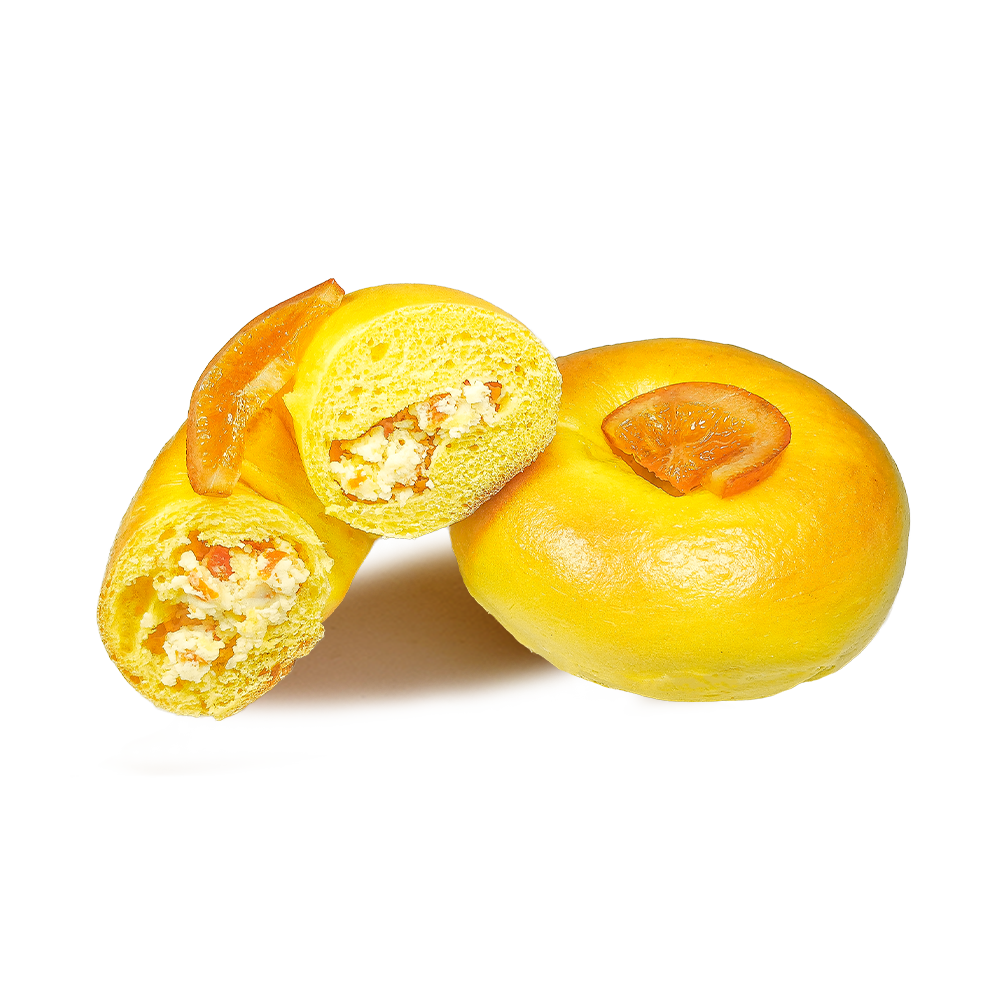
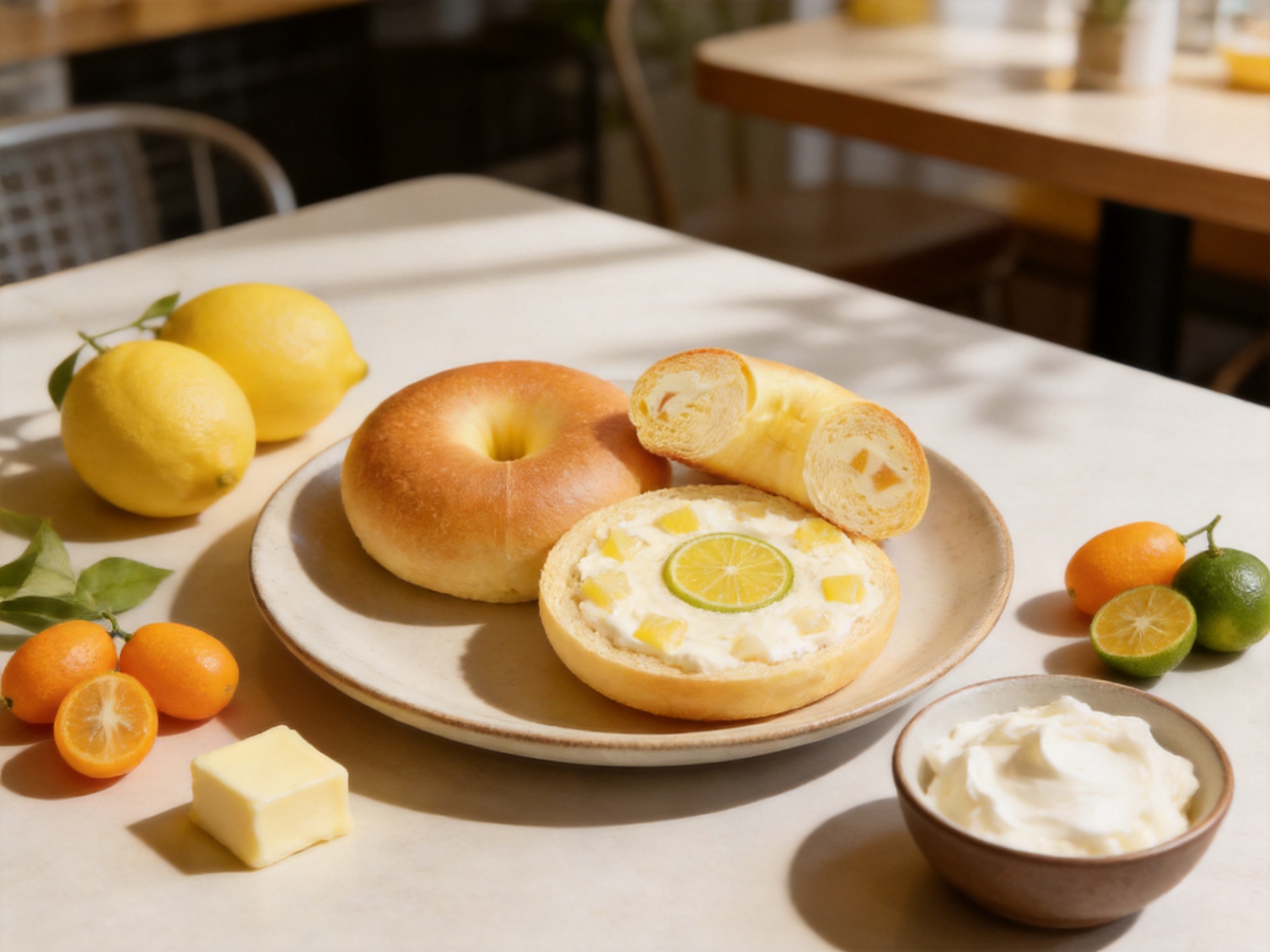
The Kumquat Lemon Butter-Cream Cheese Bagel is a distinctive fruit-filled bakery product designed for consumers and commercial buyers seeking a more refined alternative to ordinary sweet bagels. It combines a chewy, naturally fermented bagel foundation with a bright double-citrus filling made from calamansi puree and diced lemon, then balances that fruit profile with Anchor cream cheese and dairy butter. The result is a product that brings together freshness, creaminess, texture, and convenience in one format.
Unlike a standard plain bagel with a flavored spread added after baking, this product is developed as an integrated filled bagel. The citrus and dairy components are part of the product concept itself, giving the finished item a coherent flavor experience from the first bite to the final finish. The bagel provides structure and chew, the citrus supplies aromatic brightness and acidity, and the cream cheese and butter create a smooth, rounded mouthfeel.
For retailers, café chains, foodservice operators, bakery brands, and private-label buyers, the product offers a practical way to introduce a premium fruit bagel without requiring complex in-store preparation. It is suitable for frozen bakery programs in which consistency, supply stability, easy handling, and distinctive product positioning are essential. Its flavor profile is familiar enough to be approachable while still offering meaningful differentiation from common blueberry, raisin, chocolate, or plain cream cheese varieties.
The product weighs 78 grams, providing a convenient individual portion for breakfast, an afternoon snack, a café pairing, or a light meal. Its compact format supports multiple sales occasions, while its flavor allows it to sit comfortably between traditional bakery, indulgent snack, and premium breakfast categories.

Kumquat Lemon Butter-Cream Cheese Bagel
A Product Built Around Contrast and Balance
The strongest characteristic of this bagel is its controlled contrast. Citrus fruit is naturally lively, aromatic, and acidic, while cream cheese and butter are rich, smooth, and gently mellow. The bagel itself contributes a toasted wheat aroma and a firm, resilient bite. These elements could easily become unbalanced if one component dominated the others. The product’s formulation is therefore centered on proportion and interaction rather than simply adding as much flavor as possible.
Calamansi puree creates the first layer of citrus character. It brings a clean, energetic tang with a recognizable tropical-citrus impression. Compared with a single-note lemon filling, calamansi can contribute a more rounded aromatic profile, combining brightness with a subtle fruit depth. Diced lemon adds a second layer, including fresh acidity, citrus fragrance, and a slight peel-like bitterness. The diced format also introduces small textural points within the filling, preventing the interior from feeling completely uniform.
The citrus is supported by Anchor cream cheese, which provides body and a silky dairy character. Rather than hiding the fruit, the cream cheese helps define it. Fat and dairy solids can soften the perception of sharp acidity, allowing the citrus to taste vivid without becoming harsh. Dairy butter adds another dimension through its warm, rounded aroma. It also contributes to a richer filling experience and helps transform the fruit from a simple jam-like center into a more complete cream-based composition.
The product is designed to remain refreshing despite its creamy ingredients. This is important in modern bakery development because consumers increasingly look for indulgence that does not feel excessively heavy. A filling that is only rich may become tiring after several bites, while a filling that is only acidic may feel thin or aggressive. The combination of citrus, cream cheese, and butter creates a middle ground: bright enough to feel fresh, yet rich enough to feel satisfying.
Why the Double-Citrus Approach Matters
Many fruit-flavored bakery products rely on a single fruit note. A lemon bagel may emphasize sourness and aroma, while a kumquat-style product may emphasize peel bitterness or marmalade-like sweetness. By combining calamansi puree with diced lemon, this bagel can offer greater sensory layering. The puree provides a smooth fruit base, and the diced lemon contributes visible and textural variation within the filling.
This layered approach can be especially valuable for private-label and foodservice customers. A distinctive flavor makes it easier for a product to earn attention on a menu or retail shelf. It also provides a clear story for marketing teams: a chewy bagel, a double-citrus center, and a cream cheese and butter finish. Such a story is more memorable than a generic description such as “fruit-filled bagel.”
The citrus profile also gives the product flexibility across seasons. It can be positioned as a fresh spring or summer offering, but its creamy filling and baked format make it suitable for year-round sale. Retailers may feature it in breakfast assortments, café displays, afternoon tea collections, or limited-time seasonal promotions.
The Bagel Foundation: Chewy, Structured, and Aromatic
A filled bagel depends on the quality of its dough. If the dough is weak, dry, or overly dense, the filling cannot compensate for the overall eating experience. This product begins with premium flour and a Japanese-style milling approach intended to support a fine-grained crumb and a satisfying chew. The goal is a bagel that feels resilient and structured without becoming hard or heavy.
The use of premium flour supports the foundation’s wheat aroma, dough strength, and finished texture. Flour selection affects water absorption, gluten development, extensibility, and the final bite. In a filled product, these qualities are particularly important because the dough must contain the filling while remaining tender enough to eat comfortably. A well-developed dough also helps maintain product integrity during freezing, storage, transportation, thawing, and reheating.
Japanese-style milling is associated with careful attention to flour particle characteristics and consistency. A fine-grained flour structure can contribute to a smoother dough system and a more refined crumb. For a premium bagel, this matters because the product is expected to provide more than simple volume. The bite should feel clean and cohesive, with enough elasticity to communicate the identity of a bagel while avoiding a rough or excessively coarse texture.
Natural yeast fermentation is another important part of the product concept. Fermentation allows the dough to develop aroma and structure gradually. It can contribute subtle complexity to the wheat profile and help create a more mature baked flavor than a basic, rapidly mixed dough. In this product, the naturally fermented base acts as a savory and aromatic counterpoint to the sweet-tart filling.
The dough is intended to be firm yet tender. That balance is central to product differentiation. Some conventional bagels may be too soft and bread-like, while others may be overly tough or dry. The Kumquat Lemon Butter-Cream Cheese Bagel is positioned between these extremes. It retains the characteristic chew associated with a bagel while offering a more approachable texture for consumers who enjoy filled bakery products.
Advantages Compared with Conventional Filled Bagels
The product has several advantages when compared with ordinary filled bagels and more familiar fruit bakery options. Its differentiation is not based on one ingredient alone. Instead, it comes from the combination of dough technology, layered citrus formulation, dairy richness, and frozen-bakery suitability.
1. A More Complex Flavor Architecture
Many competing fruit bagels focus on one dominant flavor. Berry varieties often emphasize sweetness, while chocolate-based products emphasize indulgence. This product uses acidity, aroma, bitterness, creaminess, and chew to create a more complex profile. Calamansi puree delivers transparent citrus energy, diced lemon adds texture and peel-like depth, and the dairy ingredients round out the palate.
This complexity can appeal to consumers who want something more sophisticated than a basic sweet bread. It also gives foodservice operators a distinctive menu description. A café can present the item as a premium citrus cream cheese bagel rather than as a conventional flavored bread.
2. Brightness Without Excessive Sweetness
The product is formulated around citrus freshness rather than high sweetness. The fruit component is intended to remain lively and clean, while cream cheese and butter supply richness. This creates an opportunity for buyers targeting consumers who are reducing overly sweet foods but still want an indulgent bakery experience.
A restrained sweetness profile can also make the product easier to pair with beverages. Coffee, black tea, green tea, sparkling beverages, and lightly sweetened milk drinks can all complement citrus and cream cheese. The bagel can function as part of a balanced breakfast or snack set rather than being limited to dessert occasions.
3. A More Premium Textural Experience
The product combines three contrasting textures: the resilient chew of the bagel, the smoothness of the cream cheese filling, and the small fruit pieces from diced lemon. This contrast increases sensory interest. Consumers experience the product not only through flavor but also through bite, resistance, creaminess, and finish.
Texture is an important competitive factor in frozen bakery. A product that retains a pleasant bite after appropriate reheating is more likely to generate repeat purchases. The dough’s structure supports this objective, while the filling adds softness and moisture to the center.
4. Broader Commercial Use
Because the product is supplied as a prepared frozen bakery item, it can support multiple business formats. Retailers may sell it in frozen packs or bake it for in-store presentation. Cafés may serve it as a ready-to-heat breakfast item. Foodservice operators can incorporate it into bundled meals, snack boxes, hotel breakfast programs, or afternoon beverage promotions.
The product also offers a potential platform for private-label development. Buyers may use the existing flavor concept as a foundation for packaging, portion formats, channel-specific assortments, or seasonal launches. Its clear flavor identity reduces the need to educate consumers extensively.
Manufacturing Strengths Behind the Product
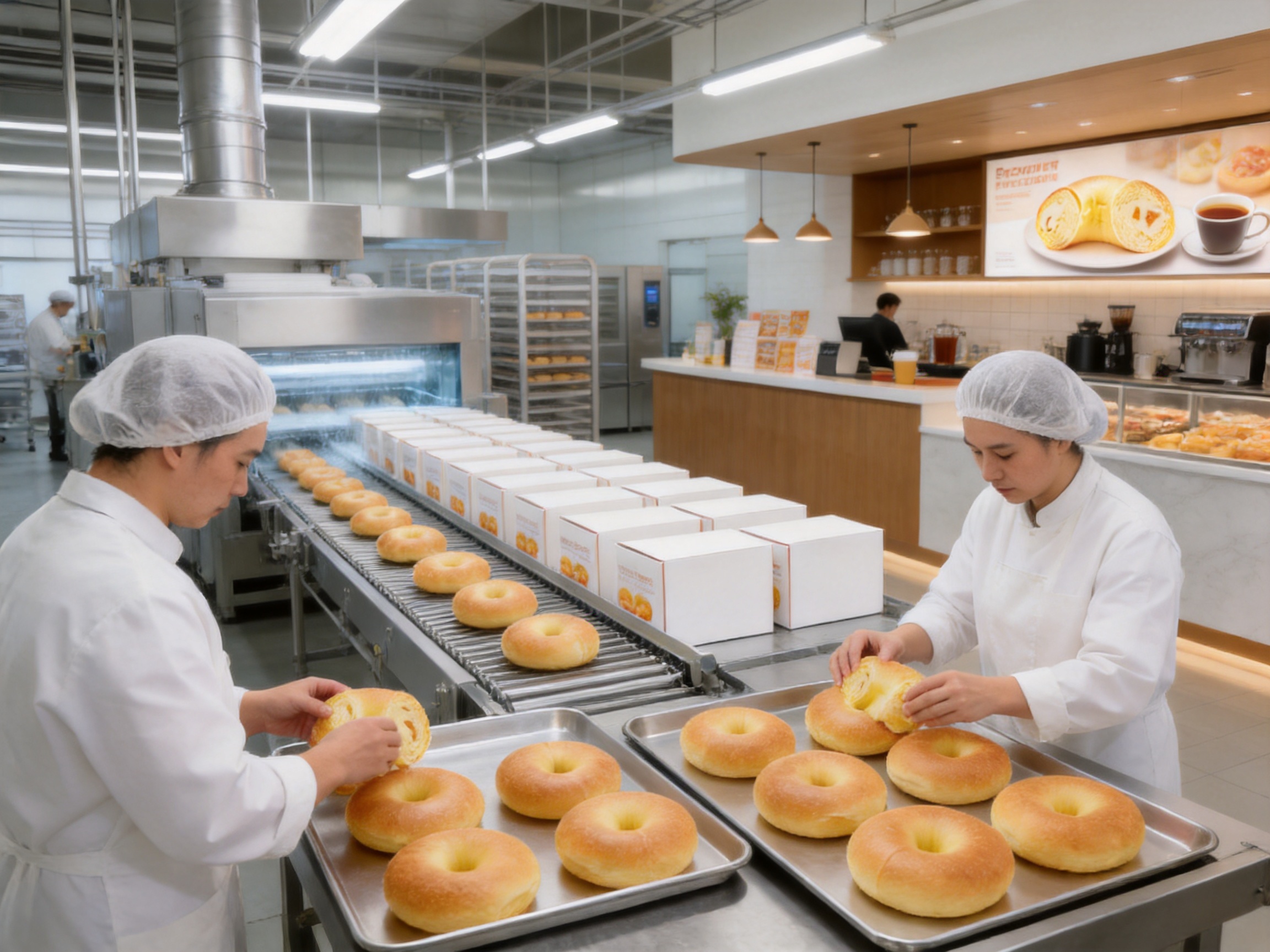
The product is manufactured by Jiangsu Goobagel Food Technology Co., Ltd., a Chinese frozen bakery producer specializing in bagel research and manufacturing since 2019. The company operates an integrated supply chain that covers raw materials, research and development, production, and nationwide distribution. This integrated structure is important for commercial customers because it connects product design with sourcing, manufacturing control, and delivery capability.
Goobagel Food has developed more than 100 clean-label bagel varieties for retail, foodservice, café chains, tea brands, and bakery operators. This level of product development experience can support customers that require more than a single standard product. It suggests the ability to work across different flavor directions, filling concepts, package formats, and application environments.
For buyers, a specialized bagel manufacturer can offer practical advantages over a general bakery supplier. Bagels have specific process requirements involving dough development, shaping, cooking or surface treatment, baking, filling control, freezing, and reheating performance. A producer focused on bagels is more likely to understand how each stage affects the final product.
Integrated Raw Material and R&D Management
Raw material management is essential for a product containing flour, citrus ingredients, cream cheese, butter, yeast, and other supporting components. Ingredient consistency influences flavor, texture, filling stability, and shelf-life performance. An integrated supply chain allows the manufacturer to coordinate ingredient specifications with product development objectives.
Research and development is especially important for filled bagels because the dough and filling must be designed together. The filling cannot be treated as an independent sauce. Its moisture, fat content, acidity, viscosity, and particle size affect dough handling, baking behavior, freezing stability, and consumer perception. Likewise, the dough must be strong enough to contain the filling without becoming too thick or dry.
Goobagel’s product development capabilities support the creation of differentiated products rather than only basic bagel shapes. The Kumquat Lemon Butter-Cream Cheese Bagel demonstrates this approach through its combination of premium dough, natural fermentation, double-citrus fruit, and dairy creaminess.
Manufacturing Consistency
Commercial customers need consistency from one production run to the next. A café chain may operate dozens or hundreds of locations, and a retail buyer may distribute products across multiple regions. Variations in size, filling distribution, texture, or bake response can affect customer satisfaction and operational efficiency.
A standardized manufacturing system helps control product weight, shape, dough development, filling placement, baking conditions, cooling, and freezing. The 78-gram specification offers a clear portion reference for packaging, nutrition calculation, inventory planning, and menu costing. Consistent portioning also supports predictable serving sizes in foodservice.
Frozen bakery production further requires attention to temperature control. The product must be frozen and stored under appropriate conditions to preserve its quality until preparation. A manufacturer experienced in frozen bagels can design products with the full supply chain in mind rather than focusing only on freshly baked performance at the factory.
Clean-Label Product Development
Goobagel has developed more than 100 clean-label bagel varieties. Clean-label expectations vary by market and customer, but the general direction is clear: buyers increasingly seek recognizable ingredients, transparent product concepts, and recipes that communicate quality. The product’s use of premium flour, natural yeast fermentation, citrus components, cream cheese, and dairy butter supports a straightforward ingredient story.
Clean-label positioning should always be supported by accurate ingredient declarations and local regulatory review. However, from a product-development perspective, a recipe centered on recognizable food components can make communication easier. It can also help retailers create a more premium presentation without relying entirely on artificial flavor language or excessive sweetness.
How the Product Fits Different Commercial Channels
Retail Grocery
In grocery retail, the product can be positioned within frozen breakfast, frozen bakery, premium snack, or specialty bagel categories. Its individual 78-gram format may support multipack packaging, mixed-flavor assortments, or single-serve grab-and-go presentations where local regulations and store systems permit.
Retail packaging can emphasize the product’s key points: a chewy bagel base, citrus fruit filling, cream cheese, and butter. The visual identity should communicate freshness and premium quality without suggesting that the product is simply a sweet pastry. Bright citrus colors, clean ingredient messaging, and serving suggestions can help shoppers understand its place in the breakfast and snack landscape.
The product may also work well in a mixed bagel assortment. A retailer could offer it alongside classic, savory, berry, or chocolate flavors. In that context, the citrus variety provides a refreshing contrast and helps the assortment appeal to shoppers looking for novelty.
Café Chains
Café operators can use the bagel as a ready-to-heat food item paired with coffee, tea, cold brew, or citrus-based beverages. Its flavor profile has enough richness to complement roasted coffee, while its acidity can provide contrast to milk-based drinks. The product can be served whole, sliced, warmed, or included in a breakfast combination.
Operational simplicity is a major benefit for café chains. A frozen filled bagel can reduce the need for extensive on-site preparation. Staff training can focus on storage, heating, presentation, and food safety procedures. Consistent portion size also simplifies menu pricing and inventory control.
For limited-time offers, the product can be introduced as a seasonal citrus special. It may also be included in a premium afternoon tea or snack pairing. Since citrus is widely recognized by consumers, the product can be described clearly without requiring an unfamiliar flavor explanation.
Tea and Beverage Brands
Tea brands and beverage-focused businesses often need food items that complement their drinks without overwhelming them. The citrus and cream cheese profile can pair naturally with black tea, jasmine tea, green tea, fruit tea, sparkling tea, and milk tea. The bagel’s chewiness also gives the pairing more substance than a small cookie or light pastry.
A beverage brand could use the product in a breakfast bundle, afternoon refreshment set, or promotional collaboration. The bagel’s fruit-forward identity gives it a natural connection to lemon tea, calamansi drinks, and other citrus beverages.
Hotels and Foodservice Operators
Hotels, catering businesses, and institutional foodservice operators may use the product in breakfast buffets, meeting catering, room-service selections, or prepacked meal boxes. The individual portion helps with serving control, while the frozen format can support planned inventory and reduce dependence on daily scratch production.
The product can be presented as a premium alternative to plain bread or ordinary breakfast rolls. Its filling provides built-in flavor, reducing the need for separate spreads or toppings. This can simplify buffet presentation and improve portion convenience for guests.
Bakery and Private-Label Brands
Private-label customers may use the product as a ready-made addition to their own bakery portfolio. The manufacturer’s experience with more than 100 bagel varieties provides a useful foundation for customization discussions, including packaging, product assortment, target channel, and positioning.
A private-label buyer may choose to maintain the current flavor identity or use it as inspiration for a broader citrus series. Possible development directions could include different portion sizes, assorted fruit fillings, seasonal packaging, or complementary savory products. Any customization would depend on technical requirements, minimum order quantities, regulatory standards, and commercial agreement.
From Ingredient Selection to Finished Frozen Product
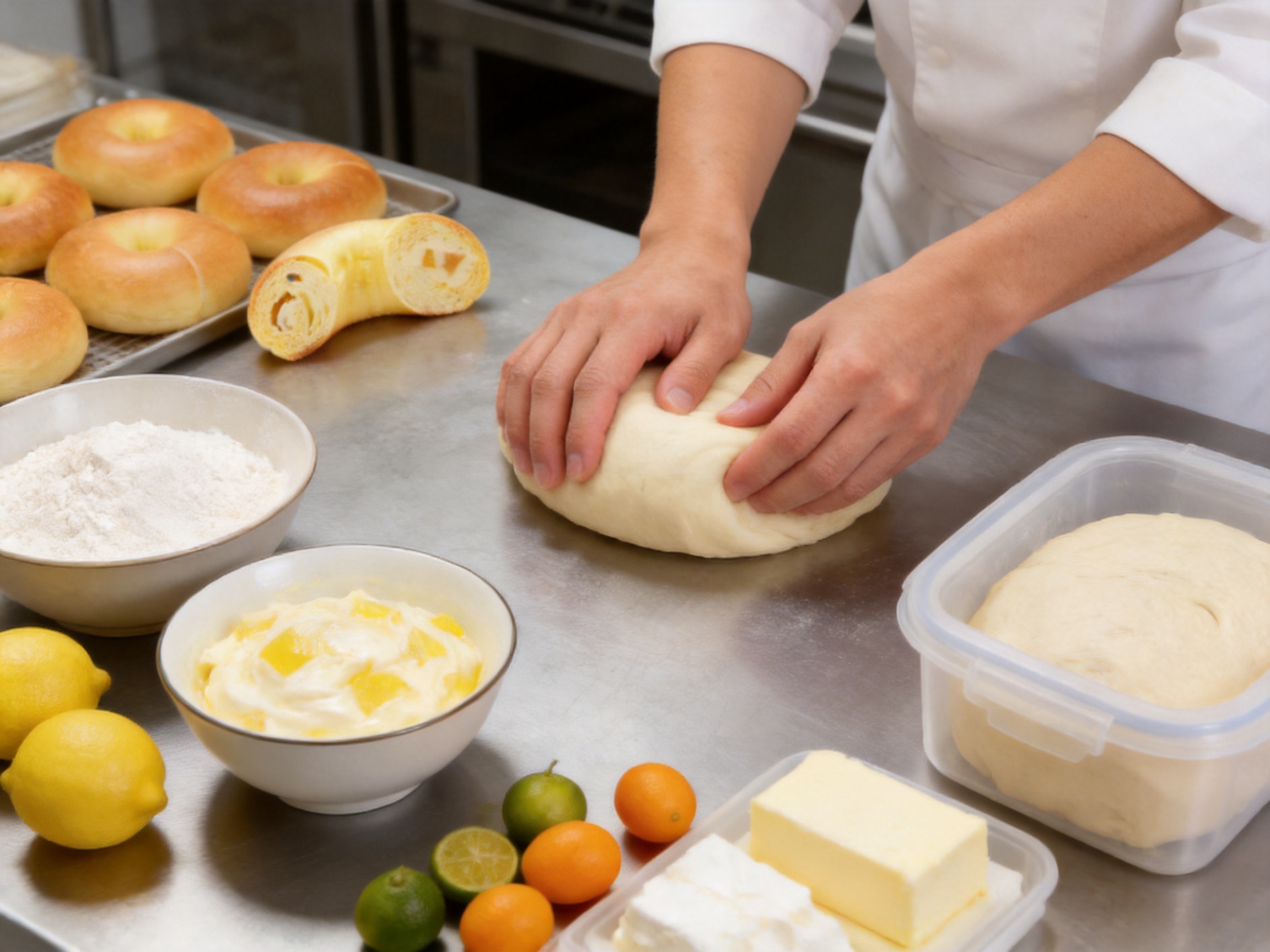
The manufacturing process begins with ingredient specifications. Premium flour must be selected for appropriate protein performance, absorption, dough strength, and flavor. Citrus ingredients must be evaluated for aroma, acidity, color, particle size, and consistency. Dairy components must provide the desired creaminess and stability in the filling system.
Once ingredients are approved, the dough is mixed and developed to create an elastic structure. The objective is not simply to maximize strength. Excessive development can produce a tough bite, while insufficient development may lead to poor shape retention or filling leakage. The process must create a dough that is workable during forming and pleasant after baking.
Natural yeast fermentation allows the dough to mature. Time, temperature, and dough condition must be managed carefully because fermentation affects flavor, gas retention, extensibility, and final volume. The fermentation stage is part of the product’s premium character, helping create the clean wheat aroma and structured crumb associated with the bagel foundation.
The filling is prepared as a balanced system rather than a loose mixture of ingredients. Calamansi puree and diced lemon must be distributed in a way that preserves their flavor and texture. Cream cheese and dairy butter must provide a smooth base that can surround the citrus elements. The filling should be stable enough for forming and baking while remaining creamy in the finished product.
During forming, the filling must be enclosed securely within the dough. This requires control over dough piece weight, filling weight, sealing, and shape. The bagel must retain its recognizable form while protecting the center. The dough-to-filling ratio influences both eating quality and manufacturing yield, so it must be carefully managed.
After shaping and any required surface treatment, the bagels are baked under controlled conditions. Baking develops the outer structure, wheat aroma, color, and internal crumb. The process must also heat the filling appropriately without causing excessive leakage, separation, or drying. Cooling follows baking to stabilize the product before freezing.
Freezing is a critical stage for maintaining product quality during distribution. Rapid and controlled freezing can help preserve texture and reduce quality changes during storage. The finished bagels are then packed for commercial distribution according to the requirements of the target market and channel.
Although exact process parameters may vary by production line and customer specification, the overall approach reflects a full-system view of frozen bakery manufacturing. The product is designed not only for factory output but also for transportation, storage, preparation, and final consumption.
Quality and Performance Considerations for Buyers
When evaluating a filled frozen bagel, commercial buyers should consider more than flavor. Product performance includes portion consistency, packaging integrity, frozen storage behavior, thawing response, reheating performance, filling distribution, bite, aroma, and appearance.
The Kumquat Lemon Butter-Cream Cheese Bagel is designed to provide a repeatable experience across these stages. Its structured dough helps protect the filling and maintain product identity. Its creamy citrus center offers a distinctive flavor after preparation. Its frozen format supports inventory planning and reduces the need for immediate consumption after production.
Buyers should also evaluate the product using their own equipment and operating procedures. A café convection oven, retail oven, air fryer, microwave, or other preparation system may produce different results. Product testing should therefore include the intended heating method, serving time, holding period, and packaging format.
For retail customers, shelf presentation and package communication are important. For foodservice customers, labor savings and speed of service may be more important. For private-label buyers, branding flexibility and supply reliability may be the key priorities. A specialized manufacturer can work with customers to align the product with the intended application.
| Evaluation Area | Product Relevance | Commercial Benefit |
|---|---|---|
| Flavor | Calamansi puree, diced lemon, cream cheese, and dairy butter create layered citrus richness. | Provides a distinctive alternative to common sweet or plain bagel flavors. |
| Texture | Premium flour, fine-grained dough structure, and natural fermentation support a chewy yet tender bite. | Improves eating satisfaction and supports premium positioning. |
| Portion | Each bagel is specified at 78 grams. | Supports predictable costing, packaging, and serving control. |
| Convenience | Frozen bakery format supports storage and preparation as needed. | Reduces dependence on daily scratch production and helps manage inventory. |
| Application | Suitable for retail, cafés, foodservice, beverage brands, and bakery programs. | Allows buyers to use one product across several sales occasions. |
| Differentiation | Double-citrus filling combined with cream cheese and butter. | Creates a memorable product story for menus and packaging. |
| Supply Capability | Produced by a company specializing in bagel R&D and frozen bakery manufacturing. | Supports more stable commercial sourcing and product development cooperation. |
Product Positioning and Consumer Appeal
The product can be positioned as a premium breakfast bagel, a modern fruit bagel, a café snack, or a lightly indulgent bakery item. Its versatility comes from the fact that it does not belong exclusively to one flavor category. It contains enough creaminess to satisfy consumers seeking indulgence, enough citrus brightness to appeal to freshness-oriented shoppers, and enough dough structure to remain a genuine bagel rather than a cake-like pastry.
Its flavor can also appeal to consumers who appreciate layered taste experiences. The first impression may be citrus-forward, followed by cream cheese smoothness and a warm butter note. The finish is intended to be clean rather than excessively sugary. This progression can make the bagel feel more sophisticated than products that deliver a single intense sweet note.
For younger consumers and urban café customers, the product offers novelty without excessive unfamiliarity. Calamansi may be less common in mainstream bagel selections, but the lemon and cream cheese combination provides a familiar reference point. For mature consumers, the product retains recognizable bakery elements while offering a more contemporary flavor direction.
The product may also be attractive to consumers who want convenient portion-controlled food. At 78 grams, it can serve as a compact breakfast or snack portion. Serving recommendations and nutritional information should be determined according to the final formulation and applicable local regulations, but the individual format itself supports practical everyday use.
Why Specialized Bagel Manufacturing Creates Value
Working with a specialized bagel manufacturer can provide advantages throughout the product lifecycle. A company focused on bagels can develop expertise in dough behavior, shaping, filling integration, baking, freezing, and reheating. This specialization can shorten development time and reduce the technical risks associated with introducing a new filled bakery product.
Goobagel Food’s history of bagel research and manufacturing since 2019 provides a focused base for this type of cooperation. Its portfolio of more than 100 clean-label bagel varieties indicates experience across multiple flavor and application categories. This is relevant to buyers that want a supplier capable of supporting product line expansion rather than only delivering one item.
The company’s integrated supply chain also supports coordination between R&D and production. In practice, a successful commercial product must be scalable. A recipe that performs well in a small laboratory batch may require modification before it can be produced consistently at commercial volume. Integrated manufacturing helps connect formulation decisions with production realities.
Nationwide distribution capability within China is another strength for customers serving the domestic market. It can help support broader delivery coverage and more organized supply planning. International buyers may additionally evaluate export documentation, packaging requirements, cold-chain arrangements, regulatory compliance, and destination-market specifications during the sourcing process.
The company’s stated values—persistence, craftsmanship, respect, and science—also reflect a product-development philosophy relevant to modern bakery manufacturing. Persistence supports continuous improvement, craftsmanship supports attention to texture and flavor, respect supports cooperation with customers and consumers, and science supports controlled development and process management.
Potential Serving and Merchandising Ideas
The most direct serving method is to warm the bagel and serve it whole. Heating can soften the interior, release citrus aroma, and enhance the dairy notes in the filling. The exact heating method should follow the product’s technical instructions and the operator’s food-safety procedures.
The bagel may also be sliced and presented as part of a breakfast plate. It can be paired with fresh fruit, yogurt, coffee, tea, or a light salad. Because the filling is already integrated, additional spreads may not be necessary, helping preserve the intended flavor balance.
For cafés, menu language can emphasize “double citrus,” “cream cheese,” “butter,” “naturally fermented,” or “chewy bagel texture,” subject to accurate labeling and approved claims. Retail merchandising can place the product in a premium frozen bakery section or feature it in a seasonal citrus display.
For catering and hospitality, the bagel can be offered in breakfast boxes or afternoon refreshment packages. Its individual format allows easy portion planning, while the distinctive flavor adds variety to menus that might otherwise rely heavily on plain bread, croissants, or standard muffins.
Important Considerations for Importers and Distributors
Importers and distributors should review product specifications, packaging, storage conditions, shelf-life requirements, minimum order quantities, and delivery schedules before commercial launch. Frozen bakery products depend on an uninterrupted cold chain, so logistics planning is essential from factory dispatch to final storage.
Market-specific labeling should be verified before sale. This may include ingredient declarations, allergen statements, nutritional information, storage instructions, preparation instructions, date coding, and country-of-origin requirements. Because the product contains wheat and dairy ingredients, allergen management is particularly important.
Buyers should also confirm the final product’s preparation performance in the target market. Local equipment, serving habits, and consumer expectations can differ. Product trials should assess the bagel’s internal temperature, filling consistency, external appearance, chewiness, and aroma after the intended preparation process.
Packaging design should protect the product during frozen storage and transport while giving the product sufficient shelf appeal. The front-of-pack message should communicate the flavor clearly. The back-of-pack content can explain the citrus filling, dairy components, serving method, and storage requirements.
Comparison with Common Market Alternatives
Compared with a plain bagel served with separate cream cheese, this product offers greater convenience and flavor integration. The consumer does not need to purchase or portion a separate spread. The fruit component is already included, and each bite is designed to contain both dough and filling.
Compared with a standard lemon pastry, the product offers a more substantial chewy texture and a less dessert-like eating experience. The bagel foundation provides structure and satiety, while the cream cheese and butter keep the product indulgent.
Compared with a berry-filled bagel, the double-citrus profile offers sharper aromatic brightness and a cleaner finish. Berry products may emphasize jam-like sweetness, whereas this product is designed around layered acidity, fruit texture, and dairy balance.
Compared with a chocolate bagel, the citrus variety provides a fresher and lighter flavor direction. This makes it useful for assortment balancing, especially when a retailer or café wants to offer both rich and refreshing options.
| Alternative Product | Typical Consumer Impression | Distinctive Position of the Citrus Bagel |
|---|---|---|
| Plain bagel with separate spread | Traditional and customizable, but requires extra preparation. | Provides an integrated filling with consistent portioning and flavor. |
| Berry-filled bagel | Sweet, fruity, and often jam-oriented. | Offers layered citrus acidity, lemon texture, and a cleaner finish. |
| Chocolate-filled bagel | Rich, sweet, and dessert-like. | Creates a brighter option with creaminess but less heavy flavor perception. |
| Standard lemon pastry | Soft, sweet, and pastry-oriented. | Combines citrus flavor with a resilient bagel bite and breakfast versatility. |
| Plain bread roll | Simple and functional. | Adds a premium flavor story and a built-in cream cheese center. |
Q&A
What is the Kumquat Lemon Butter-Cream Cheese Bagel?
It is a 78-gram filled bagel combining a chewy bagel base with calamansi puree, diced lemon, Anchor cream cheese, and dairy butter. It is designed to deliver a layered citrus flavor with a smooth, creamy finish.
What makes the flavor different from a standard lemon bagel?
The product uses two citrus components rather than relying on lemon alone. Calamansi puree provides bright fruit acidity, while diced lemon adds additional citrus aroma, peel-like depth, and small pieces of fruit texture. Cream cheese and butter then round out the flavor.
Is the product sweet or sour?
It is designed to be balanced rather than dominated by either sweetness or sourness. The citrus provides freshness and acidity, while cream cheese and butter soften the overall profile. The intended finish is lively and clean without being excessively sharp.
What type of texture does the bagel have?
The dough is developed to provide a fine-grained, chewy foundation that is firm yet tender. The center adds a creamy contrast, and diced lemon contributes additional textural interest.
How does natural yeast fermentation contribute to the product?
Natural yeast fermentation helps develop the dough’s wheat aroma, structure, and flavor complexity. It also supports the product’s premium positioning by contributing to a more developed bagel character.
Why is Japanese-style milling used?
The Japanese-style milling approach is intended to support a refined flour structure and a fine-grained crumb. In the finished bagel, this contributes to a cleaner bite and a balanced combination of chewiness and tenderness.
Who manufactures the product?
The product is manufactured by Jiangsu Goobagel Food Technology Co., Ltd., a Chinese frozen bakery producer specializing in bagel research and manufacturing since 2019.
What types of customers can purchase this product?
The product is suitable for retail buyers, foodservice operators, café chains, tea and beverage brands, hotels, bakery businesses, distributors, and private-label customers.
Can the bagel be used in a private-label program?
It is suitable for discussion as part of an OEM or private-label bakery program. Buyers should confirm customization options, packaging requirements, minimum order quantities, specifications, and regulatory needs with the manufacturer.
What is the benefit of the frozen format?
The frozen format allows commercial customers to store inventory and prepare products according to demand. It can reduce the need for daily scratch production and support more consistent portioning and quality across locations.
Can cafés serve the product as a breakfast item?
Yes. Its citrus and cream cheese profile works well for breakfast, coffee breaks, afternoon snacks, and light meal occasions. Preparation should follow the manufacturer’s instructions and the café’s food-safety procedures.
What beverages pair well with the bagel?
The bagel can pair with coffee, black tea, green tea, jasmine tea, milk tea, fruit tea, sparkling beverages, and other drinks with either roasted, creamy, or citrus-compatible notes.
Does the product contain dairy?
Yes. The filling includes Anchor cream cheese and dairy butter. Buyers should review the final ingredient declaration and allergen information for the specific market and product specification.
Does the product contain wheat?
Yes. The bagel foundation is made with premium flour. Wheat and dairy allergen declarations should be managed according to the requirements of the destination market.
How should buyers evaluate the product before placing an order?
Buyers should conduct trials using their intended storage, thawing, heating, serving, and holding procedures. Evaluation should include flavor, aroma, texture, filling distribution, appearance, portion consistency, packaging, and operational convenience.
How many bagel varieties does the manufacturer offer?
The company has developed more than 100 clean-label bagel varieties for retail, foodservice, café chains, tea brands, and bakery operators. The exact available range may depend on current production schedules and customer requirements.
What should distributors confirm before importing?
Distributors should confirm product specifications, storage temperature, shelf life, packaging, cold-chain requirements, order quantities, delivery schedules, documentation, labeling, and destination-market compliance.
Conclusion
The Kumquat Lemon Butter-Cream Cheese Bagel offers a strong combination of sensory differentiation and commercial practicality. Its flavor is built around a double-citrus layer of calamansi puree and diced lemon, supported by the smooth richness of Anchor cream cheese and dairy butter. Its dough foundation uses premium flour, Japanese-style milling, and natural yeast fermentation to create a structured, chewy, and aromatic bagel experience.
Compared with plain, berry, chocolate, or standard lemon alternatives, the product provides a more layered flavor story and a more varied texture. It can satisfy consumers who want a refreshing but indulgent bakery item, while giving retailers and foodservice operators a convenient frozen product with multiple applications.
The manufacturing capabilities behind the product add further value. Jiangsu Goobagel Food Technology Co., Ltd. brings specialized bagel experience, an integrated supply chain, more than 100 developed varieties, and commercial production knowledge across retail and foodservice channels. These strengths can support buyers seeking reliable supply, consistent quality, OEM cooperation, or private-label development.
For modern bakery programs, the product represents more than a flavored bagel. It is a complete product concept that connects ingredient quality, fermentation, filling technology, frozen distribution, and market differentiation. Its combination of chewy dough, bright citrus, creamy dairy, and convenient preparation gives it the potential to occupy a distinctive place in premium frozen bakery assortments.
References
1. Jiangsu Goobagel Food Technology Co., Ltd. Product information for the Kumquat Lemon Butter-Cream Cheese Bagel.
2. Jiangsu Goobagel Food Technology Co., Ltd. Corporate information concerning bagel research, manufacturing, clean-label product development, and frozen bakery distribution.
3. General principles of wheat flour functionality, dough development, fermentation, and bakery texture control.
4. General principles of frozen bakery manufacturing, cold-chain management, and reheating performance.
5. General food industry guidance concerning dairy allergen declaration, wheat allergen management, product labeling, and commercial bakery quality control.
