
 中文简体
中文简体
 English




postmaster@goobagelfood.com
Content
- 1 1. Product Overview and Market Position
- 2 2. The Foundation: Premium Flour and Japanese-Style Milling
- 3 3. Natural Yeast Fermentation and Flavor Development
- 4 4. The Double-Citrus Flavor Architecture
- 5 5. Cream Cheese and Dairy Butter: Richness with Definition
- 6 6. Product Experience from First Bite to Finish
- 7 7. Frozen Bakery Manufacturing Strengths
- 8 8. OEM and Private-Label Potential
- 9 9. Why This Product Can Outperform Conventional Competitors
- 10 10. Quality, Handling, and Operational Considerations
- 11 11. Brand and Manufacturing Credibility
- 12 12. Recommended Product Positioning
- 13 13. Suggested Serving and Pairing Concepts
- 14 14. Frequently Asked Questions
- 14.1 What type of product is the Kumquat Lemon Butter-Cream Cheese Bagel?
- 14.2 What citrus ingredients are used?
- 14.3 Is the product very sweet?
- 14.4 What makes the dough different from an ordinary bagel?
- 14.5 Why is natural yeast fermentation important?
- 14.6 What role does the dairy butter play?
- 14.7 What is the product weight?
- 14.8 Who manufactures the product?
- 14.9 Does the manufacturer offer OEM and private-label services?
- 14.10 How many bagel varieties has the company developed?
- 14.11 Can the product be used in cafés?
- 14.12 Can it be sold through retail channels?
- 14.13 What should buyers consider before placing an order?
- 14.14 What allergens may be relevant?
- 14.15 Why is this product different from a plain bagel with cream cheese?
- 15 15. Conclusion
- 16 References
- 17 Product: Kumquat Lemon Butter-Cream Cheese Bagel
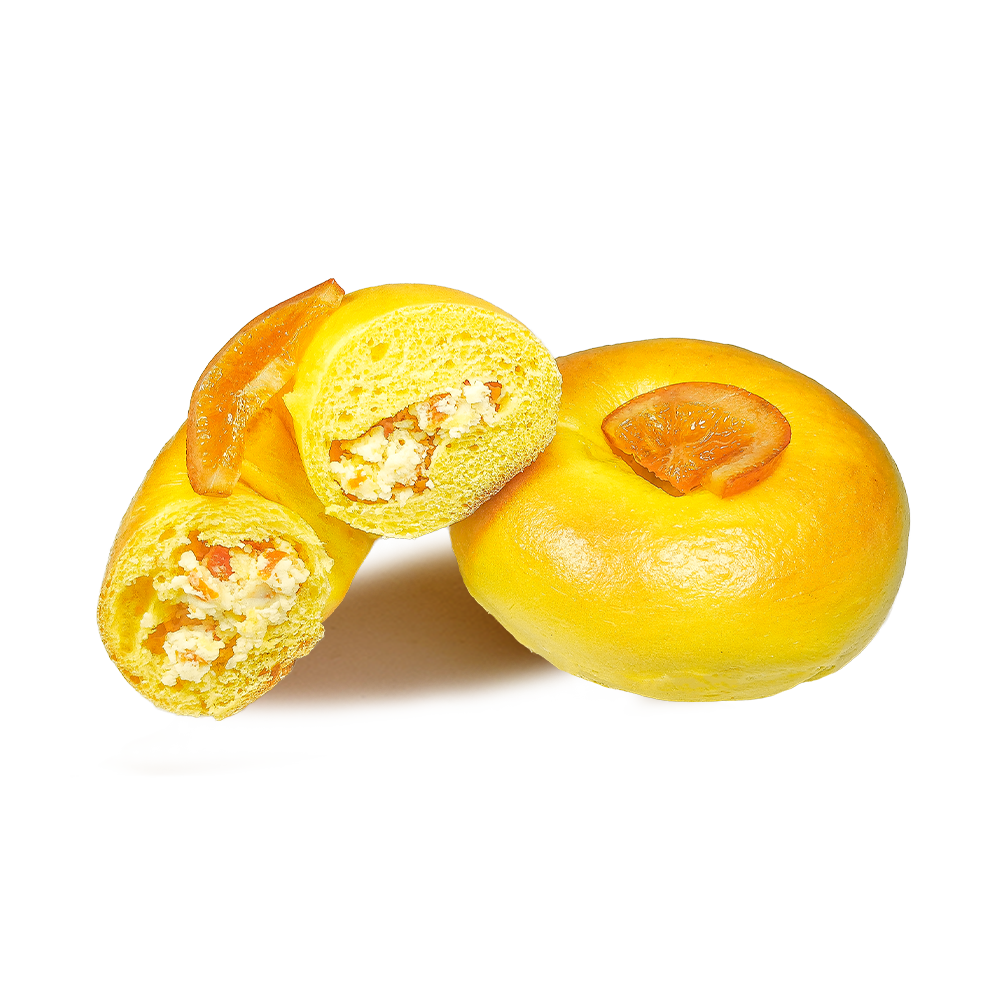
The Kumquat Lemon Butter-Cream Cheese Bagel brings together the structural qualities of a traditionally fermented bagel and the bright, layered character of premium citrus. Designed for modern retail, foodservice, cafés, bakery operators, and private-label programs, it offers a distinctive alternative to ordinary fruit bagels and standard cream-cheese-filled products.
Its appeal begins with contrast. The foundation is firm, chewy, and resilient, while the filling is smooth, creamy, fragrant, and fruit-forward. Calamansi puree contributes a vivid citrus tang, diced lemon adds texture and a gentle peel-like bitterness, and the combination of Anchor cream cheese with dairy butter creates a rich yet balanced finish. Rather than relying on excessive sugar, the product develops its identity through aroma, acidity, texture, and carefully controlled richness.
For buyers and food businesses, this product also represents a practical commercial solution. It is developed by Jiangsu Goobagel Food Technology Co., Ltd., a Chinese frozen bakery manufacturer specializing in bagel research and production since 2019. The company has built an integrated operating model that connects raw-material sourcing, product development, manufacturing, quality control, and distribution. This structure helps commercial customers obtain consistent products while reducing the complexity of developing and producing filled bagels independently.
The result is more than a flavored bagel. It is a carefully positioned bakery product that responds to several current market needs: clean-label appeal, convenient frozen distribution, premium flavor combinations, reliable portion consistency, and differentiation for cafés, retailers, and foodservice menus.

Kumquat Lemon Butter-Cream Cheese Bagel
1. Product Overview and Market Position
The Kumquat Lemon Butter-Cream Cheese Bagel belongs to the fruit bagel category, while also occupying an important space between a classic bagel and a dessert-inspired filled bakery item. It can be served as a breakfast product, a café accompaniment, a light snack, or a premium bakery selection. Its flavor profile is recognizable enough for broad consumer appeal but distinctive enough to create product curiosity.
Many fruit-flavored bakery products depend primarily on sweetness. This bagel takes a more sophisticated direction. The citrus components are not simply added to create a sweet fruit note. Instead, they are layered to create brightness, freshness, texture, and a clean finish. Calamansi puree provides a sharp, aromatic acidity, while diced lemon contributes a more complex citrus character that includes subtle bitterness and a natural fruit texture.
The filling further strengthens this positioning. Cream cheese is familiar to bagel consumers, but the addition of dairy butter gives the filling a warmer and more rounded aroma. The fat component helps carry the citrus fragrance across the palate, while the acidity prevents the cream cheese from feeling too heavy. This balance is especially valuable in commercial bakery products because it allows the item to feel indulgent without becoming overwhelmingly rich.
At 78 grams, the product offers a practical individual serving size. It is substantial enough to function as a satisfying snack or breakfast item, yet compact enough for café displays, retail freezer cabinets, grab-and-go cases, catering assortments, and mixed bakery boxes. The size also supports portion control and predictable inventory planning for commercial buyers.
A Premium Alternative to Basic Bagel Flavors
Classic plain, sesame, onion, and cinnamon-based bagels remain important in the market, but they often compete in crowded categories. A citrus cream-cheese-filled bagel creates a stronger point of distinction. Its flavor combines familiar bakery ingredients with a less common citrus direction, allowing operators to expand their menus without introducing an entirely unfamiliar format.
Compared with a plain bagel served with a separate spread, the filled format provides convenience and consistency. The consumer does not need to purchase or portion cream cheese separately. Each unit is designed to deliver a repeatable relationship between bread, filling, citrus aroma, and richness. For cafés and foodservice operators, this can simplify preparation and reduce the need for multiple ingredients at the point of service.
Compared with a highly sweet pastry, the product can appeal to customers who want a more balanced bakery experience. The chewy dough creates a satisfying base, while the citrus acidity keeps the flavor lively. This makes it suitable for occasions where a consumer may prefer something more substantial than a cake or pastry but more flavorful than an ordinary bread roll.
Competitive Advantages at a Glance
| Product Attribute | Consumer Benefit | Commercial Advantage |
|---|---|---|
| Premium flour foundation | Clean wheat aroma and satisfying structure | Supports a premium product position |
| Japanese-style milling approach | Fine-grained, even, and pleasant crumb | Creates a differentiated texture profile |
| Natural yeast fermentation | More developed flavor and resilient chew | Strengthens product quality perception |
| Calamansi puree | Bright and energetic citrus acidity | Offers a distinctive fruit identity |
| Diced lemon | Fruit texture and subtle peel-like complexity | Creates a layered flavor rather than a simple filling |
| Cream cheese and dairy butter | Silky, aromatic, and rounded mouthfeel | Supports premium indulgence without excessive sweetness |
| Frozen bakery format | Convenient availability and preparation | Supports inventory planning and wider distribution |
| 78-gram format | Practical single serving | Suitable for retail, cafés, and foodservice applications |
2. The Foundation: Premium Flour and Japanese-Style Milling
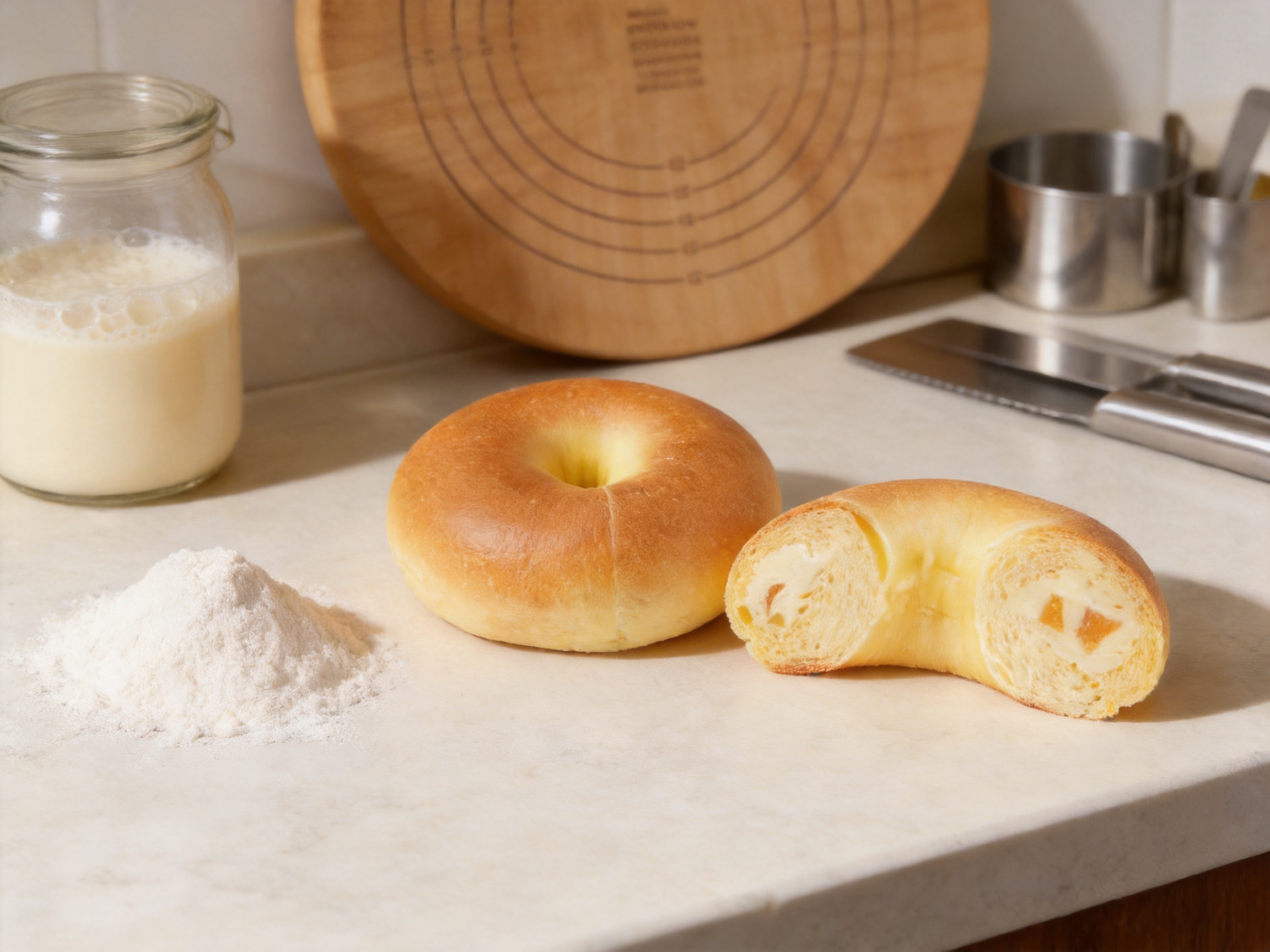
A filled bagel is only as successful as its dough. The filling may attract initial attention, but the bread determines whether the product feels premium, satisfying, and memorable. In the Kumquat Lemon Butter-Cream Cheese Bagel, the dough is developed from carefully selected premium flour and processed using a Japanese-style milling approach.
Milling influences the behavior of flour during mixing, fermentation, shaping, baking, and storage. A carefully controlled milling approach can contribute to a more uniform flour particle profile, helping the dough develop an even structure. For a bagel, this is particularly important because the product must remain cohesive and chewy while also supporting a filled interior.
The intended result is a fine-grained crumb with a firm yet tender bite. The texture should resist collapsing under the weight of the filling, but it should not become dry, tough, or excessively dense. This balance is a key point of differentiation. Some low-quality bagels may be overly hard on the outside, crumbly inside, or heavy after freezing and reheating. A properly developed dough can preserve a more pleasant eating experience across the product’s commercial life.
Why Dough Structure Matters in a Filled Bagel
Filled bagels present technical challenges that are not always found in plain bagels. The dough must be strong enough to contain the filling during forming and baking. At the same time, it must allow the consumer to bite through the product easily. If the dough is too weak, the filling may leak or the shape may become inconsistent. If it is too dense, the citrus and cream-cheese profile may be masked by an overly heavy bread texture.
The product’s chewy foundation helps solve this structural challenge. A resilient crumb creates a clear textural contrast with the smooth filling. That contrast is central to the product experience: the exterior and bread interior provide resistance, while the center delivers softness and creaminess.
The flour choice also supports the clean wheat aroma described for the product. This is important because citrus flavors can become artificial or unbalanced when placed against a weak or overly processed dough. A mild, natural grain character provides a neutral but flavorful base that allows calamansi and lemon to remain prominent without competing with them.
Texture as a Premium Signal
Consumers often judge bakery quality through texture before they consciously analyze flavor. A bagel that has a satisfying bite can communicate freshness, craftsmanship, and value. The fine-grained crumb of this product is intended to feel cohesive rather than coarse. Its chew should be noticeable but not exhausting, and its firmness should support the filling rather than overpower it.
For commercial customers, a reliable texture is equally important. Retailers need products that perform consistently across batches. Café operators need a bagel that can be served in a predictable condition after the recommended preparation process. Foodservice buyers need products that can be incorporated into operating routines without excessive variation in appearance or eating quality.
The combination of premium flour and a controlled milling approach provides a technical foundation for this consistency. While final performance also depends on storage, handling, and preparation, the product begins with a dough designed for commercial reliability rather than occasional small-batch use alone.
3. Natural Yeast Fermentation and Flavor Development
Natural yeast fermentation is another defining element of the product’s dough system. Fermentation is not only a leavening step. It is also a process through which the dough develops aroma, elasticity, flavor depth, and internal structure.
Compared with a dough designed only for rapid production, a naturally fermented dough can offer a more developed wheat character. The fermentation process allows the flour, water, and yeast system to evolve over time. This contributes to the clean aroma and satisfying chew expected from a premium bagel.
In this product, fermentation serves a particularly important role because the citrus filling is bright and aromatic. The dough needs enough character to feel like a genuine bagel, but it must remain restrained enough to support the fruit profile. A well-managed fermentation provides that balance. It gives the bread a deeper foundation without introducing an aggressive flavor that could conflict with calamansi, lemon, cream cheese, or butter.
Supporting a Firm Yet Tender Crumb
The phrase “firm yet tender” describes an important quality target. Firmness is necessary for the traditional bagel identity and for structural support. Tenderness ensures that the product remains pleasant to eat and does not feel dry or overly dense.
Natural yeast fermentation can contribute to a more flexible dough network and a better-developed crumb. The result is intended to be resilient without being rubbery. When the product is cut, warmed, or bitten, the dough should retain its shape while yielding naturally.
This balance is especially useful in frozen bakery applications. Products that are designed only for immediate consumption may not maintain their intended texture after freezing and subsequent preparation. A commercial frozen bagel must be engineered with the entire supply chain in mind. Dough development, filling behavior, baking, freezing, storage, and final preparation all influence the consumer experience.
Manufacturing Control Behind Fermentation
Fermentation requires process discipline. Variables such as ingredient temperature, mixing intensity, fermentation time, dough temperature, yeast activity, and production scheduling can affect the final product. A professional manufacturer must manage these factors carefully to ensure that one batch does not differ significantly from another.
Goobagel’s integrated manufacturing model supports this kind of control. The company’s activities cover raw materials, research and development, production, and distribution. This gives the manufacturer a connected view of the process rather than treating each stage as an isolated activity.
For OEM and private-label customers, this integration is valuable. Buyers are not only purchasing a finished bagel; they are also relying on the producer’s ability to repeat the formulation, manage production conditions, and deliver stable supply. A manufacturer with internal product-development and production capabilities can respond more efficiently when customers need changes to pack formats, flavor profiles, serving sizes, or application requirements.
4. The Double-Citrus Flavor Architecture
The flavor design of the Kumquat Lemon Butter-Cream Cheese Bagel is built around two citrus components rather than one. This creates greater complexity and helps prevent the product from tasting like a simple sweetened lemon filling.
Calamansi Puree: Bright, Clear, and Energetic
Calamansi puree provides the first layer of citrus expression. Calamansi is valued for its lively acidity and distinctive aromatic character. In a filled bagel, it can create an immediate sense of freshness when the consumer reaches the center.
The puree format allows the fruit character to be distributed through the filling in a smooth and integrated way. Rather than presenting only dry or powdered flavor notes, puree can contribute a more natural fruit impression. Its acidity also helps cut through the richness of cream cheese and butter, making the overall filling feel lighter on the palate.
This brightness is commercially useful because consumers often seek products that feel refreshing as well as indulgent. A rich filling without acidity may become tiring after several bites. Calamansi helps maintain energy and definition, giving the product a more complete flavor arc.
Diced Lemon: Texture and Gentle Bitterness
Diced lemon adds a second dimension. Its value is not limited to flavor intensity. The small fruit pieces introduce a subtle textural variation that contrasts with the smooth cream-cheese base.
Lemon can also contribute a mild peel-like bitterness. This bitterness is not intended to dominate the product. Instead, it creates depth and prevents the citrus profile from becoming one-dimensional. The result moves beyond a basic sweet-and-sour combination toward a more layered experience involving acidity, fruit texture, aroma, and a clean finish.
In premium bakery development, small textural details can have a significant effect. A completely smooth filling may feel uniform from beginning to end. Diced fruit creates moments of variation, helping the consumer recognize the presence of real fruit elements and adding interest to every bite.
Why Two Citrus Components Perform Better Than One
A single citrus ingredient may produce a recognizable flavor, but it can lack dimension. Calamansi and lemon complement each other because they contribute different qualities. Calamansi emphasizes brightness and tang, while lemon contributes familiar citrus aroma, fruit texture, and restrained bitterness.
Using both ingredients allows the product to avoid two common weaknesses. First, it does not depend entirely on sweetness to communicate fruit flavor. Second, it does not rely only on sharp acidity, which could make the filling feel aggressive. The two citrus elements are balanced by the cream cheese and butter, producing a flavor that is refreshing but not harsh.
This design also creates a clear point of difference from ordinary lemon-flavored bakery products. The product is not simply a lemon bagel. It is a layered citrus bagel with a specific combination of fruit ingredients and dairy richness.
5. Cream Cheese and Dairy Butter: Richness with Definition
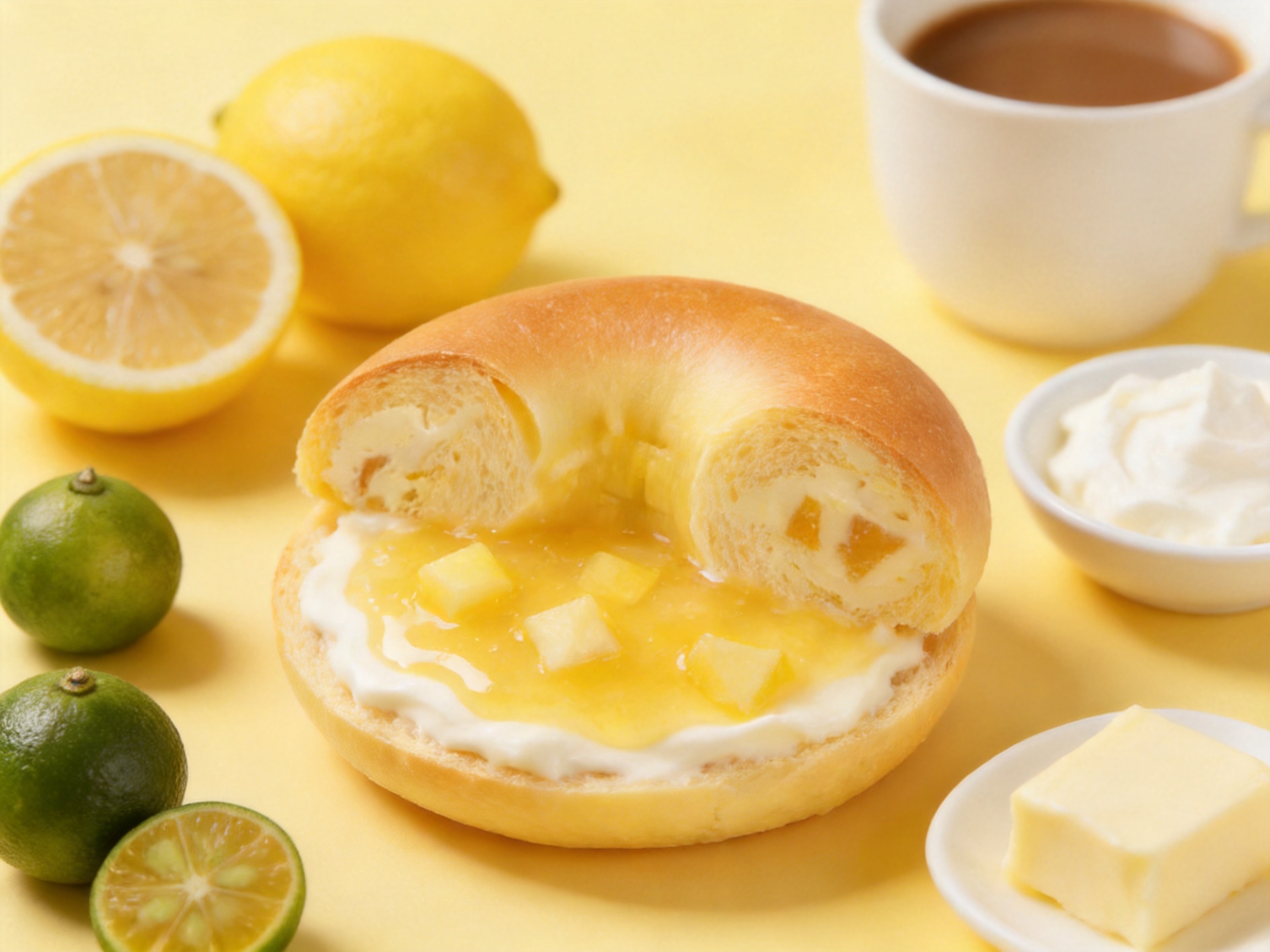
The filling’s dairy components are selected to support, rather than conceal, the citrus. Anchor cream cheese provides a smooth and substantial base. Dairy butter contributes a warm, rounded aroma and a fuller mouthfeel.
Cream cheese is naturally suited to bagels because consumers already associate the two products. However, the filling in this product is designed to go beyond a standard spread. It is integrated with citrus ingredients so that the cream cheese acts as an anchor for acidity and aroma.
Anchor Cream Cheese as the Flavor Anchor
The term “anchor” is useful because cream cheese gives the filling body and stability. Its creamy texture softens the sharpness of calamansi and lemon while preserving their identity. Without this dairy foundation, the citrus might appear too thin or pointed.
Cream cheese also provides familiarity. Even when consumers encounter calamansi as a flavor, the presence of cream cheese makes the product easier to understand. The consumer can recognize the overall format as a bagel with a creamy filling while discovering a more modern flavor combination within it.
Dairy Butter for Aroma and Roundness
Dairy butter adds an additional layer of richness. Its warm aroma can make the filling feel more fragrant and bakery-oriented. It also helps create a smoother transition between the chewy dough and the citrus center.
The purpose of butter is not to make the product heavy. Instead, it helps round the sharp edges of the fruit components. A carefully balanced butter contribution can make acidity feel brighter because the contrast is clearer. This is different from simply reducing acidity. The fruit remains expressive, but the overall impression becomes more polished.
Indulgence Without Excessive Sweetness
One of the product’s strongest advantages is its restrained sweetness. Many filled bakery items use a high sugar level to create immediate impact. That approach can be effective for certain product categories, but it may also limit repeat consumption. A product that is too sweet can feel suitable only as an occasional dessert.
The Kumquat Lemon Butter-Cream Cheese Bagel takes a more balanced approach. Cream cheese and butter create indulgence through texture and aroma, while citrus provides energy and freshness. This allows the product to serve multiple occasions, including breakfast, afternoon refreshment, café pairing, and light snacking.
For retailers and foodservice operators, a balanced flavor can increase menu flexibility. The product may be positioned with coffee, tea, yogurt, fruit beverages, or light breakfast combinations. It can also fit into premium bakery assortments where variety is important but excessive sweetness is not desirable across every item.
6. Product Experience from First Bite to Finish
The sensory experience can be understood as a progression. The first impression comes from the bagel’s aroma and exterior structure. The consumer then experiences the chewy dough, followed by the creamy filling. As the filling opens, calamansi introduces brightness, diced lemon adds texture and complexity, and butter and cream cheese create a smooth finish.
This progression gives the product a stronger sensory identity than a bagel with only a flavored topping. The filling is not an afterthought. It is central to the design and works in relationship with the dough.
Appearance and Portion Appeal
A filled bagel creates visual and merchandising value. When cut open or displayed in a suitable package, the contrast between the bread and the creamy citrus center can help communicate the product concept. The 78-gram format also makes the item easy to include in single-serve packaging and mixed product assortments.
For retail buyers, visual differentiation is important in a crowded freezer or bakery case. A product with a clearly defined flavor name and a recognizable filled format can attract customers who are searching for something beyond conventional bagel varieties.
Texture Contrast
The texture contrast is one of the product’s most important advantages. The bagel is structured and chewy, while the filling is silky and creamy. Diced lemon creates small points of fruit texture within the filling, adding another layer of variation.
Texture contrast helps maintain consumer interest. Each component has a role: the dough supplies chew, the cream cheese supplies smoothness, the butter supplies softness and aroma, and the diced lemon supplies fruit texture. The product therefore feels composed rather than blended into a single undifferentiated flavor.
Flavor Finish
The finish is intended to be clean and lively. Citrus remains present after the creamy sensation begins to fade, preventing the final impression from becoming overly fatty or sweet. This makes the product particularly suitable for pairing with beverages.
Coffee can provide roasted bitterness against the bright citrus. Tea can reinforce the product’s refreshing character. Milk-based beverages can extend the creamy notes. Sparkling or fruit beverages can create a more energetic breakfast or snack combination. Such pairing flexibility adds value for café and foodservice customers.
7. Frozen Bakery Manufacturing Strengths
The frozen format is a major commercial advantage. Frozen bakery products can support consistent supply, reduce daily preparation requirements, and extend the operational reach of a product. However, frozen production must be handled with technical precision. Freezing and storage can affect dough structure, filling stability, moisture migration, aroma, and final texture.
A capable frozen bakery manufacturer must therefore consider the full product lifecycle. This includes ingredient selection, dough development, filling formulation, forming, baking, cooling, freezing, packaging, storage, transportation, and preparation instructions.
Integrated Supply Chain Management
Goobagel operates an integrated supply chain covering raw materials, research and development, production, and nationwide distribution. This structure supports closer coordination between product design and manufacturing execution.
Integrated control can provide several advantages. Raw materials can be assessed according to their impact on dough performance and flavor. R&D teams can develop prototypes with manufacturing conditions in mind. Production teams can scale validated formulas more efficiently. Distribution planning can be connected to storage and delivery requirements.
For wholesale customers, this means the product is supported by a system rather than by a single recipe. Reliable commercial supply depends on repeatable procurement, manufacturing capacity, packaging coordination, and distribution planning. An integrated manufacturer is better positioned to coordinate these elements.
Product Development Capability
Goobagel has developed more than 100 bagel varieties for different commercial applications. This breadth indicates experience in flavor development, dough formulation, filling systems, product sizing, and market positioning.
The Kumquat Lemon Butter-Cream Cheese Bagel demonstrates how that capability can be applied to a specific concept. The product is not based on a single flavor note. It combines flour selection, Japanese-style milling, natural yeast fermentation, citrus puree, diced fruit, cream cheese, and butter. Such a formulation requires coordination between sensory goals and production practicality.
For OEM and private-label customers, a broad development background can reduce the time required to move from concept to finished product. Customers may approach the manufacturer with a target flavor, consumer segment, serving size, or retail position. The manufacturer can then use its existing technical knowledge to support sample development and commercialization.
Consistency for Commercial Applications
Consistency is essential for brands, cafés, and distributors. Customers expect the same product experience when they reorder or encounter the product at a different location. Variations in filling quantity, dough weight, citrus intensity, or texture can weaken consumer confidence.
Standardized manufacturing processes help control these variables. In a filled bagel, portion accuracy is especially important because the ratio of dough to filling determines the overall experience. Too little filling may make the product seem ordinary, while too much may compromise structure or overpower the dough.
A professional production system is designed to repeat the intended balance across batches. This consistency supports menu planning, nutritional calculation, inventory management, pricing, and customer satisfaction.
8. OEM and Private-Label Potential
The product is suitable for businesses seeking a differentiated frozen bagel under their own brand or as part of an existing product portfolio. OEM and private-label programs allow retailers, café chains, foodservice groups, and bakery operators to offer specialized products without building a complete bagel manufacturing operation.
A citrus-filled bagel can be adapted to several commercial strategies. It may serve as a seasonal launch, a permanent premium flavor, a limited-edition café item, or a component of a wider fruit-bagel collection. Its unusual combination of calamansi, lemon, cream cheese, and butter gives buyers room to create a distinctive product story.
Applications for Retail
Retailers can position the product in frozen bakery sections, premium breakfast selections, or specialty snack ranges. Its individual serving format is practical for household consumption, while its filled profile can help create a stronger point of difference than plain bagels.
Retail packaging may emphasize the citrus combination, creamy center, chewy bagel base, and convenient preparation format. Clear flavor communication is important because consumers may be familiar with lemon but less familiar with calamansi. The product story should explain that the two citrus ingredients create brightness and depth rather than presenting them as unrelated flavors.
Applications for Cafés
Cafés can serve the bagel as a ready-to-prepare breakfast or snack item. It can be paired with coffee, tea, iced beverages, and fruit-based drinks. The flavor profile is sufficiently distinctive for menu promotion, yet the bagel format remains familiar and easy for customers to understand.
The product can also contribute to seasonal menu development. Citrus flavors are often associated with freshness and can be particularly attractive in spring and summer promotions, although a frozen format allows year-round availability when supply planning is appropriate.
Applications for Foodservice
Foodservice operators may use the product in hotel breakfast programs, office catering, school or institutional cafés, convenience foodservice, and mixed bakery offerings. The single-serving format supports portion management and reduces the need for on-site filling or assembly.
For catering, the bagel can be served as part of a breakfast box or snack assortment. For institutional settings, its familiar bread format may be easier to introduce than more specialized pastries. For convenience-oriented operations, the product offers a premium alternative to standard packaged breakfast items.
Applications for Private Labels
Private-label customers can build the product into a branded range of frozen bakery products. Depending on market requirements, the customer may focus on clean-label communication, premium ingredients, fruit-forward flavor, café-style indulgence, or convenient preparation.
Goobagel’s experience across research, production, and distribution can support cooperation during product development. The final program would still require customer-specific confirmation of packaging, labeling, regulatory compliance, specifications, minimum order quantities, storage conditions, and delivery arrangements.
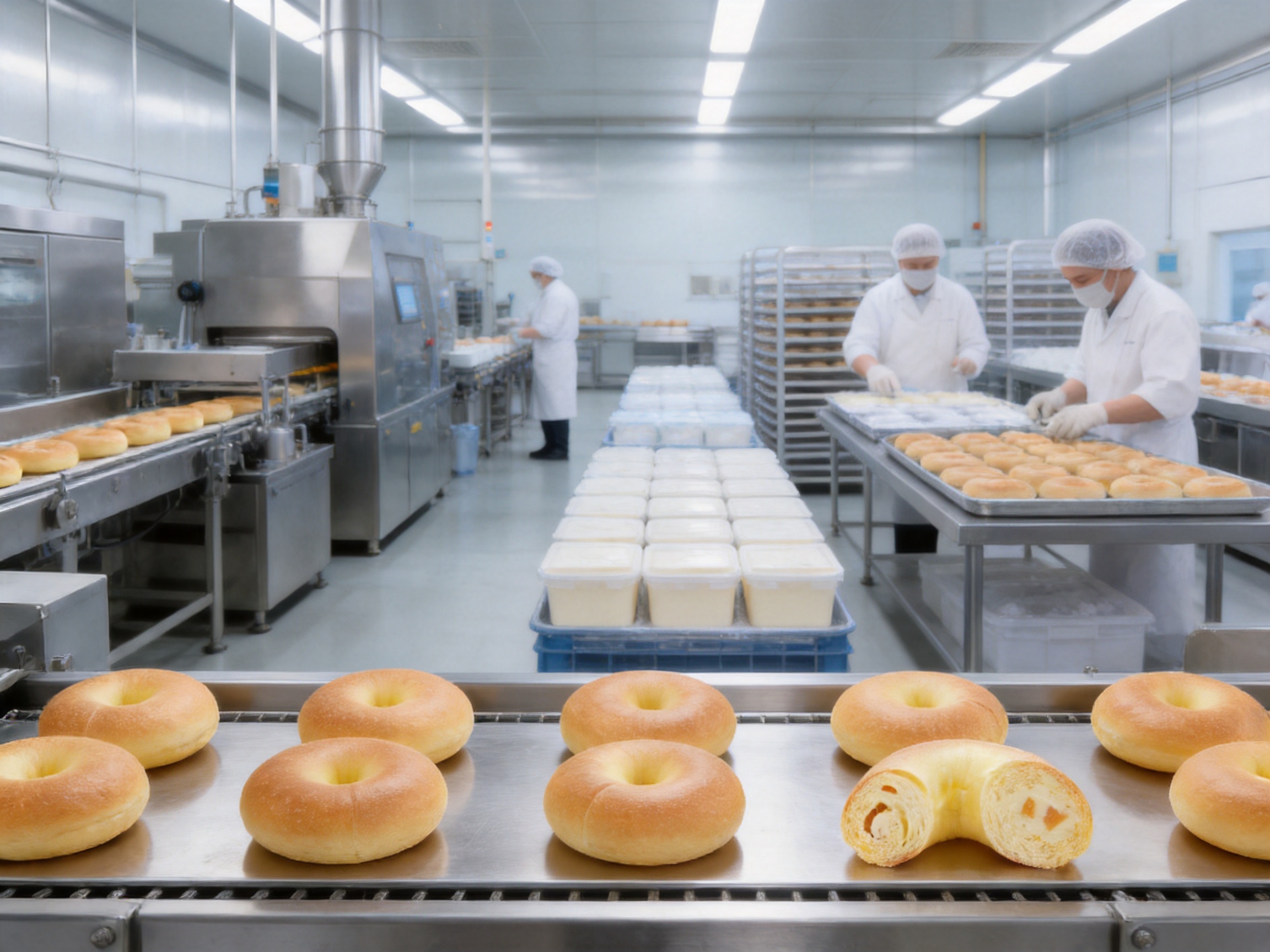
9. Why This Product Can Outperform Conventional Competitors
Competitive performance depends on more than flavor novelty. A product must deliver a strong consumer experience and provide operational value to the buyer. The Kumquat Lemon Butter-Cream Cheese Bagel combines several advantages that can help it compete effectively.
Distinctive Flavor Without Excessive Complexity
The citrus combination is differentiated but understandable. Consumers can recognize lemon and cream cheese, while calamansi adds a more unusual point of interest. This is a practical form of innovation: the product feels new without becoming difficult to explain.
Balanced Indulgence
The use of cream cheese and dairy butter gives the product a premium character, but citrus acidity keeps the profile from becoming overly heavy. This balance may encourage broader consumption than a heavily sweetened bakery item.
Stronger Texture Identity
The chewy bagel base creates a clear distinction from soft cakes, sweet rolls, and filled pastries. It gives the product greater substance and allows it to function in breakfast and snack occasions rather than only dessert occasions.
Convenient Filled Format
A filled bagel provides the flavor of a bagel-and-spread combination in a single unit. This improves convenience for consumers and simplifies preparation for commercial operators. The filling is already integrated, so there is less need for additional ingredients, utensils, or assembly time.
Commercially Scalable Product Concept
The product is supported by a manufacturer with experience in developing more than 100 bagel varieties and operating an integrated frozen bakery supply chain. This gives buyers a stronger foundation for scale than working with a producer whose capability is limited to a narrow range of products.
Broad Menu Compatibility
The product can be sold as breakfast, a snack, a café pastry alternative, a retail frozen bakery item, or a catering component. This flexibility increases the number of channels in which it can be tested and sold.
10. Quality, Handling, and Operational Considerations
Although the manufacturer provides a frozen product designed for commercial use, final quality depends on proper handling after production. Buyers should establish clear procedures for frozen storage, transportation, stock rotation, thawing, heating, and service.
Frozen products should be kept within the specified storage conditions and protected from repeated temperature fluctuations. Proper stock rotation helps maintain product freshness and reduces the risk of long-term storage beyond the recommended period.
Preparation procedures should be validated by each operator according to its equipment and service format. Ovens, warming systems, air fryers, and other preparation methods may produce different results. A café or foodservice customer should confirm the method that best preserves the bagel’s chewy dough, creamy filling, citrus aroma, and overall appearance.
Packaging should also be selected according to the distribution channel. Retail packs may require consumer-friendly preparation instructions and freezer presentation. Foodservice packs may prioritize efficient case handling and portion identification. Private-label programs may require customized artwork, language, nutrition information, allergen declarations, and regulatory review.
Because the filling contains dairy ingredients, buyers should pay particular attention to allergen communication and cold-chain management. Final specifications should be confirmed with the manufacturer before commercial launch.
11. Brand and Manufacturing Credibility
Jiangsu Goobagel Food Technology Co., Ltd. has specialized in bagel research and manufacturing since 2019. Its position as a modern frozen bakery producer is supported by an integrated supply chain and a portfolio of more than 100 bagel varieties.
The company serves retail, foodservice, café chains, tea brands, and bakery operators. This range of customers reflects the need to develop products that can perform in different environments. A bagel intended for a café may be presented differently from one designed for retail, but both require dependable quality and supply.
Goobagel’s stated values include persistence, craftsmanship, respect, and science. These principles are relevant to the product’s development. Persistence supports the repeated testing required to achieve a stable filled-bagel design. Craftsmanship relates to flour handling, fermentation, shaping, filling, and baking. Science is reflected in the control of ingredients and manufacturing variables. Respect is important in long-term cooperation with commercial partners.
The company’s mission emphasizes high-quality and healthy products while providing partners with opportunities to realize their business goals. In practical terms, this means supporting customers with products that can be introduced, scaled, and integrated into broader commercial plans.
12. Recommended Product Positioning
The Kumquat Lemon Butter-Cream Cheese Bagel should be positioned as a premium citrus-filled bagel rather than as a conventional sweet bun. Its strongest messages are its chewy bagel foundation, double-citrus filling, creamy dairy balance, and convenient frozen format.
Possible positioning themes include “bright citrus breakfast,” “premium filled bagel,” “fruit-forward café snack,” and “chewy bagel with a creamy citrus center.” The most effective message will depend on the target market, but it should communicate both freshness and indulgence.
For consumers, the flavor story should be easy to understand. Calamansi provides a lively citrus note, lemon contributes fruit texture and subtle complexity, and cream cheese and butter create a smooth finish. The explanation should avoid making the product sound excessively technical while still highlighting its premium ingredients and craftsmanship.
For buyers, the commercial story should focus on product differentiation, reliable frozen supply, consistent manufacturing, OEM capability, and suitability for multiple channels. The product can become especially attractive when included in a larger range of bagel flavors that combines classic options with innovative fillings.
13. Suggested Serving and Pairing Concepts
The bagel can be served warm, subject to the preparation instructions established by the manufacturer and the operator’s equipment. Warming can help release the aroma of butter, cream cheese, and citrus while improving the contrast between the dough and filling.
For breakfast, it can be paired with coffee, black tea, green tea, yogurt, fresh fruit, or a light dairy beverage. The citrus profile can add variety to menus that otherwise rely on chocolate, cinnamon, cheese, or savory fillings.
For an afternoon café menu, the bagel can be positioned as a lighter alternative to a heavily frosted pastry. Its chewy structure makes it satisfying, while the citrus finish keeps the experience fresh.
For catering, it can be included in breakfast boxes or mixed bakery trays. Operators may cut the product into smaller portions for tasting sets, provided that the handling and presentation process maintains product quality.
For retail, the product may be promoted as a convenient freezer item for consumers who want a café-style filled bagel at home. Clear preparation guidance and attractive product photography can help communicate the creamy center and layered citrus profile.
14. Frequently Asked Questions
What type of product is the Kumquat Lemon Butter-Cream Cheese Bagel?
It is a fruit-filled bagel containing a citrus cream-cheese and dairy-butter filling. It belongs to the fruit bagel category and can be used as a breakfast item, snack, café product, retail bakery item, or foodservice offering.
What citrus ingredients are used?
The product combines calamansi puree with diced lemon. The calamansi contributes bright acidity and aromatic freshness, while the diced lemon adds fruit texture and subtle peel-like complexity.
Is the product very sweet?
The product is designed around balanced indulgence rather than excessive sweetness. Cream cheese and dairy butter provide richness, while the citrus ingredients create acidity and freshness that help keep the finish clean.
What makes the dough different from an ordinary bagel?
The dough is made with carefully selected premium flour, a Japanese-style milling approach, and natural yeast fermentation. These elements are intended to create a fine-grained crumb, clean wheat aroma, and firm yet tender chew.
Why is natural yeast fermentation important?
Natural yeast fermentation supports the development of dough aroma, flavor, elasticity, and structure. It helps the bagel maintain a satisfying chew while providing a more developed foundation for the citrus filling.
What role does the dairy butter play?
Dairy butter adds warm aroma and rounded richness to the filling. It works with the cream cheese to soften the sharpness of the citrus while allowing the fruit character to remain bright and defined.
What is the product weight?
The listed product weight is 78 grams. This individual serving size is suitable for retail, cafés, foodservice, catering, and grab-and-go applications.
Who manufactures the product?
The product is manufactured by Jiangsu Goobagel Food Technology Co., Ltd., a Chinese frozen bakery producer specializing in bagel research and manufacturing since 2019.
Does the manufacturer offer OEM and private-label services?
Yes. The company provides bagel solutions for retail, foodservice, café chains, tea brands, bakery operators, OEM programs, and private-label customers. Specific customization options should be confirmed according to the customer’s requirements.
How many bagel varieties has the company developed?
Goobagel has created more than 100 bagel varieties. Its development experience covers different flavor concepts and commercial applications.
Can the product be used in cafés?
Yes. The product is suitable for café menus and can be paired with coffee, tea, fruit beverages, and other breakfast or snack items. Operators should validate their preferred warming and serving method before launch.
Can it be sold through retail channels?
Yes. Its frozen bakery format and individual serving size make it suitable for retail freezer programs, premium bakery assortments, and private-label products. Packaging, labeling, and storage specifications should be confirmed for the intended market.
What should buyers consider before placing an order?
Buyers should confirm product specifications, case configuration, minimum order quantities, packaging, storage requirements, shelf-life information, allergen declarations, preparation guidance, delivery arrangements, and any OEM or private-label requirements.
What allergens may be relevant?
Because the product contains cream cheese and dairy butter, milk allergen information is relevant. Buyers should obtain the complete ingredient and allergen specification from the manufacturer before commercial sale.
Why is this product different from a plain bagel with cream cheese?
The filling is integrated into the product and includes both calamansi puree and diced lemon. This creates a complete citrus flavor experience in one convenient unit, without requiring separate cream-cheese preparation or additional toppings.
15. Conclusion
The Kumquat Lemon Butter-Cream Cheese Bagel is a carefully differentiated product that combines traditional bagel structure with modern citrus flavor development. Its premium flour foundation, Japanese-style milling approach, and natural yeast fermentation create the chewy, fine-grained base required for a satisfying bagel experience.
The filling adds a second level of distinction. Calamansi puree delivers bright acidity, diced lemon introduces fruit texture and subtle bitterness, and Anchor cream cheese with dairy butter creates a smooth, aromatic, and balanced finish. Together, these components produce a product that is refreshing without being sharp, indulgent without being excessively sweet, and innovative without being difficult to understand.
Its commercial value comes from the combination of sensory appeal and manufacturing capability. The 78-gram serving size supports multiple sales channels, while the frozen format provides convenience for distribution and operation. Goobagel’s integrated supply chain, product-development experience, and portfolio of more than 100 bagel varieties provide a strong foundation for OEM, private-label, retail, café, and foodservice cooperation.
For businesses seeking a premium bakery item with a clear point of difference, this citrus-filled bagel offers a practical and versatile solution. It can help refresh a conventional bagel range, create a distinctive café menu item, or support a new frozen bakery concept built around balanced flavor, reliable quality, and scalable manufacturing.
References
1. Product specification and product description supplied for the Kumquat Lemon Butter-Cream Cheese Bagel.
2. Company information supplied for Jiangsu Goobagel Food Technology Co., Ltd.
3. General principles of bread fermentation, dough development, and bakery product formulation.
4. General principles of frozen bakery manufacturing, cold-chain handling, and commercial foodservice operations.
5. General sensory evaluation principles for texture, aroma, acidity, sweetness, and flavor balance in bakery products.
