
 中文简体
 English




postmaster@goobagelfood.com
Content
- 1 A New Direction for the Fruit Bagel Category
- 2 Product Identity and Core Specifications
- 3 The Sensory Experience: Crisp, Creamy, Fragrant, and Bright
- 4 Texture as a Competitive Advantage
- 5 Advantages over Conventional and Competing Bakery Products
- 6 Manufacturing Strengths Behind the Product
- 7 Commercial Applications Across Different Channels
- 8 OEM and Private-Label Potential
- 9 Clean-Label and Quality Positioning
- 10 Why the Product Stands Out in a Competitive Market
- 11 Recommended Positioning Messages
- 12 Storage, Handling, and Operational Planning
- 13 Frequently Asked Questions
- 13.1 What is the toasted almond mango-coconut bagel?
- 13.2 What category does the product belong to?
- 13.3 What makes the flavor combination distinctive?
- 13.4 Is the product very sweet?
- 13.5 What texture can customers expect?
- 13.6 Who can purchase this product commercially?
- 13.7 Can the product be used in a café menu?
- 13.8 Can it be used for private-label programs?
- 13.9 What manufacturing experience supports the product?
- 13.10 How many bagel varieties has the company developed?
- 13.11 Does the product contain allergens?
- 13.12 Is the product available as a frozen bakery item?
- 13.13 What is the main advantage over a plain bagel?
- 13.14 What is the main advantage over a sweet pastry?
- 13.15 How should businesses position the product?
- 14 Conclusion
- 15 References
- 16 Product: Toasted Almond Mango-Coconut Bagel
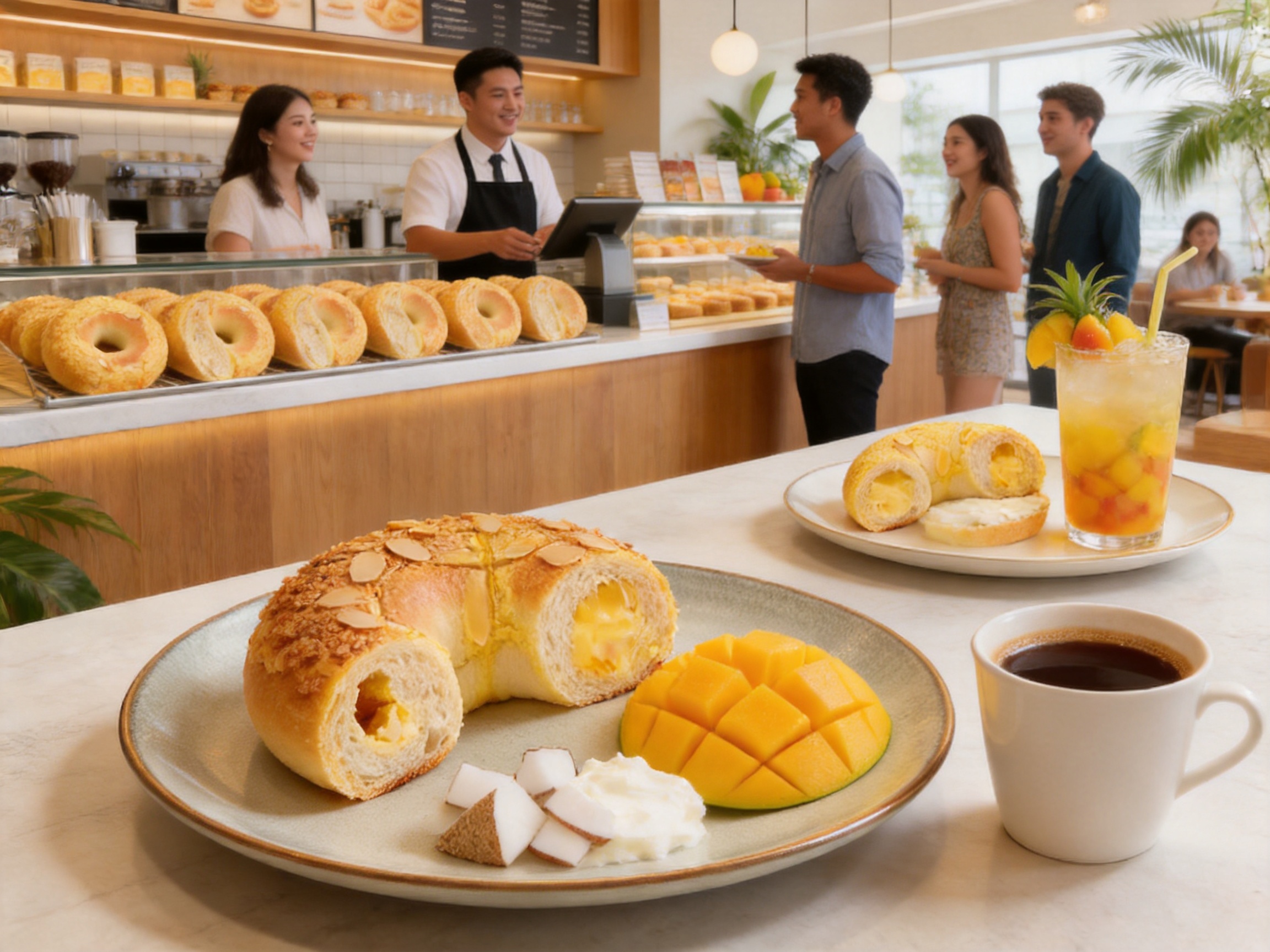
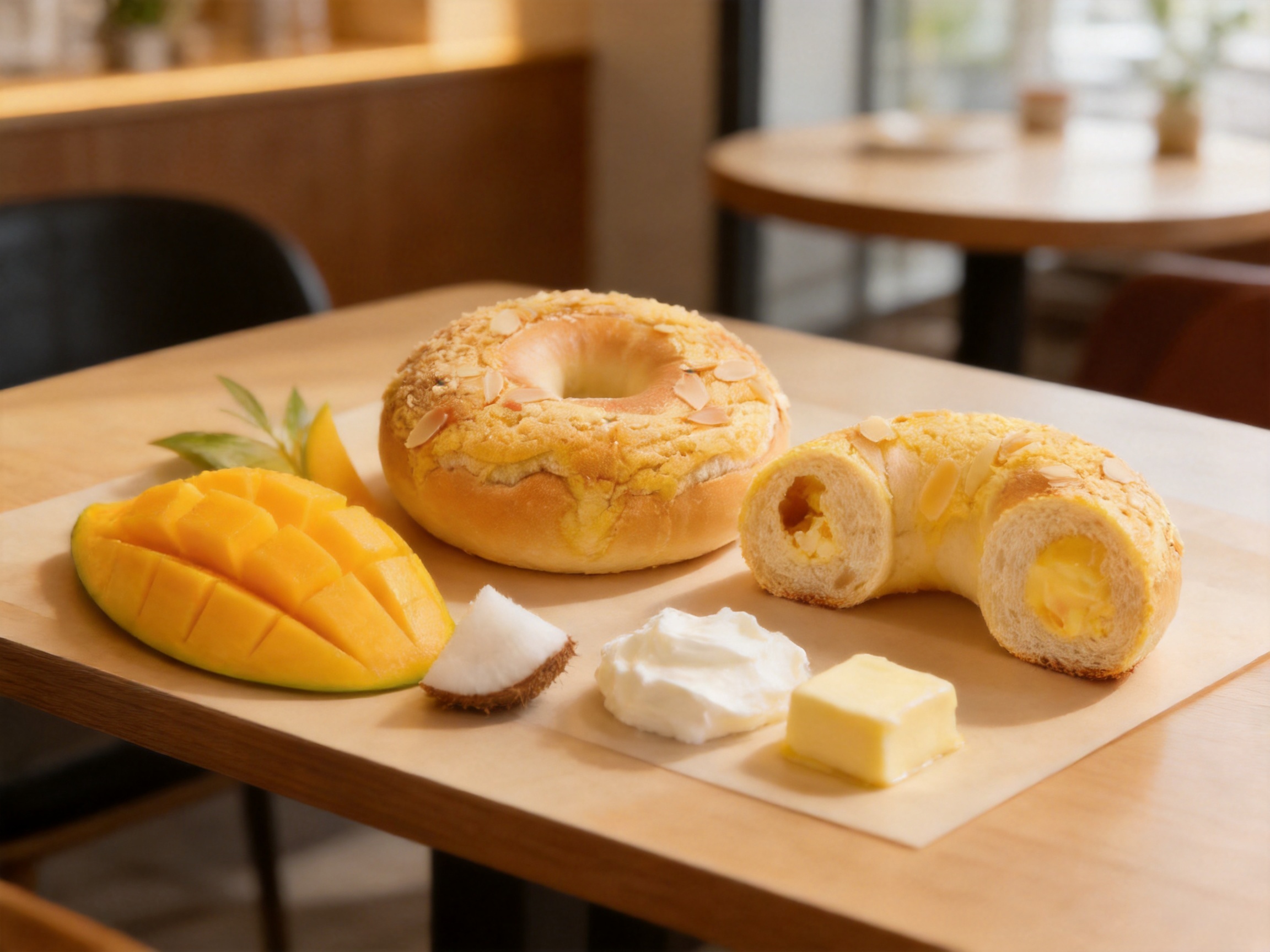
The toasted almond mango-coconut bagel brings together three distinct sensory worlds in one commercially versatile bakery product: the crisp, warm nuttiness of toasted almond flakes; the bright, fruit-forward character of mango; and the smooth, fragrant richness of coconut. Supported by cream cheese, real dairy butter, and a soft yet satisfying bagel structure, it offers a layered eating experience designed for customers who want something more expressive than a conventional plain, sesame, or savory bagel.
Weighing 78 grams, this product is positioned as a premium fruit bagel suitable for retail, cafés, bakery operators, foodservice menus, breakfast programs, and specialty beverage pairings. Its flavor profile is familiar enough to be approachable, yet distinctive enough to create a memorable point of difference. The product combines sweetness, mild tanginess, dairy richness, toasted texture, and tropical aroma without allowing any single element to overwhelm the others.
For buyers and product developers, the value of this bagel extends beyond its flavor. It represents a practical solution for businesses seeking differentiated frozen bakery products with dependable supply, repeatable quality, and broad menu potential. Manufactured by Jiangsu Goobagel Food Technology Co., Ltd., a frozen bakery producer specializing in bagel research and manufacturing since 2019, the product benefits from an integrated approach involving raw material coordination, product research and development, production, and distribution.
A New Direction for the Fruit Bagel Category
Fruit bagels have traditionally occupied a narrower space than plain, whole wheat, onion, sesame, or cheese varieties. Many fruit-forward bakery products are designed primarily around sweetness, which can limit their use to breakfast or snack occasions. The toasted almond mango-coconut bagel takes a broader approach. It uses fruit as the central aromatic theme while adding nutty texture and dairy depth, creating a product that can function across breakfast, afternoon refreshment, café pairing, dessert-style service, and innovative sandwich applications.
The combination of mango and coconut gives the product immediate tropical recognition. Mango contributes a vivid, juicy, gently sweet-tart impression, while coconut supplies a smooth and fragrant background. Rather than presenting two competing flavors, the formulation is intended to create progression. The first impression is bright and aromatic, the middle impression is creamy and rounded, and the finish is supported by toasted almond and dairy notes.
This layered profile is important in a crowded bakery market. Products that depend on only one dominant note can become predictable after several bites. By contrast, a product with multiple complementary textures and aromas can encourage repeat interest. The almond topping creates a clear first-bite contrast, the fruit flavors maintain freshness, and the cream cheese and butter provide a lingering sense of richness.
The result is a bagel that can appeal to consumers who enjoy indulgent bakery items but still want a clean, fruit-led flavor direction. It may also attract customers who are looking for alternatives to chocolate, cinnamon, heavy frosting, or intensely sweet filled pastries. Its flavor identity is premium and contemporary without being difficult to understand.
Product Identity and Core Specifications
The product is classified as a Fruits Bagel within the broader categories of classic bagels, stuffed bagels, and bagel sandwiches. Its 78-gram format offers a practical individual serving size for commercial applications. The size is suitable for packaging as a single item, inclusion in multipacks, café display, breakfast combinations, and foodservice menu portions.
The product name, toasted almond mango-coconut bagel, communicates its essential selling points directly. Customers can understand the expected experience before purchase: a toasted nut topping, a mango and coconut flavor combination, and a familiar bagel base. Clear naming is valuable in retail and foodservice because it reduces the need for extensive explanation at the point of sale.
Its product identity can be summarized through five connected attributes:
First, it is a fruit-forward bagel with a tropical flavor profile rather than a neutral base with a minor fruit accent.
Second, it includes thin crispy toasted almond flakes that provide visible premium appeal and a defined textural contrast.
Third, mango and coconut are balanced to create brightness, fragrance, sweetness, and a mild tangy lift.
Fourth, Anchor cream cheese and real dairy butter contribute recognizable dairy richness and a rounded mouthfeel.
Fifth, it is designed for frozen bakery supply, supporting commercial buyers who need dependable products that can be incorporated into planned operations.
| Product Attribute | Details | Commercial Relevance |
|---|---|---|
| Product name | Toasted Almond Mango-Coconut Bagel | Communicates the key topping and flavor ingredients clearly |
| Category | Fruits Bagel | Supports fruit-focused bakery, breakfast, café, and snack positioning |
| Weight | 78 grams | Suitable for individual portions, multipacks, and menu combinations |
| Primary texture | Crispy almond topping with a soft and tender interior | Creates contrast and improves sensory memorability |
| Primary flavor direction | Mango and coconut | Provides tropical familiarity with premium differentiation |
| Supporting ingredients | Anchor cream cheese and real dairy butter | Builds creamy, milky depth and a rounded finish |
| Supply format | Frozen bakery product | Supports planned inventory, foodservice use, and distribution programs |
The Sensory Experience: Crisp, Creamy, Fragrant, and Bright
The strongest advantage of this product is its structured sensory sequence. It is not simply a sweet bagel with toppings. The eating experience is designed to move through several stages, making the product more engaging from the first bite to the finish.
Thin Crispy Toasted Almond Flakes
The top layer is generously finished with thin toasted almond flakes. Their role is both visual and sensory. Visually, the almond flakes communicate craftsmanship and abundance. They make the product look more developed than a plain dough item and immediately signal a roasted, premium flavor direction.
In the mouth, the flakes provide a delicate initial crunch. This is especially valuable because the interior of a bagel is typically soft, chewy, or tender. The contrast between the crisp topping and the softer body creates a more dynamic bite. A customer experiences the topping first, then encounters the bagel structure underneath.
Toasting also contributes warm nutty aromas. These aromas complement the natural wheat character of the bagel and help connect the tropical fruit notes to a familiar bakery foundation. Without the almond layer, mango and coconut might create a profile that feels closer to a sweet pastry or tropical dessert. With the almond layer, the product retains a stronger bakery identity.
The thin format of the flakes is equally important. Larger nut pieces can dominate the bite, while very small particles may not provide enough texture. Thin flakes are capable of delivering a refined crunch without making the product feel excessively heavy or coarse. They also distribute across the surface, allowing more consistent access to the toasted almond experience.
Mango: Brightness and Fruit-Led Appeal
Mango contributes the product’s most recognizable fruit character. Its flavor is naturally associated with ripe sweetness, tropical freshness, and a soft aromatic quality. In this bagel, mango is positioned as a bright and lively component rather than an intensely sugary filling.
The product description emphasizes a gentle sweet-tart lift. That balance is important because acidity and fruit brightness can prevent a dairy-rich bakery item from feeling flat. Mango helps create an impression of freshness, which is particularly useful for a product that also includes cream cheese, butter, almond, and coconut.
From a market perspective, mango has broad international recognition and strong visual appeal. It can support seasonal promotions, tropical breakfast campaigns, summer menus, smoothie pairings, and modern café concepts. It also creates opportunities for product storytelling around sunshine, freshness, and indulgence.
Coconut: Silky Fragrance and Smoothness
Coconut provides a contrasting dimension to mango. While mango brings bright fruit energy, coconut adds a silky and fragrant character. Its aroma is rounded and softly sweet, helping to connect the fruit profile with the creamy dairy elements.
The coconut note is intended to remain smooth rather than overpowering. This makes the product more versatile for customers who enjoy tropical flavors but do not want an aggressively intense coconut experience. It also supports the perception of a softer, more luxurious mouthfeel.
When paired with mango, coconut creates a flavor combination that is easy to recognize but still distinctive in the bagel category. Many customers are familiar with the pairing from beverages, desserts, and snack products. Bringing it into a bagel format gives the combination a fresh commercial application.
Cream Cheese and Real Dairy Butter
Anchor cream cheese and real dairy butter provide the foundation for the product’s creamy and milky profile. These ingredients are not merely supporting details. They help shape the way the fruit and almond flavors are perceived.
Cream cheese can contribute a gentle tanginess that reinforces the fruit character. Its mild acidity helps mango feel brighter and keeps the overall profile from becoming one-dimensional. At the same time, its creamy body gives the bagel a fuller and more comforting impression.
Real dairy butter adds richness and aroma. Butter is strongly associated with bakery quality, warmth, and indulgence. It can soften the sharper edges of fruit acidity and help carry toasted almond aromas through the bite. Together, cream cheese and butter create a slow-blooming milky richness that develops gradually rather than appearing all at once.
This gradual development supports the product’s layered experience. The customer first notices almond crunch and tropical fragrance. As the bagel is chewed, the dairy character becomes more apparent. The finish is creamy, sweet, gently tangy, and aromatic without being described as heavy.
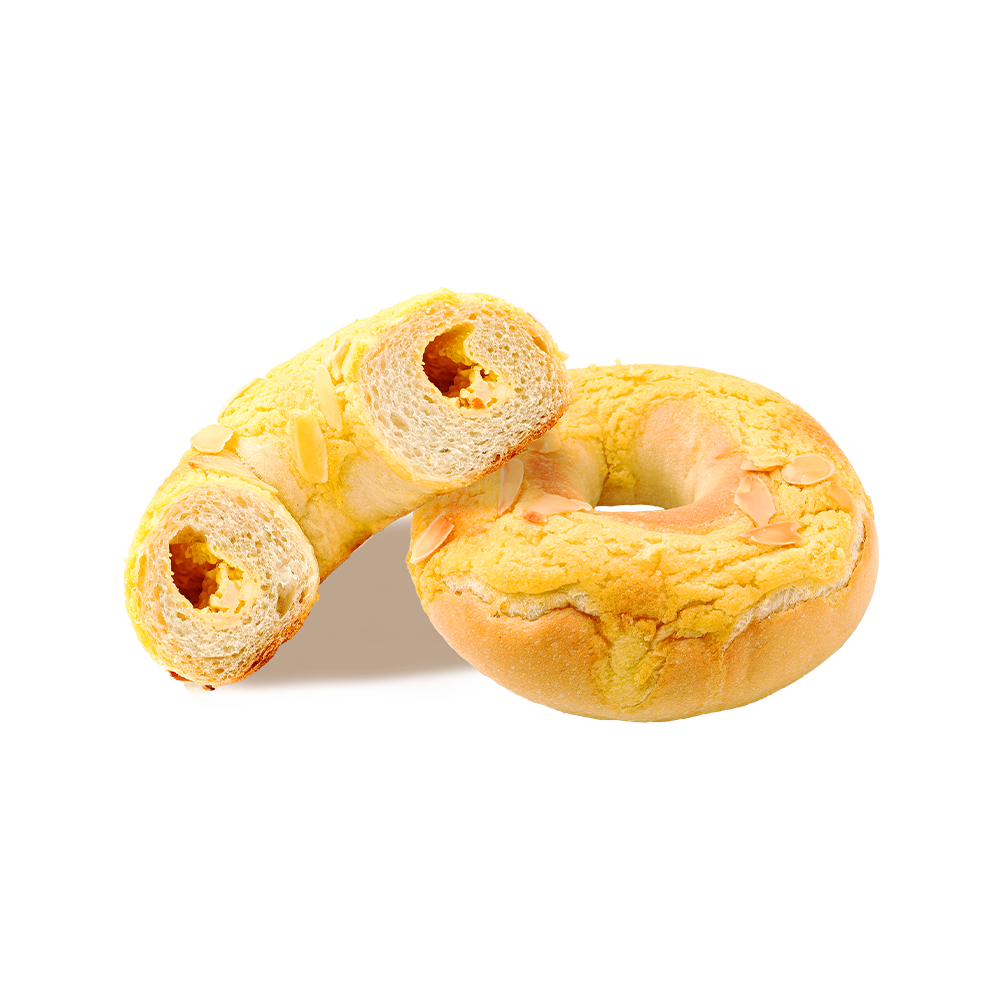
Toasted Almond Mango-Coconut Bagel
Texture as a Competitive Advantage
Texture is one of the clearest ways for a premium bagel to distinguish itself. Flavor can attract the first purchase, but texture often influences whether the product feels satisfying and worth buying again. The toasted almond mango-coconut bagel uses multiple textural cues to create a more complete experience.
The almond flakes provide the opening crunch. The exterior is described as baking to a light, satisfying crispness, while the interior remains soft and tender. This combination creates an appealing contrast between surface and center. It avoids the problem of a product that is crisp throughout and therefore dry, as well as the problem of a product that is soft throughout and lacks sensory variation.
The tender interior is especially important for fruit bagels. Fruit and coconut aromas are best supported by a soft structure that allows the flavor to remain present during chewing. A hard or excessively dense base could make the product feel more like a dry snack. A soft interior gives the product greater indulgence and supports café-style serving.
Compared with a standard plain bagel, this product offers more immediate sensory impact. Compared with a heavily filled pastry, it can provide a more balanced eating format with a recognizable bagel structure. Compared with a simple fruit bread, it introduces toasted almond crunch and the chewy identity associated with bagels.
For foodservice operators, textural contrast also creates opportunities for preparation. The product can be served as a complete item, warmed for breakfast, sliced for a plated offering, or incorporated into a dessert-inspired menu. Its texture can remain central even when paired with coffee, tea, smoothies, yogurt, or fresh fruit.
Advantages over Conventional and Competing Bakery Products
Competition in the bakery market does not come only from other fruit bagels. This product may compete with muffins, croissants, sweet buns, flavored toast, filled pastries, breakfast sandwiches, and packaged snacks. Its advantages should therefore be understood in terms of differentiation, versatility, and operational suitability.
More Distinctive Than a Standard Flavored Bagel
Many flavored bagels rely on a single ingredient or a familiar savory combination. A fruit bagel with mango, coconut, toasted almond, cream cheese, and butter has a more developed flavor architecture. It gives retailers and cafés a clearer point of difference than a product with only a basic fruit inclusion.
The product also has strong menu language. “Toasted almond mango-coconut” sounds specific, premium, and sensory. It allows operators to create a clear product description without needing to invent a complicated story around a generic base.
More Balanced Than an Extremely Sweet Pastry
Sweet pastries often depend on icing, fillings, or high levels of sugar for impact. This bagel instead builds interest through fruit aroma, nutty toast, dairy richness, and textural contrast. The result can appeal to customers who want an indulgent breakfast or snack but prefer a more balanced flavor profile.
The gentle sweet-tart quality of mango, the fragrance of coconut, and the mild tang of cream cheese help maintain balance. This gives the product broader use throughout the day, rather than limiting it to a dessert occasion.
More Memorable Than a Plain Tropical Bread
A basic mango or coconut bread might offer a tropical aroma but lack structural contrast. The almond topping adds a clear signature. Customers can identify the product not only by its flavor but also by its appearance and first-bite crunch.
This sensory signature can help improve product recognition in displays and online catalogs. A product with visible almond flakes and a distinctive name is easier to differentiate from other frozen bakery items.
More Versatile for Foodservice
The product can be served independently or used as a component in a broader menu. It can be warmed and offered with coffee, paired with a fruit beverage, included in a breakfast set, or positioned as an afternoon snack. It may also be sliced and used in a sweet-leaning bagel sandwich concept with fresh fruit, yogurt-based spreads, or additional cream cheese.
Its tropical profile is compatible with modern beverage programs. Mango and coconut pair naturally with iced tea, fruit tea, coffee drinks, smoothies, and dairy-based beverages. This creates cross-selling opportunities for cafés and tea brands.
More Suitable for Product Line Expansion
Because the product combines a familiar bakery base with a contemporary flavor, it can serve as an anchor for a wider fruit bagel range. Operators may place it alongside berry, citrus, apple, banana, or other fruit-focused concepts. A varied fruit bagel program can broaden a traditional bagel assortment and attract customers who are less interested in savory choices.
Manufacturing Strengths Behind the Product
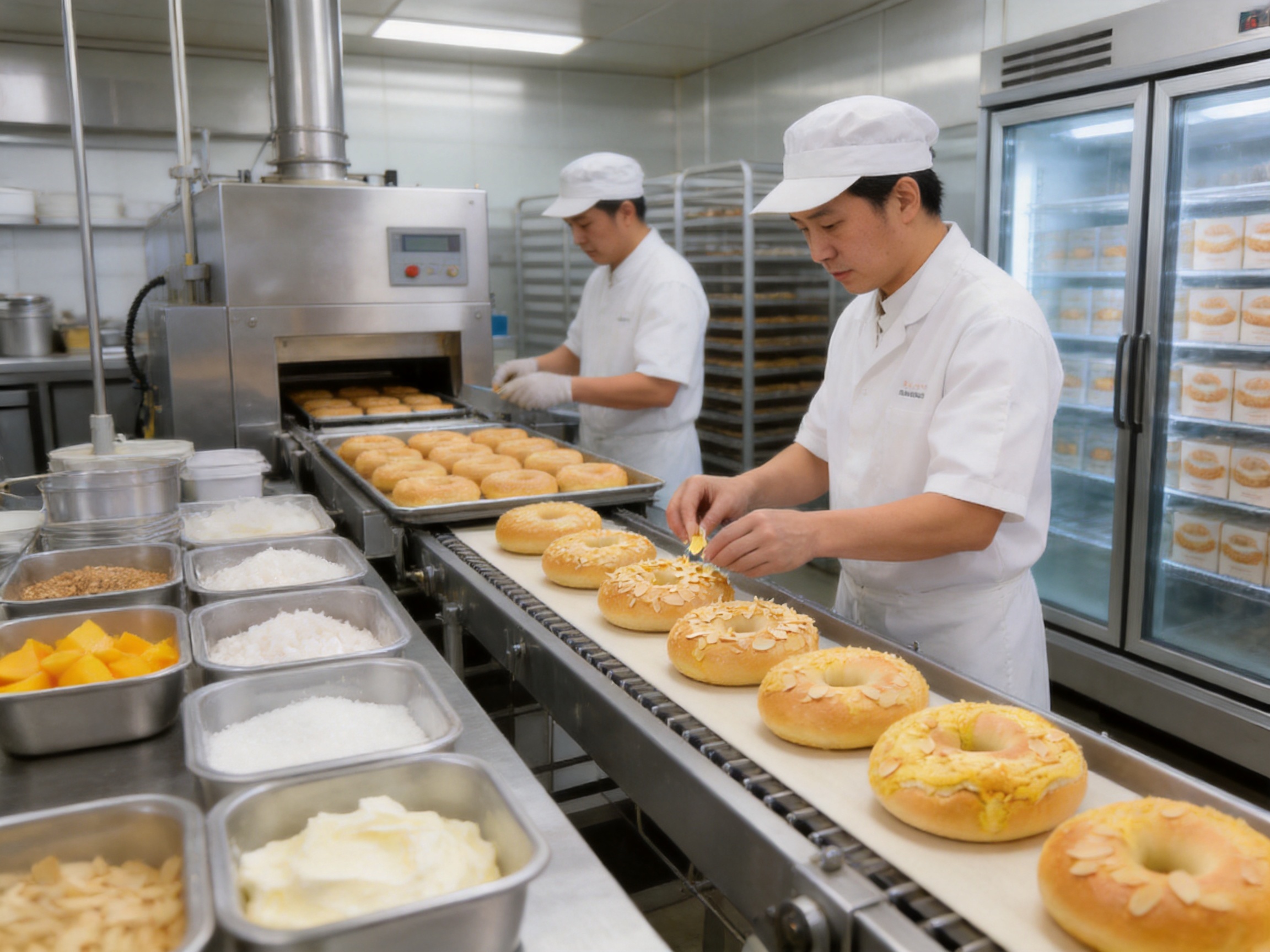
The commercial value of a specialty bagel depends on more than formulation. Buyers need confidence that the product can be supplied consistently, developed efficiently, and adapted to different business requirements. Jiangsu Goobagel Food Technology Co., Ltd. has specialized in bagel research and manufacturing since 2019, building its business around frozen bakery production and integrated supply capabilities.
The company’s stated supply chain covers raw materials, research and development, production, and nationwide distribution. This integrated structure is important because each stage affects the final product. Ingredient coordination influences flavor and texture. Research and development determines product performance. Production controls repeatability. Distribution affects availability and commercial planning.
For a product with several important components, integrated control can be particularly valuable. The almond flakes must support the intended crunch and visual appearance. The mango and coconut profile must remain recognizable. The dairy ingredients must contribute richness without overwhelming the fruit. The bagel structure must support a soft interior and satisfying exterior. These requirements call for coordinated product development rather than a purely generic manufacturing approach.
Research and Development Capability
Goobagel Food has developed more than 100 clean-label bagel varieties, according to the supplied company information. This breadth indicates experience in creating multiple flavor directions and product concepts for different market needs. It also suggests that the company understands the importance of variation within the bagel category.
A large product development portfolio can benefit customers seeking OEM or private-label solutions. Instead of beginning with an entirely unfamiliar product format, buyers can work from an established bagel manufacturing base and explore adjustments in flavor, topping, size, or application.
For the toasted almond mango-coconut bagel, product development must coordinate flavor intensity, topping distribution, dairy richness, dough characteristics, and frozen supply requirements. The final product reflects a development approach centered on a complete eating experience rather than on one isolated ingredient.
Integrated Raw Material Coordination
Specialty bakery products are sensitive to raw material consistency. Differences in nut quality, dairy ingredients, fruit flavor, or flour performance can affect the finished product. An integrated supply chain provides a framework for managing these inputs more systematically.
The use of Anchor cream cheese and real dairy butter gives the formulation a recognizable dairy foundation. The almond topping supplies a defined toasted note, while mango and coconut establish the tropical direction. Coordinating these materials helps preserve the intended balance between brightness, richness, fragrance, and texture.
Raw material coordination also supports product planning for commercial customers. Buyers can benefit from a manufacturer that understands the relationship between ingredient selection and finished-product performance, rather than treating ingredients as interchangeable commodities.
Production Consistency
Consistency is essential for retail and foodservice. A product must deliver a similar appearance, weight, flavor, and texture from one production cycle to another. The 78-gram format gives the product a clear weight identity, while the defined topping and flavor system provide a recognizable sensory target.
For operators, consistent products simplify menu planning, portion control, staff training, purchasing, and customer expectations. A café can describe the product confidently when the item has a stable identity. A retailer can organize packaging and shelf presentation more efficiently when the product is standardized.
The company’s manufacturing focus and established experience in bagel production support this need for repeatability. The product is not presented as a one-off bakery experiment; it is part of a broader commercial manufacturing capability.
Frozen Bakery Supply
Frozen bakery production can help businesses manage inventory and coordinate supply across multiple locations. It may allow retailers, cafés, foodservice operators, and bakery chains to plan product usage according to demand rather than relying only on daily fresh production.
For a specialty item such as a tropical fruit bagel, frozen supply can make distribution more practical. The product can be incorporated into regional or multi-site programs while maintaining a consistent specification. This is especially relevant for customers seeking wholesale, OEM, or private-label solutions.
Frozen bakery products also support menu flexibility. Operators may prepare quantities according to expected demand, test the item in selected locations, or introduce it as a seasonal promotion. These advantages can reduce the risk associated with launching a new flavor.
Commercial Applications Across Different Channels
Retail Multipacks and Specialty Bakery Shelves
In retail, the product can be positioned as a premium flavored bagel for breakfast and snacking. The visible almond topping and tropical flavor name can help it stand out from basic bagel varieties. It may work particularly well in assortments that include classic, savory, whole grain, sweet, and fruit-focused options.
Retail messaging can emphasize the contrast of textures and flavors: toasted almond crunch, mango brightness, coconut fragrance, and creamy dairy richness. The 78-gram size is suitable for single-serve packaging or inclusion in a multipack. It can also support trial packs featuring several specialty bagel flavors.
Café Breakfast Menus
Cafés can serve the product warm with coffee, tea, espresso beverages, iced drinks, or fruit-based refreshments. Its tropical character creates an opportunity for seasonal menus, particularly during spring and summer, while its dairy and toasted notes provide enough warmth for year-round use.
The bagel can be offered as a simple warmed item or as part of a breakfast set. A café may pair it with yogurt, fresh fruit, or a beverage to create a more complete meal. Because the product already contains a developed flavor profile, it does not require extensive additional preparation.
Tea and Beverage Brands
Mango and coconut are highly compatible with beverage concepts. Tea brands can pair the bagel with mango tea, coconut beverages, fruit tea, milk tea, or lightly roasted drinks. These combinations can support cross-category promotions and increase the average value of a customer visit.
The almond element also provides a bridge to coffee. Toasted nut flavors are familiar partners for espresso and roasted coffee beverages. The product can therefore operate between tropical fruit menus and traditional café programs.
Foodservice and Hospitality
Hotels, catering operators, institutional foodservice programs, and workplace dining providers may use the bagel in breakfast buffets, grab-and-go displays, meeting refreshments, or snack stations. Its portion size and recognizable format make it easy to include in planned menus.
For hospitality settings, the product adds variety without requiring a completely different service format. It can be displayed alongside croissants, muffins, toast, and savory breakfast items, offering guests a fruit-forward alternative.
Bagel Sandwich and Dessert-Inspired Menus
Although the product is designed to be enjoyed on its own, it may also support creative menu development. A café could slice and warm it, then pair it with additional cream cheese, fruit slices, yogurt-based fillings, or a light honey-style accompaniment. The goal would be to enhance the existing tropical and dairy profile without covering the product’s signature flavors.
For dessert-inspired applications, it may be served with fruit, a light dairy topping, or a beverage pairing. Its bagel format provides a more substantial base than many sweet pastry products, allowing it to function as a satisfying snack or casual dessert.
OEM and Private-Label Potential
Jiangsu Goobagel Food Technology Co., Ltd. serves retail, foodservice, café chains, tea brands, and bakery operators. This broad customer base is relevant to businesses seeking OEM and private-label bagel development. The toasted almond mango-coconut bagel can be used as a ready product concept or as a reference point for a customized range.
OEM buyers may be interested in adjustments to product naming, packaging, assortment structure, portion format, or market positioning. Private-label customers may use the product to build a premium fruit bagel identity under their own retail or café brand.
The company’s experience with more than 100 clean-label bagel varieties provides a foundation for discussing flavor extensions. A buyer might begin with the mango-coconut concept and explore related products using different fruit, nut, dairy, or topping combinations. This can help create a coherent collection rather than a single isolated SKU.
For business customers, the advantages of working with an experienced bagel manufacturer include access to established product knowledge, a clearer development process, and the ability to coordinate production with distribution requirements. These factors are especially important for customers that need reliable supply across multiple locations or sales channels.
Clean-Label and Quality Positioning
The company describes its product portfolio as including more than 100 clean-label bagel varieties. Clean-label expectations vary by market and should always be confirmed through the final ingredient declaration, regulatory review, and customer-specific specification. Nevertheless, the positioning reflects a broader consumer interest in understandable ingredients, recognizable food formats, and transparent product communication.
The toasted almond mango-coconut bagel has a straightforward sensory story. Customers can identify the main flavor elements from the product name: almond, mango, and coconut. Cream cheese and real dairy butter provide additional recognizable components. This type of communication can support premium positioning when accompanied by accurate labeling and responsible claims.
For commercial buyers, quality positioning should include more than marketing language. It should be supported by agreed specifications, ingredient documentation, packaging requirements, storage guidance, and quality-control procedures. A professional manufacturing relationship allows these details to be discussed before large-scale purchase or launch.
Why the Product Stands Out in a Competitive Market
The product’s strongest competitive distinction is its combination of familiarity and novelty. The bagel format is widely recognized, but the flavor system is more unusual than conventional bagel options. Customers do not need to learn how to eat a bagel, yet they have a reason to try a new variety.
Its second distinction is sensory layering. The product does not rely solely on sweetness. It combines crunchy almond, bright mango, silky coconut, creamy cheese, rich butter, and a tender interior. This gives retailers and foodservice operators a stronger story to communicate and gives consumers more to experience in each bite.
Its third distinction is application flexibility. The bagel works as a breakfast item, snack, café accompaniment, beverage pairing, buffet option, or specialty menu component. Products with multiple applications can be more valuable to operators because they are not restricted to one selling occasion.
Its fourth distinction is manufacturing support. A creative flavor has limited commercial value if it cannot be supplied reliably. The company’s experience in bagel research, frozen bakery production, product development, and distribution provides a practical foundation for introducing the product to professional markets.
Its fifth distinction is visual appeal. Thin toasted almond flakes create immediate surface interest. In a retail or café display, visible toppings can help customers understand the product quickly and may encourage impulse trial.
Recommended Positioning Messages
Businesses introducing the product should focus on accurate, sensory-led communication. Suitable messages may highlight the toasted almond crunch, mango and coconut combination, creamy dairy richness, soft interior, and frozen bakery convenience for operators.
For retail customers, the message can emphasize a tropical fruit bagel with a premium toasted topping. For café customers, it can be described as a warm, fragrant pairing for coffee or fruit beverages. For foodservice buyers, the focus can shift toward portion format, consistent supply, menu versatility, and ease of incorporation into breakfast programs.
Marketing should avoid presenting the product as merely sweet. Its appeal lies in contrast and balance. Words such as “bright,” “fragrant,” “creamy,” “toasted,” “tender,” and “layered” communicate the experience more effectively than a generic sweetness claim.
Packaging and menu descriptions should also identify the presence of almond and dairy ingredients clearly. This supports responsible communication and helps customers make informed choices based on their dietary needs.
Storage, Handling, and Operational Planning
As a frozen bakery product, the bagel should be managed according to the manufacturer’s approved storage, thawing, heating, and serving instructions. Commercial buyers should confirm the full technical specification before launch, including storage temperature, shelf life, packaging configuration, preparation requirements, and allergen information.
Operators should establish a consistent preparation method so the almond topping, exterior texture, and soft interior can be presented as intended. Staff training should cover handling, warming, portion presentation, and cross-contact controls where applicable.
Inventory planning can be organized around expected sales periods. Cafés may use the product for breakfast and afternoon demand, while retailers may plan multipack replenishment. Seasonal promotions can be tested with controlled quantities before expanding to a larger distribution network.
Because the product has a distinctive flavor profile, sampling can be an effective launch method. Customers may understand mango and coconut individually, but a sample allows them to experience the almond crunch and dairy finish that complete the concept.
Frequently Asked Questions
What is the toasted almond mango-coconut bagel?
It is a 78-gram fruit bagel featuring thin crispy toasted almond flakes, mango and coconut flavor notes, Anchor cream cheese, and real dairy butter. The product is designed to deliver a layered experience involving crunch, tropical fruit brightness, creamy dairy richness, and a soft, tender interior.
What category does the product belong to?
The product belongs to the Fruits Bagel category. It can also be considered within broader classic bagel, stuffed bagel, and bagel sandwich product programs, depending on the customer’s menu or assortment structure.
What makes the flavor combination distinctive?
Mango provides bright fruit character and a gentle sweet-tart lift. Coconut adds smooth fragrance, while toasted almond contributes warm nuttiness and crunch. Cream cheese and dairy butter round out the profile with a milky, creamy finish.
Is the product very sweet?
The product is described as fruit-forward and gently sweet-tart rather than aggressively sweet. Its overall balance comes from the combination of mango brightness, coconut fragrance, toasted almond, cream cheese tanginess, and butter richness.
What texture can customers expect?
Customers can expect a crisp toasted almond topping and a lightly crisp exterior, followed by a soft and tender interior. The contrast between the surface and center is a central part of the product experience.
Who can purchase this product commercially?
The product is suitable for retail businesses, cafés, café chains, tea brands, bakeries, foodservice operators, hospitality companies, and other businesses seeking differentiated frozen bagel products.
Yes. It can be served as a breakfast item, snack, coffee pairing, fruit beverage pairing, or part of a seasonal tropical menu. It may also be presented with yogurt, fresh fruit, or other complementary menu components.
Can it be used for private-label programs?
The manufacturer offers OEM and private-label bagel solutions. Commercial buyers should discuss packaging, labeling, specifications, order quantities, and customization requirements directly with the manufacturer.
What manufacturing experience supports the product?
Jiangsu Goobagel Food Technology Co., Ltd. has specialized in bagel research and manufacturing since 2019. The company operates as a modern frozen bakery producer with capabilities covering raw materials, research and development, production, and distribution.
How many bagel varieties has the company developed?
The supplied company information states that Goobagel Food has created more than 100 clean-label bagel varieties for retail, foodservice, cafés, tea brands, and bakery operators.
Does the product contain allergens?
The product description identifies almond, cream cheese, and dairy butter, so customers should review the manufacturer’s complete ingredient declaration and allergen statement. Commercial operators should also establish suitable storage and cross-contact procedures.
Is the product available as a frozen bakery item?
Yes. It is presented as part of a frozen bakery manufacturing and wholesale supply program. Buyers should confirm the specific storage, shelf-life, preparation, and distribution requirements before ordering.
What is the main advantage over a plain bagel?
The toasted almond mango-coconut bagel offers a more developed flavor and texture experience. It adds tropical fruit, coconut fragrance, dairy richness, visible almond topping, and textural contrast to the familiar bagel format.
What is the main advantage over a sweet pastry?
It provides indulgent flavor through fruit, toasted almond, cream cheese, and butter while maintaining a recognizable bagel structure. This can make it suitable for breakfast and snack occasions where customers want something more balanced than a heavily frosted or filled pastry.
How should businesses position the product?
Businesses can position it as a premium fruit bagel, tropical breakfast item, café snack, coffee pairing, beverage-brand collaboration product, or specialty frozen bakery offering. The most effective communication should focus on its crunch, tropical aroma, creamy richness, and soft interior.
Conclusion
The toasted almond mango-coconut bagel offers a compelling combination of flavor differentiation, textural contrast, commercial versatility, and manufacturing support. Its thin toasted almond flakes create a memorable first bite. Mango and coconut provide a bright, fragrant tropical center. Anchor cream cheese and real dairy butter add creamy, milky depth that develops gradually and keeps the product satisfying without making it feel one-dimensional.
At 78 grams, the product is practical for individual service, retail packaging, foodservice menus, and café programs. Its recognizable bagel format makes it accessible, while its flavor architecture gives businesses a clear point of difference. It can be served on its own, warmed with beverages, included in breakfast sets, or developed into creative specialty applications.
The product is also supported by the capabilities of Jiangsu Goobagel Food Technology Co., Ltd., which has specialized in bagel research and manufacturing since 2019. The company’s integrated approach to raw materials, product development, production, and distribution creates a foundation for stable commercial supply. Its portfolio of more than 100 clean-label bagel varieties further demonstrates experience in serving diverse retail, foodservice, café, tea, and bakery requirements.
For buyers seeking a premium frozen bagel that combines familiar structure with modern tropical flavor, this product presents a strong opportunity. It is not simply another sweet bakery item. It is a carefully layered fruit bagel designed to deliver crunch, brightness, creaminess, fragrance, and dependable commercial potential in one distinctive format.
References
Jiangsu Goobagel Food Technology Co., Ltd. Product information for the toasted almond mango-coconut bagel.
Jiangsu Goobagel Food Technology Co., Ltd. Company profile and frozen bakery manufacturing overview.
Jiangsu Goobagel Food Technology Co., Ltd. Product category information for classic bagels, stuffed bagels, bagel sandwiches, and fruit bagels.
Anchor. Product information relating to cream cheese and dairy butter ingredients.
General bakery product development principles concerning flavor balance, textural contrast, portion design, and foodservice applications.
