
 中文简体
 English




postmaster@goobagelfood.com
Content
- 1 A New Direction for Filled Bagels
- 2 The Foundation: A Firm and Chewy Bagel Base
- 3 Tender Chicken Breast as the Central Filling
- 4 The Teng Pepper Flavor Experience
- 5 Cheese, Peanuts, Sesame, and Black Pepper
- 6 Product Advantages Compared with Conventional Alternatives
- 7 Manufacturing Strengths Behind the Product
- 8 Applications Across Retail and Foodservice
- 9 OEM and Private-Label Opportunities
- 10 Quality, Clean-Label Positioning, and Product Trust
- 11 How the Product Can Be Positioned in Marketing
- 12 Why Texture Matters in Product Differentiation
- 13 Operational and Commercial Benefits
- 14 Q&A: Understanding the Teng Pepper Chicken Bagel
- 14.1 What is the product?
- 14.2 What does “teng pepper” contribute to the flavor?
- 14.3 Is the bagel base soft or chewy?
- 14.4 Why is the bagel hand-shaped?
- 14.5 What type of chicken is used?
- 14.6 What do the peanuts and sesame add?
- 14.7 What is the role of cheese?
- 14.8 Who can purchase or use this product commercially?
- 14.9 Can the product support private-label development?
- 14.10 Why is the product suitable for cafés?
- 14.11 How is this product different from a plain bagel?
- 14.12 How is it different from a standard chicken bun?
- 15 Conclusion
- 16 References
- 17 Product: Chewy Bagel Base Teng Pepper Chicken Bagel

The modern bagel market is moving beyond traditional cream cheese fillings and breakfast-only positioning. Consumers increasingly look for products that combine convenience, texture, visual appeal, bold flavor, and genuine meal value. A well-developed filled bagel can answer all of these expectations in one portable format. The Chewy Bagel Base Teng Pepper Chicken Bagel is designed around this opportunity, combining an artisan-style chewy bagel shell with tender chicken breast, a layered teng pepper seasoning profile, cheese, peanuts, sesame, and black pepper.
At 128 grams, this product is positioned as a substantial individual serving rather than a small snack. It offers the structure of a bagel, the flavor intensity of a savory prepared meal, and the convenience of a frozen bakery product. Its design is especially relevant to foodservice operators, café chains, retail buyers, bakery businesses, tea brands, and private-label companies seeking differentiated products with reliable commercial performance.
What makes this product distinctive is not one isolated ingredient. Its competitive strength comes from the way the bagel base, chicken filling, seasoning, toppings, and manufacturing capabilities work together. The product is built to deliver a firm bite, a soft and flavorful center, an increasingly aromatic spice experience, and a topping combination that changes in texture from bite to bite.
A New Direction for Filled Bagels
Traditional bagels are often associated with plain, sesame, onion, blueberry, or cream cheese applications. These familiar formats remain important, but they do not always meet the demand for more exciting savory products. Consumers are now accustomed to global flavors, layered seasoning, convenient handheld meals, and products that can function across multiple eating occasions.
The Teng Pepper Chicken Bagel responds to this shift by bringing a recognizable bagel structure together with a flavor profile inspired by the aromatic, numbing, and spicy qualities of teng pepper. Instead of presenting the pepper sensation as a single sharp burst, the product is described as progressing from fragrance to numbing warmth and then to confident heat. This staged flavor experience gives the product greater depth than a simple hot sauce or generic chili filling.
The product also benefits from its familiar format. Even customers who may be cautious about highly regional or unfamiliar foods can understand the bagel concept immediately. The handheld form is convenient for breakfast, lunch, an afternoon meal, travel, takeaway service, or quick-service menus. At the same time, the chicken and seasoning profile provides enough individuality to make the product memorable.
For commercial buyers, this combination is valuable. A product that is too familiar may struggle to create excitement, while a product that is too unfamiliar may require extensive explanation. A chewy chicken bagel with a clear spicy and savory identity occupies a practical middle ground: approachable in format, distinctive in flavor, and suitable for multiple sales channels.

Chewy Bagel Base Teng Pepper Chicken Bagel
The Foundation: A Firm and Chewy Bagel Base
Imported Wheat and a Distinctive Bite
The bagel base begins with carefully selected imported wheat. Wheat quality has a direct effect on the structure, aroma, and eating experience of a bakery product. In this application, the goal is not a soft bread texture that disappears quickly. The goal is a firm outer bite and a resilient, pleasantly dense interior that can support a substantial filling.
This structure is important because filled products face different technical and sensory demands from plain bakery items. The shell must remain enjoyable on its own, but it must also hold the chicken, cheese, nuts, seeds, and seasoning without becoming overwhelmed. A weak or overly soft base can make the product feel messy, fragile, or insubstantial. A strong but excessively hard base can make the product difficult to eat. The intended balance is a chewy bite with enough flexibility and density to provide support.
The clean grain aroma of the bagel contributes another layer to the finished product. It creates a neutral yet characterful foundation for the more expressive filling. The subtle natural sweetness of the wheat helps balance the salty, savory, aromatic, and spicy components inside the bagel. This balance allows the base to remain noticeable without competing with the chicken or teng pepper profile.
Hand-Shaped Craftsmanship
Each bagel is described as being hand-shaped one by one using a traditional artisan technique. Hand shaping gives the product a craft-oriented identity and supports the visual expectation of an individually formed bagel. It also reflects a manufacturing philosophy in which the shape and structure of the base are treated as important parts of the final eating experience.
For buyers, an artisan-inspired process can add value in several ways. It supports premium positioning, helps distinguish the product from highly standardized bread snacks, and gives the bagel a more authentic appearance. In a retail freezer or café display, the recognizable ring or filled-bagel form can communicate quality before the package is opened.
Hand shaping does not mean that commercial production must sacrifice consistency. A modern frozen bakery producer can combine traditional forming methods with organized production systems, product development controls, and supply-chain management. This combination is one of the key strengths of a manufacturer experienced in both craftsmanship and scalable production.
The result is a bagel base that is intended to feel more substantial than a conventional soft bun. Its resilient texture encourages chewing, allowing the grain aroma, chicken flavor, pepper fragrance, and crunchy toppings to develop progressively. This extended eating experience is particularly useful for a product with layered seasoning because the flavor remains present through multiple bites rather than disappearing immediately.
Tender Chicken Breast as the Central Filling
The filling uses chicken breast selected and prepared for a tender, soft texture. Chicken breast can be a challenging ingredient in filled bakery products because it may become dry or stringy if poorly handled. In this product, the stated objective is to retain juiciness and tenderness while giving the meat a refined, delicate texture.
Chicken breast is also commercially versatile. It is widely recognized by consumers, works across breakfast and lunch applications, and provides a familiar protein foundation for bold seasonings. Its relatively clean flavor allows the teng pepper profile to remain prominent. The chicken does not need to compete with the seasoning; instead, it carries and softens the aromatic heat.
The interaction between the chicken and the bagel base is central to the product’s appeal. The chewy exterior creates resistance at the beginning of each bite, while the tender chicken offers a softer contrast in the center. This difference in texture helps the product feel more complete than a filled bread with a uniform consistency.
For foodservice operators, a chicken-filled bagel can be positioned in several ways. It may be sold as a ready-to-heat breakfast item, a compact lunch, a savory café option, or a convenient snack for customers who want something more filling than a sweet pastry. Its individual format can also help simplify menu planning, portion communication, and takeaway service.
The Teng Pepper Flavor Experience
Fragrant First, Numbing Next, Spicy at the Finish
The defining feature of the filling is the use of teng pepper seasoning. Rather than describing the experience simply as “hot,” the product emphasizes a sequence of sensations: fragrant, numbing, and spicy. This progression gives the seasoning a more sophisticated identity and helps distinguish it from products based only on chili heat.
The first impression is aromatic. The pepper character introduces a bright fragrance that opens the palate before the stronger sensation develops. The next stage is a noticeable numbing quality that creates the signature teng pepper effect. Finally, the flavor builds into a confident heat that remains present as the consumer continues chewing.
This gradual progression is commercially useful because it encourages repeat bites. A one-dimensional spicy product may deliver immediate impact but lose interest quickly. A layered seasoning gives customers more to discover. The flavor begins with aroma, develops through mouthfeel, and finishes with heat, creating an experience that can be described clearly on menus and packaging.
The teng pepper profile also pairs naturally with chicken. Chicken provides a mild, savory canvas that allows the aromatic pepper to remain visible. The cheese adds roundness, while the peanuts, sesame, and black pepper reinforce the roasted and aromatic dimensions. Each supporting ingredient contributes to the overall progression instead of merely adding weight.
Balanced Heat for Broader Applications
Spicy products must be designed carefully for commercial use. A flavor that is overwhelmingly hot may appeal to a narrow audience, while a product without enough character may fail to create differentiation. The described balance of fragrance, numbing sensation, and heat offers a way to create a recognizable spicy identity without relying only on intensity.
Retailers can present the bagel as a premium savory frozen item with an adventurous flavor profile. Café operators can use it as a signature menu item or limited-time feature. Tea and beverage brands may pair it with milky, fruity, or lightly sweet drinks to create a contrasting meal combination. Bakeries can position it as a filled specialty product that adds variety to a standard bread selection.
The flavor can also support storytelling. A product description can focus on the progression from fragrance to numbing heat, the tender chicken center, and the contrast between chewy bread and crunchy toppings. This gives sales teams and customers a clear reason to choose it over an ordinary chicken sandwich or a plain bagel.
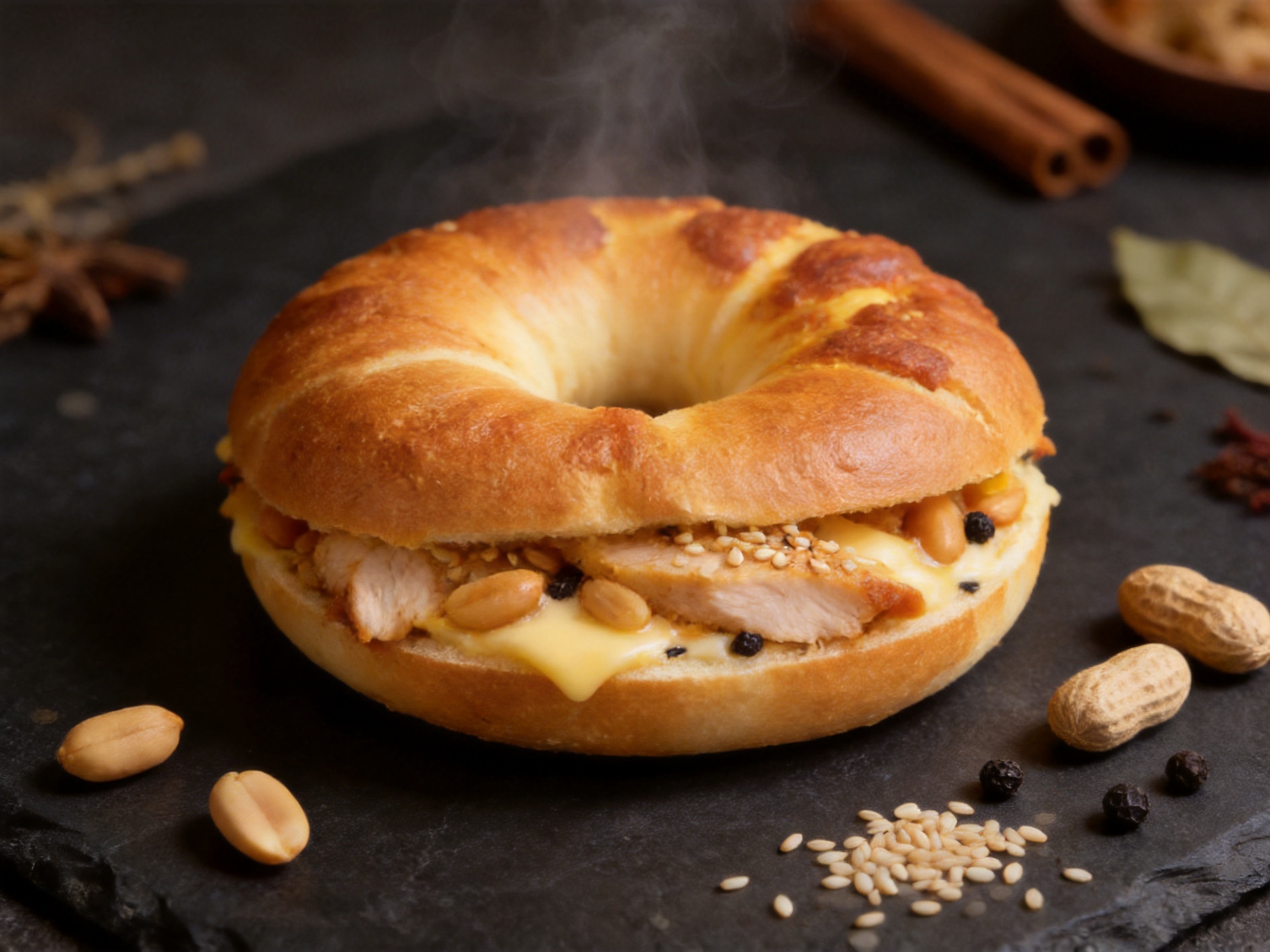
Cheese, Peanuts, Sesame, and Black Pepper
The toppings and finishing ingredients are designed to create a five-flavor balance involving fragrance, numbing sensation, spiciness, savoriness, and crunch. Their purpose is not merely decorative. Each component changes the sensory experience and helps the product maintain interest across the entire bite.
Cheese for Creaminess and Roundness
Cheese provides a gentle creamy quality that helps round out the sharper elements of the pepper seasoning. The richness of cheese can soften the perception of heat without removing the product’s spicy identity. It also adds a familiar, comforting flavor that helps make the overall profile more accessible.
In a filled bagel, cheese contributes both flavor and texture. Depending on preparation and heating, it may create a soft, cohesive center or a satisfying pull. This gives the product an indulgent quality while remaining compatible with the savory chicken filling.
Peanuts for Crunch and Nutty Depth
Peanuts introduce a more pronounced crunchy texture and a roasted nutty character. Their flavor supports the savory qualities of the chicken and contributes to the product’s sense of substance. The contrast between the chewy bagel and crisp peanut pieces is especially important because it prevents the eating experience from becoming texturally uniform.
Crunch also creates a stronger perception of freshness and complexity. Each bite can contain a slightly different balance of soft chicken, creamy cheese, firm bagel, and crisp peanut. This variation makes the product feel more dynamic than a filling composed entirely of smooth or minced ingredients.
Sesame for Roasted Aroma
Sesame brings a warm roasted fragrance that naturally complements wheat and bagel flavors. It reinforces the grain aroma of the base while connecting the bread to the savory filling. Sesame is also familiar to consumers in many bakery and Asian-inspired food applications, making it an effective bridge between the bagel format and the teng pepper seasoning.
Its aroma becomes particularly useful when the product is heated. Warmth can help release the roasted notes of the sesame and make the product more inviting in cafés, convenience settings, and foodservice counters.
Black Pepper for a Crisp Aromatic Finish
Black pepper completes the seasoning structure with a crisp, aromatic finish. While teng pepper provides the signature numbing sensation, black pepper adds a different kind of pepper character. The two pepper notes can work together to create greater depth than either one would provide alone.
This layered approach supports a more memorable flavor profile. The product does not depend on a single dominant seasoning. Instead, the consumer experiences aromatic wheat and sesame, tender chicken, creamy cheese, nutty peanuts, teng pepper warmth, and black pepper fragrance in a coordinated sequence.
Product Advantages Compared with Conventional Alternatives
| Evaluation Area | Teng Pepper Chicken Bagel | Conventional Plain Bagel | Typical Soft Chicken Bun |
|---|---|---|---|
| Texture | Firm, chewy base with tender filling and crunchy components | Chewy base but usually without a substantial savory center | Generally softer and less resilient |
| Flavor Identity | Layered teng pepper, chicken, cheese, peanut, sesame, and black pepper profile | Usually mild and dependent on spreads or toppings | Often centered on a single savory filling |
| Meal Positioning | Suitable for breakfast, lunch, snacks, cafés, takeaway, and retail | Often requires an additional spread or filling | Usually positioned as a familiar bread snack or light meal |
| Texture Contrast | Chewy, tender, creamy, and crunchy elements in one product | Primarily focused on the bread texture | Often dominated by soft bread and filling |
| Differentiation | Combines a familiar bagel format with an adventurous regional pepper profile | Limited differentiation unless specially flavored | May be familiar but less distinctive |
| Commercial Potential | Appropriate for frozen retail, foodservice, cafés, bakeries, and private label | Broad but often requires additional preparation or customization | Broad, but may face strong competition from similar products |
The comparison shows why the product can occupy a distinctive position. A plain bagel offers flexibility, but it usually requires a spread, sandwich filling, or additional preparation. The Teng Pepper Chicken Bagel arrives with its core flavor architecture already developed. This can reduce the need for operators to build a complete menu item from separate ingredients.
Compared with a typical soft chicken bun, the product offers greater textural contrast and a more recognizable bagel identity. The chewy shell can create a premium perception, while the layered pepper profile gives the item a stronger reason for purchase. These characteristics can be particularly valuable in crowded frozen food and café categories.
Compared with a generic spicy bread product, the bagel has a clearer structure and a more balanced filling concept. The spice is supported by chicken, cheese, peanuts, sesame, and black pepper rather than being used as the only source of excitement. This makes the product more suitable for consumers who want complexity as well as heat.
Manufacturing Strengths Behind the Product
Integrated Supply Chain Management
The manufacturer behind the product operates an integrated supply chain covering raw materials, research and development, production, and nationwide distribution. This structure is important for commercial customers because product quality depends on more than the recipe alone. Ingredient coordination, development capability, manufacturing organization, and distribution reliability all influence the success of a frozen bakery program.
An integrated supply chain can support more consistent communication between product development and production teams. When a formula, texture, filling ratio, or packaging requirement needs to be adjusted, the manufacturer is better positioned to evaluate the change across the relevant stages of the operation.
For importers, distributors, retailers, and foodservice buyers, supply-chain integration can also simplify cooperation. Instead of relying on disconnected suppliers for the bagel base, filling, flavor development, and production, buyers can work with a manufacturer that manages the complete product pathway.
Research and Development Capability
Product development is a central strength of a modern frozen bakery company. The manufacturer has developed more than 100 clean-label bagel varieties for different commercial applications. This breadth indicates experience in adapting the bagel format to multiple flavor directions, customer preferences, and business models.
The Teng Pepper Chicken Bagel demonstrates the value of this development experience. Its formulation requires coordination between dough texture, filling stability, meat tenderness, seasoning balance, cheese behavior, and crunchy inclusions. A manufacturer developing this type of product must think beyond individual ingredients and focus on the complete experience after the product is prepared for consumption.
R&D capability is also important for OEM and private-label customers. Different markets may request changes in size, packaging, flavor intensity, ingredient positioning, labeling, or serving format. A company with an established product development foundation can use its existing knowledge to support customization more efficiently than a supplier focused only on a narrow range of standard items.
Frozen Bakery Production
Frozen bakery manufacturing provides commercial flexibility. It allows products to be produced within an organized manufacturing system and then supplied to retail, foodservice, cafés, bakery operators, and other customers according to their distribution plans. For buyers, frozen bagels can support inventory management, menu consistency, and broader geographic reach.
The product is offered as a 128-gram format, giving buyers a clear basis for portion planning and menu development. A defined individual size can help operators calculate serving costs, plan display space, and communicate product information to customers.
Frozen products also create opportunities for different preparation models. Depending on the buyer’s operating requirements, the bagel may be incorporated into retail freezer programs, café heating systems, bakery displays, or foodservice menus. The manufacturer’s role is to provide a stable product platform that can support these commercial uses.
Craftsmanship Combined with Scale
One of the most compelling strengths is the combination of hand-shaped bagel craftsmanship and modern commercial production. Customers increasingly value products that appear authentic and carefully made, but businesses also require dependable supply and repeatable results.
A purely handmade product may be difficult to distribute widely, while a product that appears overly industrial may lack premium appeal. This bagel is positioned between those extremes. Its hand-shaped identity communicates care and craft, while the manufacturer’s organized production and distribution capabilities support larger commercial programs.
This balance is especially relevant for private-label and OEM customers. A buyer can develop a product line that carries a handcrafted story without having to build a complete bagel manufacturing operation independently. The manufacturer’s existing capabilities provide a foundation for product launch and ongoing supply.
Applications Across Retail and Foodservice
Retail Freezer Programs
In retail, the product can be positioned as a premium savory frozen bagel. Its distinctive flavor gives it stronger shelf communication than an unfilled plain bagel, while the familiar format remains easy for consumers to understand. Packaging can emphasize the chewy base, tender chicken, layered pepper sensation, and contrasting toppings.
The product may appeal to shoppers seeking convenient meal solutions that feel more substantial than ordinary snacks. At 128 grams, it can be communicated as an individual serving suitable for quick preparation at home. Retailers can also place it near frozen breakfast products, handheld meals, Asian-inspired foods, or specialty bakery items.
Café and Coffee Shop Menus
Cafés can use the product as a savory alternative to sweet pastries and standard breakfast sandwiches. Its bagel format pairs naturally with coffee, tea, milk-based drinks, and cold beverages. The pepper profile can also provide a signature item that helps a café stand apart from competitors offering only conventional ham, egg, or cheese products.
For cafés, operational simplicity is an important advantage. A prepared filled bagel can reduce the need to stock and assemble several separate ingredients. It may also help maintain consistent flavor and portioning across locations, particularly for chains or multi-site operators.
Tea Brands and Beverage Pairings
Tea brands and beverage-focused businesses can use the bagel to expand beyond drinks. The numbing and spicy flavor creates an opportunity for pairing with creamy, lightly sweet, floral, or fruit-forward beverages. Such combinations can increase average order value and encourage customers to view a beverage shop as a place for light meals as well as drinks.
The product’s portable format is suitable for takeaway service. Customers can order a bagel with a drink as a compact meal combination, making the product relevant to commuting, studying, office breaks, and casual travel.
Bakery Operators
Independent and chain bakeries can add the product to their savory range without developing a filling recipe from the beginning. Its flavor profile provides contrast to sweet breads, plain bagels, and traditional sandwiches. The product may be displayed as a specialty filled bagel or incorporated into a rotating seasonal selection.
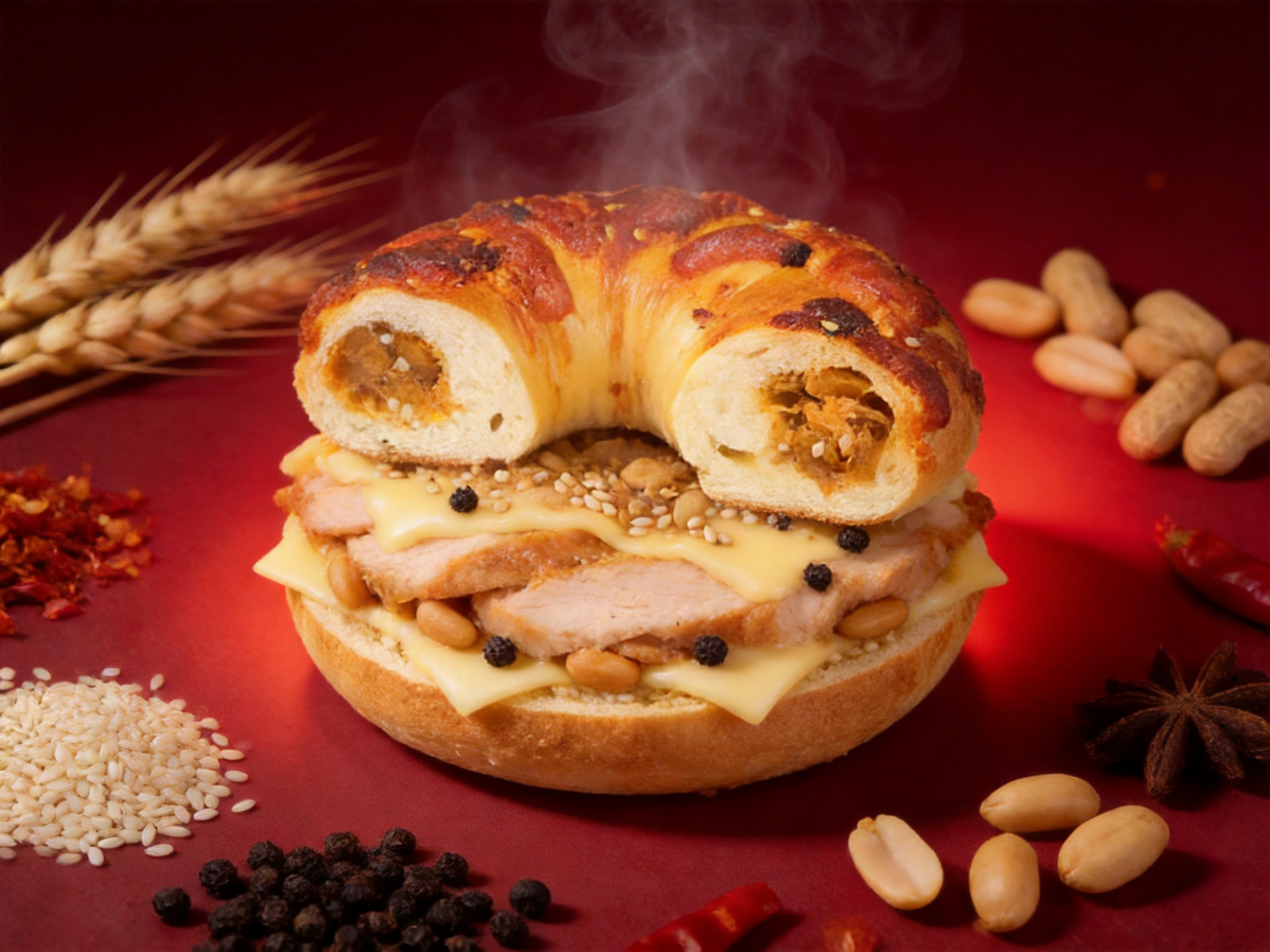
A bakery can also create its own serving presentation around the product. It may be heated and served whole, cut for visual display, or combined with a side salad, soup, or beverage. The chewy base and colorful toppings can create an attractive cross-section when prepared for display.
Foodservice and Institutional Catering
Foodservice buyers often need products that are easy to portion, store, prepare, and serve. The 128-gram individual format provides a practical starting point for menu planning. The bagel can be used in workplace cafés, convenience food programs, casual dining, catering, and other settings where a handheld savory product is useful.
Because the flavor is already integrated into the product, operators may reduce preparation steps compared with building a chicken sandwich from separate bread, meat, sauce, cheese, and toppings. This can help support consistency during busy service periods.
OEM and Private-Label Opportunities
The product is well suited to OEM and private-label development because it combines a proven bakery format with a differentiated flavor concept. Buyers can use the manufacturer’s experience to create products for their own brand, retail channel, café chain, or foodservice identity.
Private-label customers may be interested in adjusting the presentation while retaining the core product architecture. Potential development discussions can include package design, product naming, serving positioning, flavor intensity, channel-specific requirements, and the balance between premium craft cues and convenient frozen distribution.
A strong OEM partnership should begin with a clear understanding of the target consumer and sales channel. A retail buyer may emphasize package visibility and home preparation. A café chain may prioritize consistency, speed of service, and beverage pairing. A bakery operator may focus on display quality and premium flavor language. The same base product can be positioned differently depending on the commercial objective.
The manufacturer’s broad portfolio of more than 100 bagel varieties can support this type of cooperation. Experience across multiple bagel concepts gives the development team a wider reference point when evaluating texture, flavor combinations, product size, and application requirements.
Quality, Clean-Label Positioning, and Product Trust
Goobagel Food describes its product range as including more than 100 clean-label bagel varieties. Clean-label positioning is increasingly important for buyers who want products with understandable ingredient stories and a more transparent market identity. For the Teng Pepper Chicken Bagel, the ingredient narrative is easy to communicate: imported wheat, tender chicken breast, cheese, peanuts, sesame, teng pepper, and black pepper.
Clear ingredient storytelling can help a product stand out in a crowded category. Instead of relying only on general claims such as “delicious” or “high quality,” the product can describe its actual sensory structure. Consumers can understand what creates the chew, what provides the protein, what creates the heat, and what adds crunch.
Product trust also depends on reliable manufacturing and supply. The manufacturer’s stated mission is to provide customers with high-quality and healthy products while offering partners opportunities to realize their goals. Its values include persistence, craftsmanship, respect, and science. These principles align with the needs of commercial customers seeking both product creativity and dependable cooperation.
For buyers evaluating suppliers, the combination of company history, R&D depth, integrated operations, and a broad product portfolio can be as important as the appeal of one individual SKU. The product must not only taste distinctive; it must also fit into a stable supply relationship.
How the Product Can Be Positioned in Marketing
The most effective marketing message should focus on contrast and progression. The bagel begins with a firm, chewy base, moves into tender chicken, develops through aromatic teng pepper, and finishes with cheese, peanuts, sesame, and black pepper. This sequence is more compelling than presenting the item as simply a spicy chicken bagel.
Marketing communication can highlight the following product benefits:
• A substantial 128-gram individual format.
• Imported wheat and a firm, resilient bagel texture.
• Hand-shaped craftsmanship inspired by traditional bagel making.
• Tender chicken breast with a soft and juicy eating quality.
• A progressive teng pepper experience from fragrance to numbing warmth and spice.
• Cheese for creaminess, peanuts for crunch, sesame for roasted aroma, and black pepper for a crisp finish.
• Frozen convenience for retail, foodservice, cafés, bakeries, and private-label programs.
The product can also be presented through sensory language. Words such as “chewy,” “tender,” “aromatic,” “numbing,” “spicy,” “savory,” and “crunchy” provide consumers with a clear expectation of what they will experience. For B2B buyers, this language can be adapted into menu descriptions, product catalogs, packaging copy, and sales presentations.
Why Texture Matters in Product Differentiation
Flavor attracts attention, but texture often determines whether a product feels premium and memorable. The Teng Pepper Chicken Bagel offers several textural stages: resistance from the outer bagel, resilience from the dense interior, tenderness from the chicken, creaminess from the cheese, and crunch from the peanuts and sesame.
This variety is a significant advantage over products with a single dominant texture. A soft bun with a soft filling may be convenient, but it can feel less distinctive. A plain bagel can provide chewiness, but without a substantial filling it may not deliver the same meal satisfaction. The combination in this product makes each bite more dynamic.
Texture also affects perceived value. A product that requires more chewing and includes multiple components can feel more substantial than a similarly sized item with a uniform structure. This is especially relevant to a 128-gram product intended to function as a meal or filling snack.
For foodservice operators, texture creates an opportunity to build a stronger customer experience. A menu description can promise a chewy bagel, tender chicken, melted or creamy cheese, and a crunchy finish. These details help customers imagine the product before ordering and make the item easier to recommend.
Operational and Commercial Benefits
From a business perspective, the product offers more than flavor novelty. Its integrated format can support standardized preparation, consistent portioning, and straightforward menu development. Operators do not need to separately formulate a chicken filling, choose a spicy sauce, source a compatible bagel, and develop a topping combination.
The product can also help simplify category expansion. A café that already sells beverages can add a savory bagel without creating a full hot-food kitchen. A bakery can add a filled specialty item without developing a new dough system. A retailer can expand its frozen bakery selection with a product that offers a stronger flavor point of difference.
The manufacturer’s nationwide distribution capability is relevant for customers seeking broader market coverage. A product intended for multiple regions requires more than an attractive recipe. It requires organized production and distribution planning so that buyers can maintain supply as demand develops.
For private-label clients, the product can serve as a starting point for a broader bagel range. A spicy chicken SKU can be accompanied by other savory, sweet, or specialty varieties, allowing a buyer to build a complete frozen bagel portfolio through one experienced manufacturing partner.
Q&A: Understanding the Teng Pepper Chicken Bagel
What is the product?
It is a 128-gram filled bagel featuring a chewy bagel base, tender chicken breast, teng pepper seasoning, cheese, peanuts, sesame, and black pepper. It is designed as a savory handheld product for retail, foodservice, cafés, bakeries, and related commercial channels.
What does “teng pepper” contribute to the flavor?
Teng pepper contributes an aromatic profile and a characteristic numbing sensation followed by spicy warmth. In this product, the flavor is intended to develop progressively from fragrance to numbing heat and then to a more confident spicy finish.
Is the bagel base soft or chewy?
The product is designed around a firm, resilient, and pleasantly dense texture. It is intended to provide a satisfying chew rather than the very soft texture associated with ordinary buns.
Why is the bagel hand-shaped?
Hand shaping supports an artisan-inspired appearance and reflects traditional bagel-making craftsmanship. It helps reinforce the product’s premium identity while being combined with organized commercial manufacturing.
What type of chicken is used?
The filling uses chicken breast prepared with the goal of maintaining tenderness, softness, and juiciness. The mild character of chicken breast also provides a suitable foundation for the teng pepper seasoning.
What do the peanuts and sesame add?
Peanuts add crunch and nutty richness, while sesame contributes a warm roasted aroma. Together, they create textural and aromatic contrast against the chewy bagel and tender chicken.
What is the role of cheese?
Cheese adds creaminess and helps round out the pepper seasoning. It provides a gentle richness that balances the numbing and spicy sensations.
Who can purchase or use this product commercially?
The product is suitable for retail buyers, frozen food distributors, foodservice operators, café chains, tea brands, bakeries, convenience businesses, and companies seeking OEM or private-label bagel solutions.
Can the product support private-label development?
Yes. The manufacturer specializes in bagel research and production and has developed more than 100 bagel varieties. This background can support discussions around private-label positioning, product portfolios, packaging, channel requirements, and flavor development.
Why is the product suitable for cafés?
Its handheld format, substantial portion, bold flavor, and compatibility with hot and cold beverages make it suitable for café menus. It can also serve as a savory alternative to sweet pastries and conventional breakfast items.
How is this product different from a plain bagel?
A plain bagel generally requires a separate spread or filling. This product integrates the savory meal components into one item, combining chicken, cheese, pepper seasoning, nuts, and seeds with the chewy bagel base.
How is it different from a standard chicken bun?
The product offers a firmer and chewier bagel texture, a more layered topping structure, and a distinctive teng pepper flavor. It is designed to provide more contrast between bread, filling, creaminess, and crunch.
Conclusion
The Chewy Bagel Base Teng Pepper Chicken Bagel is a strong example of how a familiar bakery format can be redesigned for modern savory food demand. Its appeal comes from the complete combination of elements: imported wheat, hand-shaped craftsmanship, a firm and resilient bite, tender chicken breast, progressive teng pepper heat, creamy cheese, crunchy peanuts, roasted sesame, and aromatic black pepper.
Compared with plain bagels, soft chicken buns, and generic spicy bread products, it offers a clearer sensory identity and greater meal functionality. It is substantial enough for breakfast or lunch, portable enough for takeaway, distinctive enough for café menus, and flexible enough for retail and private-label development.
The product is also supported by a manufacturer with experience in bagel research, frozen bakery production, integrated supply-chain management, and nationwide distribution. Its portfolio of more than 100 clean-label bagel varieties demonstrates the ability to work across different flavor concepts and commercial applications.
For businesses seeking a product that combines craft character with scalable manufacturing, the Teng Pepper Chicken Bagel offers a compelling option. It delivers the comfort and familiarity of a bagel while introducing a more adventurous flavor journey—fragrant, numbing, spicy, savory, creamy, nutty, roasted, and crunchy in one complete handheld product.
References
1. Product specification and sensory description for the 128-gram Chewy Bagel Base Teng Pepper Chicken Bagel.
2. Manufacturer information regarding frozen bakery production, bagel research, integrated supply-chain operations, and product development.
3. Manufacturer information regarding clean-label bagel varieties for retail, foodservice, café chains, tea brands, bakery operators, OEM, and private-label applications.
4. General principles of bakery product development, texture contrast, flavor layering, portion design, and foodservice commercialization.
5. General references on bagel structure, wheat-based dough systems, savory filling development, spice balance, and frozen bakery distribution.
