
 中文简体
 English






postmaster@goobagelfood.com
Content
- 1 A Modern Interpretation of the Multigrain Bagel
- 2 High-Proportion Dark Whole Wheat as the Product Foundation
- 3 Oats, Flaxseed, and Sesame: A Multi-Seed Texture System
- 4 Flavor Profile and Eating Experience
- 5 Nutrition-Oriented Positioning Without Sacrificing Taste
- 6 Advantages Over Conventional Bagels
- 7 Manufacturing Strengths Behind the Product
- 8 Research and Development for Commercial Applications
- 9 Applications Across Retail and Foodservice
- 10 Menu Ideas for the Dark Whole Wheat Multigrain Bagel
- 11 Quality Consistency and Customer Confidence
- 12 OEM and Private-Label Opportunities
- 13 Why This Product Fits Current Bakery Trends
- 14 Responsible Product Communication
- 15 Buyer Considerations for Commercial Evaluation
- 16 Frequently Asked Questions
- 16.1 What makes this bagel different from a standard plain bagel?
- 16.2 What is the product weight?
- 16.3 Is the bagel suitable for sandwiches?
- 16.4 Can the bagel be eaten without a filling?
- 16.5 What seeds and grains are used on the surface?
- 16.6 Is this a sweet bagel?
- 16.7 Who manufactures the product?
- 16.8 Does the manufacturer offer OEM and private-label services?
- 16.9 What manufacturing strengths support the product?
- 16.10 Is the product suitable for frozen distribution?
- 16.11 Can the product be customized?
- 16.12 Does the product contain allergens?
- 16.13 What types of businesses can use this bagel?
- 16.14 How should the product be positioned to consumers?
- 17 Conclusion
- 18 References
- 19 Product: Dietary Nutrition Dark Whole Wheat Multigrain Bagel

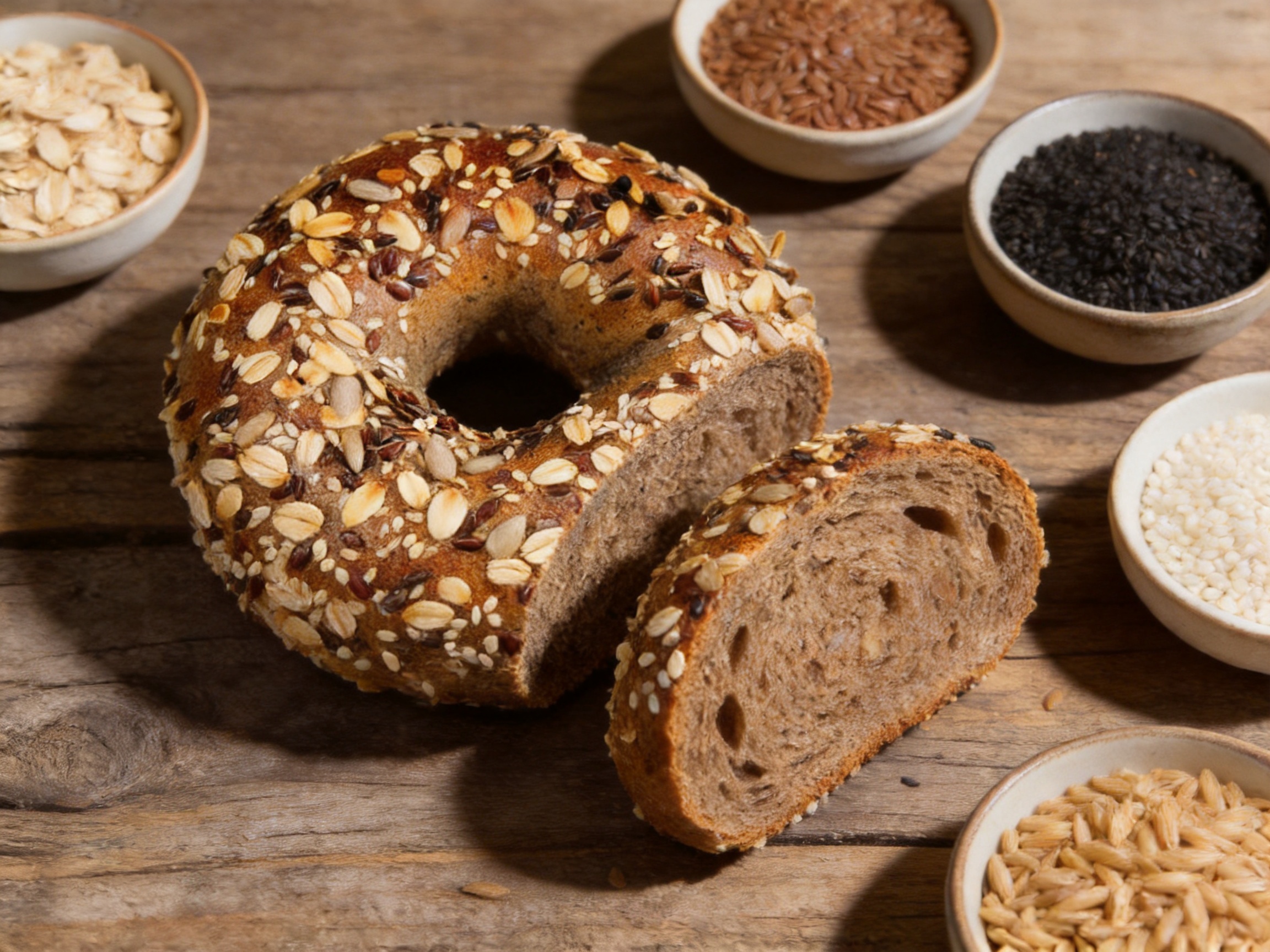
The Dietary Nutrition Dark Whole Wheat Multigrain Bagel is designed for consumers and commercial buyers who want more from a bagel than a familiar round shape and a chewy texture. Made with a high proportion of dark whole wheat flour and finished with oats, flaxseed, and black and white sesame, this 110-gram bagel combines substantial nutrition, full grain character, visual appeal, and dependable versatility.
It is a product created for modern eating habits. Consumers increasingly look for foods that feel wholesome without sacrificing taste, texture, or convenience. Retailers and foodservice operators, meanwhile, need products that are easy to merchandise, reliable in preparation, consistent from batch to batch, and flexible enough to support breakfast, lunch, snacks, and café menus. This multigrain bagel addresses these needs with a robust whole-grain profile and a format that can be used in both simple and premium applications.
Its most distinctive quality is the balance between hearty nutrition and genuine eating pleasure. The deep wheat aroma of dark whole wheat flour gives the bagel an earthy foundation. Whole-kernel milling helps retain more of the bran, germ, and endosperm, contributing to a richer grain identity. Oats and flaxseed add visual texture and a nutty character, while black and white sesame create a crisp, aromatic topping. Together, these ingredients form a bagel with a satisfying bite and a long, warm finish.
For commercial buyers, the product also represents an opportunity to offer a more differentiated alternative to ordinary plain or lightly topped bagels. Its darker color, visible seeds, and generous grain surface communicate value immediately on the shelf or serving counter. It can be positioned as a better-for-you breakfast, a premium sandwich base, a wholesome café item, or a practical frozen bakery product for foodservice operations.
A Modern Interpretation of the Multigrain Bagel
Multigrain products are often associated with health, but not every multigrain bagel delivers a memorable flavor experience. Some products rely mainly on superficial topping or a small amount of grain ingredients, resulting in a product that looks wholesome but tastes close to a standard white-flour bagel. The Dietary Nutrition Dark Whole Wheat Multigrain Bagel takes a more complete approach by building its character around a high proportion of dark whole wheat flour and reinforcing that base with several grains and seeds.
This approach creates depth from the inside out. The whole wheat foundation contributes a fuller aroma and more pronounced flavor than a conventional refined-flour bagel. The toppings then add a second layer of sensory interest. Oats provide a mild cereal note and a gentle toasted impression. Flaxseed contributes a subtle nuttiness and a distinctive seed texture. Black and white sesame add additional aroma, contrast, and crunch.
The result is not simply a bagel with seeds sprinkled on top. It is a grain-forward product in which the interior and exterior work together. The interior provides structure, chew, and a lasting wheat flavor, while the topping creates a crisp first impression. This combination supports a more satisfying eating experience, particularly for consumers who prefer breads with visible ingredients and a pronounced grain identity.
The 110-gram format also gives the product a substantial presence. It is large enough to serve as a complete breakfast or sandwich base while remaining suitable for individual packaging and portion control. For cafés, restaurants, hotels, and retailers, this size can support clear menu planning and predictable serving portions.
High-Proportion Dark Whole Wheat as the Product Foundation
The central advantage of this bagel is its use of a high proportion of dark whole wheat flour. Whole wheat flour is produced from the entire wheat kernel, including the bran, germ, and endosperm. Each part contributes a different quality. The bran is associated with the outer layers of the kernel, the germ provides a naturally rich component, and the endosperm supplies the main flour body and baking structure.
By using whole-kernel milling, the product is developed around a more complete grain profile rather than relying only on refined flour. This contributes to the bagel’s darker appearance, fuller aroma, and more satisfying texture. The natural grain character is especially important for consumers who want a bread product that looks and tastes genuinely wholesome.
Dark whole wheat also gives the bagel a stronger flavor identity. Instead of a light, neutral profile that disappears beneath spreads or fillings, it offers a deep wheat aroma that remains noticeable when paired with cream cheese, smoked salmon, eggs, lean proteins, or vegetables. This allows the bagel to function as an active component of a meal rather than merely a carrier for other ingredients.
From a product-development perspective, the whole wheat foundation creates a clear point of difference. Many conventional bagels compete mainly through flavor additions such as cheese, fruit, or sweet toppings. A dark whole wheat multigrain bagel competes through ingredient character, appearance, texture, and perceived nutritional value. This makes it suitable for product lines that emphasize balanced eating, wholesome grains, natural-looking ingredients, and everyday nutrition.
The darker color can also enhance shelf communication. Consumers often recognize a deep brown grain appearance as a visual sign of a more substantial bread. When combined with visible oats, flaxseed, and sesame, the product quickly communicates its multigrain positioning without requiring an elaborate explanation.
Why Whole-Kernel Milling Matters
Whole-kernel milling supports a more integrated grain experience. Rather than separating the wheat components and using only the refined central portion, the process preserves more of the kernel’s natural composition. This can help the finished bagel maintain the aroma, color, and texture associated with whole wheat.
For a manufacturer, whole-kernel milling also requires attention to ingredient handling, flour consistency, hydration, dough development, and baking performance. Whole wheat ingredients can influence dough behavior because bran and germ affect water absorption, elasticity, and the final crumb. A successful product therefore depends on careful formulation and controlled production rather than simply adding whole wheat flour to a conventional recipe.
Goobagel Food’s experience in bagel research and manufacturing supports the development of products that combine whole-grain ingredients with commercial consistency. Since its establishment in 2019, the company has focused on bagel research, product development, production, and supply. Its integrated approach allows the product team to consider ingredient selection, dough performance, manufacturing efficiency, frozen storage, and customer application as connected parts of one system.

Dietary Nutrition Dark Whole Wheat Multigrain Bagel
Oats, Flaxseed, and Sesame: A Multi-Seed Texture System
The topping is one of the most visible and memorable features of the Dietary Nutrition Dark Whole Wheat Multigrain Bagel. Oats, flaxseed, black sesame, and white sesame are applied to create a layered surface that is both attractive and functional. The mixture provides more than decoration. It contributes crispness, aroma, flavor contrast, and a stronger perception of quality.
Oats provide a familiar cereal character that works naturally with whole wheat. When baked, oats can develop a lightly toasted aroma and a delicate surface texture. Their appearance also reinforces the product’s breakfast positioning, making the bagel feel appropriate for morning meals, grain-focused menus, and health-conscious retail ranges.
Flaxseed brings an appealing seed note and a distinctive visual detail. It helps the product look more generously formulated than a plain bagel while contributing to the overall nutty flavor impression. Because flaxseed is associated by many consumers with nutritious eating, its presence supports the product’s better-for-you positioning without forcing the bagel into a narrow diet category.
Black and white sesame create visual contrast across the surface. The two colors make the topping look abundant and carefully composed, while sesame’s naturally aromatic character becomes more noticeable after baking. The seeds provide small points of crispness that contrast with the chewy interior. This difference in texture keeps each bite interesting and helps the bagel maintain a premium sensory profile.
The combined topping can be described as a crunchy grain layer. As the bagel bakes, the surface develops a toasted character that complements the mellow, rye-like notes of the darker grain base. The flavor gradually deepens during chewing, producing a longer finish than a lightly flavored white bagel.
Texture as a Competitive Advantage
Texture is one of the most important factors in bagel quality. Consumers expect a bagel to have structure, but they also want it to be pleasant to bite and easy to eat. A product that is too soft may feel ordinary, while one that is excessively firm can become difficult to enjoy. The Dietary Nutrition Dark Whole Wheat Multigrain Bagel is designed to occupy a balanced position: sturdy enough for fillings, chewy enough to feel like a true bagel, and textured enough to provide a satisfying bite.
The seed topping creates an immediate contrast. The first bite introduces crispness, followed by the substantial grain texture of the interior. This contrast makes the bagel more interesting than a uniformly soft or smooth product. It also helps the product remain recognizable when used in sandwiches, where fillings might otherwise dominate the bread’s identity.
For foodservice buyers, structural integrity is especially valuable. A bagel needs to be sliced, filled, packaged, transported, and served without becoming fragile. The product description emphasizes that it holds its structure beautifully, making it suitable for cream cheese spreads, smoked salmon, lean proteins, vegetables, and other ingredients. This is important for operators who need a dependable bread base during busy service periods.
Flavor Profile and Eating Experience
The flavor of the bagel develops in several stages. The first impression comes from the baked topping, where sesame and oats create a toasted aroma. The second impression comes from the dark whole wheat interior, which provides a deeper and more rounded grain flavor. The final impression is a warm, lingering finish with a mild rye-like character.
This progression gives the product a more sophisticated profile than a standard plain bagel. It is flavorful enough to be eaten on its own, yet balanced enough to support sweet or savory pairings. A consumer can enjoy it with a simple spread, while a chef can use it as the base for a more complex menu item.
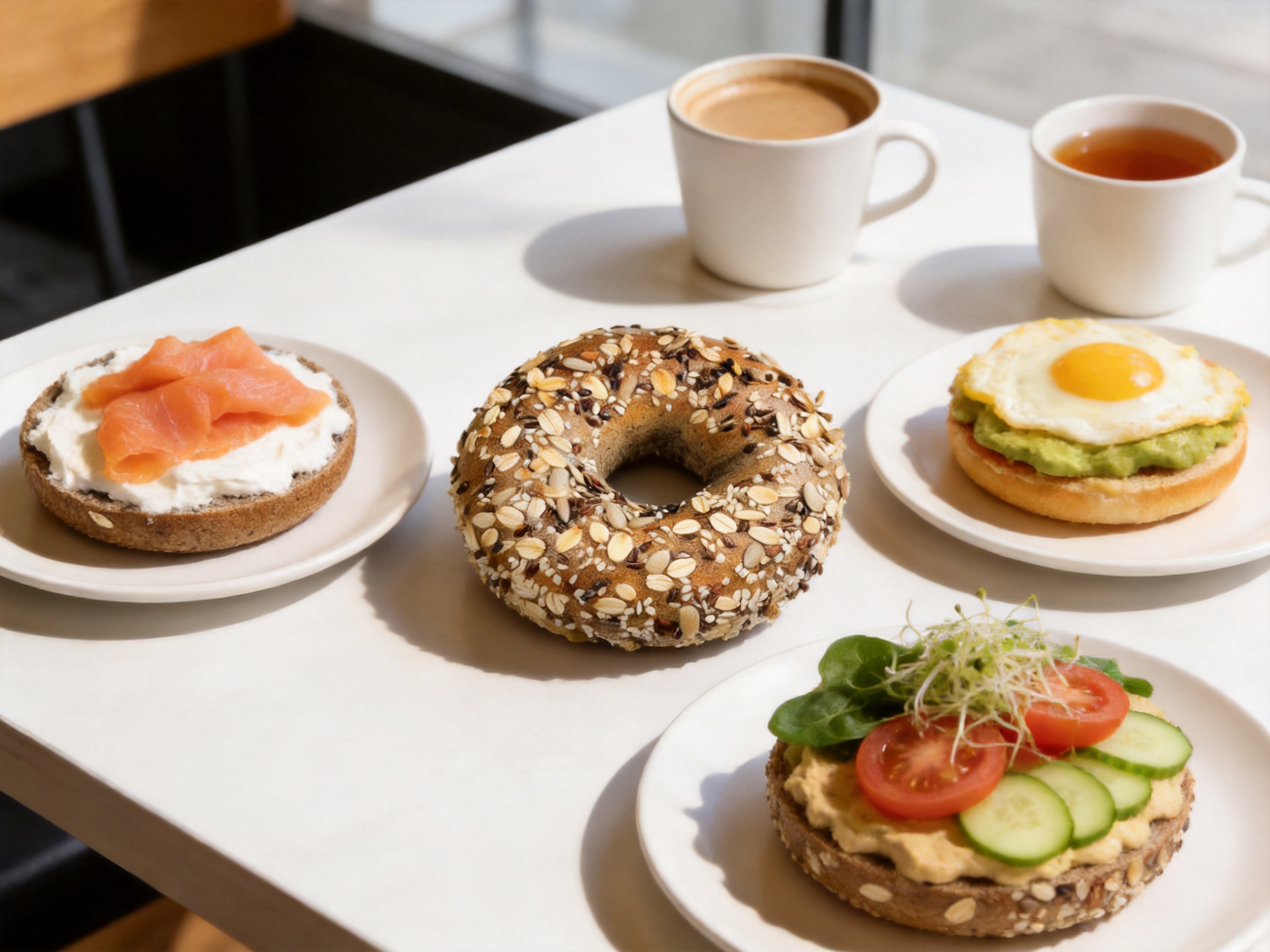
The bagel does not need heavy sauces or strongly flavored fillings to become appealing. Cream cheese highlights its grain aroma and provides a smooth contrast to the seeds. Smoked salmon creates a classic savory combination, with the dark wheat and sesame balancing the fish’s richness. Fresh vegetables bring brightness and moisture, while lean proteins make the product suitable for a filling lunch or post-workout meal.
It can also work with egg, avocado, turkey, chicken, hummus, cottage cheese, or roasted vegetables. These applications demonstrate that the bagel is not restricted to one daypart. It can be included in breakfast menus, brunch offerings, lunch programs, café displays, hotel buffets, and convenient retail meal solutions.
Nutrition-Oriented Positioning Without Sacrificing Taste
The phrase “better for you” is increasingly common in bakery marketing, but consumers are becoming more discerning. They want products that offer meaningful ingredient value and still taste enjoyable. A dry, overly dense, or bland product may fail to generate repeat purchases even if its nutritional positioning is attractive.
The Dietary Nutrition Dark Whole Wheat Multigrain Bagel is developed around a more balanced proposition. Its whole wheat foundation and multi-seed topping support a wholesome image, while its toasted aroma, chewy structure, and layered texture support everyday enjoyment. The product is therefore suitable for consumers who want nutritious choices but do not want to compromise on flavor.
The product description emphasizes grain ingredients rather than making unsupported medical or dietary claims. This is important for responsible commercial communication. Whole wheat, oats, flaxseed, and sesame can be highlighted as recognizable ingredients that contribute to a grain-rich eating experience. Specific nutrition declarations, allergen statements, and regulatory claims should always be confirmed through the final product specification and the requirements of the target market.
For retailers, this positioning can support several merchandising strategies. The bagel may be placed in a whole-grain range, a breakfast solution section, a premium frozen bakery assortment, or a better-choice product collection. For foodservice operators, it can be presented as a multigrain alternative to a plain bagel without requiring the menu to adopt a highly specialized health-food identity.
Appealing to Multiple Consumer Groups
The product can appeal to several overlapping consumer groups. Health-conscious shoppers may appreciate its dark whole wheat base and visible seeds. Busy professionals may value its substantial size and suitability for a complete meal. Families may enjoy its familiar bagel format with a more interesting grain taste. Café customers may choose it because its appearance suggests freshness, texture, and premium ingredients.
It can also serve consumers who simply prefer breads with stronger flavor. Not everyone selects whole grain products for nutritional reasons alone. Many choose them because they enjoy toasted seeds, nutty notes, darker bread, and a more complex bite. By delivering flavor as well as ingredient value, the bagel has the potential to attract a wider audience than a product marketed only around nutrition.
Advantages Over Conventional Bagels
The product’s competitive advantages can be organized into several areas: ingredient composition, sensory quality, visual identity, application flexibility, and manufacturing support.
| Product Attribute | Dietary Nutrition Dark Whole Wheat Multigrain Bagel | Typical Plain Bagel | Commercial Benefit |
|---|---|---|---|
| Primary grain character | High-proportion dark whole wheat with a deep wheat aroma | Usually lighter and more neutral | Creates a stronger product identity and supports whole-grain positioning |
| Surface ingredients | Oats, flaxseed, black sesame, and white sesame | Often plain or lightly topped | Improves visual appeal, texture, and perceived value |
| Eating texture | Chewy, substantial interior with a crisp multi-seed surface | More uniform texture | Provides a more memorable sensory experience |
| Meal versatility | Suitable for spreads, fish, proteins, vegetables, and standalone eating | Commonly used for basic breakfast applications | Supports more menu options and dayparts |
| Visual positioning | Dark grain color with a generous, contrasting topping | Light-colored and visually familiar | Stands out in retail displays and café cases |
| Consumer message | Wholesome, hearty, grain-rich, and flavorful | Traditional and convenient | Supports premium and health-oriented merchandising |
Compared with a plain bagel, this product offers more sensory communication before the consumer even takes a bite. The dark color suggests a whole-grain base, while the visible topping indicates a more complex formulation. That visual information can be valuable in a crowded freezer or bakery display, where products need to communicate their point of difference quickly.
Compared with a lightly topped multigrain bagel, the high proportion of dark whole wheat gives the product a more integrated grain profile. The grains are not limited to surface decoration. The interior contributes to the overall taste, aroma, and structure. This makes the product feel more authentic and substantial.
Compared with heavily flavored bagels containing cheese, sweet fruit, or strong seasonings, the dark whole wheat multigrain format is more adaptable. It can be paired with a wider range of ingredients without creating flavor conflicts. This flexibility is particularly valuable to private-label customers and foodservice operators that want one product to serve multiple menu concepts.
Manufacturing Strengths Behind the Product
A distinctive formula is only valuable when it can be produced consistently. Whole wheat and seed-rich products can present technical challenges. The flour may require careful hydration management, seeds must be distributed and adhered effectively, and the finished product must retain its structure through freezing, storage, preparation, and service.
Goobagel Food has specialized in bagel research and manufacturing since 2019. The company operates as a modern frozen bakery producer with an integrated supply chain covering raw materials, research and development, production, and nationwide distribution. This integrated model supports communication between the teams responsible for ingredient sourcing, formulation, manufacturing, quality management, and delivery.
Such integration is important for product consistency. When ingredient decisions and production decisions are closely connected, a manufacturer can better evaluate how changes in flour, seeds, processing conditions, packaging, or storage may affect the finished bagel. It also helps the company respond more efficiently to customer requirements, including product specifications, packaging formats, application needs, and private-label development.
The company has developed more than 100 clean-label bagel varieties for retail, foodservice, café chains, tea brands, and bakery operators. This broad product-development experience indicates familiarity with different commercial environments. A retail customer may prioritize packaging appearance and consumer appeal. A café chain may need stable portion size and reliable preparation. A foodservice operator may prioritize structure and performance under repeated service conditions. A bakery operator may need products that complement an existing range.
The Dietary Nutrition Dark Whole Wheat Multigrain Bagel fits naturally into this development system. Its formulation is sufficiently distinctive for premium positioning but versatile enough for different channels. It can be supplied as part of a wider bagel portfolio or developed into a customized product line according to customer requirements.
Raw Material and Formulation Coordination
The product’s quality begins with ingredient coordination. Dark whole wheat flour, oats, flaxseed, and sesame each influence flavor, texture, appearance, and processing behavior. A manufacturer must consider not only the individual quality of each ingredient but also how they interact in the dough and during baking.
Goobagel Food’s supply-chain structure covers raw materials and product research, enabling the company to evaluate ingredients as part of a complete formulation. This is particularly relevant for multi-seed products, where topping distribution, adhesion, and baking stability affect the final appearance. Consistent sourcing and controlled formulation help maintain a recognizable product profile for commercial customers.
For OEM and private-label projects, formulation coordination also helps customers develop a product that matches their intended market. A buyer may want a stronger whole wheat identity, a different topping balance, a specific package size, or a profile optimized for a particular sandwich application. A manufacturer with dedicated research and development capabilities can work from the core product concept while adapting details to customer needs.
Production and Frozen Bakery Expertise
Frozen bakery manufacturing requires more than baking a product and placing it into cold storage. The product must be designed to withstand the conditions associated with freezing, distribution, storage, preparation, and final serving. Dough structure, moisture management, packaging, and handling all influence the experience at the point of consumption.
As a frozen bakery producer, Goobagel Food is positioned to support customers that require reliable supply over time rather than occasional fresh production. Frozen distribution can help retailers and foodservice operators manage inventory, standardize product availability, and reduce dependence on local daily baking capacity. It can also allow customers in different regions to access a consistent product specification.
The company’s nationwide distribution capability further supports commercial supply. For buyers, dependable logistics are often as important as the recipe itself. A successful product must arrive in suitable condition, remain consistent across deliveries, and fit the customer’s ordering and inventory systems.
Research and Development for Commercial Applications
Research and development is central to the company’s strength. With more than 100 clean-label bagel varieties developed for multiple customer groups, Goobagel Food has built experience in translating broad market trends into practical bakery products. This includes products designed for retail shelves, foodservice operations, café chains, tea brands, and bakery businesses.
The Dietary Nutrition Dark Whole Wheat Multigrain Bagel demonstrates how R&D can connect consumer preference with manufacturing practicality. Consumers want whole grains, recognizable ingredients, appealing texture, and satisfying flavor. Buyers need a product that can be produced at scale, stored efficiently, prepared consistently, and used in more than one way. A successful formulation must address both sides.
Product development can also support customization. An OEM customer may be building a wellness-focused breakfast line, a premium café menu, a hotel buffet program, or a frozen retail range. The same core concept may need different packaging, serving recommendations, or positioning in each channel. A manufacturer with product development experience can help turn the bagel into a commercial solution rather than treating it as a fixed, one-size-fits-all item.
Clean-Label Development
The company describes its bagel portfolio as including more than 100 clean-label varieties. Clean-label expectations vary by market and should be confirmed against the specific product specification, but the general principle is clear: buyers increasingly value understandable ingredients, recognizable grain components, and formulations that support transparent communication.
The dark whole wheat multigrain concept naturally supports this direction. Its principal grain and seed ingredients are familiar to consumers and easy to communicate in product descriptions, menu copy, and retail packaging. Instead of relying on a complicated flavor concept, the bagel’s appeal comes from the ingredients themselves and the way they are combined.
For private-label customers, this can make the product easier to integrate into an existing brand story. A retailer can emphasize whole grains and everyday nutrition. A café can highlight toasted seeds and hearty texture. A foodservice distributor can present the product as a dependable multigrain alternative for breakfast and sandwich programs.
Applications Across Retail and Foodservice
The bagel is suitable for a wide range of commercial uses because it has a balanced flavor and strong structure. Its 110-gram size makes it substantial enough for meal applications while remaining easy to portion and package.
Retail Breakfast and Frozen Bakery
In retail, the product can be sold as an individual breakfast item, a multipack, or part of a broader frozen bakery collection. Its dark color and visible topping can help it stand apart from plain, onion, or cheese bagels. Product photography and packaging can emphasize the oats, flaxseed, and sesame surface, while the description can explain the high-proportion dark whole wheat base.
The frozen format can provide consumers with convenient access to a bakery-style product at home. Retailers may also benefit from inventory flexibility, especially when compared with products that require short daily shelf-life management. Exact storage, preparation, packaging, and labeling details should be confirmed through the final commercial specification.
Café Chains and Tea Brands
Café chains and tea brands often need food items that complement beverages and support quick service. A dark whole wheat multigrain bagel can be paired with coffee, tea, smoothies, or other drinks. It can be served with cream cheese, used as a breakfast sandwich base, or offered as a more substantial alternative to sweet bakery items.
Its premium appearance can support menu descriptions such as toasted multigrain bagel, whole wheat seed bagel, or hearty grain breakfast sandwich, subject to applicable labeling rules. The product’s balanced flavor also means that different stores or franchise locations can use the same base product in several menu combinations.
Hotels and Catering
Hotels, resorts, and catering operators can use the bagel in breakfast buffets, conference catering, brunch service, and boxed meals. Its substantial size and recognizable format make it easy for guests to understand and customize. It can be displayed alongside spreads, smoked salmon, eggs, sliced vegetables, and fresh fruit.
For catering applications, structural integrity matters. The bagel should remain suitable for slicing, filling, and presentation. Its multigrain topping also improves the visual variety of a breakfast display, especially when placed beside lighter breads, croissants, rolls, and pastries.
Sandwich and Meal Solutions
The bagel can serve as a robust base for sandwiches featuring turkey, chicken, tuna, eggs, tofu, hummus, vegetables, or smoked salmon. Its grain flavor can complement savory ingredients while its structure helps contain fillings. This makes it suitable for quick-service restaurants, workplace cafeterias, convenience food programs, and meal-delivery menus.
Because the flavor is not excessively sweet or strongly seasoned, it can accommodate many recipes. Operators can create a breakfast sandwich in the morning and a vegetable or lean-protein sandwich later in the day without changing the bread product.
Menu Ideas for the Dark Whole Wheat Multigrain Bagel
A simple cream cheese preparation can showcase the product’s own character. The smooth spread contrasts with the crisp topping and allows the dark wheat aroma to remain prominent. A whipped cream cheese with herbs can add freshness, while a honey or fruit spread can create a mildly sweet breakfast option.
Smoked salmon, cream cheese, cucumber, and fresh herbs create a classic premium application. The sesame and whole wheat notes provide a deeper background for the salmon, while the seeds enhance the visual presentation.
An egg, avocado, and tomato sandwich can position the bagel as a satisfying breakfast or brunch item. The creamy avocado and soft egg contrast with the bagel’s chewy structure and crunchy surface. A lean turkey, lettuce, and tomato sandwich can provide a practical lunch option with broad consumer appeal.
For plant-forward menus, the bagel can be paired with hummus, roasted vegetables, spinach, cucumber, and sprouts. The hearty grain base helps the sandwich feel substantial, while the vegetables contribute freshness and color.
These applications illustrate the product’s versatility without requiring major changes to the base recipe. Operators can adapt fillings according to season, menu theme, dietary preferences, and local consumer demand.
Quality Consistency and Customer Confidence
Commercial customers need confidence that the product they approve during sampling will remain recognizable during regular supply. Consistency includes more than weight. It also covers appearance, topping distribution, crumb structure, flavor, texture, packaging, and frozen performance.
Goobagel Food’s integrated supply chain and dedicated manufacturing focus are important strengths in this area. By connecting raw materials, R&D, production, and distribution, the company can manage product development as an ongoing system. This supports stable quality and consistent performance for commercial applications.
The company’s stated values—persistence, craftsmanship, respect, and science—also reflect the practical requirements of bakery manufacturing. Persistence supports continuous improvement. Craftsmanship relates to attention to dough, baking, and finishing details. Respect applies to customers, partners, and consumers. Science supports controlled formulation, process evaluation, and product development.
These principles are particularly relevant to a bagel with multiple sensory components. Whole wheat flour, oats, flaxseed, and sesame must work together in a consistent way. A small change in ingredient behavior or processing can affect the final product. Careful manufacturing helps protect the characteristics that make the bagel commercially attractive.
OEM and Private-Label Opportunities
The product is well suited to OEM and private-label programs because its core proposition is clear and adaptable. A buyer can use the bagel as a ready-developed product or as the starting point for a customized range. The key selling points—dark whole wheat, multi-seed topping, substantial texture, and broad application—can support many brand strategies.
A retailer may request packaging that emphasizes breakfast convenience and whole grains. A café chain may need a product optimized for toasted sandwiches. A foodservice distributor may want case configurations suited to professional kitchens. A bakery operator may be interested in a product that expands its multigrain offering without developing a new recipe from the beginning.
Private-label cooperation also allows customers to build a consistent identity across multiple bagel products. The dark whole wheat multigrain version can be offered alongside classic, stuffed, sandwich, or specialty varieties. This creates a portfolio that serves different consumer preferences while maintaining a common manufacturing relationship.
Goobagel Food’s experience with more than 100 bagel varieties provides a useful foundation for this type of work. Customers can benefit from a manufacturer familiar with different flavors, formats, ingredient combinations, and sales channels. Any customization should be evaluated against technical, regulatory, packaging, and supply requirements in the intended market.
Why This Product Fits Current Bakery Trends
Several trends support the commercial potential of this bagel. Consumers continue to seek convenient foods that feel more nutritious and less processed in character. Whole grains, seeds, and visible ingredients can help products communicate this value. At the same time, shoppers still expect enjoyable flavor and texture.
The bagel format itself remains versatile. It can be eaten at home, purchased from a café, served in a hotel, or used in a prepared meal. Unlike some highly specialized health products, a bagel is familiar and easy to understand. Adding dark whole wheat and multiple seeds upgrades the format without making it unfamiliar.
Another important trend is the demand for products that serve multiple occasions. A product that can function as breakfast, lunch, a snack, or a sandwich base offers greater value to both consumers and operators. The Dietary Nutrition Dark Whole Wheat Multigrain Bagel meets this need through its balanced flavor and firm structure.
Frozen bakery technology also supports convenience and supply reliability. Retailers and foodservice businesses can maintain access to the product while managing inventory according to their operational needs. For manufacturers, a frozen model creates opportunities to serve customers across broader geographic markets.
Responsible Product Communication
Effective marketing should emphasize the product’s real qualities: high-proportion dark whole wheat flour, whole-kernel milling, oats, flaxseed, black and white sesame, a 110-gram format, toasted grain flavor, crisp topping, substantial texture, and broad versatility.
Nutrition-related communication should be based on verified product data. Terms such as “whole wheat,” “multigrain,” “source of fiber,” “high fiber,” or other regulated claims may have different requirements depending on the market. Customers should confirm the final formulation, nutrition panel, allergen declaration, and applicable labeling rules before making formal claims.
The product contains sesame as a highlighted ingredient, and the presence of wheat means that allergen communication is important. Additional information concerning cross-contact, preparation, storage, and handling should be supplied through the official product specification and verified by the customer’s regulatory or quality team.
This careful approach strengthens long-term trust. A product can be marketed attractively while remaining accurate, transparent, and compliant. The bagel’s genuine sensory and ingredient advantages provide ample material for strong communication without depending on exaggerated promises.
Buyer Considerations for Commercial Evaluation
When evaluating the bagel for a retail or foodservice program, buyers should consider the intended serving occasion, required packaging format, frozen storage conditions, preparation method, case quantity, delivery schedule, and target market. Sampling should include plain tasting as well as representative applications such as cream cheese, smoked salmon, egg, lean protein, and vegetables.
Buyers should also assess how the product looks after slicing and preparation. The dark crumb, topping distribution, and structural integrity can influence consumer perception. For sandwich applications, the bagel should be evaluated with realistic filling weights and sauces. For retail, packaging and display tests can help determine how clearly the product’s value is communicated.
Goobagel Food can support commercial discussions through its experience in research, manufacturing, distribution, OEM, and private-label supply. Product details should be confirmed directly with the company, including packaging, minimum order quantities, shelf life, storage requirements, certification status, customization options, and delivery arrangements.
Frequently Asked Questions
What makes this bagel different from a standard plain bagel?
The main differences are its high-proportion dark whole wheat base, whole-kernel milling approach, and topping of oats, flaxseed, black sesame, and white sesame. These ingredients create a darker appearance, deeper grain aroma, more complex flavor, and a crisp multi-seed surface.
What is the product weight?
The product description identifies the bagel as 110 grams. Buyers should confirm whether this refers to the nominal finished weight and review the official specification for commercial tolerances.
Is the bagel suitable for sandwiches?
Yes. Its substantial structure and balanced flavor make it suitable for cream cheese, smoked salmon, eggs, lean proteins, fresh vegetables, hummus, and other sandwich fillings. It is designed to hold its structure well in practical foodservice applications.
Can the bagel be eaten without a filling?
Yes. The whole wheat and multi-seed formulation provides enough flavor and texture for the bagel to be enjoyed on its own. Toasting can further emphasize the oats, sesame, and grain aromas.
What seeds and grains are used on the surface?
The topping includes oats, flaxseed, black sesame, and white sesame. These ingredients provide visual contrast, toasted aroma, and a crunchy surface texture.
Is this a sweet bagel?
No. The product is primarily grain-forward and savory-neutral, with a rich wheat aroma, nutty seed notes, and a warm finish. This allows it to pair with both savory fillings and selected sweet spreads.
Who manufactures the product?
The product is manufactured by Jiangsu Goobagel Food Technology Co., Ltd., a China-based frozen bakery producer specializing in bagel research and manufacturing since 2019.
Does the manufacturer offer OEM and private-label services?
Yes. The company offers OEM and private-label bagel solutions and has developed more than 100 bagel varieties for retail, foodservice, café chains, tea brands, and bakery operators.
What manufacturing strengths support the product?
The company operates an integrated supply chain covering raw materials, research and development, production, and nationwide distribution. This structure supports coordinated product development, stable quality, and reliable commercial supply.
Is the product suitable for frozen distribution?
It is presented as a frozen bakery product. Buyers should confirm the exact freezing, storage, transportation, thawing, heating, and serving instructions through the official product specification.
Can the product be customized?
OEM and private-label projects may allow customization of formulation, packaging, specifications, or commercial presentation. The available options should be discussed with the manufacturer according to order volume, target market, technical requirements, and regulatory needs.
Does the product contain allergens?
The formula highlights wheat-based whole wheat flour and sesame ingredients. Buyers should request the complete allergen statement and manufacturing information before placing an order, especially when the product will be sold in a market with specific allergen-labeling requirements.
What types of businesses can use this bagel?
Potential customers include retailers, cafés, coffee and tea chains, hotels, restaurants, caterers, foodservice distributors, convenience food operators, bakery businesses, and private-label brands.
How should the product be positioned to consumers?
It can be positioned as a hearty dark whole wheat bagel, a multi-seed breakfast option, a premium frozen bakery product, a wholesome sandwich base, or an everyday grain-rich staple. The final positioning should reflect verified product data and the requirements of the target market.
Conclusion
The Dietary Nutrition Dark Whole Wheat Multigrain Bagel combines a high-proportion dark whole wheat foundation with oats, flaxseed, black sesame, and white sesame. This creates a product with a deep grain aroma, crisp topping, substantial chew, and versatile flavor. It offers a meaningful alternative to plain bagels while remaining familiar, practical, and easy to use.
Its advantages are both sensory and commercial. The dark color and visible seeds create strong shelf and menu appeal. The whole wheat and multi-seed formulation supports nutrition-oriented positioning. The structured interior works with spreads, seafood, proteins, and vegetables. The 110-gram size provides a substantial serving format for breakfast, lunch, and snack applications.
Behind the product is Jiangsu Goobagel Food Technology Co., Ltd., a frozen bakery manufacturer with experience in bagel research, integrated supply-chain management, product development, production, and distribution. Its portfolio of more than 100 clean-label bagel varieties demonstrates the ability to serve different commercial channels and customer requirements.
For retailers, foodservice buyers, café chains, bakery operators, and private-label brands, this bagel offers a combination of recognizable ingredients, premium appearance, dependable versatility, and scalable manufacturing support. It is not simply a darker version of a traditional bagel. It is a complete multigrain product designed to deliver wholesome character, satisfying texture, and practical value across modern bakery applications.
References
1. Goobagel Food product information for the Dietary Nutrition Dark Whole Wheat Multigrain Bagel.
2. Jiangsu Goobagel Food Technology Co., Ltd. company information and manufacturing profile.
3. General principles of whole-kernel wheat milling and whole-grain ingredient use in bakery products.
4. General bakery science references concerning dough development, grain ingredients, seed toppings, baking, and frozen bakery distribution.
5. General food labeling and allergen-management guidance for wheat, sesame, whole-grain, and nutrition-related product communication.
