
 中文简体
 English


postmaster@goobagelfood.com
Content
- 1 A Distinctive Product Concept Built Around Balance
- 2 Ingredient Profile: A Creamy Dairy Foundation
- 3 Temperature-Responsive Eating Experience
- 4 Advantages Over Conventional Bagel Offerings
- 5 Manufacturing Strengths Behind the Product
- 6 Frozen Bakery Convenience for Wholesale Buyers
- 7 Private Label and OEM Potential
- 8 Quality and Product Development Considerations
- 9 Marketing the Rose Cream Cheese Bagel
- 10 Why This Product Fits Current Commercial Demand
- 11 Q&A: Product, Manufacturing, and Commercial Use
- 11.1 What is the main flavor of the bagel?
- 11.2 How large is each bagel?
- 11.3 Can the bagel be served warm?
- 11.4 Can it also be served chilled?
- 11.5 What beverages pair well with the product?
- 11.6 What makes this product different from a standard cream cheese bagel?
- 11.7 Who manufactures the product?
- 11.8 What manufacturing capabilities does the company provide?
- 11.9 Is the product suitable for private-label programs?
- 11.10 Is the product suitable for cafés and tea shops?
- 11.11 What should buyers verify before placing an order?
- 11.12 Does the product contain dairy?
- 11.13 Can the product be used in a broader bagel range?
- 12 Conclusion
- 13 References
- 14 Product: New Zealand Cream Cheese Rose Cream Cheese Bagel
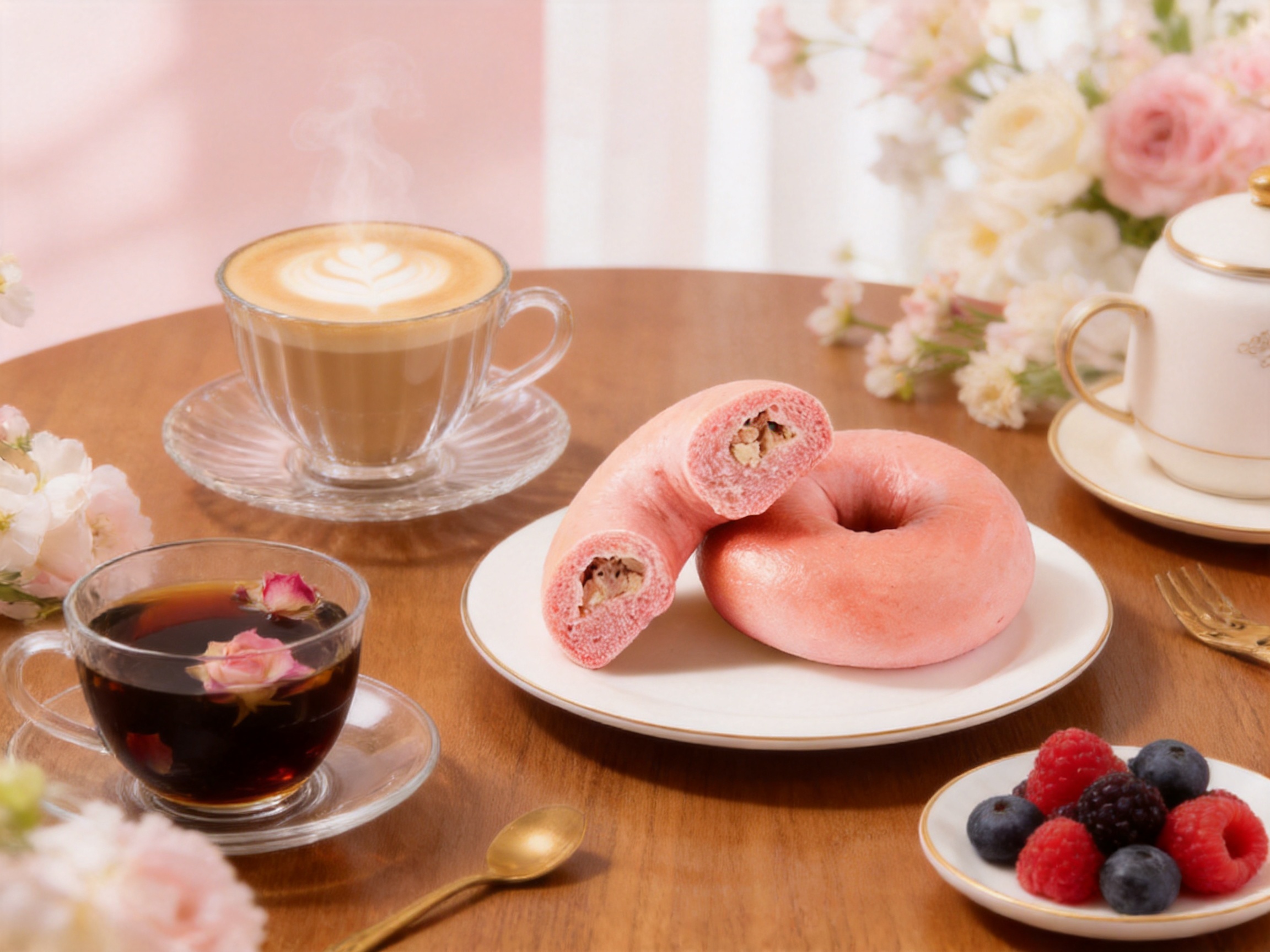
The bagel market continues to develop as consumers look for products that combine convenience, recognizable ingredients, attractive presentation, and distinctive flavor. Traditional plain bagels remain important, but cafés, retailers, hotels, restaurants, and bakery operators increasingly need products that offer something more memorable. A successful premium bagel must deliver dependable texture, clear flavor identity, efficient preparation, and commercial consistency. The New Zealand Cream Cheese Rose Cream Cheese Bagel answers this demand by bringing together a rich dairy foundation and a refined floral profile in a format suitable for breakfast, afternoon tea, retail merchandising, and foodservice applications.
Made with a New Zealand cream cheese base and Yunnan double-petal red rose, this 100-gram cream cheese bagel is designed around contrast and balance. The cream cheese provides a smooth, rounded, comforting center, while the rose introduces brightness, aroma, and a subtle honey-like finish. Rather than relying on an overly sweet or strongly perfumed flavor, the product presents rose as a delicate layer integrated with the dairy profile. This approach gives the bagel a more sophisticated character than conventional sweet cream cheese fillings or heavily flavored bakery products.
For commercial buyers, the product is also part of a broader frozen bakery manufacturing solution. Its value extends beyond taste. Consistent sizing, a distinctive ingredient story, convenient frozen storage, scalable production, and suitability for different service occasions make it a practical option for businesses seeking an innovative bagel with strong menu and retail potential.
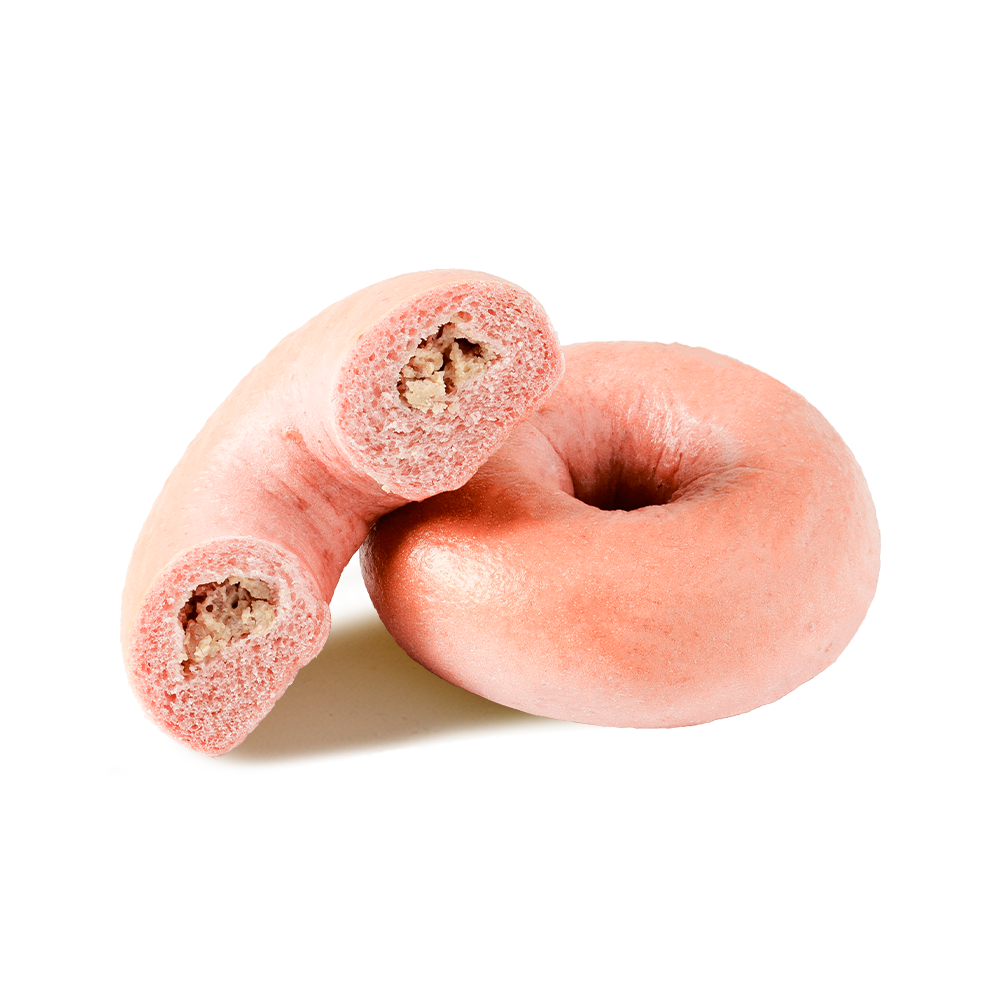
New Zealand Cream Cheese Rose Cream Cheese Bagel
A Distinctive Product Concept Built Around Balance
The central idea behind this bagel is balance. Rose can be a challenging flavor in bakery applications because excessive floral intensity may taste artificial, perfumy, or disconnected from the main product. The formulation described for this bagel takes a more restrained approach. The New Zealand cream cheese forms the primary body of the flavor, while Yunnan double-petal red rose contributes lift, aroma, and length.
This balance allows the product to occupy several market positions at once. It can be presented as a premium breakfast item, an elegant afternoon-tea accompaniment, a seasonal floral bakery specialty, or an ingredient-led product for cafés and retail bakeries. The flavor is distinctive enough to support premium positioning, yet familiar enough to remain approachable for consumers who already enjoy cream cheese and mild sweet bakery products.
The product weighs 100 grams, a practical size for an individual serving. This portion can work as a complete light breakfast, a substantial snack, or part of a combination meal with coffee, tea, fruit, yogurt, or other bakery items. For foodservice operators, the size also supports predictable portion control and straightforward menu costing.
Unlike a plain cream cheese bagel, which depends primarily on texture and dairy richness, the rose version creates a more layered eating experience. The consumer first encounters the familiar softness and creaminess of dairy. The rose then becomes apparent as the product warms or as the flavor develops during chewing. Finally, a gentle floral and honey-like note remains after the main cream cheese impression has faded. This sequence gives the bagel a longer and more interesting flavor profile.
Why Flavor Layering Matters in Premium Bakery
Premium bakery products are often judged by more than a single dominant flavor. Consumers increasingly notice aroma, aftertaste, mouthfeel, ingredient stories, and how a product behaves with beverages. A layered product can generate greater interest because it changes throughout the eating experience rather than delivering the same impression from beginning to end.
In this bagel, the dairy foundation provides familiarity and indulgence. The rose creates differentiation. The combination avoids two common weaknesses in specialty bakery products: novelty without comfort, and familiarity without excitement. The cream cheese makes the bagel easy to understand, while the rose gives retailers and foodservice operators a reason to feature it.
The product is also well suited to visual and verbal merchandising. Words such as “New Zealand cream cheese,” “Yunnan rose,” “floral,” “soft,” and “honey-like” can be used to build a premium description without relying on excessive sweetness. Its ingredient story offers a natural basis for menu copy, shelf labels, café boards, promotional campaigns, and seasonal collections.
Ingredient Profile: A Creamy Dairy Foundation
The cream cheese base is the structural and sensory foundation of the product. A good cream cheese filling or cream cheese component should provide smoothness, richness, and a clean dairy impression. In this application, the New Zealand origin is part of the product’s premium positioning. It gives buyers a clear ingredient story and helps distinguish the bagel from products built around generic cheese-flavored fillings.
The dairy component is described as soft, comforting, full-bodied, and round. These characteristics are important because they help moderate the aromatic nature of rose. Instead of allowing the floral note to dominate, the cream cheese gives it a stable background. The result is a flavor profile that can feel indulgent while remaining refined.
Cream cheese also contributes to the product’s versatility. It is naturally associated with bagels, breakfast, cafés, brunch menus, and bakery counters. Consumers do not need to learn an unfamiliar pairing before trying the product. They already understand the relationship between bagels and cream cheese. The rose element builds on that familiar foundation rather than replacing it.
From a commercial perspective, a recognizable dairy base can reduce the perceived risk of innovation. Retailers can introduce a floral bagel without presenting it as an entirely unfamiliar dessert. Café operators can recommend it to customers who enjoy cream cheese, pastries, flavored breads, or floral beverages. This makes the product more accessible than a highly experimental bakery item.
Yunnan Double-Petal Red Rose as a Differentiating Element
The Yunnan double-petal red rose supplies the product’s signature identity. Rose is associated with elegance, hospitality, tea culture, confectionery, and premium gifting. Its inclusion gives the bagel a strong point of difference in a category where many products focus on plain, sesame, onion, garlic, cinnamon, blueberry, or savory fillings.
The intended rose character is gentle rather than aggressive. The description emphasizes authentic petal-like fragrance, brightness, length, and a subtle honey-like aftertaste. This suggests a flavor direction focused on natural elegance instead of artificial intensity. Such restraint is valuable in commercial bakery because a product must appeal to a broad group of consumers, not only to people seeking a powerful floral experience.
Rose also creates opportunities for pairing and seasonal promotion. It can be associated with spring menus, afternoon tea, Valentine’s Day, Mother’s Day, wedding catering, hotel breakfast collections, premium gift boxes, and cultural food events. At the same time, its cream cheese foundation keeps the product relevant beyond seasonal occasions.
The combination of a dairy base and rose makes the bagel especially suitable for businesses looking to expand beyond standard breakfast offerings. It can serve as a signature item, a limited-time launch, a premium private-label product, or part of a broader range of innovative frozen bagels.
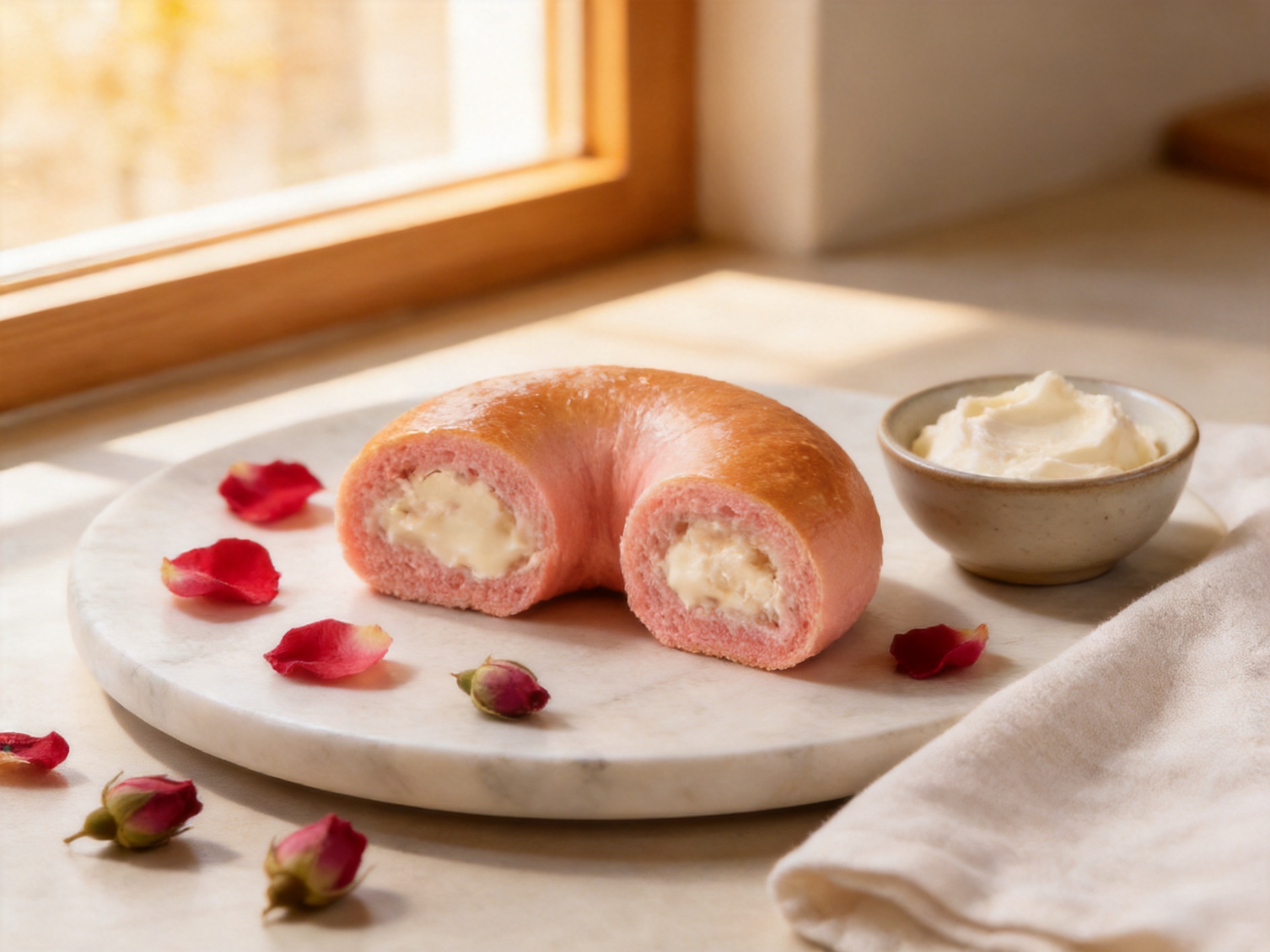
Temperature-Responsive Eating Experience
One of the product’s notable advantages is the way its flavor and texture can change with serving temperature. When served warm, the cream cheese becomes more aromatic and expressive, while the rose fragrance can deepen. This makes the bagel an attractive partner for black coffee, espresso-based drinks, and warm lattes.
When served chilled, the cream cheese becomes firmer and the floral character becomes more delicate. The product may then resemble a rose-infused dairy dessert while retaining the identity and chew of a bagel. This flexibility allows operators to create different serving styles from the same frozen product.
Temperature versatility can be commercially valuable. A café may serve the bagel warm during breakfast and brunch, then offer it chilled or lightly tempered as part of an afternoon-tea set. A hotel can include it in a breakfast buffet, while a bakery can present it in a refrigerated display with other premium filled products. A retailer can provide preparation recommendations that encourage consumers to explore both serving styles.
Many bakery products are designed for only one ideal serving condition. This product offers more room for menu development. The same item can support different beverage pairings, dayparts, and merchandising formats without requiring a change in the core recipe.
Pairing with Coffee
Black coffee provides a clean, slightly bitter contrast to the creamy dairy profile. The rose can appear brighter against the coffee, especially when the bagel is served warm. A latte creates a softer pairing because the milk in the beverage reinforces the cream cheese while allowing the floral aroma to become more rounded.
For café menus, the bagel can be included in breakfast combinations, coffee-and-bagel promotions, brunch boards, or premium beverage pairings. The product’s 100-gram format makes it suitable for a single-item pairing or for inclusion in a larger meal set.
Pairing with Floral and Black Tea
Floral tea can extend the rose theme and create a coordinated afternoon-tea experience. Black tea provides structure and mild tannic contrast, helping the dairy richness feel balanced. Operators can serve the bagel with unsweetened tea, lightly sweetened tea, or a floral infusion depending on the desired customer experience.
This pairing potential gives the product a broader daypart range than many conventional bagels. It can move from breakfast into afternoon tea without appearing out of place. For hotels, cafés, tea shops, and bakery lounges, that flexibility can help improve product utilization throughout the day.
Advantages Over Conventional Bagel Offerings
The product competes not only with other filled bagels but also with pastries, sandwiches, flavored breads, cream cheese spreads, and sweet snacks. Its competitive advantages come from the combination of flavor differentiation, ingredient storytelling, convenience, and operational flexibility.
| Commercial Attribute | New Zealand Cream Cheese Rose Cream Cheese Bagel | Potential Advantage |
|---|---|---|
| Flavor identity | Creamy dairy base with refined Yunnan rose notes | Offers a distinctive profile beyond standard savory or sweet bagels |
| Serving occasions | Breakfast, brunch, afternoon tea, snack, dessert-style service | Supports multiple dayparts and menu concepts |
| Ingredient story | New Zealand cream cheese and Yunnan double-petal red rose | Creates premium, origin-based product communication |
| Portion size | 100 grams | Supports individual serving and predictable portion control |
| Temperature options | Warm or chilled presentation | Allows different textures, aromas, and beverage pairings |
| Supply format | Frozen bakery product | Supports inventory planning, distribution, and on-demand preparation |
| Menu differentiation | Floral cream cheese bagel concept | Can function as a signature, seasonal, or premium private-label item |
More Memorable Than Standard Flavors
Plain, sesame, onion, and other familiar bagels remain important, but they may be difficult to use as hero products when a retailer or café wants to attract attention. The rose cream cheese concept provides a stronger reason for customers to try something new. It can be featured through naming, photography, sampling, seasonal displays, and beverage pairing suggestions.
Compared with heavily sweet pastries, the product offers a more balanced profile. The description does not position it as a sugar-forward dessert. Instead, its appeal comes from dairy richness and aromatic floral character. This may suit consumers who want an indulgent but more sophisticated snack.
More Versatile Than a Single-Purpose Sweet Product
A cake or sweet pastry may be mainly associated with dessert or indulgence. This bagel can be positioned across breakfast, snack, café, tea, and light-meal occasions. Its familiar bread format makes it easier to place in existing bakery sections, while its cream cheese and rose profile gives it premium appeal.
For foodservice businesses, versatility can reduce the risk associated with introducing a specialty product. The bagel does not require a completely new service model. It can be prepared and served through existing bakery and café workflows, subject to the operator’s validated storage and preparation procedures.
More Suitable for Brand Storytelling
Origin-based ingredients create a clear narrative. New Zealand cream cheese communicates dairy richness and quality positioning. Yunnan rose contributes regional character and a floral point of difference. Together, the ingredients can support a story about combining international dairy inspiration with Asian botanical elegance.
This narrative can be adapted for different markets and customer segments. A retailer may focus on premium ingredients. A tea shop may emphasize the rose and floral pairing. A café may highlight the creaminess and coffee compatibility. A hotel may present the item as part of a refined breakfast or afternoon-tea offering.
Manufacturing Strengths Behind the Product
The product is manufactured by Jiangsu Goobagel Food Technology Co., Ltd., a frozen bakery producer that has specialized in bagel research and manufacturing since 2019. The company’s stated capabilities include an integrated supply chain covering raw materials, research and development, production, and nationwide distribution.
An integrated structure is important for frozen bakery buyers because product quality depends on more than the recipe. Ingredient sourcing, formulation control, production scheduling, freezing, packaging, storage, and delivery all influence the final customer experience. When these functions are coordinated, manufacturers can respond more effectively to quality requirements, product development projects, and commercial volume needs.
The company has developed more than 100 clean-label bagel varieties for retail, foodservice, café chains, tea brands, and bakery operators. This product-development experience is relevant to buyers seeking a supplier that can provide more than one item. It suggests the ability to work across multiple flavor directions, product formats, and customer applications.
Research and Development Capability
Bagel development requires the coordination of dough structure, filling compatibility, flavor release, freezing performance, reheating behavior, portion size, and packaging requirements. A floral cream cheese bagel adds further complexity because the rose must remain noticeable without overpowering the dairy component.
A strong research and development process can help evaluate these factors together. The objective is not simply to create a pleasant fresh product in a laboratory or bakery setting. The product must also remain commercially practical after frozen storage, transportation, preparation, and service. Texture and aroma must be considered from the perspective of the operator and the final consumer.
For customers seeking OEM or private-label products, product development expertise is particularly valuable. A manufacturing partner may be able to adjust flavor intensity, filling balance, size, packaging, or presentation according to market requirements. Any changes would need to be confirmed through technical development and commercial validation, but the company’s portfolio indicates experience in creating a broad range of bagel solutions.
Integrated Supply Chain Management
The company describes its supply chain as covering raw materials, research and development, production, and nationwide distribution. This integration can provide several benefits. It may improve communication between sourcing and production teams, support more efficient planning, and help maintain greater consistency when demand changes.
For wholesale buyers, supply reliability is often as important as flavor. A product that performs well but cannot be replenished consistently creates problems for menus, retail shelves, promotional campaigns, and customer expectations. A manufacturer with established production and distribution capabilities can provide a stronger foundation for recurring orders.
Frozen bakery products are especially dependent on logistics discipline. Temperature management, inventory rotation, shipment planning, and storage coordination all contribute to product performance. Buyers should confirm detailed requirements with the manufacturer, including storage temperature, shelf life, carton configuration, minimum order quantity, packaging format, and distribution conditions.
Consistent Commercial Performance
Goobagel Food positions its products around stable quality, consistent performance, and reliable supply. These attributes matter to café chains and foodservice operators that must serve the same product across multiple locations. A consistent bagel helps standardize portioning, preparation, pricing, and customer expectations.
Consistency also supports private-label programs. Retailers and brands need products that can maintain a recognizable eating experience over repeated production cycles. This includes more than flavor. Size, appearance, filling distribution, texture, packaging, and preparation behavior all contribute to brand trust.
A manufacturer with experience across retail, foodservice, cafés, tea brands, and bakery operators is better positioned to understand the different requirements of each channel. Retail customers may prioritize packaging and shelf presentation. Cafés may focus on reheating speed and beverage pairing. Foodservice buyers may emphasize portion control and delivery stability. Product development and manufacturing decisions can be aligned with the intended channel.

Frozen Bakery Convenience for Wholesale Buyers
Frozen bagels can help businesses manage labor, space, demand fluctuations, and menu variety. Instead of producing every item from raw ingredients at each location, operators can hold frozen inventory and prepare products according to sales patterns. This approach can support consistent quality while reducing the need for specialized bakery production at every site.
For retail buyers, frozen supply can make it easier to coordinate distribution to multiple stores. For café chains, it can simplify menu standardization. For hotels and restaurants, it can provide an attractive specialty item without requiring a separate rose cream cheese preparation process.
The frozen format may also reduce waste when compared with fully fresh products that must be sold within a shorter period. Operators can plan stock according to expected demand and use products as needed, subject to the manufacturer’s storage and handling instructions. Buyers should establish appropriate inventory rotation procedures and ensure that all locations follow validated preparation guidelines.
Operational Applications
The bagel can be used in several commercial settings. In cafés, it can be toasted or warmed and served with coffee, tea, or a light breakfast set. In hotels, it can be placed in a premium breakfast assortment or presented as part of a rotating specialty bakery collection. In tea shops, it can complement floral or black tea and support afternoon service.
Retail bakeries can sell the product individually, in multipacks, or as part of a themed seasonal range. Supermarket bakery departments can use it to add variety to a frozen or ready-to-prepare bakery selection. Foodservice distributors can offer it to restaurants, catering companies, event venues, and institutional buyers that want a differentiated bakery option.
The product may also work well in tasting boxes and corporate gift assortments when packaged appropriately. Its rose profile gives it a premium and celebratory association, while the bagel format keeps the product more substantial than a small confectionery item.
Private Label and OEM Potential
Private-label buyers often seek products that can be differentiated without building a manufacturing facility of their own. A distinctive bagel with a clear ingredient story can help a retailer, café group, tea brand, or bakery chain develop a proprietary range.
The New Zealand cream cheese and Yunnan rose concept offers a strong base for private-label development. The product already has a defined flavor direction, but commercial partners may wish to adapt the product for a particular market. Possible development areas could include package design, product naming, language, case configuration, serving guidance, and channel-specific promotional materials.
Any formulation or specification changes should be confirmed through formal technical discussions. Buyers may also need to review ingredient declarations, allergen information, nutrition data, country-specific labeling requirements, shelf-life documentation, storage instructions, and import regulations before launch.
Building a Premium Product Range
The rose cream cheese bagel can serve as an anchor for a broader collection. A brand might develop a floral series, a cream cheese series, a premium breakfast range, or a tea-pairing bakery line. Its distinctive character can help establish a higher-value tier alongside more familiar bagel flavors.
Once a customer accepts the concept, related products can be introduced to encourage repeat purchases and cross-selling. The manufacturer’s stated portfolio of more than 100 bagel varieties may provide opportunities for buyers to explore complementary products, although specific availability, formulation, and market suitability should be discussed directly.
A range strategy also allows operators to balance innovation and familiarity. The rose bagel can attract attention, while classic or savory options provide dependable choices for customers with more traditional preferences. Together, the products can create a fuller bakery assortment.
Quality and Product Development Considerations
When evaluating a specialty frozen bagel, buyers should assess the complete product experience. Flavor is essential, but commercial success also depends on appearance, texture, filling distribution, packaging, preparation, and storage performance.
The rose cream cheese bagel should be evaluated after the intended preparation method rather than only when fresh from production. Buyers may wish to compare warm and chilled presentations, examine the cream cheese texture, assess rose aroma at different temperatures, and test pairings with the beverages or foods planned for the final menu.
Sampling should also consider holding time. A product may be served immediately after heating in one business, while another may need to maintain it for a short service window. The manufacturer and buyer should agree on preparation and holding procedures that protect texture and flavor.
Ingredient and Allergen Communication
Because the product contains cream cheese, buyers must account for dairy allergen communication and relevant labeling rules. The final ingredient declaration should be obtained from the manufacturer and reviewed according to the regulations of the target market. If the product is imported, additional documentation may be required by customs, food authorities, distributors, or retail customers.
The clean-label positioning mentioned by the manufacturer may be useful for marketing, but buyers should verify the exact ingredient list and any applicable claims before using such language in consumer-facing materials. Clear and accurate communication protects both the customer and the purchasing brand.
Storage and Handling
Frozen products depend on correct temperature control throughout storage and distribution. Buyers should confirm the recommended storage temperature, shelf life, carton details, thawing or heating instructions, and procedures for handling opened cases. Retail and foodservice locations should train staff to follow the manufacturer’s instructions consistently.
Proper stock rotation is also important. First-expiring, first-out inventory management can help reduce avoidable waste and support product quality. Distribution partners should be selected based on their ability to maintain appropriate frozen conditions.
Marketing the Rose Cream Cheese Bagel
The product’s marketing should communicate both comfort and discovery. A description that focuses only on rose may make the item seem too unusual for some customers. A description that focuses only on cream cheese may fail to explain why the product is special. Effective communication should introduce the familiar dairy foundation first, then present rose as a refined aromatic layer.
Possible messaging themes include “creamy dairy richness with a delicate floral finish,” “a premium bagel for coffee and tea,” “New Zealand cream cheese paired with Yunnan rose,” and “a soft, elegant alternative to ordinary sweet bakery products.” These concepts can be adapted to different brand voices and markets.
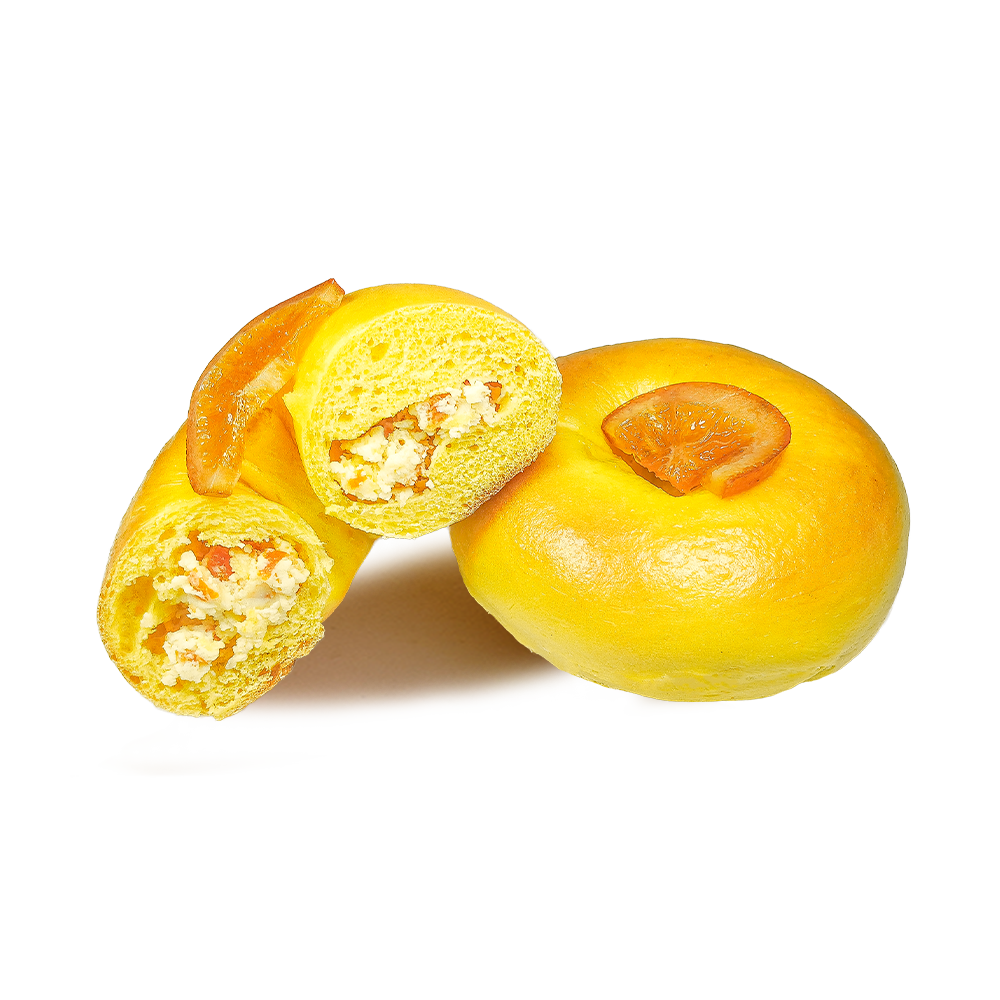
Visual presentation can emphasize the product’s soft interior, cream cheese filling, and premium floral identity. Packaging may use restrained colors, botanical elements, and clear serving suggestions. For retail and café environments, pairing icons or short recommendations can help consumers understand how to enjoy the product.
Seasonal and Event-Based Promotion
Rose is naturally suited to seasonal campaigns. Spring promotions, floral festivals, afternoon-tea events, Mother’s Day, Valentine’s Day, wedding catering, and premium hospitality menus can all provide appropriate settings. The product can also be introduced as a limited-time flavor to create urgency and encourage trial.
However, the bagel does not need to be restricted to special occasions. Its cream cheese base makes it suitable for everyday breakfast and snack use. A year-round core listing combined with seasonal promotional emphasis may provide a practical balance between stability and excitement.
Digital Content and Sampling
Short-form videos can show the product being warmed, cut open, paired with a latte, or served with tea. The temperature-responsive character is particularly suitable for visual content because the same product can be presented in two different ways. Sampling is also useful because consumers may be curious about rose but uncertain whether they will enjoy it. The creamy dairy base can make the first tasting more approachable.
For business buyers, product photography, preparation guides, sample kits, specification sheets, and pairing recommendations can support sales conversations. Clear technical information should accompany promotional claims so that retailers and foodservice customers can make informed decisions.
Why This Product Fits Current Commercial Demand
Modern food businesses are looking for products that combine convenience with a distinctive story. They want items that can be prepared efficiently but still feel special to the customer. They also need products that work across multiple channels and can be incorporated into existing operations.
This bagel addresses those needs through several connected strengths. It has a recognizable format, a premium ingredient story, a differentiated flavor, a practical individual portion, and frozen supply potential. It can support breakfast and afternoon occasions, warm and chilled presentations, coffee and tea pairings, retail and foodservice formats, and standard or private-label programs.
The product also reflects a broader shift toward creative bakery innovation. Consumers may be willing to try new combinations when the product includes a familiar anchor. Cream cheese provides that anchor. Rose supplies the innovation. The result is a concept that is unusual enough to attract attention without becoming inaccessible.
Q&A: Product, Manufacturing, and Commercial Use
What is the main flavor of the bagel?
The main flavor is a smooth and rich cream cheese profile supported by delicate Yunnan double-petal red rose notes. The rose is intended to add brightness, fragrance, and a subtle honey-like finish rather than an overpowering perfume character.
How large is each bagel?
The listed product description gives a weight of 100 grams. This makes it suitable as an individual breakfast item, snack, café pairing, or component of a larger meal or afternoon-tea set.
Can the bagel be served warm?
Yes. A warm serving can deepen the rose fragrance and make the cream cheese feel especially soft and comforting. Buyers should follow the manufacturer’s validated preparation instructions for heating and service.
Can it also be served chilled?
The product description indicates that chilled service is suitable. At a cooler temperature, the cream cheese becomes firmer and the floral notes become more delicate, creating a dessert-like dairy impression while retaining the bagel format.
What beverages pair well with the product?
Black coffee, warm lattes, black tea, and floral teas are all suitable pairing directions. Coffee provides contrast, while milk-based beverages and floral teas reinforce the creaminess and aromatic character.
What makes this product different from a standard cream cheese bagel?
The addition of Yunnan double-petal red rose creates a layered floral profile and a more distinctive premium identity. A standard cream cheese bagel emphasizes dairy richness alone, while this product combines familiarity with aromatic differentiation.
Who manufactures the product?
The product is manufactured by Jiangsu Goobagel Food Technology Co., Ltd., a Chinese frozen bakery producer that has specialized in bagel research and manufacturing since 2019.
What manufacturing capabilities does the company provide?
The company describes an integrated supply chain covering raw materials, research and development, production, and nationwide distribution. It also states that it has developed more than 100 clean-label bagel varieties for retail, foodservice, cafés, tea brands, and bakery operators.
Is the product suitable for private-label programs?
The manufacturer offers OEM and private-label bagel solutions as part of its business positioning. Buyers should discuss available customization, minimum order quantities, packaging, labeling, formulation requirements, and market documentation directly with the manufacturer.
Is the product suitable for cafés and tea shops?
Yes. Its coffee and tea compatibility, flexible serving temperature, and premium floral profile make it suitable for cafés, tea shops, afternoon-tea menus, and specialty bakery counters.
What should buyers verify before placing an order?
Buyers should confirm the full ingredient list, allergen declaration, nutrition information, storage temperature, shelf life, packaging format, preparation instructions, case quantity, minimum order quantity, lead time, shipping conditions, and documentation required for the destination market.
Does the product contain dairy?
The product is based on cream cheese, so buyers should treat it as a dairy-containing product and obtain the official allergen and ingredient documentation from the manufacturer before sale.
Can the product be used in a broader bagel range?
Yes. It can function as a premium signature item alongside classic, savory, sweet, or other filled bagels. The manufacturer’s stated portfolio of more than 100 varieties may provide opportunities for complementary product selection.
Conclusion
The New Zealand Cream Cheese Rose Cream Cheese Bagel is a differentiated frozen bakery product built around a clear and appealing contrast: rich dairy comfort combined with refined floral brightness. Its 100-gram format, flexible temperature presentation, coffee and tea pairing potential, and premium ingredient story give it strong relevance for cafés, retail bakeries, hotels, tea brands, foodservice operators, and private-label buyers.
Its advantages over conventional bagels come from more than the rose flavor alone. The product offers a layered sensory experience, several daypart applications, a memorable origin-based story, and the operational advantages associated with a frozen bakery supply model. It can be positioned as a breakfast item, an afternoon-tea specialty, a seasonal innovation, a signature café product, or part of a premium retail range.
The manufacturing foundation is equally important. Jiangsu Goobagel Food Technology Co., Ltd. brings experience in bagel research and production, an integrated supply chain, a broad product-development portfolio, and a focus on stable quality and reliable supply. These capabilities can help commercial partners move from product discovery to practical implementation, subject to the confirmation of technical specifications and market requirements.
For buyers seeking an innovative bagel that remains approachable, the combination of New Zealand cream cheese and Yunnan rose provides a strong proposition. It gives consumers something familiar enough to enjoy immediately and distinctive enough to remember after the first bite.
References
1. Product specification and flavor description supplied for the New Zealand Cream Cheese Rose Cream Cheese Bagel.
2. Company information supplied for Jiangsu Goobagel Food Technology Co., Ltd., including its manufacturing history, product development capabilities, supply-chain structure, mission, vision, and values.
3. General frozen bakery product-development principles relating to ingredient management, temperature control, portion consistency, storage, distribution, and foodservice preparation.
4. General commercial bakery merchandising principles relating to premium ingredient storytelling, beverage pairing, seasonal promotion, private-label development, and multi-channel foodservice applications.
