
 中文简体
 English



postmaster@goobagelfood.com
Content
- 1 Product Overview and Market Positioning
- 2 The Product Experience: Texture, Aroma, and Flavor
- 3 How the Product Compares with Conventional Filled Bakery Items
- 4 German-Style Lye Bath Processing
- 5 Filling Development and Ingredient Integration
- 6 Frozen Bakery Manufacturing Advantages
- 7 Integrated Supply Chain and Manufacturing Capability
- 8 OEM and Private-Label Opportunities
- 9 Recommended Serving and Menu Applications
- 10 Quality and Consistency Considerations
- 11 Why the Flavor Combination Is Commercially Relevant
- 12 Frequently Asked Questions
- 12.1 What is the Pretzel Red Bean Cream Cheese Bagel?
- 12.2 What does the bagel taste like?
- 12.3 What is the texture of the product?
- 12.4 Is the product ready to serve?
- 12.5 Can it be served warm?
- 12.6 Who can use this product?
- 12.7 What makes it different from a standard bagel with cream cheese?
- 12.8 What makes the crust look different?
- 12.9 Why are whole bean pieces retained in the filling?
- 12.10 Can the product be used for private-label programs?
- 12.11 What manufacturing experience does the supplier have?
- 12.12 What should buyers evaluate before placing a commercial order?
- 13 Conclusion
- 14 References
- 15 Product: Pretzel Red Bean Cream Cheese Bagel
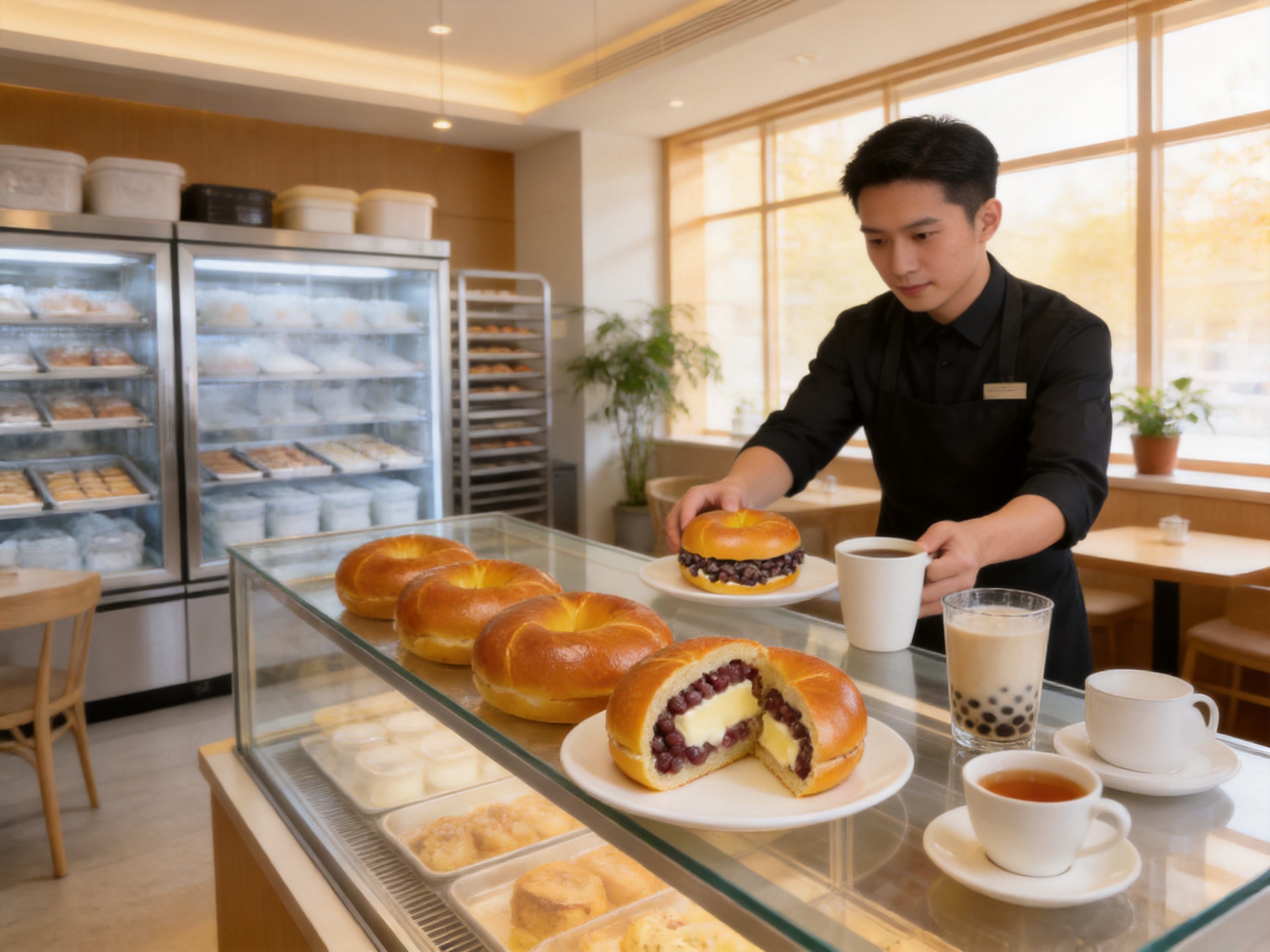
The Pretzel Red Bean Cream Cheese Bagel brings together three familiar but highly complementary elements: a German-style pretzel crust, gently sweet red adzuki bean filling, and a rich cream cheese and butter dairy layer. Designed as a cold sandwich bagel product, it offers a convenient way for cafés, bakeries, breakfast operators, tea brands, retailers, and foodservice businesses to serve a premium filled bagel with consistent quality and efficient preparation.
Weighing 170 grams, the product is substantial enough to function as a satisfying breakfast, afternoon tea item, light meal, or dessert-inspired snack. Its structure is also commercially practical. The exterior provides the visual appeal of a glossy, deep brown pretzel, while the interior combines a smooth bean filling with the creamy richness of New Zealand Anchor cream cheese and real dairy butter.
This combination gives the product a broader flavor profile than a conventional plain bagel or a basic sweet filled bun. The savory-salty crust creates an immediate pretzel identity. The red bean contributes a clean, restrained sweetness and a gentle bean fragrance. The cream cheese and butter soften the overall impression with milky richness and subtle tang. Together, these layers create contrast without becoming excessively sweet, heavy, or one-dimensional.
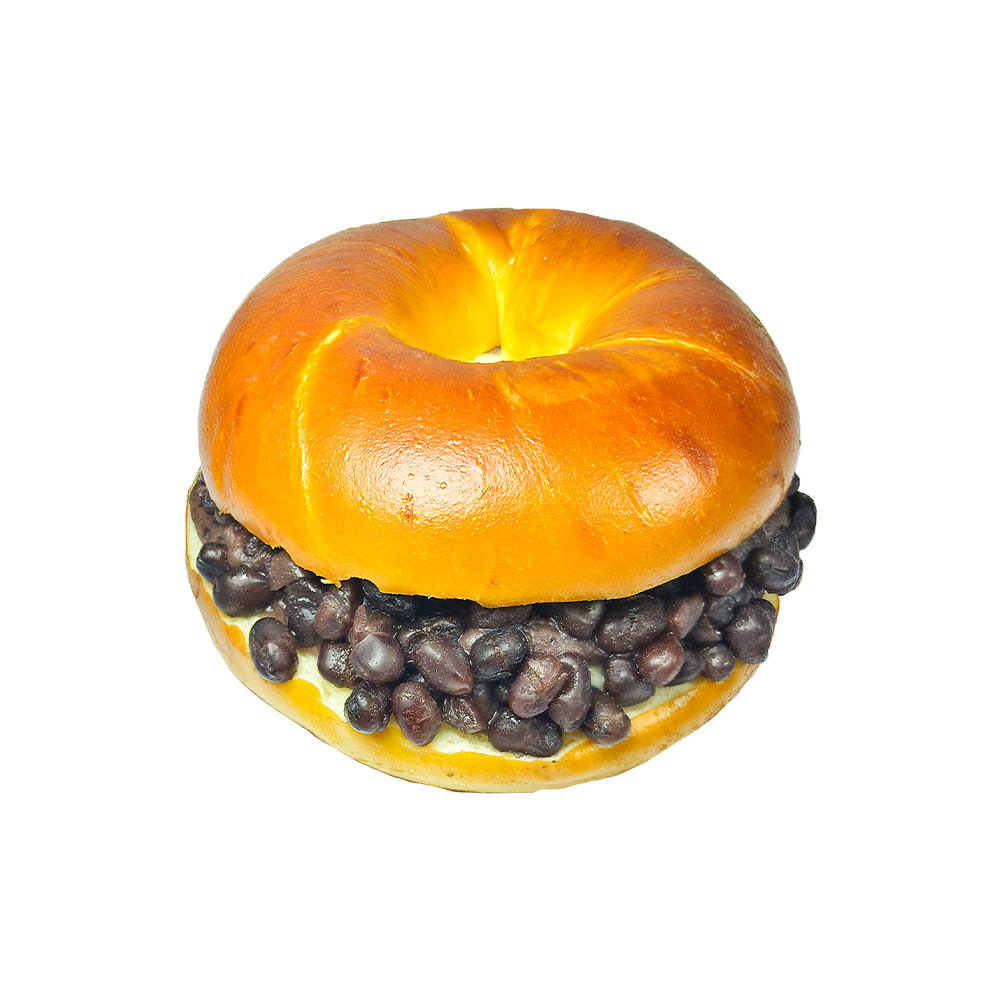
Pretzel Red Bean Cream Cheese Bagel
Product Overview and Market Positioning
The Pretzel Red Bean Cream Cheese Bagel belongs to the cold sandwich bagel category, but its application potential extends well beyond a traditional sandwich menu. It can be presented as a ready-to-serve filled bakery item after thawing, or it can be incorporated into a broader breakfast and snack program according to the operator’s preparation model.
The 170-gram format offers a useful balance between portion value and operational flexibility. It is large enough to communicate premium positioning, yet familiar enough for customers who already understand bagels as convenient, portable bakery products. The filled center gives the item a complete eating experience without requiring additional spreads, sauces, or toppings in its basic serving format.
Its flavor concept is particularly suitable for consumers who enjoy products that combine Western bakery techniques with Asian-inspired ingredients. Red adzuki beans are widely recognized for their mild, comforting sweetness and natural aroma. When paired with cream cheese, they provide a flavor direction that feels familiar in both café and bakery environments while remaining more distinctive than standard fruit, chocolate, or plain cheese fillings.
The product may be positioned in several ways:
• As a premium breakfast item served with coffee, tea, milk, or other beverages.
• As an afternoon tea selection for cafés, hotels, bakeries, and tea shops.
• As a convenient cold-chain bakery item for retail and foodservice distribution.
• As a filled bagel for café chains seeking a signature menu item.
• As a private-label or OEM product for brands that want a differentiated frozen bakery offering.
• As a sweet-savory snack for consumers who want something more substantial than a pastry but more indulgent than a plain bread product.
Unlike a standard bagel with a separate spread, the filling is integrated into the product. This reduces assembly steps during service and makes portion control easier. Operators can offer a consistent finished product without depending on the manual application of cream cheese, red bean paste, or butter at each location.
The Product Experience: Texture, Aroma, and Flavor
A Glossy Pretzel Exterior
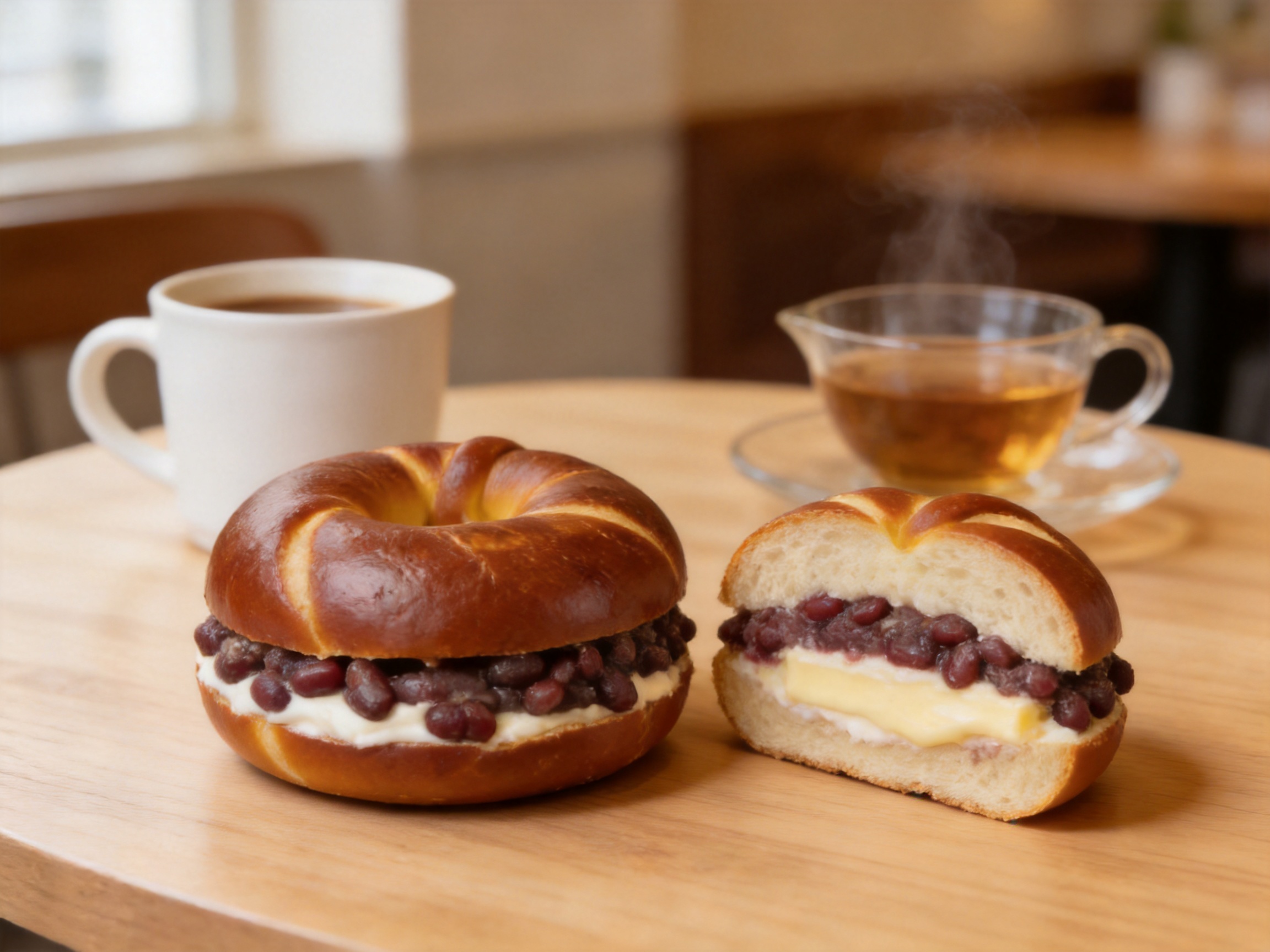
The first point of differentiation is the bagel’s exterior. The German-style lye bath process creates the deep brown, glossy crust associated with traditional pretzels. This appearance gives the product immediate shelf and display appeal. Compared with a pale or conventionally baked bagel, the dark crust communicates a more developed baking process and a stronger savory identity.
The crust is not only visual. The lye bath contributes to the characteristic surface flavor and aroma of pretzel-style baked goods. It provides a savory-salty base note that balances the sweetness of the red bean filling. This contrast is important because the product is designed to avoid the flat sweetness often associated with filled bakery items.
When eaten, the exterior offers a pleasantly chewy bite with a slight snap. This initial resistance gives way to a softer and more tender interior. The textural sequence makes the product feel more substantial and crafted than a uniformly soft filled bun. It also reinforces the distinction between the bagel and the filling, allowing each component to remain identifiable.
Slow-Simmered Red Adzuki Beans
The red bean component is made from plump red adzuki beans that are slowly simmered to develop a smooth, cohesive filling. The intended texture is neither completely smooth nor coarse. Instead, it combines a fine, silky-sandy character with selected whole-bean pieces.
This approach provides two benefits. First, the finer portion of the filling spreads a gentle, even sweetness across the palate. Second, the small whole-bean pieces create a natural bite that reminds the consumer of the original ingredient. The result is more characterful than a completely uniform paste and more refined than a rough or dry bean filling.
The sweetness is described as clean and restrained. This is a significant advantage in a product that also contains dairy richness. Excessive sweetness could make the bagel feel heavy or dessert-like, while an overly mild filling could fail to stand out against the pretzel crust. The controlled sweetness allows the fragrance of the adzuki beans to remain present without overpowering the cream cheese or the savory crust.
Adzuki beans also provide a flavor language that can appeal across several markets. Consumers in East Asian markets may recognize the ingredient immediately, while international customers may experience it as an interesting alternative to conventional berry, chocolate, or cinnamon fillings. For menu developers, this creates an opportunity to tell a simple product story based on contrast, craftsmanship, and cross-cultural flavor design.
Cream Cheese and Dairy Butter
The dairy layer uses Anchor cream cheese from New Zealand together with real butter. The cream cheese contributes a velvety mouthfeel and subtle tang. The butter deepens the dairy aroma and extends the aftertaste, helping the filling feel complete rather than merely sweet.
Cream cheese is especially effective in this application because its mild acidity can offset the sweetness of the bean filling. It also creates a familiar bagel association, since cream cheese is one of the most recognized traditional bagel accompaniments. By incorporating the cream cheese into the filling, the product turns a familiar pairing into a ready-made, portable format.
The use of butter supports a fuller flavor and smoother perception. Rather than relying on sweetness alone to create richness, the product uses dairy aroma and texture to build depth. The combined taste is sweet, savory, and milky, with the pretzel crust adding a lightly salted finish.
| Product Element | Primary Contribution | Commercial Benefit |
|---|---|---|
| German-style lye bath crust | Deep brown gloss, chewy bite, savory-salty aroma | Strong visual identity and differentiation from ordinary bagels |
| Slow-simmered red adzuki beans | Clean sweetness, bean fragrance, natural whole-bean texture | Distinctive filling concept with broad menu potential |
| Anchor cream cheese | Velvety texture and subtle tang | Familiar bagel pairing in a convenient integrated format |
| Real dairy butter | Fuller dairy aroma and lingering finish | More rounded and premium sensory experience |
| 170-gram format | Substantial serving size | Suitable for breakfast, snacks, tea service, and light meals |
| Frozen bakery format | Storage and distribution flexibility | Supports centralized supply and consistent outlet preparation |
How the Product Compares with Conventional Filled Bakery Items
Competition in the frozen bakery market includes plain bagels, filled buns, sweet rolls, stuffed breads, laminated pastries, and ready-to-assemble sandwich products. The Pretzel Red Bean Cream Cheese Bagel is differentiated by combining the recognizable format of a bagel with the crust character of a pretzel and the flavor architecture of a filled dessert-inspired bakery item.
Advantage Over Plain Bagels
A plain bagel offers flexibility, but it usually requires a spread, topping, or additional sandwich ingredients before it becomes a complete menu item. The Pretzel Red Bean Cream Cheese Bagel already contains a developed filling, reducing preparation requirements and giving the customer a defined flavor experience.
Its dark glossy crust also gives it greater visual impact than an unfilled plain bagel. In a display case or online menu image, the pretzel appearance can help the item attract attention without requiring elaborate toppings.
Advantage Over Ordinary Sweet Buns
Many sweet buns depend on a soft exterior and a high-sugar filling. While these products can be appealing, they may not provide enough savory contrast or textural variation. The pretzel crust introduces salt, chew, and a lightly crisp surface character. This gives the item a more balanced sensory profile and makes it suitable for occasions when consumers want a sweet product that still feels like a substantial bread item.
Advantage Over Separate Bagel-and-Spread Service
Traditional bagel service often involves slicing a bagel, preparing a spread, portioning the spread, and assembling the order. Each step introduces labor, equipment needs, portion variation, and cleaning requirements. The filled format simplifies the process. After the appropriate thawing or preparation step, the product can be served with minimal assembly.
This can be especially valuable for small cafés, high-volume chains, convenience stores, hotels, and outlets with limited kitchen space. Operators can reduce dependence on specialist preparation while maintaining a product that still feels premium and carefully designed.
Advantage Over Single-Flavor Fillings
A filling based only on red bean may appeal to consumers who enjoy a sweet bean flavor, but it may not provide the creamy richness associated with modern indulgent bakery products. A cream-cheese-only filling can be familiar but less distinctive. The combination of adzuki beans, cream cheese, and butter creates multiple flavor layers and a more complete mouthfeel.
The product’s appeal is therefore built on contrast: dark crust and pale filling, savory surface and restrained sweetness, chewy exterior and soft center, natural bean pieces and smooth dairy creaminess. These contrasts help the item remain interesting from the first bite through the finish.
German-Style Lye Bath Processing
The lye bath is a central part of the product’s identity. In pretzel production, an alkaline bath is applied to the shaped dough before baking. This treatment affects the surface chemistry of the dough, helping create the characteristic dark color, glossy appearance, and distinctive pretzel aroma during baking.
For a manufacturer, this process requires disciplined control. The dough must be shaped consistently, the bath must be managed carefully, and the subsequent baking conditions must be coordinated to achieve a stable result. The aim is not simply to darken the surface. It is to develop the recognizable combination of appearance, aroma, chew, and savory character associated with a well-made pretzel.
The finished crust should support the filling rather than dominate it. If the surface is too hard, it may overwhelm the tender center. If it is too soft or pale, the product may lose its pretzel identity. A successful process creates a crust with enough bite and resilience to provide contrast, while preserving an interior that remains soft and enjoyable after the product has been thawed according to the intended handling procedure.
The lye bath also creates a strong visual marker for quality. Consumers often make an immediate judgment based on surface color and sheen. The deep brown glossy exterior gives the product a premium, bakery-crafted appearance that can improve display performance and support higher-value positioning.
Filling Development and Ingredient Integration
Producing a filled bagel requires more than preparing a flavorful filling. The filling must be compatible with the dough, remain properly distributed, withstand production handling, and deliver a pleasant texture after frozen storage and thawing. The filling also needs to remain balanced so that the product does not become overly wet, dry, sweet, or dense.
The red adzuki beans are slowly simmered to develop a cohesive texture. Slow cooking can help soften the beans and release their natural flavor while allowing the manufacturer to manage the final consistency. The intended result is a filling that feels smooth and refined but still contains selected whole-bean pieces.
Maintaining this balance requires attention to raw material quality, cooking time, moisture control, particle size, and blending. Beans that are insufficiently cooked may create a hard or distracting bite. Beans that are processed too aggressively may lose their natural character and produce a completely uniform paste. The product specification favors a middle point: silky and cohesive, with an intentionally natural texture.
The cream cheese and butter must also be incorporated in a way that produces a stable, creamy filling. The dairy ingredients are not simply flavor additives. They influence viscosity, mouthfeel, aroma, and the way the filling interacts with the baked dough. A controlled production process helps ensure that the dairy layer remains harmonious with the red bean component rather than separating into unrelated flavors.
Integrated filling also supports consistency across batches. In a commercial setting, consumers expect the same flavor balance and filling distribution each time they purchase the product. Standardized mixing, depositing, shaping, and inspection procedures help reduce variations in filling quantity and placement.
Frozen Bakery Manufacturing Advantages
The frozen format is one of the product’s important commercial strengths. Frozen bakery products can support centralized manufacturing, planned inventory, regional distribution, and more consistent outlet-level preparation. They are particularly useful for businesses that want to offer specialized bakery products without maintaining a complete production kitchen at every location.
Freezing can help preserve the product between manufacturing and final service when appropriate cold-chain practices are followed. It allows operators to schedule preparation around demand rather than producing every item from scratch each morning. This can reduce unsold fresh inventory and make it easier to manage demand fluctuations.
For café chains and multi-location brands, centralized frozen supply can support standardized menus. Each outlet receives the same product specification, reducing the variation that may occur when individual stores prepare fillings or dough independently. This is valuable for brand consistency, customer satisfaction, staff training, and cost planning.
The product is intended to be ready to enjoy after thawing, making it operationally convenient. Exact handling procedures should be established by each operator according to its equipment, storage conditions, packaging instructions, and food safety program. Depending on the service concept, the bagel may be presented after thawing or may receive additional warming or finishing steps if the menu requires them.
Frozen distribution also supports export and longer-distance commercial supply more effectively than many short-life fresh bakery products. Manufacturers can coordinate production schedules and shipping plans while customers can maintain stock for planned promotions, seasonal programs, and new store openings.
Operational Benefits for Foodservice Customers
The product can help address several common foodservice challenges:
• Reduced dependence on in-store filling and assembly.
• More predictable portion size through the standardized 170-gram format.
• Faster service during breakfast and afternoon tea periods.
• Easier staff training compared with scratch preparation.
• Better menu consistency across multiple outlets.
• Lower complexity for businesses with limited kitchen space.
• Ability to introduce a distinctive item without developing a complete recipe internally.
• Greater flexibility for wholesale, retail, café, hotel, and catering applications.
These benefits do not eliminate the need for proper storage and handling. Frozen bakery performance depends on maintaining suitable temperatures, protecting the packaging, preventing avoidable thaw-and-refreeze cycles, and following the supplier’s recommended preparation guidance.
Integrated Supply Chain and Manufacturing Capability
Jiangsu Goobagel Food Technology Co., Ltd. has specialized in bagel research and manufacturing since 2019. Its business model covers raw materials, research and development, production, and nationwide distribution. This integrated structure provides a foundation for developing bakery products that are designed not only to taste appealing but also to perform reliably in commercial settings.
An integrated supply chain can improve communication between product development and manufacturing. Ingredient selection, formula design, process engineering, packaging, storage, and distribution can be considered together rather than as isolated stages. This is particularly important for filled frozen products, where the relationship between ingredients and process conditions directly influences final quality.
The company has developed more than 100 clean-label bagel varieties for retail, foodservice, café chains, tea brands, and bakery operators. The broad product portfolio indicates experience in adapting bagel concepts to different flavor preferences, customer segments, and sales channels. For buyers seeking OEM or private-label products, this development capability can shorten the path from concept to commercial product.
Product development for the Pretzel Red Bean Cream Cheese Bagel involves more than combining attractive ingredients. The manufacturer must coordinate dough formulation, shaping, lye bath treatment, baking, filling performance, freezing, storage, thawing, and final presentation. A company with dedicated bagel research and manufacturing experience is better positioned to manage these connected requirements than a supplier that treats bagels as a minor extension of a general bakery range.
The company’s stated values include persistence, craftsmanship, respect, and science. These values align with the needs of commercial bakery production. Persistence supports continuous improvement; craftsmanship supports attention to texture and flavor; respect supports cooperation with customers and partners; and science supports process control, product development, and repeatability.
OEM and Private-Label Opportunities
The Pretzel Red Bean Cream Cheese Bagel can serve as a ready-made product for distributors and foodservice operators, but it can also function as a base for OEM and private-label programs. A distinctive flavor profile gives retailers and café groups an opportunity to introduce a signature item without starting product development from zero.
Private-label customers may seek adjustments to packaging, carton configuration, product naming, market positioning, serving instructions, or channel-specific specifications. Depending on the project, they may also require a broader product family built around the same concept, such as alternative fillings, different pack sizes, or related pretzel-style bagels.
The manufacturer’s experience with more than 100 bagel varieties supports a collaborative development approach. Buyers can discuss target consumers, distribution methods, price positioning, preparation equipment, flavor preferences, and desired product claims. These factors can then guide the development of an appropriate commercial specification.
For café chains, the product can become part of a seasonal or permanent menu. For tea brands, the red bean and dairy flavor profile may complement beverage programs. For retailers, the frozen format can support packaged bakery sections and home-consumption occasions. For hotels and catering operators, the 170-gram portion offers a practical item for breakfast or refreshment service.
OEM and private-label cooperation also allows businesses to build a product story around the combination of pretzel technique and red bean cream cheese filling. This story is easy for staff to explain and easy for consumers to understand: a glossy pretzel-style bagel, filled with gently sweet red beans and creamy dairy ingredients.

Recommended Serving and Menu Applications
The product is designed to be enjoyed after thawing, making it suitable for straightforward service. Operators should establish their own standard operating procedures based on the product’s packaging, local food safety requirements, equipment, and intended serving temperature.
Breakfast Service
For breakfast, the bagel can be served as a complete filled bakery item alongside coffee, tea, milk, or fruit-based beverages. Its combination of bread, bean filling, and dairy richness gives it a more substantial presence than a small pastry. The dark crust also provides a visually distinctive alternative to croissants, muffins, and ordinary breakfast rolls.
Afternoon Tea
The restrained sweetness and creamy finish make the product suitable for afternoon tea menus. It can be offered as an individual item or included in a selection of bakery products. The red bean filling provides a familiar flavor for many Asian consumers while also offering an accessible introduction for customers who have not previously tried adzuki-based bakery fillings.
Café and Tea-Shop Menus
For cafés and tea shops, the product can be paired with milk tea, black tea, green tea, coffee, or specialty beverages. The savory crust helps prevent the item from competing too directly with sweet drinks. It can be marketed as a signature filled bagel, a premium snack, or a convenient pairing item.
Retail and Take-Home Use
In retail, frozen packaging can allow customers to store the product and prepare it according to household needs. Product communication should clearly explain storage, thawing, and serving recommendations. A strong package image can emphasize the glossy pretzel exterior and the filled center, while the product name can communicate the three main flavor elements.
Quality and Consistency Considerations
Commercial buyers evaluating a filled frozen bagel typically consider more than flavor. They may assess appearance, weight, filling distribution, texture after thawing, packaging integrity, storage stability, ease of preparation, and supply reliability.
The 170-gram specification gives buyers a clear portion reference. Consistent weight supports menu pricing, nutritional calculation, inventory planning, and customer expectations. The product’s visual appearance should also remain recognizable across production batches, especially the depth of crust color and the glossy pretzel finish.
Texture is another important performance factor. The exterior should retain its characteristic chew, while the interior should remain tender. The filling should be smooth enough to feel creamy but textured enough to retain the natural character of whole red beans. These qualities work together to create the intended contrast between crust, dough, bean filling, and dairy creaminess.
Supply reliability is supported by the company’s integrated manufacturing and distribution model. For brands operating several locations, consistent replenishment can be just as important as the initial product concept. A product that tastes good but cannot be supplied consistently creates operational problems. The manufacturer’s focus on nationwide distribution and commercial customers is therefore relevant to buyers seeking a dependable long-term partner.
Quality evaluation should always be conducted using the actual commercial sample and the customer’s intended preparation method. Equipment, thawing time, packaging, storage conditions, and service environment can affect the final result. Product trials help buyers confirm that the bagel fits their specific operation.
Why the Flavor Combination Is Commercially Relevant
The Pretzel Red Bean Cream Cheese Bagel occupies a useful middle ground between savory bread and sweet bakery. This can expand its selling opportunities throughout the day. A highly sweet product may be limited to dessert or snack occasions, while a plain savory bagel may require additional ingredients to create appeal. This product combines enough savory character for breakfast and enough sweetness for tea time.
Its flavor is also easy to communicate. Consumers can understand the product from the name alone: pretzel indicates the crust, red bean indicates the main filling, and cream cheese indicates the dairy component. Clear flavor communication can reduce the explanation required at the point of sale.
The product also benefits from textural storytelling. Customers are not simply purchasing a flavored dough item. They are receiving a sequence that begins with a glossy, chewy crust, continues through a tender bagel interior, and ends with a layered filling of bean sweetness and dairy creaminess. These details can be used in menu descriptions, product photography, staff training, and promotional materials.
For brands seeking differentiation, this type of layered product may be more memorable than a standard filled bread. It has enough familiarity to be approachable and enough novelty to create curiosity. The balance can support trial purchases while encouraging repeat visits when customers are looking for a dependable but distinctive bakery option.
Frequently Asked Questions
What is the Pretzel Red Bean Cream Cheese Bagel?
It is a 170-gram filled bagel in the cold sandwich bagel category. The product combines a German-style lye bath pretzel crust with a red adzuki bean filling and a dairy layer made with Anchor cream cheese from New Zealand and real butter.
What does the bagel taste like?
The exterior has a savory-salty pretzel character with a deep brown glossy crust. The filling provides clean, restrained red bean sweetness, while the cream cheese contributes mild tang and the butter adds a fuller dairy aroma. The overall taste is sweet, savory, creamy, and balanced.
What is the texture of the product?
The crust is pleasantly chewy with a slight snap. The interior is soft and tender. The filling combines a smooth, silky-sandy texture with selected whole red bean pieces, creating a natural bite rather than a completely uniform paste.
Is the product ready to serve?
The product is designed to be enjoyed after thawing. Each operator should follow the supplier’s handling guidance and establish procedures appropriate for its storage facilities, preparation equipment, food safety program, and service requirements.
Can it be served warm?
The product may be suitable for additional warming depending on the operator’s menu concept and equipment, but the recommended preparation method should be confirmed through product testing and supplier guidance. Warming can change the crust, dough, filling texture, and serving experience.
Who can use this product?
The product is suitable for cafés, bakery chains, tea brands, hotels, restaurants, retailers, catering businesses, foodservice distributors, and operators seeking a distinctive frozen filled bagel.
What makes it different from a standard bagel with cream cheese?
The cream cheese is integrated into the filling rather than applied separately during service. The product also includes red adzuki beans and a pretzel-style lye bath crust, creating a more layered flavor and reducing assembly requirements.
What makes the crust look different?
The German-style lye bath process helps create the characteristic deep brown color and glossy finish associated with pretzel-style baked goods. It also contributes to the product’s savory aroma and surface flavor.
Why are whole bean pieces retained in the filling?
Whole bean pieces provide a more natural bite and help communicate the identity of the red adzuki bean ingredient. They complement the smoother portion of the filling and create textural contrast.
Can the product be used for private-label programs?
The manufacturer provides OEM and private-label bagel solutions. Buyers can discuss their target market, packaging requirements, product positioning, distribution model, and potential customization needs with the company.
What manufacturing experience does the supplier have?
Jiangsu Goobagel Food Technology Co., Ltd. has specialized in bagel research and manufacturing since 2019. The company operates an integrated supply chain covering raw materials, research and development, production, and distribution, and has developed more than 100 bagel varieties.
What should buyers evaluate before placing a commercial order?
Buyers should review product samples, weight consistency, filling distribution, crust appearance, thawed texture, storage conditions, packaging, shelf-life information, delivery requirements, minimum order quantities, and preparation procedures. Testing the product in the intended sales environment is recommended.
Conclusion
The Pretzel Red Bean Cream Cheese Bagel is a carefully differentiated frozen bakery product built around contrast and convenience. Its German-style lye bath crust creates a deep brown glossy appearance, chewy bite, and savory-salty base. Its slow-simmered red adzuki beans provide clean sweetness and natural whole-bean texture. Anchor cream cheese and real butter add velvety richness, subtle tang, and a lingering dairy finish.
These characteristics give the product advantages over plain bagels, ordinary sweet buns, and manually assembled bagel-and-spread combinations. It offers a complete flavor experience in a standardized 170-gram format while reducing the preparation complexity associated with separate fillings and spreads.
From a manufacturing perspective, the product benefits from an integrated supply chain, dedicated bagel research, commercial production experience, and a portfolio of more than 100 varieties. These strengths support applications across cafés, tea brands, retail, hotels, foodservice, and private-label programs.
For buyers seeking a frozen bagel with a clear product story, broad daypart potential, and a distinctive combination of Western pretzel technique and red bean cream cheese flavor, this product offers a practical and memorable solution. It is familiar enough for easy customer understanding, yet differentiated enough to strengthen a modern bakery or beverage menu.
References
1. Goobagel Food product information for the Pretzel Red Bean Cream Cheese Bagel, including product weight, category, ingredients, and sensory description.
2. Goobagel Food company information concerning bagel research, manufacturing, integrated supply chain operations, and product development capabilities.
3. General technical literature on alkaline treatment and surface development in pretzel-style baking.
4. General foodservice guidance concerning frozen bakery storage, thawing, preparation, and cold-chain handling.
5. General bakery technology references concerning dough structure, filled bakery products, freezing, and thawing performance.
6. General ingredient references concerning adzuki beans, cream cheese, butter, and their applications in bakery formulation.
