
 中文简体
 English


postmaster@goobagelfood.com
Content
- 1 A Product Designed Around Texture, Flavor, and Convenience
- 2 The Chewy Bagel Base: A Structural Advantage
- 3 Tender Chicken Breast with a Layered Pepper Experience
- 4 Five-Flavor Balance Across Every Bite
- 5 Advantages Compared with Conventional Filled Bakery Products
- 6 Advanced Manufacturing Strengths Behind the Product
- 7 Commercial Applications for Different Buyers
- 8 Quality, Consistency, and Supply Considerations
- 9 How the Product Supports Brand Differentiation
- 10 Why This Product Is Relevant to Current Food Trends
- 11 Recommended Positioning and Serving Communication
- 12 Partnering with an Experienced Frozen Bagel Manufacturer
- 13 Q&A
- 13.1 What is the Chewy Bagel Base Teng Pepper Chicken Bagel?
- 13.2 What makes the bagel base different?
- 13.3 Is the product very spicy?
- 13.4 What does teng pepper contribute?
- 13.5 Why is chicken breast used?
- 13.6 What role do peanuts and sesame play?
- 13.7 Who can use this product?
- 13.8 Can it be used for private-label programs?
- 13.9 Why is frozen production useful for foodservice?
- 13.10 Does the product contain potential allergens?
- 13.11 What should buyers evaluate before placing an order?
- 14 Conclusion
- 15 References
- 16 Product: Chewy Bagel Base Teng Pepper Chicken Bagel
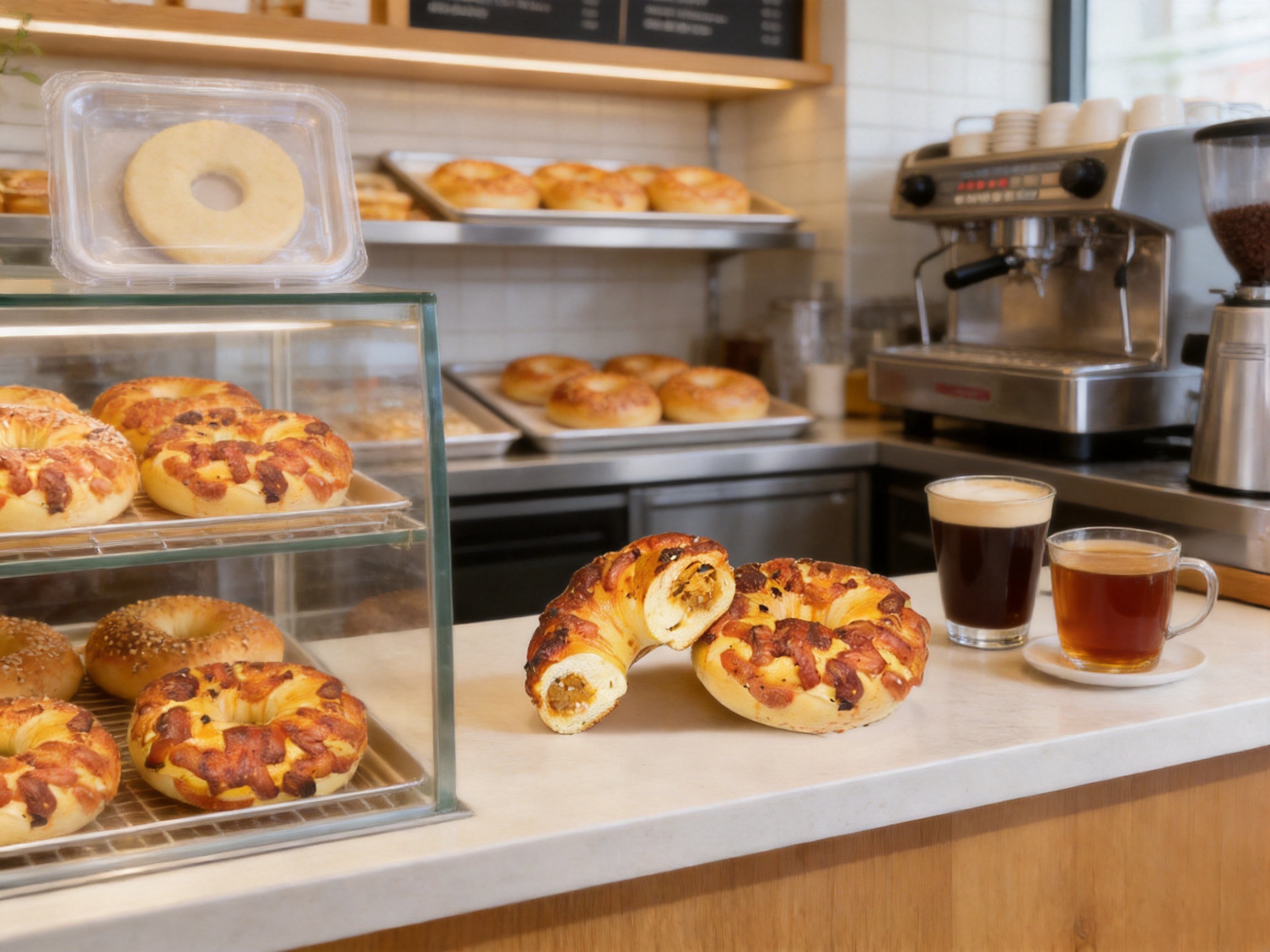
Bagels have moved far beyond the traditional breakfast counter. Today, they are used in cafés, bakery chains, convenience stores, hotel buffets, corporate catering, quick-service restaurants, and retail freezer programs. Their appeal comes from a combination of portability, versatility, satisfying texture, and compatibility with both sweet and savory fillings. However, not every bagel can perform equally well in a commercial environment. Foodservice buyers need products that taste distinctive, remain stable after preparation, support efficient operations, and provide a memorable experience for consumers.
The Chewy Bagel Base Teng Pepper Chicken Bagel is designed around these modern requirements. It combines a firm, resilient bagel base with tender chicken breast, a layered teng pepper seasoning profile, cheese, peanuts, sesame, and black pepper. Rather than treating the bagel as a simple carrier for filling, the product develops flavor and texture across the entire bite. The exterior offers a satisfying chew, the interior remains pleasantly dense, and the filling introduces a progression from fragrance to numbing sensation, heat, savoriness, creaminess, and crunch.
This composition gives the product a clear position in the frozen bagel market. It is not merely a plain bagel with a standard meat filling. It is a complete savory product intended to deliver a differentiated flavor experience while maintaining the practical advantages of frozen bakery production. Its profile is especially suitable for customers seeking bold Asian-inspired flavors, premium handheld meals, and convenient products that can be prepared consistently at scale.
A Product Designed Around Texture, Flavor, and Convenience
The product weighs 128 grams, giving it a substantial presence as a handheld meal or filling snack. Its format can serve several commercial purposes. It can be sold as an individual breakfast item, offered as a lunchtime sandwich alternative, included in a café display, or used as part of a frozen retail range. Because the bagel and filling are developed as one product, operators do not need to source separate bread, meat, cheese, and toppings for every serving.
The product category includes classic bagels, stuffed bagels, and bagel sandwiches, while the specific product is positioned as a minced meat bagel. This positioning provides flexibility for different sales channels. A retailer may present it as a convenient frozen meal. A café may serve it as a premium savory bagel. A foodservice distributor may include it in a portfolio of ready-to-prepare bakery products. A bakery chain may use it as a distinctive seasonal or permanent menu item.
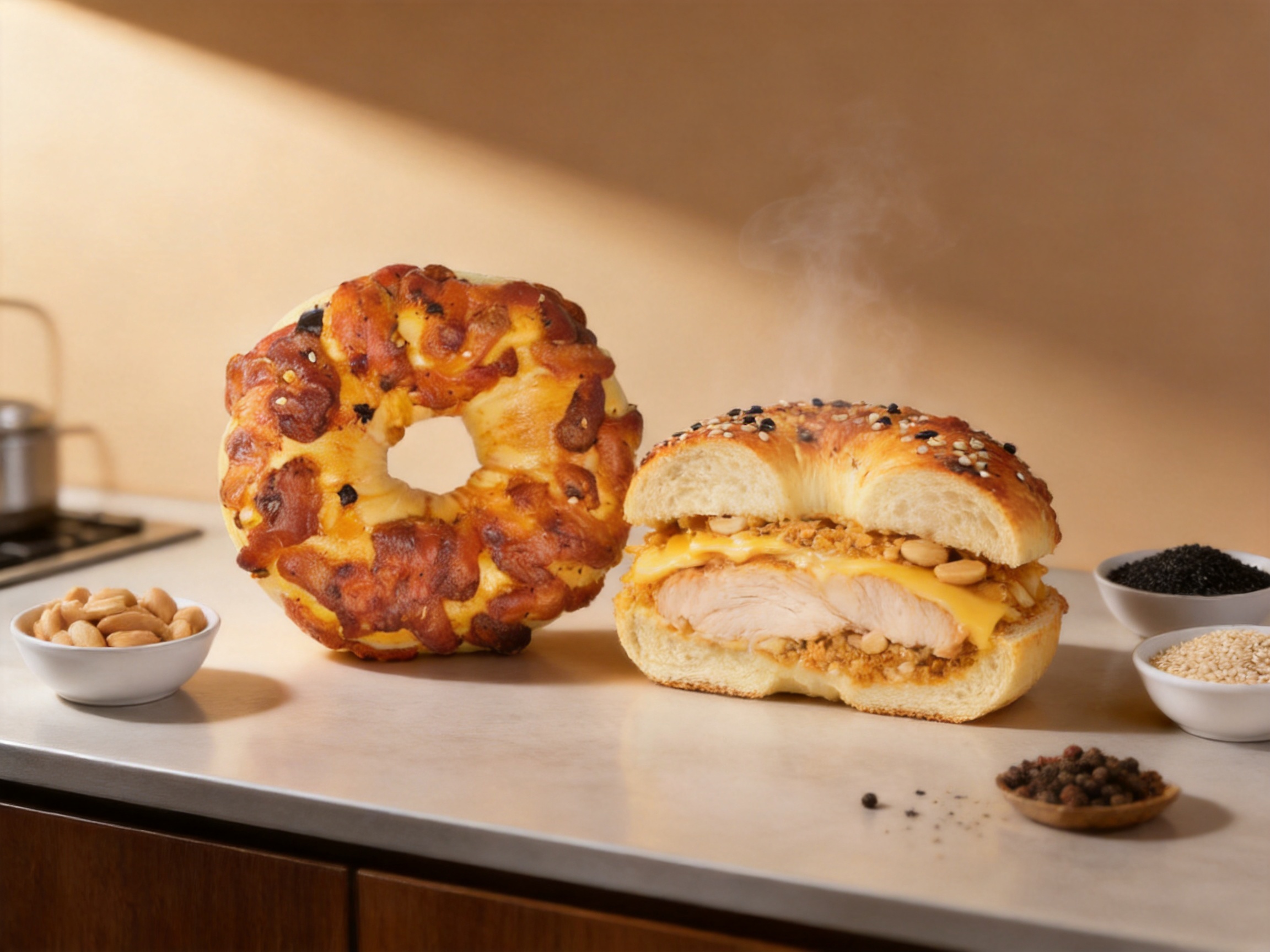
Its strongest point is the coordination of contrasting qualities. The bagel base is firm and chewy rather than soft and bread-like. The chicken contributes tenderness and savory depth. Teng pepper introduces a bright, numbing sensation that develops progressively. Cheese reduces the sharpness of the spice and adds richness. Peanuts and sesame provide contrasting crunch and roasted aroma. Black pepper reinforces the aromatic finish. These elements are intended to remain recognizable while working together as a unified product.
For commercial buyers, this integrated design matters. Many filled bakery products rely heavily on sauce or seasoning to create impact, but their texture may become unbalanced or their bread may fail to support the filling. In this product, the bagel base is treated as an important part of the eating experience. Its structure is intended to hold the filling securely and provide a dependable bite from the first mouthful to the last.

Chewy Bagel Base Teng Pepper Chicken Bagel
The Chewy Bagel Base: A Structural Advantage
Imported Wheat Selected for a More Satisfying Bite
The base begins with carefully selected imported wheat. Ingredient selection is one of the foundations of bakery consistency because wheat influences dough strength, elasticity, aroma, crumb structure, and finished texture. For a stuffed bagel, these characteristics are particularly important. The dough must be strong enough to contain the filling, yet not so dense that it becomes difficult to eat.
The product is developed to produce a firm exterior and a resilient interior. This distinction separates a true chewy bagel experience from ordinary bread with a hole or a soft filled bun. The outside is intended to provide resistance when bitten, while the inside offers a pleasantly dense and elastic texture. Together, these qualities create the characteristic chew that many consumers associate with a high-quality bagel.
The wheat also contributes a clean grain aroma and subtle natural sweetness. These mild notes help create a neutral but flavorful foundation for the stronger chicken and pepper components. A good base should not compete aggressively with the filling, but it should still have enough flavor to remain satisfying when eaten on its own. The product’s grain character supports this balance.
Hand-Shaped Production for Artisan Character
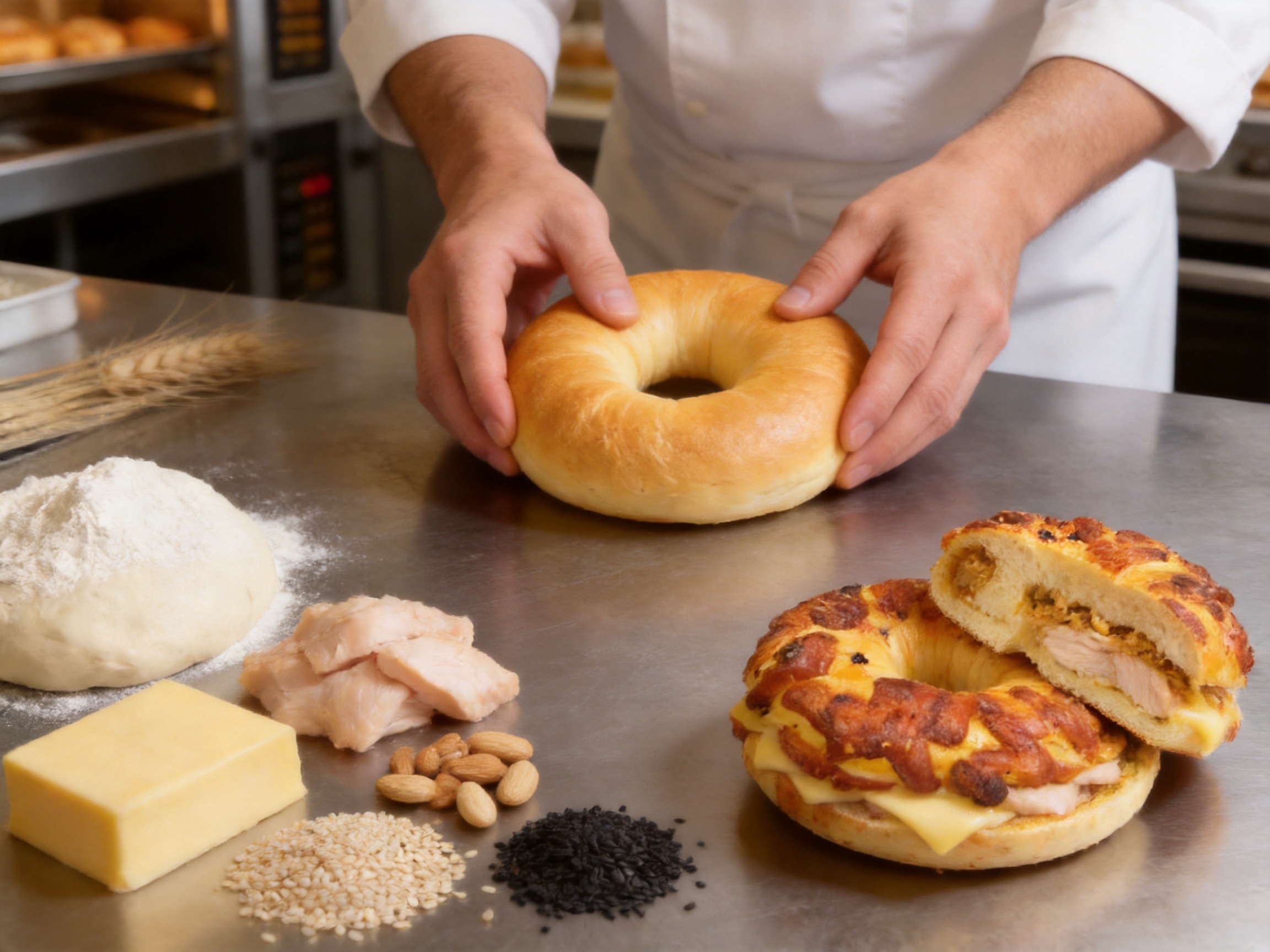
Each bagel is hand-shaped using a traditional artisan technique. Hand shaping provides a direct connection between the manufacturing process and the visual identity of the finished item. It supports the product’s handcrafted positioning and helps preserve the rounded, substantial appearance expected from a premium bagel.
Hand shaping also demonstrates that the product is not treated as an anonymous mass-produced bread item. The company’s stated emphasis on craftsmanship is reflected in the way the bagel is formed. For buyers serving products in cafés, bakery counters, and branded retail displays, this artisan element can support a more premium presentation.
At the same time, hand-shaped production is combined with modern frozen bakery manufacturing. This combination is valuable because it links traditional appearance and texture with the operational advantages of a controlled production environment. Customers can receive a bagel that appears carefully made, while commercial partners benefit from standardized supply and repeatable product specifications.
Why Structure Matters in a Filled Bagel
A filled bagel must perform differently from a plain bagel. It must carry meat, cheese, nuts, seeds, and seasoning without splitting, collapsing, or becoming excessively hard. Its crumb needs enough resilience to retain shape during handling and preparation. Its outer structure needs to support convenient eating, whether the product is served whole, wrapped, or presented in a takeaway package.
The firm and resilient base of this product is therefore a functional advantage as well as a sensory advantage. It creates a dependable platform for the filling and helps reduce the risk that the product will feel like a soft bun with a heavy center. The denser texture also contributes to satiety, making the 128-gram format suitable for consumers who want a more substantial snack or light meal.
Compared with softer filled bakery products, a chewy bagel may also offer a more distinctive eating experience. The consumer has to engage with the product through chewing, which allows the grain aroma, chicken, pepper, cheese, and roasted toppings to appear in stages. This slower flavor release supports a more memorable product identity.
Tender Chicken Breast with a Layered Pepper Experience
Chicken Breast Prepared for Tenderness
The filling uses tender chicken breast prepared to retain a juicy and soft character. Chicken breast is a practical protein for commercial bakery applications because it offers a clean flavor and a familiar nutritional profile. However, it can become dry if not handled correctly. The product description emphasizes tenderness and a delicate texture, indicating that the chicken is intended to remain soft enough to complement the firm bagel base.
This contrast is central to the product. If both the bread and filling were firm, the bite could feel dry or overly dense. If both were soft, the product might lack structure and distinction. The chewy bagel and tender chicken create a deliberate textural balance: the bread provides resistance, while the meat provides softness and moisture.
The chicken also provides a mild savory foundation for the seasoning. Because chicken breast has a relatively clean flavor, it can carry the teng pepper profile without overwhelming it. This allows the pepper’s fragrance and numbing character to remain prominent while preserving the recognizable taste of the meat.
The “Fragrant, Numbing, Spicy” Progression
The teng pepper seasoning is designed as a progressive flavor experience. Instead of delivering only immediate heat, the profile develops in stages. The first impression is aromatic and fragrant. The numbing sensation follows, creating a distinctive tingling character. A confident spicy note then builds through continued chewing.
This progression differentiates the product from conventional pepper chicken fillings that may taste simply salty, hot, or heavily sauced. The teng pepper style introduces a more complex sensory sequence. Its numbing quality gives the product an identity that is immediately relevant to consumers who enjoy contemporary regional and Asian-inspired flavors.
Layered heat can also create stronger repeat appeal. A simple spicy note may be noticed once and then become predictable. A fragrance-to-numbing-to-spicy progression changes as the consumer continues eating. Each bite can reveal slightly different interactions between the pepper, chicken, cheese, and toppings. This creates a more engaging experience than a one-dimensional seasoning system.
For foodservice operators, distinctive flavor can help a product stand out in a crowded menu. Many cafés and quick-service outlets already offer ham, tuna, egg, or standard chicken sandwiches. A teng pepper chicken bagel offers a more adventurous alternative while remaining familiar enough for consumers who enjoy chicken-based products.
Managing Bold Flavor in a Portable Product
Strongly seasoned foods must be balanced carefully when placed inside a handheld format. Excessive heat can dominate the bread and reduce repeat consumption. Too little seasoning can make the product appear ordinary. The inclusion of cheese, peanuts, sesame, and black pepper provides multiple balancing points around the chicken and teng pepper.
Cheese contributes a creamy, rounded sensation that softens the sharper edges of the pepper. Peanuts contribute nuttiness and crunch, while sesame adds roasted warmth. Black pepper reinforces the aromatic quality and gives the finish additional definition. These components help the heat feel integrated into the product rather than added as an isolated challenge.
The result is intended for consumers who want flavor intensity with balance. It can appeal to adventurous eaters, fans of spicy food, younger consumers seeking novelty, and customers looking for alternatives to conventional breakfast sandwiches. The product’s flavor identity is bold, but its structure remains approachable because it is built around familiar ingredients such as chicken, cheese, and bagel dough.
Five-Flavor Balance Across Every Bite
Cheese for Creaminess and Roundness
Cheese plays an important balancing role. Its gentle creaminess adds richness to the lean chicken and offsets the intensity of the teng pepper. It can also help connect the filling to the bagel base, creating a smoother transition between bread and meat.
In addition to flavor, cheese contributes to the perception of indulgence. Consumers often associate melted or integrated cheese with a satisfying hot meal. In a frozen bagel product, this characteristic can help transform a convenient item into a more complete eating occasion. The product is therefore suitable not only for breakfast but also for lunch, afternoon snacking, and casual dinner occasions.
Peanuts for Crunch and Nutty Depth
Peanuts provide a clear textural contrast with both the chewy bread and tender chicken. Their crunch makes the product more dynamic and helps prevent the filling from feeling uniform. Their nutty richness also works with the roasted sesame and the savory chicken to create additional depth.
The peanut element gives the product a stronger Asian-inspired character and adds a memorable finishing note. From a product development perspective, crunchy inclusions are useful because they make a filled bakery product feel more layered and crafted. Instead of presenting one soft mass inside bread, the product offers several sensations in sequence.
Sesame for Roasted Aroma
Sesame contributes a warm roasted fragrance that complements the wheat aroma of the bagel. This connection is important because it links the topping and base through shared toasted notes. The sesame does not need to dominate; its role is to make the overall flavor feel fuller and more aromatic.
Roasted aromas are especially valuable in prepared food because they can influence appetite before the first bite. When the product is heated and served in a café, bakery, or foodservice setting, the combination of warm bread, chicken, cheese, and sesame can create an inviting sensory impression.
Black Pepper for a Crisp Aromatic Finish
Black pepper reinforces the product’s spicy identity while adding a sharper and more familiar pepper note. This helps connect the distinctive teng pepper sensation with a flavor that many consumers already recognize. It also gives the finish a crisp aromatic quality that keeps the product from becoming overly rich.
The interaction between teng pepper and black pepper is particularly useful. Teng pepper provides the signature numbing and spicy character, while black pepper adds a different type of pepper aroma and heat. Together, they create a more complete seasoning profile than either ingredient would provide alone.
| Component | Main Sensory Contribution | Functional Role in the Product |
|---|---|---|
| Chewy bagel base | Firm exterior, resilient interior, grain aroma | Supports the filling and provides structure |
| Chicken breast | Tender, juicy, savory, mild | Provides the central protein component |
| Teng pepper | Fragrant, numbing, spicy | Creates the product’s distinctive flavor identity |
| Cheese | Creamy, rich, rounded | Balances pepper intensity and adds indulgence |
| Peanuts | Crunchy, nutty, rich | Introduces textural contrast |
| Sesame | Warm, roasted, aromatic | Enhances fragrance and toasted notes |
| Black pepper | Crisp, aromatic, spicy | Strengthens the finish and seasoning complexity |
Advantages Compared with Conventional Filled Bakery Products
A More Distinctive Flavor Position
Many filled bakery products compete through convenience alone. They may offer familiar combinations but provide little sensory differentiation. The Chewy Bagel Base Teng Pepper Chicken Bagel is positioned differently. Its signature comes from the combination of a traditional chewy bagel structure and a modern, layered pepper chicken filling.
This flavor position can help foodservice operators expand beyond standard Western sandwich profiles. Rather than relying only on bacon, ham, tuna, or plain chicken, buyers can offer a product with a recognizable but contemporary identity. The product may be especially attractive to cafés and bakery chains that want to add an Asian-inspired item without redesigning their entire menu.
More Texture than a Soft Filled Bun
A soft bun often delivers a uniform texture from crust to center. The product described here is intended to provide greater textural variety. The bagel is firm and chewy, the chicken is tender, the cheese is creamy, and the peanuts create crunch. Sesame and black pepper add additional aromatic detail.
Texture variety is a meaningful competitive advantage because it affects perceived quality and satisfaction. A product that changes across the bite can feel more carefully formulated and more premium. It also gives consumers a reason to remember the product beyond its visual appearance.
Greater Menu Flexibility
The product can be adapted to multiple service occasions. It can function as a breakfast bagel, a savory snack, a quick lunch, a café special, or a frozen retail item. Its 128-gram size gives it enough substance for individual consumption while remaining compatible with handheld service.
Operators can present it in different ways without changing the core product. It may be served whole for takeaway, cut in half for display, paired with a beverage, included in a breakfast combination, or placed in a mixed bagel assortment. This flexibility can help businesses use one product across multiple menu periods.
Operational Consistency from Frozen Production
Frozen bakery products can help commercial buyers maintain consistent stock and reduce preparation complexity. Instead of preparing chicken filling, seasoning, cheese, and bagel dough separately, an operator can work with a finished product designed for standardized handling. This can reduce the number of assembly steps required at the point of sale.
For chains and multi-location businesses, consistency is particularly important. Customers expect the same product experience at different branches. A centrally manufactured bagel with a defined weight, filling composition, and flavor profile can support more reliable portioning and menu execution.
Frozen supply can also make planning easier. Businesses may order according to projected demand, store products under appropriate conditions, and prepare units as needed. This can be useful for locations with limited kitchen space or limited access to skilled bakery labor.
Advanced Manufacturing Strengths Behind the Product
An Integrated Supply Chain
Jiangsu Goobagel Food Technology Co., Ltd. has specialized in bagel research and manufacturing since 2019. The company operates as a modern frozen bakery producer with an integrated supply chain covering raw materials, research and development, production, and nationwide distribution.
An integrated structure can improve coordination across the product life cycle. Ingredient selection can be connected directly to product development. Product specifications can be translated into production procedures. Finished goods can then be supported through an organized distribution network. This type of integration is important for customers who need reliable supply rather than occasional small-batch availability.
For the Chewy Bagel Base Teng Pepper Chicken Bagel, integration is especially relevant because the product involves multiple components with different technical requirements. The bagel must maintain chew and structure. The chicken must remain tender. The cheese must support the desired richness. Peanuts and sesame must contribute texture and aroma. A coordinated development and manufacturing system helps these components function together.
Research and Development Capability
The company has developed more than 100 clean-label bagel varieties for retail, foodservice, café chains, tea brands, and bakery operators. This product range indicates broad experience in adapting bagels to different flavor concepts, application environments, and customer needs.
A large product portfolio can support faster innovation because the manufacturer can draw on accumulated knowledge about dough systems, fillings, toppings, freezing, packaging, and preparation. It also allows buyers to explore multiple categories through one supplier. A customer interested in a spicy chicken bagel may also require classic bagels, stuffed bagels, sweet varieties, or private-label products.
Research and development is not limited to inventing unusual flavors. It also includes solving practical problems such as texture retention, filling distribution, product stability, portion control, and suitability for different preparation methods. The product’s design suggests that sensory creativity and commercial functionality are being considered together.
Clean-Label Product Development
The company describes its bagel varieties as clean-label products. Clean-label expectations vary by market and customer, but the general direction is clear: buyers and consumers increasingly want understandable product concepts, transparent positioning, and ingredient choices that support a more straightforward food identity.
For commercial buyers, clean-label positioning can be useful in retail, café, and foodservice communication. It can support product descriptions that emphasize recognizable ingredients and a less complicated image. It may also help brands develop product ranges that align with consumers seeking convenient food without an overly processed impression.
Any specific regulatory or ingredient claim should be confirmed through the applicable product specification and market requirements. Nevertheless, the clean-label development direction provides a useful foundation for private-label customers that want to build a more contemporary frozen bakery portfolio.
Combining Craftsmanship with Modern Production
The company’s stated values include persistence, craftsmanship, respect, and science. These values are reflected in the product’s balance of hand-shaped appearance and modern manufacturing capability. Craftsmanship supports the sensory and visual qualities of the bagel, while science supports repeatability, process control, and product development.
This combination is important because either element alone may be insufficient. A purely traditional process may struggle to supply large commercial volumes consistently. A purely industrial process may produce a technically stable item that lacks character. The product aims to combine the best aspects of both approaches: an artisan-inspired bagel with the consistency expected from a professional frozen bakery manufacturer.
For brand owners and distributors, this combination can strengthen product storytelling. The bagel can be presented as carefully shaped and thoughtfully developed, while the manufacturing partner can support stable supply and commercial deployment. This is particularly valuable for customers building premium convenience ranges.
Commercial Applications for Different Buyers
Café Chains
Café chains can use the product as a savory alternative to pastries, cakes, and standard breakfast sandwiches. Its strong flavor profile can attract customers who prefer spicy or Asian-inspired choices. The bagel format is familiar to café consumers, while the teng pepper chicken filling introduces novelty.
The product can be served with coffee, tea, sparkling beverages, or chilled drinks. It may also be included in a breakfast bundle or lunch promotion. Because the product is already portioned and filled, the café can simplify preparation while maintaining a premium appearance.
Bakery Operators
Bakery operators can use the product to expand their savory range without investing in a separate filled-bread production line. The product’s hand-shaped appearance and layered toppings can contribute to a more crafted display. It may be sold individually, presented in a heated cabinet, or included in a mixed assortment.
Its contrast between chewy bread and tender filling can also help a bakery differentiate its savory offer from softer buns and ordinary sandwiches. The bold flavor provides a strong point of communication for menu boards and product labels.
Tea and Beverage Brands
Tea brands increasingly offer food items that complement their beverages. A pepper chicken bagel can provide a savory option for customers who want more than a sweet pastry. Its richness and spice may pair well with milk tea, fruit tea, black tea, or other refreshing drinks.
For tea shops with limited kitchen facilities, a frozen filled bagel can be easier to manage than made-to-order savory food. It can expand average transaction value while using existing heating and serving procedures.
Retail and Convenience Channels
Retailers can position the product as a premium frozen breakfast or snack. The 128-gram format is suitable for individual consumption, while the distinctive flavor may attract customers looking for something different from ordinary frozen bread or sandwiches.
Packaging and preparation instructions will be important in this channel. The product should be presented clearly, with attention to storage, cooking, serving, allergen information, and the intended sensory experience. Its key selling points include the chewy bagel base, chicken breast, layered pepper flavor, cheese, peanuts, and sesame.
Private-Label and OEM Programs
Private-label customers can use the product concept as a starting point for their own frozen bakery range. The manufacturing company offers OEM and private-label bagel capabilities, making it possible for customers to develop products under their own brands, subject to commercial discussion and technical confirmation.
A private-label program may involve changes to packaging, labeling, portion size, flavor intensity, product assortment, or market positioning. The core product concept can remain recognizable while being adapted to the requirements of a particular retailer, café chain, distributor, or foodservice group.
Quality, Consistency, and Supply Considerations
Reliable Product Specifications
Commercial customers need more than an appealing recipe. They need product specifications that can be communicated, tested, and repeated. The stated 128-gram product weight provides a clear starting point for portion planning, menu costing, packaging, and logistics.
Consistent dimensions and filling distribution are also important. A customer purchasing a filled bagel expects each unit to provide a similar balance of bread, chicken, cheese, and toppings. Consistency supports consumer trust and helps operators calculate serving costs more accurately.
Preparation Performance
A frozen bagel must be developed with its intended preparation process in mind. The goal is to restore a satisfying texture and temperature without causing excessive dryness, filling leakage, or uneven heating. Commercial buyers should confirm the recommended preparation method, equipment compatibility, thawing requirements, and holding conditions with the manufacturer before launch.
The product’s chewy base and tender filling are particularly important during preparation. The base should remain pleasantly resilient rather than becoming hard, while the chicken and cheese should retain their intended texture. These performance factors should be evaluated through product testing under the actual operating conditions of each customer.
Distribution and Inventory Management
As a frozen bakery product, the bagel is suitable for organized cold-chain distribution. Buyers can plan shipments and inventory according to sales forecasts, seasonal demand, and available freezer capacity. A stable frozen format may also reduce daily preparation pressure at individual locations.
Proper storage and handling procedures remain essential. Commercial partners should follow the manufacturer’s specifications for temperature, shelf life, packaging integrity, stock rotation, and preparation. These controls protect both product quality and food safety.
How the Product Supports Brand Differentiation
A strong product can become a useful branding tool when its sensory identity is clear. The Chewy Bagel Base Teng Pepper Chicken Bagel has several attributes that can be communicated simply: chewy bagel, tender chicken, fragrant pepper, numbing heat, cheese, peanuts, sesame, and black pepper.
These characteristics provide multiple storytelling angles. A café may emphasize the contrast between artisan-shaped bagel dough and bold chicken filling. A retailer may emphasize convenience and flavor exploration. A tea brand may present the bagel as a savory partner for beverages. A distributor may highlight the product as a differentiated addition to a frozen bakery portfolio.
The product can also support menu innovation. Operators may use it as a featured item during a limited-time campaign, a new-product launch, a regional flavor series, or a premium breakfast collection. Because it is sufficiently distinctive, it does not need to depend entirely on additional sauces or complicated garnishes to create consumer interest.
At the same time, the product remains adaptable. It can be served in its original form, cut into portions for sharing, or paired with simple side items. The bagel’s structure makes it visually recognizable, while the pepper chicken filling gives it a stronger identity than an unfilled or generic product.
Why This Product Is Relevant to Current Food Trends
Demand for Portable Meals
Consumers increasingly value food that can be eaten conveniently during commuting, study, work, travel, or short breaks. A filled bagel fits this need because it combines bread and filling in one handheld format. The firm structure can make it easier to carry and consume than products with loose fillings or excessive sauce.
The 128-gram size is also compatible with the idea of a compact but satisfying meal. It is substantial enough to provide a sense of fullness while remaining easy to pair with a beverage or side item.
Interest in Bold and Regional Flavors
Many consumers are looking for stronger and more diverse flavor experiences. Teng pepper provides a distinctive point of difference from standard black pepper, chili, or barbecue seasoning. Its fragrance and numbing sensation create a profile that is recognizable, contemporary, and suitable for consumers who enjoy exploring regional food styles.
Using this flavor in a bagel format also demonstrates how familiar international bakery products can be adapted to local and regional taste preferences. The result is neither a plain Western bagel nor a traditional full meal. It is a hybrid product designed for modern food culture.
Premium Convenience
Convenience no longer has to mean ordinary. Consumers may accept frozen or quickly prepared products when those products offer better flavor, more interesting texture, and a stronger sense of value. The product’s hand-shaped bagel base, tender chicken, cheese, and layered toppings support this concept of premium convenience.
For commercial buyers, premium convenience can help justify a stronger price position than basic bread products. The value comes not only from the ingredients but also from the development work required to combine structure, filling, flavor, and frozen supply into one dependable item.
Recommended Positioning and Serving Communication
Clear communication can help customers understand the product before tasting it. A menu description should identify the core experience without becoming overly technical. Useful terms may include chewy bagel, tender chicken breast, fragrant teng pepper, numbing spice, creamy cheese, roasted sesame, and crunchy peanuts.
Operators should decide how prominently to communicate the numbing sensation. For customers who enjoy spicy food, this feature can be a strong attraction. For broader audiences, the menu can describe it as a layered pepper flavor with balanced heat. The exact wording should match the local market, customer expectations, and applicable labeling requirements.
Serving temperature and preparation quality will influence the final experience. The product should be tested after preparation to confirm that the bagel remains chewy, the chicken remains tender, and the cheese and toppings deliver the intended balance. Staff training should include handling, heating, presentation, and allergen awareness.
Because the product contains peanuts, sesame, wheat, milk, and chicken-based ingredients, allergen communication is especially important. Commercial customers should obtain the full ingredient declaration and allergen documentation from the manufacturer before selling the product. Any local regulatory requirements should be reviewed by the responsible importer, distributor, or foodservice operator.
Partnering with an Experienced Frozen Bagel Manufacturer
Jiangsu Goobagel Food Technology Co., Ltd. provides a manufacturing base for customers seeking frozen bagel products, OEM development, and private-label solutions. Its experience in bagel research and production since 2019, combined with a portfolio of more than 100 varieties, supports customers that need both product choice and development capability.
The company’s integrated approach covers raw materials, research and development, manufacturing, and distribution. This can simplify cooperation for buyers that would otherwise need to coordinate several different suppliers. It also provides a foundation for discussing custom requirements such as flavor direction, product format, packaging, target channel, and supply planning.
Its stated mission is to provide customers with high-quality and healthy products while giving partners opportunities to realize their business goals. This partner-oriented approach is relevant to food brands that need more than a catalog item. They may require assistance with selecting a suitable bagel type, adapting a flavor profile, building an assortment, or preparing a private-label launch.
The company’s vision is to strive for a better life, supported by values of persistence, craftsmanship, respect, and science. In practical terms, these values align with the product’s central proposition: a carefully shaped, technically developed, commercially supplied bagel that combines craftsmanship with modern food manufacturing.
Q&A
What is the Chewy Bagel Base Teng Pepper Chicken Bagel?
It is a 128-gram filled bagel made with a chewy bagel base, tender chicken breast, teng pepper seasoning, cheese, peanuts, sesame, and black pepper. It is positioned as a savory stuffed bagel with a layered fragrant, numbing, and spicy flavor profile.
What makes the bagel base different?
The base is developed from selected imported wheat and is hand-shaped using a traditional artisan technique. It is intended to have a firm exterior, resilient interior, clean grain aroma, subtle natural sweetness, and a pleasantly dense chew.
Is the product very spicy?
The product has a confident spicy character, but its flavor is designed to develop in stages. Fragrance appears first, followed by a numbing sensation and then building heat. Cheese, chicken, peanuts, sesame, and the bagel base help balance the pepper intensity.
What does teng pepper contribute?
Teng pepper provides a distinctive aromatic and numbing quality that differs from ordinary black pepper or simple chili heat. It gives the product its signature sensory identity and creates a progressive flavor experience.
Why is chicken breast used?
Chicken breast provides a familiar, clean-tasting protein that can carry the pepper seasoning effectively. The product is developed to keep the chicken tender and soft so that it contrasts with the chewy bagel base.
What role do peanuts and sesame play?
Peanuts add crunch and nutty richness, while sesame contributes warm roasted fragrance. Together, they make the filling more texturally varied and aromatic.
Who can use this product?
The product is suitable for cafés, bakery chains, tea brands, foodservice operators, retailers, convenience channels, distributors, and private-label customers. It can be positioned as a breakfast item, savory snack, light meal, or premium frozen bakery product.
Can it be used for private-label programs?
The manufacturer offers OEM and private-label bagel services. Buyers can discuss packaging, product specifications, flavor intensity, assortment planning, and other commercial requirements with the manufacturer.
Why is frozen production useful for foodservice?
Frozen production can support longer-term inventory planning, centralized quality control, simplified preparation, and consistent serving across multiple locations. Operators should follow the manufacturer’s storage and preparation specifications.
Does the product contain potential allergens?
The product includes wheat, milk, peanuts, and sesame components, and it contains chicken. Buyers should obtain the complete ingredient and allergen documentation from the manufacturer and comply with all local labeling requirements before sale.
What should buyers evaluate before placing an order?
Buyers should confirm product specifications, minimum order quantities, packaging, storage conditions, shelf life, preparation instructions, shipping arrangements, allergen documentation, and private-label requirements. Product testing under actual operating conditions is also recommended.
Conclusion
The Chewy Bagel Base Teng Pepper Chicken Bagel offers a strong combination of texture, flavor differentiation, and commercial practicality. Its hand-shaped bagel base provides a firm and satisfying chew, while tender chicken breast introduces a softer and more delicate center. Teng pepper creates a progressive fragrant, numbing, and spicy experience, and the addition of cheese, peanuts, sesame, and black pepper produces a layered balance of creaminess, crunch, warmth, and aroma.
Compared with ordinary filled buns or conventional chicken sandwiches, the product offers a more distinctive identity and a broader range of sensory contrasts. It can help cafés, bakeries, tea shops, retailers, and foodservice operators add a premium savory item without creating a complex in-store assembly process.
Behind the product is a frozen bakery manufacturer with experience in bagel research, a portfolio of more than 100 varieties, integrated supply chain capabilities, and support for OEM and private-label development. The combination of imported wheat selection, artisan hand shaping, modern production, research and development, and organized distribution gives commercial partners a platform for reliable product expansion.
For buyers searching for an innovative frozen bagel with a bold flavor profile and broad application potential, this teng pepper chicken product represents a compelling opportunity. It is familiar enough to be approachable, distinctive enough to stand out, and structured enough to support commercial foodservice performance.
References
1. Goobagel Food product information for the Chewy Bagel Base Teng Pepper Chicken Bagel, including product weight, ingredients, flavor description, and category positioning.
2. Jiangsu Goobagel Food Technology Co., Ltd. company information concerning bagel research, frozen bakery manufacturing, integrated supply chain operations, product development, and distribution.
3. General principles of bakery product development, including dough structure, wheat functionality, texture design, filled-bread formulation, and frozen food manufacturing.
4. General foodservice considerations for portion control, cold-chain management, allergen communication, preparation consistency, and private-label product development.
