
 中文简体
 English



postmaster@goobagelfood.com
Content
- 1 1. Product Overview: A Dessert-Inspired Cold Sandwich Bagel
- 2 2. The Flavor Concept: Cocoa from the Dough, Chocolate from the Filling
- 3 3. Cream Cheese and Chocolate: Designed for Balance
- 4 4. Texture Engineering: Soft, Fluffy, and Creamy
- 5 5. The Thaw-and-Eat Format and Its Commercial Benefits
- 6 6. Manufacturing Strengths Behind the Product
- 7 7. Advantages for Retailers, Cafés, and Foodservice Buyers
- 8 8. OEM and Private-Label Potential
- 9 9. Quality, Consistency, and Supply Reliability
- 10 10. How the Product Can Be Positioned in the Market
- 11 11. Consumer Experience from First Bite to Finish
- 12 12. Product Handling and Serving Considerations
- 13 13. A Strong Foundation for Product Portfolio Expansion
- 14 14. Q&A: Frequently Asked Questions
- 14.1 Q1: What is the Cocoa Chocolate Cream Cheese Bagel?
- 14.2 Q2: Does the product contain cocoa only in the filling?
- 14.3 Q3: How does the filling taste?
- 14.4 Q4: What is the texture after thawing?
- 14.5 Q5: Does the bagel need to be heated before serving?
- 14.6 Q6: Which businesses can use this product?
- 14.7 Q7: What makes this product different from a traditional cream cheese bagel?
- 14.8 Q8: What are the operational benefits for cafés?
- 14.9 Q9: Is the product suitable for private-label programs?
- 14.10 Q10: Why is a specialized bagel manufacturer useful for OEM development?
- 14.11 Q11: Can the product be sold as an everyday snack?
- 14.12 Q12: What company manufactures the product?
- 15 15. Conclusion
- 16 References
- 17 Product: Cocoa Chocolate Cream Cheese Bagel
The modern bagel market is moving beyond the traditional plain, sesame, onion, and savory sandwich formats. Consumers increasingly want products that combine convenience, indulgence, recognizable ingredients, attractive texture, and dependable quality. The Cocoa Chocolate Cream Cheese Bagel responds to this demand with a carefully developed combination of cocoa-infused dough and a smooth chocolate cream cheese filling.
Weighing approximately 90 grams, this cold sandwich bagel is designed for thaw-and-eat consumption. It does not depend on reheating to reveal its core appeal. After thawing, the filling becomes soft, silky, and almost ice-cream-like, while the cocoa bagel remains tender and fluffy. This format gives retailers, cafés, foodservice operators, and private-label brands an appealing product that is easy to store, simple to serve, and suitable for several eating occasions.
The product is manufactured by Jiangsu Goobagel Food Technology Co., Ltd., a Chinese frozen bakery producer specializing in bagel research and manufacturing since 2019. Its capabilities cover raw-material sourcing, recipe development, production, frozen storage, and distribution. With more than 100 bagel varieties developed for commercial applications, the company is positioned to support retail chains, café brands, tea shops, bakery operators, and foodservice businesses seeking consistent frozen bagel solutions.
This article examines the product’s flavor architecture, texture, convenience, commercial advantages, manufacturing strengths, and suitability for OEM and private-label programs.
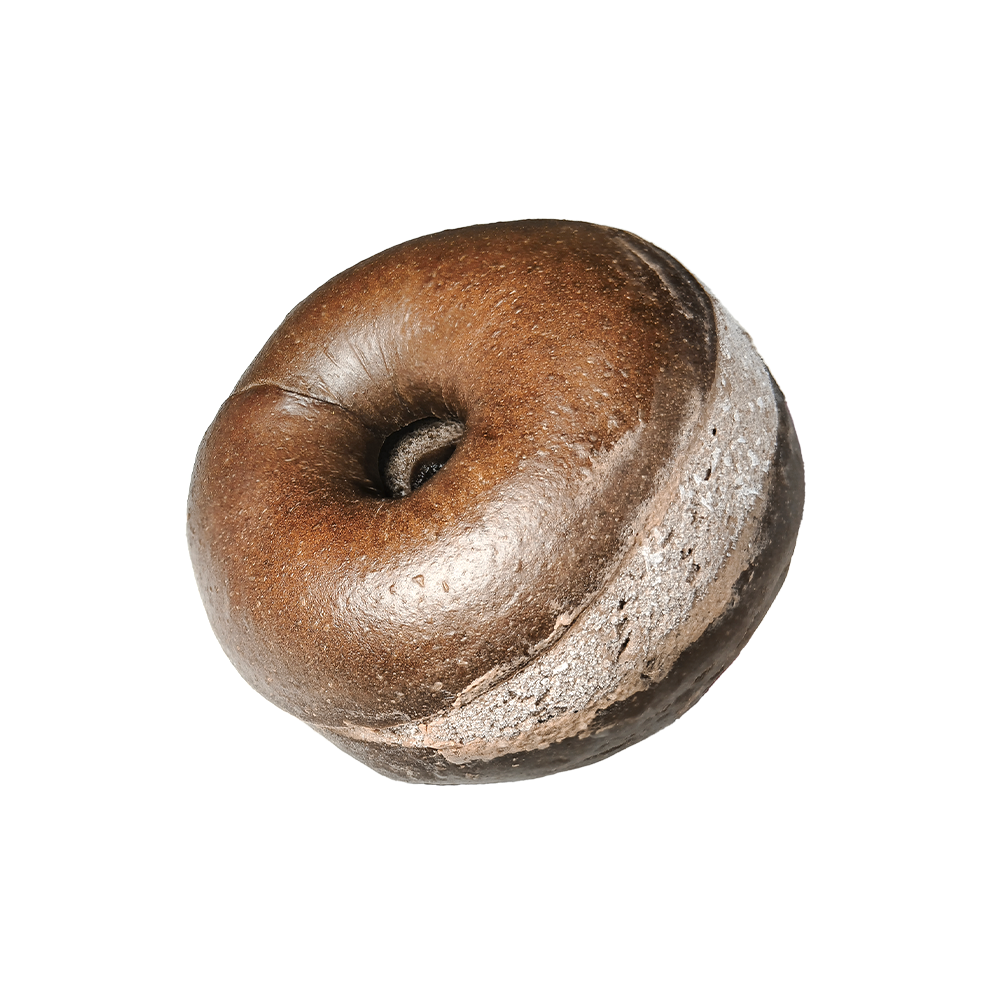
Cocoa Chocolate Cream Cheese Bagel
1. Product Overview: A Dessert-Inspired Cold Sandwich Bagel
The Cocoa Chocolate Cream Cheese Bagel belongs to the cold sandwich bagel category. Unlike a conventional plain bagel served with a separately spread topping, it combines the bread and filling into one finished product. The result is a portion-controlled item with a defined flavor profile and a consistent internal structure.
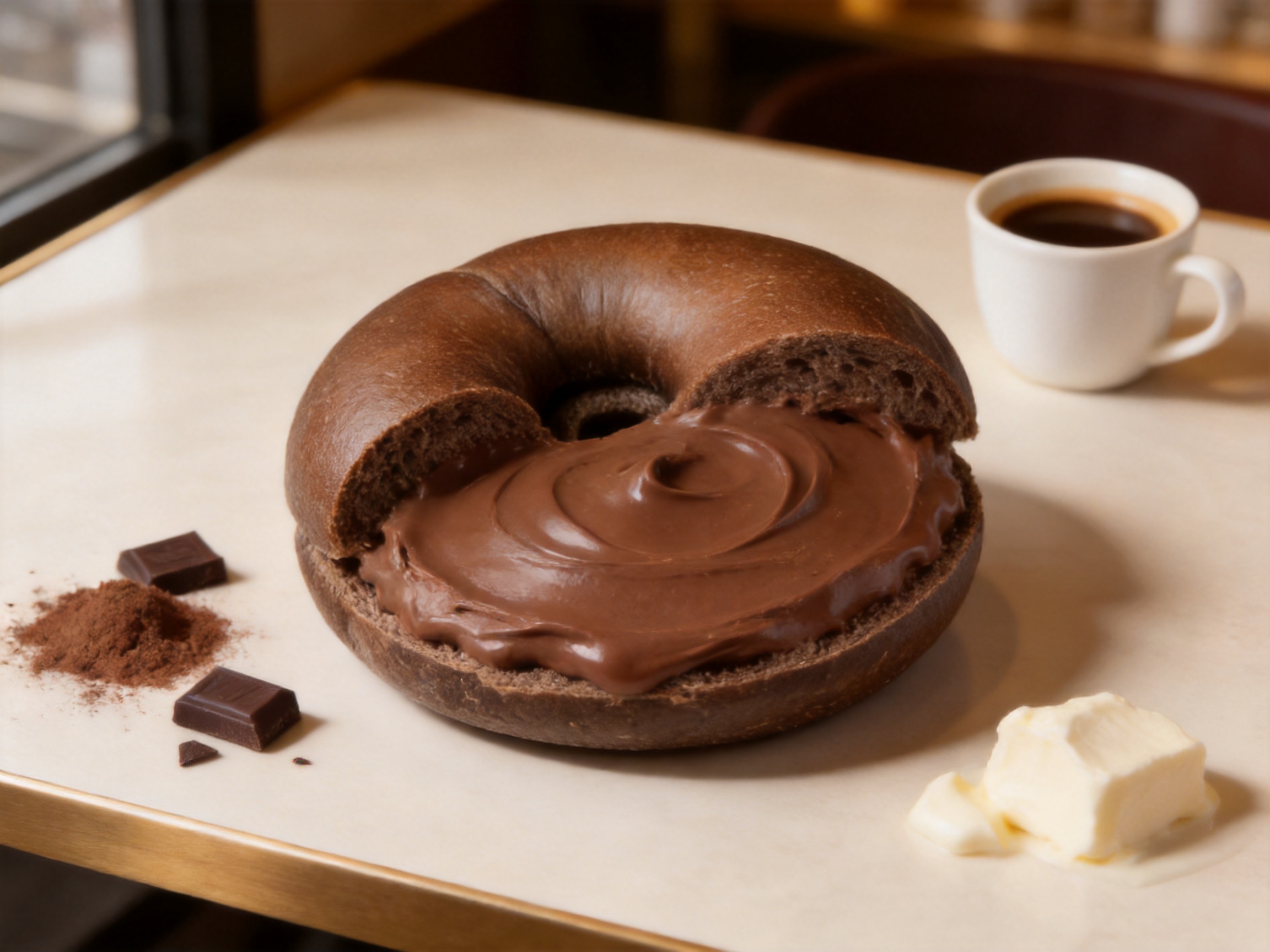
The outer dough is made with premium wheat flour and Malaysian-imported cocoa powder. Rather than adding chocolate flavor only through the filling, cocoa is kneaded directly into the dough. This approach gives the bread a more integrated aroma and allows the cocoa character to appear from the first bite. The product presents a deeper color and a warm chocolate fragrance without becoming excessively sweet.
The filling combines Anchor cream cheese with chocolate. This pairing is deliberately balanced to preserve the identity of both components. Cream cheese contributes a creamy dairy character, buttery richness, and a gentle tang. Chocolate contributes depth, fullness, and a rounded cocoa finish. When properly balanced, these elements create a layered profile instead of allowing one ingredient to overpower the other.
The product is designed for thaw-and-eat service. Once thawed, the filling softens rapidly in the mouth and provides a smooth contrast to the soft cocoa dough. This serving method is especially useful for operators that want to offer a premium-looking bakery item without relying on ovens, grills, sandwich presses, or complex preparation procedures.
| Product Attribute | Product Information | Commercial Value |
|---|---|---|
| Product type | Cold sandwich bagel | Suitable for chilled display and ready-to-eat service after thawing |
| Approximate weight | 90 grams | Practical single-serving portion |
| Dough profile | Cocoa-infused wheat dough | Integrated chocolate aroma and distinctive appearance |
| Filling | Anchor cream cheese and chocolate | Creamy, rich, lightly tangy, and balanced |
| Serving method | Thaw and eat | Reduces preparation time and equipment requirements |
| Primary applications | Retail, cafés, tea shops, foodservice, and bakery counters | Flexible placement across multiple sales channels |
| Customization potential | OEM and private-label development | Supports brand-specific products and market positioning |
2. The Flavor Concept: Cocoa from the Dough, Chocolate from the Filling
One of the product’s most important advantages is that the cocoa flavor is built into the dough rather than being limited to the filling. This creates a more complete sensory experience. In some chocolate bakery products, the bread serves only as a neutral carrier for a sweet center. Here, the dough itself contributes aroma, flavor, and visual identity.
Malaysian-imported cocoa powder is kneaded with premium wheat flour during dough preparation. This allows the cocoa to become distributed throughout the bread structure. As the dough is mixed and developed, the cocoa becomes part of the overall matrix rather than remaining as a surface coating or isolated flavor pocket.
The resulting profile is intended to be deep and aromatic, with warm, toasted sweetness and a pleasant touch of bitterness. The bitterness is important because it gives the product a more mature chocolate character. Without this balance, the combination of chocolate filling and cocoa dough could become excessively sweet. The mild bitterness helps create contrast and encourages a cleaner finish.
The flavor also avoids relying on a single dominant note. The consumer first experiences the cocoa aroma from the dough, then the gentle sweetness of the bread, followed by the creamy dairy richness of the filling. Chocolate becomes more prominent as the filling melts, while the cream cheese contributes a slight tang that prevents the profile from feeling heavy.
This layered design gives the product a broader appeal than a simple sweet bun. It can be positioned as an afternoon snack, a breakfast treat, a café accompaniment, a dessert-style bakery item, or a premium frozen product for home consumption.
Why Dough-Based Cocoa Flavor Matters
Adding cocoa to the dough offers several potential product advantages. First, it gives the bagel a recognizable appearance before it is cut open. A darker cocoa-colored exterior can attract attention in freezer displays, bakery cases, and café counters.
Second, the flavor is more evenly distributed. Consumers do not need to reach the center of the product to experience the chocolate character. Every section of the bagel can provide a degree of cocoa aroma, while the filling adds a more concentrated layer of chocolate creaminess.
Third, the dough and filling can be developed as complementary components. The bread does not need to be intensely sweet because it already has cocoa depth. This leaves room for the filling to provide richness without making the total product unbalanced.
Finally, the format creates a stronger point of difference from ordinary cream cheese bagels. Traditional cream cheese bagels generally feature a neutral or savory dough with a dairy filling. The cocoa version occupies a more indulgent space while retaining the recognizable handheld structure of a bagel.
3. Cream Cheese and Chocolate: Designed for Balance
The filling is based on a combination of Anchor cream cheese and chocolate. This pairing is familiar to consumers, yet the balance between the two ingredients determines whether the final product tastes refined or overly sweet. The formulation is designed so that cream cheese and chocolate complement rather than compete with one another.
Cream cheese contributes a smooth, buttery mouthfeel. Its mild acidity adds a clean finish and helps offset the richness of the chocolate. Chocolate provides body, depth, and a rounded sweetness. The combination creates a profile that can appeal to consumers who enjoy dessert flavors but prefer a more balanced taste than highly sweet confectionery products.
The filling’s creaminess is particularly important in a cold sandwich format. Because the product is intended to be eaten after thawing rather than heated, the filling must provide a pleasant texture at a lower serving temperature. Once thawed, it becomes soft and delicate, allowing it to melt quickly on the palate.
This texture creates a contrast with the bagel base. The bread is soft and fluffy, while the filling is smooth and fluid in perception. The contrast makes the product more interesting than a uniform bread texture and gives the consumer a clear sensory progression with every bite.
The filling also supports premium positioning. A chocolate-flavored bread alone may be perceived as a standard sweet bakery item. A cocoa dough paired with a dairy-based chocolate cream cheese center suggests a more carefully developed product with greater complexity and a more distinctive eating experience.
A More Comfortable Sweetness Level
The product is described as having a comfortable sweetness level for everyday enjoyment. This positioning is commercially useful because it allows the bagel to fit into several consumption occasions. A very sweet product may be limited to dessert menus, while a balanced product can be served with coffee in the morning, offered as an afternoon snack, or included in a café assortment.
The cocoa dough supplies aroma and depth without requiring heavy sugar intensity. The cream cheese adds tang and dairy richness, while the chocolate provides fullness. Together, these characteristics produce a rounded flavor that can be indulgent without becoming overwhelming.
For retailers and foodservice operators, balanced sweetness can also encourage repeat purchases. Consumers may be more likely to purchase a product regularly when it feels satisfying but not excessively rich. This makes the item suitable for routine café visits, workplace snack programs, convenience retail, and home freezer stocking.
4. Texture Engineering: Soft, Fluffy, and Creamy
Texture is one of the defining points of difference between this product and dense or highly chewy bagels. The cocoa dough is developed to be softer and fluffier, creating a lighter bite than the firm texture associated with some traditional bagel styles.
This softer structure is important because cocoa dough can easily become heavy if not carefully formulated and processed. Cocoa powder changes the composition of the dough and can influence moisture distribution, dough development, and perceived firmness. A successful product must maintain sufficient structure for handling while remaining tender and pleasant after thawing.
The finished bagel is intended to offer a soft bite rather than a dense chew. This makes it accessible to consumers who enjoy the shape and portability of a bagel but prefer the tenderness of a filled bakery product. The texture also supports the dessert-inspired positioning of the item.
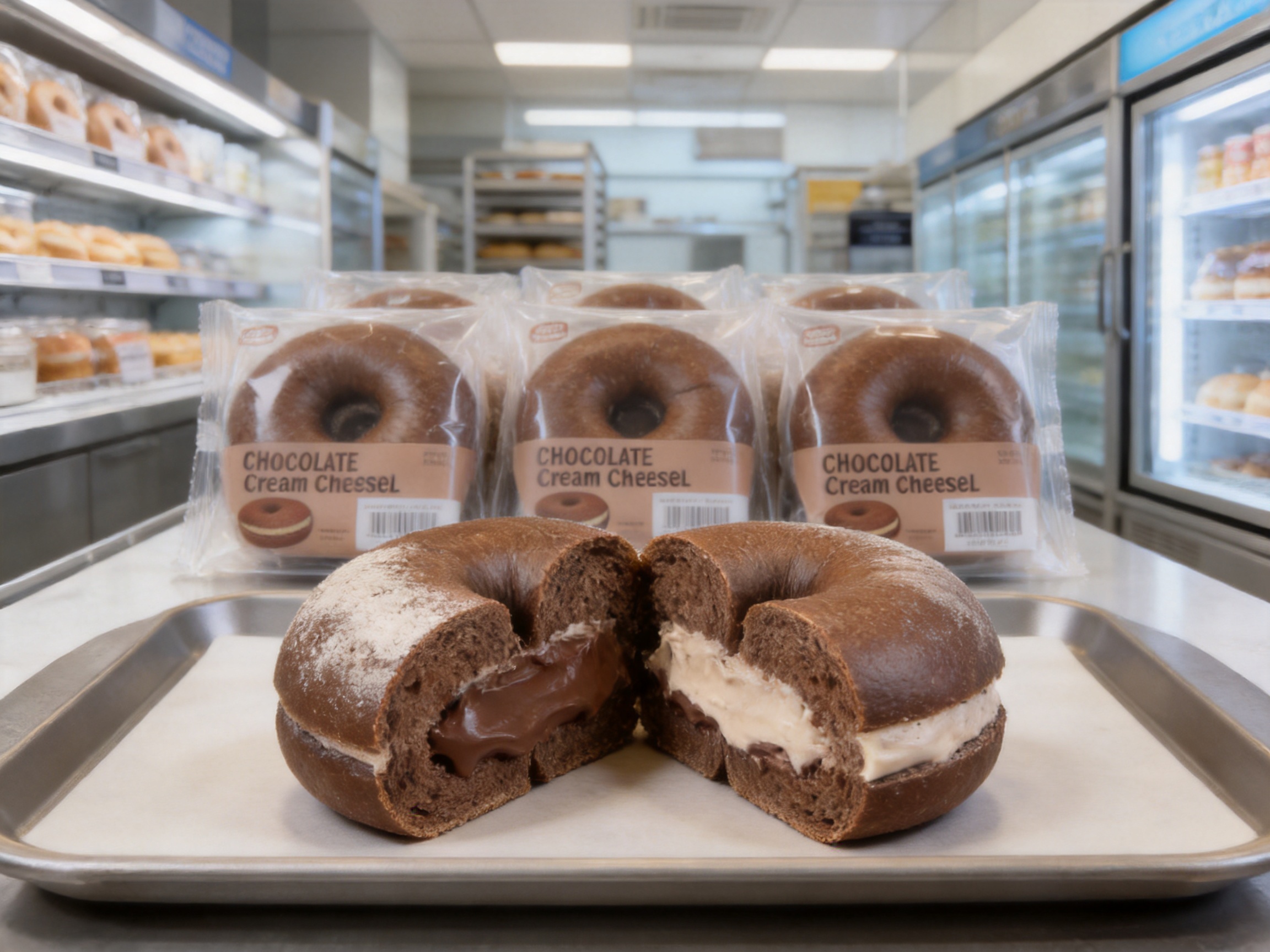
Inside, the filling provides a second texture dimension. After thawing, it becomes silky and almost ice-cream-like in perception. It melts quickly and integrates with the bread as the product is chewed. The combination of fluffy dough and soft filling helps create a more luxurious experience than a standard bread-and-spread format.
For commercial operators, predictable texture is essential. A product that changes significantly from batch to batch can create consumer complaints, preparation issues, and inconsistent brand experiences. Frozen bakery manufacturing must therefore control dough mixing, portioning, shaping, filling, freezing, storage, and thawing conditions as part of one connected process.
Texture Advantages Compared with Conventional Formats
Compared with a plain bagel served with a separate spread, the filled format provides a more consistent distribution of cream cheese and chocolate. Each product is assembled before sale, reducing the need for manual spreading and helping maintain portion control.
Compared with a dense sweet bun, the bagel structure gives the product a more recognizable and portable identity. It can be held in one hand, packaged individually, and sold through café, retail, and takeaway channels.
Compared with a reheated filled pastry, the product can be served cold after thawing. This preserves the intended creaminess of the filling and reduces the risk of overheating, leakage, or texture damage caused by excessive reheating.
Compared with a conventional chewy bagel, the softer dough can provide broader consumer appeal. It is particularly suitable for consumers who want a gentle bite and a creamy filling rather than a firm, bread-forward experience.
5. The Thaw-and-Eat Format and Its Commercial Benefits
The product is designed around a thaw-and-eat approach. This means the operator does not need to bake or reheat the item before serving, provided that the appropriate storage and thawing procedures are followed. This simple preparation model can offer substantial operational advantages.
First, it reduces labor. Staff members do not need to assemble a bagel, prepare a cream cheese spread, portion chocolate, or monitor an oven. The product can be transferred from frozen storage to a controlled thawing environment and then presented for sale.
Second, it reduces equipment dependence. Small cafés, convenience stores, tea shops, and foodservice outlets may have limited kitchen space. A ready-filled frozen bagel can be integrated into operations without requiring a full bakery or extensive hot-food equipment.
Third, it supports speed of service. Products can be thawed in planned quantities according to expected demand. This is useful during breakfast periods, afternoon peaks, school or office catering, and high-volume takeaway operations.
Fourth, it improves portion consistency. Every item is produced with a defined weight and filling configuration. This helps operators maintain stable pricing, predictable food costs, and consistent presentation.
Fifth, it can help reduce preparation waste. Manual assembly may leave unused cream cheese, chocolate, packaging, or bread components. A finished frozen product simplifies inventory management and reduces the number of open ingredients handled at the point of sale.
Suitable Sales Channels
The Cocoa Chocolate Cream Cheese Bagel can be positioned in supermarkets, convenience stores, cafés, tea shops, bakeries, hotel breakfast programs, workplace catering, and online frozen-food channels. Its format is adaptable because the product can function as a standalone snack or as part of a larger food and beverage offer.
In cafés, it can be paired with coffee, milk tea, hot chocolate, or cold beverages. The cocoa and cream cheese profile offers a natural connection with coffee-based menus while also providing a visually distinctive alternative to ordinary sandwiches.
In convenience retail, the product can be packaged as an individual chilled or frozen snack. The 90-gram portion is substantial enough to feel satisfying while remaining practical for single-person consumption.
In supermarkets, the item can be sold in multipacks for household freezer storage. Consumers may thaw individual units according to need, providing flexibility and reducing the pressure to consume the entire package at once.
In foodservice, the bagel can be used for breakfast trays, dessert assortments, meeting refreshments, student dining, or branded snack programs. Its consistent portion and simple preparation are useful in settings where many servings must be handled efficiently.
6. Manufacturing Strengths Behind the Product
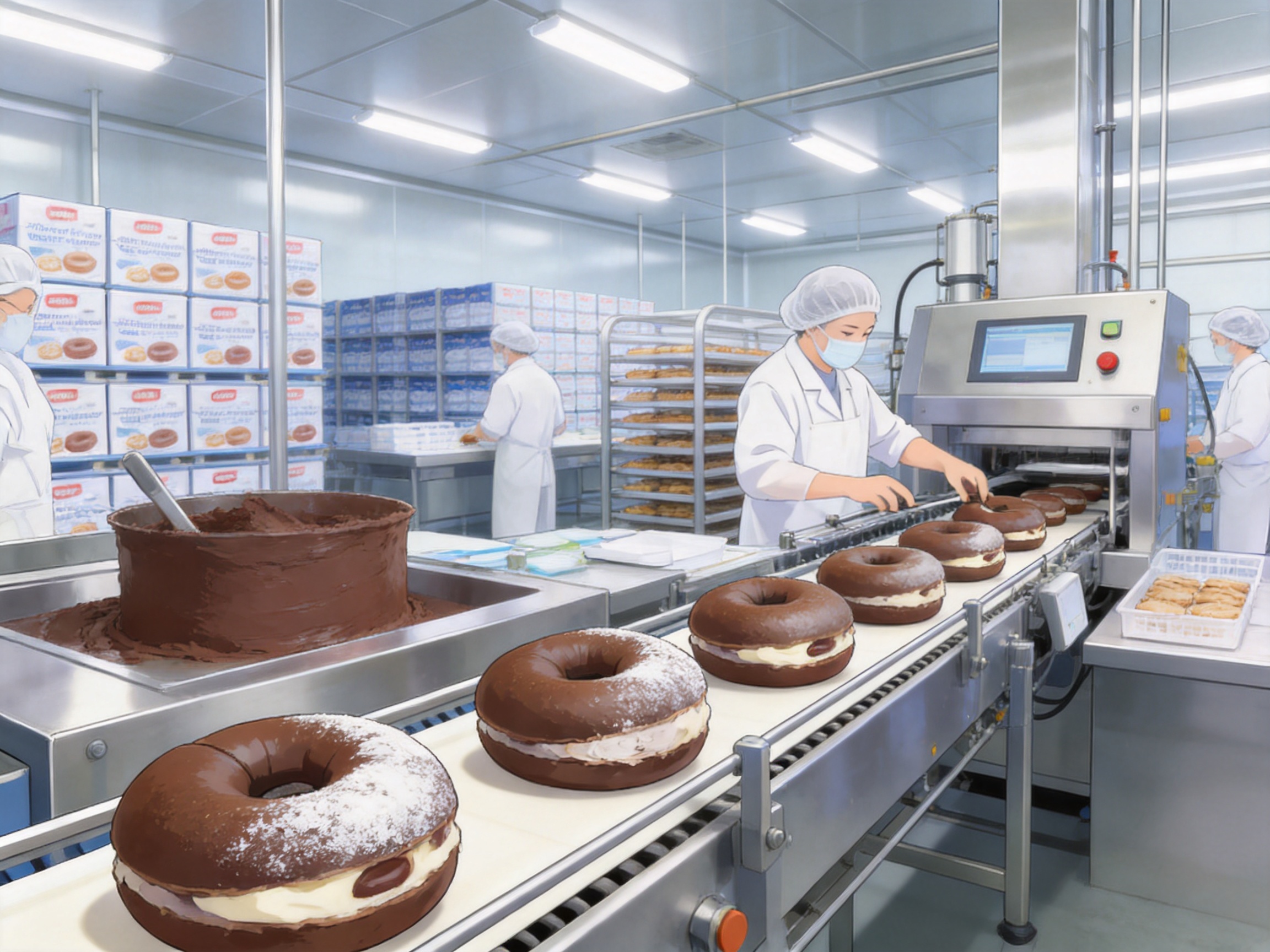
The product’s commercial performance depends not only on its recipe but also on the manufacturing system used to produce it. Jiangsu Goobagel Food Technology Co., Ltd. has specialized in bagel research and manufacturing since 2019. Its operating model covers the major stages needed to develop and supply frozen bakery products.
The company’s integrated supply chain includes raw materials, research and development, production, and nationwide distribution. This integration helps connect product design with manufacturing execution. Instead of treating recipe development, production, and logistics as separate activities, the company can evaluate the entire path from ingredient selection to commercial delivery.
A focused bagel manufacturer can also build specialized knowledge around dough behavior, shaping, filling placement, freezing performance, packaging requirements, and thawing quality. These details are particularly important for filled products because the bread and filling must remain compatible throughout processing and storage.
The company has developed more than 100 clean-label bagel varieties for retail, foodservice, café chains, tea brands, and bakery operators. This breadth indicates experience in adapting bagel concepts to different market preferences, flavor profiles, serving formats, and business models.
For buyers, a broad product development portfolio can be valuable because it demonstrates the ability to work with multiple product directions. A customer may begin with a cocoa cream cheese bagel and later request savory fillings, fruit flavors, breakfast sandwiches, regional tastes, or seasonal products. A manufacturer with an established development platform can support these extensions more efficiently.
Raw-Material Management
Ingredient selection is central to the product’s flavor and texture. Premium wheat flour provides the structural foundation of the dough, while Malaysian-imported cocoa powder contributes the desired cocoa aroma and color. Anchor cream cheese forms the dairy component of the filling, and chocolate completes the flavor system.
Raw-material management involves more than purchasing ingredients. A manufacturer must consider ingredient consistency, storage conditions, batch variation, compatibility with processing equipment, and performance after freezing and thawing. This is particularly relevant to cocoa powder and dairy-based fillings, which can affect dough handling and finished texture.
An integrated producer can coordinate ingredient specifications with the formulation and production teams. If an ingredient changes in moisture, fat, particle size, or flavor intensity, the recipe and process may need to be reviewed. This type of coordination helps protect product consistency across production runs.
Research and Development
Research and development plays a central role in creating a product that performs well in real commercial conditions. The development process for a filled cocoa bagel may involve testing the cocoa level in the dough, the ratio of cream cheese to chocolate, filling volume, dough softness, shaping behavior, freezing response, thawing time, and sensory balance.
The objective is not simply to make a product that tastes good immediately after production. It must also remain attractive after frozen storage, transportation, thawing, display, and consumption. A strong R&D process considers the complete product lifecycle.
Product development also needs to address the needs of different customers. A café may prioritize thawing speed and display appearance. A supermarket may focus on packaging, shelf organization, and household convenience. A foodservice operator may prioritize portion control, case efficiency, and reliable supply. An OEM customer may require custom branding, specifications, or flavor adjustments.
Production and Process Coordination
A frozen filled bagel requires coordinated production stages. Dough ingredients must be mixed to the correct development level. Cocoa must be evenly distributed throughout the dough. Portions must be controlled to achieve the intended product weight. The dough must be shaped consistently, and the filling must be placed accurately to support a stable internal structure.
After filling and shaping, the product must be handled in a way that protects its appearance and prevents filling loss. Freezing is also a critical stage because it helps preserve the product for distribution while influencing the texture observed after thawing.
Consistency across these steps is essential. A product may have an excellent formula but still underperform if the filling is uneven, the dough varies in weight, or the freezing process causes excessive structural changes. Manufacturing expertise provides the discipline needed to translate a recipe into a repeatable commercial product.
7. Advantages for Retailers, Cafés, and Foodservice Buyers
The Cocoa Chocolate Cream Cheese Bagel offers several practical advantages for commercial buyers. Its strongest benefit is the combination of differentiated flavor and operational simplicity. Many food products offer either convenience or premium positioning; this product is designed to offer both.
The product has a clear visual and verbal selling point. “Cocoa dough with chocolate cream cheese filling” is easy for staff to explain and easy for consumers to understand. The concept does not require a complex description, yet it provides more interest than a plain bagel or standard cream cheese sandwich.
Its single-serving format supports straightforward menu pricing. Operators can calculate food costs with greater consistency than when ingredients are assembled manually. Standardized portions also assist with promotional bundles, café meal deals, and multipack retail formats.
The product’s frozen format can support inventory planning. Businesses may hold stock and thaw quantities according to demand rather than producing all units fresh each morning. This may be especially useful for locations with changing traffic patterns or limited production capacity.
The product can also help broaden a menu. A café focused on beverages can add a premium bakery snack without investing in extensive baking equipment. A bakery operator can include a filled frozen bagel alongside pastries, buns, and savory sandwiches. A retailer can use it to develop a dessert-style breakfast or snack section.
Differentiation in a Competitive Market
Competition in the bakery category is intense, and products need a clear reason for consumers to choose them. This bagel differentiates itself through several combined features: cocoa in the dough, chocolate cream cheese filling, soft and fluffy texture, cold serving suitability, and a recognizable bagel format.
Each feature supports the others. The cocoa dough creates visual and aromatic distinction. The filling supplies indulgence. The cream cheese introduces a light tang and dairy richness. The thaw-and-eat design adds convenience. The bagel format provides portability and a familiar product shape.
Competitors may offer chocolate bread, filled buns, cream cheese pastries, or traditional bagels. However, the combination of these characteristics gives this product its own position. It is not simply a chocolate bun, because it retains the identity of a bagel. It is not simply a traditional bagel, because it offers a dessert-inspired flavor and creamy filling. It is not merely a spread sandwich, because the filling is integrated during production.
This distinctive positioning can help buyers build a more varied product portfolio. It may appeal to consumers who want something new but still prefer familiar ingredients and a convenient eating format.
8. OEM and Private-Label Potential
For brands seeking to launch or expand a frozen bakery range, the product provides a strong foundation for OEM and private-label development. A customer can use the core concept as supplied or explore adjustments that better fit a particular market.
Potential areas of customization may include packaging design, product naming, serving instructions, case configuration, flavor intensity, filling ratio, and product assortment. Depending on commercial requirements, the bagel could become part of a broader branded line containing cocoa, fruit, savory, breakfast, or seasonal varieties.
Private-label retailers may value the product because it offers a distinctive concept without requiring them to build a complete manufacturing system from the beginning. A specialized manufacturer can support the development and production stages while the retailer focuses on brand presentation, distribution, and customer relationships.
Café and tea brands may also use the product as a signature accompaniment. A cocoa cream cheese bagel can be paired with a branded beverage menu and positioned as a premium snack. Seasonal packaging or limited-time promotions may further increase consumer interest.
For foodservice distributors, the product can function as a ready-to-serve frozen item within a larger bakery catalog. The consistent portion, simple thawing approach, and broad flavor appeal make it suitable for multiple customer types.
Why Manufacturing Experience Matters for OEM Projects
OEM development requires more than copying a flavor idea. The manufacturer must understand how changes in ingredients, filling quantity, dough structure, packaging, storage, and distribution affect the finished product. Experience with a broad range of bagel products can help reduce development risk.
A specialized manufacturer can also offer practical guidance on how a product should be positioned and served. For example, a formulation designed for cold consumption may require different textural targets from one intended to be toasted. A product intended for café display may need different packaging or thawing instructions from one sold in a supermarket freezer.
Jiangsu Goobagel Food Technology Co., Ltd. works with retail, foodservice, café chain, tea brand, and bakery customers. This cross-channel experience can help the company understand the operational requirements associated with different sales environments.
9. Quality, Consistency, and Supply Reliability
For commercial buyers, a successful product must be more than attractive during the first sample evaluation. It must be reproducible in volume and available through a reliable supply system. Consistency affects consumer trust, menu planning, inventory management, and long-term brand performance.
The company describes its products as offering stable quality, consistent performance, and reliable supply for a wide range of commercial applications. These attributes are particularly valuable for frozen bakery customers because the product may pass through several stages before reaching the consumer.
A bagel may be produced at the manufacturing site, frozen, transported, stored by a distributor, delivered to a retailer or café, thawed under controlled conditions, displayed, and finally consumed. Each stage can affect the final eating experience. A dependable manufacturing and distribution system helps reduce unnecessary variation.
Supply reliability is also important for promotional planning. Retailers and café brands may invest in advertising, seasonal campaigns, or menu placements. If product availability is inconsistent, these activities become more difficult to manage. A manufacturer with integrated production and distribution capabilities can provide a stronger foundation for ongoing supply.
Product consistency also supports staff training. When the product behaves predictably after thawing, employees can follow standardized procedures with greater confidence. This is especially useful for businesses operating across multiple locations.
10. How the Product Can Be Positioned in the Market
The Cocoa Chocolate Cream Cheese Bagel can be positioned as a premium everyday indulgence. This phrase reflects its balance between an enjoyable flavor experience and practical convenience. It has enough richness to feel special but enough familiarity to support regular consumption.
For breakfast, it can provide an alternative to ordinary toast, muffins, or plain bagels. The cocoa dough and cream cheese filling make it suitable for consumers who prefer sweet flavors in the morning.
For an afternoon break, it can be paired with coffee, tea, milk, or a cold beverage. Its portable format makes it convenient for office workers, students, travelers, and shoppers.
For dessert menus, it can be presented as a bakery-based chocolate treat. The creamy center and cocoa exterior provide a dessert impression without requiring elaborate plating.
For home consumption, it can be stored as part of a frozen snack assortment. Consumers can thaw a single unit when needed, making it suitable for families, shared households, and individual shoppers.
For branded foodservice, the product can be integrated into breakfast combinations, coffee promotions, afternoon tea sets, and seasonal campaigns. Its distinctive flavor gives marketers a clear theme around which to build product communication.
11. Consumer Experience from First Bite to Finish
The intended experience begins with the appearance of the cocoa-colored bagel. The darker dough signals a chocolate direction while retaining the rounded, familiar shape of a bagel. After thawing, the product is ready for consumption without additional preparation.
The first bite introduces the soft and fluffy dough. The cocoa aroma appears immediately, accompanied by warm sweetness and a mild bitter note. As the bite reaches the center, the chocolate cream cheese filling adds richness and a smoother texture.
The cream cheese contributes a subtle tang that keeps the flavor from becoming flat. Chocolate adds body and depth, while the dough provides a gentle toasted cocoa character. The combined profile develops in layers rather than arriving as a single intense burst of sweetness.
As the filling warms in the mouth, it becomes silky and melts quickly. The result is a contrast between a tender bread structure and a creamy center. The finish is designed to be satisfying but not excessively heavy, encouraging the product to be enjoyed as part of an everyday eating routine.
This sequence is important for product differentiation. Consumers often remember products that provide a clear change in texture or flavor during eating. The combination of cocoa bread and ice-cream-soft filling gives the bagel a memorable identity.
12. Product Handling and Serving Considerations
Because the product is frozen and designed for thaw-and-eat consumption, correct handling is essential. Commercial operators should follow the manufacturer’s storage, thawing, shelf-life, and food-safety instructions. These procedures help preserve the intended texture and support safe service.
Thawing should be managed in a controlled environment. Operators may plan thawing quantities according to expected demand and display capacity. Avoiding unnecessary temperature fluctuations can help protect the product’s structure and appearance.
The bagel should be presented in packaging or display conditions appropriate for the intended sales channel. Individual packaging may support convenience retail and takeaway service, while bakery cases or café displays may emphasize product visibility.
Although the product is designed to be eaten after thawing, buyers should not assume that reheating is necessary or desirable. The filling’s soft, ice-cream-like texture is part of the product concept. If an operator wishes to serve the product warm, that approach should be evaluated separately because heating may change the filling’s consistency and the overall sensory balance.
Clear serving instructions can help consumers understand the product. Simple communication such as “thaw and enjoy” reinforces convenience and distinguishes the product from bakery items that require preparation.
13. A Strong Foundation for Product Portfolio Expansion
The Cocoa Chocolate Cream Cheese Bagel can serve as an anchor product for a broader portfolio. Once consumers respond positively to the format, brands may introduce related varieties that retain the same convenient structure while changing the dough, filling, or flavor direction.
Possible extensions may include cocoa dough with hazelnut cream, vanilla cream cheese, strawberry cream cheese, coffee cream, or other dessert-inspired fillings. The same development platform could also support savory versions using cheese, meat, vegetables, herbs, or breakfast ingredients.
A portfolio approach allows retailers and café chains to create a recognizable product family. Consistent shape and packaging can build recognition, while different colors and flavor profiles encourage trial and repeat purchases.
For the manufacturer, experience with more than 100 bagel varieties provides a base for continued innovation. Product development can be guided by market trends, customer specifications, seasonal demand, and regional preferences.
14. Q&A: Frequently Asked Questions
Q1: What is the Cocoa Chocolate Cream Cheese Bagel?
It is a 90-gram cold sandwich bagel made with cocoa-infused wheat dough and a filling that combines Anchor cream cheese with chocolate. It is designed to be thawed and eaten without reheating.
Q2: Does the product contain cocoa only in the filling?
No. Malaysian-imported cocoa powder is kneaded directly into the dough, giving the bagel an integrated cocoa aroma, color, and flavor. The filling adds a separate layer of chocolate and cream cheese richness.
Q3: How does the filling taste?
The filling is designed to balance smooth dairy richness, gentle cream cheese tang, and chocolate depth. It is intended to be creamy and satisfying without becoming excessively sweet.
Q4: What is the texture after thawing?
The dough is intended to be soft and fluffy rather than dense or highly chewy. The filling becomes silky and almost ice-cream-like in texture, creating a contrast between the bread and the center.
Q5: Does the bagel need to be heated before serving?
No. It is designed as a thaw-and-eat product. Operators should follow the manufacturer’s recommended thawing and handling instructions.
Q6: Which businesses can use this product?
The product is suitable for supermarkets, convenience stores, cafés, tea shops, bakeries, hotels, foodservice operators, workplace catering programs, and online frozen-food retailers.
Q7: What makes this product different from a traditional cream cheese bagel?
A traditional cream cheese bagel commonly uses a plain or savory dough with a dairy spread. This product uses cocoa in the dough and combines chocolate with cream cheese in a pre-filled format, creating a dessert-inspired flavor and a more consistent portion.
Q8: What are the operational benefits for cafés?
Cafés can reduce manual assembly, limit the need for additional preparation equipment, serve a consistent portion, and add a distinctive bakery item to their beverage menu.
Q9: Is the product suitable for private-label programs?
Yes. The manufacturer provides OEM and private-label bagel solutions. Buyers can discuss packaging, product specifications, flavor positioning, assortment planning, and other commercial requirements.
Q10: Why is a specialized bagel manufacturer useful for OEM development?
A specialized manufacturer understands bagel dough, shaping, filling, freezing, thawing, and commercial supply requirements. This experience can help transform a product concept into a repeatable, scalable item.
Q11: Can the product be sold as an everyday snack?
Yes. Its balanced cocoa, chocolate, and cream cheese profile is suitable for breakfast, afternoon snacks, coffee breaks, dessert occasions, and convenient home consumption.
Q12: What company manufactures the product?
The product is manufactured by Jiangsu Goobagel Food Technology Co., Ltd., a frozen bakery producer that has specialized in bagel research and manufacturing since 2019.
15. Conclusion
The Cocoa Chocolate Cream Cheese Bagel combines several strong commercial attributes in one product: a recognizable bagel format, cocoa-infused dough, chocolate cream cheese filling, soft texture, convenient thaw-and-eat preparation, and suitability for multiple sales channels.
Its main advantage over simpler bakery formats is the way its components work together. Cocoa is built into the dough rather than used only as a filling flavor. Chocolate and cream cheese are balanced to provide richness, depth, and a gentle tang. The dough is designed to be soft and fluffy, while the filling becomes silky after thawing.
For buyers, the product offers more than an appealing flavor concept. Its frozen format can simplify operations, support portion control, reduce preparation requirements, and provide flexibility across retail, cafés, foodservice, and private-label programs.
The manufacturing capabilities behind the product further strengthen its commercial potential. Jiangsu Goobagel Food Technology Co., Ltd. combines bagel-focused R&D, raw-material coordination, production expertise, integrated supply-chain management, and experience with more than 100 bagel varieties. These capabilities allow the company to support both standardized products and customized OEM development.
As consumer demand continues to move toward convenient yet premium bakery experiences, products such as the Cocoa Chocolate Cream Cheese Bagel can occupy an attractive position. It offers the indulgence of chocolate and cream cheese, the portability of a bagel, and the operational convenience of a frozen thaw-and-eat product.
References
1. Product specification and sensory description for the Cocoa Chocolate Cream Cheese Bagel.
2. Company information regarding Jiangsu Goobagel Food Technology Co., Ltd., including its bagel research, manufacturing, supply-chain, and distribution capabilities.
3. Internal product-development information concerning cocoa dough formulation, cream cheese and chocolate filling balance, and thaw-and-eat positioning.
4. General frozen bakery product-development principles relating to dough processing, filling integration, freezing, thawing, portion control, and foodservice application.
5. General commercial bakery guidance concerning OEM development, private-label production, retail presentation, café service, and foodservice distribution.
