
 中文简体
 English



postmaster@goobagelfood.com
Content
- 1 1. A New Direction for the Modern Bagel Category
- 2 2. Product Profile and Core Specifications
- 3 3. Malaysian-Imported Cocoa Kneaded into the Dough
- 4 4. Soft and Fluffy Texture Instead of Excessive Density
- 5 5. Anchor Cream Cheese and Chocolate in a Balanced Filling
- 6 6. The Ice-Cream-Soft Filling Experience
- 7 7. Thaw-and-Eat Convenience for Modern Operations
- 8 8. Frozen Bakery Stability and Supply-Chain Benefits
- 9 9. Advanced Manufacturing Capabilities
- 10 10. Clean-Label Product Development and Consumer Expectations
- 11 11. Advantages Over Conventional Bagels
- 12 12. Advantages Over Standard Chocolate Pastries
- 13 13. Advantages for OEM and Private-Label Buyers
- 14 14. Potential Retail and Foodservice Positioning
- 15 15. Suggested Consumer Experience
- 16 16. Quality Considerations for Buyers
- 17 17. Manufacturing Strengths of the Producer
- 18 18. Why Product Consistency Matters in Large-Scale Sales
- 19 19. A Flexible Product for International Markets
- 20 20. Sustainability and Efficiency Considerations
- 21 21. How the Product Supports Better Menu Development
- 22 22. Frequently Asked Questions
- 22.1 What is a cocoa chocolate cream cheese bagel?
- 22.2 How is the cocoa flavor created?
- 22.3 Is the bagel dense and chewy like a traditional bagel?
- 22.4 What is in the filling?
- 22.5 Does the product need to be reheated?
- 22.6 What texture does the filling have after thawing?
- 22.7 Who can purchase this product?
- 22.8 Can it be used as a café menu item?
- 22.9 What makes it different from a normal chocolate pastry?
- 22.10 What makes it suitable for private-label programs?
- 22.11 What manufacturing experience does the producer have?
- 22.12 What information should buyers confirm before ordering?
- 23 23. Final Assessment
- 24 References
- 25 Product: Cocoa Chocolate Cream Cheese Bagel
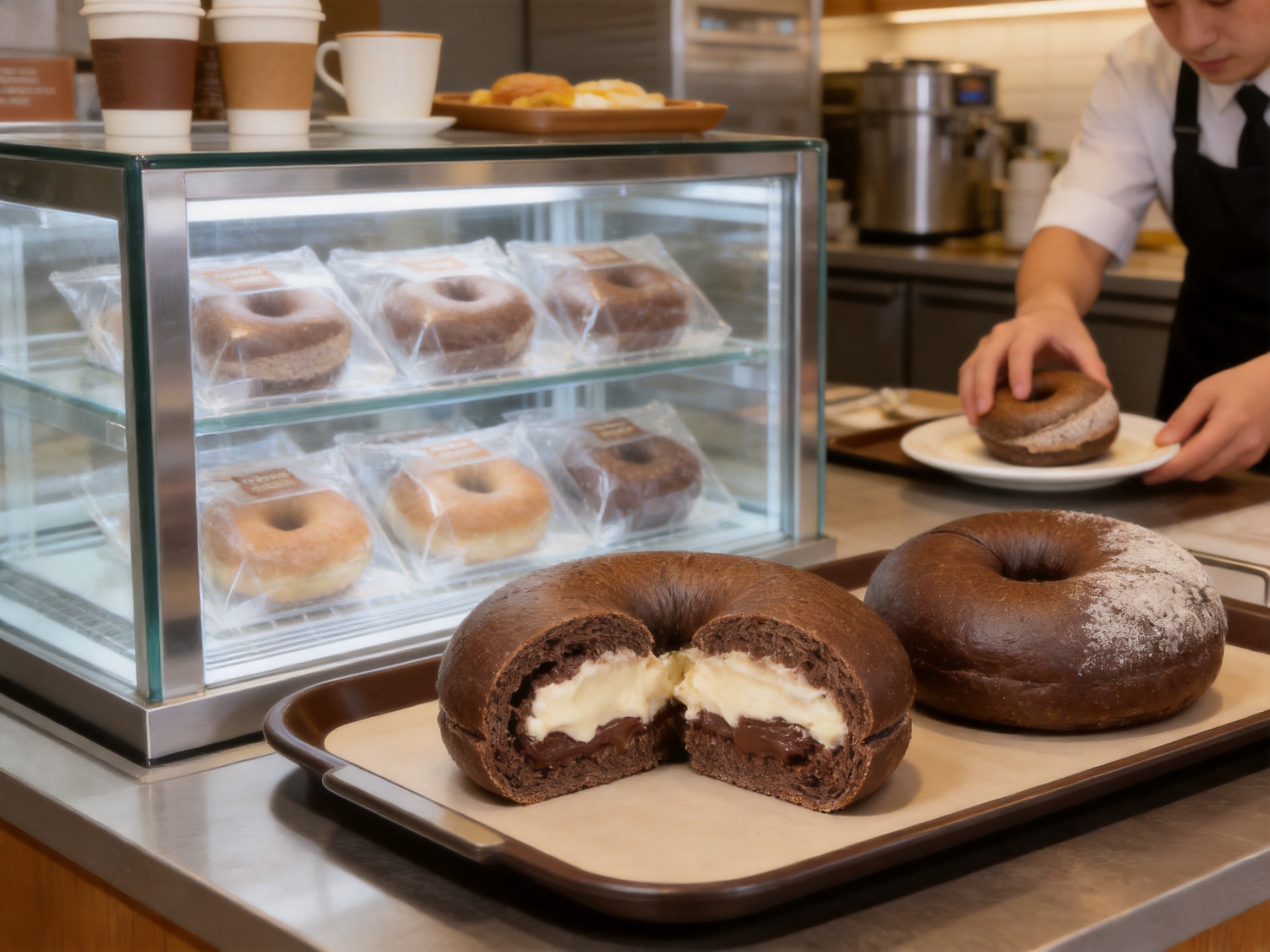
The cocoa chocolate cream cheese bagel is a distinctive frozen bakery product created for consumers and commercial buyers who want more than a traditional plain bagel. It combines a soft cocoa-enriched dough with a smooth chocolate and cream cheese filling, producing a product with visual appeal, layered flavor, convenient preparation, and broad sales potential. With a finished weight of approximately 90 grams, it is suitable for breakfast, café menus, afternoon snacks, dessert displays, convenience retail, and private-label bakery programs.
Unlike many conventional bagels that focus primarily on chewiness and density, this product is designed around a softer and fluffier eating experience. Malaysian-imported cocoa powder is kneaded directly into premium wheat flour, allowing the chocolate aroma to develop from the dough rather than relying only on an external coating or filling. The result is a balanced cocoa base with warm toastiness, gentle sweetness, and a pleasant touch of bitterness.
The interior filling adds a second layer of product differentiation. Anchor cream cheese is blended with chocolate in a carefully controlled ratio. The cream cheese contributes milky richness, smoothness, and a subtle tang, while the chocolate adds fullness and depth. Neither component is intended to overpower the other. Instead, the two flavors support one another, creating a creamy profile that is indulgent without becoming excessively sweet.
Designed for thaw-and-eat consumption, the bagel does not require reheating after proper thawing. The filling develops an ice-cream-soft texture, melting quickly on the palate and pairing naturally with the light cocoa dough. This preparation method supports flexible use in homes, cafés, retail freezers, hotel breakfast programs, and foodservice operations where speed and consistency are important.
1. A New Direction for the Modern Bagel Category
The bagel category has traditionally been associated with dense structure, a firm crust, and a pronounced chew. Those characteristics remain appealing to many consumers, but the market is also expanding toward softer, more dessert-oriented, and more convenient products. Consumers increasingly seek bakery items that can function across multiple occasions rather than being limited to one meal period.
A cocoa chocolate cream cheese bagel responds to this change by combining familiar bagel format with dessert-style flavor architecture. It can be consumed as a breakfast item, paired with coffee, served as an afternoon snack, or positioned as a small indulgence after a meal. This versatility gives retailers and foodservice operators more opportunities to promote the same product throughout the day.
The product is also suitable for businesses that want to introduce chocolate flavor without relying on a conventional pastry. Chocolate croissants, muffins, cakes, and cookies are widely available. A chocolate-filled bagel offers a more distinctive format while retaining the convenience and portability associated with bakery snacks.
From a merchandising perspective, the product has several natural selling points. Its cocoa-colored exterior creates immediate shelf recognition. Its cream cheese and chocolate center provides a clear filling story. Its thaw-and-eat format simplifies preparation. Its 90-gram size supports portion control, individual packaging, and easy inclusion in multi-item assortments.
2. Product Profile and Core Specifications
The product is categorized as a cold sandwich bagel and belongs to a broader range that includes classic bagels, stuffed bagels, and bagel sandwiches. This positioning is important because it communicates both its filled structure and its suitability for chilled or thawed consumption.
| Product Attribute | Specification or Benefit |
|---|---|
| Product name | Cocoa Chocolate Cream Cheese Bagel |
| Product type | Cold sandwich bagel |
| Approximate weight | 90 grams per piece |
| Dough profile | Soft, fluffy cocoa-enriched bagel dough |
| Main flavor ingredients | Malaysian-imported cocoa powder, chocolate, and cream cheese |
| Filling texture after thawing | Silky, creamy, and ice-cream soft |
| Preparation method | Thaw and eat; reheating is not required |
| Primary applications | Breakfast, café service, retail snacks, dessert displays, and foodservice |
| Commercial format | Suitable for frozen bakery, OEM, and private-label programs |
These specifications make the product practical for both direct consumers and professional buyers. Individual weight allows operators to calculate serving costs and establish consistent menu pricing. The soft texture broadens consumer appeal, particularly among people who do not prefer highly dense or intensely chewy bagels. The filled format also makes the product feel complete without requiring additional spreads or toppings.
3. Malaysian-Imported Cocoa Kneaded into the Dough
One of the defining advantages of this product is the way cocoa is incorporated. Rather than placing chocolate flavor only in the filling, Malaysian-imported cocoa powder is kneaded into the dough with premium wheat flour. This process builds the cocoa character into the foundation of the product.
Integrating cocoa directly into the dough creates a more continuous flavor experience. When consumers bite through the outer layer, they immediately encounter a warm cocoa aroma. The filling then reinforces the chocolate impression, but the product does not depend solely on the center for its identity. Every part of the bagel contributes to the overall flavor.
This approach also helps establish a more refined taste profile. Cocoa can provide aromatic depth, roasted notes, and a controlled bitterness that balances sweetness. When the dough is formulated carefully, the cocoa does not taste artificial or overly sugary. Instead, it can create the impression of dark chocolate, toasted grain, and gentle warmth.
The use of imported cocoa is also relevant to buyers looking for a clear ingredient story. In a competitive bakery market, a product can stand apart when its flavor is supported by a recognizable raw material feature. The cocoa is not presented merely as a decorative dusting. It is part of the dough structure and contributes to the product’s color, aroma, and taste.
Flavor Development from the Dough Outward
Many filled bakery products have a neutral outer layer that functions mainly as a carrier for the filling. This cocoa bagel takes a different approach. The dough has an independent flavor identity, while the cream cheese and chocolate filling adds richness and contrast.
The result is a layered tasting sequence. The first impression is a soft cocoa aroma from the dough. The bite then introduces mild sweetness and toasted grain character. As the filling warms in the mouth, cream cheese richness and chocolate depth become more prominent. Finally, the subtle tang of the cream cheese helps refresh the palate and prevents the finish from becoming flat.
This flavor progression can be valuable in commercial settings because it gives consumers a stronger reason to repurchase. Products with multiple sensory stages often feel more substantial than products delivering one simple taste from beginning to end.
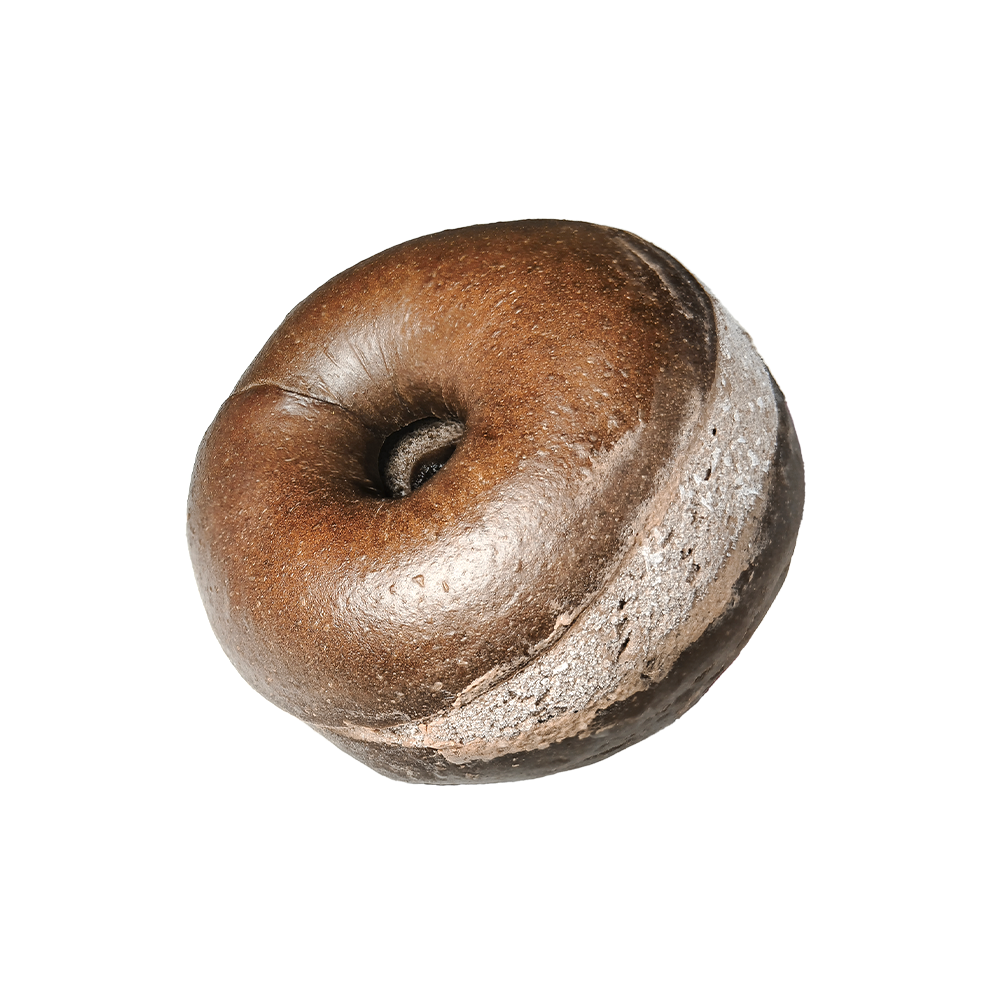
Cocoa Chocolate Cream Cheese Bagel
4. Soft and Fluffy Texture Instead of Excessive Density
Texture is one of the most important points of difference between this product and many traditional bagels. The cocoa chocolate cream cheese bagel is formulated to be softer and fluffier rather than dense, hard, or excessively chewy. This makes it accessible to a broader audience, including consumers who enjoy bagel flavors but prefer a gentler bite.
A softer bagel can also be more suitable for cold or thawed consumption. Traditional dense bagels may become firm when chilled, while an appropriately formulated soft dough can retain a pleasant mouthfeel after freezing and thawing. The texture must be managed carefully because frozen storage, moisture migration, and thawing can all affect the final eating experience.
The product’s structure is designed to support its filling. The outer dough should be strong enough to maintain shape during handling and distribution, yet tender enough to complement the creamy center. This balance is especially important for frozen products, which may be transported, stored, displayed, and prepared under different operating conditions.
Texture as a Competitive Advantage
Compared with highly chewy bagels, this product may appeal more strongly to consumers seeking a snack-like or dessert-like experience. Compared with ordinary sweet buns, it offers a more distinctive bagel identity and a more substantial format. Compared with cakes and pastries, it provides portability and portion control.
The soft texture also supports multiple serving styles. It can be eaten directly after thawing, served on a café plate, placed in a takeaway bag, or included in a breakfast assortment. Operators do not necessarily need knives, toasters, spreads, or additional toppings to create a complete serving.
For brands developing a broader frozen bakery portfolio, texture diversification is valuable. A product range made entirely of dense, chewy bagels may not reach all target consumers. A softer cocoa-filled option can expand the range into snack, dessert, and indulgent breakfast occasions.
5. Anchor Cream Cheese and Chocolate in a Balanced Filling
The filling is built around the relationship between Anchor cream cheese and chocolate. This combination is familiar to consumers, but the quality of the final product depends on proportion, texture, and processing. Too much chocolate can hide the cream cheese. Too much cream cheese can weaken the chocolate identity. Excessive sweetness can make the product tiring to eat.
The filling is formulated to maintain a clear balance. The cream cheese contributes a smooth dairy character, buttery richness, and a mild tang. Chocolate contributes body, depth, and a fuller finish. When combined, the two ingredients create a creamy profile that feels indulgent while remaining suitable for regular consumption.
The tang from the cream cheese plays a particularly important role. Chocolate-based fillings can sometimes seem heavy or one-dimensional, especially when sweetness is high. A restrained dairy tang introduces contrast and helps the cocoa notes remain clear. It also creates a more mature flavor impression than a purely sweet chocolate filling.
Complementary Rather Than Competitive Flavors
The filling is designed around complementarity. The chocolate is not intended to dominate the cream cheese, and the cream cheese is not intended to erase the cocoa character. Instead, each ingredient provides something the other lacks.
Cream cheese supplies smoothness, dairy richness, and acidity. Chocolate supplies aroma, depth, and a rounded roasted quality. The cocoa dough then connects the two elements, creating continuity between the outer layer and the center. This gives the product a more complete sensory structure than a plain bagel paired with a separate spread.
For commercial buyers, balanced flavor can also support a wider target market. Extremely sweet products may appeal primarily to children or dessert-focused consumers. A moderate sweetness level with cocoa bitterness and cream cheese tang can attract adults, office workers, café customers, and consumers looking for a more refined snack.
6. The Ice-Cream-Soft Filling Experience
After proper thawing, the filling becomes exceptionally soft and creamy. Its texture has been designed to resemble the smooth, quick-melting quality associated with ice cream. This creates a distinctive contrast with the soft but more structured cocoa bagel exterior.
The contrast is important because sensory interest does not depend only on flavor. Consumers also notice how a product changes during chewing. The outer dough provides a gentle, fluffy bite, while the filling melts rapidly and coats the palate. This combination makes the product feel delicate rather than heavy.
A filling that remains smooth after thawing can improve perceived quality. Graininess, excessive firmness, or separation may reduce consumer satisfaction. For that reason, the formulation and freezing process must work together to preserve a stable and pleasant texture through storage and preparation.
The ice-cream-soft sensation also gives the product a strong dessert identity without requiring a separate frozen dessert format. Retailers can place it in frozen bakery sections, snack programs, café freezers, or chilled display concepts, depending on their operating model and labeling requirements.
Suitable Occasions for the Thawed Product
At breakfast, the bagel can be paired with coffee, tea, milk, or fruit. Its portion size is convenient for consumers who want something satisfying but not oversized. In the afternoon, it can serve as a sweet snack during a work break or study session. In cafés, it can be offered as a signature bakery item alongside hot and cold beverages.
The product can also function as a simple dessert. Because the cocoa dough and cream cheese filling already provide a complete flavor combination, operators do not need to add complex toppings. A light dusting of cocoa, a small amount of powdered sugar, or a beverage pairing may be sufficient for presentation, depending on the customer’s requirements.
7. Thaw-and-Eat Convenience for Modern Operations
The product is designed for consumption after thawing, with no reheating required. This is a significant operational advantage for businesses that need consistent service with minimal equipment. Staff can move the required quantity from frozen storage to a controlled thawing process, then serve the product when ready.
Eliminating the reheating step can reduce preparation time and simplify workflow. It may also help preserve the intended cream cheese texture. Reheating filled dairy products can sometimes create challenges related to melting, leakage, uneven temperature, or changes in mouthfeel. A thaw-and-eat system avoids many of these issues when handled according to appropriate storage and food safety procedures.
For convenience stores and cafés, quick preparation can help reduce labor pressure during peak periods. For hotels and catering operations, the format can support batch planning. For retail consumers, it means the product can be enjoyed without a toaster or oven, which makes it practical in offices, dormitories, travel settings, and homes with limited kitchen equipment.
| Application Setting | Operational Advantage |
|---|---|
| Retail freezer | Individual portions can be stored and prepared according to demand. |
| Café | Fast service with minimal finishing equipment. |
| Hotel breakfast | Convenient portioning and simple display preparation. |
| Office pantry | Can be consumed after thawing without reheating equipment. |
| Foodservice distribution | Frozen format supports planned inventory and wider distribution. |
| Private-label program | Distinctive flavor and format for customized brand portfolios. |
Thaw-and-eat convenience does not remove the need for proper handling. Commercial users should follow the supplier’s storage, thawing, shelf-life, packaging, and food safety guidance. The advantage is that once the product has been correctly thawed, it is ready to serve without another preparation stage.
8. Frozen Bakery Stability and Supply-Chain Benefits
Frozen bakery products offer practical benefits for modern distribution networks. They can be produced in planned batches, stored under controlled conditions, and distributed to customers in different regions. This allows buyers to maintain inventory without requiring daily fresh production at every sales location.
For operators, frozen storage can improve menu consistency. A standardized product can be supplied to multiple stores, reducing differences caused by local preparation methods. The same cocoa flavor, filling ratio, portion size, and appearance can be maintained across a café chain, retail group, or foodservice network when storage and handling are properly controlled.
Frozen products can also help reduce production pressure at the point of sale. Stores do not need to mix cream cheese, prepare chocolate filling, shape dough, and bake from raw ingredients. Instead, they can focus on inventory management, thawing, presentation, and customer service.
For buyers managing several product categories, a frozen bagel with a clear preparation process can fit into existing cold-chain systems. This is especially useful for distributors and foodservice suppliers seeking products that can be delivered alongside other frozen bakery items.
9. Advanced Manufacturing Capabilities
Jiangsu Goobagel Food Technology Co., Ltd. has specialized in bagel research and manufacturing since 2019. The company operates as a modern frozen bakery producer with an integrated supply chain covering raw materials, research and development, production, and nationwide distribution.
An integrated supply chain can provide important advantages in product development. When raw material management, formulation, manufacturing, and distribution are connected, the producer can coordinate quality requirements more effectively. This is particularly relevant for filled products, where dough, filling, freezing, packaging, and storage must work together.
The company has developed more than 100 clean-label bagel varieties for retail, foodservice, café chains, tea brands, and bakery operators. This breadth indicates experience across different flavor profiles, product structures, and commercial applications. It also supports customers seeking a broader product portfolio rather than a single isolated item.
Research and Development for Commercial Performance
Product development in the frozen bakery sector requires more than creating an attractive flavor. A successful item must also withstand production, freezing, storage, distribution, thawing, and final consumption. The formulation must be reproducible at scale, and the product must remain suitable for the customer’s operating environment.
The cocoa chocolate cream cheese bagel reflects this type of product-development approach. Its identity depends on several coordinated elements: cocoa integrated into the dough, a soft and fluffy structure, a stable chocolate and cream cheese filling, and a thaw-and-eat consumption method. These elements must be considered together rather than developed independently.
Experience with a large portfolio of bagel varieties can also help a manufacturer respond to different customer needs. One buyer may prioritize café service, another may require retail packaging, and another may seek a private-label product with a customized flavor direction. A strong R&D platform can provide a foundation for these conversations.
Process Integration from Ingredient to Finished Product
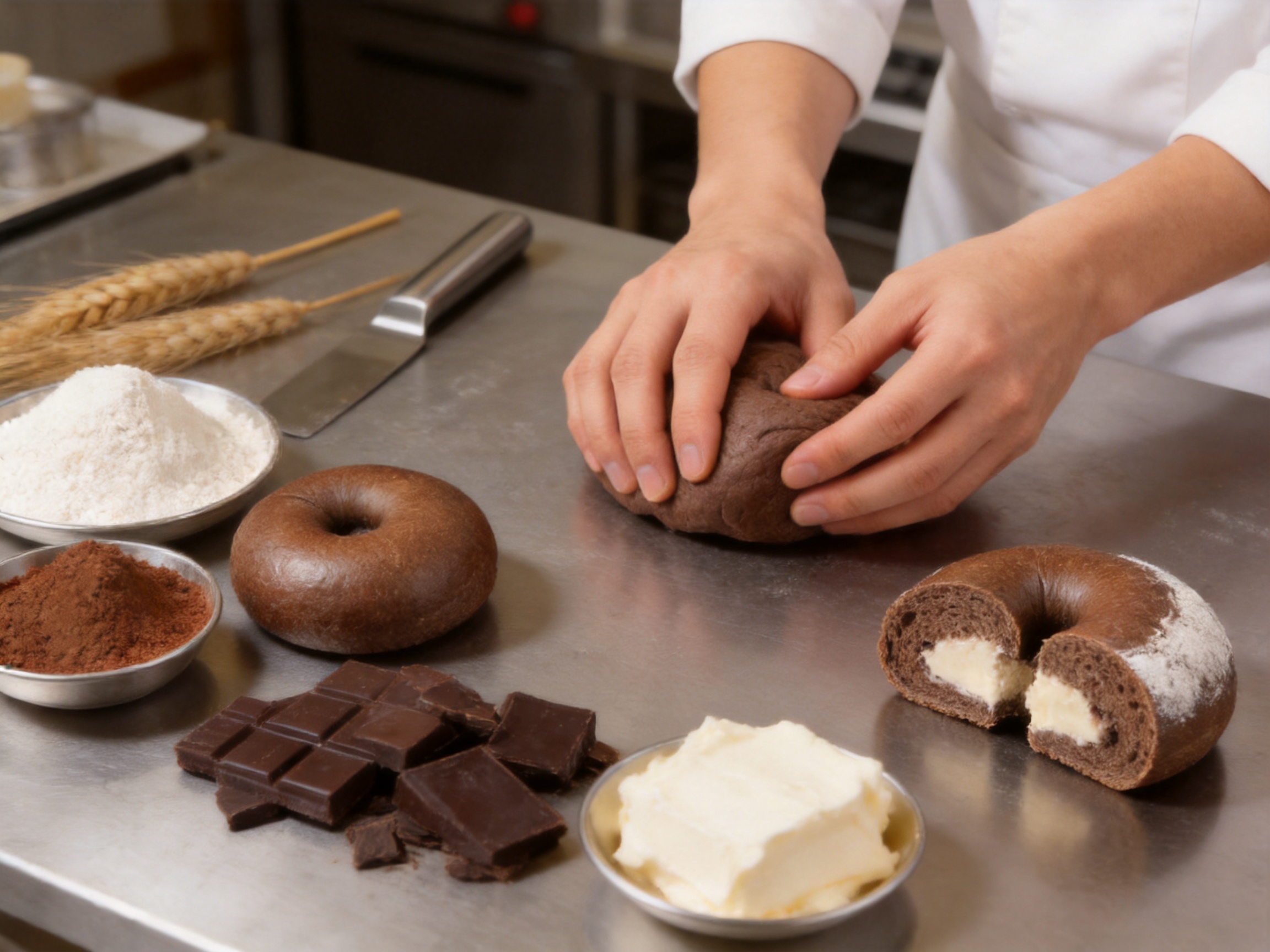
A fully integrated manufacturing model can support control across the production chain. Raw materials need to meet defined specifications. Dough mixing must distribute cocoa consistently. Filling must be portioned accurately. Forming must protect product appearance and prevent leakage. Freezing must help preserve texture. Packaging must support storage and distribution.
Each stage affects the final consumer experience. Uneven cocoa distribution can create inconsistent flavor. Inaccurate filling can change the balance between dough and center. Poor forming can affect appearance and handling. Inadequate freezing can damage texture. A coordinated manufacturing system helps reduce these risks.
For business buyers, manufacturing strength is not only about production volume. It is also about repeatability, quality control, communication, and the ability to maintain specifications over time. Consistent performance is essential for brands that need to build customer trust across multiple sales channels.
10. Clean-Label Product Development and Consumer Expectations
Consumers are increasingly interested in food products with understandable ingredient stories and recognizable quality attributes. The company’s product-development portfolio includes more than 100 clean-label bagel varieties, supporting demand for bakery products that are both convenient and positioned around simpler, more transparent formulations.
Clean-label expectations can vary by market and customer. They may involve ingredient recognition, avoidance of unnecessary complexity, or a preference for products that communicate their main flavor sources clearly. In this product, the central story is easy to understand: cocoa is incorporated into the dough, while chocolate and cream cheese create the filling.
Clear product communication can help retailers and foodservice operators train staff and explain the item to customers. Instead of presenting a complicated list of technical features, sellers can describe the product in sensory terms: a soft cocoa bagel with a creamy chocolate and cream cheese center that is ready after thawing.
Commercial buyers should always verify the final ingredient statement, allergen declaration, nutritional information, and regulatory documentation for the target market before launch. These details may vary according to formulation, packaging, destination, and local requirements.
11. Advantages Over Conventional Bagels
The product offers several advantages over a conventional plain or savory bagel. First, it provides a more distinctive flavor identity. A plain bagel generally depends on toppings, spreads, or sandwich fillings to create variety. The cocoa chocolate cream cheese bagel is already filled and flavored, allowing it to be consumed as a complete item.
Second, the product has a softer texture. Consumers who find traditional bagels too dense or chewy may prefer the lighter bite. This can expand the audience beyond dedicated bagel enthusiasts to include dessert snack buyers, café customers, and people seeking soft bakery products.
Third, the product combines dough and filling into one coordinated experience. A consumer does not need to purchase cream cheese separately or assemble a chocolate spread. This improves convenience and supports portion consistency.
Fourth, the thaw-and-eat format offers operational simplicity. A store can serve the bagel without toasting, grilling, or baking after thawing. This may reduce equipment requirements and help staff deliver a consistent product during busy service periods.
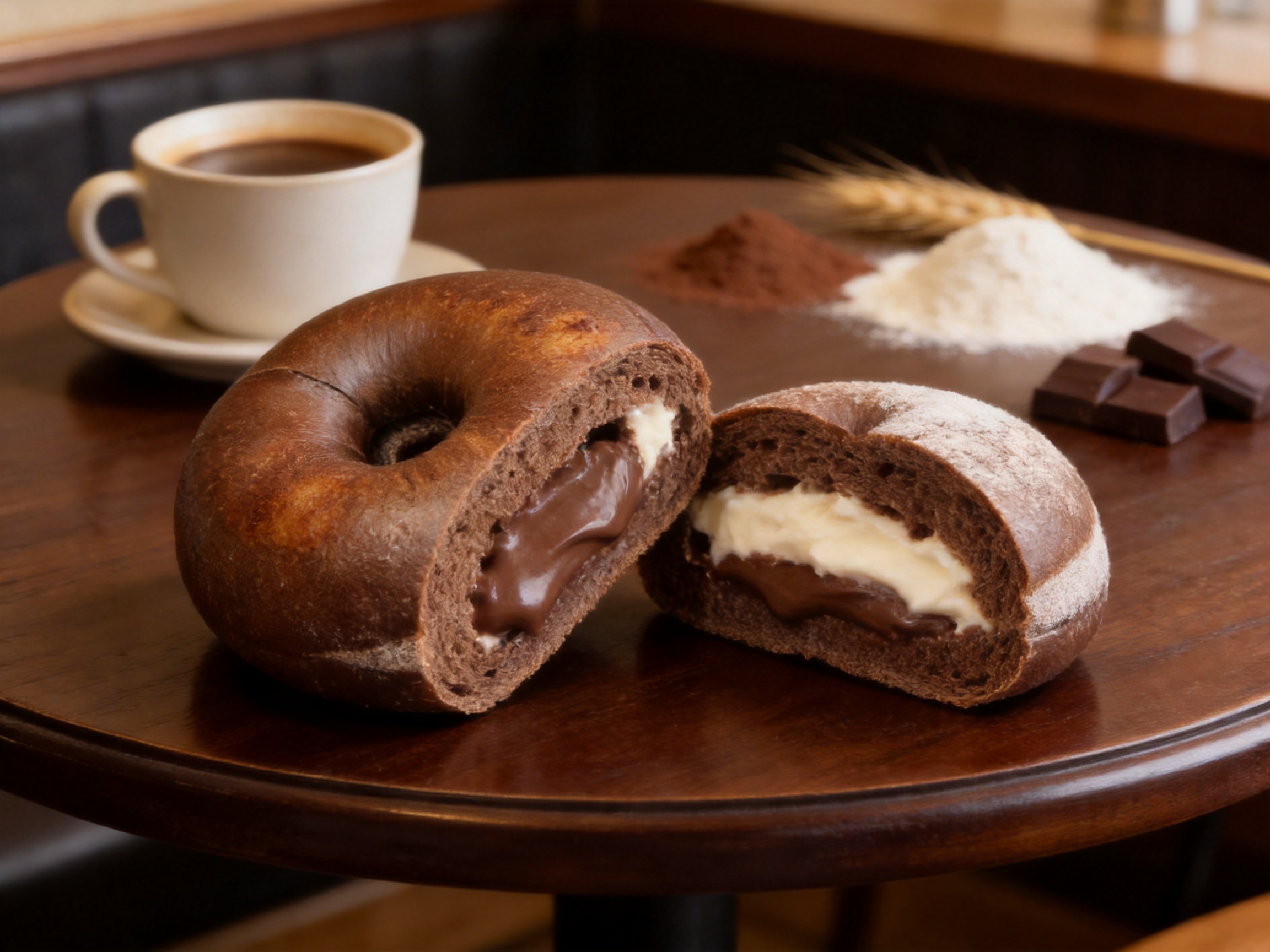
Finally, its cocoa color and filled cross-section can create stronger visual interest than an ordinary bagel. Visual differentiation is valuable in retail freezers, café displays, online catalogs, and promotional photography.
12. Advantages Over Standard Chocolate Pastries
Chocolate pastries are popular, but many have a high-butter, laminated, or cake-based structure. The cocoa chocolate cream cheese bagel provides a different experience. It offers a soft bread-like exterior with a creamy center, creating a product that feels substantial without being identical to a croissant, muffin, or cake.
The bagel format can also be easier to package and handle. Its rounded shape supports individual wrapping and stacking, while its 90-gram portion offers a clear serving unit. The product can be placed in a breakfast basket, takeaway bag, snack box, or frozen assortment.
Another advantage is the balance between indulgence and everyday usability. A rich pastry may be perceived as an occasional treat, whereas a filled bagel can fit more naturally into breakfast and snack routines. The cream cheese tang and controlled sweetness reinforce this everyday positioning.
For a retailer or café, this difference can help create a more diverse menu. The product does not need to replace existing pastries. It can occupy a separate position as a filled cocoa bagel, giving customers another choice and giving the operator another reason to promote the bakery range.
13. Advantages for OEM and Private-Label Buyers
The product is well suited to OEM and private-label discussions because it has a clear concept, a distinctive flavor combination, and broad application potential. A buyer can position it under a breakfast line, café collection, dessert snack range, family bakery assortment, or premium frozen product series.
Private-label customers often need more than a standard commodity item. They need a product that can support packaging, marketing, and repeat purchase. The cocoa dough, imported cocoa ingredient story, Anchor cream cheese filling, and thaw-and-eat convenience provide several communication points for a customized brand presentation.
OEM collaboration may also allow buyers to discuss packaging format, serving instructions, assortment composition, product specifications, and market positioning. The exact scope of customization depends on the customer’s requirements, regulatory conditions, order quantities, and manufacturing agreement.
For café chains and tea brands, the bagel can be used as a food pairing for coffee, milk tea, cocoa beverages, or fruit-based drinks. For retail brands, it can be sold as a frozen individual snack or included in a multi-flavor bagel pack. For bakery operators, it can supplement freshly made items with a convenient frozen option.
14. Potential Retail and Foodservice Positioning
Retailers can present the product in several ways. In a frozen bakery section, it can be positioned as an easy breakfast or snack item. In a premium bakery display, it can be promoted as a cocoa-filled specialty product. In an online grocery catalog, close-up photography can show the cocoa exterior and creamy center.
Cafés may serve it thawed as a ready-to-eat pastry alternative. It can be sold individually, included in a breakfast set, or paired with a hot drink. A simple serving approach can protect operational efficiency, while a more elaborate presentation may include fruit, a beverage, or a light garnish.
Hotels and institutional foodservice operators may value its portion control and preparation simplicity. The 90-gram format can be incorporated into breakfast buffets, takeaway meal boxes, employee cafeterias, or event catering, subject to appropriate storage and handling procedures.
Tea brands can use the chocolate and cream cheese flavor as a companion to milk tea and coffee-based drinks. Its moderate size makes it suitable for an add-on purchase, particularly when bundled with a beverage or offered as part of a limited-time seasonal promotion.
15. Suggested Consumer Experience
For the best eating experience, the product should be thawed according to the supplier’s recommended instructions. Once thawed, the outer dough should remain soft and fluffy, while the filling should become smooth and highly creamy.
Consumers may enjoy the bagel on its own, but beverage pairing can further emphasize its flavor. Coffee can highlight the cocoa and toasted notes. Black tea can provide contrast to the creaminess. Milk or a dairy-based beverage can create a more indulgent combination. Fruit beverages can add freshness to the rich center.
The product can be served as a complete snack without additional toppings. This is one of its practical strengths. However, foodservice operators may choose to create signature presentations using powdered cocoa, chocolate curls, fruit, or a small amount of sauce, provided such additions are compatible with the intended product positioning.
16. Quality Considerations for Buyers
When evaluating a filled frozen bagel, buyers should consider more than flavor. They should review dough consistency, filling distribution, package integrity, frozen storage requirements, thawing performance, appearance after thawing, and suitability for the target sales channel.
Flavor consistency is especially important for repeat purchasing. The cocoa should be noticeable but not harsh. The chocolate should provide depth without overwhelming the cream cheese. The filling should remain creamy rather than becoming watery or grainy. The dough should be soft but strong enough to handle normal packaging and service.
Commercial testing should include evaluation after the product has passed through the expected distribution and storage conditions. Buyers may also wish to test the product at different points during its recommended shelf life. These checks can help confirm that the item performs as expected in actual operations.
Packaging and labeling should clearly communicate storage conditions, thawing instructions, serving information, allergens, net weight, and other required details. Since requirements differ by market, importers and private-label customers should coordinate documentation with the manufacturer and relevant regulatory specialists.
17. Manufacturing Strengths of the Producer
Jiangsu Goobagel Food Technology Co., Ltd. combines product research, manufacturing, and distribution capabilities within a modern frozen bakery operation. Its specialization in bagel development since 2019 provides a focused foundation for producing both familiar and innovative bagel formats.
The company’s stated capabilities include a fully integrated supply chain covering raw materials, R&D, production, and nationwide distribution. This structure can support more efficient coordination between product concept and finished-goods delivery. It also gives customers a single manufacturing partner for development and supply discussions.
Its portfolio of more than 100 clean-label bagel varieties demonstrates the ability to work across multiple product concepts. A broad portfolio can support customer requests for classic flavors, filled products, sandwich formats, and specialty bakery solutions. It may also help buyers build a complete assortment instead of relying on one product type.
The company works with brands across China and provides bagel solutions for retail, foodservice, cafés, tea brands, and bakery operators. This commercial experience is relevant because each channel has different expectations for packaging, preparation, portion size, shelf presentation, and supply reliability.
The company’s stated values include persistence, craftsmanship, respect, and science. These values align with the requirements of modern food manufacturing, where consistent execution, product improvement, cooperation, and process-based decision-making are essential.
18. Why Product Consistency Matters in Large-Scale Sales
When a product is sold through a single store, small variations may go unnoticed. When it is distributed through a chain or a large retail network, consistency becomes much more important. Customers expect the same appearance, flavor, texture, and filling experience each time they purchase the product.
A professional manufacturing system helps support this consistency by standardizing raw material specifications, production procedures, portioning, freezing, packaging, and quality checks. The goal is not merely to produce a large quantity. The goal is to produce a repeatable product that performs reliably across batches.
For the cocoa chocolate cream cheese bagel, repeatability is central to its value proposition. The cocoa should remain evenly integrated into the dough. The dough should maintain the intended soft structure. The cream cheese and chocolate ratio should remain stable. The filling should thaw with the expected smoothness.
Consistency also supports commercial planning. Buyers can establish serving prices, calculate food costs, design promotional bundles, and forecast customer demand more confidently when portion and quality are controlled.
19. A Flexible Product for International Markets
The flavor combination of cocoa, chocolate, and cream cheese has broad international familiarity. At the same time, the bagel format gives the product a distinctive identity. This balance between familiarity and novelty can make it suitable for different regional markets, subject to local regulations and consumer preferences.
In markets where bagels are already established, the product can expand the category into sweet and dessert-oriented occasions. In markets where bagels are still developing, the cocoa flavor may provide an accessible introduction because consumers already recognize chocolate bakery products.
The frozen format also supports international trade and distribution planning. Importers and distributors can work with a centralized supply model rather than requiring local production at every destination. Appropriate cold-chain logistics, documentation, packaging, and regulatory compliance remain essential parts of any international program.
Private-label customers can adapt the communication style to local consumers. One market may emphasize breakfast convenience. Another may emphasize café indulgence. A third may focus on premium ingredients and a soft texture. The product’s core characteristics can support multiple marketing approaches without changing its fundamental identity.
20. Sustainability and Efficiency Considerations
Frozen bakery production can contribute to operational efficiency by allowing products to be manufactured in planned quantities and used according to demand. This can help reduce the pressure to produce fresh items daily at every sales location. Better inventory planning may also help operators manage waste, although actual results depend on forecasting, storage, and handling practices.
Thaw-and-eat preparation can reduce the need for additional cooking equipment at the point of sale. A café or retail location may be able to serve the product with existing frozen storage and controlled thawing space, rather than installing additional ovens or high-capacity heating equipment.
Packaging design, distribution efficiency, energy use, and waste management should be evaluated as part of the complete product program. Commercial buyers may wish to discuss packaging material options, case configuration, logistics planning, and inventory controls with the manufacturer when developing a large-scale project.
21. How the Product Supports Better Menu Development
A strong menu item should be easy to understand, simple to prepare, and sufficiently distinctive to attract attention. This bagel meets these requirements through its combination of clear flavor, convenient preparation, and flexible serving occasions.
It can act as an anchor product for a sweet bagel series. A retailer may pair it with fruit-filled, matcha, vanilla, or savory varieties. A café may use it as a signature chocolate bakery item. A tea brand may include it in a snack pairing menu. A hotel may offer it alongside plain, sesame, and savory bagels.
The product can also support seasonal promotion. Chocolate and cream cheese are suitable for winter campaigns, Valentine’s Day programs, back-to-school snack collections, and holiday gift assortments. Because the product is not tied to one narrow meal occasion, it can be promoted at different times throughout the year.
Its rounded shape and cocoa color also offer useful visual assets for menu photography and digital commerce. A cut-open image can display the creamy center, while a whole-product image can communicate portability and portion size.
22. Frequently Asked Questions
What is a cocoa chocolate cream cheese bagel?
It is a filled bagel made with soft cocoa-enriched dough and a creamy center combining chocolate with Anchor cream cheese. The product weighs approximately 90 grams and is designed for consumption after thawing.
How is the cocoa flavor created?
Malaysian-imported cocoa powder is kneaded directly into the dough with premium wheat flour. This creates cocoa aroma and flavor throughout the outer bagel rather than relying only on the filling.
Is the bagel dense and chewy like a traditional bagel?
The product is designed to be softer and fluffier than a highly dense or intensely chewy traditional bagel. Its texture is intended to provide a gentler bite and complement the creamy filling.
What is in the filling?
The filling combines chocolate with Anchor cream cheese. The cream cheese provides dairy richness and a subtle tang, while the chocolate contributes depth and fullness.
Does the product need to be reheated?
No. It is designed as a thaw-and-eat product. After proper thawing according to the supplier’s instructions, it can be consumed without reheating.
What texture does the filling have after thawing?
The filling is designed to become very soft, silky, and creamy, with an ice-cream-like quality that melts quickly on the palate.
Who can purchase this product?
The product is suitable for retailers, cafés, foodservice operators, hotel groups, tea brands, bakery businesses, distributors, OEM customers, and private-label buyers.
Yes. It can be served as a standalone bakery item, paired with coffee or tea, included in a breakfast set, or used in a dessert-oriented snack menu.
What makes it different from a normal chocolate pastry?
It combines a bagel format with cocoa dough and a cream cheese-chocolate filling. This provides a softer bread-like structure, a distinctive filled center, and the portioning and portability associated with a bagel.
What makes it suitable for private-label programs?
It has a clear product concept, distinctive flavor, flexible sales applications, and a frozen format suitable for retail and foodservice distribution. Packaging and commercial specifications can be discussed according to the buyer’s requirements.
What manufacturing experience does the producer have?
Jiangsu Goobagel Food Technology Co., Ltd. has specialized in bagel research and manufacturing since 2019. It operates an integrated supply chain covering raw materials, R&D, production, and distribution, and has developed more than 100 bagel varieties.
What information should buyers confirm before ordering?
Buyers should confirm formulation, ingredient and allergen declarations, packaging, minimum order requirements, storage conditions, thawing instructions, shelf life, documentation, delivery terms, and market-specific regulatory requirements.
23. Final Assessment
The cocoa chocolate cream cheese bagel is a modern frozen bakery product that combines distinctive flavor, soft texture, convenient preparation, and broad commercial potential. Its main point of difference is the integration of cocoa into the dough, which creates a complete chocolate experience rather than a plain bagel with a sweet center. The Anchor cream cheese and chocolate filling adds richness, depth, and a gentle tang, while the thawed texture provides a smooth and ice-cream-soft eating experience.
Compared with conventional bagels, it is softer, more dessert-oriented, and ready to enjoy without additional spreads. Compared with standard chocolate pastries, it offers a unique bagel format, controlled portion size, and flexible use across breakfast, snack, café, and foodservice occasions.
Its commercial value is strengthened by the producer’s specialized bagel expertise, integrated supply chain, research and development capabilities, broad product portfolio, and experience serving retail and foodservice customers. These capabilities can help buyers develop consistent products for branded, OEM, and private-label programs.
For retailers and foodservice operators seeking a visually distinctive and operationally convenient frozen bakery item, this product provides a compelling combination of cocoa aroma, creamy filling, soft structure, and reliable serving flexibility. It is not simply a chocolate-flavored bagel. It is a carefully structured product designed to connect indulgent flavor with modern frozen bakery convenience.
References
1. Product specification materials for the Cocoa Chocolate Cream Cheese Bagel, including product category, approximate weight, flavor description, filling concept, and thaw-and-eat positioning.
2. Company profile materials for Jiangsu Goobagel Food Technology Co., Ltd., including company history, manufacturing capabilities, product development portfolio, supply-chain coverage, mission, vision, and values.
3. General frozen bakery manufacturing principles concerning dough formulation, filling stability, freezing, storage, thawing, packaging, and commercial distribution.
4. General foodservice product-development principles concerning portion control, preparation efficiency, menu versatility, retail presentation, and private-label applications.
5. General sensory evaluation principles concerning aroma, sweetness, acidity, texture, flavor balance, mouthfeel, and consumer acceptance.
