
 中文简体
中文简体
 English



postmaster@goobagelfood.com
Content
- 1 A Product Built Around a Clear Consumer Promise
- 2 Flavor Architecture: Wheat First, Cranberry Brightness Second
- 3 Texture and Eating Quality
- 4 Low-Fat Positioning and Better-for-You Appeal
- 5 Advantages Compared with Conventional Bakery Alternatives
- 6 Manufacturing Strengths Behind the Product
- 7 Process Considerations from Raw Material to Finished Bagel
- 8 Commercial Applications
- 9 Serving and Pairing Ideas
- 10 Why the Product Is Suitable for OEM and Private Label
- 11 Quality, Consistency, and Customer Value
- 12 Recommended Evaluation Criteria for Buyers
- 13 Branding and Merchandising Opportunities
- 14 Sustainability and Operational Efficiency Considerations
- 15 Frequently Asked Questions
- 15.1 What makes this cranberry bagel different from a plain bagel?
- 15.2 Is the product suitable for breakfast?
- 15.3 Can it be used for light meals?
- 15.4 What does the low-fat positioning mean?
- 15.5 Does the product contain real cranberries?
- 15.6 How does the product balance sweetness and acidity?
- 15.7 What texture can consumers expect?
- 15.8 Who manufactures the product?
- 15.9 What types of customers does the manufacturer serve?
- 15.10 Does the company offer other types of bagels?
- 15.11 Can buyers request OEM or private-label cooperation?
- 15.12 Is the bagel suitable for retail frozen distribution?
- 15.13 Can the product be served without toppings?
- 15.14 What toppings pair well with the cranberry flavor?
- 15.15 How should buyers evaluate the product before launching it?
- 16 Conclusion
- 17 References
- 18 Product: Healthy And Low-Fat Cranberry Bagel
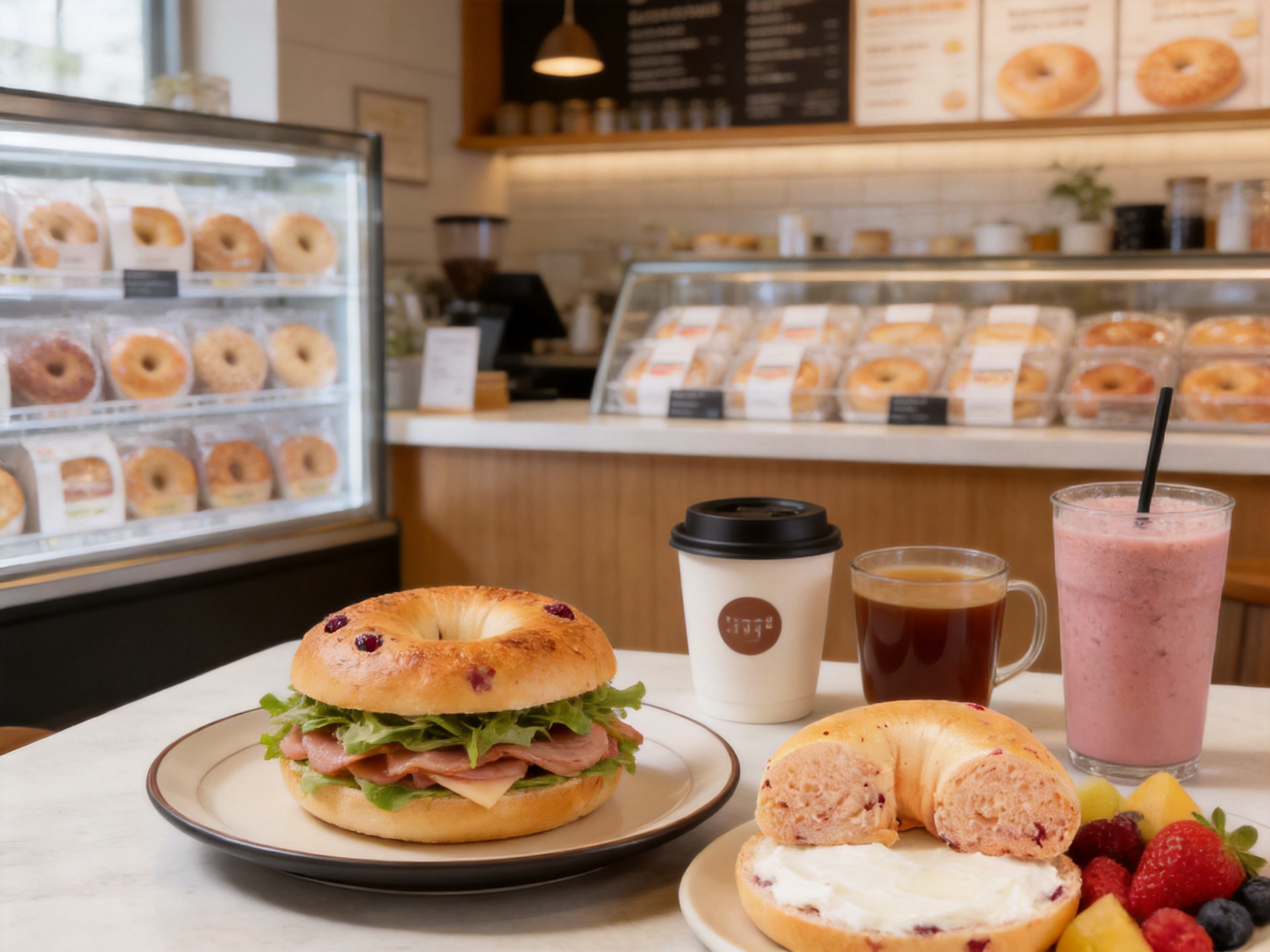
Consumers are looking for bakery products that combine familiar comfort with clearer nutritional value, dependable quality, and convenient preparation. The Healthy and Low-Fat Cranberry Bagel responds to these expectations with a balanced formula built around wheat, real dried cranberries, a satisfying bagel texture, and flexible foodservice applications. It is designed to deliver the substantial eating experience associated with a classic bagel while offering a lighter, fruit-forward profile suitable for breakfast, snacks, light meals, café menus, and post-workout occasions.
For retailers, cafés, restaurant groups, bakery operators, and private-label customers, the product offers more than a sweet bakery item. It provides a consistent commercial platform that can be served on its own, toasted, sliced, filled, or paired with both sweet and savory ingredients. The combination of a resilient exterior, tender interior, visible fruit appeal, and low-fat positioning gives buyers an adaptable product for multiple menu concepts.
Manufactured by Jiangsu Goobagel Food Technology Co., Ltd., the bagel is supported by an integrated frozen bakery production model. The company combines raw material management, product research and development, production, and distribution within one supply chain. Since 2019, Goobagel Food has concentrated on bagel research and manufacturing, developing more than 100 bagel varieties for retail, foodservice, cafés, tea brands, and bakery operators.
This article examines the product’s flavor structure, texture, nutritional positioning, manufacturing strengths, commercial advantages, storage and serving possibilities, and suitability for OEM and private-label programs.
A Product Built Around a Clear Consumer Promise
The Healthy and Low-Fat Cranberry Bagel is based on a simple but effective promise: a real bagel experience with a bright cranberry note and a more health-conscious product profile. Instead of relying on heavy toppings, excessive fillings, or an overly rich formula, the product develops its character through the interaction of wheat and fruit.
The first impression comes from the grain foundation. High-quality wheat is selected to create a clean and consistent base flavor. This gives the bagel a warm, full-bodied aroma that remains recognizable after baking and reheating. The wheat profile is important because it prevents the fruit from becoming isolated or artificial-tasting. Cranberry flavor is most effective when it has a substantial grain structure behind it.
The second impression comes from the dried cranberries folded into the dough. Their sweet-tart character creates a gentle contrast with the wheat. Rather than presenting sweetness alone, cranberry contributes fruit acidity, a slight tang, and a lingering finish. This balance makes the bagel suitable for consumers who enjoy sweet bakery products but prefer a flavor that is not one-dimensional.
The third promise is textural. The outside is intended to retain the recognizable resilience of a bagel, while the inside remains soft and tender. This contrast contributes to a more satisfying bite than a light, cake-like breakfast pastry. The product is substantial enough to support a filling breakfast, but its low-fat orientation helps it fit menus focused on balanced eating.
Flavor Architecture: Wheat First, Cranberry Brightness Second
A dependable wheat foundation
Wheat is not merely a background ingredient in a bagel. It determines much of the aroma, structure, chew, color, and overall eating experience. The product begins with a carefully selected wheat base to establish a stable flavor platform. A clean grain profile allows the bagel to work across different serving occasions and reduces the risk that the fruit component will overpower the product.
The warm aroma of baked wheat gives the bagel a familiar and comforting identity. It also supports a broad range of pairings. For example, the bagel can be served with cream cheese for a classic breakfast combination, yogurt for a lighter snack, lean proteins for a more substantial meal, or fresh greens for a café-style sandwich. The neutral-to-warm grain character creates room for both sweet and savory customization.
Real dried cranberries for noticeable fruit presence
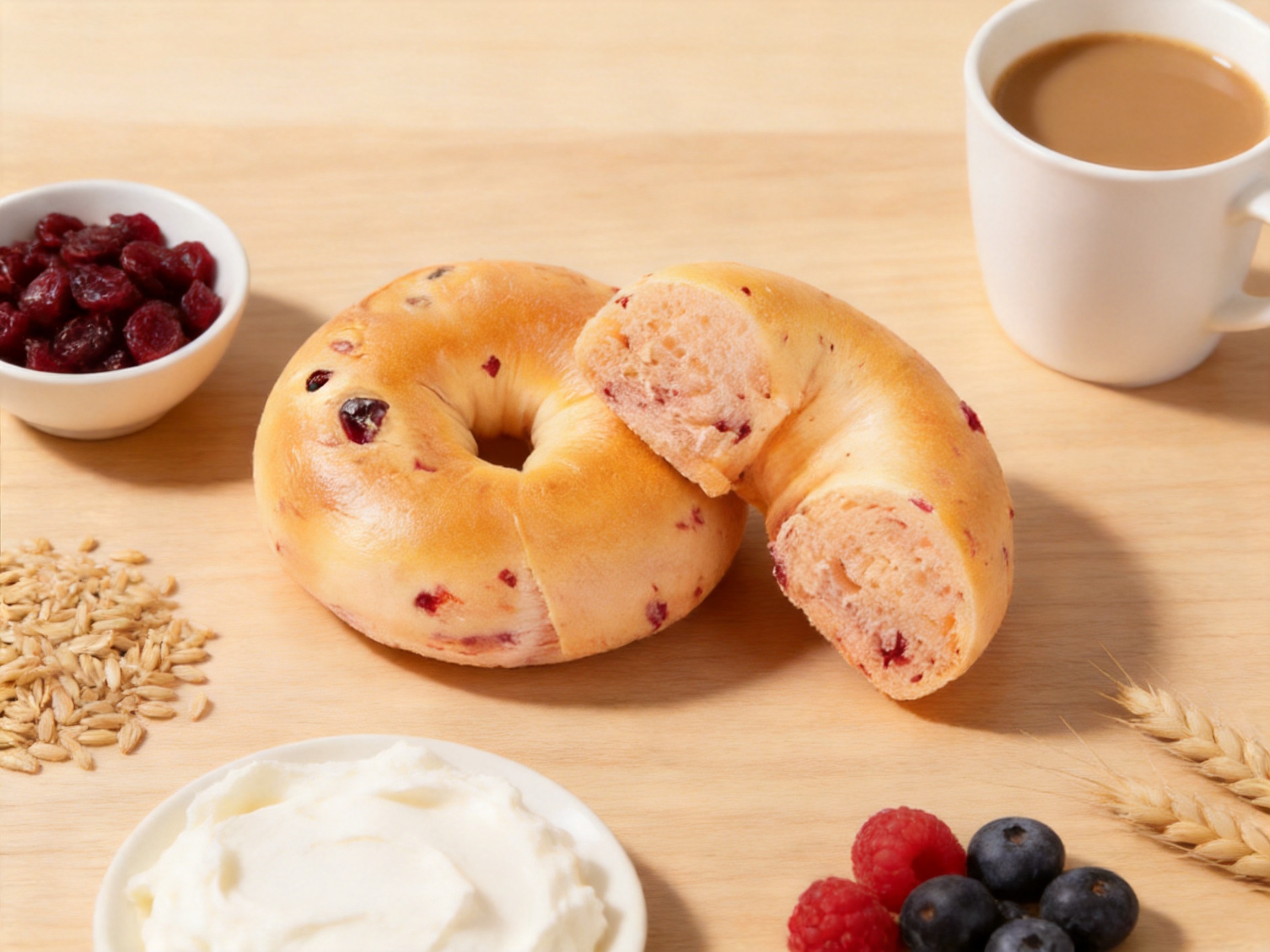
Real dried cranberries are folded into the dough in a meaningful proportion. This approach gives the fruit a physical and sensory presence in the finished product. Consumers can encounter cranberry pieces during eating rather than receiving only a generalized fruit aroma.
The cranberry component contributes several complementary characteristics. Its natural fruit identity brings brightness to the grain base. Its sweet-tart profile prevents the bagel from tasting excessively sugary. Its chewy pieces add variation to the crumb, making each bite more interesting. The fruit also creates visual appeal when the bagel is sliced, which is valuable for retail packaging, café displays, and online product presentation.
Attention to the baking performance of the cranberries is also important. Fruit ingredients can influence moisture distribution, sweetness perception, and crumb texture. A well-developed formula must allow the cranberries to remain enjoyable after baking, freezing, storage, thawing, and reheating. The objective is a fruit presence that remains balanced throughout the eating experience rather than becoming dry, hard, or hidden within the dough.
A balanced sweetness profile
The product is positioned as sweet and fruity, but its appeal does not depend on an intense dessert-style sweetness. Cranberry naturally provides both sweetness and acidity, allowing the product to taste lively without requiring an excessively rich profile. This makes it relevant to breakfast and snack occasions in addition to indulgent bakery consumption.
For foodservice operators, a balanced sweetness profile is commercially useful. It allows the same bagel to be paired with sweet spreads, neutral dairy products, or selected savory ingredients. The product can be marketed as a fruit bagel, a better-for-you breakfast option, or a versatile base for seasonal menu development.

Healthy And Low-Fat Cranberry Bagel
Texture and Eating Quality
Resilient on the outside
A defining feature of a bagel is the contrast between its outer surface and interior. The Healthy and Low-Fat Cranberry Bagel is developed to retain a resilient outside that offers gentle resistance when bitten. This characteristic differentiates it from ordinary soft rolls and cake-style breakfast products.
The exterior should provide enough structure to support slicing, toasting, spreading, and sandwich assembly. In commercial settings, this is especially important because products are often handled by staff, placed in display cases, packed for takeaway, or prepared in high-volume service environments. A bagel that maintains its shape and surface integrity can improve preparation efficiency and presentation consistency.
Tender within
While the outside provides structure, the interior is intended to remain soft and tender. A tender crumb improves immediate palatability and helps the fruit integrate with the wheat base. It also supports a comfortable eating experience for consumers who want a filling bakery product without excessive hardness or dryness.
The interior texture has practical implications for serving. A softer crumb can absorb or hold spreads without collapsing too quickly. It can also complement cream cheese, yogurt-based fillings, fresh fruit, nut spreads, lean proteins, and leafy vegetables. When toasted, the interior can develop additional warmth while retaining enough tenderness to avoid a brittle or overly dry bite.
Texture stability for frozen bakery applications
Frozen bakery products must be designed with the full product journey in mind. The bagel may pass through production, freezing, cold-chain distribution, storage, thawing, reheating, and final service before it reaches the consumer. Each stage can influence moisture migration and texture.
Goobagel Food’s focus on frozen bagel manufacturing supports the development of products intended for this type of commercial handling. Consistent formulation, process control, and packaging coordination help protect the intended contrast between exterior resilience and interior tenderness. The exact preparation method may vary by customer and application, but the product is designed to provide reliable performance across normal foodservice and retail workflows.
Low-Fat Positioning and Better-for-You Appeal
The low-fat formula is one of the product’s central commercial advantages. Consumers increasingly examine not only flavor but also how a product fits into their daily eating patterns. A bagel that offers substantial grain character, fruit inclusions, and a low-fat positioning can appeal to shoppers seeking a more balanced alternative to richer pastries.
Low-fat positioning does not mean the product must feel insubstantial. The bagel’s wheat structure and satisfying chew help create fullness and eating satisfaction. This distinction is important. Consumers often want a product that feels like real food rather than a highly processed snack that provides only temporary satisfaction.
The product can support several communication themes:
• A fruit-containing breakfast option.
• A wheat-based alternative to richer pastries.
• A convenient bakery product for active lifestyles.
• A flexible base for balanced toppings.
• A portion-friendly item for cafés, retail bakeries, and foodservice menus.
These themes should always be adapted to the customer’s regulatory requirements and confirmed product specifications. Nevertheless, the underlying product design gives buyers a credible platform for health-conscious menu development.
Advantages Compared with Conventional Bakery Alternatives
More distinctive than a plain bagel
A plain bagel offers versatility, but it may require additional toppings or fillings to create a memorable flavor identity. The cranberry version incorporates fruit directly into the dough, giving it a recognizable point of difference before any topping is added. This can reduce the need for complex preparation while improving the product’s visual and sensory appeal.
For retailers, a fruit-inclusive product can expand the range of a bagel assortment. For cafés, it can provide a signature breakfast option that looks different from plain, sesame, or standard grain varieties. For private-label customers, cranberry offers a familiar ingredient with broad consumer recognition and strong seasonal relevance.
More substantial than a typical sweet pastry
Many sweet pastries rely on high levels of fat, sugar, laminated dough, icing, or rich fillings. These products can be appealing, but they may not satisfy consumers who want a more substantial breakfast or snack. The Healthy and Low-Fat Cranberry Bagel presents a different kind of indulgence: fruit sweetness within a structured wheat product.
The bagel format naturally supports a more filling eating experience. It can be consumed as a complete item or opened and enhanced with additional ingredients. This makes it suitable for consumers who want a product that bridges the gap between a snack and a light meal.
More versatile than a strongly flavored specialty bread
Some specialty breads are defined by intense seasoning or narrow pairing requirements. Cranberry offers flavor distinction without limiting the product to one menu style. It can appear in breakfast programs, café counters, hotel buffets, workplace catering, school-oriented foodservice where permitted, and retail freezer sections.
The product’s gentle fruit acidity can work with dairy, grains, poultry, vegetables, and selected plant-based ingredients. This versatility gives operators more opportunities to manage inventory and develop multiple serving formats from one frozen SKU.
More operationally convenient than from-scratch preparation
Producing bagels from scratch requires ingredient procurement, dough preparation, fermentation management, shaping, cooking, baking, labor scheduling, quality monitoring, and waste control. A frozen finished bagel can simplify these operations for customers that do not want to maintain full bakery production capacity.
Frozen supply also helps operators maintain a more predictable product offering. Portions can be prepared according to demand, reducing the pressure to produce large quantities in advance. This is particularly useful for cafés and foodservice locations with fluctuating traffic patterns.
Manufacturing Strengths Behind the Product
Integrated supply chain management
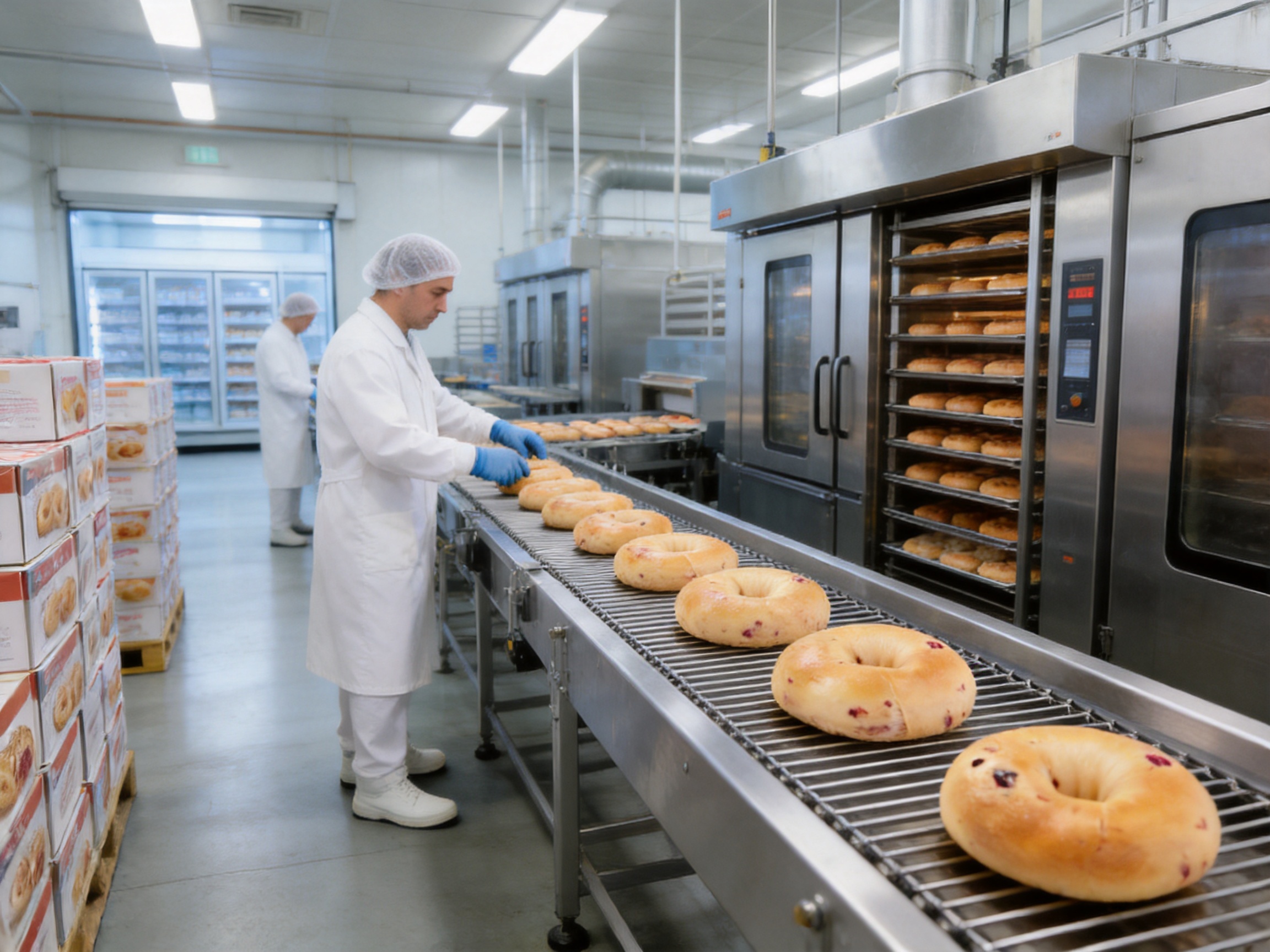
Goobagel Food operates a fully integrated supply chain covering raw materials, research and development, production, and nationwide distribution. This structure allows the company to connect product design with manufacturing realities and commercial delivery requirements.
Supply chain integration can provide several benefits. Raw material decisions can be coordinated with product specifications. R&D teams can communicate directly with production teams. Manufacturing feedback can be used to refine formulas and processes. Distribution planning can be considered during product development rather than treated as an afterthought.
For customers, this integrated model supports more dependable communication and supply planning. It can also help the manufacturer respond to requests involving flavor, texture, packaging, portion size, or application-specific performance.
Dedicated bagel research and development
Since 2019, the company has specialized in bagel research and manufacturing. Dedicated category experience is valuable because bagels require a particular balance of dough development, shaping, cooking or baking behavior, crumb structure, surface characteristics, and freezing performance.
A manufacturer focused on bagels can build knowledge across multiple formulas and customer applications. Experience with classic bagels, stuffed bagels, and bagel sandwiches creates a broader technical foundation for product development. The cranberry bagel benefits from this category focus because fruit inclusions must be integrated without losing the core identity of the bagel.
Broad product development capability
Goobagel Food has developed more than 100 clean-label bagel varieties for a wide range of commercial customers. This product development scale suggests experience with different flavor families, ingredient combinations, formats, and market requirements.
A broad portfolio can support customers in several ways. Buyers may begin with an existing product and adapt it to their market. They may combine an established dough platform with a new inclusion. They may also develop a small family of products for a café or retail program, using the same manufacturing partner across multiple flavors.
The Healthy and Low-Fat Cranberry Bagel fits naturally within this development approach. It has a clear core formula but can be presented through different packaging, portioning, serving, and private-label strategies.
Clean-label product orientation
The company describes its product range as clean-label. In practical terms, this orientation reflects a focus on understandable ingredient positioning and products that align with modern consumer expectations. Exact ingredient declarations, allergen statements, nutritional values, and permitted claims should be confirmed for each finished specification and target market.
For buyers, clean-label development can improve communication with consumers who read packaging closely. It can also support retail positioning around simplicity, transparency, and recognizable ingredients. The cranberry inclusion and wheat foundation provide an accessible product story that can be communicated without relying on an overly complicated flavor concept.
Process Considerations from Raw Material to Finished Bagel
Raw material selection
Product quality begins with raw materials. Wheat must provide consistent functionality and flavor so that the finished dough can withstand processing and freezing while delivering a pleasant crumb. Cranberries must contribute a stable flavor, suitable chew, and reliable performance during baking and storage.
Raw material control is especially important when producing at commercial scale. Variations in flour characteristics, fruit moisture, particle size, or ingredient quality can affect dough behavior and finished texture. An integrated manufacturer can evaluate these factors as part of product development and production planning.
Formula development
The formulation process must balance multiple objectives at the same time. The bagel needs enough structure to feel authentic, enough tenderness to remain enjoyable, and sufficient fruit distribution to provide a noticeable cranberry experience. It must also support low-fat positioning and remain practical for frozen distribution.
Fruit inclusion levels require careful attention. Too little fruit can make the product appear ordinary, while too much may interfere with dough structure or create an unbalanced sweetness. The goal is a consistent distribution in which consumers encounter cranberry throughout the product rather than only in isolated areas.
Dough development and mixing
Mixing establishes the foundation for dough strength and crumb structure. Consistent mixing helps distribute ingredients and develop the wheat-based dough to the intended level. The process must account for the presence of dried fruit, because fruit pieces can affect the way dough is handled and divided.
Commercial production requires repeatability. Dough should behave consistently from batch to batch so that the shaped pieces have comparable size, appearance, and baking performance. Process controls at this stage contribute directly to final product quality.
Dividing and shaping
Accurate dividing supports portion consistency and helps customers control serving costs. Shaping contributes to the recognizable ring form and influences how the product slices, toasts, and presents in packaging.
Uniform shaping is particularly important for retail and foodservice customers. Similar dimensions improve case packing, display appearance, cooking instructions, and portion planning. They also help ensure that cranberry distribution and baking results remain consistent across the production run.
Thermal processing and baking
Bagel processing must create the intended balance between exterior resilience and interior tenderness. Thermal conditions influence surface development, crumb setting, moisture retention, color, and the final performance of the cranberries.
The product’s development objective is not simply to produce a baked dough ring. It is to produce a bagel that remains recognizable and enjoyable after freezing and customer preparation. This requires attention to the interaction between formula and process rather than focusing on one stage alone.
Freezing and distribution preparation
Freezing preserves the product for later use and enables broader distribution. It also gives customers greater flexibility because they can store inventory and prepare units according to demand. A well-managed frozen bakery system helps protect product availability and reduce the need for daily from-scratch production.
Packaging and cold-chain handling should be coordinated with the customer’s logistics system. Storage temperatures, transportation conditions, thawing procedures, and reheating instructions should follow the final product specification. Customers should obtain detailed technical documentation before commercial launch.
Commercial Applications
Retail freezer programs
The product is well suited to retail freezer sections where consumers seek convenient bakery items with a longer usable life than fresh products. A cranberry bagel can stand out among plain and savory options because the fruit pieces create both flavor and visual differentiation.
Retail packaging can emphasize the wheat base, cranberry inclusion, low-fat positioning, and flexible serving occasions, subject to substantiation and local labeling rules. Preparation guidance should be clear and easy to follow, helping consumers achieve a warm and satisfying result at home.
Cafés can use the product as a ready-to-prepare breakfast item or as a base for customized menu combinations. It can be toasted and served with cream cheese, butter alternatives, yogurt-inspired spreads, fruit toppings, or selected nut and seed spreads.
The bagel can also complement coffee, tea, smoothies, and other beverage programs. Its fruit-forward character creates a natural connection with breakfast beverages while its wheat structure helps it function as a more substantial food offering.
Hotel and institutional foodservice
Buffets and foodservice programs benefit from products that are recognizable, easy to portion, and suitable for different dietary preferences. The cranberry bagel can be presented alongside plain and savory bagel varieties, allowing guests to select according to their flavor preferences.
Because it can be served without elaborate finishing, the product may simplify back-of-house preparation. Operators can also offer spreads and toppings separately, allowing guests to personalize the product while keeping the core item standardized.
Tea shops and beverage-led brands increasingly add bakery items to increase average order value and create complete consumption occasions. The cranberry bagel provides a fruit-associated bakery option that can be paired with hot tea, iced tea, fruit beverages, or yogurt-based drinks.
Its flavor profile is suitable for seasonal promotions, morning bundles, afternoon snack sets, and limited-time combinations. The product can be positioned as a convenient accompaniment rather than only as a traditional breakfast item.
Bakery operators and private-label programs
Bakery operators may use the product as a reliable frozen base while focusing their own resources on finishing, packaging, merchandising, and customer service. Private-label buyers can develop a product identity around their own brand strategy while sourcing from an experienced bagel manufacturer.
OEM and private-label cooperation may include discussions about packaging format, product size, case configuration, labeling language, ingredient requirements, distribution regions, and target consumer positioning. The appropriate commercial structure should be established through a detailed technical and business review.
Serving and Pairing Ideas
| Serving format | Suggested pairing | Commercial advantage |
|---|---|---|
| Toasted breakfast bagel | Cream cheese, yogurt spread, or fresh fruit | Simple preparation with a familiar breakfast appeal |
| Light meal | Lean protein, fresh greens, and a mild spread | Uses the bagel as a filling meal base |
| Snack plate | Low-fat dairy, fruit, and unsweetened tea | Supports a balanced snack concept |
| Café takeaway | Hot coffee, tea, or a smoothie | Creates an easy food-and-beverage combination |
| Retail home serving | Toasted and served plain or with a preferred topping | Allows consumers to customize sweetness and richness |
| Seasonal promotion | Cranberry-themed beverages or fruit-based spreads | Supports limited-time merchandising and menu events |
Cream cheese is a classic pairing because its smooth, creamy texture contrasts with the bagel’s resilient surface and tender crumb. The mild dairy flavor also allows the cranberry to remain prominent. Yogurt-based spreads can reinforce the product’s lighter, breakfast-oriented positioning, while fresh greens and lean proteins can transform it into a more complete meal.
For consumers who prefer a simpler experience, the bagel can be toasted and eaten without additional toppings. This serving style highlights the wheat aroma and the sweet-tart cranberry pieces. It may also be appropriate for sampling programs, product demonstrations, and retail tasting events.
Why the Product Is Suitable for OEM and Private Label
A clear and adaptable product concept
Private-label products need a concept that consumers can understand quickly. “Healthy and Low-Fat Cranberry Bagel” communicates the main product characteristics: a familiar bagel format, a recognizable fruit ingredient, and a health-conscious positioning. This clarity can simplify packaging communication and sales presentations.
The concept can also be adjusted to different market priorities. One buyer may focus on breakfast convenience. Another may emphasize clean-label bakery choices. A café chain may highlight cranberry flavor and beverage pairing. A retailer may focus on frozen storage and at-home preparation. The same underlying product can support these different commercial stories.
Support from an experienced manufacturer
Goobagel Food’s specialization in bagel research and manufacturing gives OEM customers access to category-specific knowledge. Its portfolio of more than 100 bagel varieties demonstrates experience in developing products for different applications and customer groups.
Product development discussions can consider the intended channel, serving method, packaging requirements, target cost, desired texture, fruit intensity, and distribution conditions. These details are essential because a bagel designed for a café toaster may require different operational guidance from one intended for direct retail preparation.
Supply continuity and commercial planning
A frozen product can support inventory planning by allowing customers to hold stock for scheduled service. The manufacturer’s integrated supply chain and nationwide distribution experience provide a foundation for discussing commercial supply requirements.
Buyers should evaluate forecast volumes, lead times, minimum order quantities, case configuration, storage capacity, delivery schedules, and quality documentation during the purchasing process. Clear planning at the beginning of a program helps reduce avoidable operational challenges after launch.
Quality, Consistency, and Customer Value
Consistency is one of the most important advantages a commercial bakery supplier can provide. Customers need each shipment to perform in a similar way so that staff can follow established preparation procedures and consumers receive a familiar experience.
For this cranberry bagel, consistency includes the size and shape of each unit, the distribution of cranberry pieces, the wheat aroma, the exterior resilience, the interior tenderness, and the product’s performance after frozen storage and preparation. These characteristics influence customer satisfaction as well as operational efficiency.
Reliable product performance can reduce waste. If staff know how many units to prepare and how the product responds to toasting or reheating, they can better match production to demand. Consistent portioning can also make food-cost calculations more accurate and simplify menu pricing.
Quality is not limited to sensory performance. It also includes communication, documentation, packaging suitability, delivery coordination, and responsiveness during product development. A strong manufacturing partner supports the product from initial concept through ongoing supply.
Recommended Evaluation Criteria for Buyers
Before placing a commercial order, buyers should evaluate the product according to the requirements of their own market. A structured review may include the following areas:
Flavor: Confirm that the wheat aroma is clean and that the cranberry provides noticeable sweet-tart character without excessive sweetness.
Texture: Assess the exterior resilience and interior tenderness immediately after preparation and after the product has been held for the intended service period.
Fruit distribution: Slice multiple samples to evaluate whether cranberry pieces are distributed consistently throughout the dough.
Preparation performance: Test the product using the equipment and preparation method that will be used in stores, cafés, kitchens, or homes.
Storage performance: Review the product after the planned frozen storage period and confirm that it continues to meet the intended quality standard.
Packaging: Ensure that the pack protects the product, supports efficient storage, and communicates preparation and labeling information clearly.
Regulatory compliance: Verify nutrition information, ingredient declarations, allergen statements, health-related claims, and language requirements for the target market.
Supply capability: Discuss production capacity, lead times, order quantities, delivery arrangements, and contingency planning.
These evaluation steps help buyers move beyond a first tasting and determine whether the product is suitable for a complete commercial program.
Branding and Merchandising Opportunities
The product can be merchandised through several consumer-friendly messages. Its fruit inclusion supports visual communication, while its low-fat orientation supports a better-for-you narrative. The wheat foundation adds familiarity and helps position the product as a real bakery staple rather than a novelty item.
Packaging may highlight the contrast between the grain base and cranberry pieces. Product photography can show the whole bagel and a sliced cross-section. Serving suggestions can demonstrate how the item works with cream cheese, yogurt, lean proteins, fresh greens, or fruit.
Retailers can place the product within breakfast, healthy bakery, frozen convenience, or seasonal cranberry assortments. Cafés can use menu language that emphasizes toasted texture and fruit flavor. Foodservice operators can offer it as part of a breakfast bundle or as an alternative to richer pastries.
Merchandising should remain accurate and compliant. Statements such as “low-fat,” “healthy,” or “clean-label” must be supported by the final specification and applicable regulations. The manufacturer and buyer should coordinate all claims before packaging or promotional materials are finalized.
Sustainability and Operational Efficiency Considerations
Frozen bakery products can help operators manage production more efficiently because preparation can be aligned with actual demand. Producing or heating units in smaller quantities may reduce unsold finished goods in locations where traffic varies by day or time.
Centralized manufacturing can also support consistent production planning across multiple customer locations. Rather than requiring every outlet to maintain complete bakery facilities, a foodservice group may receive standardized products and focus local labor on preparation and service.
Operational efficiency depends on correct storage and handling. Customers should follow the agreed cold-chain requirements, use suitable packaging, and apply first-in-first-out inventory practices. Reducing unnecessary waste requires cooperation among the manufacturer, distributor, store, and final preparation team.
Frequently Asked Questions
What makes this cranberry bagel different from a plain bagel?
The product combines a classic wheat-based bagel structure with real dried cranberries folded into the dough. This provides a sweet-tart fruit presence, visible inclusions, and a more distinctive flavor without requiring elaborate toppings.
Is the product suitable for breakfast?
Yes. Its wheat foundation, satisfying texture, fruit flavor, and low-fat positioning make it suitable for breakfast menus. It can be served toasted, plain, with cream cheese, with yogurt-based toppings, or as part of a broader breakfast combination.
Can it be used for light meals?
Yes. The resilient exterior and tender interior provide a useful base for lean proteins, fresh greens, mild spreads, and other meal ingredients. The product can be sliced and filled according to the operator’s menu concept.
What does the low-fat positioning mean?
The product is developed with a low-fat formula intended to support a more health-conscious bakery offering. Buyers should confirm the exact nutrition profile and permitted claim language for the specific market before using the term on packaging or advertising.
Does the product contain real cranberries?
Yes. Real dried cranberries are folded into the dough to provide a noticeable fruit experience and chewy texture variation. The final ingredient statement should be reviewed for complete regulatory and allergen information.
How does the product balance sweetness and acidity?
Cranberries contribute both sweetness and gentle tartness. The wheat base provides warmth and depth, helping prevent the fruit flavor from becoming overly sugary. The intended result is a balanced sweet-fruity profile with a lingering cranberry finish.
What texture can consumers expect?
The product is designed to have a resilient outside and a soft, tender interior. The exact result will depend on storage, thawing, heating equipment, and preparation procedures, so commercial buyers should conduct product trials using their planned workflow.
Who manufactures the product?
The product is manufactured by Jiangsu Goobagel Food Technology Co., Ltd., a China-based frozen bakery producer specializing in bagel research and manufacturing since 2019.
What types of customers does the manufacturer serve?
Goobagel Food develops products for retail, foodservice, café chains, tea brands, bakery operators, and other commercial customers. Its product development capabilities also support OEM and private-label cooperation.
Does the company offer other types of bagels?
Yes. The company’s product categories include classic bagels, stuffed bagels, and bagel sandwiches. It has developed more than 100 bagel varieties with different flavor and application possibilities.
Can buyers request OEM or private-label cooperation?
Yes. Buyers can discuss OEM and private-label requirements with the manufacturer. Important topics include product specifications, size, flavor intensity, packaging, labeling, order volume, storage, delivery, and target-market requirements.
Is the bagel suitable for retail frozen distribution?
The product is developed as a frozen bakery item and can be considered for retail frozen programs. Buyers should confirm packaging, shelf-life, storage conditions, and distribution specifications for their intended market.
Can the product be served without toppings?
Yes. Toasting and serving the bagel plain allows consumers to experience the wheat aroma and cranberry flavor directly. Toppings can be added according to personal preference or menu requirements.
What toppings pair well with the cranberry flavor?
Cream cheese, yogurt-based spreads, fresh fruit, mild nut or seed spreads, lean proteins, and fresh greens can all be considered. Pairings should be selected according to the desired nutritional profile and target customer.
How should buyers evaluate the product before launching it?
Buyers should conduct sensory, preparation, storage, packaging, and operational trials. They should also confirm nutrition information, ingredient declarations, allergen statements, product claims, order requirements, and delivery arrangements before commercial launch.
Conclusion
The Healthy and Low-Fat Cranberry Bagel combines the familiarity of a classic bagel with the brightness of real dried cranberries and the appeal of a more health-conscious formula. Its clean wheat foundation provides warmth and substance, while the fruit contributes sweet-tart flavor, chewy texture, and visual distinction. The resilient exterior and tender interior support both direct consumption and customized serving.
Compared with plain bagels, the product offers stronger built-in flavor differentiation. Compared with rich pastries, it provides a more substantial wheat-based eating experience with low-fat positioning. Compared with highly specialized breads, it offers broad pairing flexibility. As a frozen bakery product, it can also help commercial operators simplify production, manage inventory, and standardize service.
These product advantages are supported by Goobagel Food’s focused experience in bagel research and manufacturing, integrated supply chain, broad clean-label product development, and service to retail and foodservice customers. The company’s capabilities make the cranberry bagel a practical candidate for retail, café, catering, bakery, OEM, and private-label programs.
For buyers seeking a fruit-forward bagel with dependable commercial potential, this product offers a balanced combination of flavor, texture, nutrition-oriented positioning, versatility, and manufacturing support.
References
1. Jiangsu Goobagel Food Technology Co., Ltd. Product information for Healthy and Low-Fat Cranberry Bagel.
2. Jiangsu Goobagel Food Technology Co., Ltd. Company information and manufacturing profile.
3. Association of Official Analytical Chemists. Official Methods of Analysis.
4. Codex Alimentarius Commission. General Standard for the Labelling of Prepackaged Foods.
5. United States Department of Agriculture. Food Safety and Inspection Service guidance on frozen food handling and storage.
6. AIB International. Baking industry guidance on sanitation, process control, and food safety.
7. National Restaurant Association. Foodservice menu development and consumer dining trend resources.
