
 中文简体
中文简体
 English






postmaster@goobagelfood.com
Content
- 1 The Product Concept: Making a Plain Bagel Distinctive
- 2 Core Sensory Advantages
- 3 How the Product Compares with Ordinary Commodity Bagels
- 4 Ingredient Philosophy and Formula Discipline
- 5 Advanced Manufacturing Process
- 6 Frozen Bakery Performance and Supply Advantages
- 7 Applications Across Multiple Foodservice Channels
- 8 Private Label and OEM Potential
- 9 Quality Consistency as a Competitive Strength
- 10 Why the Plain Format Offers Long-Term Value
- 11 Recommended Preparation and Serving Concepts
- 12 Company Manufacturing and Development Strengths
- 13 Commercial Advantages for Buyers
- 14 Q&A
- 14.1 What makes this plain bagel different from an ordinary bread roll?
- 14.2 What is the product weight?
- 14.3 Does the bagel have a strong flavor?
- 14.4 Why is the crumb described as honeycomb?
- 14.5 Is the bagel suitable for sandwiches?
- 14.6 Can it be used in retail frozen bakery programs?
- 14.7 Who can purchase or customize this product?
- 14.8 What manufacturing capabilities support the product?
- 14.9 How can the bagel be served?
- 14.10 Why is a plain bagel useful for a private label brand?
- 15 Conclusion
- 16 References
- 17 Product: Glossy And Brittle Plain Bagel
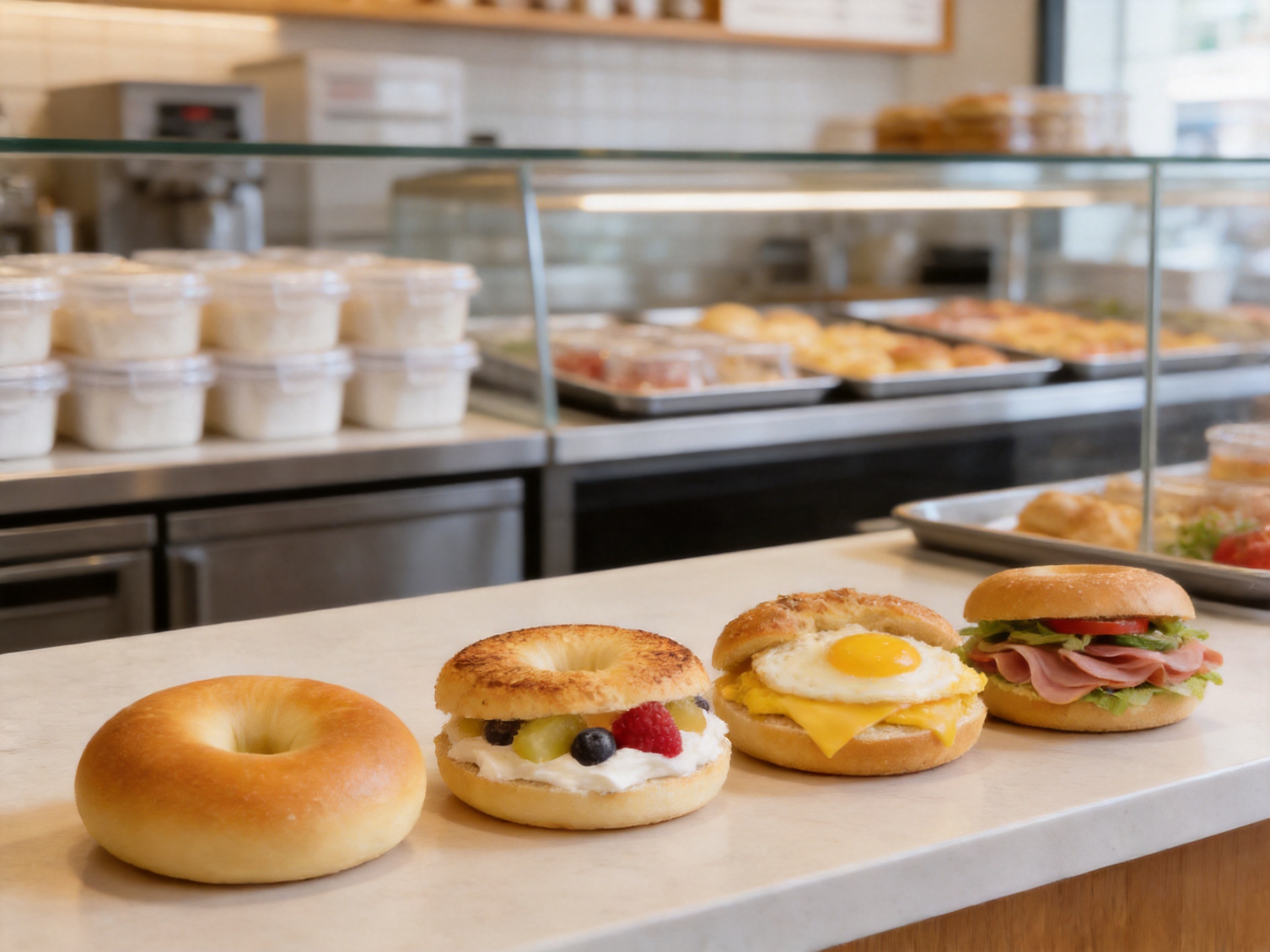
The plain bagel is one of the most demanding products in the bakery category because its simplicity leaves very little room for error. Flavored bagels can use inclusions, fillings, spices, or toppings to create a strong sensory impression. A plain bagel has no such protection. Its quality depends almost entirely on the flour, water balance, fermentation control, shaping accuracy, boiling or surface-treatment method, baking profile, cooling process, and storage performance. When these elements are carefully managed, the result is a product with a clean grain aroma, a glossy crust, a crisp first bite, and a resilient, chewy interior.
The Glossy and Brittle Plain Bagel is developed around this principle of disciplined simplicity. Weighing approximately 110 grams, it is designed to deliver a recognizable bagel experience while remaining versatile enough for breakfast menus, café sandwiches, retail freezer programs, catering, and private label product lines. Its intentionally minimal formula allows the character of high-grade wheat flour to remain at the center of the eating experience. Rather than depending on heavy sweetness, strong flavorings, or excessive toppings, the product emphasizes texture, balance, and reliable performance.
For buyers, distributors, foodservice operators, and brand owners, the product offers more than an attractive finished item. It represents a practical commercial platform. It can be served plain, toasted with butter, spread with cream cheese, paired with sweet or savory ingredients, or used as the structural base for a complete sandwich. Its neutral flavor profile reduces the risk of pairing conflicts, while its dense yet tender crumb provides enough strength to support fillings without becoming dry or excessively heavy.
The bagel is manufactured by Jiangsu Goobagel Food Technology Co., Ltd., a modern frozen bakery producer with capabilities covering raw materials, research and development, production, and distribution. Since 2019, the company has specialized in bagel research and manufacturing and has developed more than 100 clean-label bagel varieties for retail, foodservice, café chains, tea brands, and bakery operators. This integrated approach supports consistent product development, stable supply, and commercial flexibility.
The Product Concept: Making a Plain Bagel Distinctive
A plain bagel may appear straightforward, but the best examples combine several contrasting sensations. The exterior should be firm enough to provide a clear bite, but not so hard that it becomes difficult to eat. The interior should be chewy, but not rubbery. The crumb should be compact enough to feel substantial, but not dense in a heavy or doughy way. It should retain moisture, but not feel wet or gummy. The Glossy and Brittle Plain Bagel is designed to achieve this balance through controlled formulation and precise processing.
The product’s defining sensory sequence begins with the crust. Its surface develops a natural gloss during baking, giving the bagel a clean and appealing appearance. On first contact, the crust provides a delicate snap. This initial brittleness is not intended to dominate the eating experience. Instead, it transitions into the characteristic elastic chew associated with a well-made bagel. The contrast between crisp exterior and resilient interior creates a more complete bite than a soft, bread-like roll.
Inside, the crumb is described as having a fine honeycomb structure. This structure contributes to an even texture and helps distribute moisture throughout the product. The result is a crumb that feels smooth and dense without becoming heavy. It is hydrated without becoming soggy, and tender without losing the firmness required for slicing, toasting, filling, and transport.
The formula is intentionally restrained. A straightforward ingredient profile lets the wheat aroma remain clear and natural. This approach is especially valuable for commercial customers that want a dependable base for their own menu concepts. A plain bagel with excessive sweetness or a pronounced artificial note can restrict its applications. A clean, grain-forward bagel can move across multiple dayparts and menu categories with fewer limitations.
Core Sensory Advantages
Glossy, Crisp Exterior
The first visual cue is the surface finish. A naturally glossy crust communicates freshness, careful baking, and product quality. It also supports the perception of a traditional bagel rather than an ordinary round bread product. When sliced and displayed in a retail package or on a café counter, the surface helps the product maintain an appealing handcrafted appearance even when produced at commercial scale.
The crust is designed to be brittle enough to create a satisfying first bite. This feature can distinguish the product from soft bagels that resemble rolls or buns. A soft exterior may be convenient, but it often lacks the sensory definition that customers associate with a genuine bagel. The Glossy and Brittle Plain Bagel provides a clearer textural identity while remaining suitable for reheating and toasting.
Elastic, Controlled Chew
Chew is one of the most important quality indicators in a bagel. It is influenced by flour quality, dough development, fermentation, shaping, moisture management, and baking. If chew is underdeveloped, the product may feel like ordinary bread. If it is excessive, the product may become tough or tiring to eat. The product is developed to provide an elastic chew that remains satisfying without overwhelming the palate.
This texture also provides practical value. The bagel can be sliced without collapsing, toasted without losing its identity, and filled without tearing easily. For foodservice operators, this means fewer limitations when creating sandwiches with spreads, meats, vegetables, sauces, or cheese. For retail customers, it means the product can be prepared in familiar ways at home while maintaining its core texture.
Fine Honeycomb Crumb
The interior structure contributes to both mouthfeel and functionality. A fine honeycomb crumb creates a smooth, consistent bite rather than large, irregular holes that can cause spreads or sauces to pass through the product. At the same time, it avoids a completely solid interior that would feel compact and heavy.
This balance is especially useful in sandwiches. Cream cheese, butter, nut spreads, egg products, sliced meats, and vegetable fillings can adhere to the crumb without immediately soaking through. The bagel offers enough openness for tenderness and enough density for support. This makes it a practical base for standardized foodservice assembly, where portion control and repeatable presentation are important.
Clean Wheat Aroma
Because the formula is intentionally simple, the aroma is centered on wheat and baking rather than strong flavor additives. A clean grain character can be a major advantage in a product intended for broad distribution. It gives the bagel a familiar identity and allows the operator to add flavor through toppings, spreads, fillings, or accompanying beverages.
The restrained profile also supports both sweet and savory applications. The same bagel can be paired with cream cheese and fruit in the morning, smoked or roasted proteins at lunch, or vegetables and spreads in a vegetarian menu. A flavored base may be excellent in one application but unsuitable in another. The neutral character of this product expands the number of possible uses.

Glossy And Brittle Plain Bagel
How the Product Compares with Ordinary Commodity Bagels
Competition in the bagel market is not limited to other premium bagels. The product also competes with commodity bread rings, soft sandwich buns, mass-produced breakfast rolls, and low-cost frozen bakery items. In this environment, differentiation must be visible in both sensory quality and operating performance.
Many commodity products are developed primarily around cost control. This can lead to a softer crust, less distinctive chew, a weaker grain aroma, or an interior that becomes dry after reheating. Such products may satisfy a basic price requirement, but they can limit the quality of the final menu item. When a bagel is used as a sandwich carrier, a weak structure can cause cracking, sogginess, or filling displacement. When it is sold as a retail product, a lack of texture can reduce repeat purchase potential.
The Glossy and Brittle Plain Bagel takes a more quality-oriented approach. High-grade wheat flour is selected to provide a stronger foundation for flavor and structure. Fermentation timing and baking temperature are controlled with precision rather than treated as interchangeable production variables. The result is a product with a more recognizable crust, a more developed chew, and a more balanced crumb.
Compared with soft bread-style competitors, the product offers greater textural contrast. Compared with extremely dense bagels, it provides a more approachable interior. Compared with heavily flavored products, it offers broader pairing flexibility. Compared with inconsistent small-batch supply, it is supported by a professional manufacturing system designed for stable commercial production.
| Evaluation Area | Glossy and Brittle Plain Bagel | Common Commodity Alternative | Commercial Benefit |
|---|---|---|---|
| Surface appearance | Natural gloss with a defined baked crust | Often soft, dull, or less developed | Improves shelf presentation and product recognition |
| First bite | Delicate crispness followed by chew | May feel uniformly soft or dry | Creates a more distinctive eating experience |
| Interior texture | Fine honeycomb crumb with balanced moisture | May be overly compact, irregular, or porous | Supports slicing, spreading, and sandwich assembly |
| Flavor profile | Clean, understated wheat aroma | May rely on sweetness or stronger additives | Pairs with a wider range of ingredients |
| Menu flexibility | Suitable for plain service, toast, spreads, and sandwiches | May be limited by flavor or texture | Supports multiple dayparts and menu formats |
| Supply suitability | Produced within an integrated frozen bakery system | May vary by supplier or production batch | Helps operators plan purchasing and distribution |
Ingredient Philosophy and Formula Discipline
The product’s formulation reflects a principle that is increasingly important in modern bakery: fewer distractions can create a clearer quality signal. When an item contains many strong flavors, it can be difficult for customers to evaluate the underlying bread. A plain bagel has nowhere to hide. The quality of the flour, the management of the dough, and the care taken during baking all become part of the final impression.
High-grade wheat flour serves as the foundation. Flour influences dough strength, water absorption, elasticity, fermentation tolerance, crumb structure, and finished flavor. Selecting a stronger and more suitable flour than ordinary commodity flour can help the manufacturer create a bagel that holds its shape while still developing a tender interior.
A minimal formula also creates opportunities for customer customization. Retail brands may position the bagel as a clean and simple breakfast staple. Café chains may use it as a neutral carrier for signature fillings. Foodservice distributors may offer it as a reliable standard item across multiple customer accounts. Private label buyers can build their own packaging, serving suggestions, and promotional identity around the product without having to compete with a dominant flavor built into the bagel itself.
Formula discipline does not mean the product is basic or underdeveloped. On the contrary, a simple ingredient list requires greater process control. When there are fewer ingredients to provide sweetness, aroma, softness, or visual appeal, those qualities must come from the raw materials and manufacturing method. This makes process precision a central part of the product’s value.
Advanced Manufacturing Process
Raw Material Selection
Manufacturing begins with the selection and evaluation of raw materials. Wheat flour must be suitable for the intended dough strength, hydration, fermentation behavior, and finished crumb. Consistent raw material quality helps reduce variation between production runs and supports a more predictable finished product.
An integrated producer can connect raw material decisions with product development and production feedback. If a flour performs differently during mixing or fermentation, the development and manufacturing teams can adjust process parameters more systematically. This is more reliable than treating raw materials as interchangeable commodities.
Precision Mixing and Dough Development
The dough must be developed enough to create strength and elasticity, but not mixed in a way that damages the desired texture. Mixing affects gluten development, hydration distribution, temperature, and the dough’s ability to retain gases during fermentation. These variables influence the final honeycomb crumb and the bagel’s ability to maintain its shape.
Commercial production requires repeatability. The same product must perform consistently across large quantities, different production days, and different distribution routes. Controlled mixing conditions and standardized procedures help create a stable base for the later stages of fermentation, shaping, and baking.
Fermentation Timing
Fermentation is one of the key stages in developing aroma and internal structure. Timing must be managed carefully. Insufficient fermentation can produce a tight, underdeveloped crumb and a less expressive flavor. Excessive fermentation can weaken the dough, alter the shape, and create an interior that does not deliver the desired density and chew.
The product description emphasizes that fermentation timing is dialed in with precision. This is important because the target is not simply maximum expansion. The desired structure is fine and honeycomb-like, with enough openness to feel tender but sufficient density to remain recognizable as a bagel. Precise fermentation helps achieve this middle ground.
Shaping and Dimensional Consistency
Shape affects both customer perception and operational efficiency. A consistent ring or round form helps retailers present the product more attractively and allows foodservice operators to portion ingredients more consistently. Uniform dimensions also support predictable slicing, toasting, packaging, and inventory planning.
At commercial scale, shaping must be carefully coordinated with dough condition. Dough that is too soft may lose definition, while dough that is too strong may resist forming and create an overly tight interior. Process control helps maintain the intended profile from one production batch to the next.
Surface Treatment and Baking
The glossy crust and brittle first bite depend heavily on the baking profile. Temperature, time, airflow, moisture, and product loading all influence surface color, crust development, and internal moisture. Baking must create a firm exterior while avoiding excessive drying of the crumb.
The company’s production approach places emphasis on precise bake temperature. This supports a controlled transition from crisp exterior to chewy interior. The goal is not simply a dark surface or a hard shell. It is a balanced crust with a natural sheen, a clear bite, and a center that remains moist and elastic.
Cooling and Frozen Bakery Management
Cooling is an important stage because the product continues to stabilize after leaving the oven. If handled improperly, moisture can migrate unevenly, affecting the crust and crumb. In a frozen bakery system, cooling and subsequent freezing must be coordinated to preserve the intended eating quality through storage, transportation, and final preparation.
Goobagel operates as a modern frozen bakery producer with an integrated supply chain. This structure covers raw materials, research and development, production, and distribution. Such integration helps connect the product’s original design with its commercial delivery. The bagel is not developed only for immediate bakery display; it is intended to perform as a frozen product across retail and foodservice channels.

Frozen Bakery Performance and Supply Advantages
Frozen bakery products provide practical advantages for businesses that need stable inventory and flexible preparation. Operators can plan stock more efficiently, reduce the pressure associated with daily fresh production, and prepare product according to actual demand. This can be especially useful for cafés, hotels, restaurants, institutional kitchens, convenience stores, and retail chains with different sales patterns across locations.
A frozen plain bagel can also support menu consistency. When the same product is supplied to multiple locations, operators can establish standardized preparation instructions and serving portions. This helps reduce variation between stores and makes it easier to train staff. The bagel’s structural strength and neutral profile provide a reliable platform for centralized recipes.
For distributors and wholesale customers, supply reliability is as important as taste. The company’s fully integrated structure is designed to support stable quality and dependable delivery. Its experience with retail, foodservice, café chains, tea brands, and bakery operators indicates an understanding of the varied requirements that different channels may have.
Retail buyers may prioritize package appearance, product consistency, and consumer convenience. Café chains may focus on slicing, toasting, assembly speed, and menu versatility. Foodservice customers may require dependable case quantities, repeatable preparation, and compatibility with existing kitchen workflows. Private label buyers may seek a product that can be positioned under their own brand identity. A versatile plain bagel can address all of these needs more easily than a highly specialized flavor.
Applications Across Multiple Foodservice Channels
Breakfast Service
The bagel is naturally suited to breakfast menus. It can be served plain, toasted, or paired with butter and cream cheese. Its grain-forward aroma provides a satisfying foundation without requiring elaborate preparation. Restaurants can offer it as a standalone breakfast item, a side dish, or part of a bundled meal with coffee, fruit, eggs, or other breakfast components.
The 110-gram format provides a substantial individual portion while remaining manageable for a wide range of menu applications. Operators can also cut the bagel into halves, quarters, or smaller portions for sharing platters, catering trays, and buffet service.
Café and Tea Brand Menus
Cafés and tea brands increasingly use bakery products to extend their menus and increase average transaction value. A plain bagel is useful because it does not compete with beverage flavors. It can accompany coffee, tea, milk-based drinks, fruit beverages, or seasonal specialty products.
The bagel can be paired with cream cheese, honey, butter, jam, nut spreads, or savory fillings. Its clean flavor allows each café to create a signature combination while relying on a consistent base product. This supports menu development without requiring a completely different bakery item for every recipe.
Sandwiches and Light Meals
A bagel sandwich can serve as a breakfast, lunch, brunch, or convenient takeaway meal. The product’s dense yet tender crumb provides structural support for sliced meats, eggs, cheese, vegetables, smoked fish, sauces, and spreads. Its chew gives the sandwich a more substantial eating experience than a standard soft bun.
For operators, the bagel shape also provides a recognizable format. It can be displayed whole, sliced across the center, or packaged as a portable meal. The surface gloss and defined crust help the finished sandwich maintain visual appeal, while the neutral base allows the filling to remain the main flavor focus.
Retail and Home Consumption
In retail, consumers often value products that can be used in several ways. The plain bagel can be toasted for breakfast, served with a spread, used in a sandwich, or stored for later consumption through a frozen format. This flexibility supports repeat use and reduces the likelihood that the product will be perceived as a single-purpose purchase.
Retail brands can position the product around quality, convenience, clean flavor, or meal versatility. Packaging may present serving suggestions that include sweet and savory options. Because the product has a restrained profile, it can appeal to households with different preferences rather than only to customers seeking a particular flavored bagel.
Catering and Institutional Foodservice
Catering operations need products that are easy to portion, transport, and assemble. The bagel’s stable structure makes it suitable for breakfast meetings, conference trays, hotel service, school meal programs, and workplace catering. It can be prepared in advance with spreads or fillings while maintaining a recognizable form.
Institutional customers may also benefit from standardized sizing and dependable preparation. A consistent product simplifies purchasing, recipe costing, and serving plans. The plain profile makes it easier to design menus that satisfy different dietary preferences without introducing multiple strongly flavored bread products.
Private Label and OEM Potential
Private label buyers require more than a finished product. They need a manufacturing partner capable of translating a product concept into repeatable commercial output. The Glossy and Brittle Plain Bagel is suitable for this model because its core attributes are clearly defined: high-quality wheat character, glossy crust, crisp-to-chewy texture, fine crumb structure, and broad application flexibility.
A private label customer may choose to emphasize different aspects of the product depending on its market position. A premium retail brand may highlight the refined grain aroma and carefully developed texture. A foodservice distributor may emphasize versatility and supply reliability. A café group may focus on the bagel’s ability to support signature sandwiches. A bakery operator may use the product as a standardized base for further preparation.
Goobagel’s research and development capabilities support customization and product expansion. With more than 100 clean-label bagel varieties developed, the company has experience working across different flavors, formats, and commercial requirements. This broader product knowledge can help customers evaluate the plain bagel alongside other products when building a complete range.
OEM and private label cooperation can also simplify portfolio development. A buyer may begin with the plain bagel as a core product and later add flavored, stuffed, or sandwich-oriented options. Working with a manufacturer that already understands bagel formulation and frozen bakery production can reduce the need to coordinate multiple suppliers.
Quality Consistency as a Competitive Strength
Consistency is often the difference between a product that performs well in one location and a product that can support a regional or national program. Customers expect the same appearance, bite, and preparation behavior each time they purchase a familiar product. For business buyers, inconsistency creates waste, complaints, staff confusion, and difficulty in maintaining a standard menu.
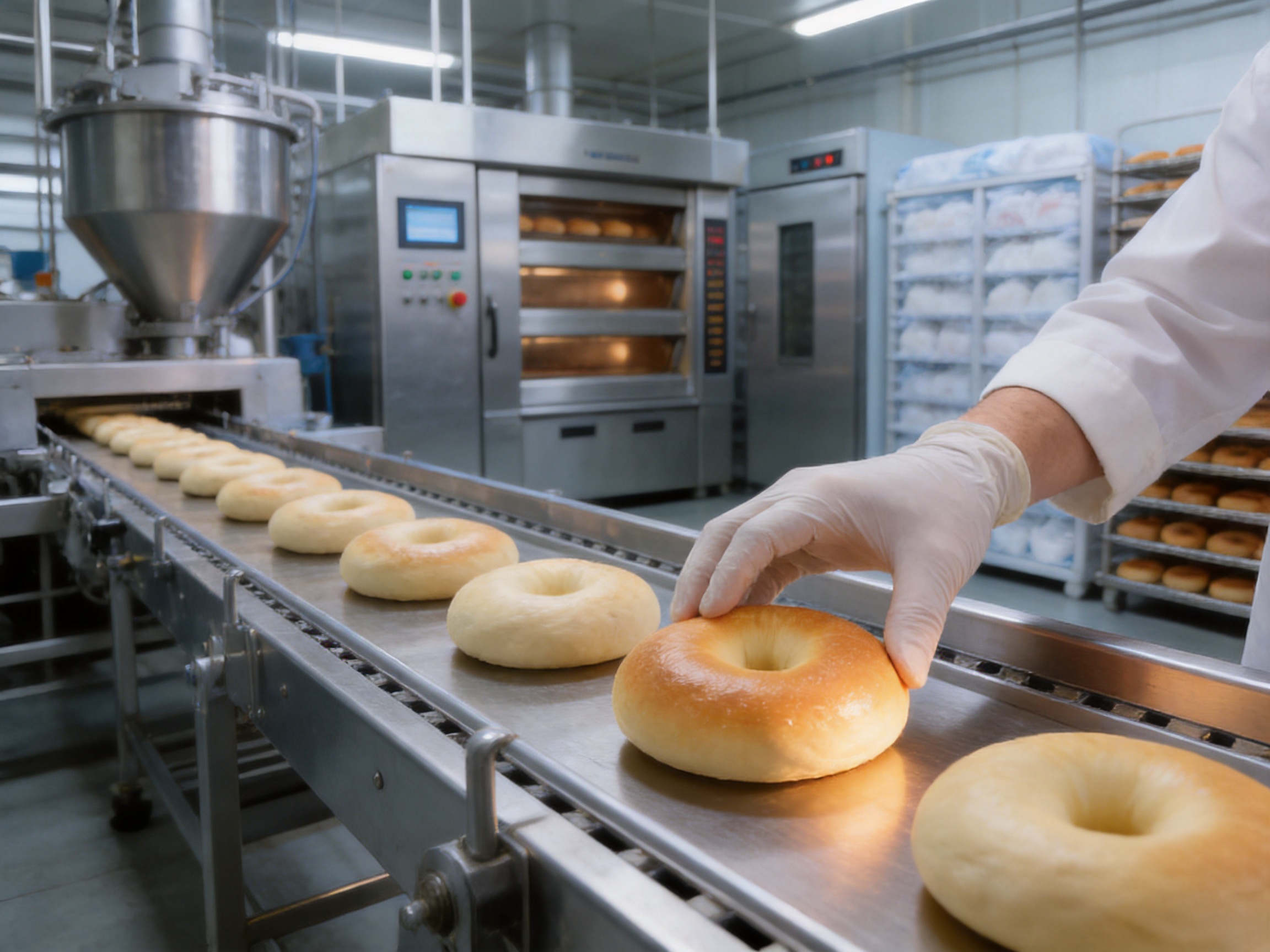
The manufacturing strengths of Goobagel are built around a supply chain that includes raw materials, R&D, production, and distribution. This integrated model provides greater control over the relationship between product design and manufacturing execution. It also supports faster communication when customers need product adjustments or when new applications are being considered.
Quality consistency begins with a defined product target. The Glossy and Brittle Plain Bagel is not described only by its size or shape. It is defined by a complete sensory profile: clean wheat aroma, a glossy crust, a crisp initial bite, elastic chew, and a fine, hydrated crumb. Establishing these targets helps guide production decisions and customer evaluation.
Consistency also includes practical performance. A product should slice cleanly, tolerate toasting, accept spreads, and support sandwich fillings. It should behave predictably in the customer’s preparation environment. These factors matter because commercial buyers evaluate bakery products not only at the moment of unwrapping but throughout the preparation and serving process.
Why the Plain Format Offers Long-Term Value
Trends in foodservice and retail change quickly. Seasonal flavors, limited editions, and strong flavor combinations can create excitement, but they may not remain relevant throughout the year. A plain bagel has a more stable role in the product portfolio. It can serve as a permanent menu item and provide a dependable volume base.
Its flexibility also reduces menu complexity. One base product can be used in multiple recipes, which helps operators simplify purchasing and storage. Staff can be trained to prepare several menu items from the same bagel. Retailers can position the product in breakfast, snack, and meal occasions without needing separate bakery formats for each use.
The plain format is also suitable for product layering. Operators can add premium ingredients such as specialty cream cheese, smoked proteins, local vegetables, artisan preserves, or seasonal toppings. The bagel provides structure and grain character while the operator controls the final flavor identity. This creates opportunities for menu innovation without changing the core bakery supply.
For consumers, familiarity is another advantage. Customers generally understand how to use a plain bagel. They do not need extensive explanation, and they can adapt it to their own preferences. A product that is easy to understand can be especially valuable in retail environments where shoppers make quick purchasing decisions.
Recommended Preparation and Serving Concepts
For the simplest presentation, the bagel can be served plain or lightly warmed to emphasize its natural wheat aroma. Toasting increases surface crispness and creates a warmer, more pronounced baked character. Butter or cream cheese can be applied immediately after heating so that it spreads smoothly across the cut surface.
For a sweet application, the bagel can be paired with cream cheese and fruit preserves, honey, sliced banana, cinnamon, or nut-based spreads. The restrained flavor of the base allows sweet ingredients to remain clear without creating an overly flavored finished product.
For a savory application, it can be filled with egg, cheese, roasted vegetables, chicken, turkey, beef, smoked fish, or plant-based proteins. Its chew and structure help keep these ingredients contained. Sauces and spreads should be applied in a controlled amount to preserve the balance between moist filling and firm bread.
For premium café menus, the bagel can be cut and toasted before adding a signature filling. Operators may use the same base with several different recipes, such as a breakfast egg sandwich, a cream cheese and smoked fish option, a roasted vegetable combination, or a deli-style meat and cheese sandwich.
For catering, smaller portions can be created by slicing each bagel into multiple sections. The product can be arranged with assorted spreads and fillings to create a flexible breakfast or brunch platter. The neutral base is particularly useful when the catering audience includes guests with varied tastes.
Company Manufacturing and Development Strengths
Jiangsu Goobagel Food Technology Co., Ltd. has specialized in bagel research and manufacturing since 2019. Its business is structured around frozen bakery production, with an integrated supply chain covering raw materials, product research and development, manufacturing, and distribution. This gives the company a focused understanding of both the technical and commercial sides of bagel production.
The company has developed more than 100 clean-label bagel varieties. This range reflects experience with product formulation, flavor development, texture control, and market-specific applications. It also demonstrates the ability to move beyond a single product and support customers that need a broader bakery portfolio.
Its customer base includes retail businesses, foodservice operators, café chains, tea brands, and bakery companies. These channels require different forms of support. Retail customers may need stable packaging-ready products. Foodservice customers may prioritize handling and preparation. Café and tea brands may seek products that complement beverages and support fast service. Bakery operators may require dependable bases for further processing.
The company’s stated values—persistence, craftsmanship, respect, and science—align with the requirements of a technically demanding bakery category. Persistence supports long-term product improvement. Craftsmanship emphasizes attention to texture and baking quality. Respect supports cooperation with customers and partners. Science encourages controlled development rather than relying only on informal production habits.
Commercial Advantages for Buyers
Buyers evaluating the Glossy and Brittle Plain Bagel can consider several commercial advantages. First, the product has a broad application range. It can be sold as a retail bakery item, used in a foodservice sandwich, served in a café, or incorporated into a private label line.
Second, the product has a clear sensory identity. The contrast between glossy crust, brittle first bite, elastic chew, and fine crumb gives sales teams a specific quality story to communicate. Products with a defined sensory profile are easier to position than products described only with general terms such as “standard bagel” or “frozen bread.”
Third, the product supports menu customization. Its clean wheat character does not dictate the final recipe. Buyers can add their own flavors through fillings, spreads, toppings, sauces, and packaging presentation.
Fourth, the company’s integrated manufacturing system supports supply planning. An experienced frozen bakery producer can help customers move from product selection to regular ordering with greater confidence. This is particularly important for businesses expanding across multiple locations.
Finally, the product can serve as a core item in a larger portfolio. Once a customer establishes demand for the plain bagel, related varieties can be added to create a more complete range. This supports category growth while maintaining a familiar base product.
Q&A
What makes this plain bagel different from an ordinary bread roll?
The product is designed around the characteristic bagel contrast of a defined glossy crust, a crisp first bite, and an elastic interior chew. Its crumb is dense enough to feel substantial while remaining tender and hydrated. A conventional bread roll is often softer and may not provide the same crust-to-chew transition.
What is the product weight?
The listed product weight is approximately 110 grams. This format is suitable for individual serving, breakfast menus, retail packs, sandwich assembly, and catering applications.
Does the bagel have a strong flavor?
No. Its flavor profile is intentionally clean and understated, with an honest wheat aroma. This allows it to pair with sweet spreads, savory fillings, cream cheese, butter, vegetables, proteins, and sauces without creating flavor conflict.
Why is the crumb described as honeycomb?
The description refers to a fine internal structure that provides a balance between density and tenderness. The crumb is not intended to be hollow or excessively airy. Instead, it should feel smooth and substantial while retaining enough moisture and openness for a comfortable bite.
Is the bagel suitable for sandwiches?
Yes. Its structure is designed to support slicing, toasting, spreads, sauces, and fillings. It can be used for breakfast sandwiches, deli-style combinations, vegetarian recipes, and other foodservice applications.
Can it be used in retail frozen bakery programs?
The product is developed within a modern frozen bakery manufacturing system. This makes it suitable for commercial programs that require frozen storage, distribution, and preparation according to the buyer’s operating procedures.
Who can purchase or customize this product?
Potential customers include retailers, foodservice distributors, café chains, tea brands, bakeries, restaurants, caterers, and private label buyers. Customization requirements can be discussed according to the intended market, packaging format, serving method, and product range.
What manufacturing capabilities support the product?
The manufacturer integrates raw material management, research and development, production, and distribution. Its bagel-focused experience and portfolio of more than 100 clean-label varieties support product development and commercial supply.
How can the bagel be served?
It can be served plain, warmed, toasted, spread with butter or cream cheese, combined with sweet toppings, or used as the base for a complete sandwich. Its neutral profile allows one product to support many recipes and dayparts.
Why is a plain bagel useful for a private label brand?
A plain bagel provides a flexible foundation for brand positioning. The private label owner can control packaging, serving suggestions, fillings, and promotional messaging while using a product with a clear and broadly acceptable flavor profile.
Conclusion
The Glossy and Brittle Plain Bagel demonstrates how a simple bakery product can achieve meaningful differentiation through disciplined formulation and precise manufacturing. Its value comes from balance: a naturally glossy crust with a crisp first bite, an elastic chew that remains approachable, and a fine honeycomb crumb that is dense without heaviness and hydrated without sogginess.
Its clean wheat character makes it more versatile than strongly flavored alternatives. It can move from a simple toasted breakfast item to a premium café sandwich, a retail freezer staple, a catering component, or a private label product. This flexibility allows buyers to serve several customer needs while maintaining a manageable product portfolio.
The product is supported by Jiangsu Goobagel Food Technology Co., Ltd.’s focused experience in bagel research and frozen bakery manufacturing. The company’s integrated supply chain, product development capabilities, broad variety portfolio, and experience across retail and foodservice channels provide a strong foundation for commercial cooperation.
For buyers seeking a reliable plain bagel with a refined texture, broad application potential, and professional manufacturing support, this product offers a practical combination of sensory quality and business flexibility. It is not plain in the sense of being ordinary. It is plain in the sense of being carefully focused: high-quality grain character, controlled texture, dependable structure, and a foundation ready for almost any serving concept.
References
1. Product specification and sensory description for the Glossy and Brittle Plain Bagel, Jiangsu Goobagel Food Technology Co., Ltd.
2. Company profile and manufacturing information for Jiangsu Goobagel Food Technology Co., Ltd.
3. General principles of wheat flour functionality, dough development, fermentation, and bakery texture control.
4. General frozen bakery production and foodservice distribution practices.
5. General applications of bagels in retail, café, catering, and commercial sandwich menus.
