
 中文简体
中文简体
 English





postmaster@goobagelfood.com
Content
- 1 A Grain-Forward Bagel for Contemporary Eating Habits
- 2 True Whole-Wheat Character from Whole-Kernel Milling
- 3 Australian Rolled Oats for Layered Texture
- 4 Flaxseed for Aroma, Texture, and Product Identity
- 5 How the Three Grain Components Work Together
- 6 A Convenient Five-Minute Eating Experience
- 7 Advantages Over Conventional Bagel Options
- 8 Frozen Bakery Manufacturing as a Commercial Advantage
- 9 Integrated Supply Chain and Product Development Strengths
- 10 Process Control from Raw Materials to Finished Product
- 11 Performance in Retail and Foodservice Applications
- 12 Private Label and OEM Development Opportunities
- 13 Menu Ideas for the Low-Fat Whole Wheat Oat Flaxseed Bagel
- 14 Quality, Consistency, and Customer Value
- 15 Responsible Product Positioning
- 16 Why Manufacturing Expertise Matters in Multigrain Bagels
- 17 Purchasing Considerations for Commercial Buyers
- 18 Frequently Asked Questions
- 18.1 What is the Low Fat Whole Wheat Oat Flaxseed Bagel?
- 18.2 What makes the product different from a plain bagel?
- 18.3 How should the bagel be prepared?
- 18.4 Is it suitable for foodservice?
- 18.5 What is the benefit of the 85-gram size?
- 18.6 Does the product contain whole grains?
- 18.7 What do the oats contribute?
- 18.8 What does the flaxseed contribute?
- 18.9 Can the bagel be used for private-label products?
- 18.10 Who manufactures the product?
- 18.11 How many bagel varieties has the company developed?
- 18.12 What should buyers confirm before placing an order?
- 19 Conclusion
- 20 References
- 21 Product: Low Fat Whole Wheat Oat Flaxseed Bagel
Consumers are increasingly looking for bakery products that combine convenience, satisfying texture, recognizable ingredients, and a more balanced nutritional profile. Bagels remain one of the most versatile bakery formats because they can be enjoyed at breakfast, used as a sandwich base, served as a post-workout meal, or incorporated into café and foodservice menus. However, not every bagel delivers the same eating experience. Some products are overly dense, excessively sweet, bland in flavor, or made with refined flour that offers limited grain character.
The Low Fat Whole Wheat Oat Flaxseed Bagel is designed to answer these common market needs with a grain-focused formula, a layered texture, and a convenient frozen-bakery format. Each bagel weighs 85 grams and combines true whole-wheat flour, Australian rolled oats, and flaxseed. The result is a bagel with a rustic yet approachable bite, a naturally toasted aroma, and a flexible profile that works equally well with sweet or savory toppings.
For consumers, the product offers an easy five-minute preparation experience: slice, toast, and add a preferred spread or filling. For retailers, cafés, restaurants, and foodservice operators, it provides a reliable base for menu development. Its flavor is distinctive enough to stand alone, while its neutral grain profile allows it to pair with cream cheese, eggs, vegetables, deli meats, fruit spreads, and other ingredients.
This article examines the product’s ingredient concept, sensory advantages, practical applications, commercial potential, and the manufacturing strengths behind its development. It also explains why a whole-wheat, oat, and flaxseed formulation can help a bagel stand apart in an increasingly competitive frozen bakery market.

Low Fat Whole Wheat Oat Flaxseed Bagel
A Grain-Forward Bagel for Contemporary Eating Habits
The modern bakery market is shaped by several overlapping trends. Consumers want convenient foods, but they also pay closer attention to ingredient quality, satiety, texture, and the perceived balance of a product. Retail buyers and foodservice operators are responding by expanding beyond traditional white-flour bakery items and introducing products that communicate more natural grain character.
The Low Fat Whole Wheat Oat Flaxseed Bagel is well suited to this environment because it combines the familiarity of a classic bagel with the visual, aromatic, and textural cues associated with whole grains. The formulation does not rely on an elaborate topping or strongly flavored filling to create differentiation. Instead, the product’s appeal is built into the dough through whole wheat, oats, and flaxseed.
At 85 grams, the bagel offers a substantial individual portion while remaining practical for single-serve retail packaging and foodservice use. It can function as a complete breakfast when paired with eggs or dairy, as a lighter lunch foundation when filled with vegetables and lean proteins, or as a simple snack when toasted and spread with nut butter or fruit preserves.
Its low-fat positioning also creates opportunities for operators who want to offer a more balanced alternative without removing the satisfaction consumers expect from a bagel. A lower-fat formulation does not automatically mean a dry or disappointing eating experience. The interaction between whole-wheat flour, rolled oats, flaxseed, moisture, and baking conditions is important in creating a product that retains a pleasant chew and a full grain flavor.
Rather than competing only on sweetness, size, or heavy toppings, this bagel competes through ingredient transparency, everyday versatility, and an eating experience that develops as the consumer chews. These qualities can be valuable in categories where buyers are searching for products that feel both convenient and credible.
True Whole-Wheat Character from Whole-Kernel Milling
One of the defining characteristics of this product is its emphasis on true whole-wheat flavor. Whole wheat is more than a color or marketing phrase. Its sensory identity comes from the presence and interaction of different parts of the grain, including bran, endosperm, and germ. When these components are retained and handled appropriately, they contribute distinctive aroma, flavor, color, and texture.
The bran contributes a subtle rustic bite. It can create a gently grainy sensation that communicates authenticity and gives the bagel a more complex chew than a highly refined flour product. The germ contributes a naturally sweet and lightly toasted aroma, while the endosperm provides the starch structure necessary for dough development and a satisfying bread-like interior.
The product concept prioritizes milling from whole kernels to preserve as much of this grain character as possible. This approach supports a more honest whole-wheat profile rather than simply adding bran or coloring to a refined flour base. The result is intended to taste wholesome and clean, with a depth that does not depend on excessive sweetness, artificial intensity, or a heavy topping.
For consumers familiar with whole-grain bakery products, this distinction matters. A bagel made with genuine whole-wheat ingredients can provide a more recognizable grain aroma and a more substantial mouthfeel. For buyers and brand owners, it offers a clearer product story that can be communicated on packaging, menus, product pages, and promotional materials.
Whole-wheat dough can present technical challenges. Bran particles may interfere with gluten development, absorb water, and affect dough elasticity. The germ contains natural oils that can influence flavor and shelf stability. These factors require careful control of ingredient quality, hydration, mixing, proofing, baking, and frozen storage. A manufacturer with product development experience must balance these variables so that the finished bagel remains appealing after freezing, distribution, thawing, and reheating.
The goal is not to create a harsh or overly dense whole-wheat product. Instead, the target is a bagel with a recognizable grain bite that remains approachable to consumers who may be transitioning from conventional white-flour bagels to more wholesome alternatives.
Australian Rolled Oats for Layered Texture
Rolled oats add another dimension to the product’s eating experience. Unlike finely milled oat flour, rolled oats retain a visible and textural identity. During baking, the oat pieces can toast and contribute a mild nutty aroma. Depending on their placement and hydration, they may provide a soft chew in some areas and a lightly crisp sensation in others.
The product uses Australian rolled oats as part of its grain system. Their role is not simply decorative. Oats help broaden the flavor profile of the bagel, adding a gentle cereal sweetness that complements the deeper notes of whole wheat. This creates a more rounded profile that can be enjoyed without sugar-heavy toppings.
Texture is especially important in a bagel. Consumers typically expect a combination of a lightly firm exterior and a chewy interior. An oat-containing formulation can add variation within that structure. As the bagel is chewed, the consumer experiences the initial bite of the crust, the resilient interior, and the softer or slightly toasted oat pieces. This layered experience can make the product feel more substantial and memorable.
Oats also support the product’s positioning as a breakfast-friendly food. They are widely recognized as a familiar cereal grain, and their presence can make the bagel feel suitable for consumers who associate oats with steady, everyday nourishment. The product therefore combines the portability of a bagel with the grain appeal of an oat-based breakfast item.
For foodservice operators, oats can also improve visual differentiation. A whole-wheat oat bagel can be distinguished from a traditional plain bagel in a display case or online menu image without requiring an elaborate coating. This creates an opportunity for clear merchandising: the product can be presented as a whole-grain option while remaining familiar enough for mainstream customers.
Flaxseed for Aroma, Texture, and Product Identity
Flaxseed provides a third layer of differentiation. When consumers bite into the bagel, the seeds can offer a subtle popping sensation and a nutty fragrance. This small textural event helps create a more dynamic eating experience than a smooth, uniform dough.
The flaxseed is particularly effective when combined with whole wheat and oats. Whole wheat brings rustic grain depth, oats provide a soft cereal sweetness and toasted character, and flaxseed adds a light nutty note with a distinct seed texture. Together, these ingredients create a product identity that is more complex than a basic multigrain label might suggest.
The presence of flaxseed also supports visual communication. Seeds can be seen in the cut surface or across the exterior, giving consumers immediate evidence that the product contains recognizable grain ingredients. In a retail setting, this visual cue can encourage trial because shoppers can quickly understand that the bagel is different from a standard refined product.
Careful processing remains important. Seeds must be distributed consistently throughout the dough so that each bagel offers a dependable experience. Uneven distribution can lead to variation between units, while excessive seed concentration in one area may affect slicing or eating quality. Consistent dosing, mixing, and portioning are therefore important parts of manufacturing control.
Flaxseed also has a natural oil content, which means ingredient storage and handling deserve attention. A professional frozen bakery manufacturer must manage raw-material storage, production scheduling, formulation balance, and finished-product protection. The purpose is to preserve the intended nutty aroma while maintaining a stable product throughout its commercial life.
How the Three Grain Components Work Together
The main strength of the formulation is the interaction among whole wheat, rolled oats, and flaxseed. Each ingredient contributes a different sensory function, and the combination creates a more complete product experience.
| Component | Primary Contribution | Consumer Experience | Commercial Value |
|---|---|---|---|
| True whole wheat | Rustic grain flavor, bran bite, germ aroma, darker natural appearance | Wholesome, substantial, authentic | Supports whole-grain positioning and product differentiation |
| Australian rolled oats | Toasted cereal notes, soft chew, layered texture | Comforting, mildly sweet, satisfying | Strengthens breakfast appeal and visual interest |
| Flaxseed | Nutty fragrance, seed texture, gentle popping sensation | More dynamic bite and recognizable inclusions | Creates a distinctive multigrain identity |
| Bagel format | Chewy structure, portable shape, broad topping compatibility | Convenient and familiar | Suitable for retail, cafés, restaurants, and catering |
When these components are properly balanced, the product does not taste like separate ingredients placed together. Instead, the grains support one another. The whole wheat establishes a firm foundation, oats soften and broaden the profile, and flaxseed supplies contrast. This balance is important because a product with too much bran may seem rough, one with too many oats may lose structural integrity, and one with excessive seeds may become difficult to portion or fill.
The formulation is therefore best understood as a coordinated grain system. It is designed to deliver depth without heaviness, texture without harshness, and a recognizable ingredient story without sacrificing versatility.

A Convenient Five-Minute Eating Experience
Convenience is central to the product concept. The recommended preparation is simple: slice the bagel, toast it, and add a preferred spread or filling. This process can be completed in approximately five minutes, making the product suitable for busy mornings, quick office meals, post-exercise eating, and simple at-home snacks.
Toasting is especially valuable because it activates the product’s grain aroma. Heat can enhance the roasted notes of whole wheat and oats while lightly crisping the exterior. It can also warm the flaxseed and release its nutty fragrance. The interior remains suitable for spreads and fillings, creating a contrast between the toasted surface and chewy center.
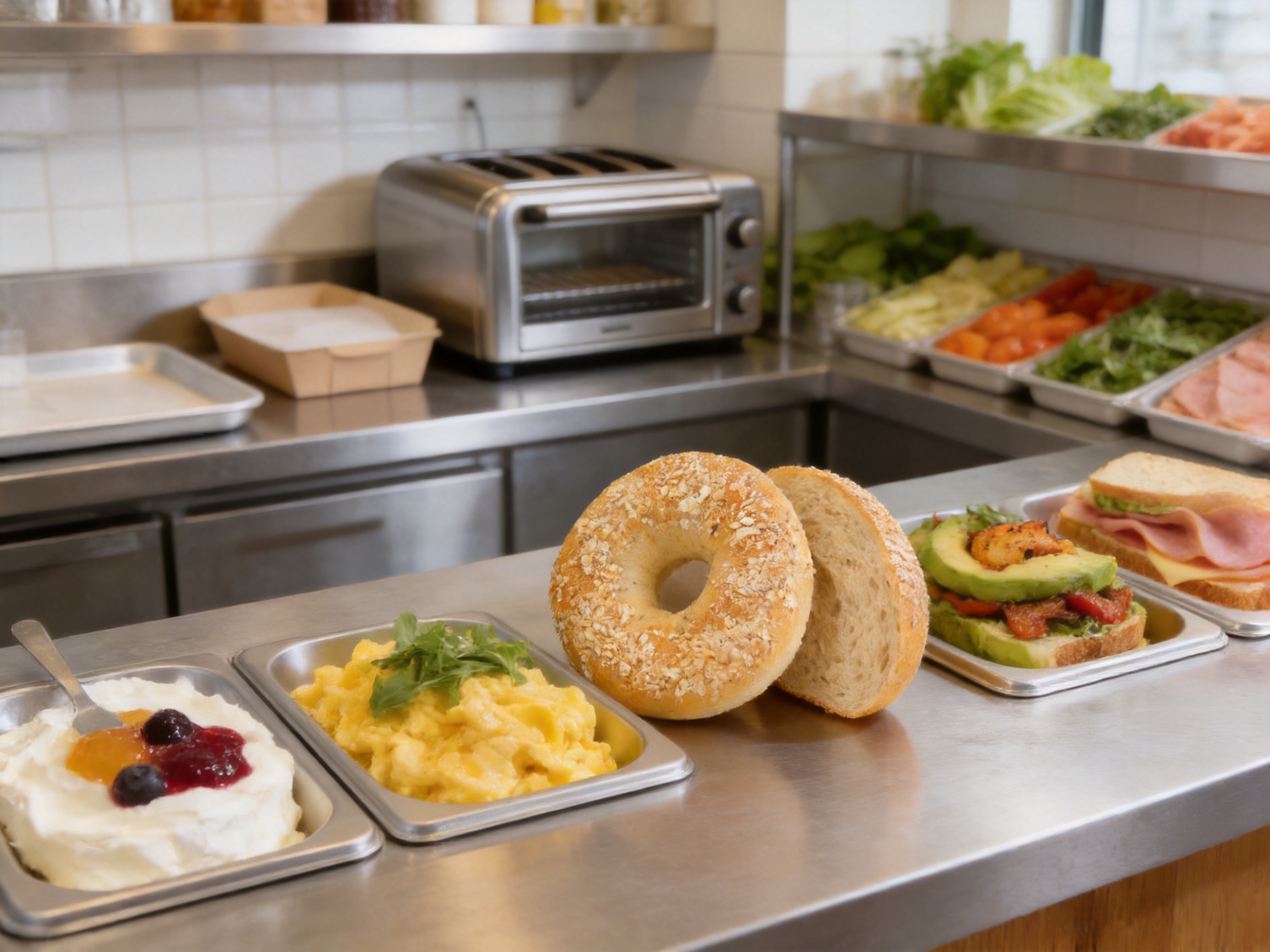
The product can be served with cream cheese or jam for a familiar breakfast. These simple combinations allow the bagel’s grain flavor to remain noticeable while adding richness or sweetness. For a more substantial meal, it can be filled with eggs, leafy greens, sliced vegetables, deli meats, roasted vegetables, or other sandwich ingredients.
This flexibility makes the bagel useful across different dayparts. Breakfast cafés can serve it with scrambled eggs, avocado, or cream cheese. Lunch operators can use it as a sandwich carrier. Fitness-oriented outlets can pair it with eggs, lean proteins, or vegetables. Hotels and catering businesses can include it in breakfast buffets. Retailers can sell it as a freezer-friendly household staple.
The product also supports customization. A consumer can choose a sweet, savory, high-protein, vegetarian, or plant-forward preparation without changing the underlying bagel. This adaptability increases the number of occasions in which the product can be consumed and reduces the risk that it will be perceived as a niche item.
Advantages Over Conventional Bagel Options
In a crowded bagel category, products must offer a clear reason for selection. The Low Fat Whole Wheat Oat Flaxseed Bagel has several points of distinction when compared with a conventional plain or refined-flour bagel.
More Recognizable Grain Character
A plain refined bagel often depends on toppings, spreads, or fillings to provide flavor interest. This product has a built-in grain profile created by whole wheat, oats, and flaxseed. That gives it greater standalone character and allows operators to serve it with minimal additional ingredients.
Layered Rather Than Uniform Texture
Some conventional bagels provide a consistent but one-dimensional chew. The inclusion of rolled oats and flaxseed introduces textural variation. Consumers encounter the firm exterior, chewy interior, oat pieces, and seed inclusions in a single bite. This can create a more engaging experience and support repeat purchase.
Balanced Flavor for Sweet and Savory Use
A heavily sweetened bagel may be difficult to use with savory fillings, while an aggressively seasoned bagel may not work well with jam or cream cheese. The whole wheat, oat, and flaxseed profile is comparatively flexible. It has enough flavor to stand on its own but remains compatible with many toppings and fillings.
Low-Fat Product Positioning
The low-fat positioning gives retailers and foodservice operators an option for consumers who are actively comparing nutritional profiles. It also creates a point of distinction from richer bakery items that rely on high-fat inclusions, laminated dough, or sweet fillings. The product can be incorporated into a menu as a grain-forward alternative without presenting itself as a dessert-style bakery item.
Convenience Without Excessive Preparation
The frozen format allows the bagel to be stored and prepared according to operational needs. Consumers can enjoy it after simple toasting, while commercial kitchens can use it as a consistent base for sandwiches and plated meals. This is more efficient than preparing dough from scratch or maintaining a complex in-house bagel production system.
Strong Cross-Channel Compatibility
The product is suitable for retail, foodservice, cafés, tea brands, bakery operators, and restaurant menus. Its broad usage potential is an advantage over highly specialized bakery products that can only be sold in one channel or one daypart.
Frozen Bakery Manufacturing as a Commercial Advantage
Frozen bakery production offers important practical benefits when it is managed through a coordinated manufacturing system. A frozen bagel can be produced in planned batches, distributed to different markets, and prepared when needed. This helps reduce the pressure to bake fresh products at every point of sale and supports more consistent availability.
For retailers, frozen storage can extend planning flexibility. Products can be brought into distribution centers or stores according to demand forecasts, then prepared in smaller quantities. This may help reduce the operational risk associated with unpredictable daily demand. Retailers can also use frozen products to maintain assortment across multiple locations.
For cafés and restaurants, frozen bagels can simplify kitchen operations. Staff members do not need to mix, shape, proof, boil, and bake bagel dough during service. Instead, they can focus on finishing, toasting, filling, and presentation. This is especially useful for businesses that want to offer a bagel sandwich menu without investing in a full bakery production line.
A reliable frozen bakery product must be more than a fresh bagel placed into a freezer. The formulation and process must be designed for freezing, storage, transport, thawing, and reheating. Water migration, ice crystal formation, packaging protection, and reheating performance can all influence the final eating experience.
The manufacturing objective is to preserve the intended structure and flavor after the product reaches the customer. This requires attention to dough development, portion control, baking consistency, cooling, freezing speed, storage conditions, and distribution discipline. A manufacturer with an integrated supply chain is better positioned to coordinate these stages than a company that relies on disconnected suppliers and production partners.
Integrated Supply Chain and Product Development Strengths
Jiangsu Goobagel Food Technology Co., Ltd. has specialized in bagel research and manufacturing since 2019. As a modern frozen bakery producer, the company operates an integrated supply chain that covers raw materials, research and development, production, and nationwide distribution.
This structure provides several advantages for customers seeking private-label, OEM, or wholesale bagel solutions. When ingredient sourcing, formula development, manufacturing, and distribution are connected, product decisions can be evaluated more efficiently. Adjustments to texture, flavor, portion size, packaging format, or application can be assessed within a coordinated system rather than being divided among unrelated organizations.
Research and development is particularly important for whole-wheat and multigrain products. Grain ingredients can affect dough absorption, mixing behavior, proofing, slicing, freezing, and reheating. A product development team must understand how these variables interact and how the bagel will perform not only immediately after baking but also after frozen storage and foodservice preparation.
The company has developed more than 100 clean-label bagel varieties for different commercial settings. This portfolio experience indicates familiarity with a range of flavors, textures, inclusions, and usage requirements. For a buyer, broad product development experience can be valuable because it supports both standard product sourcing and customized project development.
Commercial customers may require different specifications depending on the channel. A café may prioritize fast preparation and sandwich stability. A supermarket may require retail-ready packaging and reliable freezer performance. A hotel may focus on consistent portioning and buffet presentation. A bakery operator may seek a base product that can be finished or customized in-store. The ability to understand these differences is an important manufacturing strength.
Goobagel’s stated mission is to provide customers with high-quality and healthy products while providing partners with opportunities to realize their dreams. Its stated values—persistence, craftsmanship, respect, and science—align with the requirements of a product category where repeatability, careful development, and practical innovation are essential.
Process Control from Raw Materials to Finished Product
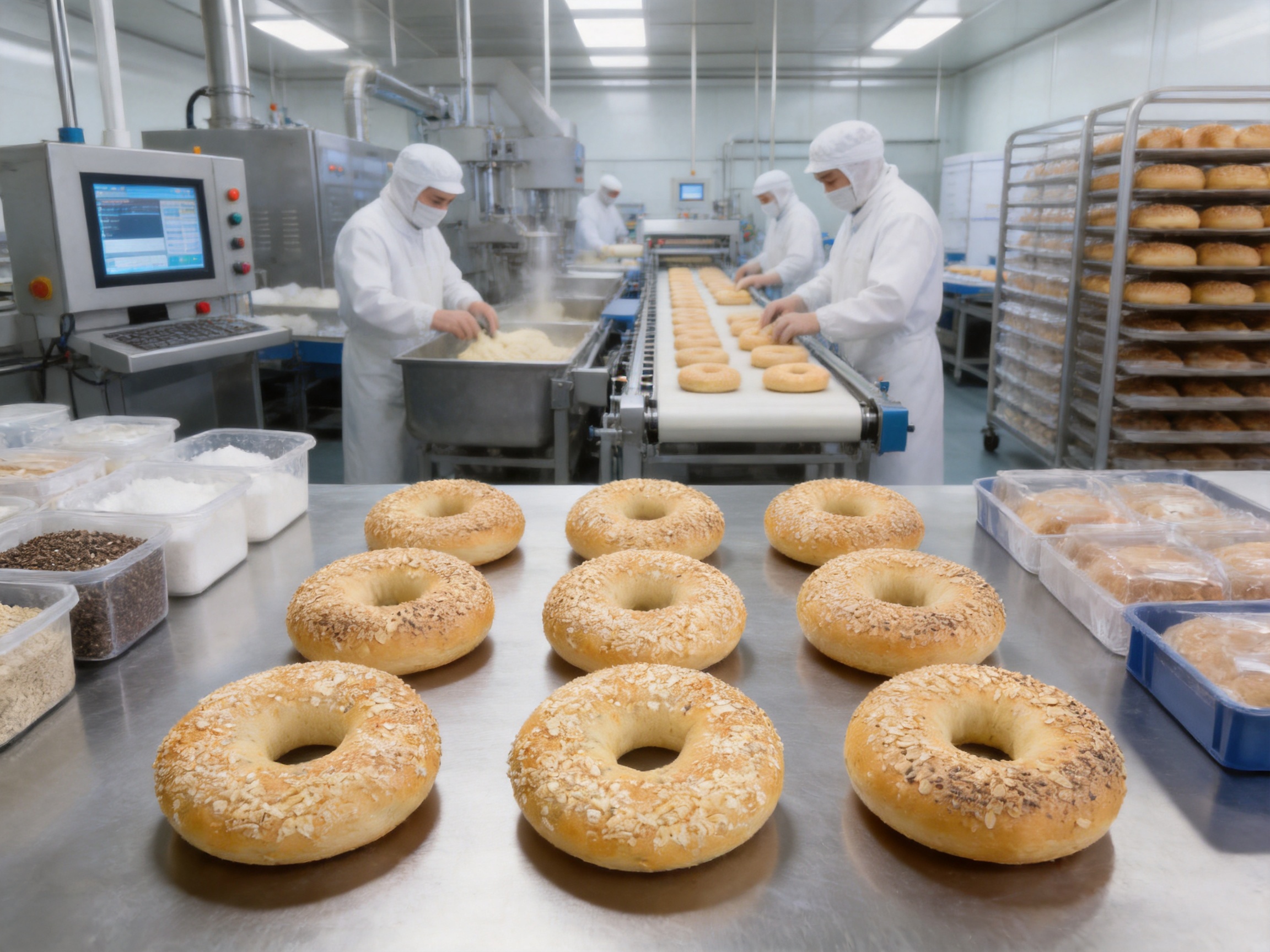
A consistent bagel begins with consistent raw materials. Whole-wheat flour, rolled oats, flaxseed, and other ingredients must be selected and stored in a way that protects their quality. Grain ingredients can vary naturally in moisture, particle size, aroma, and absorption. Professional manufacturing therefore requires incoming-material evaluation and appropriate storage procedures.
Ingredient preparation is followed by controlled mixing. The dough must be developed sufficiently to create the desired structure while accounting for the presence of bran, oats, and seeds. Whole-wheat particles may influence gluten formation, and rolled oats may absorb moisture during mixing and resting. The formula and mixing sequence must be managed to produce dough that can be portioned and shaped consistently.
Portion control is especially important for an 85-gram bagel. Consistent weight supports predictable nutrition information, standardized menu costing, uniform packaging, and even baking. In foodservice, consistent sizing also ensures that sandwiches look consistent from one order to the next. In retail, it helps customers understand what to expect when they purchase the product.
Shaping determines the bagel’s visual identity and affects how it performs during proofing, baking, slicing, and filling. The dough must retain an appropriate central opening or bagel form while maintaining enough structural strength to avoid excessive deformation. Consistent shaping also improves the appearance of products displayed in a retail package or on a serving plate.
Proofing requires careful timing and environmental control. Under-proofed dough may produce a dense texture, while over-proofed dough may lose strength and become difficult to handle. Whole-wheat and multigrain formulations may respond differently from refined-flour dough, making process knowledge especially important.
Baking develops the crust, interior structure, aroma, and final color. The objective is to achieve a bagel that is sufficiently baked for stability and flavor while retaining a pleasant chew. The presence of oats and flaxseed adds additional considerations because they can influence surface color and local moisture behavior.
After baking, cooling and freezing are critical. Product should be cooled appropriately before freezing and packaging so that excess heat and condensation do not compromise texture or packaging integrity. Efficient freezing helps protect the structure and supports better performance during later preparation.
These stages illustrate why advanced manufacturing is not limited to large equipment. It also involves formulation expertise, process discipline, production planning, quality checks, and a clear understanding of the customer’s final use. The finished bagel is the result of the entire chain.
Performance in Retail and Foodservice Applications
The product’s commercial potential comes from its ability to perform in multiple environments. For retail, it can be offered as a frozen breakfast staple with clear whole-grain and multigrain appeal. Packaging can communicate the presence of whole wheat, rolled oats, and flaxseed while highlighting the 85-gram portion and easy preparation method.
In supermarkets, the bagel can be positioned alongside traditional plain, sesame, onion, and flavored bagels. Its differentiation is based on ingredients and texture rather than an unusual flavor that may limit consumer acceptance. It can therefore attract shoppers seeking a more grain-focused option while remaining familiar enough for ordinary breakfast use.
In cafés, the bagel can be toasted to order and paired with cream cheese, egg, avocado, vegetables, or deli meats. Its hearty grain profile can support premium menu descriptions, especially when combined with fresh ingredients. Operators may also use it as a base for seasonal specials, such as roasted vegetable sandwiches, egg-and-greens breakfast items, or turkey and salad combinations.
In restaurants, the product can be incorporated into brunch menus, quick-service meals, and takeout offerings. Its portability is useful for customers who want a meal that can be eaten while commuting or working. Because the bagel can be prepared with a wide range of fillings, it allows menu developers to create several products from one core bakery item.
For hotels and catering operators, portion consistency and preparation convenience are important. The 85-gram format can be used for breakfast stations, boxed breakfasts, meetings, and events. It can be served plain with spreads or used in pre-assembled sandwiches. Frozen inventory can also support demand fluctuations better than a strictly fresh, daily-production model.
Tea brands and bakery operators may use the product to expand into savory or breakfast offerings. A whole-wheat oat flaxseed bagel can complement beverages and pastries while providing a more substantial alternative for customers who want a filling food item. This creates opportunities for cross-selling and broader menu balance.
Private Label and OEM Development Opportunities
Private-label buyers often need more than a finished product. They may require assistance with formulation, portion size, packaging, positioning, and production planning. An experienced bagel manufacturer can support these needs by using existing R&D capabilities and production knowledge.
The Low Fat Whole Wheat Oat Flaxseed Bagel can serve as a finished product or as a development reference. A buyer may choose the existing formula for faster commercialization, or request adjustments to match a specific market. Potential areas for discussion may include bagel size, seed distribution, flavor intensity, packaging quantity, preparation instructions, and channel requirements.
OEM development is particularly relevant for retailers and foodservice groups that want a differentiated product under their own name. The product’s ingredient story is easy to understand and can be adapted to different brand identities. A customer may emphasize whole grains, convenience, breakfast, active lifestyles, or café-style eating depending on its target audience.
Successful private-label development requires clear communication about specifications. Buyers should define the target market, serving format, storage conditions, packaging preferences, expected order volumes, distribution region, and preparation method. Manufacturers can then evaluate the formula and process against these requirements.
Because Goobagel manages research and development, production, and distribution within an integrated structure, it is positioned to discuss these commercial details in a coordinated way. This can reduce the complexity of working with separate formula developers, bakeries, and logistics providers.
For international buyers, product discussions should also address local labeling, allergen declarations, import requirements, packaging language, and storage regulations. These details vary by market and should be confirmed during the commercialization process. A strong manufacturing partner should be prepared to provide the product information needed for regulatory and purchasing review.
Menu Ideas for the Low-Fat Whole Wheat Oat Flaxseed Bagel
The product’s balanced flavor allows it to support a wide variety of menu concepts. The following applications demonstrate how the bagel can be used without requiring complicated preparation.
Breakfast Egg and Greens Bagel
Toast the sliced bagel and fill it with scrambled or fried egg, leafy greens, and a mild cheese. The grain flavor gives the sandwich a hearty foundation, while the greens add freshness. This combination can be offered as a breakfast café item or prepared for takeaway.
Cream Cheese and Fruit Spread
For a simple sweet application, use cream cheese with berry, apple, or citrus spread. The mild sweetness of toasted oats complements fruit flavors without overpowering them. This preparation is suitable for hotel breakfast service, cafés, and at-home consumption.
Roasted Vegetable Bagel
Layer roasted vegetables such as peppers, mushrooms, zucchini, or eggplant with greens and a light dressing. The flaxseed and whole-wheat notes pair naturally with roasted flavors. This format can support vegetarian menu development and plant-forward positioning.
Deli Meat and Salad Bagel
Use sliced deli meat with lettuce, tomato, cucumber, and a mustard-based spread. The bagel’s chewy structure helps support sandwich fillings, while its grain flavor provides more character than a standard white bread carrier.
Post-Workout Combination
For a more substantial option, pair the bagel with egg, lean protein, vegetables, or a dairy-based spread. The product can be used as a convenient carbohydrate component in a broader meal. Operators should develop final nutritional and allergen information according to the complete recipe rather than the bagel alone.
Open-Faced Café Toast
Slice and toast the bagel, then serve it open-faced with avocado, cottage cheese, hummus, or smoked fish. This presentation highlights the grain texture and can create a visually appealing plated item with minimal assembly.
Quality, Consistency, and Customer Value
For commercial buyers, product quality is closely connected to consistency. A bagel may taste excellent in a sample but fail commercially if its size, texture, or preparation performance varies widely. Consistency supports customer satisfaction, purchasing confidence, menu costing, and operational efficiency.
The product’s 85-gram specification provides a basis for portion control. Consistent weight helps foodservice operators calculate ingredient usage and selling prices. It also allows retailers to create uniform multipacks and communicate serving expectations clearly.
Texture consistency is equally important. Customers expect a bagel to remain pleasant after toasting, not become excessively hard or crumbly. The manufacturer’s process must therefore be designed around the final use condition, including frozen storage and preparation by the customer or foodservice staff.
Flavor consistency protects the product’s identity. Whole wheat, oats, and flaxseed should work together in a repeatable way across production batches. Buyers who use the bagel in a branded sandwich or retail program need the same grain profile each time so that customers receive a familiar experience.
Reliable supply is another part of customer value. Goobagel describes its business as covering raw materials, R&D, production, and nationwide distribution. An integrated structure can help support production planning and supply coordination, particularly for customers with recurring orders or multiple locations.
Commercial success also depends on responsiveness. Buyers may need changes in packaging, delivery schedules, product format, or application guidance. A manufacturer that understands both the technical and commercial sides of frozen bakery production can provide more useful support than a supplier focused only on shipping finished goods.
Responsible Product Positioning
Health-oriented bakery marketing should be clear and accurate. The product can be described as a low-fat whole-wheat oat flaxseed bagel, but final claims must reflect the applicable regulations of the destination market and the verified product specification. Buyers should confirm nutrition facts, ingredient declarations, allergen statements, and permitted claims before launching the product.
The product’s strongest communication points are its recognizable grain ingredients, 85-gram portion, convenient preparation, and broad menu flexibility. These features can be presented without making unsupported medical or nutritional promises. A responsible product description should explain what the bagel contains and how it can fit into everyday eating occasions.
Whole wheat, oats, and flaxseed are familiar ingredients, but consumers may still want practical guidance. Packaging and menus can show serving suggestions such as toasted with cream cheese, paired with eggs, or filled with vegetables. This helps shoppers understand how to use the product rather than leaving them with an abstract health message.
For B2B buyers, responsible positioning also improves long-term brand credibility. Clear ingredient communication can reduce confusion and support trust among retailers, foodservice customers, and end consumers. The product should be promoted for its actual sensory and functional advantages: grain flavor, layered texture, convenient preparation, and application versatility.
Why Manufacturing Expertise Matters in Multigrain Bagels
Multigrain bakery products are not automatically easy to manufacture. Each grain ingredient changes the dough system. Whole-wheat particles influence gluten development and water absorption. Oats affect moisture distribution and bite. Flaxseed contributes seeds and natural oils. Together, these ingredients require a controlled formula and a carefully managed process.
Bagels also have a distinctive structure. They are expected to be chewy, resilient, and suitable for slicing. If the dough is too weak, the product may lose its shape. If it is too dry or overly baked, the eating experience may become hard. If the interior is too soft, it may not support fillings effectively. These quality targets must be managed through practical manufacturing knowledge.
Frozen distribution adds another layer of complexity. The finished product must maintain acceptable texture and aroma after storage and preparation. This is why process design should begin with the customer’s final application. A bagel intended for retail home toasting may have different requirements from one intended for high-volume café sandwich production.
Goobagel’s experience in bagel research and manufacturing since 2019 provides a foundation for addressing these challenges. Its development of more than 100 varieties suggests experience with product variation and commercial adaptation. This matters when customers need a supplier capable of moving beyond a single standard formula.
The company’s stated emphasis on craftsmanship and science reflects the balance required in this category. Craftsmanship supports sensory quality and attention to detail. Science supports repeatable formulation, process control, storage performance, and product evaluation. Both are necessary for a frozen bagel that performs consistently at scale.
Purchasing Considerations for Commercial Buyers
Before selecting a whole-wheat oat flaxseed bagel for a retail or foodservice program, buyers should evaluate several factors. First, the product should be tested in its intended preparation environment. A sample toasted in a home appliance may perform differently from one prepared in a commercial conveyor toaster or contact grill.
Second, buyers should assess the product with the actual toppings and fillings planned for launch. Cream cheese, egg, vegetables, deli meats, spreads, and sauces can all influence the perceived balance of flavor and texture. A successful pairing should allow the bagel to remain noticeable without competing with the filling.
Third, storage and handling procedures should be reviewed. Frozen bakery products require suitable freezer capacity, stock rotation, and preparation instructions. Retailers and foodservice operators should establish procedures that protect product quality from receipt through service.
Fourth, buyers should confirm documentation. This may include ingredient information, nutrition data, allergen declarations, packaging specifications, shelf-life information, case configuration, and logistics details. The exact requirements depend on the destination market and application.
Finally, buyers should consider scalability. A product may begin as a limited café launch and later expand to multiple outlets or retail locations. A manufacturer with integrated sourcing, R&D, production, and distribution capabilities may be better equipped to support that growth.
Frequently Asked Questions
What is the Low Fat Whole Wheat Oat Flaxseed Bagel?
It is an 85-gram bagel made with a grain-focused formulation featuring true whole wheat, Australian rolled oats, and flaxseed. It is designed to deliver a rustic grain bite, toasted cereal aroma, layered texture, and broad compatibility with sweet and savory toppings.
What makes the product different from a plain bagel?
A plain bagel generally offers a simpler flavor and texture profile. This product includes whole wheat, oats, and flaxseed, which contribute deeper grain flavor, visible ingredients, toasted notes, and a more varied bite. Its low-fat positioning also provides a distinct alternative for buyers comparing different bakery profiles.
How should the bagel be prepared?
The basic preparation is to slice and toast the bagel, then add a preferred spread or filling. It can be served with cream cheese, jam, eggs, greens, deli meats, roasted vegetables, avocado, hummus, or other ingredients.
Is it suitable for foodservice?
Yes. The bagel can be used by cafés, restaurants, hotels, catering businesses, tea brands, bakery operators, and other foodservice organizations. Its frozen format and versatile flavor profile support breakfast, lunch, snack, and sandwich applications.
What is the benefit of the 85-gram size?
The 85-gram format provides a consistent individual portion. This can support standardized menu costing, uniform retail packaging, predictable sandwich sizing, and easier inventory planning.
Does the product contain whole grains?
The product description identifies true whole wheat and whole-kernel milling as important elements of the formulation. Buyers should review the official ingredient and nutrition documentation for the specific market before making regulated whole-grain claims on packaging or menus.
What do the oats contribute?
Australian rolled oats add a mild cereal sweetness, toasted aroma, and textural variation. They help create a layered eating experience rather than a completely uniform chew.
What does the flaxseed contribute?
Flaxseed adds a nutty fragrance and a subtle popping sensation when chewed. It also provides visible seed inclusions that help distinguish the bagel from a standard plain product.
Can the bagel be used for private-label products?
The manufacturer provides OEM and private-label bagel solutions. Buyers can discuss whether the existing product is suitable for their program or whether adjustments to size, packaging, formula, or positioning are required.
Who manufactures the product?
The product is manufactured by Jiangsu Goobagel Food Technology Co., Ltd., a Chinese frozen bakery producer that has specialized in bagel research and manufacturing since 2019.
How many bagel varieties has the company developed?
The company states that it has developed more than 100 clean-label bagel varieties for retail, foodservice, café chains, tea brands, and bakery operators.
What should buyers confirm before placing an order?
Buyers should confirm the ingredient list, nutrition facts, allergen information, packaging format, storage requirements, shelf-life details, minimum order quantities, case configuration, delivery schedule, and any destination-market regulatory requirements.
Conclusion
The Low Fat Whole Wheat Oat Flaxseed Bagel combines a familiar bagel format with a more distinctive grain system. True whole wheat provides rustic depth and a naturally wholesome character. Australian rolled oats contribute toasted cereal notes and layered chew. Flaxseed adds nutty aroma and a gentle textural pop. Together, these components create a product that is flavorful enough to enjoy on its own while remaining flexible enough for a wide range of toppings and fillings.
Its 85-gram size, frozen format, and five-minute preparation concept make it practical for households and commercial kitchens. It can support breakfast menus, sandwich programs, retail freezer assortments, hotel buffets, catering events, and private-label bakery lines.
The product’s commercial strengths are supported by the manufacturing capabilities of Jiangsu Goobagel Food Technology Co., Ltd. The company has specialized in bagel research and manufacturing since 2019 and operates an integrated supply chain covering raw materials, R&D, production, and distribution. Its portfolio of more than 100 clean-label bagel varieties demonstrates a broad product development base for different customer needs.
For buyers seeking a bagel that offers whole-grain character, layered texture, low-fat positioning, and operational convenience, this product provides a strong foundation. Its appeal comes not from a single feature but from the coordination of ingredients, process control, frozen-bakery expertise, and application flexibility.
References
1. Jiangsu Goobagel Food Technology Co., Ltd. Product description and company information supplied for this article.
2. AACC International. Approved Methods of Analysis for cereal grains, flour, dough, and baked products.
3. Cauvain, S. P. Breadmaking: Improving Quality. Woodhead Publishing.
4. Gisslen, W. Professional Baking. Wiley.
5. United States Department of Agriculture. Whole grains and grain-product guidance.
6. Codex Alimentarius Commission. General principles and standards for the labeling of prepackaged foods.
7. Food and Agriculture Organization of the United Nations. Technical resources on cereals, grains, and food processing.
