
 中文简体
中文简体
 English

postmaster@goobagelfood.com
Content
- 1 Product Positioning: A Premium Citrus Bagel with Broad Commercial Potential
- 2 A Bagel Foundation Built for Texture and Filling Performance
- 3 The Double-Citrus Layer: Beyond Simple Sweet and Sour
- 4 Cream Cheese and Dairy Butter: Richness with Definition
- 5 Manufacturing Strengths Behind the Product
- 6 Frozen Bakery Format and Operational Value
- 7 Advantages Compared with Conventional Bagel Options
- 8 Clean-Label and Ingredient Communication
- 9 Quality, Consistency, and Customer Experience
- 10 Brand and Menu Development Opportunities
- 11 Why Manufacturing Expertise Matters to Buyers
- 12 Recommended Evaluation Criteria for Commercial Buyers
- 13 Q&A: Common Questions About the Product
- 13.1 What makes this bagel different from a standard fruit bagel?
- 13.2 Does the product taste mainly sweet?
- 13.3 What citrus ingredients are associated with the product?
- 13.4 What is the texture of the bagel?
- 13.5 Why are cream cheese and butter used together?
- 13.6 Is this product suitable for cafés?
- 13.7 Can it be used in retail programs?
- 13.8 Is private-label development possible?
- 13.9 What types of businesses may benefit from this product?
- 13.10 What should buyers verify before ordering?
- 14 Conclusion: A Strong Opportunity for Premium Frozen Bakery
- 15 References
- 16 Product: Kumquat Lemon Butter-Cream Cheese Bagel
The modern bagel market is moving beyond traditional plain, sesame, and savory varieties. Consumers increasingly seek products that combine a familiar format with distinctive flavor, premium ingredients, and a memorable eating experience. The Kumquat Lemon Butter-Cream Cheese Bagel responds directly to this shift by bringing together a chewy, carefully fermented bagel foundation, a layered citrus profile, and a rich but balanced cream cheese filling.
Designed for retail, foodservice, cafés, bakery operators, tea brands, and private-label programs, this product offers more than an attractive flavor combination. It represents a structured approach to frozen bakery manufacturing in which dough development, fermentation, filling composition, ingredient selection, and supply reliability are treated as equally important. The result is a product that can serve as a premium breakfast item, an afternoon snack, a café menu component, or a differentiated private-label bakery offering.
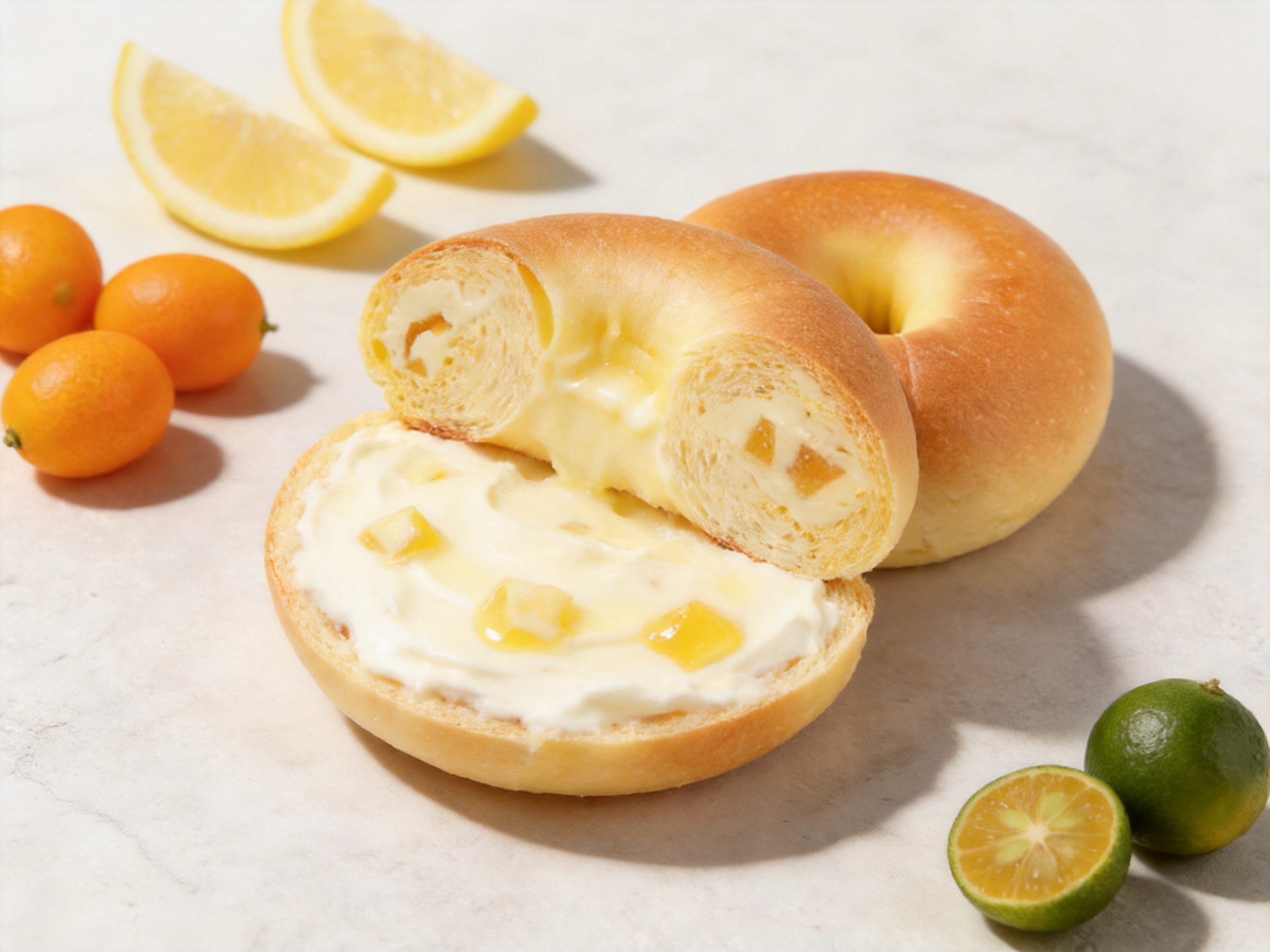
The product combines the bright character associated with kumquat and lemon with a creamy butter and cream cheese center. According to the supplied formulation description, the citrus layer includes calamansi puree and diced lemon. This creates a multi-dimensional citrus impression rather than a single-note sweetness. The puree contributes a clean, vivid acidity, while the diced lemon adds fruit texture, aromatic peel character, and a gently bitter finish. Dairy butter and Anchor cream cheese soften and round the citrus without eliminating its freshness.
At the same time, the bagel itself is designed to provide the structural qualities expected from a premium product: a fine-grained crumb, a satisfying chew, a clean wheat aroma, and enough resilience to support a substantial filling. These qualities are especially important in commercial applications because a filled bagel must remain appealing after freezing, storage, preparation, and service.

Kumquat Lemon Butter-Cream Cheese Bagel
Product Positioning: A Premium Citrus Bagel with Broad Commercial Potential
The Kumquat Lemon Butter-Cream Cheese Bagel occupies a valuable position between everyday bakery staples and highly specialized dessert products. It has the recognizable format of a bagel, but its flavor architecture gives it a more refined and contemporary identity. This balance makes it suitable for customers who want something more interesting than a plain bagel while still preferring a familiar, convenient bakery item.
Its fruit-forward profile can appeal to consumers who enjoy bright, refreshing flavors, while its cream cheese and butter filling provide the indulgence expected from a premium bakery product. Rather than relying on excessive sweetness, the product emphasizes contrast: chewy and creamy, bright and rich, aromatic and clean, familiar and innovative.
This positioning can help retailers and foodservice operators build a more varied product portfolio. A traditional bagel range may already include plain, whole wheat, blueberry, cinnamon, or savory choices. A citrus cream cheese bagel introduces a different consumption occasion. It can be marketed as a breakfast item, a light dessert, a brunch specialty, or a seasonal limited edition. Its versatility also makes it suitable for gift boxes, café pairings, hotel breakfast programs, and frozen bakery assortments.
The product is also well suited to private-label development. Buyers can position it according to their market strategy: as a premium health-conscious indulgence, a modern café snack, a fruit-inspired breakfast product, or a bakery item for consumers seeking clean and lively flavor. Since the base format is widely understood, the product does not require customers to learn an entirely unfamiliar food category.
Key Product Characteristics
| Feature | Product Advantage | Commercial Relevance |
|---|---|---|
| Bagel foundation | Fine-grained, chewy, resilient crumb with a clean wheat aroma | Provides a premium texture that supports filling and multiple serving occasions |
| Citrus profile | Combination of kumquat and lemon positioning with calamansi puree and diced lemon in the supplied formulation | Creates a distinctive flavor identity that can stand out in retail and café displays |
| Cream filling | Anchor cream cheese combined with dairy butter | Delivers richness and smoothness while balancing citrus acidity |
| Flavor balance | Bright, layered, refreshing, and not excessively sweet | Broadens appeal among consumers who prefer sophisticated or restrained sweetness |
| Frozen bakery format | Suitable for commercial supply and downstream preparation | Supports inventory planning, distribution, and menu consistency |
| Customization potential | Appropriate for retail, foodservice, café, tea, bakery, and private-label programs | Allows buyers to adapt packaging, positioning, and sales channels to local demand |
A Bagel Foundation Built for Texture and Filling Performance
A filled bagel succeeds only when the dough and filling work together. If the dough is too soft, the product may feel more like a sweet bun than a bagel. If it is too dense or dry, it can overpower the filling and reduce consumer enjoyment. The supplied product description emphasizes a fine-grained and chewy foundation, created through the use of premium flour, Japanese-style milling, and natural yeast fermentation.
Premium flour provides the structural basis for a consistent bagel. Flour selection influences water absorption, dough strength, crumb texture, aroma, and the finished product’s ability to withstand handling. A well-developed dough should remain firm enough to maintain its shape while still producing a tender, pleasant bite. This is particularly important for filled products because the dough must support the internal cream cheese and citrus composition without collapsing or becoming excessively heavy.
The Japanese-style milling approach described for this product is associated with careful attention to flour fineness and eating quality. In practical terms, a fine-grained flour system can help create a smoother dough structure and a more refined crumb. It can also support an elegant mouthfeel that complements the creamy filling. The goal is not simply softness. A premium bagel requires a controlled balance between firmness, elasticity, tenderness, and chew.
Natural yeast fermentation further contributes to the product’s sensory profile. Fermentation is not merely a production step; it is a flavor-development process. Properly managed fermentation can help generate a clean wheat aroma, improve dough extensibility, and create a more complex but balanced taste. The product description specifically highlights a clean wheat aroma, suggesting that the dough is intended to remain flavorful without competing with the citrus and dairy components.
For commercial buyers, the texture of the bagel has an additional significance. A product that maintains a satisfying bite after frozen storage and preparation can contribute to a more reliable customer experience. Inconsistent texture can create complaints, reduce repeat purchases, and complicate foodservice operations. A stable foundation therefore becomes both a quality advantage and a business advantage.
Why Texture Matters in a Filled Bagel
The filling of the Kumquat Lemon Butter-Cream Cheese Bagel is rich, aromatic, and moist. The dough must therefore provide contrast. The chew gives the product a clear bagel identity, while the filling introduces smoothness and richness. This contrast prevents the eating experience from becoming monotonous.
A fine-grained crumb is also useful for portion control and handling. A coarse or fragile crumb may release excessive crumbs, weaken the product, or make it more difficult to slice and serve. A controlled crumb structure can support attractive presentation in cafés, bakeries, and packaged retail formats.
The product’s resilience is another important advantage. The supplied description presents the bagel as firm yet tender, resilient without being dry or heavy. This balance is valuable in commercial settings because the product may be thawed, heated, sliced, toasted, or served at different times after preparation. While exact preparation outcomes depend on the buyer’s equipment and operating procedures, a resilient dough foundation provides a stronger starting point for consistent service.
The Double-Citrus Layer: Beyond Simple Sweet and Sour
The defining feature of this bagel is its layered citrus character. Many fruit-flavored bakery products rely on a single fruit note or a sweet fruit filling. This approach can produce immediate familiarity, but it may lack depth. The Kumquat Lemon Butter-Cream Cheese Bagel takes a more complex direction by combining multiple citrus impressions.
The product name highlights kumquat and lemon, while the supplied formulation description identifies calamansi puree and diced lemon. Together, these references indicate a citrus concept built around brightness, aromatic peel character, and textural variation. Calamansi puree contributes a lively acidity and transparent citrus aroma. Diced lemon introduces small pieces of fruit texture and a subtle peel bitterness. The kumquat positioning adds an appealing association with concentrated citrus fragrance and whole-fruit character.
This combination helps the product move beyond a basic sweet-and-sour profile. Acidity provides energy, but acidity alone can feel sharp. Sweetness provides approachability, but excessive sweetness can become tiring. The layered citrus design allows the product to use contrast more effectively. The first impression can be bright and refreshing, followed by a fuller fruit aroma, then a creamy finish that softens the sharper edges.
Texture also contributes to the citrus experience. A smooth puree can distribute flavor throughout the filling, while diced lemon can provide small points of fruit sensation. These textural differences make each bite more dynamic. The consumer may experience creaminess first, followed by a burst of citrus aroma and a delicate peel-like finish.
Flavor Progression During Consumption
The product can be understood as a sequence of sensory stages. The bagel’s wheat aroma and chewy exterior establish the first impression. As the consumer reaches the filling, dairy butter and cream cheese provide immediate smoothness and richness. The citrus then becomes more pronounced, bringing brightness and freshness. Finally, the lemon and kumquat-related notes remain on the palate, creating a clean finish rather than a heavy sugary aftertaste.
This progression is a useful commercial advantage because products with multiple sensory stages can encourage curiosity and repeat consumption. A simple product may be understood immediately, while a layered product gives consumers more to discover. This is particularly relevant in premium cafés, specialty bakery counters, and online retail descriptions where flavor storytelling supports product value.
The citrus profile also offers seasonal flexibility. It can be presented as a refreshing spring or summer item, but the cream cheese and butter filling provide enough richness for year-round consumption. Retailers may use it in seasonal promotions, citrus-themed assortments, brunch collections, or limited-time café menus.
Cream Cheese and Dairy Butter: Richness with Definition
The dairy component is central to the product’s identity. Cream cheese creates the creamy body of the filling, while pure dairy butter adds aroma and richness. The supplied description identifies Anchor cream cheese and dairy butter as key ingredients. Their role is not simply to make the bagel richer. They are used to shape the relationship between the citrus and the filling.
Cream cheese is naturally suited to fruit-based bakery applications because its mild tang and smooth body can support both sweet and acidic flavors. In this product, it acts as an anchor for the citrus layer. Its creamy texture helps distribute the fruit components, while its mild dairy character gives the filling a satisfying finish.
Dairy butter contributes a different dimension. Butter brings a warm, rounded aroma that can make the product feel more indulgent. It also helps connect the citrus filling to the wheat-based bagel. The combination of grain, dairy, and fruit creates a more complete flavor profile than any one component could provide alone.
The formulation goal described in the product materials is especially important: the creaminess should elevate the citrus without dimming it. This is a meaningful distinction. In some filled bakery products, a rich dairy center can overwhelm fruit flavor. In others, a strong citrus component can make the filling feel acidic or unbalanced. Here, the intended result is refreshing but not sharp, indulgent but not cloying.
A More Restrained Alternative to Heavily Sweet Fillings
Consumer preferences in premium bakery are increasingly diverse. Some customers enjoy sweet desserts, while others prefer products with moderate sweetness and stronger natural flavor definition. The Kumquat Lemon Butter-Cream Cheese Bagel can appeal to the second group because its identity is based on citrus brightness and dairy balance rather than on sugar intensity alone.
A restrained sweetness profile can also create more serving flexibility. The product may be paired with coffee, tea, sparkling beverages, yogurt, fruit, or savory breakfast components without producing an overly sweet overall meal. In cafés, it can be offered as a standalone snack or included in a breakfast combination. In retail, it can complement other bakery items in a mixed box.
For private-label customers, the flavor balance can support premium positioning. Buyers may emphasize real fruit inspiration, refined indulgence, modern citrus flavor, or a contrast between chewy dough and smooth filling. The formulation provides multiple storytelling options while maintaining a clear product identity.
Manufacturing Strengths Behind the Product
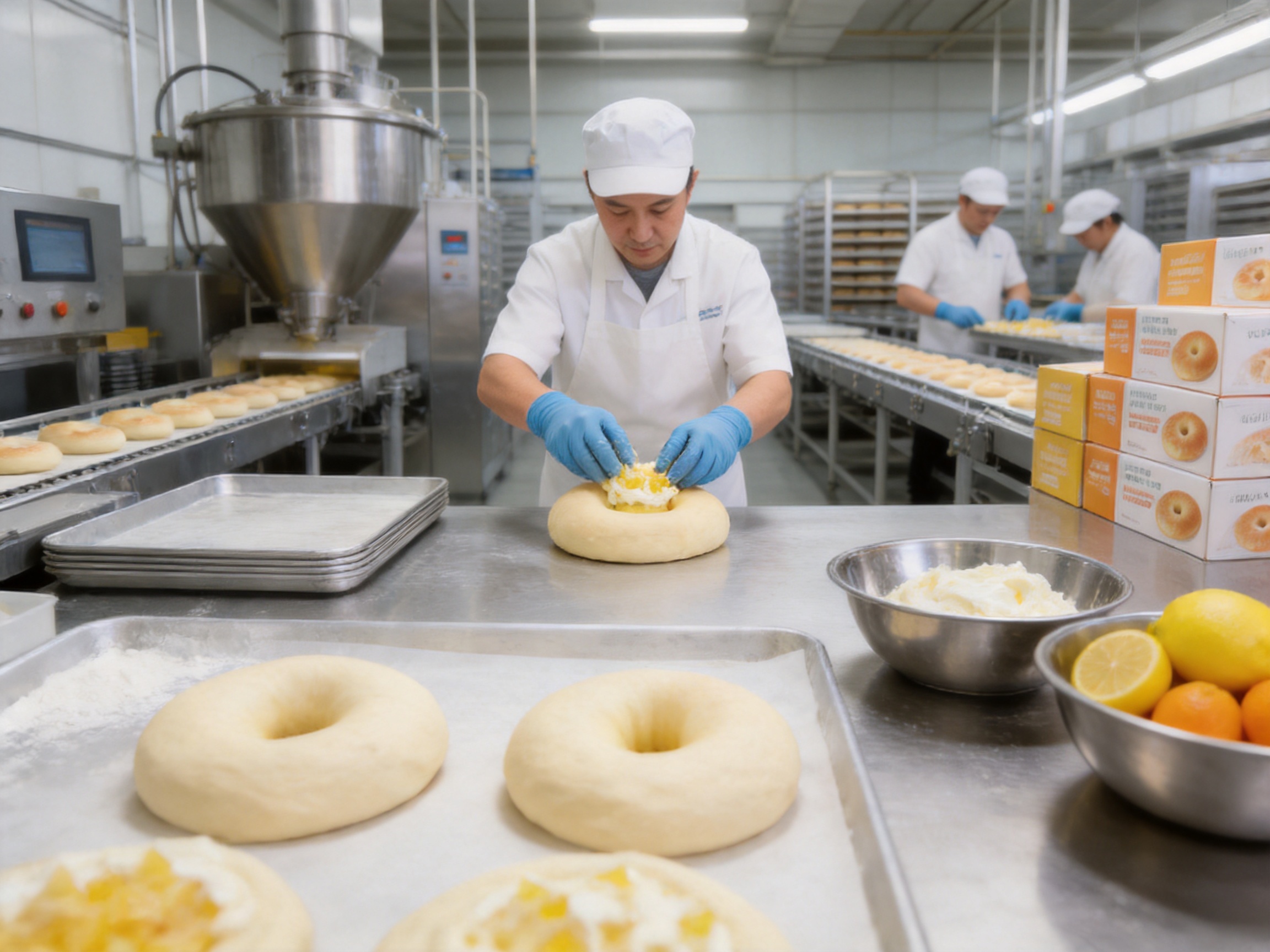
The product is manufactured by Jiangsu Goobagel Food Technology Co., Ltd., a Chinese frozen bakery producer that has specialized in bagel research and manufacturing since 2019. The company’s stated operations cover raw materials, research and development, production, and nationwide distribution. This integrated supply-chain approach is important because a successful commercial bakery product depends on coordination across all of these areas.
Ingredient selection affects formulation. Research and development translates ingredients into a repeatable product. Production must reproduce the intended specifications at scale. Distribution must preserve commercial availability and support customers across different regions. When these functions are connected within one organization, product development and supply planning can be more closely coordinated.
The company states that it has developed more than 100 clean-label bagel varieties for retail, foodservice, café chains, tea brands, and bakery operators. This breadth suggests experience with multiple product styles, customer requirements, and consumption occasions. It also creates a foundation for customization and portfolio development. Buyers seeking a single specialty bagel may benefit from working with a supplier that understands how the product fits into a broader range.
Research and Development as a Commercial Advantage
Research and development is particularly valuable in the bagel category because the product must satisfy both sensory and operational requirements. A flavor may be attractive in a small kitchen trial but difficult to produce consistently in volume. A filling may taste excellent but require adjustments to improve handling, storage, or preparation. A dough may have an appealing texture when fresh but fail to deliver the same quality after freezing.
The supplied company information emphasizes strong product development capabilities. For buyers, this can translate into a more collaborative development process. Instead of selecting only from fixed products, customers may be able to discuss target flavor profiles, filling preferences, packaging concepts, serving formats, or market positioning with an experienced manufacturer.
The Kumquat Lemon Butter-Cream Cheese Bagel itself demonstrates this product-development approach. It combines a specialized citrus direction with a technically demanding dairy filling and a structured chewy dough. The concept requires coordination between acidity, moisture, texture, aroma, and dough performance. Its development therefore reflects more than a simple flavor addition.
Integrated Supply Chain and Production Coordination
An integrated supply chain can improve visibility from raw material sourcing to finished product distribution. For a frozen bakery buyer, this may simplify communication and support more reliable planning. Consistent access to suitable flour, dairy ingredients, fruit components, packaging materials, and production resources is essential for maintaining product continuity.
Supply reliability is one of the most important considerations in wholesale purchasing. A product that performs well but cannot be replenished consistently may create gaps in retail shelves or menu availability. Goobagel’s stated nationwide distribution experience and integrated operating structure are relevant strengths for customers that require an ongoing supply relationship rather than a one-time purchase.
Commercial buyers should still confirm specific details such as minimum order quantities, lead times, shipping conditions, storage requirements, labeling, allergen declarations, and market-specific documentation during the purchasing process. However, the company’s stated manufacturing and distribution experience provides a useful foundation for those discussions.
Frozen Bakery Format and Operational Value
The frozen format provides practical benefits for many commercial customers. Frozen bakery products can support inventory management by allowing operators to plan stock around expected demand rather than relying entirely on daily fresh production. This can be especially useful for cafés, restaurants, hotels, retailers, and bakery chains with fluctuating customer traffic.
A frozen bagel also helps simplify back-of-house operations. Operators may not need to manage a complete dough-making and filling process on site. Instead, they can focus on storage, preparation, finishing, display, and service. This can reduce the need for specialized production labor while helping standardize portion size and product appearance.
For retail customers, the frozen format can support different sales models. The product may be sold frozen in consumer packaging, included in a frozen bakery assortment, or prepared in-store depending on equipment and local regulations. For foodservice customers, it can be incorporated into breakfast menus, café displays, catering boxes, or hotel buffet programs.
The operational value of frozen bakery is closely connected to product stability. A bagel must retain its core appeal after the relevant storage and preparation process. The product’s chewy, resilient foundation is therefore not only a sensory feature but also an operational asset. It gives the finished item a stronger chance of remaining satisfying across different service environments.
Applications Across Multiple Channels
| Channel | Recommended Role | Potential Selling Point |
|---|---|---|
| Retail frozen bakery | Premium fruit-filled breakfast or snack product | Distinctive citrus flavor with convenient preparation |
| Café chains | Signature breakfast item or afternoon pastry alternative | Chewy bagel texture paired with creamy citrus filling |
| Tea brands | Food pairing for tea, fruit tea, or specialty beverages | Bright citrus notes that complement refreshing drinks |
| Hotels | Breakfast buffet or grab-and-go bakery selection | Familiar bagel format with premium differentiation |
| Bakery operators | Filled product for display cases and takeaway menus | Layered flavor profile and attractive product story |
| Foodservice distributors | Wholesale frozen bakery item for multiple accounts | Stable commercial format and broad end-user potential |
| Private-label programs | Branded citrus bakery product under a buyer’s identity | Flexible positioning for regional or specialty markets |
Advantages Compared with Conventional Bagel Options
The product’s advantages become clearer when compared with common alternatives in the bagel category. A plain bagel offers familiarity and broad compatibility, but it may provide limited differentiation. A heavily sweet fruit bagel can attract attention, but it may lack the savory-grain and dairy balance associated with a premium filled product. A standard cream cheese bagel provides richness, but without a layered fruit component it may feel less distinctive.
The Kumquat Lemon Butter-Cream Cheese Bagel combines several benefits in one format. It retains the recognizable chew of a bagel, introduces a sophisticated citrus profile, and includes a creamy filling that increases indulgence. This combination can help retailers and foodservice operators create a product that is easy to understand but difficult to confuse with a conventional competitor.
Compared with simple flavored dough products, the filled format creates a more dramatic eating experience. The citrus and dairy components are not merely distributed as a surface flavor; they form a central part of the product. This can make the item more suitable for premium merchandising and visual menu storytelling.
Compared with extremely sweet pastries, the product may appeal to customers who want richness without an intensely sugary finish. The citrus acidity provides lift, while the cream cheese and butter provide comfort. This creates a balanced profile that can work across breakfast and snack occasions.
Distinctive Differentiation Factors
The first differentiation factor is the flavor combination. Citrus and cream cheese are familiar enough to be accessible, but the kumquat, calamansi, and lemon direction gives the product a more nuanced identity than a generic lemon pastry. The second is textural contrast: chewy bagel, smooth cream cheese, and fruit pieces. The third is the commercial frozen format, which supports broader distribution and operational flexibility.
The fourth factor is manufacturing specialization. The company focuses on bagel research and production rather than treating the product as an incidental addition to a broad bakery portfolio. Its stated development of more than 100 bagel varieties indicates category-specific experience. That specialization can be valuable when buyers require consistent texture, filling performance, and product adaptation.
The fifth factor is the product’s positioning flexibility. It can be presented as premium, refreshing, modern, indulgent, or specialty-oriented depending on the customer’s target market. A product with several credible positioning routes gives buyers more opportunities to test different channels and promotional messages.
Clean-Label and Ingredient Communication
The company describes its bagel varieties as clean-label products. In commercial communication, clean-label positioning should be supported by transparent ingredient declarations and compliance with the requirements of the target market. Buyers should verify the complete ingredient list, additive use, allergen information, nutritional values, and regulatory documents before making consumer-facing claims.
Within the product story, the strongest ingredient communication opportunities are premium flour, natural yeast fermentation, citrus components, dairy butter, and cream cheese. These elements can be communicated in a clear and appealing way without relying on exaggerated claims. The focus can remain on recognizable ingredients, carefully developed texture, and balanced flavor.
Because the product contains dairy ingredients and wheat, allergen management is an important consideration. Commercial customers should ensure that packaging, menus, online listings, and staff training accurately communicate relevant allergen information. Proper storage and preparation instructions should also be provided according to the final distribution and service model.
Quality, Consistency, and Customer Experience
In the food industry, product quality is not defined only by the first tasting. It is also measured by consistency across batches, locations, preparation cycles, and purchase occasions. A customer who enjoys the product today should be able to encounter a similar experience in the future.
Consistency is particularly important for café chains and foodservice groups. A signature item must taste and feel similar whether it is served in one branch or another. A reliable frozen product can help reduce variation caused by local labor, equipment, or production skill. The manufacturer’s role is to establish a stable product specification, while the operator’s role is to follow storage and preparation procedures carefully.
The Kumquat Lemon Butter-Cream Cheese Bagel has several attributes that support a consistent experience: a defined dough structure, a formulated filling, a recognizable citrus profile, and a commercial production system. Buyers can further strengthen consistency by establishing standard operating procedures for thawing, heating, slicing, serving, and display.
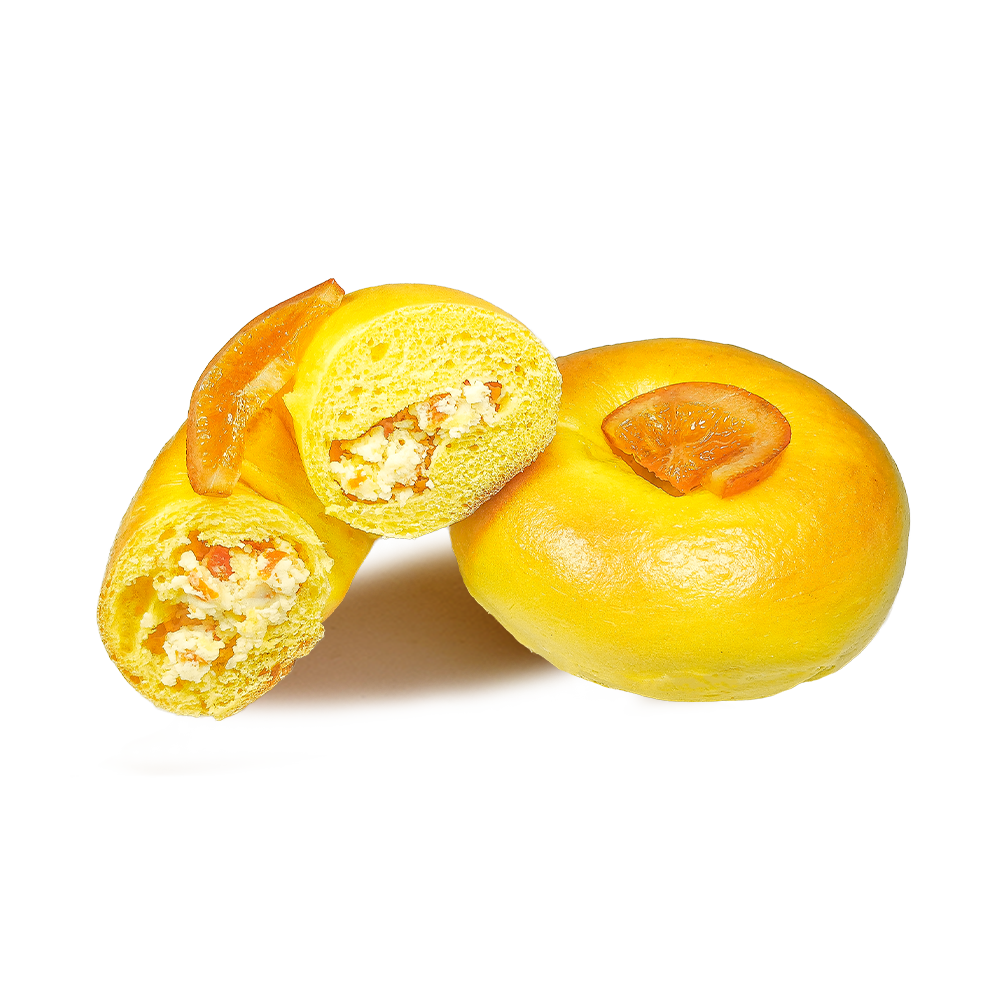
Customer experience also includes appearance. A premium filled bagel should look substantial, clean, and appetizing. The contrast between the golden or lightly colored exterior and the creamy interior can support attractive merchandising. When sliced, the filling can help communicate the product’s value immediately. This visual aspect is useful in café display cases, retail photography, digital menus, and social media campaigns.
Brand and Menu Development Opportunities
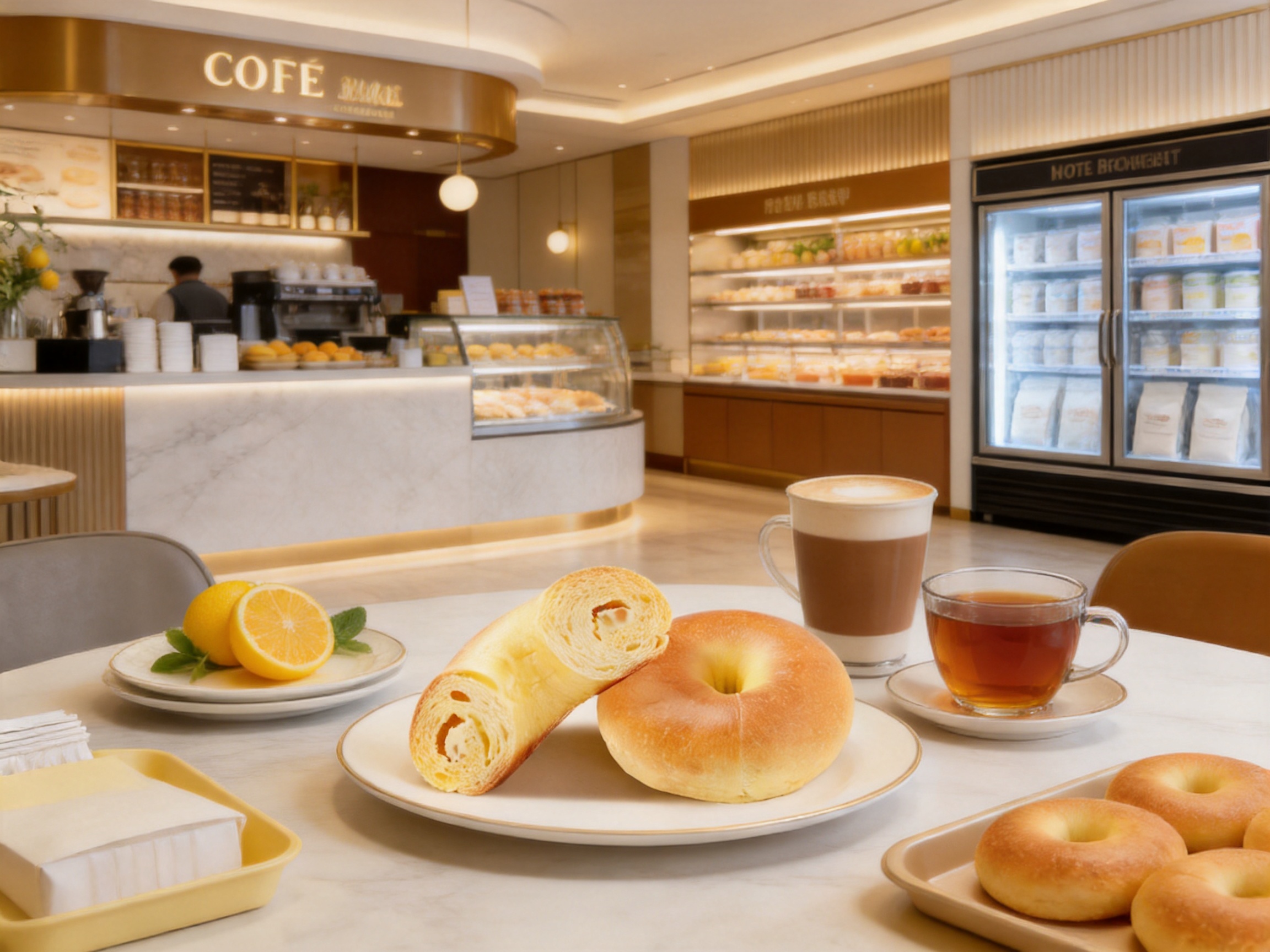
Although the product has a clear identity, buyers can adapt its presentation to different commercial environments. A café may serve it warm with coffee or tea. A hotel may include it in a breakfast assortment alongside fresh fruit and yogurt. A retailer may package it as a premium frozen breakfast item. A bakery may offer it as a signature filled bagel with a short, descriptive product name.
The citrus profile offers strong opportunities for menu language. Descriptions can emphasize bright fruit, creamy dairy, natural citrus aroma, gentle peel bitterness, or a refreshing finish. The product can be positioned as sophisticated without becoming inaccessible. Clear communication is especially important because some customers may not immediately understand the difference between a kumquat, calamansi, and lemon profile.
For seasonal programs, the bagel can support spring and summer campaigns focused on freshness and brightness. For year-round programs, the dairy filling provides enough comfort and richness to make the product suitable for colder months. Its versatility allows operators to adjust the presentation without changing the underlying product.
Pairing Suggestions
The bagel’s citrus and cream cheese profile pairs naturally with black tea, green tea, fruit tea, coffee, sparkling water, and lightly sweetened dairy beverages. A strong dark coffee can provide contrast to the bright filling, while a floral or lightly oxidized tea can highlight the citrus aroma. For breakfast menus, it can be served with fresh berries, yogurt, or a simple fruit cup.
For a more indulgent presentation, operators may warm the bagel and serve it with a light dusting of powdered sugar or a small portion of fruit. For a restrained presentation, it can be served without additional toppings so that the citrus and dairy filling remain the focus. Any added preparation should be tested carefully to ensure that it complements rather than overwhelms the product.
Why Manufacturing Expertise Matters to Buyers
Purchasing a specialty bagel is not only a flavor decision. It is also a supplier-selection decision. Buyers must consider whether the manufacturer can support product development, repeat orders, quality management, documentation, and commercial communication. A visually appealing sample is valuable, but long-term success depends on the supplier’s ability to deliver consistently.
Goobagel’s stated experience since 2019, bagel-focused research, broad product portfolio, and integrated supply chain are relevant strengths in this context. The company’s mission emphasizes high-quality and healthy products as well as opportunities for business partners. Its stated values—persistence, craftsmanship, respect, and science—also reflect an approach based on continuous development and technical discipline.
The company’s focus on retail, foodservice, café chains, tea brands, and bakery operators indicates an understanding that different customers require different solutions. A retail buyer may prioritize packaging, shelf presentation, and consumer instructions. A café chain may prioritize preparation speed and branch consistency. A distributor may prioritize case configuration, storage, and replenishment. A private-label customer may require formulation discussion, packaging coordination, and market-specific documentation.
A supplier with experience across these channels may be better positioned to identify practical challenges early in the development process. This can reduce unnecessary revisions and support a smoother transition from concept to commercial launch.
Recommended Evaluation Criteria for Commercial Buyers
Before placing a wholesale or private-label order, buyers should evaluate the product using both sensory and operational criteria. Sensory testing should consider aroma, exterior texture, crumb structure, filling distribution, citrus intensity, sweetness, acidity, dairy richness, and aftertaste.
Operational testing should examine storage conditions, preparation time, equipment compatibility, yield, serving size, packaging performance, and product appearance after preparation. Buyers should conduct tests in the same type of environment in which the bagel will be sold. A product intended for a café should be tested using café equipment and realistic service timing. A product intended for retail should be evaluated through the complete consumer preparation process.
Commercial discussions should also cover product specifications, case size, order quantities, production lead times, sample procedures, shipping arrangements, labeling requirements, allergen declarations, and quality documentation. These details help ensure that the product is suitable not only in theory but also in the buyer’s actual supply chain.
Suggested Buyer Checklist
| Evaluation Area | Questions to Confirm |
|---|---|
| Flavor | Is the citrus bright but balanced? Is the sweetness suitable for the target market? |
| Texture | Does the bagel remain chewy and tender after the intended preparation method? |
| Filling | Is the cream cheese and butter filling evenly distributed and visually appealing? |
| Storage | Are frozen storage requirements clearly specified and manageable? |
| Preparation | Can staff prepare the product consistently with available equipment? |
| Packaging | Does the packaging protect the product and provide appropriate consumer information? |
| Supply | Can the supplier support expected order volume and replenishment schedules? |
| Compliance | Are ingredient, allergen, nutritional, and regulatory documents available for the target market? |
| Customization | Can the supplier support private-label packaging or product adjustments where needed? |
Q&A: Common Questions About the Product
What makes this bagel different from a standard fruit bagel?
The product uses a layered citrus and dairy concept rather than relying on a single fruit flavor. Its filling combines citrus components with cream cheese and dairy butter, while the bagel foundation provides a chewy, fine-grained texture. This creates contrast between fruit brightness, dairy richness, and wheat-based chew.
Does the product taste mainly sweet?
The intended profile is balanced rather than excessively sweet. Citrus acidity provides freshness, while cream cheese and butter add richness. The product description emphasizes a refreshing finish and restrained sweetness, making it suitable for customers who prefer a more refined fruit bakery profile.
What citrus ingredients are associated with the product?
The product is named around kumquat and lemon, and the supplied formulation description specifies calamansi puree and diced lemon. These components contribute bright acidity, fruit aroma, subtle peel character, and textural variation. Buyers should confirm the final ingredient declaration for their specific order and market.
What is the texture of the bagel?
The intended texture is fine-grained, chewy, firm yet tender, and resilient without being dry or excessively heavy. This structure is designed to support the creamy filling while maintaining a recognizable bagel eating experience.
Why are cream cheese and butter used together?
Cream cheese provides a smooth, mildly tangy base for the filling, while dairy butter adds warm aroma and fuller richness. Together, they help soften and frame the citrus flavor without completely covering its brightness.
Is this product suitable for cafés?
Yes. Its frozen bakery format, premium flavor profile, and recognizable bagel format make it suitable for cafés, especially as a breakfast item, afternoon snack, or beverage pairing. Operators should establish preparation procedures and test the product with their available equipment.
Can it be used in retail programs?
Yes. The product can be considered for frozen retail assortments, premium breakfast ranges, and specialty bakery programs. Final suitability will depend on packaging, labeling, storage requirements, distribution conditions, and the retailer’s preparation model.
Is private-label development possible?
The manufacturer presents its products as suitable for OEM and private-label programs. Buyers should discuss branding, packaging, minimum order quantities, formulation specifications, documentation, production schedules, and target-market requirements directly with the supplier.
What types of businesses may benefit from this product?
Potential customers include foodservice distributors, cafés, bakery operators, hotel groups, retail chains, tea brands, breakfast providers, and private-label food companies. The product’s combination of familiar format and distinctive flavor allows it to fit several commercial channels.
What should buyers verify before ordering?
Buyers should confirm the final recipe, ingredient list, allergen information, nutritional data, storage conditions, preparation instructions, packaging specifications, case configuration, minimum order quantity, lead time, shipping process, and quality documentation. Product testing under real operating conditions is also recommended.
Conclusion: A Strong Opportunity for Premium Frozen Bakery
The Kumquat Lemon Butter-Cream Cheese Bagel offers a compelling combination of distinctive flavor, refined texture, and commercial flexibility. Its premium flour foundation, Japanese-style milling approach, and natural yeast fermentation support a chewy and resilient bagel structure. Its citrus layer brings together the product’s kumquat and lemon identity with the supplied formulation’s calamansi puree and diced lemon. Its cream cheese and dairy butter filling adds smoothness, aroma, and richness while preserving a bright, clean finish.
Compared with conventional bagel choices, the product provides stronger sensory differentiation without abandoning the familiarity of the bagel format. Compared with heavily sweet pastries, it offers a more balanced approach in which acidity, dairy, fruit texture, and wheat aroma work together. These qualities can help retailers, cafés, bakery operators, and foodservice providers create a premium item with broad positioning potential.
The manufacturing platform behind the product is equally important. Jiangsu Goobagel Food Technology Co., Ltd. brings stated experience in bagel research and manufacturing, an integrated supply chain, a portfolio of more than 100 clean-label bagel varieties, and capabilities intended for retail, foodservice, café chains, tea brands, and bakery operators. These strengths provide a foundation for consistent production, product development, and private-label cooperation.
For buyers seeking a frozen bagel that can stand apart from standard offerings, this citrus cream cheese product provides a practical and flavorful option. Its strongest advantages are the balance between brightness and indulgence, the contrast between chewy dough and creamy filling, and the ability to adapt to multiple commercial channels. With appropriate testing, clear specifications, and coordinated supply planning, it can become a distinctive addition to a modern frozen bakery portfolio.
References
1. Product information supplied for the Kumquat Lemon Butter-Cream Cheese Bagel, including formulation description, product category, product weight, and image references.
2. Company information supplied for Jiangsu Goobagel Food Technology Co., Ltd., including manufacturing history, product development capabilities, integrated supply-chain description, mission, vision, and values.
3. General principles of bakery science concerning flour functionality, yeast fermentation, dough structure, crumb development, and frozen bakery handling.
4. General foodservice product-development principles concerning sensory evaluation, preparation consistency, commercial storage, menu positioning, and private-label supply planning.
5. General retail and foodservice merchandising principles concerning premium bakery differentiation, flavor communication, product pairing, and consumer-facing product descriptions.
