
 中文简体
中文简体
 English


postmaster@goobagelfood.com
Content
- 1 1. Product Overview
- 2 2. A Flavor Architecture Built on Contrast
- 3 3. Why This Product Stands Out from Conventional Sandwich Options
- 4 4. Manufacturing Strengths Behind the Product
- 5 5. The Role of Process Control in a Filled Bagel
- 6 6. Applications Across Commercial Channels
- 7 7. OEM and Private-Label Potential
- 8 8. Quality, Supply, and Partnership Considerations
- 9 9. Suggested Menu and Marketing Positioning
- 10 10. Consumer Experience from First Bite to Last
- 11 11. Practical Evaluation Checklist for Buyers
- 12 12. Why a Specialist Manufacturer Matters
- 13 13. Frequently Asked Questions
- 13.1 Q1: What is the Sauerkraut Slow-Roasted Beef Cheese Bagel?
- 13.2 Q2: What makes the flavor different from a standard bagel sandwich?
- 13.3 Q3: Is the product intended to be served hot?
- 13.4 Q4: Why is sauerkraut included with beef and cheese?
- 13.5 Q5: What is the advantage of the multigrain bagel base?
- 13.6 Q6: Who can use this product?
- 13.7 Q7: Can the product be used in an OEM or private-label program?
- 13.8 Q8: Can the recipe be customized?
- 13.9 Q9: Does the manufacturer offer other bagel varieties?
- 13.10 Q10: What should buyers confirm before ordering?
- 13.11 Q11: What gives the product commercial appeal?
- 13.12 Q12: How should the product be marketed?
- 14 14. Conclusion
- 15 References
- 16 Product: Sauerkraut Slow-Roasted Beef Cheese Bagel
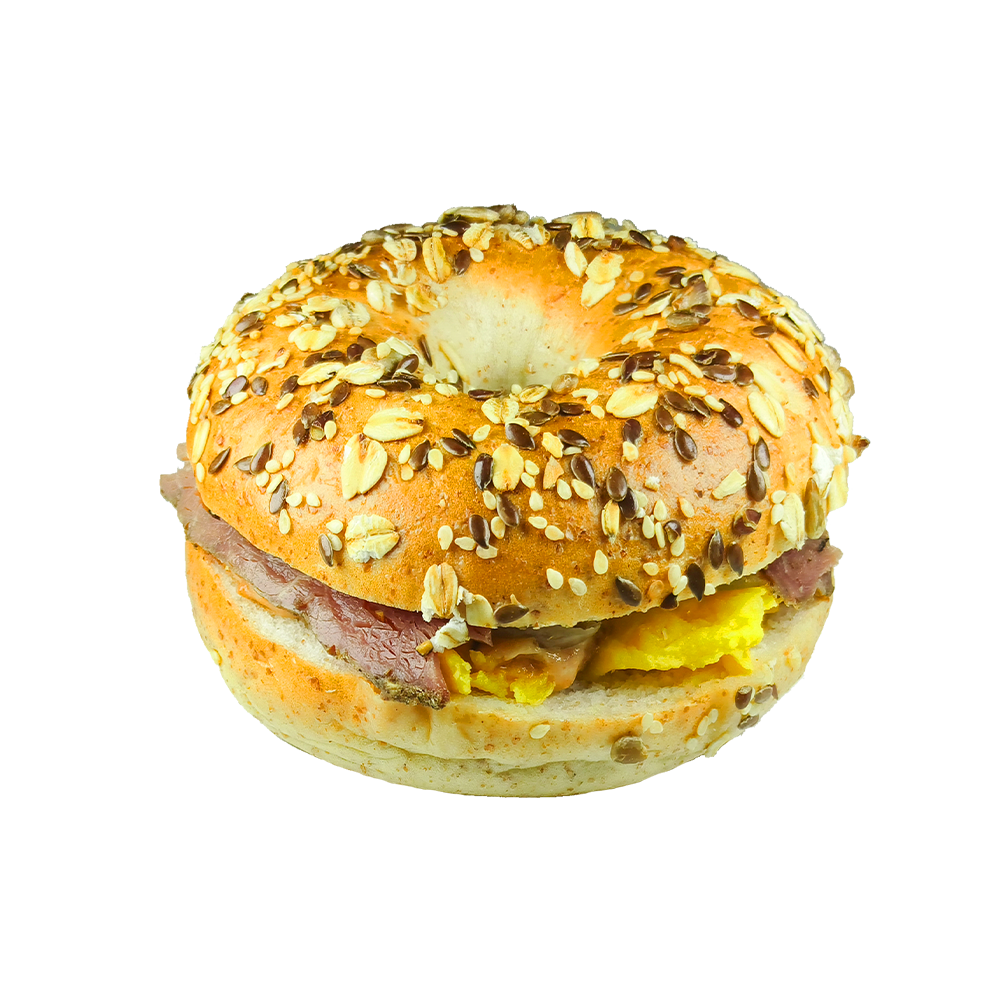
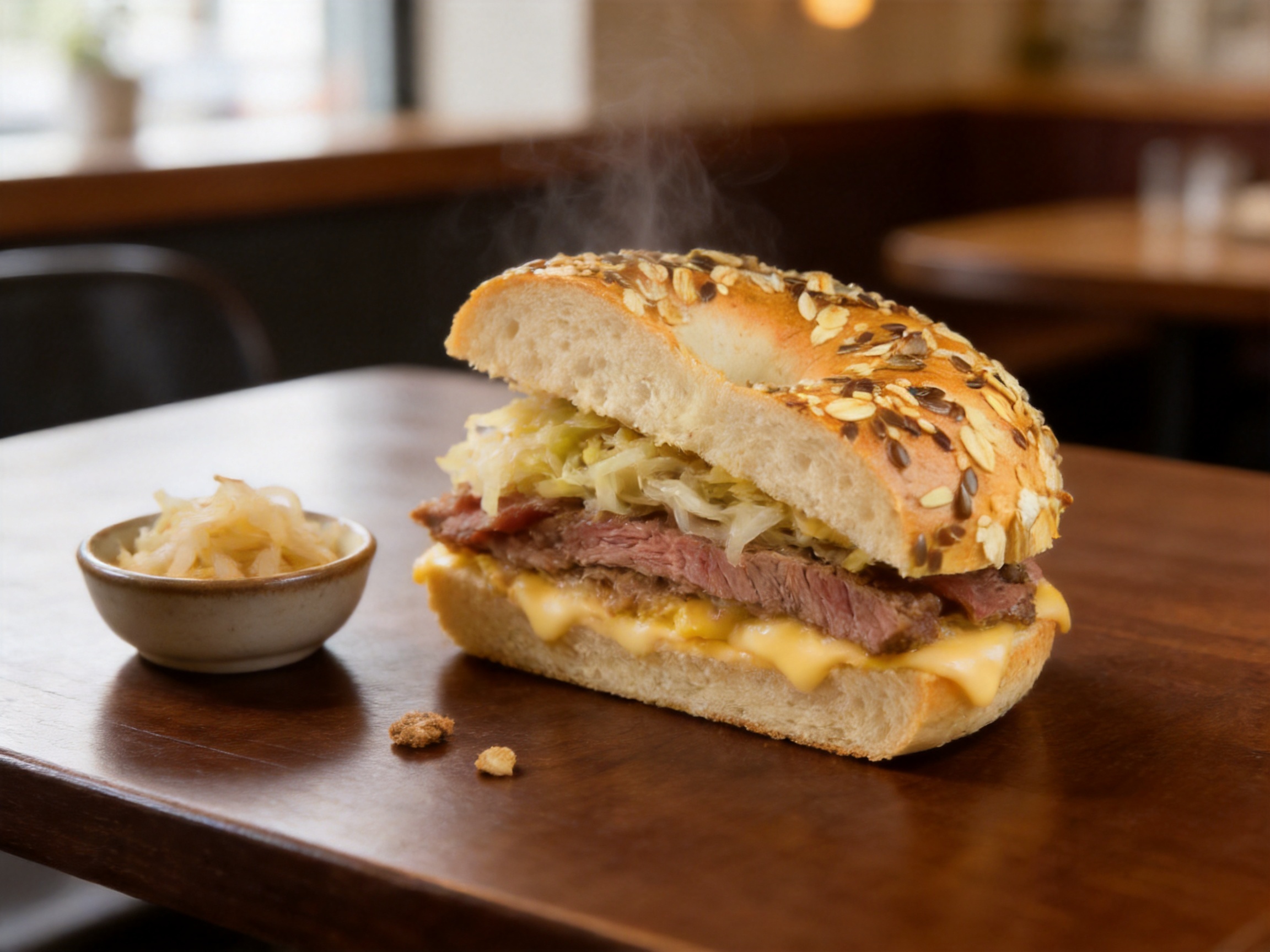
The Sauerkraut Slow-Roasted Beef Cheese Bagel is designed for customers who want a complete, satisfying meal in a convenient handheld format. It combines a hearty multigrain bagel base, lactic-fermented sauerkraut, low-temperature slow-roasted beef, and a full slice of imported cheese. Each element contributes a different sensory quality: grainy and toasted, crisp and tangy, juicy and savory, or smooth and creamy.
With a product weight of 170 grams, this hot sandwich bagel offers a substantial serving while remaining practical for cafés, bakery shops, quick-service restaurants, retail counters, and prepared-food programs. It is not simply a filled bread product. It is a structured meal solution developed around contrast, consistency, convenience, and commercial usability.
The product is manufactured by Jiangsu Goobagel Food Technology Co., Ltd., a Chinese frozen bakery producer specializing in bagel research and manufacturing since 2019. The company provides bagel products for retail, foodservice, café chains, tea brands, and bakery operators. Its integrated approach covers raw-material coordination, product research and development, production, and distribution, allowing customers to source differentiated bagel solutions from an experienced specialist.
This article examines the product’s composition, flavor architecture, manufacturing strengths, competitive advantages, serving applications, and suitability for OEM and private-label programs.
Sauerkraut Slow-Roasted Beef Cheese Bagel
1. Product Overview
The Sauerkraut Slow-Roasted Beef Cheese Bagel belongs to the hot sandwich bagel category. It is developed for heating before consumption, allowing the cheese to melt, the beef aroma to open, and the multigrain base to become warm and more aromatic. It can be presented as a ready-to-heat item for foodservice or as a frozen prepared product for wholesale and retail applications, subject to the customer’s required packaging and distribution format.
The product includes four primary components:
| Component | Primary Characteristics | Contribution to the Finished Product |
|---|---|---|
| Multigrain bagel base | Toasted aroma, distinct grain texture, higher-fiber whole-wheat profile | Provides structure, chew, satiety, and a hearty foundation |
| Lactic-fermented sauerkraut | Refreshing acidity, crisp bite, fermented character | Balances the richness of beef and cheese |
| Low-temperature slow-roasted beef | Juicy texture, roasted depth, gentle charred finish, subtle spice | Creates the main savory and meaty flavor |
| Imported cheese slice | Full slice, smooth melting behavior, creamy savory aroma | Connects the beef and sauerkraut while adding indulgence |
At 170 grams, the product is positioned as a meal-oriented bagel rather than a light snack. Its size supports applications where customers expect a filling breakfast, lunch, afternoon meal, or convenient dinner alternative. The format also makes portion planning easier for professional operators because each unit can be handled, heated, counted, and priced consistently.
The product name communicates its central flavor promise clearly. Sauerkraut provides brightness, slow-roasted beef delivers depth, and cheese adds creaminess. The word “bagel” establishes a familiar handheld format, while the multigrain base gives the product a more substantial and contemporary identity than a standard white-bread sandwich.
2. A Flavor Architecture Built on Contrast
Many sandwich products become heavy when several rich components are combined. Beef, cheese, and bread can create a dense eating experience unless acidity, texture, and freshness are included. This product addresses that challenge through deliberate contrast.
2.1 The multigrain foundation
The bagel base is made with a multigrain dough that delivers a bold toasted aroma and a noticeable grain texture. The whole-wheat-oriented profile creates a more substantial bite than a plain refined bread base. It is intended to feel hearty and meal-worthy, supporting a filling sensation without relying solely on heavy sauces or excessive fat.
A multigrain base also contributes visual and textural differentiation. In a display cabinet or product photograph, the grain character communicates a more crafted and premium impression. During consumption, the base gives the sandwich enough structure to hold the fillings while maintaining the chew associated with a bagel.
For foodservice operators, structural performance is particularly important. A sandwich that becomes too soft or collapses during heating can be difficult to package and inconvenient for customers. The bagel format offers a firm exterior and an interior suitable for pairing with moist sauerkraut, juicy beef, and melted cheese.
2.2 The brightness of fermented sauerkraut
Sauerkraut is a defining feature of the product. Rather than functioning as a decorative topping, it provides a refreshing acidic element that cuts through the richness of the beef and cheese. Its crisp bite introduces a clean textural change after the chew of the bagel and the tenderness of the beef.
Lactic fermentation gives sauerkraut a distinctive tang. This acidity helps keep the overall flavor from feeling flat or overly rich. It also creates a familiar connection with traditional European-style beef and cheese combinations while presenting that flavor profile in a modern bakery format.
The sauerkraut’s role is especially valuable after heating. Warm beef and melted cheese can intensify savory and creamy notes. The fermented vegetable component brings lift and contrast, allowing customers to experience multiple flavor stages in a single bite.
2.3 The depth of slow-roasted beef
The beef is prepared through low-temperature slow roasting. This process is intended to preserve juiciness while developing a deeper roasted profile. Compared with a filling that is simply seasoned and quickly cooked, slow-roasted beef can deliver greater aromatic complexity and a more rounded savory character.
The product description emphasizes a gently charred finish and subtle spice. These notes provide warmth without overwhelming the sauerkraut’s acidity. The beef remains the central savory component, but it is balanced by the other ingredients rather than presented as a heavy or aggressively seasoned filling.
Juiciness is also important in a frozen or prepared sandwich format. A dry meat filling can make the entire product seem stale, especially when paired with a dense bagel. The slow-roasted beef is therefore designed to contribute moisture and tenderness while retaining enough structure for convenient handheld eating.
2.4 The creaminess of imported cheese
A full slice of imported cheese is placed inside the sandwich so that it melts throughout the filling during heating. The cheese creates a smooth layer that links the beef and sauerkraut. Its creamy texture softens the grainier bagel base and adds a familiar comfort-food quality.
Using a full slice instead of a small amount of shredded cheese creates a more recognizable melt and a more consistent visual result. When heated correctly, the cheese becomes an aromatic, flowing layer. It intensifies the roasted character of the beef while rounding off the sharper edge of the fermented sauerkraut.
The cheese also improves the product’s sensory progression. The customer first encounters the toasted multigrain exterior, then the tender beef and crisp sauerkraut, followed by the smooth richness of melted cheese. This alternation helps the product remain interesting from the first bite to the last.
3. Why This Product Stands Out from Conventional Sandwich Options
The market contains many frozen sandwiches, filled breads, and bagel products. The Sauerkraut Slow-Roasted Beef Cheese Bagel differentiates itself by combining a recognizable bagel format with a more developed flavor system.
3.1 More distinctive than a standard ham or cheese bagel
Basic ham-and-cheese or cheese-only bagels are familiar and easy to understand, but they may offer limited flavor contrast. This product adds fermented sauerkraut and slow-roasted beef, creating greater depth, acidity, and texture.
Its flavor profile is also more memorable. A customer may describe it as tangy, roasted, creamy, hearty, or satisfying rather than simply savory. This gives retailers and foodservice businesses a stronger product story for menu descriptions, point-of-sale materials, and promotional campaigns.
3.2 More balanced than an overly rich meat sandwich
Some meat-filled sandwiches rely heavily on fatty sauces, large portions of processed meat, or excessive cheese. These products can be indulgent but may feel heavy. The sauerkraut provides a natural counterpoint, while the multigrain base gives the sandwich substance without requiring an oversized filling volume.
The result is a product positioned between indulgence and balance. It delivers beef and cheese for satisfaction, but the fermented vegetable component prevents the flavor from becoming one-dimensional. This balance can appeal to customers who want a hearty meal but still value freshness and contrast.
3.3 More convenient than an assembled made-to-order sandwich
Preparing a comparable sandwich from separate ingredients requires inventory management, staff time, recipe training, and assembly control. Operators must store bread, beef, sauerkraut, cheese, and condiments; manage portions; and maintain a consistent heating and presentation process.
A prepared bagel sandwich simplifies these steps. The core ingredients are already assembled into a standardized unit. Staff can focus on storage, heating, packaging, and service rather than weighing and layering fillings for every order. This can help reduce preparation variability and improve speed during busy periods.
Frozen bakery products are often associated with basic breakfast items. However, this product demonstrates how frozen distribution can support more developed savory concepts. The combination of multigrain bread, fermented vegetables, slow-roasted beef, and imported cheese gives the format a premium positioning.
For wholesale customers, a frozen product can support longer-distance distribution, planned stock management, and more predictable availability than a fully fresh sandwich. The exact shelf-life, storage, packaging, and reheating specifications should be confirmed for each commercial configuration, but the product concept is well suited to professional frozen-food channels.
4. Manufacturing Strengths Behind the Product
A compelling recipe must be supported by reliable manufacturing. The product’s commercial value depends not only on taste but also on repeatability, supply continuity, product development capability, and the ability to adapt the product for different channels.
4.1 Specialized bagel expertise
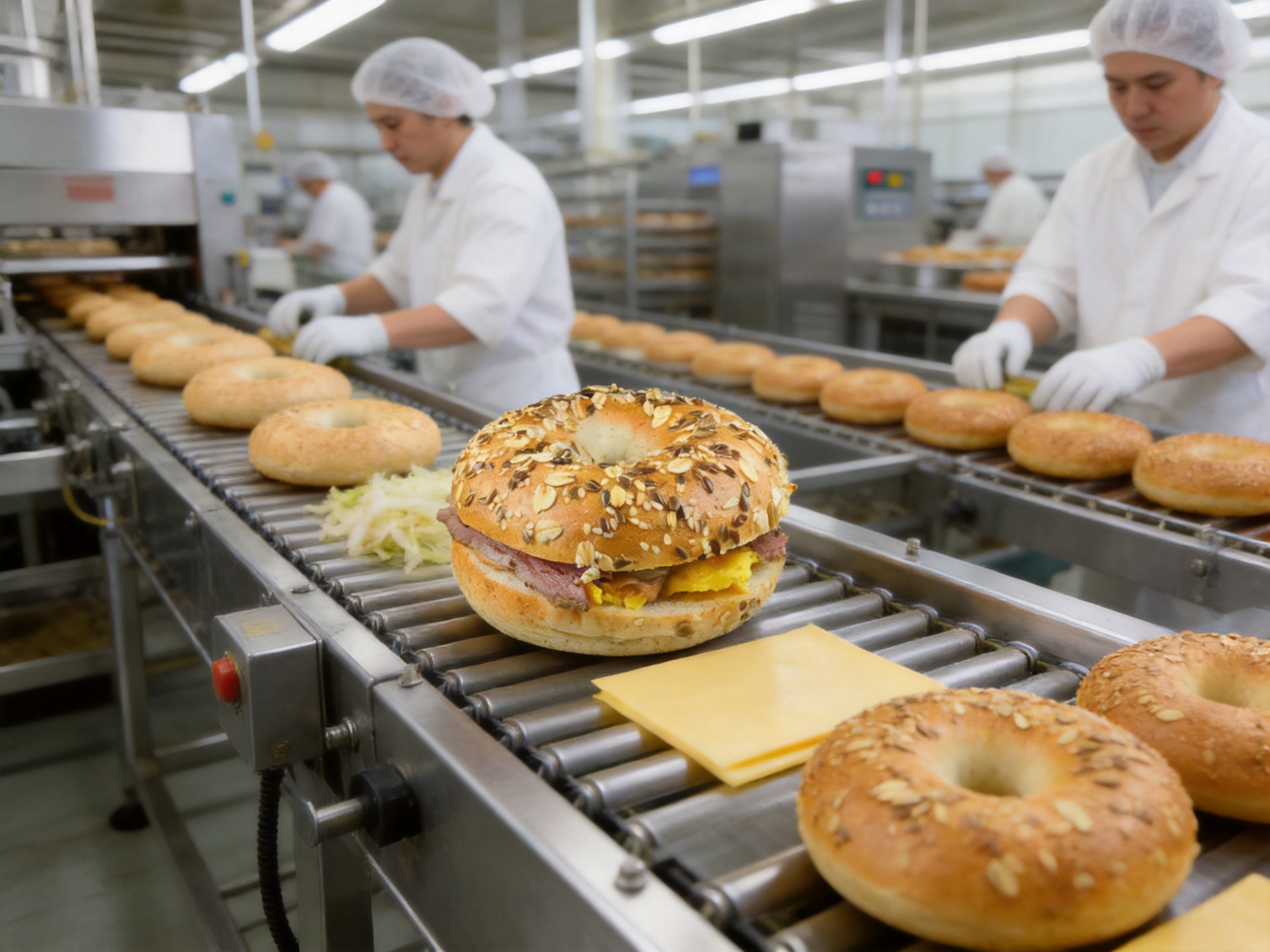
Jiangsu Goobagel Food Technology Co., Ltd. has specialized in bagel research and manufacturing since 2019. This focus is important because bagels require a different production mindset from ordinary sliced bread. Their dough structure, chew, shape, surface texture, filling compatibility, freezing performance, and reheating behavior all influence the final customer experience.
A specialist bagel manufacturer can develop products around these requirements rather than treating the bagel as a simple substitute for another bread type. The company’s product range includes more than 100 clean-label bagel varieties, demonstrating a broad product-development platform and experience with different flavor directions.
For buyers, specialization can reduce the need to educate a general bakery supplier about bagel-specific requirements. It also creates a foundation for developing products with different weights, fillings, surface finishes, grain profiles, and channel applications.
4.2 An integrated supply chain
The company operates an integrated supply chain covering raw materials, research and development, production, and nationwide distribution. This structure can support better coordination between product design and manufacturing execution.
When research and production are closely connected, new products can be assessed not only for flavor but also for operational feasibility. A filling must be compatible with the dough, forming process, heating method, packaging format, and storage requirements. An integrated system allows these considerations to be addressed during development rather than after a product has already been commercialized.
Supply-chain integration can also support more reliable planning. Commercial customers need stable deliveries, predictable specifications, and clear communication about product changes. Coordination across materials, production, and distribution helps create a more dependable supply relationship.
4.3 Product development capacity
The Sauerkraut Slow-Roasted Beef Cheese Bagel reflects a development process based on sensory composition rather than simple ingredient accumulation. Each ingredient has a defined role: the multigrain base supplies structure and satiety, sauerkraut adds acidity and crispness, beef contributes roasted depth, and cheese creates a creamy connection.
Developing such a product requires attention to ingredient compatibility. Moisture migration, filling distribution, melting behavior, bite resistance, and flavor intensity must be considered together. A product can contain premium ingredients and still fail if the bread becomes soggy, the cheese does not melt attractively, or the filling overwhelms the base.
The company’s broader portfolio of more than 100 bagel varieties suggests experience in creating diverse profiles for different customer preferences. This supports the development of customized products for buyers seeking specific flavors, formats, or market positions.
4.4 Consistent commercial performance
Foodservice and retail customers require more than an attractive sample. They need products that perform consistently across repeated orders. The company describes its products as offering stable quality, consistent performance, and reliable supply for commercial applications.
For a hot sandwich bagel, consistency may involve the finished weight, shape, filling position, bread texture, heating response, and visual appearance. These factors affect labor, packaging, customer satisfaction, and the operator’s ability to maintain a dependable menu.
A standardized 170-gram product can help businesses design serving procedures, price points, nutritional calculations, and inventory plans. It can also make multi-location rollout easier because staff in different stores can work with the same basic unit.
5. The Role of Process Control in a Filled Bagel
Filled bakery products require coordinated process control because several components must remain compatible from production through final heating. The product’s value comes from the relationship between its parts, not only from the individual quality of the ingredients.
5.1 Dough development
The multigrain bagel dough must provide enough strength to hold the filling while still delivering a pleasant bite. Whole-wheat and grain components can influence dough handling, density, water absorption, and texture. A specialist manufacturer can adjust the dough system so that the final product remains hearty without becoming excessively hard or dry.
The toasted aroma of the bagel base is another important quality characteristic. It helps establish the product’s identity before the filling is even tasted. After heating, the exterior should support a warm bakery aroma that complements the beef and melted cheese.
5.2 Filling placement and portion discipline
In a sandwich product, filling distribution affects every bite. If the beef, sauerkraut, and cheese are concentrated in one area, the customer may experience inconsistent flavor and texture. A well-controlled process aims to distribute the components so that the product delivers the intended contrast throughout.
Portion discipline is equally important for commercial buyers. Standardized filling quantities support consistent cost calculations and predictable sensory performance. It also helps prevent excessive moisture or uneven heating caused by large variations in the filling load.
5.3 Moisture management
Sauerkraut and slow-roasted beef naturally contribute moisture, while cheese melts during heating. The bagel must be robust enough to contain these ingredients without losing its structure. Moisture management is therefore central to product quality.
The aim is not to remove all moisture. A completely dry sandwich would lack juiciness and tenderness. Instead, the product must balance moisture retention inside the filling with sufficient bread integrity on the outside. This balance is one of the reasons that product-specific development is more valuable than simply combining off-the-shelf ingredients.
5.4 Heating performance
The product is designed to be enjoyed hot. Heating activates several of its most important characteristics: the cheese melts, the beef aroma becomes more pronounced, the sauerkraut warms while retaining its distinctive acidity, and the multigrain base develops a more inviting toasted profile.
Operators should use the manufacturer’s validated heating instructions for the selected format. Heating equipment, starting temperature, packaging, and service conditions can vary widely between cafés, convenience stores, restaurants, and retail kitchens. Clear instructions help staff achieve a consistent result without overheating the bread or drying the filling.
6. Applications Across Commercial Channels
6.1 Café chains
Cafés can use the product as a premium savory option alongside coffee, tea, and other beverages. Its 170-gram size makes it suitable for breakfast or lunch menus, while its beef, cheese, and sauerkraut profile gives the menu greater variety than sweet pastries and simple breakfast sandwiches.
The product can be marketed as a hearty hot bagel sandwich for customers seeking a substantial meal in a compact format. It may also support meal deals that combine a hot sandwich with a beverage, helping cafés create clear and convenient purchasing occasions.
6.2 Bakery shops
Bakery operators can use the product to extend beyond traditional bread and pastry offerings. A filled multigrain bagel provides a savory alternative that can be heated to order or displayed as a prepared meal, depending on the operating model.
The product’s flavor story can also support premium bakery positioning. Fermented sauerkraut, slow-roasted beef, imported cheese, and multigrain dough provide stronger menu language than a generic filled bread description.
6.3 Quick-service restaurants
Quick-service restaurants need products that are easy to store, quick to prepare, and simple for staff to understand. A standardized hot sandwich bagel can help reduce assembly steps and support consistent service during high-demand periods.
The product may be suitable for breakfast, brunch, lunch, or all-day menus. Its savory profile is broad enough for multiple dayparts, while the bagel format gives it an identity distinct from burgers, wraps, and conventional toast sandwiches.
6.4 Convenience stores and prepared-food counters
Convenience retailers can benefit from a product that is easy to merchandise, heat, and consume on the go. The compact handheld format supports customers who need a filling meal without cutlery.
The bagel can be placed in a heated display or prepared after purchase according to the retailer’s operating procedures. Its visible filling and recognizable sandwich structure can make it easier for customers to understand than a product with an unfamiliar shape or presentation.
6.5 Tea and beverage brands
Tea brands and beverage-focused chains increasingly add savory food to increase average order value and create more complete purchasing occasions. The Sauerkraut Slow-Roasted Beef Cheese Bagel can complement both hot and cold drinks because its acidity, roasted meat flavor, and creamy cheese create a strong food pairing platform.
For beverage businesses with limited kitchen space, a prepared frozen bagel may offer a practical way to introduce a hot savory item without installing a full cooking line. The operator should evaluate equipment capacity, storage space, food-safety procedures, and service volume before launch.
6.6 Retail and private-label programs
Retail buyers can position the product as a premium frozen breakfast or meal item. Its flavor combination offers differentiation from plain bagels and common breakfast sandwiches. Private-label customers may also adapt the product’s packaging, serving proposition, and communication style to match their own brand strategy.
Jiangsu Goobagel Food Technology Co., Ltd. works with retail and foodservice customers and provides OEM and private-label bagel solutions. Buyers can discuss product specifications, packaging formats, labeling requirements, minimum order quantities, and market-specific documentation during the development process.
7. OEM and Private-Label Potential
The product can serve as a starting point for customers that want a distinctive filled bagel under their own brand. A private-label program may use the existing flavor concept or develop a customized version with changes to filling ratios, cheese selection, grain composition, package size, or consumer positioning.
7.1 Customization opportunities
Potential customization areas may include:
| Customization Area | Possible Development Direction | Commercial Purpose |
|---|---|---|
| Product weight | Smaller snack format or larger meal format | Fit different price points and consumption occasions |
| Bagel base | Multigrain, whole-wheat-oriented, plain, seeded, or specialty grain profile | Match nutritional, visual, or brand positioning |
| Protein filling | Alternative beef seasoning, different meat format, or other savory protein | Target regional tastes and menu categories |
| Vegetable element | Different fermented or pickled vegetable profiles | Create acidity, color, and local flavor relevance |
| Cheese component | Different cheese styles or melt characteristics | Adjust aroma, creaminess, and premium perception |
| Packaging | Foodservice bulk pack, retail carton, or individually wrapped format | Support the customer’s distribution and service model |
Any customization should be evaluated for sensory quality, production feasibility, freezing performance, reheating behavior, regulatory compliance, and cost. A successful OEM partner does not simply print a customer’s logo on an existing item. It helps translate a market concept into a stable product that can be manufactured and supplied at commercial scale.
7.2 Supporting brand differentiation
The flavor combination gives private-label customers a strong foundation for storytelling. They can focus on the contrast between tangy sauerkraut and roasted beef, the heartiness of the multigrain bagel, or the convenience of a hot meal in a handheld format.
Brand owners may also develop different communication angles for different markets. A café can emphasize a warm, satisfying lunch. A supermarket can emphasize freezer convenience and premium ingredients. A convenience chain can focus on fast heating and portability. The product’s composition supports all three approaches.
8. Quality, Supply, and Partnership Considerations
When selecting a frozen bagel manufacturer, buyers should evaluate more than the product sample. A long-term supplier must be able to support specifications, documentation, production planning, communication, and delivery requirements.
8.1 Stable product specifications
Commercial customers should confirm the target product weight, ingredient declaration, allergen information, dimensions, packaging configuration, storage conditions, shelf-life information, and recommended heating method. These details should be documented before a large-scale launch.
For the Sauerkraut Slow-Roasted Beef Cheese Bagel, the 170-gram specification provides a clear starting point. Buyers may then determine whether the product fits their serving size, packaging, menu price, and nutritional communication requirements.
8.2 Reliable supply planning
Goobagel Food describes its supply chain as covering raw materials, R&D, production, and nationwide distribution. This integrated structure is relevant to customers that need regular replenishment or intend to expand across multiple locations.
Supply planning should include forecast volumes, production lead times, order cycles, shipping conditions, inventory rotation, and contingency communication. These factors are especially important for chains and distributors that cannot afford frequent stockouts.
8.3 Clean-label product development
The company has developed more than 100 clean-label bagel varieties. The meaning of “clean label” can vary by market and customer, so buyers should request the specific ingredient declaration and regulatory documentation applicable to their destination market.
Nevertheless, the company’s stated focus on clean-label development indicates attention to modern consumer expectations. Many customers now look for products with understandable ingredient stories, recognizable components, and a balance between convenience and perceived quality.
8.4 Communication with technical and commercial teams
Product development is most efficient when commercial goals and technical requirements are discussed together. Buyers should communicate their target consumer, sales channel, expected volume, equipment, packaging needs, price range, and launch schedule.
The manufacturer can then evaluate whether the existing product is suitable or whether an adjusted formula and format would provide a better result. Early communication can prevent avoidable changes late in the development process.
9. Suggested Menu and Marketing Positioning
9.1 A hearty hot meal in a familiar format
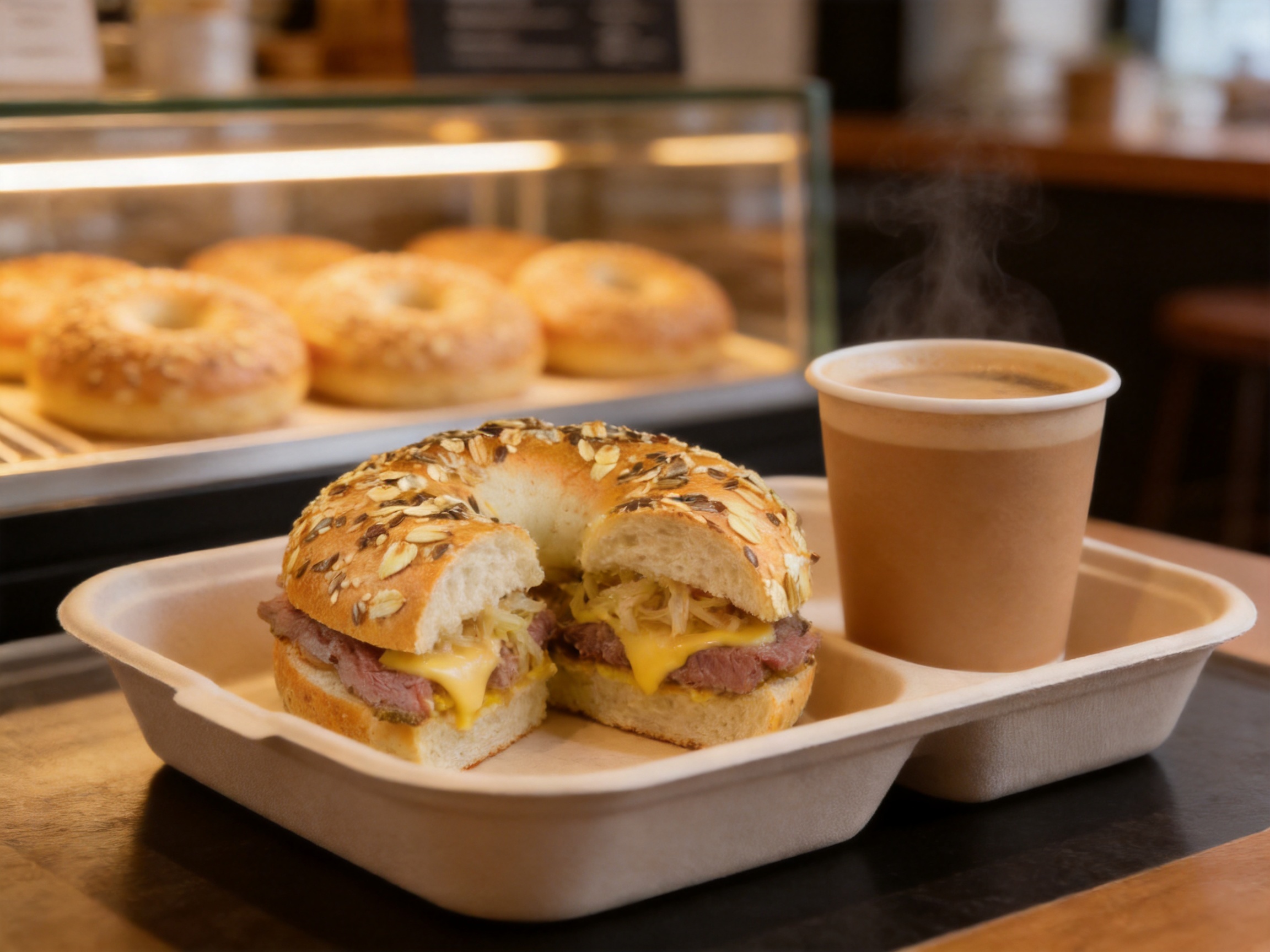
The product can be positioned as a warm, filling bagel sandwich for customers who want more than a light snack. The multigrain base and 170-gram weight support this message, while the beef and cheese deliver a satisfying savory profile.
Suggested menu language should remain clear and appetizing. For example, an operator may describe it as a toasted multigrain bagel filled with slow-roasted beef, tangy sauerkraut, and melted cheese. This explanation communicates the major ingredients without requiring customers to understand a complicated recipe.
Another positioning approach is to highlight contrast: bright fermented acidity against roasted beef, crisp sauerkraut against tender meat, and grain texture against creamy melted cheese.
This approach is useful for cafés and restaurants that want to present the item as a crafted specialty rather than a generic frozen sandwich. It also gives staff a simple explanation to use when customers ask what makes the product different.
9.3 A convenient foodservice solution
For business buyers, the product’s value includes operational simplicity. It can help operators offer a more complete savory menu with fewer assembly steps than a made-to-order sandwich. A product that is consistent, easy to store, and quick to heat can support efficient service without sacrificing menu variety.
Operational benefits should always be evaluated against the customer’s own equipment and procedures. The appropriate heating method, holding time, packaging, and display process must be confirmed before launch.
10. Consumer Experience from First Bite to Last
The product is designed to create a sequence of sensory experiences. The first impression comes from the warm toasted aroma of the multigrain bagel. The exterior provides a firm, grain-textured bite, while the interior introduces the savory aroma of slow-roasted beef.
As the customer continues chewing, the sauerkraut brings a crisp, fermented tang. This acidity refreshes the palate and prevents the sandwich from feeling too rich. The melted cheese then contributes a smooth, creamy layer that binds the flavors together.
The final impression is intended to be hearty but balanced. The customer receives the satisfaction of beef, cheese, and a substantial bagel, while the sauerkraut provides the brightness needed to maintain definition. This sensory progression makes the product suitable for customers who appreciate complex flavor but still want a convenient handheld meal.
11. Practical Evaluation Checklist for Buyers
Before placing a commercial order, buyers should evaluate the product against their own operational and market requirements. The following questions can guide the review:
Does the 170-gram serving size fit the intended menu and price point?
Does the multigrain bagel remain structurally sound after the recommended heating process?
Is the beef portion sufficient for the target consumer and product positioning?
Does the sauerkraut provide noticeable acidity without overpowering the beef and cheese?
Does the imported cheese melt attractively and remain evenly distributed?
Can the product be stored and heated using the equipment available at each location?
Are the packaging, labeling, allergen, and documentation requirements suitable for the target market?
Can the supplier provide the desired order volume and delivery schedule?
Would a customized recipe, package, or weight improve the product’s fit for the intended channel?
A structured evaluation helps convert a promising product into a reliable commercial program. Sampling should include the actual heating equipment and service conditions that will be used after launch.
12. Why a Specialist Manufacturer Matters
Bagel manufacturing combines bakery knowledge with prepared-food expertise. The base must have the right bite, but the filling must also remain attractive and stable. A company focused specifically on bagels is more likely to understand how dough, fillings, freezing, packaging, and reheating interact.
Goobagel Food’s specialization since 2019, portfolio of more than 100 clean-label bagel varieties, and integrated supply-chain model provide a foundation for serving customers that require more than a one-time custom sample. Its stated mission is to provide customers with high-quality and healthy products while offering partners opportunities to realize their business goals.
The company’s values include persistence, craftsmanship, respect, and science. These principles are relevant to product development because successful commercial bakery products require repeated testing, careful execution, collaborative communication, and decisions supported by technical understanding.
For international buyers, supplier selection should include direct confirmation of manufacturing capability, export documentation, product specifications, food-safety controls, and destination-market compliance. The manufacturer’s experience and resources provide a starting point, while each customer remains responsible for confirming the requirements of its own market and sales channel.
13. Frequently Asked Questions
Q1: What is the Sauerkraut Slow-Roasted Beef Cheese Bagel?
It is a hot sandwich bagel weighing 170 grams. It combines a multigrain bagel base with lactic-fermented sauerkraut, low-temperature slow-roasted beef, and a full slice of imported cheese.
Q2: What makes the flavor different from a standard bagel sandwich?
The product is built around contrast. Sauerkraut contributes bright fermented acidity and a crisp bite, slow-roasted beef provides savory depth and juiciness, imported cheese adds creamy richness, and the multigrain bagel supplies toasted grain flavor and a hearty texture.
Q3: Is the product intended to be served hot?
Yes. Heating allows the cheese to melt, brings out the roasted beef aroma, warms the bagel base, and creates the intended hot sandwich experience. Operators should follow the manufacturer’s recommended heating instructions for the specific product format.
Q4: Why is sauerkraut included with beef and cheese?
Sauerkraut provides acidity and freshness that balance the richness of beef and cheese. Its crisp texture also creates contrast with the tender filling and chewy multigrain bagel.
Q5: What is the advantage of the multigrain bagel base?
The multigrain base offers a distinct grain texture, toasted aroma, and higher-fiber whole-wheat-oriented profile. It provides a more substantial and filling foundation than a basic refined bread base.
Q6: Who can use this product?
The product is suitable for cafés, bakery shops, quick-service restaurants, convenience stores, prepared-food counters, retail businesses, tea brands, foodservice distributors, and private-label operators.
Q7: Can the product be used in an OEM or private-label program?
Yes. Jiangsu Goobagel Food Technology Co., Ltd. provides OEM and private-label bagel solutions. Buyers can discuss customization of product specifications, packaging, formulation, serving size, and market positioning.
Q8: Can the recipe be customized?
Potential customization may include the bagel base, product weight, filling balance, cheese selection, seasoning, packaging, and application format. Each change should be evaluated for taste, structure, freezing performance, heating response, labeling, and cost.
Q9: Does the manufacturer offer other bagel varieties?
The company has developed more than 100 clean-label bagel varieties. Customers can discuss existing products or request a development program based on their target market and commercial requirements.
Q10: What should buyers confirm before ordering?
Buyers should confirm product specifications, ingredient and allergen information, packaging, storage conditions, shelf-life, heating instructions, minimum order quantities, lead times, documentation, delivery arrangements, and any destination-market requirements.
Q11: What gives the product commercial appeal?
Its appeal comes from the combination of a familiar handheld format, premium flavor contrast, substantial 170-gram portion, standardized preparation, and suitability for frozen bakery and foodservice programs.
Q12: How should the product be marketed?
It can be marketed as a hearty hot multigrain bagel sandwich, a premium beef and cheese bagel with tangy sauerkraut, or a convenient meal solution for breakfast, lunch, and all-day foodservice. The best message depends on the customer’s channel and target audience.
14. Conclusion
The Sauerkraut Slow-Roasted Beef Cheese Bagel brings together four complementary elements in one practical product: a hearty multigrain bagel base, bright lactic-fermented sauerkraut, juicy low-temperature slow-roasted beef, and smooth melted imported cheese.
Its primary competitive advantage is balance. The product offers the richness consumers expect from beef and cheese while using sauerkraut to add acidity and freshness. The multigrain base contributes texture, toasted aroma, and satiety, making the item feel like a complete meal rather than a simple filled snack.
Its commercial advantage is consistency and convenience. A standardized 170-gram unit can simplify preparation, portion control, menu planning, and inventory management. The hot sandwich format is suitable for cafés, restaurants, bakery shops, convenience stores, retail programs, and beverage chains that want to expand their savory offerings.
Behind the product is a specialist bagel manufacturer with experience in research and manufacturing since 2019, an integrated supply chain, more than 100 clean-label bagel varieties, and capabilities serving retail and foodservice customers. For businesses seeking a differentiated bagel product or a customized private-label solution, this combination of flavor development and manufacturing support makes the product a strong candidate for commercial evaluation.
Before launch, each buyer should confirm the detailed specification, packaging, storage, heating, regulatory, and supply requirements for its own market. With appropriate validation, the Sauerkraut Slow-Roasted Beef Cheese Bagel can provide a distinctive, satisfying, and operationally practical addition to modern frozen bakery and hot food programs.
References
1. Product specification and product description for the Sauerkraut Slow-Roasted Beef Cheese Bagel, supplied by the manufacturer.
2. Company profile and manufacturing information for Jiangsu Goobagel Food Technology Co., Ltd., supplied by the manufacturer.
3. General foodservice product-development principles concerning portion consistency, moisture management, reheating performance, and prepared-food operations.
4. General bakery manufacturing principles concerning multigrain dough development, filled-bread structure, sensory balance, and commercial product standardization.
5. General food marketing principles concerning product differentiation, private-label development, menu positioning, and channel-specific commercialization.
