
 中文简体
中文简体
 English



postmaster@goobagelfood.com
Content
- 1 1. A Bagel Designed Around Contrast and Progression
- 2 2. The Chewy Bagel Base: A Structural Advantage
- 3 3. Tender Chicken Breast with a Distinctive Pepper Profile
- 4 4. Cheese, Peanuts, Sesame, and Black Pepper: The Finishing System
- 5 5. Manufacturing Strengths Behind the Product
- 6 6. Advantages Over More Conventional Filled Bagels
- 7 7. Applications Across Retail and Foodservice
- 8 8. OEM and Private-Label Potential
- 9 9. Quality, Consistency, and Commercial Reliability
- 10 10. Building a Menu Around the Product
- 11 11. Preparation and Handling Considerations
- 12 12. Why This Product Fits Current Consumer Preferences
- 13 13. Company Capabilities and Partnership Value
- 14 14. Buyer Evaluation Checklist
- 15 15. Frequently Asked Questions
- 15.1 What is the Chewy Bagel Base Teng Pepper Chicken Bagel?
- 15.2 What makes the bagel base different?
- 15.3 How would you describe the flavor?
- 15.4 Is the product extremely spicy?
- 15.5 What commercial channels can use this bagel?
- 15.6 Can the product be used for private-label development?
- 15.7 Does the product contain common allergens?
- 15.8 Why is a frozen format useful for foodservice?
- 15.9 What should buyers request before ordering?
- 15.10 What is the manufacturer’s core strength?
- 16 16. Conclusion
- 17 References
- 18 Product: Chewy Bagel Base Teng Pepper Chicken Bagel
The bagel market continues to expand beyond traditional breakfast formats. Consumers now expect bagels to deliver more than a familiar shape and a chewy texture. They are looking for bold fillings, layered seasoning, convenient preparation, portable eating, and flavor combinations that feel distinctive enough to share online. For retailers, cafés, bakery operators, quick-service restaurants, and food brands, this shift creates an opportunity to use the bagel as a flexible platform for innovation.
The Chewy Bagel Base Teng Pepper Chicken Bagel is developed for that opportunity. Weighing 128 grams, it combines a firm and resilient bagel base with tender chicken breast, teng pepper seasoning, cheese, peanuts, sesame, and black pepper. The product is positioned within the minced meat bagel category, but its appeal goes beyond a simple savory filling. It is designed as a layered sensory experience that develops from fragrance to numbing heat, then to spice, savoriness, creaminess, and crunch.
For commercial buyers, the product also represents a practical frozen bakery format. Its structured base is designed to support a substantial filling, while its portion size is suitable for individual meal occasions, snack occasions, café menus, and grab-and-go counters. Behind the product is an integrated manufacturing organization with experience in bagel research, product development, raw-material coordination, production, and distribution.
This article examines the product’s flavor architecture, textural advantages, manufacturing strengths, commercial applications, customization potential, and suitability for OEM and private-label programs. It also explains why a carefully engineered savory bagel can help food businesses differentiate themselves in a crowded bakery and prepared-food market.

Chewy Bagel Base Teng Pepper Chicken Bagel
1. A Bagel Designed Around Contrast and Progression
Many filled bakery products deliver one dominant impression. They may be mainly salty, mainly creamy, mainly spicy, or mainly meaty. The Chewy Bagel Base Teng Pepper Chicken Bagel is designed differently. Its identity comes from contrast: a dense and chewy bread foundation paired with soft chicken, aromatic pepper, moderate creaminess, roasted notes, and a progressively developing spicy sensation.
This approach is especially important in a modern bagel because the bagel itself has a strong textural personality. A weak or overly soft base can disappear beneath a flavorful filling. A base that is too hard or dry can make the entire product feel heavy. The product therefore begins with the bread structure. The bagel is intended to feel firm on the outside and resilient inside, creating a satisfying bite that remains present while the filling develops.
The flavor experience is similarly arranged in stages. The initial impression comes from the grain aroma of the wheat-based bagel and the fragrance of the seasonings. The next stage introduces the tender chicken and savory filling. Teng pepper then contributes a bright, characteristic numbing sensation that builds rather than arriving as a flat burst. Cheese softens and rounds the heat, while peanuts and sesame add roasted richness and a crisp, nutty contrast. Black pepper provides an aromatic finish.
This progression gives the product a stronger point of difference than a conventional plain bagel with a standard meat filling. It can appeal to consumers who enjoy familiar bakery formats but want a more adventurous flavor profile. At the same time, the bagel format keeps the eating experience accessible, portable, and easy to understand.
Why Sensory Progression Matters
Layered flavor can encourage repeat purchase because each bite remains dynamic. The consumer may first notice the aroma of the topping, then the chew of the bagel, followed by the juicy chicken, cheese, pepper fragrance, and warming or numbing spice. This sequence avoids the monotony that can occur when one seasoning dominates from the beginning to the end.
For foodservice operators, a product with a recognizable flavor progression can also support menu storytelling. Staff can describe it as a chewy savory bagel with tender chicken, fragrant teng pepper, creamy cheese, and crunchy toppings. The description is both specific and accessible, allowing the product to stand out without requiring a complicated serving concept.
2. The Chewy Bagel Base: A Structural Advantage
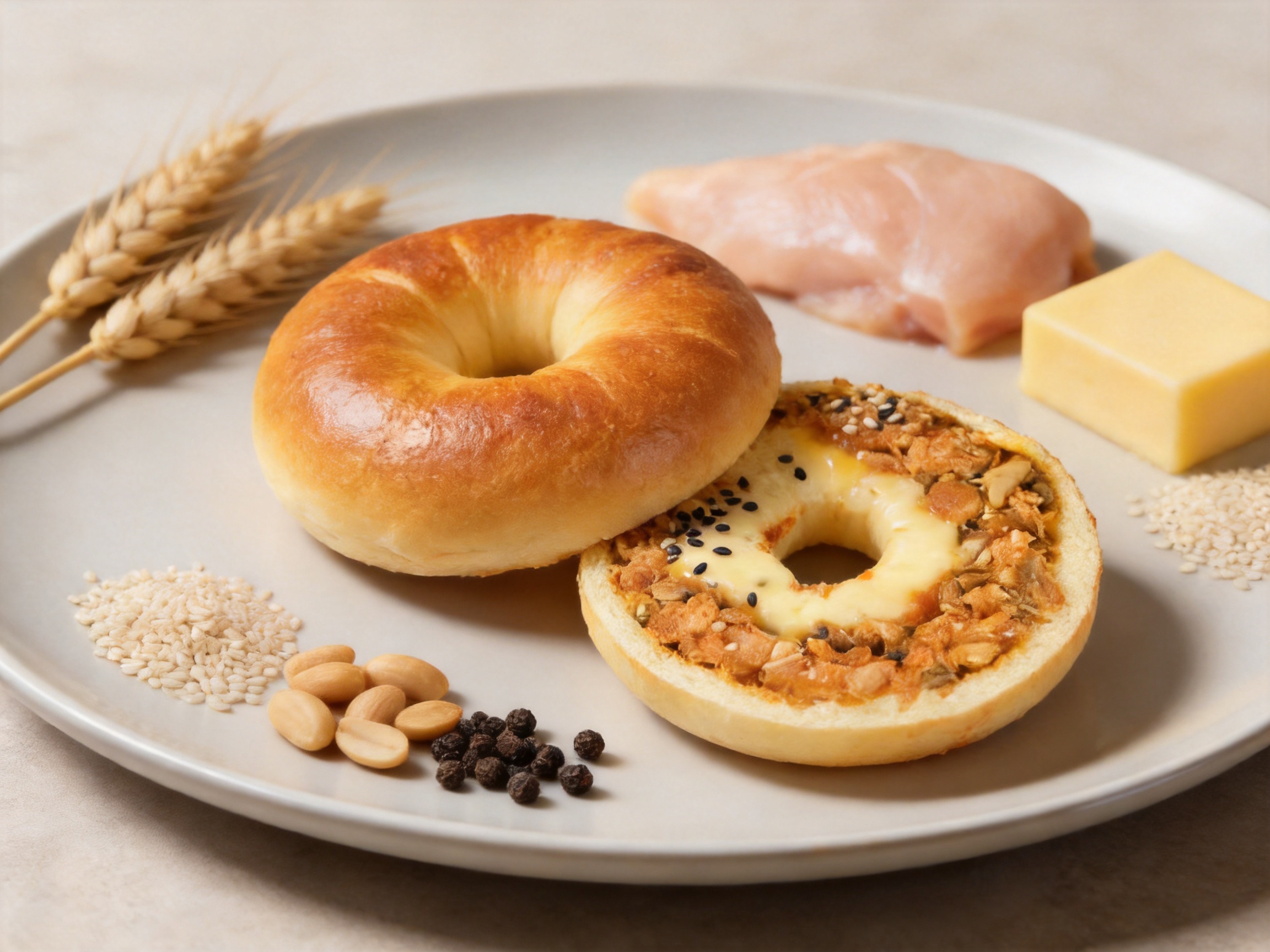
The foundation of this product is made with selected imported wheat and shaped by hand. The use of imported wheat is intended to support a clean grain aroma, a consistent baking profile, and the firm yet elastic structure associated with a quality bagel. Hand-shaping adds an artisan element to the manufacturing process and helps preserve the recognizable form of a traditionally made bagel.
Texture is one of the most important points of comparison in the bagel category. A product can contain an attractive filling, but if the bread is bland, loose, or excessively soft, the eating experience becomes less distinctive. This product is developed around a “firm outside, resilient inside” profile. The outer layer provides a clear bite, while the interior maintains a pleasantly dense chew.
That density has practical value. A substantial base provides enough support for minced chicken and toppings without collapsing immediately during handling. It also helps the product feel satisfying as a single serving. At 128 grams, the bagel can function as a meaningful snack or light meal, depending on the serving environment and accompanying menu items.
The grain character of the bread is another differentiator. The base is not intended merely to carry the filling. It contributes a subtle natural sweetness and a clean wheat aroma that balances the savory and spicy components. This makes the overall product more complete: the bread offers a mild, familiar foundation, while the filling supplies the more expressive flavor notes.
Hand-Shaped Production and Product Character
Hand-shaping is associated with care, visual individuality, and traditional bagel craft. In a commercial setting, the challenge is to preserve this character while also maintaining stable production standards. A manufacturer with dedicated research and production capabilities can use standardized procedures, operator training, process controls, and inspection practices to support consistency across batches.
The value of hand-shaping is therefore not simply visual. It reflects a product philosophy that treats the bagel as a crafted food rather than an interchangeable bread carrier. When combined with modern frozen bakery manufacturing, it can help bridge the gap between artisan appeal and commercial scalability.
3. Tender Chicken Breast with a Distinctive Pepper Profile
The filling uses chicken breast selected for its lean, delicate character. Chicken breast can become dry when poorly handled, especially in a baked or frozen product. The product concept therefore emphasizes tenderness and moisture retention, creating a soft texture that contrasts with the chewy bagel base.
This textural contrast is central to the product’s appeal. The bread delivers resistance and chew, while the chicken is intended to feel tender and refined. The result is more engaging than a filling that is uniformly dense from outside to inside. The difference between the bagel and the meat creates a clear bite structure and allows the consumer to experience multiple textures at once.
The seasoning profile is built around teng pepper. Rather than treating pepper only as a source of heat, the formulation highlights its fragrance and characteristic numbing quality. The intended progression is fragrant, numbing, and spicy. This gives the product an identity that is more complex than ordinary black-pepper chicken or a generic hot filling.
The flavor develops gradually with chewing. At first, the consumer encounters the aroma of the seasoning and the savory character of the chicken. The numbing sensation then becomes more noticeable, followed by a confident spicy finish. This progression can be particularly attractive to consumers who enjoy regional-inspired flavors and contemporary interpretations of familiar foods.
A Balanced Approach to Heat
Spicy products can sometimes be difficult to position because excessive heat may reduce their accessibility. The Chewy Bagel Base Teng Pepper Chicken Bagel approaches spice as one part of a larger flavor system. Cheese contributes mild creaminess, peanuts add richness, sesame brings roasted warmth, and the bagel base provides a neutral grain foundation.
Because these elements work together, the product is not defined only by intensity. It is defined by balance. The cheese helps soften the pepper sensation, while the nut and seed toppings provide flavor depth. Black pepper adds a separate aromatic sharpness that supports the teng pepper without replacing it.
This balance can make the product suitable for a wider range of foodservice settings than an extremely hot snack. It can be presented as a bold savory bagel, a modern café item, a filled bakery product, or a convenient meal component. Operators can also pair it with cooling beverages, fresh salads, soups, or mild side dishes to create a complete menu experience.
4. Cheese, Peanuts, Sesame, and Black Pepper: The Finishing System
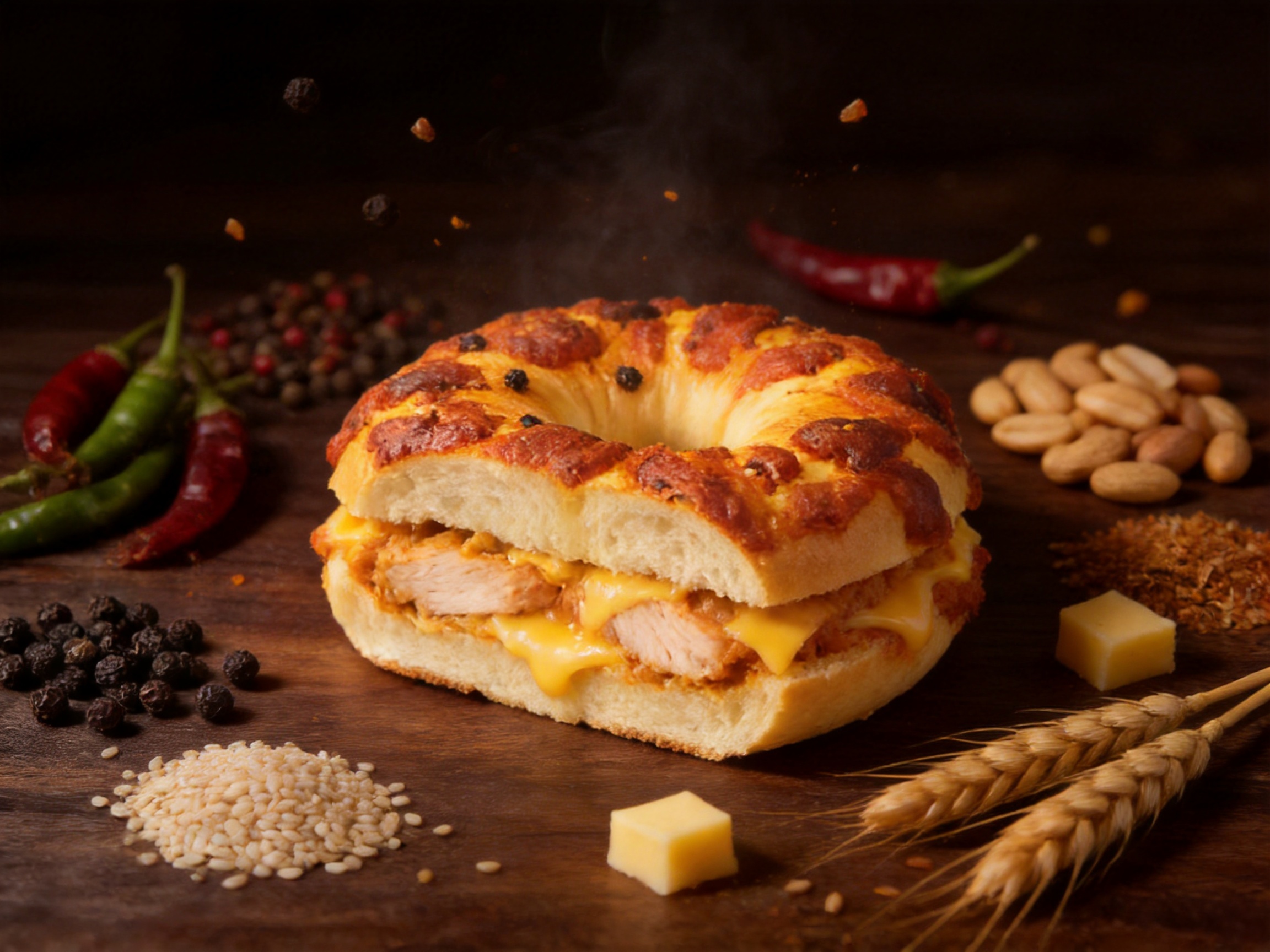
The topping system is designed to provide more than decoration. Each component contributes a distinct sensory function, and together they create an experience described by five connected qualities: fragrant, numbing, spicy, savory, and crunchy.
| Component | Primary Contribution | Role in the Overall Product |
|---|---|---|
| Chewy wheat-based bagel | Firmness, resilience, grain aroma, subtle sweetness | Provides the structural foundation and balances the filling |
| Tender chicken breast | Soft texture, savory protein character | Creates a satisfying central filling and contrasts with the bread |
| Teng pepper | Fragrance, numbing sensation, progressive spice | Establishes the product’s signature flavor identity |
| Cheese | Creaminess, richness, gentle melt, savory depth | Rounds the pepper profile and adds indulgence |
| Peanuts | Crunch, nutty flavor, roasted richness | Adds textural contrast and a stronger finish |
| Sesame | Warm roasted fragrance | Enhances aroma and supports the nutty character |
| Black pepper | Crisp aromatic sharpness | Connects the seasoning layers and extends the finish |
Cheese is particularly important because it connects the bread and meat components. Its creaminess can soften the transition between the firm bagel and the seasoned chicken. It also creates a familiar flavor cue for consumers who already enjoy cheese-filled breads, pizza-inspired snacks, and savory bakery products.
Peanuts bring a more pronounced crunch. This is useful because the bagel and chicken otherwise provide mainly chewy and tender textures. The nutty note also reinforces the roasted impression created by sesame. Together, peanuts and sesame make the topping more aromatic and memorable.
Black pepper gives the product a second pepper dimension. Teng pepper contributes its distinctive numbing and fragrant qualities, while black pepper supplies a sharper, more direct aromatic note. The two are not identical, and their combination creates greater complexity than relying on a single pepper ingredient.
Why Crunch Improves a Filled Bagel
Texture is often an underappreciated factor in product differentiation. Consumers do not evaluate a filled bagel only by flavor. They also notice how the product breaks, compresses, stretches, and finishes in the mouth. The crunchy elements interrupt the softness of the chicken and cheese, making the product feel more active and varied.
For commercial menu development, this textural variety can help the product remain appealing after reheating or serving. The exact preparation method should follow the manufacturer’s specifications, but the product concept is built around retaining recognizable differences between the bread, filling, cheese, and toppings.
5. Manufacturing Strengths Behind the Product
The product is manufactured by Jiangsu Goobagel Food Technology Co., Ltd., a Chinese frozen bakery producer specializing in bagel research and manufacturing since 2019. The company operates a supply chain covering raw materials, research and development, production, and nationwide distribution. This integrated structure is important for commercial customers because product quality depends on more than a single recipe.
A successful frozen bagel program requires coordination at multiple stages. Raw materials must be selected for their functional performance as well as their flavor. Formulations must be tested for dough behavior, filling compatibility, baking performance, freezing stability, and preparation results. Production must be organized to repeat the approved specifications. Distribution must then support reliable supply to customers and markets.
Goobagel Food has developed more than 100 bagel varieties described as clean-label products. This breadth suggests an established product-development platform rather than a single-product manufacturing model. Experience across multiple bagel types can support faster experimentation, better understanding of ingredient interactions, and more flexible responses to customer requirements.
Integrated Raw-Material Management
Ingredient selection is a critical part of product performance. Imported wheat is used for the bagel base in this product, while chicken breast, cheese, peanuts, sesame, and pepper seasonings must be coordinated as part of one complete formulation. Each ingredient affects the others. For example, the chew of the bread influences how much filling it can support, while the intensity of the seasoning affects the required balance of cheese and grain flavor.
An integrated supply-chain model can help the manufacturer manage these relationships more effectively. It allows raw-material decisions, formulation work, production planning, and distribution to be considered together. This is particularly valuable for wholesale and private-label customers that need consistent specifications over time.
Research and Development Capability
Bagel innovation requires more than adding a new topping to an existing dough. The manufacturer must consider the relationship between the base, filling, seasoning, and intended preparation method. A spicy chicken bagel, for example, must maintain a clear bread texture while carrying enough filling and seasoning to deliver a noticeable flavor impact.
Research and development work can include ingredient trials, sensory evaluation, portion adjustment, process testing, and customer feedback. The Chewy Bagel Base Teng Pepper Chicken Bagel reflects this type of integrated development because its identity depends on several coordinated components rather than one isolated ingredient.
The company’s experience in developing more than 100 varieties can also support a modular approach to innovation. Dough characteristics, filling formats, topping systems, and flavor profiles may be adapted for different commercial purposes. This can shorten the path from an initial concept to a practical product specification.
Modern Frozen Bakery Production
Frozen bakery manufacturing helps commercial customers simplify preparation and improve menu consistency. Instead of producing every bagel from raw ingredients on site, an operator can work with a prepared product that is manufactured under controlled conditions. This can reduce the burden on local kitchen labor and support more predictable portioning and presentation.
Frozen products are especially useful for businesses with multiple locations, variable demand, limited preparation space, or a desire to expand their bakery menu without building a full production operation. The product’s 128-gram format also supports clearer inventory and serving planning.
Preparation, storage, thawing, and heating procedures should always follow the manufacturer’s technical specifications and local food-safety requirements. Within those parameters, a frozen bagel can provide a practical balance between product quality, operational efficiency, and menu flexibility.
6. Advantages Over More Conventional Filled Bagels
The product’s advantages over more conventional competitors are best understood as points of differentiation rather than unsupported claims of universal superiority. It offers a combination that is not typical of a plain bagel, a standard cream-cheese bagel, or a basic meat-filled bread.
Advantage One: A More Structured Eating Experience
Many soft filled breads focus primarily on tenderness. This product adds a firm and chewy bagel foundation, giving the consumer a more substantial bite. The dense internal texture can make the product feel more satisfying and can help it function as a standalone menu item.
Advantage Two: Layered Pepper Character
Ordinary spicy chicken products often depend on a single hot seasoning. This product uses teng pepper as a central flavor identity and combines it with black pepper. The result is intended to move from fragrance to numbing sensation and then to spice, producing greater aromatic complexity.
Advantage Three: Multiple Textural Contrasts
The combination of chewy bread, tender chicken, creamy cheese, and crunchy peanuts and sesame creates a more varied mouthfeel. This can increase sensory interest and make the product more memorable than a uniformly soft filled bun.
Advantage Four: A Distinctive but Accessible Format
The flavor is adventurous, but the product format is familiar. Consumers understand how to eat a bagel, and foodservice operators can use it in breakfast, lunch, snack, café, and takeaway settings. This combination of novelty and familiarity can reduce the difficulty of introducing a new flavor.
Advantage Five: Commercial Development Support
The manufacturer’s bagel specialization, broad product portfolio, and integrated supply chain provide a stronger foundation for wholesale and private-label cooperation than a supplier focused only on one finished item. Buyers can discuss product specifications, packaging requirements, flavor adaptations, and broader menu programs with a manufacturer experienced in bagel development.
7. Applications Across Retail and Foodservice
The Chewy Bagel Base Teng Pepper Chicken Bagel is suitable for several commercial channels. Its flavor and portion size allow it to work as a finished retail product, a café offering, a foodservice component, or a platform for further customization.
Cafés and Coffee Shops
Cafés increasingly need savory items that pair with beverages and can be served quickly. A spicy chicken bagel creates a stronger lunch and afternoon-snack option than a sweet pastry. It can be presented as a signature savory item and paired with coffee, tea, sparkling drinks, milk-based beverages, or fruit-based refreshments.
The product’s visual and sensory identity can also support display merchandising. A cross-section showing the filling and toppings may help communicate its value to customers. Operators should follow approved preparation instructions to achieve the intended balance between a warmed bagel base, tender chicken, melted or softened cheese, and aromatic toppings.
Convenience Retail
Convenience stores and prepared-food counters benefit from products that are easy to portion, recognizable, and suitable for quick consumption. A 128-gram bagel can be positioned as a substantial snack or a light meal. Its handheld format is appropriate for customers who want a savory option while traveling, working, or studying.
The product can be sold individually or included in a meal combination. Possible pairings include a beverage, fruit portion, salad, soup, or packaged side. The precise retail format will depend on the customer’s equipment, packaging, storage conditions, and local regulations.
Bakery Chains and Quick-Service Restaurants
For bakery chains and quick-service restaurants, the product can add a differentiated savory item without requiring a completely new production system. A bagel menu can include both classic and innovative flavors, allowing customers to choose between familiar options and more adventurous products.
The product may also serve as a limited-time offer or seasonal menu feature. Teng pepper gives it a distinctive story, while chicken and cheese provide recognizable ingredients. This makes it suitable for promotional campaigns centered on bold flavor, regional inspiration, or new product discovery.
Tea Brands and Cross-Category Menus
Tea brands and beverage-focused businesses often seek food products that increase average order value and extend consumption occasions. A savory bagel with numbing spice and roasted toppings can complement milk tea, brewed tea, fruit tea, or other beverage categories. Because it is portable and filling, it can support afternoon and evening traffic as well as breakfast.
Retail Freezer and Foodservice Distribution
Frozen distribution allows the product to reach customers who need inventory flexibility. Wholesale buyers can plan supply according to demand, subject to agreed storage and logistics requirements. The manufacturer’s nationwide distribution experience provides a foundation for serving commercial accounts and coordinating larger product programs.
8. OEM and Private-Label Potential
Food brands frequently want products that reflect their own market positioning. A manufacturer with bagel-focused research and production capabilities can support OEM and private-label programs by adapting the product to different requirements. These may include flavor intensity, filling ratio, size, packaging design, labeling format, channel positioning, and target consumer preferences.
The Chewy Bagel Base Teng Pepper Chicken Bagel can serve as a starting concept for several directions. A brand may retain the core combination of chicken and teng pepper while adjusting heat intensity. Another customer may request a milder version with greater emphasis on cheese and grain aroma. A foodservice client may prefer a larger format, while a convenience retailer may seek a smaller snack-size portion.
Private-label development also requires attention to supply reliability and specification management. The product should be documented with clear ingredient standards, weight targets, production requirements, packaging expectations, and quality checkpoints. The manufacturer’s integrated organization can help align these areas during development.
Questions Commercial Buyers Should Discuss
Before placing an OEM or private-label order, buyers should clarify the product’s target market, expected annual volume, pack configuration, storage requirements, preparation equipment, label obligations, allergen declarations, delivery schedule, and quality standards. They should also confirm the exact formulation and whether any ingredient substitutions are permitted.
Because this product contains wheat, chicken, cheese, peanuts, sesame, and pepper seasonings, allergen and ingredient communication must be handled carefully. Final labeling should reflect the verified production formula and the regulatory requirements of the destination market.
9. Quality, Consistency, and Commercial Reliability
For commercial customers, quality is not limited to the first sample. The most important question is whether the product can be delivered with stable characteristics over repeated orders. Texture, filling distribution, portion weight, topping appearance, flavor intensity, and packaging condition all influence customer satisfaction.
A company that has specialized in bagel manufacturing since 2019 can build expertise around these specific performance factors. Bagels require careful attention to dough development, shaping, baking, cooling, freezing, and preparation. Filled products add further variables because the filling must remain compatible with the bread and the intended distribution process.
Product consistency also supports menu standardization. If a café operates several locations, customers expect the same bagel experience at each site. A prepared frozen product manufactured under controlled conditions can help reduce variation caused by local ingredient handling or differences in staff training.
The manufacturer’s stated values of persistence, craftsmanship, respect, and science reflect a useful balance for industrial food production. Persistence supports long-term product improvement. Craftsmanship protects the sensory character of the bagel. Science helps guide formulation and process control. Respect supports responsible cooperation with customers, partners, and consumers.
Clean-Label Product Development
Goobagel Food describes its product portfolio as including more than 100 clean-label bagel varieties. Clean-label expectations vary by market and customer, so buyers should review the final ingredient statement and technical documentation for each specific product. Nevertheless, a focus on clear, recognizable ingredients can support consumer communication and brand positioning.
For a product with a complex flavor system, clean-label development can be especially valuable. The ingredient story is already understandable: wheat-based bagel, chicken breast, cheese, peanuts, sesame, teng pepper, and black pepper. This can make the product easier to explain in retail or foodservice marketing, provided that all claims are supported by the verified formulation and applicable regulations.
10. Building a Menu Around the Product
The product can be served as a standalone bagel, but menu development can increase its commercial potential. A café might present it as a warm savory bagel with a beverage pairing. A restaurant could add a salad or soup to create a lunch set. A convenience retailer might offer it in a grab-and-go package with a drink.
Menu language should focus on the product’s most distinctive features without overwhelming the customer. A concise description could emphasize the chewy bagel base, tender chicken breast, fragrant teng pepper, melted cheese, and crunchy peanut and sesame topping. The level of heat should be communicated accurately according to the approved product specification.
Visual merchandising can also highlight contrast. The bagel’s shape communicates portability and familiarity, while a cut-open presentation reveals the filling. Images should show the product in a clean, appetizing setting and should represent the actual portion and topping distribution as closely as possible.
For food brands, the product can become part of a broader flavor series. Other products might use different regional seasonings or filling concepts while maintaining a consistent chewy bagel base. This approach can create a recognizable product family and encourage customers to explore multiple varieties.
11. Preparation and Handling Considerations
Because the product is made for frozen bakery supply, preparation should be organized around the manufacturer’s instructions. The appropriate method may depend on the customer’s equipment, service format, and desired texture. Buyers should confirm whether the product is intended for direct heating from frozen, thawing before preparation, or another approved process.
The objective is to protect the product’s defining contrasts. The bagel should retain its characteristic chew, the chicken should remain tender, the cheese should contribute creaminess, and the aromatic toppings should remain noticeable. Overheating or improper handling may affect these qualities, so operators should conduct preparation trials before launch.
Food safety procedures must be followed throughout storage, preparation, display, and service. Operators should use the manufacturer’s technical documentation, local regulations, and internal hazard-control procedures. The product’s final shelf-life, storage temperature, packaging format, and handling instructions should be confirmed directly with the supplier before commercial use.
12. Why This Product Fits Current Consumer Preferences
Several consumer trends support the product concept. First, consumers continue to value convenient handheld foods that can fit into busy schedules. A bagel is naturally portable and can be consumed without cutlery. Second, consumers are increasingly interested in bold and globally inspired flavors. Teng pepper offers a distinctive sensory profile that can make the product more exciting than a standard savory bagel.
Third, texture has become an important part of food discovery. The product combines chewiness, tenderness, creaminess, and crunch, giving consumers a more complete experience. Fourth, many customers appreciate products that combine familiar formats with unexpected flavor combinations. Chicken, cheese, and bread are recognizable, while the pepper profile and topping system provide novelty.
For foodservice operators, these trends create an opportunity to refresh the bagel category. The product can appeal to consumers who might not choose a plain bagel, while still remaining approachable to customers who understand the format. This balance between familiarity and innovation is one of its strongest commercial qualities.
13. Company Capabilities and Partnership Value
Jiangsu Goobagel Food Technology Co., Ltd. has specialized in bagel research and manufacturing since 2019. Its business model covers raw materials, research and development, production, and distribution. This structure allows the company to operate as more than a finished-goods supplier. It can also function as a product-development partner for brands that need support creating, refining, and scaling bagel concepts.
The company serves retail, foodservice, café chains, tea brands, and bakery operators. These customer groups have different needs. Retail buyers may focus on packaging, shelf presentation, and consumer communication. Café chains may prioritize preparation speed and consistency. Foodservice operators may require portion control and supply stability. Private-label customers may need customization and coordinated product development.
A broad portfolio of more than 100 bagel varieties gives the company experience across multiple flavor directions and product structures. This experience can be useful when a customer wants to build a complete product range rather than purchase one isolated item.
The company’s mission is to provide customers with high-quality and healthy products while providing partners with opportunities to realize their dreams. Its vision is to strive for a better life. These statements align with a partnership-oriented approach in which product development is connected to the customer’s commercial goals.

14. Buyer Evaluation Checklist
Commercial buyers considering the product should evaluate it from both sensory and operational perspectives. The following checklist can support a structured review.
| Evaluation Area | Questions to Consider |
|---|---|
| Flavor | Is the teng pepper aroma clear? Is the numbing and spicy sensation appropriate for the target market? |
| Texture | Does the bagel provide the desired firmness and chew? Does the chicken remain tender after approved preparation? |
| Appearance | Are the shape, filling visibility, cheese, peanuts, sesame, and pepper toppings suitable for the intended channel? |
| Portion | Is the 128-gram format appropriate for a snack, breakfast item, lunch item, or meal combination? |
| Operations | Can the customer’s equipment and staff follow the recommended preparation process consistently? |
| Supply | Can the required volume, delivery schedule, packaging format, and storage conditions be supported? |
| Compliance | Are ingredient, allergen, labeling, and food-safety documents available for the destination market? |
| Customization | Can the formulation, size, packaging, or branding be adapted for OEM or private-label use? |
This evaluation process helps buyers distinguish between a product that is attractive in a sample tasting and one that is suitable for long-term commercial operation. The best product must satisfy both the consumer and the supply chain.
15. Frequently Asked Questions
What is the Chewy Bagel Base Teng Pepper Chicken Bagel?
It is a 128-gram savory bagel in the minced meat bagel category. It combines a chewy wheat-based bagel with tender chicken breast, teng pepper seasoning, cheese, peanuts, sesame, and black pepper.
What makes the bagel base different?
The base uses selected imported wheat and is hand-shaped. It is developed to be firm on the outside, resilient and dense inside, and mildly sweet with a clean grain aroma.
How would you describe the flavor?
The intended flavor progression is fragrant, numbing, and spicy. Chicken contributes savory tenderness, cheese adds creaminess, peanuts and sesame provide roasted richness and crunch, and black pepper adds aromatic sharpness.
Is the product extremely spicy?
The product is designed around a noticeable teng pepper and spicy profile, but the final perception depends on the formulation and the consumer’s sensitivity. Cheese, bread, and nutty toppings help balance the pepper character. Buyers should request the official sensory specification when evaluating the product for a particular market.
What commercial channels can use this bagel?
It can be considered for cafés, bakery chains, convenience retail, quick-service restaurants, tea brands, foodservice operators, and frozen bakery distribution. The appropriate application depends on preparation equipment, storage capacity, local regulations, and menu strategy.
Can the product be used for private-label development?
The manufacturer provides OEM and private-label bagel solutions. Buyers can discuss potential adjustments to size, flavor intensity, packaging, labeling, and other commercial requirements with the supplier.
Does the product contain common allergens?
The described formulation includes wheat, cheese, peanuts, and sesame. Chicken and seasoning ingredients are also part of the product. Final allergen declarations must be based on the verified formulation, production environment, and regulations in the destination market.
Why is a frozen format useful for foodservice?
A frozen format can help operators manage inventory, reduce on-site preparation requirements, support consistent portioning, and expand their menu without producing every component from raw ingredients. Exact storage and preparation instructions should be confirmed with the manufacturer.
What should buyers request before ordering?
Buyers should request product specifications, ingredient and allergen information, packaging details, storage and preparation instructions, shelf-life documentation, sample information, quality standards, and applicable compliance documents. OEM customers should also discuss volume, lead time, customization, and labeling requirements.
What is the manufacturer’s core strength?
The company specializes in bagel research and manufacturing and operates an integrated supply chain covering raw materials, R&D, production, and distribution. Its portfolio includes more than 100 clean-label bagel varieties for retail, foodservice, cafés, tea brands, and bakery operators.
16. Conclusion
The Chewy Bagel Base Teng Pepper Chicken Bagel demonstrates how a familiar bakery format can be transformed through careful structure, flavor layering, and commercial product development. Its firm and chewy base provides a strong foundation. Tender chicken breast adds a soft and savory center. Teng pepper introduces a distinctive fragrant, numbing, and spicy progression. Cheese, peanuts, sesame, and black pepper complete the product with creaminess, roasted richness, aroma, and crunch.
Compared with more conventional filled breads and standard savory bagels, the product offers a clearer point of difference through its combination of texture and layered seasoning. It is familiar enough for everyday foodservice while distinctive enough to support menu innovation, retail discovery, and online promotion.
Its commercial potential is reinforced by the manufacturer’s specialized bagel experience, integrated supply chain, product-development capability, frozen bakery production model, and broad portfolio. For cafés, retailers, bakery chains, foodservice operators, tea brands, and private-label customers, the product can serve as a ready-to-develop solution or as inspiration for a larger bagel program.
As consumer demand continues to move toward convenient, flavorful, texturally interesting foods, a well-engineered savory bagel can occupy an attractive position between bakery snack, handheld meal, and modern foodservice specialty. With the right preparation, packaging, positioning, and market adaptation, this product provides a practical way to bring bold pepper flavor and substantial bagel texture to commercial menus.
References
1. Product specification and sensory description for the Chewy Bagel Base Teng Pepper Chicken Bagel, supplied for commercial product information.
2. Company profile and manufacturing overview of Jiangsu Goobagel Food Technology Co., Ltd.
3. General principles of frozen bakery product development, including ingredient coordination, process control, storage management, and foodservice preparation.
4. General sensory evaluation principles for assessing flavor progression, texture contrast, aroma, portion satisfaction, and consumer acceptance in filled bakery products.
5. General food-labeling and allergen-management principles applicable to products containing wheat, dairy, peanuts, sesame, chicken, and seasoning ingredients.
