
 中文简体
 English






postmaster@goobagelfood.com
Content
- 1 A Bagel Built Around Flavor Clarity
- 2 Generous Sesame Coverage and a More Engaging Texture
- 3 Texture: Firm Outside, Elastic Inside
- 4 Manufacturing Strengths Behind the Product
- 5 Advantages Over Conventional and Lower-Specification Bagels
- 6 Applications Across Retail and Foodservice
- 7 OEM and Private-Label Potential
- 8 Quality, Reliability, and Supply Continuity
- 9 Serving and Preparation Considerations
- 10 Building a Strong Product Story
- 11 Why This Product Fits the Future of Frozen Bakery
- 12 Q&A
- 12.1 What is the product weight?
- 12.2 What are the main ingredients highlighted in the product profile?
- 12.3 What does the bagel taste like?
- 12.4 Is the bagel very salty?
- 12.5 How does the texture compare with ordinary bread?
- 12.6 What makes the sesame coating valuable?
- 12.7 Can the bagel be used for sandwiches?
- 12.8 Is the product suitable for cafés and restaurants?
- 12.9 What are the benefits of a frozen supply format?
- 12.10 Can the product be customized for private-label programs?
- 12.11 What types of companies can purchase this product?
- 12.12 What manufacturing experience supports the product?
- 12.13 What information should a buyer provide when requesting a quotation?
- 13 Conclusion
- 14 References
- 15 Product: High-Quality Wheat Source Salted Sesame Bagel
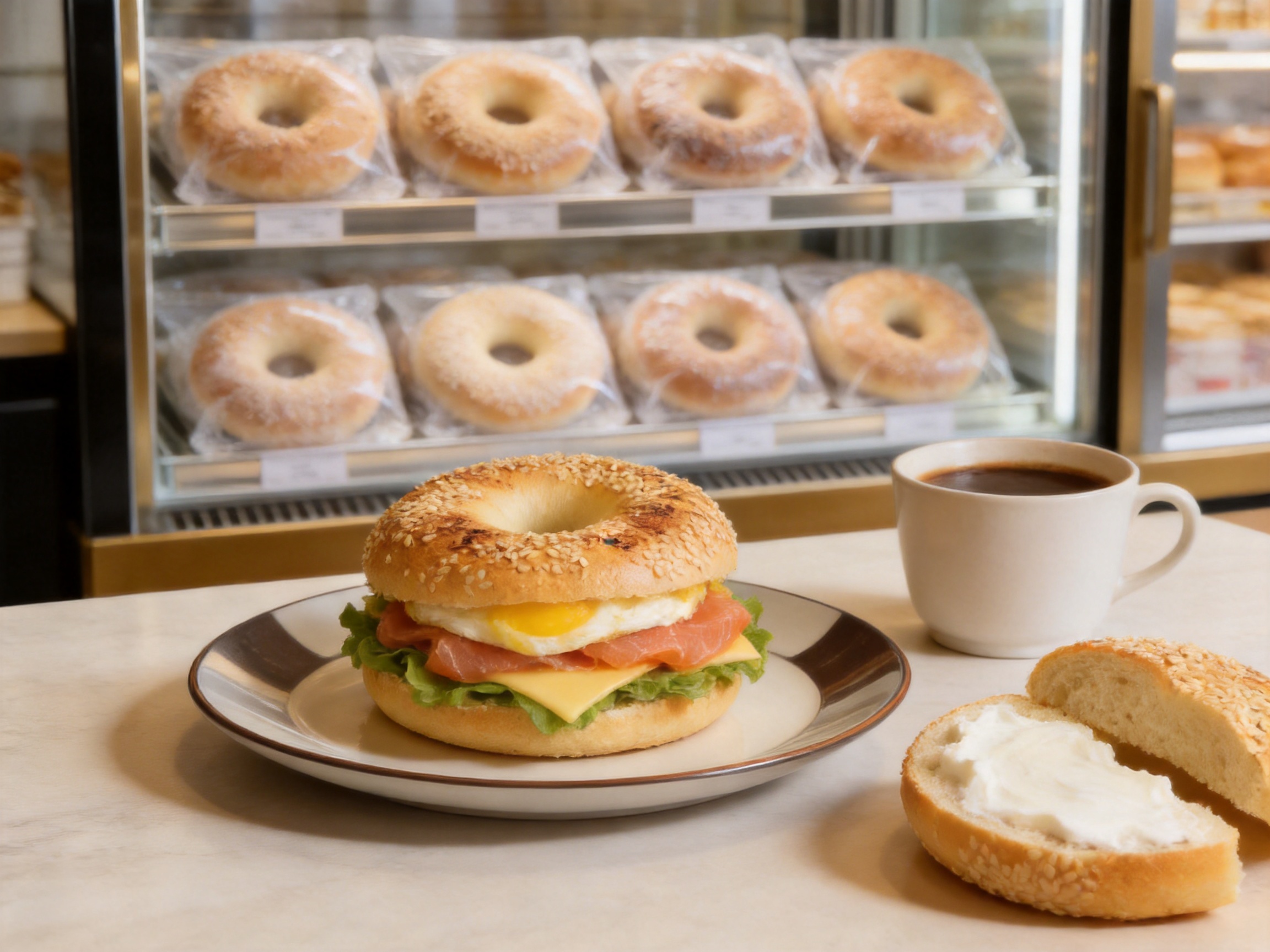
The bagel has evolved from a regional bread specialty into a versatile food platform for supermarkets, cafés, restaurants, hotels, convenience stores, catering businesses, and private-label bakery programs. Its distinctive shape, chewy texture, and ability to carry sweet or savory flavors make it especially suitable for modern foodservice. However, not every bagel delivers the same eating experience, and not every frozen bakery product provides the consistency required by commercial buyers.
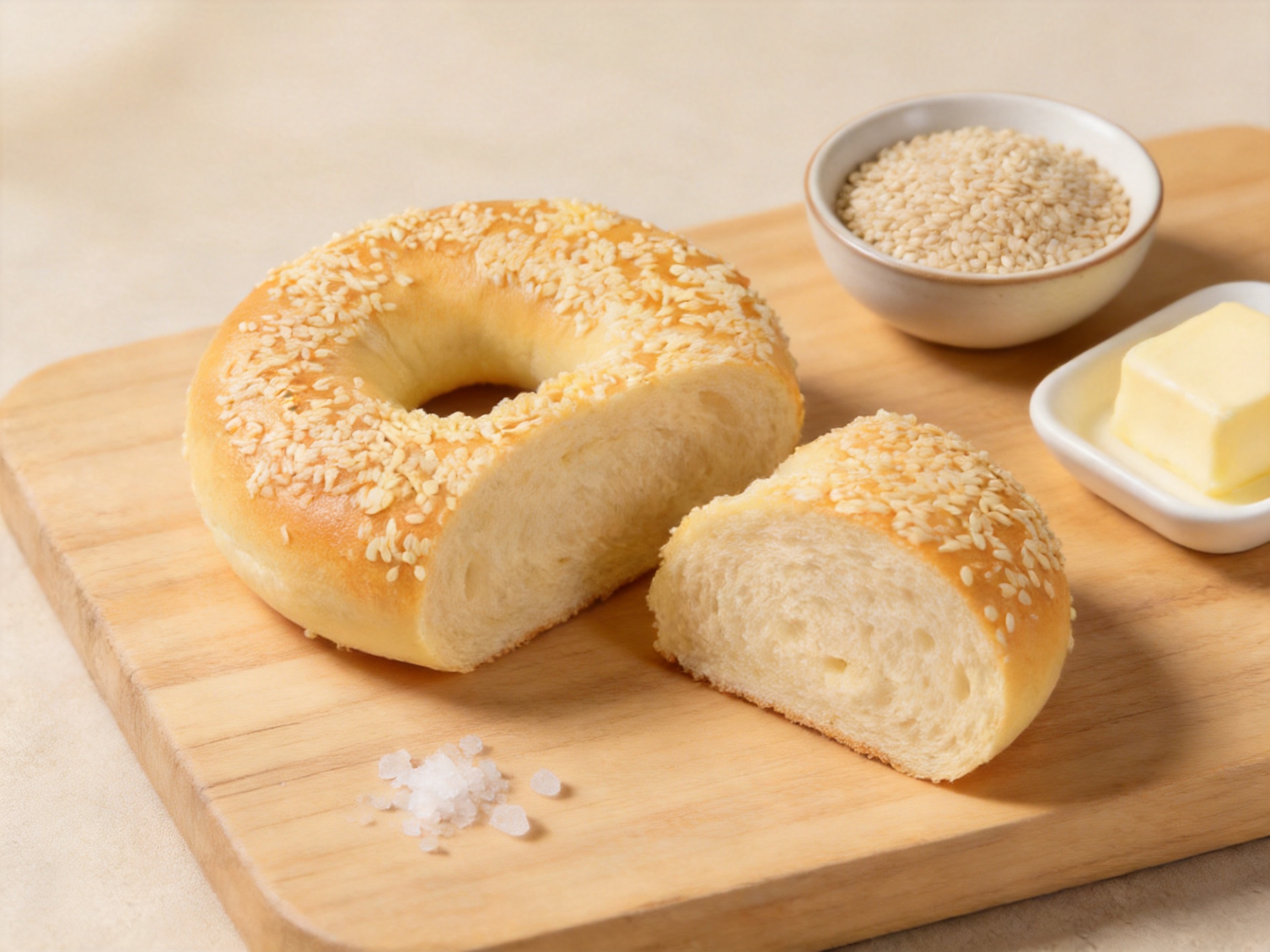
The High-Quality Wheat Source Salted Sesame Bagel is designed to meet both expectations. Weighing 110 grams, it combines carefully selected wheat flour, premium New Zealand dairy butter, Morton sea salt, and a generous coating of white sesame seeds. Its profile is deliberately simple, yet carefully balanced: a firm, toasted exterior, an elastic and chewy crumb, a rounded buttery aroma, and a clean sea-salt finish.
What makes this product particularly valuable is the way its ingredients, processing, and commercial format work together. It is not simply a bagel with salt and sesame on the surface. It is a structured product developed around flavor progression, texture stability, visual appeal, and dependable manufacturing. These qualities make it suitable for direct consumption, sandwich applications, breakfast menus, café service, and frozen retail distribution.
Produced by Jiangsu Goobagel Food Technology Co., Ltd., the product reflects a manufacturing approach built around research, product development, frozen bakery production, and supply-chain coordination. Since 2019, the company has focused on bagel research and manufacturing, developing more than 100 clean-label bagel varieties for retail, foodservice, café chains, tea brands, and bakery operators.
A Bagel Built Around Flavor Clarity
Many savory bagels rely heavily on salt, cheese, garlic, onion, or strongly flavored toppings. While those ingredients can create immediate impact, they may also overpower the wheat base and limit the product’s versatility. The High-Quality Wheat Source Salted Sesame Bagel takes a more refined approach by allowing four main elements to remain identifiable: wheat, butter, sea salt, and sesame.
The wheat provides the foundational cereal character. It gives the bagel its bread-like aroma and supports the chewy structure expected from a well-made bagel. Premium dairy butter contributes a rich, natural milky fragrance and a rounded mouthfeel. Morton sea salt sharpens the overall profile without turning the product into a one-dimensional salty snack. White sesame adds roasted nuttiness and a light crunch that appears immediately when the bagel is bitten.
This progression is important. The first impression comes from the toasted sesame aroma and the firm outer surface. As the bite continues, the elastic crumb brings forward the wheat and butter notes. During chewing, the butter flavor develops gradually rather than arriving as an overly strong coating. Finally, the salt gives definition to the finish, helping the entire flavor remain clear and memorable.
Compared with heavily seasoned competitors, this profile has a broader range of uses. It can be eaten plain, warmed for breakfast, sliced for a sandwich, paired with soup or salad, or served beside coffee and tea. Retailers can present it as a premium everyday bagel, while cafés and foodservice operators can use it as a neutral but flavorful base for customized menu items.
The Role of Carefully Selected Wheat
Wheat flour is not merely a structural ingredient in this product. It is the foundation of its aroma, chew, volume, and eating quality. A bagel requires enough dough strength to remain resilient after boiling and baking, but it must not become excessively hard or rubbery. Flour selection and dough development therefore play a central role in achieving the intended balance.
The product is positioned around a high-quality wheat source, emphasizing the importance of a dependable flour foundation. A well-controlled wheat base helps produce a consistent crumb that can withstand slicing, filling, warming, and foodservice handling. It also supports a neutral flavor platform, allowing butter, salt, and sesame to remain distinct instead of becoming confused or muted.
For commercial buyers, consistency in the wheat base is especially important. If the flour performs differently from batch to batch, the finished bagel may vary in diameter, density, chewiness, or moisture retention. Stable raw-material management reduces these variations and makes it easier for downstream customers to standardize preparation and portioning.
Premium Dairy Butter for Rounded Richness
Butter brings more than fat to the recipe. Premium New Zealand dairy butter is selected for its rich, naturally milky aroma and its ability to soften the perception of the wheat and salt. Rather than creating a sharp or artificial flavor, it helps the bagel develop a rounded character that feels indulgent while remaining suitable for everyday eating.
The butter is most noticeable as the product is chewed. This gradual development is one of the key sensory advantages of the bagel. The flavor does not depend on a strong initial burst. Instead, the butter works with the resilient crumb, opening progressively and leaving a warm, satisfying impression.
This approach can distinguish the product from lower-cost bagels that depend on sweeteners, artificial butter notes, or excessive toppings to create interest. A balanced butter profile gives buyers a premium positioning opportunity while preserving the clean identity of a savory bread product.
Morton Sea Salt for Definition, Not Excess
Salt affects aroma, flavor, dough performance, and overall balance. Used carefully, it can make wheat taste fuller and help butter and sesame appear more pronounced. Used excessively, it can mask other ingredients and narrow the product’s menu applications.
Morton sea salt is used to sharpen the profile and define the finish. The result is intended to resemble a sea-salt butter experience rather than a heavily salted topping. This distinction matters for consumers who want a savory snack but still expect a refined and balanced taste.
The clean salt finish also gives foodservice operators flexibility. The bagel can be served without additional seasoning, or it can be paired with cream cheese, smoked salmon, roast vegetables, sliced meat, eggs, or fresh greens. Because the base is flavorful but not aggressively seasoned, it can support a wide range of fillings.
Generous Sesame Coverage and a More Engaging Texture
Sesame is one of the most recognizable visual and sensory elements of this product. The white sesame coating gives the bagel a warm, artisanal appearance and immediately communicates that it is a seeded savory variety. The seeds also introduce a contrast between the crisp outer surface and the elastic interior.
The product uses generous sesame coverage rather than a sparse decorative sprinkling. This creates a more consistent first bite, ensuring that the toasted nutty aroma is present across the surface. At the same time, attention is given to seed adhesion and toasting intensity. The goal is to preserve a full sesame character without allowing it to overwhelm the wheat, butter, or sea salt.
A well-managed sesame coating provides several advantages over plain bagels. It increases visual differentiation on a retail shelf, adds texture without requiring a complex filling, and gives the consumer a clear sensory cue before the product is even cut open. In café and restaurant settings, the sesame surface can also make a simple sandwich appear more premium and complete.

High-Quality Wheat Source Salted Sesame Bagel
Texture: Firm Outside, Elastic Inside
Texture is one of the defining characteristics of a successful bagel. Consumers generally expect a bagel to be more resilient and chewy than ordinary sliced bread, but they do not want it to be dry, tough, or difficult to bite. The High-Quality Wheat Source Salted Sesame Bagel is developed around the contrast between a firm outer structure and an elastic crumb.
The exterior provides a satisfying bite and helps the bagel retain its identity after handling. It should feel substantial without becoming excessively hard. The interior is designed to remain pleasantly chewy and resilient, giving the product a sense of freshness and structure when warmed or sliced.
This textural contrast also supports different consumption occasions. As a breakfast item, the firm exterior makes the bagel feel filling and substantial. As a sandwich carrier, the elastic crumb helps hold spreads and fillings without immediately collapsing. As a snack, the chew encourages slower eating and allows the butter, wheat, sesame, and salt notes to develop in sequence.
Why Elastic Crumb Matters in Commercial Applications
For foodservice buyers, crumb performance is not only a sensory concern. It affects preparation speed, yield, waste, and presentation. A crumb that crumbles excessively can create operational problems during slicing and filling. A crumb that is too soft may compress under toppings. A crumb that is too dense may produce an unsatisfactory consumer experience.
An elastic crumb offers a useful middle ground. It maintains enough resilience for slicing and assembly while remaining comfortable to chew. The 110-gram format also provides a practical portion size for breakfast menus, café sandwiches, hotel buffets, and retail multipacks.
Because the product is suitable for frozen bakery supply, process control is particularly important. Freezing, storage, thawing, and reheating can all influence moisture distribution and texture. A bagel designed with a stable internal structure is more likely to provide dependable results across different customer preparation systems.
Manufacturing Strengths Behind the Product
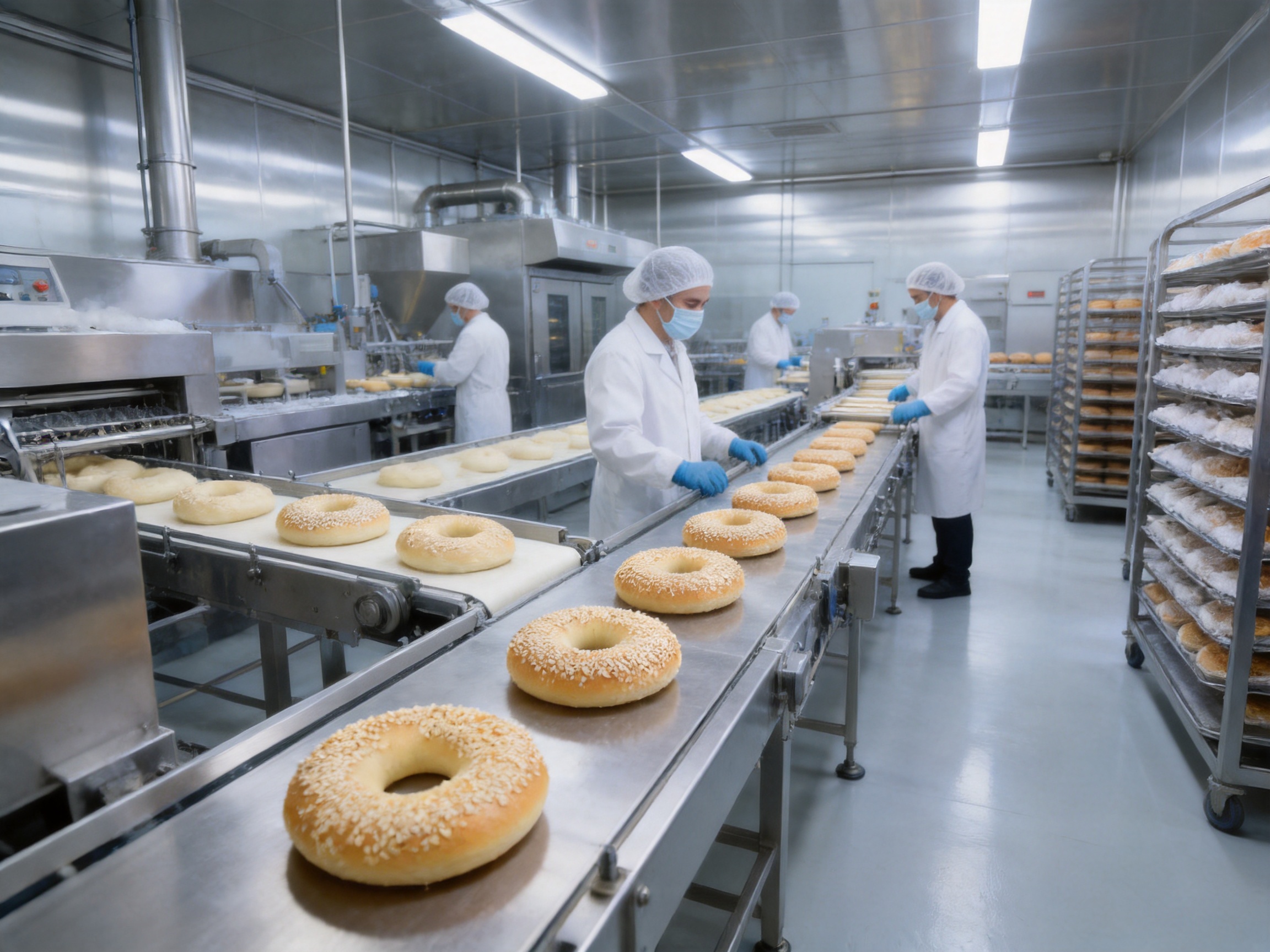
A premium bagel is not created by ingredients alone. Commercial customers need reliable manufacturing, repeatable specifications, stable supply, and the ability to develop products for different channels. Jiangsu Goobagel Food Technology Co., Ltd. operates as a modern frozen bakery producer with an integrated supply chain covering raw materials, research and development, production, and nationwide distribution.
This integrated structure allows the company to connect product design with manufacturing reality. A recipe can be evaluated not only for taste but also for scalability, consistency, frozen performance, packaging requirements, and customer application. Such coordination is valuable for buyers who need a product that performs in real commercial conditions rather than only in a small test batch.
Research and Development Focus
Goobagel Food has specialized in bagel research and manufacturing since 2019. Its development program has resulted in more than 100 clean-label bagel varieties. This product range indicates experience with different flavor systems, ingredient combinations, sizes, formats, and customer requirements.
Research and development in the bagel category involves more than creating new flavors. It includes optimizing dough characteristics, topping adhesion, baking response, freezing stability, reheating behavior, appearance, and packaging compatibility. A product may taste good in a development kitchen but fail commercially if its shape varies, its coating falls away, or its texture changes significantly after frozen storage.
The company’s focus on bagels allows it to build category-specific knowledge. This can support faster product customization for customers seeking a private-label item, a café-exclusive recipe, a retail multipack, or a foodservice format. It also makes it easier to identify which combinations of ingredients and processes are most suitable for different distribution channels.
Integrated Raw-Material Management
The supply chain begins with raw materials. Wheat flour, butter, sea salt, sesame, packaging materials, and other production inputs must be coordinated to maintain consistent output. An integrated approach supports better control over purchasing, incoming material assessment, production scheduling, and product specifications.
For the Salted Sesame Bagel, raw-material management is especially relevant because the product has a relatively focused ingredient profile. When a recipe contains only a few prominent flavor components, the quality and consistency of each one become more noticeable. Variations in butter aroma, sesame freshness, salt distribution, or wheat performance can affect the final eating experience.
Structured supply-chain coordination helps reduce avoidable variation and supports dependable production planning. This is important for importers, distributors, chain cafés, and retailers that need repeat deliveries over an extended period.
Controlled Production for Repeatable Results
Bagel production requires a sequence of carefully managed stages. Flour and other ingredients must be mixed into a dough with appropriate strength and hydration. The dough must be divided and shaped consistently. The characteristic bagel form must be maintained through proofing and cooking. Sesame must adhere effectively to the surface. Baking must develop the desired exterior without drying the interior.
Each stage influences the final product. If dough development is insufficient, the crumb may lack resilience. If proofing is poorly controlled, the bagel may become too dense or lose its shape. If the surface treatment is inconsistent, sesame coverage may vary. If baking is too intense, the exterior may become hard while the interior loses moisture.
A modern frozen bakery producer must also coordinate post-baking handling and freezing. The product needs to be cooled, packed, stored, and distributed in a way that protects its quality. Commercial reliability depends on treating the entire production chain as one connected system rather than viewing baking as the only important step.
Frozen Bakery Expertise
Frozen bakery products provide significant advantages for commercial customers. They can extend distribution range, simplify inventory planning, reduce daily in-store production requirements, and help operators offer consistent products across multiple locations. However, frozen products must be designed and handled carefully to preserve texture and flavor.
A bagel intended for frozen wholesale supply should be evaluated for its response to freezing and subsequent preparation. The dough structure, moisture balance, baking level, packaging format, and storage conditions all influence the final result. A well-developed product should retain its identity after the customer follows the recommended thawing, heating, or serving process.
For retailers, frozen supply can reduce the pressure to maintain a fully equipped bakery at every location. For cafés and restaurants, it can support faster service and more predictable portion control. For distributors, it can make it possible to supply a broad customer base from a centralized manufacturing operation.
Advantages Over Conventional and Lower-Specification Bagels
The product competes in a market that includes standard plain bagels, low-cost seeded bagels, heavily flavored varieties, and locally produced fresh bakery items. Its advantages are not based on one single feature. Instead, they come from the combination of ingredient quality, sensory balance, texture, visual appeal, manufacturing experience, and commercial flexibility.
| Evaluation Area | High-Quality Wheat Source Salted Sesame Bagel | Common Lower-Specification Alternative | Commercial Benefit |
|---|---|---|---|
| Flavor structure | Wheat, dairy butter, sea salt, and toasted sesame remain distinct | May rely on strong seasoning or a flat bread profile | Supports premium positioning and multiple menu uses |
| Butter character | Rounded, naturally milky richness that develops during chewing | May use weaker flavor or artificial butter notes | Creates a more refined and satisfying experience |
| Sesame treatment | Generous coating with attention to adhesion and toasting | May have uneven or sparse coverage | Improves shelf appearance and bite-to-bite consistency |
| Texture | Firm exterior with resilient, elastic crumb | May be overly soft, dry, dense, or brittle | Performs well for direct eating and sandwich assembly |
| Portion format | 110 grams | May vary considerably between suppliers | Supports portion control and menu costing |
| Supply model | Designed for frozen bakery distribution | May depend on local daily production | Enables wider distribution and inventory planning |
| Development capability | Backed by a company with more than 100 bagel varieties | May offer limited customization | Supports OEM, private-label, and channel-specific projects |
More Balanced Than Highly Flavored Competitors
Strong flavors can attract attention, but they are not always suitable for long-term menu use. A bagel covered in intense seasoning may pair well with one specific spread but become difficult to combine with other ingredients. The Salted Sesame Bagel offers a more flexible flavor foundation.
Its butter and sea-salt profile is recognizable without being overwhelming. Sesame contributes character while remaining compatible with savory and fresh ingredients. This balance allows the same product to support several menu concepts, reducing the need for operators to stock numerous specialized bread products.
More Premium Than a Basic Plain Bagel
A plain bagel can be practical, but it may require additional spreads or fillings to create visual and sensory interest. Sesame coverage immediately adds a premium appearance, while butter and sea salt provide more depth than a neutral base.
For retailers, the seeded surface can improve product differentiation. For cafés, it can make a simple toasted bagel feel more complete even when served with only butter or cream cheese. For foodservice operators, it can provide a distinctive bread option without requiring complicated preparation.
More Consistent Than Small-Batch Variability
Local bakery production may offer freshness and craftsmanship, but it can also involve variation in size, shape, surface coverage, and supply availability. A modern frozen manufacturer can offer more standardized specifications for customers operating multiple stores or serving large volumes.
Consistency is especially important in chain operations. A customer visiting different locations should receive a similar portion, appearance, bite, and flavor. Standardized manufacturing supports staff training, cost calculations, recipe documentation, and quality monitoring.
Applications Across Retail and Foodservice
The 110-gram Salted Sesame Bagel is suitable for a broad range of commercial applications. Its flavor profile is sufficiently distinctive for direct retail consumption, yet sufficiently versatile for use as a sandwich carrier or breakfast component.
Retail Breakfast and Frozen Bakery Sections
In retail, the product can be offered in frozen multipacks for consumers who want convenient bakery items at home. Frozen storage allows shoppers to use individual portions as needed, reducing the pressure to consume the entire package immediately.
The sesame surface and premium ingredient story can help retailers present the product as a step above ordinary bread. Packaging can emphasize the wheat foundation, dairy butter, sea-salt character, chewy texture, and convenient frozen format, subject to the buyer’s labeling and regulatory requirements.
The product can also be included in mixed bagel assortments. Its savory and seeded profile provides contrast to plain, whole-wheat, cinnamon, fruit, cheese, or other varieties. This makes it useful as an anchor flavor in a broader bagel range.
Café and Coffee-Shop Menus
The combination of sesame, butter, and sea salt makes the bagel a natural partner for coffee and tea. It can be warmed and served with butter, cream cheese, or a simple savory spread. The flavor is strong enough to remain noticeable next to a beverage but restrained enough not to compete with it.
Cafés can use the bagel for breakfast sandwiches with egg, cheese, turkey, chicken, smoked fish, or vegetables. Its chewy structure gives these sandwiches a substantial bite and helps the finished item feel more filling than a standard soft roll.
The product also suits limited-time offers. Operators can introduce seasonal fillings or regional toppings without changing the base bread. This enables menu innovation while maintaining a familiar and dependable platform.
Restaurants, Hotels, and Catering
Restaurants can serve the bagel as part of breakfast plates, brunch menus, soup-and-bread combinations, or light meals. Hotels can include it in buffet service, where consistent size and easy preparation are important. Catering companies can use it for boxed breakfasts, meeting platters, and individually packaged meals.
Because the product has an established flavor identity, it can be served with minimal additional preparation. At the same time, its shape and crumb can support more elaborate presentations. Operators may slice it into halves, toast it, fill it, or cut it into smaller portions for sharing platters.
Tea Brands and Bakery Operators
The savory sesame profile can complement tea-based menus, especially where customers expect a light baked item with a toasted and buttery character. Bakery operators can also use the bagel as a base for in-store finishing, applying spreads, toppings, or fillings according to local preferences.
For businesses that do not want to develop a bagel recipe from the beginning, a frozen manufactured product can shorten the path from concept to launch. It provides a defined base specification while leaving room for menu creativity and brand presentation.
OEM and Private-Label Potential
Commercial buyers increasingly seek bakery products that can be adapted to their own brand identity. Private-label retailers may require specific pack sizes, labeling formats, case configurations, or product positioning. Café chains may want a consistent bagel exclusive to their menu. Distributors may need a product tailored to a particular market or customer segment.
The company’s experience with more than 100 bagel varieties provides a foundation for these projects. Product development can potentially address factors such as weight, topping density, flavor strength, ingredient preferences, packaging, and application. Any customization must be evaluated against food safety, labeling, production feasibility, and supply requirements.
Possible Customization Directions
A buyer may wish to adjust the sesame coverage to create a lighter or more intensely seeded appearance. Another customer may prefer a larger or smaller portion format for a specific menu price. A retailer may seek a multipack assortment, while a café chain may require individually packaged units or a particular case count.
Flavor development can also extend from the same technical platform. The company’s bagel research capabilities may support variations involving grains, seeds, herbs, cheese, grains, or other savory ingredients, depending on the project brief. The Salted Sesame Bagel itself can serve as a benchmark for texture, flavor balance, and frozen performance.
OEM and private-label cooperation is most effective when buyers provide clear information about their target consumers, distribution conditions, preparation equipment, package requirements, and expected annual volume. This allows product development to address the complete commercial use case rather than focusing only on laboratory taste evaluation.
Quality, Reliability, and Supply Continuity
For wholesale customers, product quality must be supported by reliable supply. A bagel may be excellent in a sample shipment, but commercial success depends on whether the same specification can be maintained across repeated orders.
Goobagel Food’s integrated supply chain is designed to connect raw materials, research and development, production, and distribution. This structure can help coordinate production planning and support nationwide distribution in China, while also providing a foundation for customers evaluating broader supply partnerships.
Supply continuity is valuable for businesses that build menu items around a specific product. If the bagel is used in a signature sandwich, frequent substitutions can create customer dissatisfaction and operational complications. A stable manufacturing partner helps businesses plan promotions, negotiate distribution, and maintain consistent menus.
Clean-Label Product Development
The company has developed more than 100 clean-label bagel varieties. Clean-label expectations vary by market and must always be confirmed through the final ingredient declaration and applicable regulations, but the development direction indicates attention to straightforward product positioning and ingredient transparency.
For retailers and foodservice customers, a clean and understandable product story can support consumer communication. Buyers may emphasize the wheat base, dairy butter, sea salt, sesame, chewy texture, and frozen convenience, provided that all claims accurately reflect the final approved specification and local labeling rules.
Manufacturing as a Partnership
A capable manufacturer should be viewed as more than a source of finished goods. It can become a development partner that helps translate a market concept into a stable product. This includes discussing target weight, texture, packaging, shelf life, preparation instructions, case configuration, and distribution conditions.
Goobagel Food’s stated values of persistence, craftsmanship, respect, and science align with this partnership approach. Persistence supports long-term product improvement. Craftsmanship relates to attention to dough, toppings, baking, and final presentation. Respect is important in customer collaboration, while science supports process control and product evaluation.
Serving and Preparation Considerations
The exact preparation method should follow the manufacturer’s approved instructions and the customer’s operating procedures. In general, the bagel can be thawed or heated according to the requirements of the frozen distribution format. It may be served whole, sliced, toasted, or used as a filled sandwich base.
Heating can intensify the butter aroma and restore a more pronounced contrast between the firm surface and chewy crumb. Toasting may increase sesame fragrance and create additional surface crispness. However, operators should validate time and temperature settings with their own equipment because ovens, contact grills, toasters, and reheating systems vary.
For foodservice, standard preparation instructions are important. Staff should understand how to store the product, manage thawing, avoid unnecessary temperature fluctuation, and achieve consistent serving results. Clear procedures help protect texture and reduce waste.
For retail consumers, packaging should communicate storage, preparation, and allergen information in accordance with applicable regulations. Because the product contains wheat, dairy butter, and sesame, responsible labeling and handling are essential for customer safety.
Building a Strong Product Story
Successful bakery products often combine technical quality with a clear consumer story. The Salted Sesame Bagel has several understandable points of distinction: carefully selected wheat, premium dairy butter, Morton sea salt, generous white sesame coverage, a firm exterior, an elastic crumb, and frozen convenience.
These features can be communicated without exaggeration. A strong product description should explain what consumers can expect when they bite into the bagel: toasted sesame first, followed by chewy wheat and gradual butter richness, with sea salt bringing the flavors together.
For business buyers, the story should also include manufacturing capability. The product comes from a company focused on bagel research and production, with an integrated supply chain and a portfolio of more than 100 varieties. This reassures customers that the product is supported by category experience rather than being an isolated experiment.
The best positioning will vary by channel. Retailers may emphasize convenience and premium ingredients. Cafés may focus on sandwich performance and coffee pairing. Distributors may prioritize frozen logistics, consistent specifications, and supply continuity. Private-label buyers may focus on customization and long-term development.
Why This Product Fits the Future of Frozen Bakery
Modern consumers want convenient food, but convenience alone is no longer enough. They also expect appealing texture, recognizable ingredients, premium taste, and reliable quality. The frozen bakery category can meet these expectations when products are carefully designed for the complete journey from factory to final serving.
The Salted Sesame Bagel fits this direction because it combines sensory appeal with operational practicality. Its 110-gram format offers a clear portion. Its seeded appearance creates shelf and menu differentiation. Its balanced savory flavor supports numerous applications. Its frozen format can simplify storage and distribution. Its texture is designed to remain useful for both direct consumption and sandwich preparation.
For buyers, the product can reduce the need to choose between a basic bagel that lacks character and a highly flavored bagel that limits menu flexibility. It occupies a practical middle position: premium but approachable, distinctive but adaptable, flavorful but balanced.
For manufacturers and brand owners, it also offers a foundation for future development. The same principles—strong wheat structure, controlled butter richness, precise salt balance, effective topping adhesion, and frozen stability—can guide the creation of additional products for changing consumer preferences.
Q&A
What is the product weight?
Each High-Quality Wheat Source Salted Sesame Bagel weighs 110 grams. This format is suitable for individual breakfast servings, café sandwiches, hotel buffets, catering portions, and frozen retail packs.
What are the main ingredients highlighted in the product profile?
The product profile centers on carefully selected wheat flour, premium New Zealand dairy butter, Morton sea salt, and white sesame seeds. Buyers should refer to the final approved specification and ingredient declaration for complete information.
What does the bagel taste like?
It has a savory sea-salt butter profile with a warm toasted sesame aroma. The wheat provides the base, butter adds rounded dairy richness, sesame contributes nutty depth and crunch, and sea salt creates a clean, defined finish.
Is the bagel very salty?
The product is designed to taste savory and clearly seasoned without becoming one-dimensionally salty. The sea salt is intended to sharpen the wheat, butter, and sesame flavors rather than overpower them.
How does the texture compare with ordinary bread?
The bagel is designed to have a firmer exterior and a more elastic, chewy crumb than ordinary soft bread. This structure helps it perform well when warmed, sliced, or filled.
What makes the sesame coating valuable?
The generous white sesame coating adds visual appeal, toasted aroma, light crunch, and nutty depth. Attention to seed adhesion and toasting helps create a more consistent surface experience.
Can the bagel be used for sandwiches?
Yes. Its resilient crumb and savory flavor make it suitable for breakfast sandwiches, cream-cheese combinations, smoked fish, meat, cheese, egg, and vegetable fillings. The 110-gram size also supports practical portion control.
Is the product suitable for cafés and restaurants?
Yes. It can be used for breakfast service, brunch menus, café sandwiches, light meals, hotel buffets, catering, and coffee or tea pairings. Operators should validate preparation settings using their own equipment.
What are the benefits of a frozen supply format?
Frozen supply can extend distribution reach, simplify inventory planning, reduce the need for daily in-store dough production, and support consistent portioning across multiple locations. Proper storage and preparation procedures remain essential.
Can the product be customized for private-label programs?
Potentially. The manufacturer has experience developing more than 100 bagel varieties and works with retail, foodservice, café, tea, and bakery customers. Customization should be discussed in relation to weight, flavor, topping coverage, packaging, labeling, volume, and production feasibility.
What types of companies can purchase this product?
Potential customers include importers, distributors, supermarkets, frozen food retailers, café chains, restaurants, hotels, catering companies, tea brands, bakery operators, and private-label food businesses.
What manufacturing experience supports the product?
Jiangsu Goobagel Food Technology Co., Ltd. has specialized in bagel research and manufacturing since 2019. Its operations cover raw materials, research and development, production, and nationwide distribution, with a portfolio of more than 100 clean-label bagel varieties.
What information should a buyer provide when requesting a quotation?
A buyer should provide the intended market, annual or monthly volume, required pack size, case configuration, delivery destination, storage conditions, target preparation method, labeling requirements, and whether OEM or private-label customization is needed.
Conclusion
The High-Quality Wheat Source Salted Sesame Bagel demonstrates how a focused recipe can create a highly adaptable commercial product. Its appeal comes from the relationship between ingredients and process: carefully selected wheat creates the foundation, premium dairy butter builds rounded richness, Morton sea salt defines the flavor, and generous sesame coverage provides toasted aroma and crunch.
The firm outside and elastic crumb give the bagel the structural character expected by consumers, while the 110-gram format supports practical use across retail and foodservice. Its balanced profile is more flexible than heavily seasoned alternatives, and its sesame finish offers more visual and sensory interest than a basic plain bagel.
Behind the product is a manufacturer focused on bagel research, frozen bakery production, integrated supply-chain management, and commercial product development. With more than 100 bagel varieties and experience serving retail, foodservice, cafés, tea brands, and bakery operators, the company is positioned to support both standard supply and customized OEM or private-label programs.
For buyers seeking a frozen bagel that combines premium ingredients, dependable texture, broad menu compatibility, and scalable manufacturing support, this Salted Sesame Bagel offers a strong and versatile solution.
References
1. Goobagel Food product information for the High-Quality Wheat Source Salted Sesame Bagel, including product weight, ingredient positioning, flavor profile, and texture description.
2. Goobagel Food company information concerning bagel research, frozen bakery production, supply-chain integration, product development, and commercial applications.
3. General bakery science references concerning wheat flour functionality, dough development, gluten structure, baking, and frozen bakery quality.
4. General foodservice product-development references concerning portion control, sensory evaluation, frozen distribution, menu applications, and private-label bakery supply.
5. General ingredient references concerning the culinary functions of butter, sea salt, sesame seeds, and wheat-based bakery products.
