
 中文简体
 English






postmaster@goobagelfood.com
Content
- 1 1. The Product Concept: Simple Formula, Precise Craft
- 2 2. Distinctive Texture: Crisp First, Chewy After
- 3 3. Flavor Profile: Clean Wheat Character with Broad Pairing Potential
- 4 4. Product Specifications and Commercial Utility
- 5 5. Manufacturing Strengths and Process Control
- 6 6. Frozen Bakery Capability and Supply Reliability
- 7 7. Competitive Advantages Over Ordinary Bagels
- 8 8. Applications Across Different Business Models
- 9 9. Quality, Consistency, and Brand Value
- 10 10. Recommended Serving and Menu Development Ideas
- 11 11. Purchasing Considerations for Importers and Distributors
- 12 12. Frequently Asked Questions
- 12.1 Q1: What makes this plain bagel different from an ordinary plain bagel?
- 12.2 Q2: Why is the product described as glossy and brittle?
- 12.3 Q3: Is the bagel sweet or savory?
- 12.4 Q4: What is the product weight?
- 12.5 Q5: Can the bagel be toasted?
- 12.6 Q6: Is the product suitable for sandwiches?
- 12.7 Q7: Who manufactures the product?
- 12.8 Q8: Does the manufacturer support OEM and private-label projects?
- 12.9 Q9: What manufacturing capabilities support this product?
- 12.10 Q10: Is detailed product documentation available?
- 12.11 Q11: Can the bagel be used in both retail and foodservice?
- 12.12 Q12: How should buyers evaluate the product before a commercial order?
- 13 13. Conclusion
- 14 References
- 15 Product: Glossy And Brittle Plain Bagel
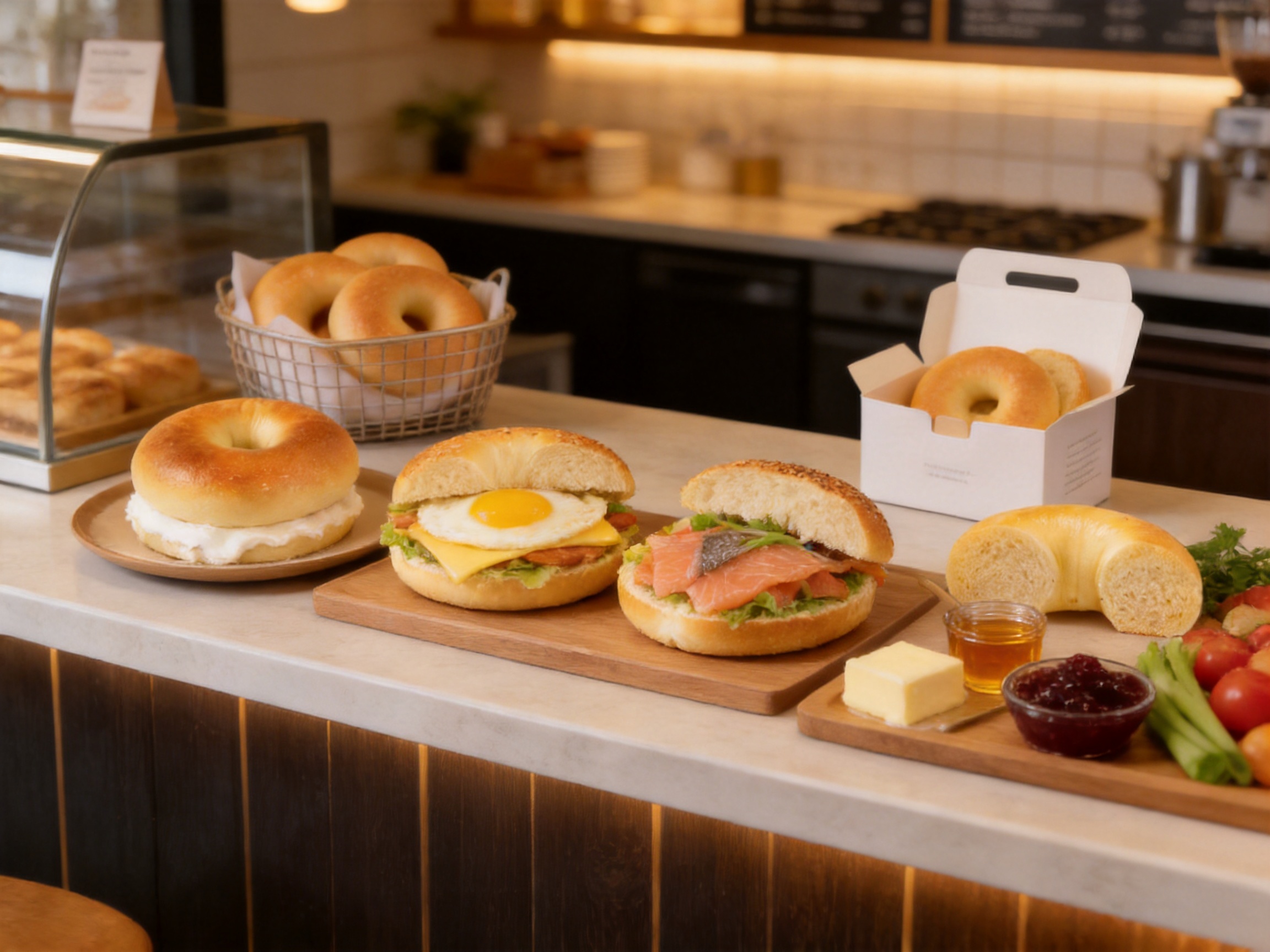
In a market filled with flavored, filled, and heavily topped bakery products, the plain bagel continues to hold a distinctive position. Its appeal depends on fundamentals: the quality of the flour, the control of fermentation, the balance between crust and crumb, and the product’s ability to perform consistently in different serving situations. A successful plain bagel must be simple without being ordinary. It must have enough character to be enjoyed on its own, while remaining neutral enough to complement butter, cream cheese, savory fillings, sweet spreads, or complete sandwich builds.
The Glossy and Brittle Plain Bagel is developed around this principle. Weighing 110 grams, it is designed as a clean, grain-forward bagel with a naturally glossy crust, a crisp first bite, and a moist, elastic interior. Its formula is intentionally restrained. Rather than relying on strong flavors, excessive sweetness, rich inclusions, or decorative toppings, the product places emphasis on wheat aroma, texture, and structural balance.
This approach makes the bagel suitable for multiple commercial channels, including retail, foodservice, cafés, bakery operators, restaurant groups, catering companies, and private-label programs. It can be sold as a ready-to-serve bakery item, toasted for breakfast, used as a sandwich carrier, or incorporated into a broader frozen bakery assortment.
Manufactured by Jiangsu Goobagel Food Technology Co., Ltd., the product reflects the company’s focus on research, product development, frozen bakery production, and commercial supply. Since 2019, the company has specialized in bagel research and manufacturing, developing more than 100 clean-label bagel varieties for different business applications. Its integrated approach covers raw materials, research and development, production, and distribution, helping customers obtain stable product quality and reliable supply.
1. The Product Concept: Simple Formula, Precise Craft
The most difficult bakery products are often those with the fewest ingredients. A heavily flavored product can use fillings, sauces, spices, seeds, cheese, or sweeteners to create immediate sensory impact. A plain bagel has nowhere to hide. Every weakness in the flour, fermentation, shaping, baking, or storage process can become noticeable at the first bite.
The Glossy and Brittle Plain Bagel addresses this challenge through a simple formula supported by precise processing. Its purpose is not to overwhelm the palate, but to reveal the natural character of high-grade wheat flour. The resulting flavor profile is clean, honest, and understated, with a recognizable grain aroma rather than an artificial or heavily seasoned finish.
Using higher-grade flour is important because flour is the foundation of the bagel’s entire eating experience. Flour quality affects dough strength, water absorption, fermentation tolerance, crumb structure, crust development, and finished chew. Commodity flour may produce acceptable results under controlled conditions, but a premium bagel requires more dependable raw material performance. Better flour can help create a dough that is easier to manage, more consistent from batch to batch, and more capable of producing a stable honeycomb crumb.
The product’s minimalist direction also gives buyers greater flexibility. A plain bagel can serve as a basic breakfast item, a premium sandwich carrier, a café menu component, or a neutral platform for seasonal promotions. Because it does not compete aggressively with other ingredients, it can be adapted to many recipes and customer preferences.
1.1 Why Simplicity Creates a Competitive Advantage
Many bagels in the marketplace compete through visual decoration or flavor intensity. They may contain sweet fillings, savory toppings, colored doughs, or multiple inclusions. Those products can be attractive, but they are often more limited in application. Their flavor profile may not suit every consumer, and their ingredient combinations may restrict menu development.
A well-made plain bagel offers a different kind of value. It creates a dependable foundation for customization while maintaining a premium eating experience by itself. Buyers can use the same base product across multiple menu formats without needing to manage several different dough systems. Retailers can position it as an everyday staple, while foodservice operators can turn it into several menu items with a limited number of additional ingredients.
The Glossy and Brittle Plain Bagel is therefore not merely a basic product. Its competitive strength comes from making the basic format more refined. The product aims to deliver a polished crust, balanced chew, satisfying moisture, and a natural grain finish without unnecessary complexity.
2. Distinctive Texture: Crisp First, Chewy After
Texture is one of the most important points of difference in bagel quality. Consumers generally expect a bagel to be more substantial than ordinary bread. It should provide resistance when bitten, but it should not become tough, dry, or difficult to chew. The outer crust should feel developed and appetizing, while the interior should remain moist and resilient.
The Glossy and Brittle Plain Bagel is formulated and processed to create a two-stage bite. The first contact is crisp and lightly brittle, followed by a satisfying elastic chew. This progression gives the product a more engaging sensory profile than a soft roll or a conventional sliced bread product.
The natural gloss of the crust contributes to its visual and tactile appeal. A glossy surface signals careful baking and gives the bagel a finished, premium appearance. The crust is not intended to be excessively hard. Instead, its role is to provide a delicate snap before yielding to the softer, more elastic structure underneath.
This crust-to-crumb contrast can be especially valuable in foodservice. A bagel that remains completely soft may feel ordinary, while one that is excessively hard may be difficult to enjoy. The balance achieved by this product gives operators a useful middle ground: a substantial exterior with a more tender and hydrated interior.
2.1 Honeycomb Crumb Structure
Inside the bagel, the crumb is designed to feature a fine honeycomb structure. This structure contributes to several important qualities. It supports a light but stable mouthfeel, helps distribute moisture, and gives spreads and fillings a surface to adhere to without causing the product to collapse.
The ideal result is “dense without heavy, hydrated without soggy.” This balance is particularly relevant for commercial use. If the crumb is too dense, the bagel can feel dry or overly filling. If it is too open, it may lack the characteristic chew and may not support sandwich ingredients effectively. If it is too wet, the product may become difficult to slice, toast, pack, or handle.
A fine honeycomb crumb helps preserve the identity of a true bagel while keeping the bite approachable. It allows the product to feel substantial without becoming burdensome. For consumers, this creates a more satisfying breakfast or snack. For professional users, it provides a dependable base for portion-controlled menu development.
2.2 Texture Performance Across Serving Methods
The bagel can be enjoyed at room temperature, warmed, or toasted. Each preparation method highlights a different aspect of its design. Served plain, the product emphasizes wheat aroma and chew. Warmed, it becomes softer and more aromatic. Toasted, the crust becomes more pronounced, while the interior develops additional contrast between crisp edges and tender crumb.
Toasting also makes the bagel suitable for a broad range of spreads. Butter can melt into the crumb, cream cheese can sit on the cut surface, and nut or fruit spreads can be layered without immediately overwhelming the base. In savory applications, the bagel can carry proteins, vegetables, sauces, and dairy ingredients while maintaining its own structure.
For operators, this adaptability reduces the need to purchase separate bread formats for different menu occasions. One plain bagel can support breakfast, brunch, lunch, snack, and takeaway applications.

Glossy And Brittle Plain Bagel
3. Flavor Profile: Clean Wheat Character with Broad Pairing Potential
The product’s flavor is deliberately restrained. Its primary note is the natural fragrance of wheat, supported by the mild toasted character created during baking. There is no requirement for a strong sweet, salty, spicy, or cheesy profile to make the product distinctive. Instead, the bagel’s identity comes from the quality of its base ingredients and the control of the manufacturing process.
This clean flavor is useful in a commercial environment because it minimizes flavor conflict. A customer may choose to add cream cheese, smoked fish, eggs, vegetables, deli meats, butter, jam, or other toppings. The bagel should support those ingredients rather than compete with them.
The neutral profile also helps brands create differentiated finished products. A café can offer a plain toasted bagel in the morning, then use the same item for an afternoon sandwich. A retailer can sell it in a standard frozen bakery pack, while a private-label customer can add its own packaging, serving suggestions, or promotional positioning.
3.1 Pairing with Breakfast Ingredients
The bagel’s structure and flavor work naturally with classic breakfast combinations. Cream cheese provides richness against the grain-forward base. Butter highlights the warm baked aroma. Eggs and cheese benefit from the bagel’s sturdy structure, particularly when the product is sliced and toasted. Smoked fish, vegetables, and herbs create a more premium open-faced presentation without requiring a strongly flavored bread.
For a simple retail or café offering, the product can be served with a small portion of spread. For a higher-value menu item, it can be combined with eggs, avocado, tomato, greens, turkey, smoked salmon, or other ingredients. The base remains recognizable in each application.
3.2 Pairing with Sweet Ingredients
Although the product is not designed as a sweet pastry, its clean profile can support sweet applications. Fruit preserves, honey, nut spreads, cinnamon butter, or yogurt-based toppings can be used without creating an excessive flavor combination. This gives operators the ability to include the bagel in breakfast and snack menus that appeal to different consumer preferences.
The restrained flavor also helps control perceived sweetness. For consumers who prefer a less sugary breakfast, the bagel can provide substance and aroma without functioning like a dessert. For those who prefer a sweeter serving, the topping can provide the main flavor direction.
4. Product Specifications and Commercial Utility
The stated product weight is 110 grams. This size gives the bagel a substantial presence while remaining practical for individual serving. Portion size is important for foodservice because it affects menu consistency, ingredient calculations, packaging, labor, and customer expectations.
A standardized 110-gram format allows operators to develop repeatable recipes. For example, a breakfast sandwich can be built with a defined amount of egg, cheese, and protein. A retail pack can be planned around consistent unit counts. A catering company can estimate the number of servings required for an event more efficiently.
| Product characteristic | Commercial benefit | Application value |
|---|---|---|
| 110-gram unit weight | Supports portion control and menu consistency | Retail packs, café servings, breakfast sandwiches, catering |
| Plain grain-forward profile | Reduces flavor conflict with toppings and fillings | Sweet and savory recipes |
| Glossy, crisp exterior | Creates visual appeal and a more premium first bite | Display cases, plated service, toasted menus |
| Elastic, moist crumb | Provides satisfying chew while supporting fillings | Sandwiches, spreads, open-faced products |
| Frozen bakery suitability | Supports organized inventory and broader distribution | Retail, foodservice, chain operations, private label |
| Minimalist formula | Provides a flexible base for customization | Menu development and brand-specific applications |
These characteristics make the product suitable for buyers who need more than a single consumer purchase. The commercial customer is often evaluating consistency, handling, storage, menu versatility, and supply reliability at the same time. A bagel may taste good in a sample but still fail commercially if its size varies, its crumb collapses, or its performance changes significantly between batches.
5. Manufacturing Strengths and Process Control
The quality of a plain bagel depends on the interaction of multiple manufacturing stages. Ingredient selection alone is not enough. The dough must be mixed to the proper development level, fermented within a controlled range, shaped consistently, and baked under conditions that create the desired crust and crumb. Subsequent cooling, freezing, packing, storage, and distribution also influence the product that reaches the customer.
Jiangsu Goobagel Food Technology Co., Ltd. operates as a modern frozen bakery producer with an integrated supply chain. Its activities cover raw materials, research and development, production, and nationwide distribution. This structure supports more coordinated decision-making than a fragmented supply model in which ingredient sourcing, product design, manufacturing, and distribution are handled by unrelated parties.
For buyers, integrated capability can provide several advantages. Product specifications can be connected more directly to manufacturing requirements. New recipes can be tested and adjusted through the company’s research and production functions. Supply planning can be managed with a clearer understanding of available materials and production capacity. Commercial feedback can also be incorporated into product development more efficiently.
5.1 Raw Material Management
The company’s product concept begins with high-grade wheat flour selected to provide a stronger foundation than ordinary commodity flour. Flour must be evaluated not only for basic composition, but also for how it behaves during mixing, fermentation, shaping, and baking.
Consistent raw material management helps reduce variation in dough handling and finished texture. A bagel requires a dough system with sufficient strength to maintain its shape and support the characteristic chew. At the same time, the dough must be capable of developing a pleasant interior rather than becoming rigid or overly compact.
A disciplined raw material approach is especially important for frozen bakery products. The finished item must be designed to maintain acceptable quality through the intended storage and distribution cycle. Ingredient performance, moisture balance, and dough structure all contribute to the final result after preparation by the customer or foodservice operator.
5.2 Research and Development
With more than 100 clean-label bagel varieties developed for different commercial uses, the company has experience working across a broad product spectrum. This development capability is relevant even for a plain bagel because the product must meet precise expectations for texture, flavor, appearance, weight, and application performance.
Research and development work may include formula refinement, ingredient evaluation, process adjustment, baking trials, texture assessment, and customer-specific adaptation. A plain product can be tested in multiple formats: served directly, toasted, sliced, filled, packaged for retail, or used in a sandwich assembly line.
For OEM and private-label customers, development capability is a practical advantage. Customers may have their own target weight, package format, consumer positioning, or menu requirements. A manufacturer with established bagel expertise can support the transition from a general product concept to a repeatable commercial specification.
5.3 Fermentation Control
Fermentation timing is one of the most important controls in bagel production. It affects dough strength, gas retention, flavor development, crumb texture, and finished volume. Too little fermentation can produce a tight, underdeveloped interior. Too much can weaken the dough and create undesirable variation.
The Glossy and Brittle Plain Bagel is developed with precise attention to fermentation timing. The goal is to create a crumb that is structured and fine, while preserving enough hydration and elasticity to deliver a satisfying chew. Process precision helps ensure that the bagel does not rely on excessive density to feel substantial.
Consistent fermentation is also necessary for commercial scalability. A product that performs well only under narrow conditions may be difficult to manufacture in large quantities. Repeatable process controls help manufacturers maintain product identity across production runs and support customers who require dependable supply.
5.4 Shaping and Size Consistency
Bagel shaping influences more than appearance. The shape determines how the dough expands, how the crust develops, how the product is sliced, and how fillings are distributed. Consistent shaping helps ensure that each unit has a similar eating experience and can be handled efficiently by operators.
For a 110-gram product, consistency in portioning and shaping is essential. Variations can create problems in packaging, pricing, sandwich assembly, and cooking time. A well-controlled production system helps align the finished units with the intended commercial specification.
5.5 Baking Precision
Baking temperature and time determine the development of the glossy crust, the level of crispness, the internal moisture balance, and the final color. The product description emphasizes that bake temperature is dialed in with precision to capture the natural grain character and produce the desired crisp-then-chewy bite.
Proper baking requires balance. Underbaking can leave the crust pale and the crumb insufficiently developed. Excessive baking can reduce moisture and make the product hard or dry. The desired result is a finished bagel with a visually appealing surface, a crisp initial bite, and an interior that remains tender and elastic.
Manufacturing precision at this stage also helps protect the product’s versatility. A bagel intended for toasting must have enough internal moisture to withstand additional heat. A bagel intended for sandwich use must retain structural integrity after slicing and filling. The baking process must therefore support both immediate consumption and further preparation.

6. Frozen Bakery Capability and Supply Reliability
Frozen bakery production provides important operational benefits for commercial buyers. It can help businesses manage inventory, plan distribution, reduce daily production pressure, and maintain a more consistent product offering across locations. These advantages are particularly valuable for cafés, chain restaurants, hotels, institutions, and retailers that need dependable supply without producing every item in-house.
As a frozen bakery producer, Goobagel Food is positioned to support customers that require bagels beyond a local fresh-bakery model. A frozen supply structure can make it easier to serve multiple stores, regional markets, and different sales channels. It can also allow operators to use product according to demand rather than depending entirely on same-day production.
For businesses, the value of frozen supply is not simply extended storage. It is the combination of product design, manufacturing consistency, storage planning, distribution coordination, and preparation guidance. These elements help transform a bagel from a single bakery item into a manageable commercial component.
6.1 Benefits for Retailers
Retail buyers often need products that can be stored, displayed, and sold according to changing demand. A plain bagel with broad consumer appeal can function as an everyday staple. Its neutral profile makes it suitable for shoppers who want a simple breakfast item as well as those who plan to add their own toppings at home.
Retailers can position the bagel in frozen bakery sections, breakfast assortments, or private-label programs. The product’s clean appearance and glossy crust can support premium presentation, while its plain format helps avoid limiting the target market to a single flavor preference.
6.2 Benefits for Cafés and Foodservice Operators
Cafés and foodservice operators can use the bagel as a versatile menu platform. A single product can support several recipes, reducing the need to manage a complex bread inventory. It can be toasted to order, filled in advance, or prepared as an open-faced item.
The product’s stable structure is useful for takeout and delivery. Sandwiches need to maintain their shape during handling, and the bagel should remain recognizable after fillings and sauces are added. The elastic crumb and substantial crust help provide the necessary support.
6.3 Benefits for Chain Customers
Restaurant and café chains require consistency across locations. Customers expect the same product size, texture, and appearance whether they purchase it in one city or another. A centralized manufacturing partner can help chains standardize a core item while reducing variation between individual stores.
The plain bagel can also serve as a foundation for regional or seasonal menu variations. Each location or campaign may use different fillings while retaining the same base specification. This creates menu flexibility without requiring a completely different bakery product for every promotion.
7. Competitive Advantages Over Ordinary Bagels
The Glossy and Brittle Plain Bagel competes not by being the loudest product on the shelf, but by offering a more disciplined interpretation of a familiar format. Its advantages are connected to the details that consumers notice quickly: crust, chew, moisture, aroma, appearance, and versatility.
7.1 Better Grain Expression
Many ordinary bagels are designed primarily for low cost or basic volume. Their flavor may be muted, their crumb may be overly dense, or their surface may lack a distinct baked character. By placing high-grade wheat flour at the center of the formula, this product aims to deliver a clearer grain aroma and a cleaner finish.
This advantage is meaningful for consumers who appreciate simple foods made well. It is also valuable to foodservice brands that want a premium base without adding complicated flavors or expensive inclusions.
7.2 More Refined Crust and Crumb Contrast
A polished glossy crust combined with a honeycomb interior creates a more layered eating experience than a uniformly soft bread product. The initial crispness provides sensory impact, while the chew and moisture maintain satisfaction after the first bite.
The contrast is also visually attractive when the bagel is sliced. The exterior communicates baked quality, while the interior shows a developed crumb that can hold spreads and fillings.
7.3 Wider Menu Compatibility
Flavored bagels can be appealing, but they may restrict menu combinations. A heavily sweetened bagel may not work with savory fillings. A strongly seasoned product may conflict with delicate toppings. A bagel containing multiple inclusions may not fit every retail or foodservice concept.
The plain product avoids these limitations. Its grain-forward flavor is substantial enough to be interesting but restrained enough to work with a broad selection of ingredients. This expands the number of recipes a buyer can create from one product.
7.4 Greater Operational Flexibility
The frozen bakery format, standardized 110-gram weight, and versatile application profile can help simplify purchasing and production planning. Buyers can evaluate one core item across multiple uses rather than sourcing separate products for breakfast, sandwich, and snack menus.
7.5 Development Support for Commercial Customers
Because the manufacturer has experience with research, product development, and more than 100 bagel varieties, customers can approach the product as part of a broader development relationship. The plain bagel can remain a standard product, or it can serve as a starting point for additional OEM and private-label projects.
8. Applications Across Different Business Models
The product can be used in many commercial settings because its value comes from both its intrinsic eating quality and its ability to support customization.
8.1 Retail Packs
For retail, the bagel can be presented as a dependable household staple. Consumers can toast it for breakfast, prepare it as a snack, or use it for sandwiches. Clear serving suggestions can emphasize its compatibility with butter, cream cheese, eggs, smoked fish, fruit spreads, or deli fillings.
8.2 Café Menus
Cafés can offer a simple toasted bagel, a cream cheese option, or a more developed sandwich. The same bagel can be used in morning and lunch menus, helping operators maximize inventory utilization.
8.3 Hotel and Catering Service
Hotels can use the product in breakfast buffets, room service, and conference catering. Its standardized unit weight supports planning, while its neutral flavor accommodates a wide range of spreads and accompaniments.
8.4 Sandwich and Grab-and-Go Programs
The bagel’s structure makes it appropriate for prepared sandwiches. Fillings can include eggs, cheese, poultry, seafood, vegetables, or plant-based ingredients. The product can be sliced and packaged for takeaway, provided that handling and preparation follow the customer’s operating procedures.
8.5 Private-Label Programs
Private-label customers may use the product as a base for their own brand positioning. Packaging, pack size, market segment, and serving communication can be adapted according to the buyer’s strategy. The manufacturer’s existing product development experience can support discussions about specifications and commercial requirements.
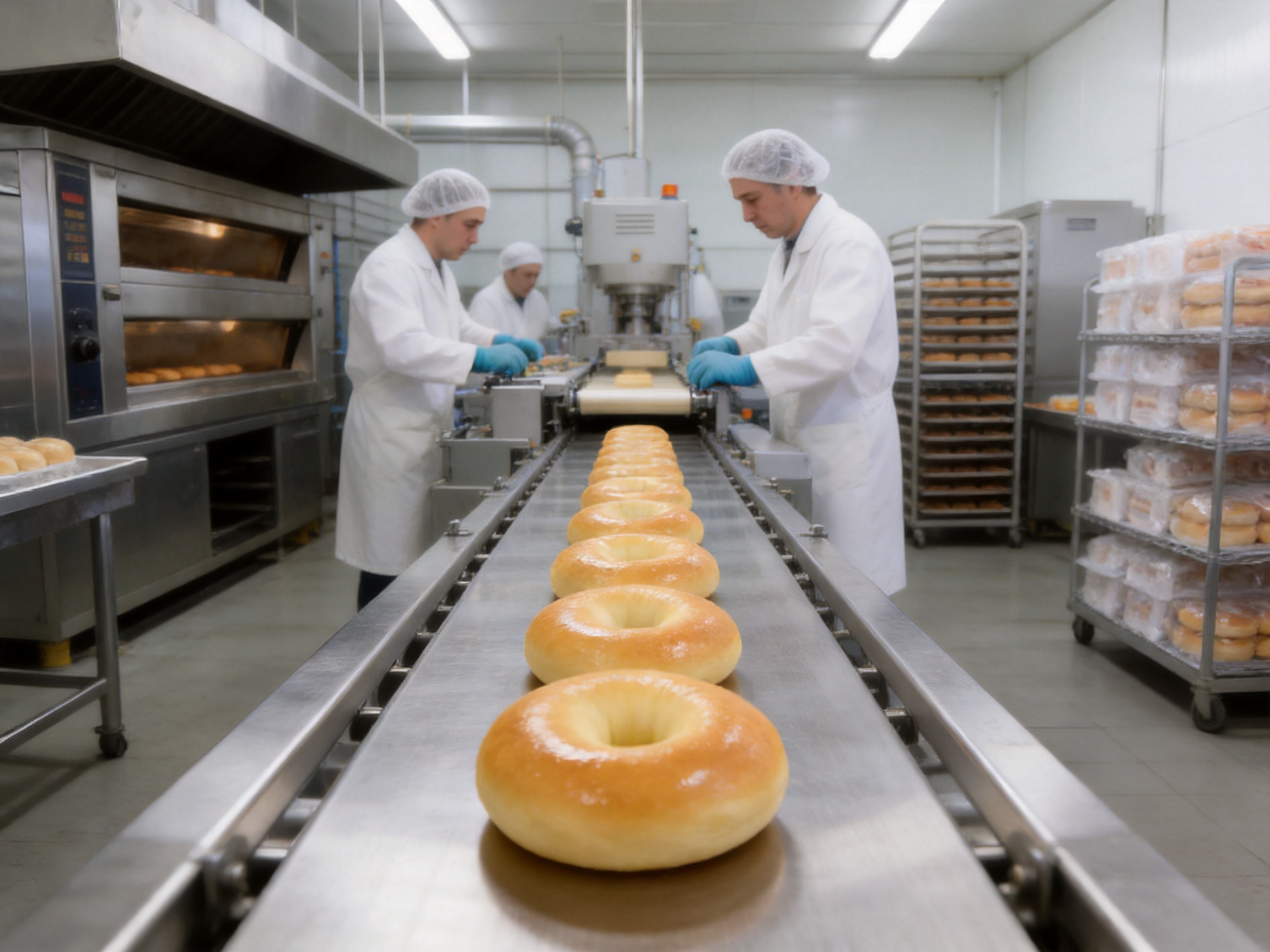
9. Quality, Consistency, and Brand Value
In commercial bakery purchasing, quality is not defined by taste alone. It includes repeatability, handling, appearance, supply, and the ability to meet a customer’s expectations over time. A product that performs well once but varies significantly between deliveries can create operational and reputational problems.
The company’s values include persistence, craftsmanship, respect, and science. These principles align naturally with the requirements of bagel manufacturing. Persistence supports continuous development. Craftsmanship emphasizes attention to texture and appearance. Science encourages process control and objective product evaluation. Respect reflects the importance of customers, partners, ingredients, and production standards.
The company’s stated mission is to provide customers with high-quality and healthy products while giving partners opportunities to realize their dreams. In practical terms, this means developing products that are useful to businesses, not merely attractive in a sample presentation. A successful commercial bagel should contribute to a customer’s menu, supply chain, and long-term product strategy.
9.1 Clean-Label Product Direction
The company has developed more than 100 clean-label bagel varieties. The plain bagel’s minimalist formula fits within this broader direction by focusing on recognizable product character rather than unnecessary complexity. Buyers seeking a simple ingredient story may find this positioning relevant, subject to their own regulatory, labeling, and market requirements.
Clean-label expectations vary by country, customer, and product category. Therefore, buyers should review the detailed ingredient declaration, allergen information, nutrition data, storage conditions, shelf-life specifications, and applicable documentation before commercial launch.
9.2 Customer-Specific Requirements
Different customers may require different packaging formats, case sizes, product weights, preparation instructions, or delivery arrangements. A manufacturer with experience in OEM and private-label work can be better positioned to discuss these requirements during the development and quotation process.
Customization should be evaluated carefully. Changes to weight, formula, shape, topping, packaging, or preparation method may affect baking performance and storage behavior. Technical review is therefore important before final approval.
10. Recommended Serving and Menu Development Ideas
The product’s neutral character allows menu developers to create a range of offerings without changing the base bagel.
10.1 Classic Cream Cheese Bagel
Toast the bagel until the cut surface is lightly crisp, then add plain cream cheese. Chives, herbs, cucumber, or smoked fish can be added for a more premium variation.
10.2 Breakfast Egg Sandwich
Use the bagel as a carrier for egg, cheese, and a selected protein or vegetable filling. The substantial crumb helps support the ingredients, while the clean wheat flavor provides balance.
10.3 Butter and Honey Service
A warm bagel served with butter and honey creates a simple breakfast or snack. The mild grain aroma allows the topping to remain the primary flavor.
10.4 Deli-Style Lunch Sandwich
Layer turkey, chicken, roast vegetables, lettuce, tomato, or other fillings between the sliced bagel. The crust and crumb create a more substantial eating experience than a standard soft sandwich roll.
10.5 Open-Faced Premium Presentation
Slice and toast the bagel, then add cream cheese, smoked fish, avocado, roasted vegetables, or seasonal toppings. The honeycomb crumb provides a visually appealing base for plated service.
11. Purchasing Considerations for Importers and Distributors
Importers, distributors, and commercial buyers should assess the product from both a sensory and operational perspective. Sampling should include evaluation of appearance, aroma, crust texture, crumb structure, slicing performance, toasting performance, and compatibility with intended fillings.
Buyers should also confirm commercial details such as minimum order quantities, packaging configuration, frozen storage requirements, transport conditions, lead times, production planning, labeling documentation, and export arrangements. These details are essential for successful long-term supply.
Because the product is intended for professional applications, buyers may wish to test it in the actual environment where it will be served. A bagel that performs well in a controlled tasting may respond differently in a café toaster, hotel kitchen, retail preparation area, or high-volume sandwich line. Application testing helps identify the most suitable preparation method and menu format.
| Evaluation area | Questions for buyers |
|---|---|
| Sensory quality | Does the bagel deliver the desired crust, chew, moisture, aroma, and grain character? |
| Preparation | Does it perform consistently when warmed, toasted, sliced, or filled? |
| Portioning | Is the 110-gram unit appropriate for the intended menu or retail format? |
| Storage | Can the buyer maintain the specified frozen storage and handling conditions? |
| Supply | Can production and distribution support the required order frequency and volume? |
| Documentation | Are ingredient, allergen, nutrition, packaging, and product specification documents available? |
| Customization | Can the supplier support private-label or application-specific requirements? |
12. Frequently Asked Questions
Q1: What makes this plain bagel different from an ordinary plain bagel?
The product is designed around a more refined balance of crust and crumb. It combines a naturally glossy, crisp exterior with a moist, elastic interior and a fine honeycomb structure. Its flavor is intentionally clean and grain-forward, allowing it to function as both a standalone bagel and a versatile base for toppings and fillings.
Q2: Why is the product described as glossy and brittle?
The description refers to the appearance and initial texture of the crust. The exterior develops a natural gloss and provides a light crispness or brittle snap at first contact. This initial texture then transitions into the characteristic chew expected from a well-made bagel.
Q3: Is the bagel sweet or savory?
It is designed as a neutral plain bagel rather than a strongly sweet or savory product. Its natural wheat aroma allows it to pair with both sweet ingredients, such as honey and fruit spreads, and savory ingredients, such as eggs, cream cheese, vegetables, and deli fillings.
Q4: What is the product weight?
The stated unit weight is 110 grams. Buyers should confirm final commercial specifications, tolerances, pack configuration, and labeling details with the manufacturer before placing an order.
Q5: Can the bagel be toasted?
Yes. Toasting is one of the recommended serving methods. It can increase the contrast between the crisp exterior and tender interior while enhancing the baked wheat aroma.
Q6: Is the product suitable for sandwiches?
Yes. Its substantial structure and elastic crumb are intended to support spreads, fillings, and sandwich ingredients. It can be used for breakfast sandwiches, deli-style products, open-faced presentations, and grab-and-go applications.
Q7: Who manufactures the product?
The product is manufactured by Jiangsu Goobagel Food Technology Co., Ltd., a Chinese frozen bakery producer specializing in bagel research and manufacturing since 2019.
Q8: Does the manufacturer support OEM and private-label projects?
The company identifies itself as an OEM and private-label bagel supplier and has developed more than 100 bagel varieties for retail, foodservice, café chains, tea brands, and bakery operators. Specific customization options should be discussed according to the customer’s product, packaging, and market requirements.
Q9: What manufacturing capabilities support this product?
The company operates an integrated supply chain covering raw materials, research and development, production, and distribution. The product concept also emphasizes controlled fermentation timing, precise baking temperature, high-grade wheat flour, and careful development of crust and crumb texture.
Q10: Is detailed product documentation available?
Commercial buyers should request the applicable ingredient declaration, allergen statement, nutrition information, storage requirements, shelf-life details, packaging specifications, and other documentation needed for their market. Availability and format should be confirmed directly with the supplier.
Q11: Can the bagel be used in both retail and foodservice?
Yes. Its plain profile, standardized unit weight, frozen bakery suitability, and broad pairing potential make it appropriate for retail packs, cafés, restaurants, hotels, catering, sandwich programs, and other foodservice environments.
Q12: How should buyers evaluate the product before a commercial order?
Buyers should test the bagel in the intended serving environment. Evaluation may include thawing or preparation behavior, slicing, toasting, crumb texture, crust crispness, filling support, packaging performance, and consumer response. Technical and commercial specifications should be confirmed before final approval.
13. Conclusion
The Glossy and Brittle Plain Bagel demonstrates how a simple bakery format can be elevated through ingredient selection, process precision, and practical commercial design. Its core advantages are clear: a naturally glossy crust, a crisp first bite, a satisfying elastic chew, a moist honeycomb crumb, and a clean wheat-forward flavor that pairs with a wide range of ingredients.
Unlike highly flavored bagels that may be limited to specific occasions, this product is designed for broad use. It can be served plain, toasted with butter, spread with cream cheese, paired with sweet toppings, or built into a complete breakfast or lunch sandwich. Its 110-gram format supports portion control, while its frozen bakery positioning can help commercial customers manage inventory and supply across multiple locations.
The manufacturing foundation is equally important. Jiangsu Goobagel Food Technology Co., Ltd. combines bagel research, product development, raw material management, production, and distribution within an integrated business structure. Its experience with more than 100 clean-label bagel varieties supports the development of products for retail, foodservice, café chains, tea brands, bakery operators, and private-label customers.
For buyers seeking a plain bagel that offers more than basic functionality, this product provides a balanced proposition. It is simple in formula but precise in execution, understated in flavor but strong in application, and familiar in format while refined in texture. These qualities make it a practical and adaptable option for businesses looking to build reliable bagel offerings across a variety of commercial channels.
References
1. Jiangsu Goobagel Food Technology Co., Ltd. Product information for Glossy and Brittle Plain Bagel.
2. Jiangsu Goobagel Food Technology Co., Ltd. Company information and product development overview.
3. General principles of wheat flour functionality, dough fermentation, baking, and crumb development in bakery production.
4. General commercial bakery considerations for frozen storage, foodservice preparation, retail distribution, and private-label product development.
5. General sensory evaluation principles for crust texture, crumb structure, aroma, flavor balance, and sandwich application performance.
