
 中文简体
 English

postmaster@goobagelfood.com
Content
- 1 A New Direction for Premium Bagel Development
- 2 The Bagel Foundation: Fine-Grained, Chewy, and Structured
- 3 A Layered Citrus Profile Rather Than a One-Note Fruit Flavor
- 4 Cream Cheese and Dairy Butter: Richness with Definition
- 5 Advantages Over Standard and Conventional Bagel Options
- 6 Manufacturing Strengths Behind the Product
- 7 Designed for Retail, Foodservice, and Private Label
- 8 Frozen Bagel Advantages for Commercial Operations
- 9 Quality and Eating Experience in Commercial Service
- 10 Brand and Product Development Support
- 11 Commercial Positioning and Target Customers
- 12 Suggested Serving and Menu Applications
- 13 Why the Product Is Difficult to Replicate Successfully
- 14 Product Specification and Supply Information
- 15 Q&A
- 15.1 What is the Kumquat Lemon Butter-Cream Cheese Bagel?
- 15.2 What citrus ingredients define the flavor?
- 15.3 How does the product differ from a traditional cream cheese bagel?
- 15.4 Is the product very sweet?
- 15.5 What is the texture of the bagel?
- 15.6 What manufacturing methods support the dough quality?
- 15.7 Who manufactures the product?
- 15.8 Can the product be used by cafés and foodservice businesses?
- 15.9 Is it suitable for retail sale?
- 15.10 Can customers develop a private-label version?
- 15.11 Why is frozen production valuable for commercial customers?
- 15.12 What types of beverages pair well with the bagel?
- 15.13 What should buyers confirm before placing an order?
- 16 Conclusion
- 17 References
- 18 Product: Kumquat Lemon Butter-Cream Cheese Bagel
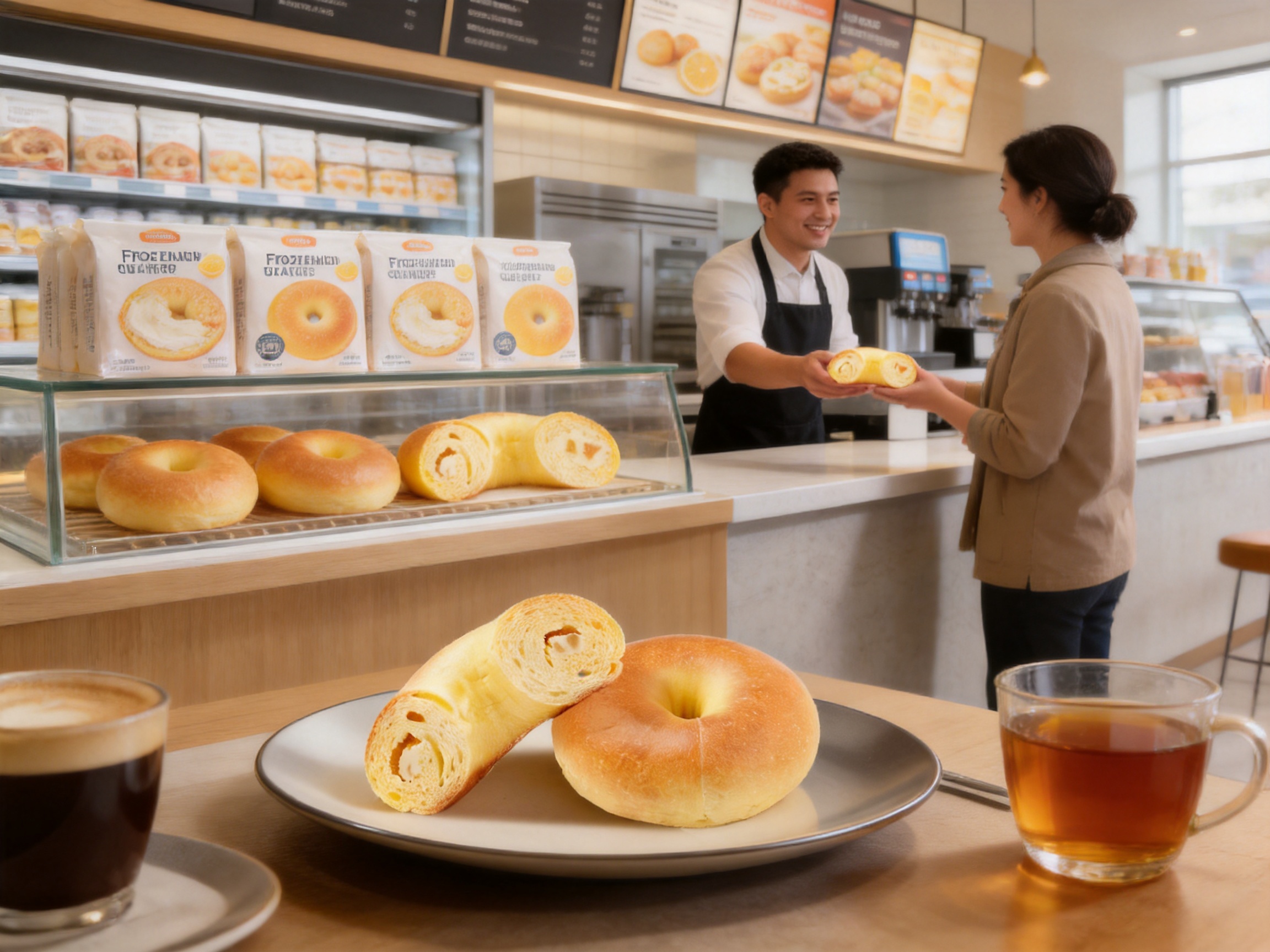
The Kumquat Lemon Butter-Cream Cheese Bagel is a distinctive frozen bakery product created for customers who want more than a traditional plain, sweet, or savory bagel. It combines a chewy, fine-grained bagel foundation with a bright citrus filling, silky cream cheese, and the rounded richness of dairy butter. The result is a product with a clear flavor identity: refreshing, creamy, fragrant, and satisfying without becoming excessively sweet.
For retailers, café chains, bakeries, tea brands, and foodservice operators, this product offers an attractive way to expand a bagel range with a premium fruit-centered option. Its flavor profile is familiar enough to be approachable, yet different enough to stand out in a crowded frozen bakery and ready-to-serve market. Citrus provides immediate freshness, while cream cheese and butter deliver the indulgent texture customers expect from a specialty filled bagel.
The product is manufactured by Jiangsu Goobagel Food Technology Co., Ltd., a Chinese frozen bakery producer specializing in bagel research, development, and manufacturing. Since 2019, the company has developed more than 100 clean-label bagel varieties for retail, foodservice, café chains, tea brands, and bakery operators. Its integrated approach covers raw-material selection, product research and development, production, and distribution, allowing commercial customers to source differentiated bagels from a single experienced manufacturing partner.
Among the most important strengths of the Kumquat Lemon Butter-Cream Cheese Bagel are its layered citrus character, balanced filling, chewy structure, frozen supply format, and suitability for OEM and private-label programs. These features make it more than a seasonal novelty. It can serve as a signature product in a premium bagel range, a breakfast item, a café accompaniment, a dessert-style snack, or a fruit-forward menu component.
A New Direction for Premium Bagel Development
Bagels have traditionally been associated with straightforward flavors such as plain, sesame, onion, cinnamon raisin, blueberry, or cheese. These familiar varieties remain commercially important, but consumers and foodservice businesses are increasingly interested in products that deliver more distinctive sensory experiences. A filled citrus bagel answers this demand by combining a recognizable bakery format with a more contemporary flavor concept.
The Kumquat Lemon Butter-Cream Cheese Bagel is positioned within the fruit bagel category, but its formulation moves beyond a simple fruit-and-dough combination. The product incorporates a carefully developed interaction between citrus acidity, fruit texture, dairy richness, and fermented wheat flavor. Rather than relying on a strongly sweet filling, it creates complexity through contrast.
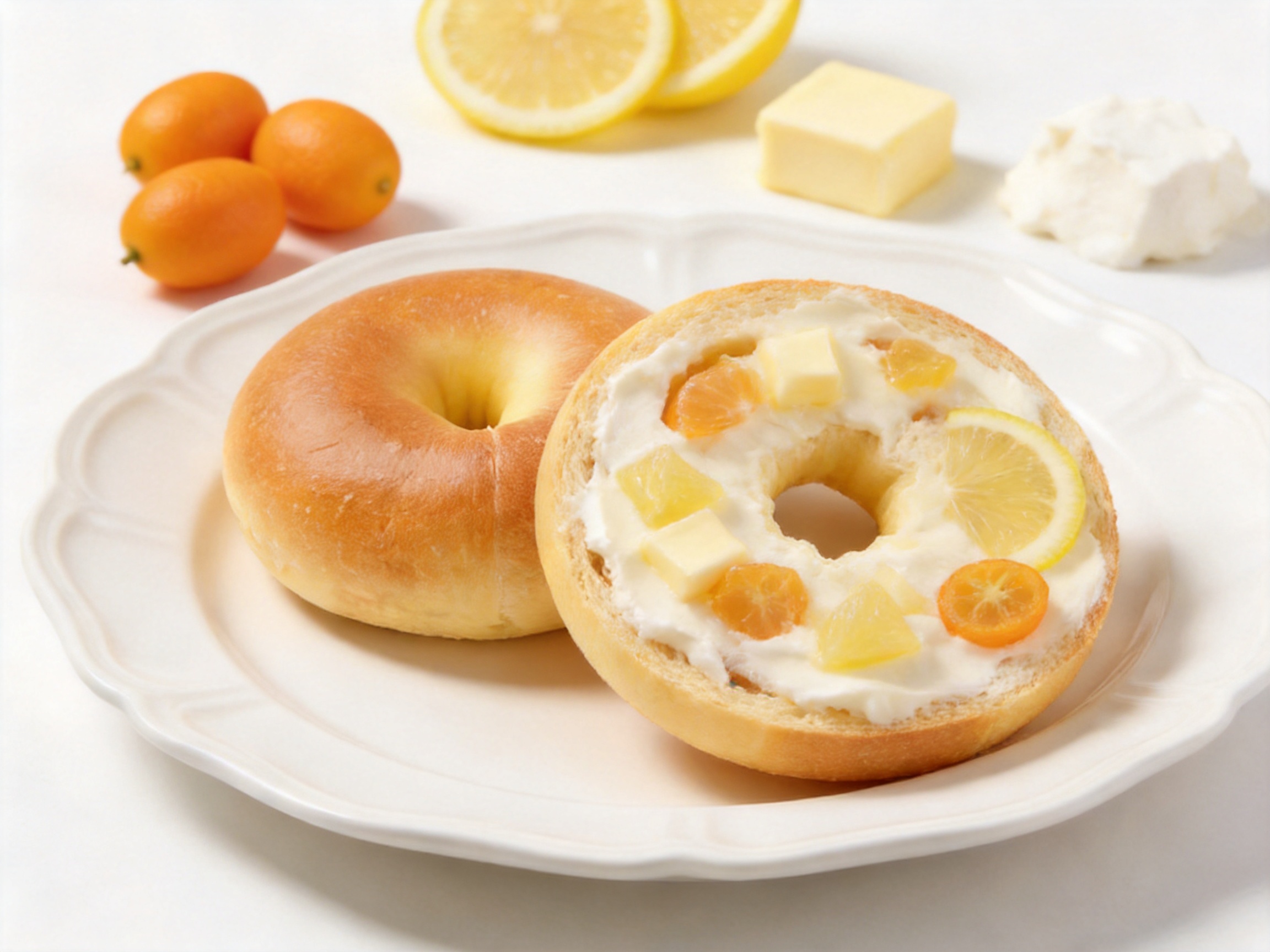
The citrus component is described as a double-citrus layer. Calamansi puree contributes a bright, transparent acidity, while diced lemon introduces a more recognizable lemon aroma, subtle peel bitterness, and a small amount of fruit texture. Kumquat and lemon together suggest a fragrant citrus profile with both juice-like freshness and peel-like depth. This layered approach can create a more sophisticated impression than a single fruit flavor used on its own.
The cream cheese filling provides body and smoothness. Its soft, rich character helps moderate the citrus acidity and gives the product a fuller mouthfeel. Dairy butter adds a warm, rounded aroma that supports the cream cheese and makes the fruit flavor feel more polished. The goal is not to hide the citrus behind dairy, but to frame it so that the acidity feels bright and controlled rather than sharp.
This balance is an important advantage in product development. Highly acidic fruit fillings may taste intense but can become one-dimensional. Very sweet fillings may be immediately appealing but can feel heavy after several bites. The Kumquat Lemon Butter-Cream Cheese Bagel is designed to occupy a more balanced position: lively enough to be memorable, creamy enough to feel indulgent, and restrained enough to encourage repeat consumption.

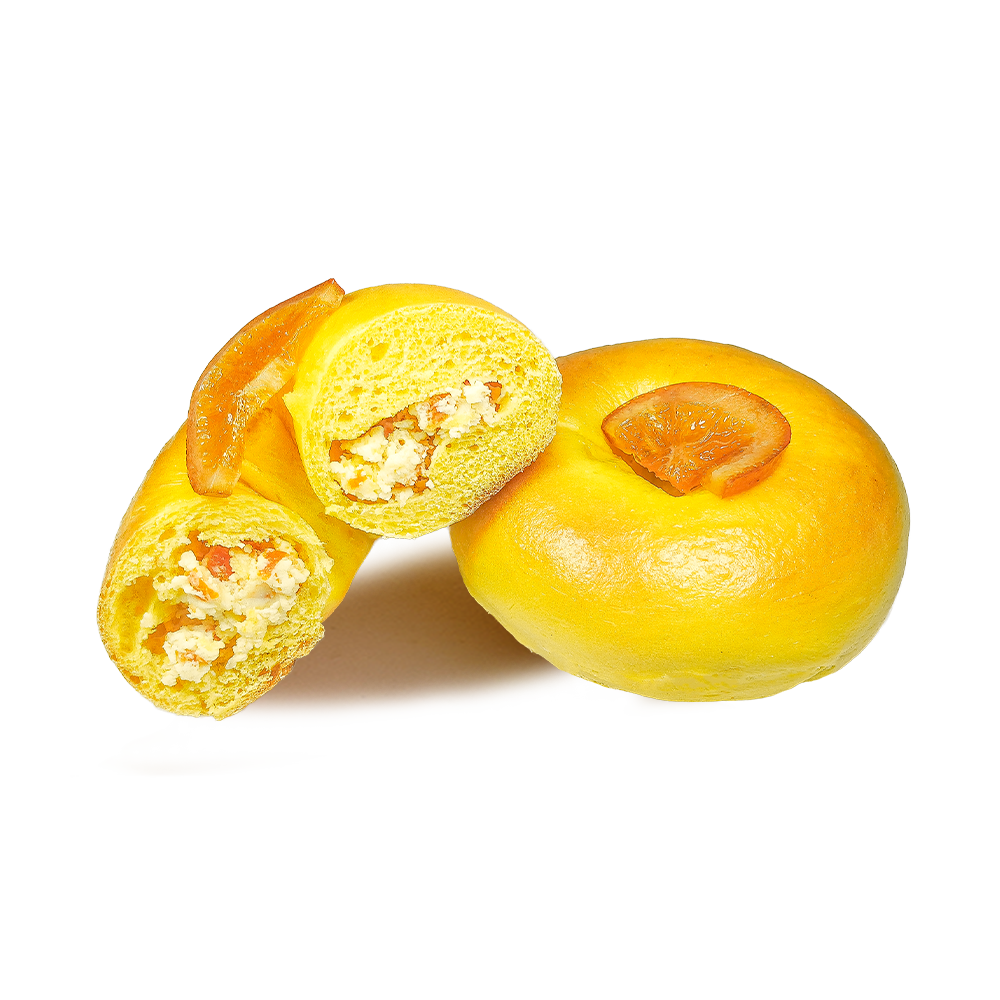
Kumquat Lemon Butter-Cream Cheese Bagel
The Bagel Foundation: Fine-Grained, Chewy, and Structured
A filled bagel depends on the quality of its dough. If the exterior is too soft, it may fail to provide the characteristic bagel eating experience. If it is too dense, it can overpower the filling. If it is too dry, the citrus and dairy components may not integrate comfortably. For this reason, the dough foundation is central to the product’s overall performance.
The Kumquat Lemon Butter-Cream Cheese Bagel begins with selected premium flour and a Japanese-style milling approach. Japanese-style milling is associated with attention to flour refinement, particle uniformity, and the development of a smooth, fine-grained dough texture. In this product, the milling approach supports a crumb that is firm yet tender, resilient without feeling dry, and chewy without being excessively heavy.
The bagel structure is also supported by natural yeast fermentation. Fermentation is more than a leavening step. It can contribute to aroma, dough strength, flavor development, and the final balance between elasticity and tenderness. A naturally fermented dough may provide a cleaner wheat aroma and a more developed flavor than a dough designed only for rapid volume generation.
For commercial customers, dough consistency is particularly important. A specialty filling can attract initial attention, but the eating quality of the bagel determines whether buyers return. A reliable dough foundation supports repeatable preparation across different retail and foodservice environments. It also helps the product maintain its identity after freezing, storage, thawing, reheating, or serving.
The product description characterizes the crumb as fine-grained and chewy. This structure creates a useful contrast with the creamy center. The customer first experiences the resilient bite of the bagel, then reaches the softer citrus-dairy filling. This sequence makes the filling feel more generous and distinct because it is not absorbed into an overly soft or cake-like dough.
Compared with ordinary sweet bread products, the bagel format offers greater chew and a more substantial eating experience. Compared with plain bagels filled with standard cream cheese, this product provides a more complete flavor composition, including fruit acidity, lemon texture, buttery aroma, and dairy richness. The combination makes it suitable for customers seeking a premium snack that feels both comforting and unusual.
Why Texture Matters in a Filled Bagel
Texture influences perceived quality, satiety, and flavor release. A resilient bagel requires the customer to chew slightly longer than a soft pastry, allowing the wheat aroma to develop before the filling becomes fully integrated. The cream cheese then contributes smoothness, while the diced citrus adds small textural accents.
This contrast can help prevent the product from feeling monotonous. A completely smooth filling may seem luxurious, but it may not provide enough sensory variation. Diced lemon introduces a fine fruit texture that complements the soft cream cheese and the structured crumb. The result is a multi-stage bite rather than a single, uniform mouthfeel.
For café and bakery operators, texture also affects presentation and serving format. The bagel can be offered whole as a handheld item, cut in half to reveal the filling, warmed for immediate consumption, or included in a premium breakfast and snack display. The visible contrast between the baked exterior and creamy citrus interior can support merchandising and menu communication.
A Layered Citrus Profile Rather Than a One-Note Fruit Flavor
One of the product’s clearest points of differentiation is its use of multiple citrus elements. Citrus flavors can range from sweet and floral to tart, bitter, aromatic, and juicy. Combining different citrus components allows a manufacturer to create a more dimensional profile.
Calamansi puree provides a distinctive acidity with a clean, bright impression. It can make the first taste feel energetic and refreshing. Diced lemon contributes recognizable lemon character, including the fragrant qualities associated with the peel and the small textural sensation of fruit pieces. Kumquat brings another layer of citrus identity, often associated with fragrant skin, gentle bitterness, and a concentrated fruit impression.
This structure is especially useful in a frozen bakery product because it gives the flavor definition after preparation. When a bagel is reheated, the aromatic butter and citrus notes can become more noticeable, while the dairy filling softens and spreads across the palate. A single, delicate fruit flavor could be difficult to perceive under the dough and dairy. A multi-layered citrus formulation has greater potential to remain recognizable from the first bite through the finish.
The product is not designed as a simple sweet lemon pastry. Its flavor direction is fresher and more balanced. The citrus is intended to feel bright without being harsh, and the sweetness is intentionally restrained. This positioning may appeal to consumers who enjoy fruit flavors but do not want an overly sugary breakfast or snack.
The subtle bitterness associated with citrus peel can also improve perceived sophistication. Bitterness, when carefully controlled, gives fruit flavors greater depth and prevents the profile from tasting like a basic candy or syrup. In combination with butter and cream cheese, the citrus gains a more rounded finish.
Flavor Progression from First Bite to Finish
The first impression is likely to be the aroma of baked wheat, butter, and citrus. The bagel’s chewy exterior establishes the product as a genuine bagel rather than a filled cake or sweet bun. As the bite progresses, the cream cheese provides smoothness and the butter contributes warmth. Citrus acidity then lifts the richness, keeping the overall impression fresh.
The finish is designed to remain clean rather than cloying. Lemon and calamansi help refresh the palate, while the butter and cream cheese give the flavor enough persistence to feel premium. This progression makes the product suitable for breakfast, afternoon refreshment, and dessert-style snacking.
For menu descriptions, the flavor can be communicated through terms such as bright citrus, creamy filling, natural wheat aroma, butter richness, lemon texture, and balanced sweetness. These descriptions make the product understandable to customers without reducing it to a generic “fruit bagel.”
Cream Cheese and Dairy Butter: Richness with Definition
The dairy component is essential to the product’s identity. Cream cheese provides a familiar bagel pairing, but the addition of dairy butter changes the richness and aroma of the filling. Instead of presenting cream cheese as a plain spread, the formulation creates a more complete filling with a silky texture and warm dairy fragrance.
Anchor cream cheese is identified as a key ingredient in the product description. Its role is to anchor the citrus, giving the filling a stable, creamy base. The cream cheese helps soften the impact of acidity while retaining enough tang to support the fruit. Dairy butter adds a fuller aroma and a more luxurious mouthfeel.
This pairing offers an advantage over fruit fillings that rely mainly on sugar. Sugar can make a product taste sweet, but butter and cream cheese add body, aroma, and a longer-lasting sense of indulgence. The result is more appropriate for premium positioning because the flavor is built from several interacting components rather than a single dominant sweetener.
The filling also supports a wide range of serving occasions. In the morning, it can function as a more interesting alternative to a plain cream cheese bagel. At an afternoon café, it can accompany coffee, tea, milk tea, or sparkling beverages. In a dessert-oriented setting, it can be presented as a warm citrus pastry with a chewy bakery base.
For commercial customers, a versatile flavor is valuable because it can support several menu categories without requiring a completely different product. The same bagel can be merchandised in a breakfast case, a frozen retail pack, a café display, or an online bakery assortment. Its positioning can be adapted through packaging, serving temperature, and descriptive language.
Advantages Over Standard and Conventional Bagel Options
The Kumquat Lemon Butter-Cream Cheese Bagel competes not only with other filled bagels but also with pastries, sweet buns, fruit breads, flavored croissants, and conventional cream cheese products. Its advantages come from the combination of format, flavor, texture, and supply capability.
| Comparison Area | Conventional Option | Kumquat Lemon Butter-Cream Cheese Bagel Advantage |
|---|---|---|
| Flavor identity | Often centered on one familiar flavor | Combines citrus puree, diced lemon, cream cheese, and dairy butter for layered flavor |
| Texture | May be soft and bread-like or dense and uniform | Offers a structured, chewy bagel crumb with a smooth and textured filling contrast |
| Sweetness | Fruit pastries may depend heavily on sugar | Uses citrus acidity and dairy richness to create balance with restrained sweetness |
| Consumer positioning | Usually traditional breakfast or standard bakery fare | Supports premium, innovative, fruit-forward, and café-style positioning |
| Menu flexibility | May fit only one daypart or category | Can be served at breakfast, as a snack, or as a dessert-style bakery item |
| Commercial use | May require separate development for different channels | Designed for retail, foodservice, café, tea, and bakery applications |
| Product differentiation | Can be difficult to distinguish from similar products | Distinctive citrus-and-dairy profile creates a clear signature proposition |
| Supply format | Fresh products may have limited distribution windows | Frozen bakery production supports planned inventory and broader distribution |
Compared with a standard plain cream cheese bagel, the citrus version offers a stronger flavor story and a more memorable eating experience. Compared with a fruit-filled pastry, it offers greater chew and a less dessert-like structure. Compared with a sweet bun, it provides more textural resistance and a more balanced flavor profile.
Compared with many flavored bagels that incorporate fruit only into the dough, this product places the citrus and dairy combination in a filling. This allows the flavor to remain concentrated and creates a visual and sensory center. The outer dough can retain its wheat character, while the filling delivers the more expressive flavor.
The product may also have an advantage over overly rich bakery products. Cream cheese and butter provide indulgence, but citrus acidity helps prevent the experience from becoming heavy. The palate is refreshed by the fruit, making the bagel suitable for consumers who want something special without choosing an intensely sweet dessert.
Manufacturing Strengths Behind the Product
A premium concept requires a manufacturing system capable of delivering consistent results. Jiangsu Goobagel Food Technology Co., Ltd. has specialized in bagel research and manufacturing since 2019. The company operates as a modern frozen bakery producer with an integrated supply chain that covers raw materials, research and development, production, and nationwide distribution.
This integrated structure is important for customers purchasing frozen bagels wholesale or developing an OEM and private-label product line. Product quality is influenced by every stage, from the selection of flour and dairy ingredients to dough development, filling control, baking, freezing, packing, storage, and delivery. An integrated manufacturer can coordinate these steps more efficiently than a supplier focused on only one production stage.
The company has created more than 100 clean-label bagel varieties. This product development experience indicates an ability to work across different flavor directions, fillings, textures, and commercial requirements. A broad product portfolio also helps the manufacturer understand how ingredients behave in bagel systems and how different flavor concepts can be translated into scalable products.
For buyers, the value of a specialized bagel manufacturer is not limited to factory output. It includes the ability to discuss product positioning, adjust flavors, evaluate filling concepts, and develop a product suitable for a particular channel. A manufacturer that focuses on bagels can bring more relevant technical knowledge than a general bakery supplier with limited experience in this category.
Premium Raw-Material Selection
The product description emphasizes carefully selected premium flour, Anchor cream cheese, dairy butter, citrus puree, and diced lemon. Ingredient selection affects taste, aroma, texture, appearance, and stability. In a filled frozen bakery item, ingredients must also work together through processing and storage.
Premium flour supports the product’s fine-grained structure and clean wheat aroma. Dairy ingredients contribute the creamy and buttery notes that define the filling. Citrus components provide the acidity and fruit character required to maintain freshness in the flavor profile. Each ingredient has a separate role, but the product succeeds only when those roles are coordinated.
Ingredient selection also supports commercial communication. Retail and foodservice customers increasingly want products with a clear ingredient story. A product built around premium flour, natural yeast fermentation, citrus, cream cheese, and dairy butter can be described in a way that communicates craftsmanship and flavor intention.
Japanese-Style Milling and Dough Development
The Japanese-style milling approach contributes to the product’s fine-grained crumb and refined eating quality. In a bagel, flour performance affects water absorption, dough handling, elasticity, crumb formation, and chew. A consistent flour system allows the manufacturer to develop a dough that is strong enough for filling and shaping while remaining tender enough for comfortable consumption.
The manufacturing advantage is not simply the use of a particular milling style. It is the ability to connect flour characteristics with fermentation, shaping, filling, baking, and freezing. The dough must be engineered as part of a complete production system. This coordination helps ensure that the final product maintains the intended balance between firmness, resilience, and tenderness.
Natural Yeast Fermentation
Natural yeast fermentation supports the clean wheat aroma and structured crumb described for the product. Fermentation time and dough development influence the flavor and physical properties of the bagel. A well-managed fermentation can produce a more developed bakery aroma and improve the relationship between crust, crumb, and filling.
For a premium product, the fermentation stage helps distinguish the bagel from rapidly produced, highly uniform bread products. The aim is a more authentic bagel character, with enough chew to provide structure and enough tenderness to remain enjoyable after preparation.
Integrated Production and Distribution
The company’s fully integrated supply chain covers raw materials, research and development, production, and nationwide distribution. This is a significant strength for business customers that need reliable supply rather than occasional small-batch production. A coordinated supply chain can support more stable procurement, production planning, and delivery management.
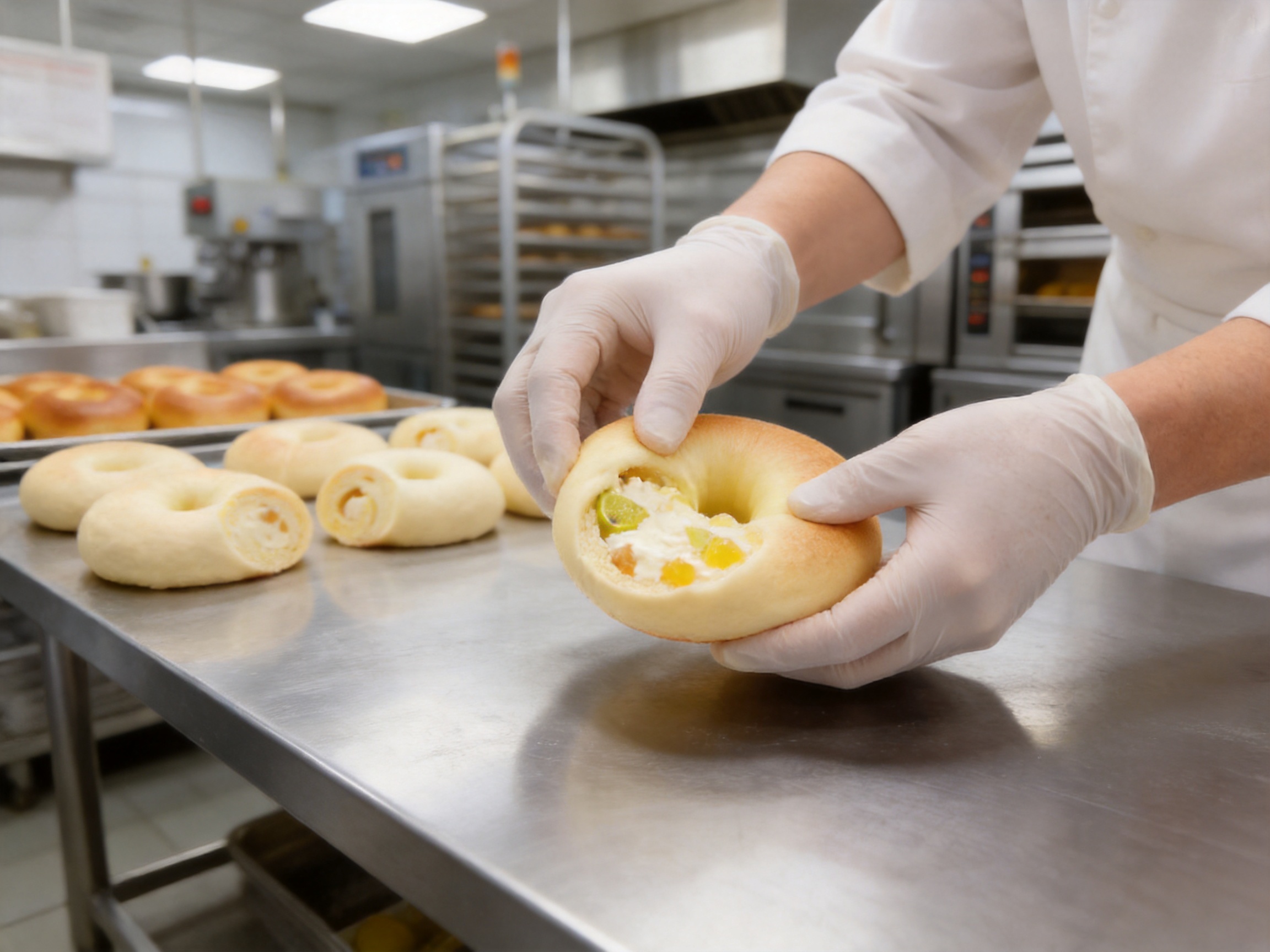
Frozen production is particularly useful for products intended for retail and foodservice. It allows operators to manage inventory according to demand, maintain a planned assortment, and prepare products closer to the time of sale. Frozen bagels can also support broader geographic distribution than products that depend entirely on short fresh-bakery windows.
For cafés and bakery operators, a frozen product can reduce the need for extensive in-store dough production. Staff can focus on preparation, presentation, and customer service while relying on a consistent manufactured base. This can help simplify operations and make specialty bagels available across multiple locations.
Designed for Retail, Foodservice, and Private Label
The Kumquat Lemon Butter-Cream Cheese Bagel is suitable for several commercial channels. In retail, it can be sold as part of a premium frozen bakery range, a fruit-forward breakfast assortment, or a limited-edition citrus collection. Packaging can emphasize the contrast between chewy bagel texture and creamy citrus filling.
In cafés, the product can be warmed and served as a signature breakfast or afternoon item. Its flavor naturally complements coffee, black tea, green tea, milk tea, sparkling citrus drinks, and lightly sweetened beverages. The bagel can be offered whole for takeaway or sliced to reveal the filling and create a more appealing presentation.
For tea brands and dessert-oriented operators, the product can function as a substantial companion item rather than a small pastry. The citrus profile aligns with modern beverage menus that use lemon, calamansi, kumquat, and other bright fruit flavors. Its dairy filling can also connect with creamy tea and coffee beverages without requiring additional toppings.
For hotels, restaurants, institutional caterers, and foodservice distributors, the bagel provides a convenient option for breakfast buffets, grab-and-go displays, snack programs, and bakery counters. Its distinctive flavor may help operators diversify beyond plain bread, standard croissants, and conventional muffins.
OEM and private-label customers can use the manufacturer’s product development capabilities to create a branded bagel program. Private-label development may involve adjustments to packaging, product naming, assortment planning, specifications, or channel positioning. The exact scope depends on commercial requirements, but the manufacturer’s experience with more than 100 bagel varieties provides a strong foundation for collaborative development.
Frozen Bagel Advantages for Commercial Operations
Frozen bakery products are valuable because they separate production from final selling. Instead of requiring all products to be baked and sold within a narrow period, operators can plan inventory around expected demand. This can reduce the pressure associated with daily fresh production and help businesses maintain product availability.
A frozen format can also support multi-location consistency. When the same product is distributed to several cafés or retail sites, centralized manufacturing helps establish a common product profile. This is particularly important for branded chains that want customers to receive the same flavor and texture at every location.
Frozen bagels can help reduce waste when compared with purely fresh production systems, provided that storage and preparation are properly managed. Operators can use inventory according to sales patterns and prepare quantities suited to each service period. Product handling should always follow the supplier’s recommended storage, thawing, and heating instructions.
For international and regional buyers, frozen production can make import and distribution planning more practical. It allows commercial partners to coordinate larger shipments and build a stable product range. As with any frozen food program, temperature control, packaging integrity, storage conditions, and local regulatory requirements remain important considerations.
Quality and Eating Experience in Commercial Service
The product’s quality is expressed through several connected attributes: the aroma of wheat and butter, the resilience of the crumb, the smoothness of the cream cheese, the texture of diced lemon, and the clean finish of citrus acidity. None of these elements should dominate to the point that the others disappear.
For best presentation, operators may choose a preparation method that warms the exterior while preserving the creamy character of the filling. The precise method should be established through the operator’s equipment and the manufacturer’s handling guidance. A properly prepared bagel should offer an inviting aroma, a warm and structured exterior, and a filling that remains rich but not excessively fluid.
Slicing the bagel before serving can highlight the filling and help communicate its premium character. The visible citrus-dairy center differentiates the product from an ordinary bagel and can encourage impulse purchases in a café or bakery display. For takeaway service, a whole bagel may be more convenient, while a halved presentation may be more suitable for dine-in menus or photography.
Menu language should focus on the product’s true strengths. Descriptions such as “chewy bagel with citrus cream cheese and dairy butter,” “layered kumquat and lemon filling,” or “bright citrus balanced with silky cream cheese” can help customers understand the offering. Avoiding excessive claims keeps the product message clear and credible.
Brand and Product Development Support
Jiangsu Goobagel Food Technology Co., Ltd. positions itself as a partner for customers seeking high-quality and innovative bagel solutions. Its mission is to provide high-quality and healthy products while offering partners opportunities to realize their business goals. This partner-oriented approach is relevant to brands that need more than a catalog item.
Product development can involve identifying a market opportunity, defining a flavor profile, selecting a dough system, testing filling compatibility, evaluating production feasibility, and preparing a commercial specification. A manufacturer with in-house research and development capabilities can help connect creative ideas with production realities.
The company’s stated values include persistence, craftsmanship, respect, and science. These values correspond closely with the requirements of specialty bakery manufacturing. Persistence supports long-term product improvement. Craftsmanship supports attention to dough, filling, and finishing quality. Respect supports cooperation with customers and partners. Science supports controlled formulation and process development.
For private-label customers, this combination can shorten the distance between concept and market. A brand may begin with a desired flavor direction, such as citrus cream cheese, and then work with the manufacturer to determine the most suitable fruit components, filling texture, dough structure, packaging format, and preparation instructions.
The broad product portfolio also creates opportunities for assortment building. A buyer could pair the Kumquat Lemon Butter-Cream Cheese Bagel with savory stuffed bagels, classic varieties, breakfast sandwiches, or other fruit bagels. This allows a retailer or foodservice operator to create a complete bagel program rather than relying on one isolated item.
Commercial Positioning and Target Customers
The product is well suited to consumers who enjoy modern bakery flavors, fruit-and-dairy combinations, and premium convenience foods. It may appeal to customers seeking an alternative to heavily sweet pastries, as well as to traditional bagel consumers who want a more adventurous flavor.
Young urban consumers, café visitors, office workers, travelers, and specialty bakery customers may respond to the product’s combination of familiarity and novelty. The bagel format is recognizable, while the citrus filling offers a reason to try something new. This balance can be useful for retailers that want innovation without introducing a product category that requires extensive consumer education.
The product may also fit seasonal or limited-time campaigns. Citrus flavors can be associated with spring and summer freshness, but the butter and cream cheese components give the bagel enough warmth and richness for year-round sale. A retailer could introduce it as a signature flavor, a seasonal feature, or part of a rotating fruit bagel program.
In business-to-business sales, the product can be positioned around operational benefits as well as consumer appeal. Buyers may value the combination of distinctive flavor, frozen storage, centralized manufacturing, consistent product development, and private-label potential.
Suggested Serving and Menu Applications
For breakfast, the bagel can be served warm with coffee, tea, fruit, or yogurt. Its cream cheese filling means it does not require an additional spread, helping simplify preparation. The citrus profile can also add variety to breakfast menus that otherwise rely on savory sandwiches and plain baked goods.
For afternoon service, it can be paired with black tea, green tea, milk tea, cold brew, or sparkling water. The bright citrus finish works well with beverages that benefit from a refreshing food pairing. The product can be presented as a premium snack for customers looking for something more substantial than a cookie or small pastry.
For dessert-style menus, the bagel can be warmed and served with a light garnish or beverage pairing, subject to the operator’s own recipe and presentation standards. Its natural butter and cream cheese richness already provide a dessert-like dimension, while the citrus prevents the profile from becoming too dense.
For retail, multipack formats can encourage household consumption and repeat purchase. Packaging should communicate the product’s key attributes clearly: bagel texture, citrus filling, cream cheese, and butter richness. The product name and visual presentation should make the distinction between the chewy exterior and creamy center easy to understand.
Why the Product Is Difficult to Replicate Successfully
At first glance, a citrus cream cheese bagel may appear simple. In practice, its quality depends on managing several technical relationships. The dough must be strong enough to contain the filling without becoming tough. The filling must be creamy enough to feel luxurious while remaining stable during production and frozen storage. Citrus acidity must be bright but not harsh. The butter aroma must be noticeable without overwhelming the fruit.
Fruit pieces introduce another consideration. Diced lemon can add valuable texture and authenticity, but the pieces must be integrated in a way that supports an even bite. The citrus should not be concentrated in only one area, and the filling should remain harmonious with the dough.
Freezing and reheating can also influence texture. A product that tastes excellent immediately after production may not deliver the same experience after storage unless the formulation and process are designed for frozen distribution. This is one reason that specialized frozen bakery experience is important.
The manufacturer’s experience in bagel research and production gives it a stronger basis for addressing these relationships. Its integrated supply chain and broad product portfolio support a development process that considers ingredients, dough, filling, processing, storage, and end use as one connected system.
Product Specification and Supply Information
The listed product description identifies the product weight as 78 grams. This size offers a practical balance between portability, satiety, and portion control. It is suitable for individual retail sale, café service, breakfast combinations, and snack occasions.
The product belongs to the fruit bagel category and is part of a broader portfolio that includes classic bagels, stuffed bagels, and bagel sandwiches. Its product identity is defined by the combination of citrus fruit, butter, and cream cheese rather than by a plain dough flavor alone.
Commercial buyers should confirm final specifications, packaging configuration, shelf-life information, storage requirements, case quantity, labeling details, and preparation instructions directly during the sourcing process. These details may vary according to market, packaging format, customer requirements, and private-label arrangements.
Q&A
What is the Kumquat Lemon Butter-Cream Cheese Bagel?
It is a 78-gram fruit bagel combining a chewy, fine-grained bagel foundation with a citrus-based filling, cream cheese, and dairy butter. The flavor profile is designed to be bright, creamy, fragrant, and balanced rather than excessively sweet.
What citrus ingredients define the flavor?
The product description highlights calamansi puree and diced lemon as a double-citrus layer, together with the kumquat and lemon flavor direction stated in the product name. The puree contributes bright acidity, while diced lemon adds fruit texture, aroma, and subtle peel-like bitterness.
How does the product differ from a traditional cream cheese bagel?
A traditional cream cheese bagel generally emphasizes the combination of plain bagel and dairy spread. This product adds a layered citrus filling, butter aroma, and diced fruit texture, creating a more complex and premium flavor experience.
Is the product very sweet?
The product is designed around balanced sweetness. Citrus acidity and dairy richness are used to create flavor complexity, allowing the product to feel indulgent without relying on an excessively sugary profile.
What is the texture of the bagel?
The bagel is described as fine-grained, chewy, firm yet tender, and resilient without being dry or heavy. The structured crumb contrasts with the smooth cream cheese filling and the texture of diced citrus.
What manufacturing methods support the dough quality?
The product uses premium flour, a Japanese-style milling approach, and natural yeast fermentation. These elements support the clean wheat aroma, refined crumb structure, and characteristic chew associated with the product.
Who manufactures the product?
The product is manufactured by Jiangsu Goobagel Food Technology Co., Ltd., a Chinese frozen bakery producer specializing in bagel research and manufacturing since 2019.
Can the product be used by cafés and foodservice businesses?
Yes. It is suitable for cafés, restaurants, hotels, bakeries, tea brands, foodservice distributors, and other commercial operators. It can be served as a breakfast item, snack, takeaway product, or dessert-style bakery offering.
Is it suitable for retail sale?
Yes. Its frozen bakery format supports retail distribution and planned inventory management. Buyers should confirm packaging, storage, labeling, and shelf-life specifications for their target market.
Can customers develop a private-label version?
The manufacturer offers OEM and private-label bagel solutions. Commercial customers can discuss product specifications, branding requirements, packaging, and development needs as part of a private-label program.
Why is frozen production valuable for commercial customers?
Frozen production can support broader distribution, inventory planning, multi-location consistency, and convenient preparation. It can also reduce the operational burden associated with producing all bakery items from scratch in every store.
What types of beverages pair well with the bagel?
The bright citrus flavor can pair well with coffee, black tea, green tea, milk tea, cold brew, sparkling water, and other lightly sweet or refreshing beverages. The best pairing depends on the operator’s menu and serving concept.
What should buyers confirm before placing an order?
Buyers should confirm final product specifications, ingredient and allergen information, packaging format, case quantity, storage conditions, shelf life, preparation instructions, minimum order requirements, delivery arrangements, and any private-label documentation required for the target market.
Conclusion
The Kumquat Lemon Butter-Cream Cheese Bagel combines the familiar appeal of a bagel with a more contemporary citrus-and-dairy flavor concept. Its fine-grained chewy foundation, natural yeast fermentation, Japanese-style milling approach, layered citrus components, Anchor cream cheese, and dairy butter create a product with strong sensory differentiation.
Its advantages extend beyond flavor. The product is supported by a manufacturer specializing in bagel research and production, with more than 100 clean-label varieties and an integrated supply chain covering raw materials, research and development, production, and distribution. This gives commercial customers access to both a distinctive finished product and a capable development partner.
For retailers, the bagel offers a premium fruit-forward option. For cafés and foodservice businesses, it provides a convenient and versatile menu item. For tea brands, bakeries, distributors, and private-label customers, it creates an opportunity to build a differentiated bagel program around flavor, texture, and frozen supply reliability.
In a market where many bakery products compete through sweetness or novelty alone, this product takes a more balanced approach. Citrus brings freshness, cream cheese brings familiarity, butter brings richness, and the chewy bagel foundation brings substance. Together, these elements create a commercially relevant specialty bagel designed for customers who want convenience without sacrificing flavor character or eating quality.
References
Jiangsu Goobagel Food Technology Co., Ltd. Product information for the Kumquat Lemon Butter-Cream Cheese Bagel.
Jiangsu Goobagel Food Technology Co., Ltd. Company information concerning bagel research, manufacturing, product development, and distribution.
Jiangsu Goobagel Food Technology Co., Ltd. Product portfolio information concerning classic bagels, stuffed bagels, bagel sandwiches, fruit bagels, OEM products, and private-label solutions.
General principles of bakery science concerning flour functionality, natural yeast fermentation, dough development, crumb structure, filling formulation, and frozen bakery processing.
General commercial foodservice principles concerning frozen inventory management, retail bakery merchandising, café menu development, and multi-channel product distribution.
