
 中文简体
 English

postmaster@goobagelfood.com
Content
- 1 A New Direction for the Premium Bagel Category
- 2 Product Profile and Core Specifications
- 3 The Bagel Foundation: Premium Flour and Japanese-Style Milling
- 4 Natural Yeast Fermentation for Greater Depth and Resilience
- 5 The Double-Citrus Layer: Calamansi Puree and Diced Lemon
- 6 Butter and Cream Cheese: A Balanced Dairy Filling
- 7 Texture as a Competitive Advantage
- 8 Manufacturing Strengths Behind the Product
- 9 Clean-Label Product Development and Commercial Reliability
- 10 Advantages for OEM and Private-Label Buyers
- 11 Applications Across Retail and Foodservice
- 12 Preparation and Serving Considerations
- 13 Why the Product Can Stand Apart from Conventional Competitors
- 14 Quality, Consistency, and Supply Chain Considerations
- 15 Brand and Menu Positioning Opportunities
- 16 Recommended Evaluation Criteria for Buyers
- 17 Q&A: Kumquat Lemon Butter-Cream Cheese Bagel
- 17.1 What is the Kumquat Lemon Butter-Cream Cheese Bagel?
- 17.2 What does the product taste like?
- 17.3 Why are calamansi puree and diced lemon used together?
- 17.4 What makes the bagel base different from ordinary filled bread?
- 17.5 What role does butter play in the filling?
- 17.6 Is this product suitable for foodservice?
- 17.7 Can the product be used for private-label programs?
- 17.8 What types of beverages pair well with the bagel?
- 17.9 How should buyers assess product performance?
- 17.10 What manufacturing strengths support this product?
- 18 Conclusion
- 19 References
- 20 Product: Kumquat Lemon Butter-Cream Cheese Bagel
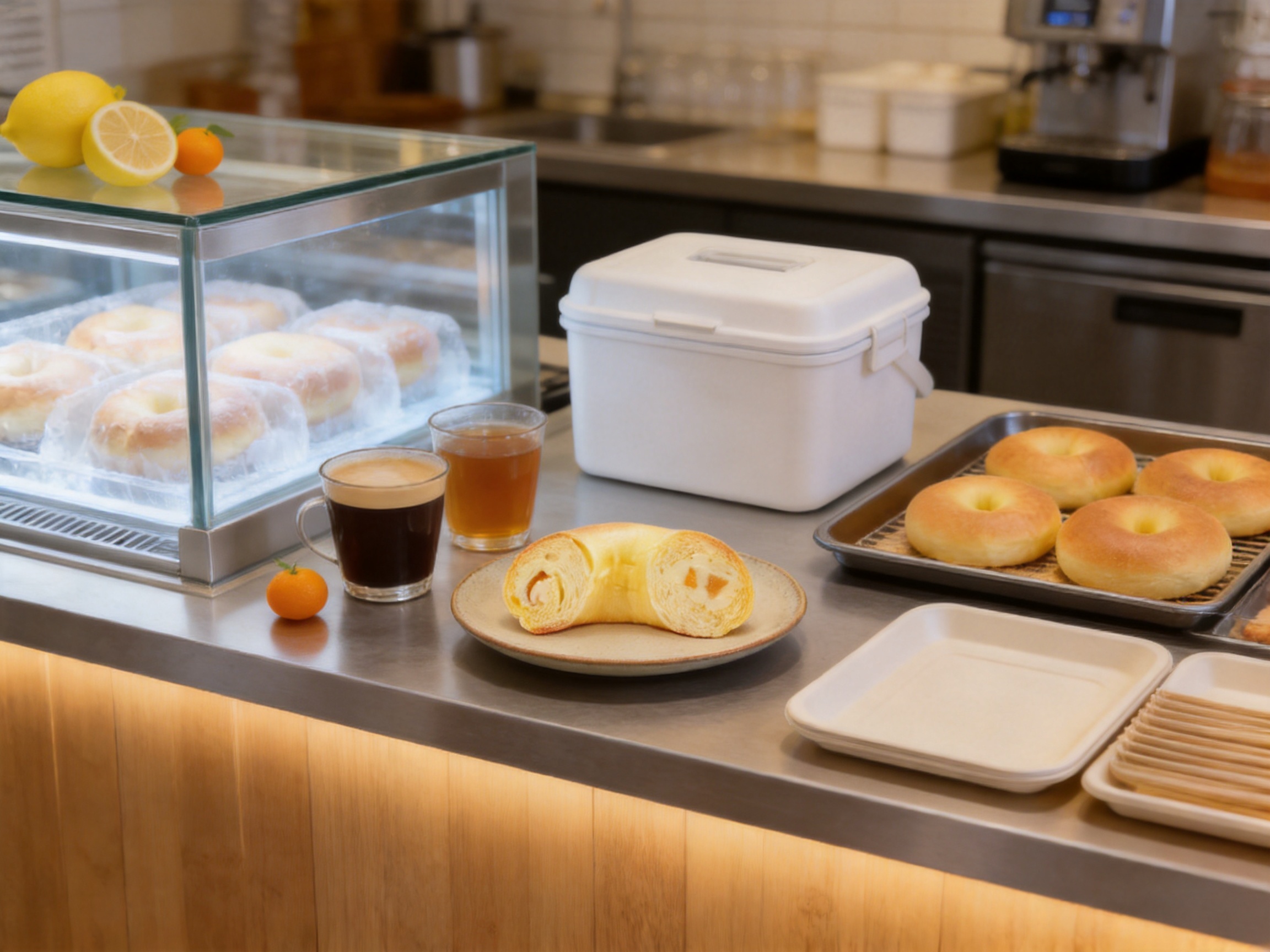
The Kumquat Lemon Butter-Cream Cheese Bagel is a distinctive frozen bakery product created for consumers who want more than a conventional plain, sweet, or savory bagel. It combines a finely structured, naturally fermented bagel base with a bright citrus filling made from calamansi puree and diced lemon, then balances the fruit with Anchor cream cheese and dairy butter. The result is a product with lively acidity, controlled sweetness, creamy richness, and a pleasantly chewy texture.
Weighing 78 grams, the product is sized for convenient retail, café, foodservice, and grab-and-go applications. Its portion size supports consistent serving control while giving consumers a satisfying eating experience. The bagel can be positioned as a breakfast item, a premium snack, a bakery counter offering, or a versatile menu component for cafés and tea brands.
What makes this product commercially attractive is not only its flavor combination. Its value also comes from the manufacturing approach behind it: carefully selected flour, Japanese-style milling, natural yeast fermentation, controlled filling development, integrated frozen bakery production, and a supply chain designed for consistent commercial supply. These elements help distinguish the product from ordinary mass-produced bagels that may rely on simple dough formulas, excessive sweetness, or less carefully structured fillings.
A New Direction for the Premium Bagel Category
The bagel category has developed well beyond traditional plain, sesame, onion, and cream cheese combinations. Consumers increasingly look for products that combine familiar formats with more expressive flavors. Fruit-forward bakery products are especially appealing when they offer natural freshness without becoming overly sweet or dessert-like.
The Kumquat Lemon Butter-Cream Cheese Bagel responds to this trend through a layered citrus profile. Kumquat-inspired flavor character, calamansi puree, and diced lemon create a more complex impression than a single fruit ingredient would provide. The citrus is bright and aromatic, while the cream cheese and butter contribute body, smoothness, and a rounded finish.
This balance is important in the modern bakery market. A product with too much sugar can feel heavy and limit repeat purchases. A product with excessive acidity may be refreshing but lack indulgence. A product with a plain cream filling may feel familiar but fail to create a memorable point of difference. This bagel is designed to occupy the space between refreshing and rich, offering contrast without losing harmony.
For retailers and foodservice operators, the product also offers an opportunity to expand a bagel range without relying on highly complicated preparation. It can be served as a premium breakfast item, paired with coffee or tea, included in a bakery assortment, or used as a convenient frozen product that supports predictable inventory management.
Product Profile and Core Specifications
The product is categorized as a fruit bagel within the wider bagel portfolio. Its name communicates the main sensory direction: kumquat, lemon, butter, and cream cheese. Each component has a specific role in the final eating experience.
| Product Attribute | Details | Commercial Value |
|---|---|---|
| Product name | Kumquat Lemon Butter-Cream Cheese Bagel | Communicates a premium fruit-and-dairy flavor profile |
| Category | Fruits Bagel | Supports fruit-focused bakery and snack merchandising |
| Net weight | 78 grams | Provides portion consistency for retail and foodservice |
| Bagel base | Premium flour with Japanese-style milling and natural yeast fermentation | Creates a fine-grained, chewy, and resilient crumb |
| Fruit components | Calamansi puree and diced lemon | Builds layered citrus aroma, acidity, and texture |
| Dairy components | Anchor cream cheese and dairy butter | Adds smoothness, richness, and a rounded finish |
| Format | Frozen bakery product | Supports convenient storage, distribution, and preparation |
| Potential channels | Retail, cafés, tea brands, bakery operators, and foodservice | Enables multiple commercial applications |
The 78-gram format is large enough to deliver a complete flavor experience while remaining suitable for single-serve consumption. It can be sold individually, included in multipacks, or placed within a broader mixed bagel assortment. For foodservice operators, a standardized weight supports menu costing, portion planning, and purchasing efficiency.
The frozen format adds practical value. Operators can manage stock according to projected demand rather than relying on same-day production. This can reduce the pressure associated with fresh bakery schedules and make it easier for cafés, convenience retailers, and foodservice kitchens to offer a premium filled bagel without establishing a complex in-house dough and filling operation.
The Bagel Foundation: Premium Flour and Japanese-Style Milling
A filled bagel is only as successful as its dough base. The filling may attract initial attention, but the texture of the bread determines whether the product feels premium during the complete eating experience. The bagel foundation used in this product is developed from carefully selected premium flour and a Japanese-style milling approach.
Japanese-style milling is associated with attention to flour refinement, particle consistency, and the development of a clean wheat profile. In a filled bagel, these characteristics are particularly valuable because the dough must support a rich filling without becoming dense, rough, or excessively dry. A more refined flour structure can contribute to a smoother crumb and a more polished bite.
The dough is designed to produce a fine-grained structure rather than a coarse or irregular interior. This gives the bagel a more uniform chew and helps it remain pleasant alongside the creamy filling. The objective is not softness alone. A premium bagel should offer resistance when bitten, followed by a tender and elastic crumb that remains enjoyable through the final mouthful.
Many ordinary bagels compete primarily on price and may use formulations that produce a heavy, tough, or dry texture after reheating. Such products can make fillings seem less integrated and may reduce consumer satisfaction. By contrast, this product is designed around structural balance: firm enough to retain bagel identity, yet tender enough to complement fruit and dairy ingredients.
The clean wheat aroma of the dough is another important advantage. Citrus and cream cheese are expressive flavors, but they should not be forced to cover undesirable flour notes or an overly yeasty smell. A clean base allows the citrus to remain clear and gives the butter and cream cheese a more natural supporting role.
Natural Yeast Fermentation for Greater Depth and Resilience
Natural yeast fermentation is a central part of the product’s dough development. Fermentation is not simply a leavening step. It also influences aroma, crumb structure, elasticity, moisture distribution, and the way the dough behaves after freezing and reheating.
Through controlled natural fermentation, the dough can develop a more rounded wheat aroma and a deeper overall flavor. The process helps create a bagel that tastes complete even before the filling is considered. This is valuable in a filled product because the bread should not function as a neutral carrier only; it should contribute its own character while allowing the citrus and dairy layers to remain prominent.
Fermentation also affects the eating texture. A well-developed dough can provide resilience without creating an excessively hard bite. The desired result is a chewy structure that recovers slightly when pressed, rather than crumbling, tearing, or becoming rubbery. This textural quality gives the product a premium identity and helps it stand apart from soft filled buns that happen to use a bagel shape.
For frozen bakery production, dough resilience is especially important. Products must be formulated and processed with freezing, storage, transport, thawing, and reheating in mind. A dough that performs well only when freshly baked may lose quality through the frozen supply chain. The manufacturing approach behind this product is intended to preserve the bagel’s structure and sensory appeal across commercial handling conditions.
Compared with products made through rushed fermentation or highly simplified dough systems, a naturally fermented bagel may offer a more developed flavor and a more satisfying bite. It also provides a stronger platform for premium positioning, because consumers can perceive differences in aroma and texture rather than receiving sweetness or filling alone.

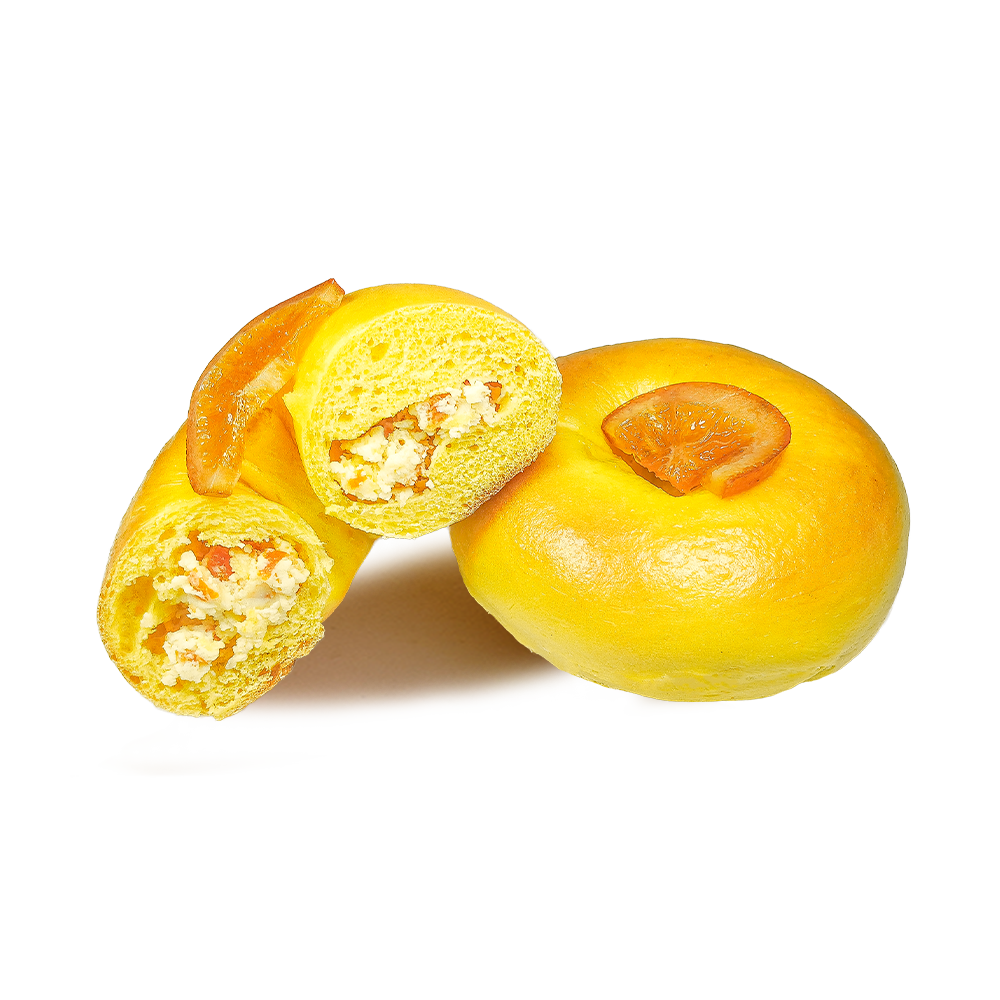
Kumquat Lemon Butter-Cream Cheese Bagel
The Double-Citrus Layer: Calamansi Puree and Diced Lemon
The fruit profile is built through two different citrus forms: calamansi puree and diced lemon. This combination creates a layered flavor experience that is more dynamic than a single citrus flavoring.
Calamansi puree contributes a bright, transparent tang. It gives the first impression of freshness and helps energize the palate as soon as the filling is tasted. Its acidity is lively but can be integrated into a creamy formulation so that it does not become harsh or one-dimensional.
Diced lemon contributes a different type of citrus expression. In addition to acidity, it can provide a subtle peel-like bitterness, aromatic complexity, and small pieces of fruit texture. This creates contrast within the filling and prevents the product from tasting like a uniform sweet cream with a generic lemon note.
The two fruit components work together to create what may be described as a double-citrus layer. The puree delivers a smooth, immediate fruit character, while the diced lemon introduces texture and a longer aromatic finish. This progression makes the filling more engaging and gives consumers a reason to notice the product beyond its appearance.
The combination is also commercially useful. Citrus flavors are widely recognized, but the particular pairing of calamansi, lemon, cream cheese, and butter is less routine than standard strawberry, blueberry, chocolate, or plain cream cheese fillings. It offers familiarity through lemon while adding a distinctive tropical-citrus accent through calamansi and kumquat-inspired positioning.
In competitive terms, this layered approach can provide stronger differentiation than products that depend on a single fruit flavor. A conventional lemon bagel may be perceived as simply sweet or sour. A product using only citrus flavoring may lack texture and depth. The use of puree and diced fruit supports a more natural and developed sensory story.
The citrus character is intended to remain clean through the finish. This is important because excessive acidity, artificial aroma, or heavy sweetness can reduce the perception of quality. By combining fruit with dairy ingredients, the formulation creates a more rounded profile in which the citrus remains bright without dominating the entire product.
Butter and Cream Cheese: A Balanced Dairy Filling
The dairy filling uses Anchor cream cheese together with pure dairy butter. These ingredients are not included simply to increase richness. They are selected to shape the texture, aroma, and balance of the fruit components.
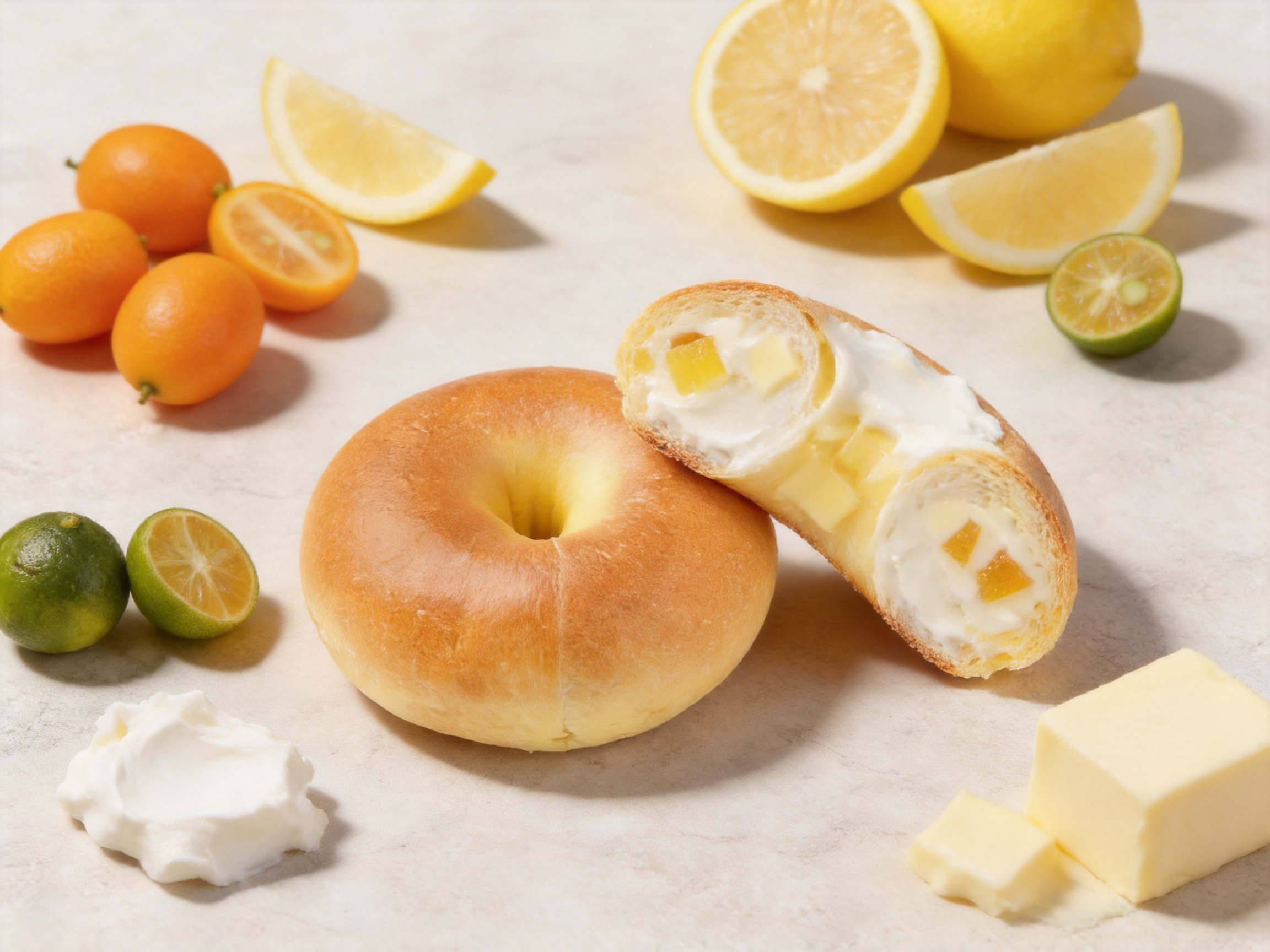
Cream cheese provides the main body of the filling. Its smooth, silky character gives the product a familiar cheesecake-like creaminess, while its gentle tang reinforces the citrus rather than competing with it. Cream cheese also helps transform the fruit ingredients into a cohesive filling that can be distributed consistently within the bagel.
Dairy butter adds warmth and aroma. Butter has a fuller fragrance than many neutral fats, and this aroma can make the filling feel more indulgent without requiring excessive sweetness. It rounds the edges of the citrus profile and adds a lingering dairy note that remains after the first fruit impression fades.
The interaction between butter, cream cheese, and citrus is one of the product’s most important sensory advantages. Acidic fruit can taste sharp when it is presented without sufficient body. Creamy ingredients can taste heavy when they are not balanced by acidity. Here, the citrus lifts the dairy, while the dairy softens and extends the citrus. The result is intended to be refreshing but not sharp, rich but not cloying.
This balance may appeal to consumers who want a premium bakery treat without the sweetness associated with many filled pastries. The product can be positioned as an elevated breakfast or snack option rather than only as a dessert. It can also complement unsweetened coffee, black tea, green tea, sparkling beverages, or lightly sweetened milk drinks.
Compared with ordinary fruit-filled products that may use a strongly sweetened center, the restrained sweetness and dairy structure offer a more sophisticated flavor direction. The product has enough richness to feel satisfying, but the citrus finish encourages another bite rather than creating palate fatigue.
Texture as a Competitive Advantage
Texture is one of the clearest ways to distinguish a premium bagel from a standard filled bread product. The Kumquat Lemon Butter-Cream Cheese Bagel is designed to deliver several textural stages in one bite.
First, the outer dough provides the characteristic bagel chew. This gives the product an identifiable structure and prevents it from being confused with a soft bun or cake. Second, the fine-grained crumb provides a tender internal transition. Third, the cream cheese and butter filling contributes smoothness. Finally, the diced lemon introduces small textural accents that reinforce the fruit identity.
This contrast between chewy dough, creamy filling, and fruit pieces gives the product a more complete sensory experience. Products with only a soft bread shell and smooth filling may feel uniform. Products with a tough shell and dense filling may feel difficult to eat. The goal here is controlled contrast rather than extreme contrast.
Texture also affects the perception of freshness. A resilient crumb can suggest careful dough development, while a smooth filling can communicate quality and indulgence. When these characteristics remain stable after preparation, they can support repeat purchasing and positive product evaluations.
Frozen bakery manufacturers must consider how texture changes throughout the supply chain. Freezing can affect moisture movement, crumb firmness, and filling stability. The dough and filling therefore need to be developed as a complete system rather than as separate ingredients. The manufacturing process is intended to protect the relationship between bread and filling so the consumer receives a cohesive product after preparation.
In comparison with lower-cost competitors, a more carefully engineered texture can become a meaningful advantage. Price-sensitive products often focus on filling quantity or visual size, while premium products must create value through the eating experience. A consumer may not know the technical details of milling or fermentation, but they can recognize when a bagel feels chewy rather than stale, creamy rather than greasy, and fruity rather than artificially flavored.
Manufacturing Strengths Behind the Product
The product is manufactured by Jiangsu Goobagel Food Technology Co., Ltd., a frozen bakery producer that has specialized in bagel research and manufacturing since 2019. The company operates an integrated supply chain covering raw materials, research and development, production, and nationwide distribution.
An integrated structure provides several advantages for product development and commercial supply. Raw material decisions can be coordinated with formulation work. R&D teams can evaluate dough, filling, freezing, and preparation performance together. Production teams can translate a tested formula into repeatable manufacturing procedures. Distribution planning can then support stable delivery to customers across multiple markets and channels.
This approach is particularly important for filled bagels. The quality of the final product depends on the relationship between flour, fermentation, fruit preparation, dairy filling, shaping, baking, cooling, freezing, packaging, and storage. If these stages are managed in isolation, variation can occur in filling distribution, dough thickness, moisture balance, or final texture. An integrated system makes it easier to identify and control these factors.
The company has developed more than 100 clean-label bagel varieties for retail, foodservice, café chains, tea brands, and bakery operators. This product development experience supports the creation of differentiated flavors while maintaining the practical requirements of commercial manufacturing. It also indicates an ability to work across multiple product categories, including classic bagels, stuffed bagels, and bagel sandwiches.
For buyers, a broad product development portfolio can reduce the risk associated with introducing a single new item. The citrus bagel may be purchased as an individual SKU, but it can also become part of a wider seasonal, premium, or fruit-themed bagel collection. The supplier’s wider capabilities make it possible to discuss complementary products, private-label ranges, and channel-specific variations.
Clean-Label Product Development and Commercial Reliability
Clean-label expectations continue to influence bakery purchasing decisions. Consumers increasingly want to understand the character of the ingredients in a product and may prefer recognizable components such as flour, fruit puree, diced lemon, cream cheese, and butter. Clean-label positioning should always reflect the actual formulation and applicable regulatory requirements, but the product’s ingredient-led flavor story provides a strong foundation for transparent communication.
The product’s sensory identity is based on real flavor relationships rather than a complicated list of unrelated flavor cues. Wheat provides the base, citrus provides brightness, and dairy provides balance. This straightforward structure can make the product easier for retailers and foodservice operators to explain to customers.
Commercial reliability is equally important. Buyers need products that perform consistently from batch to batch. Variations in bagel weight, filling distribution, dough texture, or fruit intensity can create problems for menu costing, customer expectations, and brand presentation. A manufacturer with dedicated R&D and integrated production capabilities can establish more consistent specifications and process controls.
For wholesale customers, reliability includes supply planning as well as product quality. A frozen bagel program should support predictable ordering, storage, and replenishment. It should also be flexible enough to serve different customer sizes, from independent cafés to larger retail and foodservice operations.
The manufacturer’s experience working with brands in China demonstrates an ability to provide product solutions for customers with different commercial requirements. This may include standard products, OEM development, private-label programs, packaging adaptation, or flavor customization, depending on the project scope and regulatory market.
Advantages for OEM and Private-Label Buyers
The Kumquat Lemon Butter-Cream Cheese Bagel is well suited to OEM and private-label development because it has a clear product identity and broad application potential. A buyer can position it as a signature citrus bagel, a premium filled breakfast product, a seasonal launch, or part of a better-for-you indulgence range.
Its flavor profile is distinctive without being inaccessible. Lemon is familiar to most consumers, while calamansi and kumquat notes provide novelty. Cream cheese and butter are established bakery ingredients that make the product feel approachable. This combination reduces the risk of introducing an unfamiliar product while still offering a reason for consumers to try it.
Private-label customers can also adapt the product’s presentation to their own market position. A specialty café may emphasize artisanal fermentation and premium dairy. A supermarket may focus on convenient frozen preparation and portion control. A tea brand may promote the citrus aroma as a pairing for tea beverages. A foodservice operator may use it in breakfast sets or snack menus.
The standardized 78-gram format supports several packaging options. It may be sold as an individual wrapped item, a multipack, a mixed-flavor box, or a foodservice case. The appropriate format depends on the target channel, local labeling rules, storage conditions, and preparation instructions.
OEM buyers can also evaluate whether the product should remain in its current flavor configuration or be adjusted for regional preferences. Possible development directions may include changes to citrus intensity, filling balance, sweetness level, piece size, or pack format. Any such changes should be confirmed through technical trials and sensory testing rather than assumed in advance.
Working with a manufacturer experienced in bagel R&D can shorten the development path. Instead of building a complete formula from the beginning, buyers can start from a proven product concept and then focus on market-specific requirements. This may reduce development time and provide a clearer route from sampling to commercial production.
Applications Across Retail and Foodservice
In retail, the bagel can be placed in the frozen bakery section, premium breakfast aisle, specialty bakery area, or seasonal promotional display. The product’s fruit-and-cream profile may attract shoppers who are looking for something different from savory stuffed bagels or conventional sweet pastries.
For cafés, the product can be thawed and prepared according to the operator’s equipment and service model. It may be served whole, warmed, sliced, or presented with a beverage. Its citrus profile pairs naturally with coffee, black tea, green tea, herbal infusions, and sparkling drinks.
Tea brands may find the product especially suitable because citrus and dairy notes can complement tea-based menus. A bagel with a bright fruit finish can provide contrast to milk tea, while its cream cheese filling can echo the creamy textures already familiar in many beverage programs.
Hotels, catering companies, and institutional foodservice operators may use the product in breakfast buffets, meeting breaks, or pre-portioned snack programs. The frozen format can simplify inventory planning and reduce the need for extensive on-site bakery labor.
Bakery operators can also combine it with other bagel varieties to create a differentiated assortment. A balanced portfolio might include classic plain and sesame products, savory stuffed options, sandwich-ready bagels, and premium fruit varieties. The citrus bagel can serve as the more expressive item in the range, helping the assortment appeal to multiple consumer preferences.
The product is also suitable for seasonal marketing. Citrus flavors can be associated with spring and summer freshness, but the butter and cream cheese profile gives it enough richness for year-round consumption. Limited-time launches, afternoon snack campaigns, breakfast bundles, and new-product tasting events are all possible commercial applications.
Preparation and Serving Considerations
Because the product is frozen, preparation instructions should be developed according to the final packaging format, equipment, and market requirements. Operators may use ovens, convection ovens, toaster ovens, or other approved heating systems. The objective is to restore the desired crumb texture while maintaining filling stability.
Preparation should avoid excessive heating, which may dry the dough or cause the filling to become overly fluid. It should also provide enough heat for the bagel to become aromatic and pleasantly chewy. Buyers should conduct preparation validation under their actual operating conditions before commercial launch.
For retail customers, clear instructions are important. The package should communicate storage requirements, preparation steps, serving suggestions, allergen information, and any other legally required details. Since the product contains wheat and dairy ingredients, the relevant allergen declarations must be handled according to the destination market’s regulations.
Serving presentation can influence perceived value. The bagel may be shown whole to emphasize its shape and portion size, or cut open to reveal the cream-colored filling and citrus components. In foodservice, a simple warm presentation with coffee or tea can communicate premium convenience without requiring complex plating.
Operators should also consider thawing and holding practices. A frozen bakery product may be prepared in batches according to expected demand, but holding time, temperature, and packaging should be verified to preserve texture and food safety. The supplier and buyer can collaborate on application testing to establish suitable operating procedures.
Why the Product Can Stand Apart from Conventional Competitors
The product’s strongest competitive advantage is its combination of differentiated flavor and technically developed texture. Many bagels compete through size, visual toppings, or filling quantity. This product competes through a more complete sensory design.
Its citrus profile is layered rather than singular. Calamansi puree provides a clear tang, diced lemon adds texture and aromatic depth, and the kumquat-lemon concept gives the product a recognizable but distinctive identity.
Its dairy filling is balanced rather than excessively sweet. Cream cheese supplies smoothness and tang, while butter contributes fragrance and richness. This makes the bagel suitable for consumers who prefer sophisticated sweetness levels and a clean finish.
Its dough is designed to preserve bagel character. Premium flour, Japanese-style milling, and natural yeast fermentation support a fine-grained crumb, clean wheat aroma, and resilient chew. The product therefore offers more than a filled bread shell.
Its frozen format supports operational convenience. Retailers and foodservice operators can maintain inventory with greater flexibility than fresh-only production allows. This can make premium filled bagels more accessible to businesses that do not have a full bakery team.
Finally, the manufacturer’s integrated capabilities provide a foundation for stable supply and product development. Buyers can evaluate the product as both a finished SKU and a potential platform for OEM or private-label innovation.
Quality, Consistency, and Supply Chain Considerations
For wholesale and private-label customers, product quality must be considered together with supply chain performance. A premium flavor is valuable only when the product can be produced, frozen, stored, transported, and prepared with consistent results.
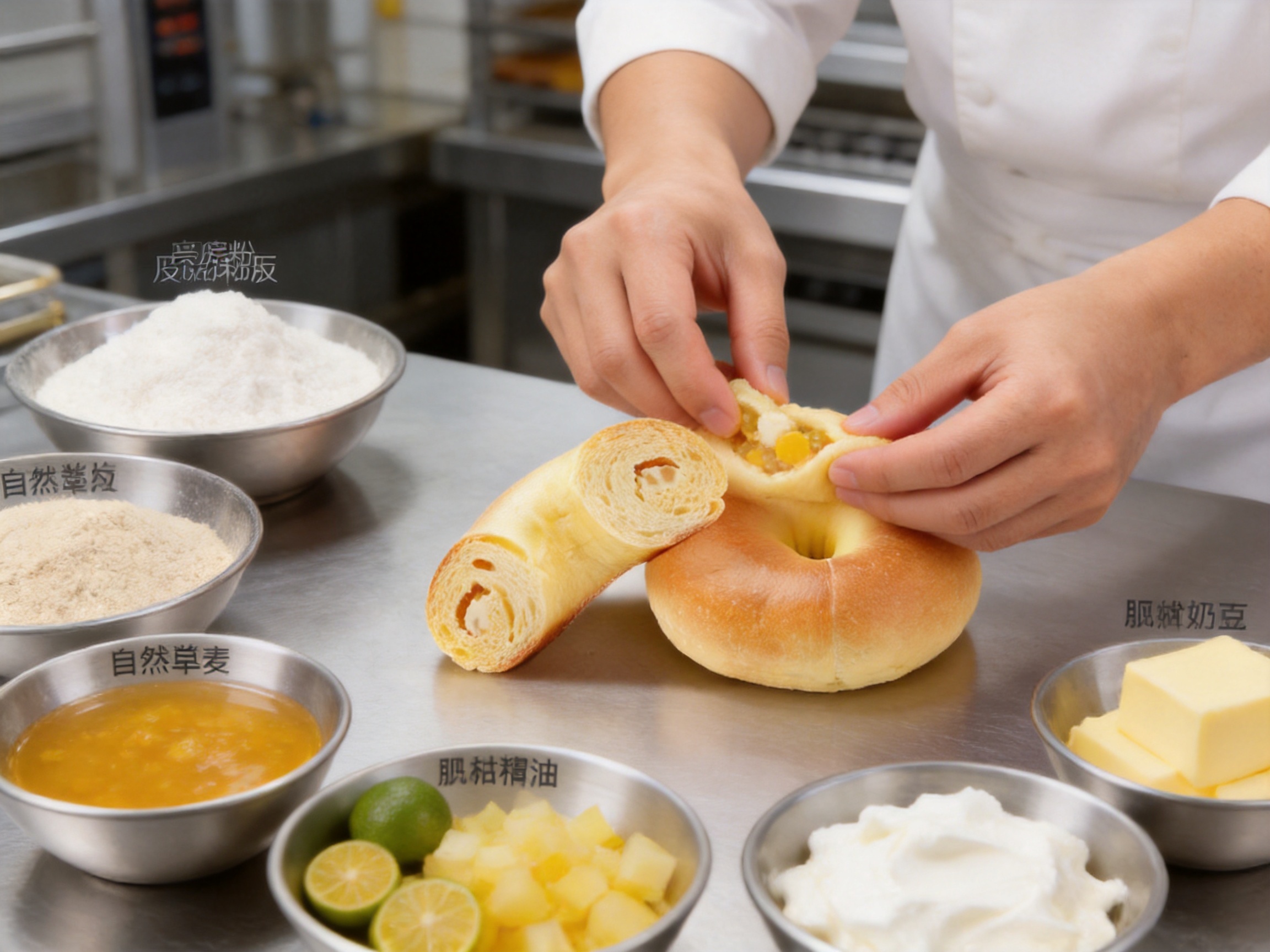
The manufacturing process begins with raw material selection and continues through formulation, fermentation, filling preparation, shaping, baking, cooling, freezing, and distribution. Each stage can influence the final product. Flour variation may affect dough strength. Fermentation conditions may affect aroma and elasticity. Fruit preparation may influence acidity and texture. Filling control may affect portion consistency. Freezing and storage may influence crumb quality.
An integrated producer can evaluate these relationships more effectively than a supplier focused only on one stage. This is especially important for OEM projects, in which the customer may require specific dimensions, packaging formats, case quantities, or preparation performance.
Buyers should discuss the specifications that matter most for their channel. These may include piece weight, filling distribution, appearance, frozen shelf life, case pack, storage temperature, lead time, minimum order quantity, and delivery schedule. Clear specifications help both parties maintain consistency during scale-up.
Sampling should include more than a first tasting. A professional evaluation may include frozen appearance, preparation performance, texture at different holding times, filling stability, sensory comparison with competing products, and consumer feedback. This process helps determine whether the product is appropriate for the intended market and service environment.
For international projects, buyers should also confirm documentation and labeling requirements before placing a commercial order. Ingredient declarations, allergen statements, nutrition information, packaging language, country-of-origin information, and import requirements can vary by market. These details should be reviewed with the relevant regulatory and logistics teams.
Brand and Menu Positioning Opportunities
The bagel can be positioned in several ways depending on the customer’s business model. A premium bakery may describe it as a naturally fermented citrus-filled bagel. A café may present it as a signature fruit cream cheese breakfast item. A supermarket may focus on convenient frozen preparation and restaurant-style quality at home.
For a wellness-oriented assortment, communication should emphasize portion control, fruit character, and restrained sweetness only where supported by the final nutritional profile. The product should not be presented as a health food without appropriate nutritional and regulatory evidence. Its stronger and more accurate positioning is premium, fruit-forward, and thoughtfully balanced.
For a dessert-oriented menu, the butter and cream cheese filling can be highlighted. It may be served warm with tea, coffee, or a lightly sweetened beverage. For a breakfast menu, the natural fermentation and substantial chew can support a more filling product story.
Visual merchandising can focus on the contrast between the golden bagel exterior and the creamy citrus center. Product photography, open-cut displays, and sampling programs may help consumers understand the filling and distinguish the product from plain bagels.
Because the flavor is unusual but accessible, sampling can be especially effective. Consumers may be familiar with lemon but less familiar with calamansi or kumquat-inspired bakery products. A tasting experience allows them to recognize the balance between acidity, creaminess, butter aroma, and chewy dough.
Recommended Evaluation Criteria for Buyers
When evaluating the Kumquat Lemon Butter-Cream Cheese Bagel for a commercial program, buyers should consider the following questions:
Does the product deliver a clear citrus aroma without an artificial or excessively sharp impression?
Does the filling remain creamy and cohesive after the intended preparation method?
Does the diced lemon contribute noticeable texture without making the filling difficult to eat?
Does the dough retain a chewy, resilient structure while remaining tender enough for a filled product?
Is the sweetness appropriate for the intended consumer and beverage pairing?
Does the 78-gram portion fit the operator’s pricing, menu, and packaging strategy?
Can the frozen format support the buyer’s storage capacity and distribution model?
Can the manufacturer provide the required documentation, packaging support, and production schedule?
Would the product benefit from customization for local taste preferences or a private-label identity?
These questions help buyers assess the product as a complete commercial solution rather than evaluating flavor alone.
Q&A: Kumquat Lemon Butter-Cream Cheese Bagel
What is the Kumquat Lemon Butter-Cream Cheese Bagel?
It is a 78-gram frozen filled bagel with a premium flour base, natural yeast fermentation, calamansi puree, diced lemon, cream cheese, and dairy butter. It belongs to the fruit bagel category and is designed for retail, café, foodservice, bakery, and private-label applications.
What does the product taste like?
The flavor begins with bright citrus acidity and a fresh fruit aroma. Diced lemon adds subtle peel-like bitterness and texture, while cream cheese and butter provide smoothness, warmth, and richness. The intended finish is refreshing but not sharp, and indulgent without excessive sweetness.
Why are calamansi puree and diced lemon used together?
They provide different forms of citrus character. Calamansi puree delivers a smooth and lively tang, while diced lemon adds fruit texture, aromatic depth, and a gentle bitterness. Together they create a more layered flavor than a single citrus ingredient.
What makes the bagel base different from ordinary filled bread?
The dough is developed as a bagel foundation using premium flour, Japanese-style milling, and natural yeast fermentation. It is intended to provide a clean wheat aroma, fine-grained crumb, satisfying chew, and resilience without becoming excessively dry or heavy.
What role does butter play in the filling?
Dairy butter contributes a warm, fragrant aroma and a fuller mouthfeel. It helps round the acidity of the citrus and supports the cream cheese, creating a richer and more balanced filling.
Is this product suitable for foodservice?
Yes. The standardized 78-gram frozen format can support cafés, tea brands, hotels, catering operations, breakfast programs, and other foodservice applications. Operators should validate preparation and holding procedures according to their equipment and service model.
Can the product be used for private-label programs?
It can serve as a starting point for OEM and private-label development. Buyers may discuss packaging, market positioning, product specifications, case configuration, and potential flavor or format adjustments with the manufacturer.
What types of beverages pair well with the bagel?
The citrus and dairy profile can pair well with coffee, black tea, green tea, herbal tea, milk tea, sparkling beverages, and lightly sweetened dairy drinks. The best pairing depends on the desired contrast between freshness, bitterness, creaminess, and sweetness.
How should buyers assess product performance?
Buyers should evaluate the bagel frozen and after preparation, considering aroma, dough chew, filling stability, citrus intensity, sweetness, diced lemon texture, portion size, holding performance, and suitability for the intended sales channel.
What manufacturing strengths support this product?
The product is supported by integrated raw material, R&D, production, and distribution capabilities. The manufacturer has specialized in bagel research and manufacturing since 2019 and has developed more than 100 bagel varieties for commercial customers.
Conclusion
The Kumquat Lemon Butter-Cream Cheese Bagel offers a compelling combination of flavor differentiation, textural quality, and commercial flexibility. Its citrus profile is built from calamansi puree and diced lemon, creating brightness, fruit texture, and a clean finish. Cream cheese and dairy butter add balance and indulgence without overwhelming the fruit.
The product’s premium identity begins with its dough. Carefully selected flour, Japanese-style milling, and natural yeast fermentation support a fine-grained, chewy, and resilient bagel foundation. This gives the product a stronger point of difference than ordinary sweet filled breads or basic fruit-flavored bagels.
Its 78-gram frozen format provides practical value for retail and foodservice operators. Businesses can offer a distinctive premium bagel without requiring a complete in-house production system, while standardized portions can support inventory planning and menu costing.
Behind the product is a manufacturer with experience in bagel R&D, clean-label product development, integrated supply chain management, and commercial production. These capabilities make the bagel suitable not only as a finished product but also as a platform for OEM, private-label, café, tea brand, bakery, and foodservice programs.
For buyers seeking a fruit-forward bagel that combines citrus freshness with creamy richness, this product presents a well-balanced and adaptable solution. It is distinctive enough to attract attention, familiar enough to encourage trial, and technically developed enough to support consistent commercial use.
References
1. Product specification and sensory description supplied for the Kumquat Lemon Butter-Cream Cheese Bagel.
2. Company information supplied for Jiangsu Goobagel Food Technology Co., Ltd., including manufacturing history, product development capabilities, and integrated supply chain overview.
3. General principles of bread fermentation, dough development, flour functionality, and frozen bakery processing.
4. General sensory evaluation principles for bakery products, including aroma, flavor, texture, acidity, sweetness, and mouthfeel assessment.
5. General foodservice and retail considerations for frozen bakery storage, preparation, portion control, and private-label product development.
