
 中文简体
中文简体
 English


postmaster@goobagelfood.com
Content
- 1 A Distinctive Product Concept in the Frozen Bagel Market
- 2 Malaysian-Imported Cocoa Kneaded Into the Dough
- 3 A Softer and Fluffier Bagel Texture
- 4 Anchor Cream Cheese and Chocolate in a Balanced Filling
- 5 Thaw-and-Eat Convenience
- 6 Why the Product Can Stand Out Against Conventional Competitors
- 7 Manufacturing Strengths Behind the Product
- 8 Research and Development for Commercial Bagel Applications
- 9 Process Control from Raw Materials to Finished Goods
- 10 Benefits for Retailers and Distributors
- 11 Benefits for Cafés, Tea Brands, and Foodservice Operators
- 12 Clean-Label Product Development and Consumer Expectations
- 13 Packaging, Storage, and Serving Considerations
- 14 Suitable Market Positioning
- 15 Quality and Supply Reliability for Business Customers
- 16 OEM and Private-Label Opportunities
- 17 Consumer Experience from First Bite to Finish
- 18 Frequently Asked Questions
- 18.1 What is the Cocoa Chocolate Cream Cheese Bagel?
- 18.2 Does the bagel require reheating?
- 18.3 What does the filling taste like?
- 18.4 Is the bagel very sweet?
- 18.5 How is the cocoa flavor created?
- 18.6 How does the texture differ from a traditional dense bagel?
- 18.7 What happens to the filling after thawing?
- 18.8 Who can purchase or use this product?
- 18.9 Can the product be used for private-label sales?
- 18.10 What is the manufacturer’s experience?
- 18.11 What should business buyers confirm before ordering?
- 18.12 Can the product be sold in different channels?
- 19 Conclusion
- 20 References
- 21 Product: Cocoa Chocolate Cream Cheese Bagel
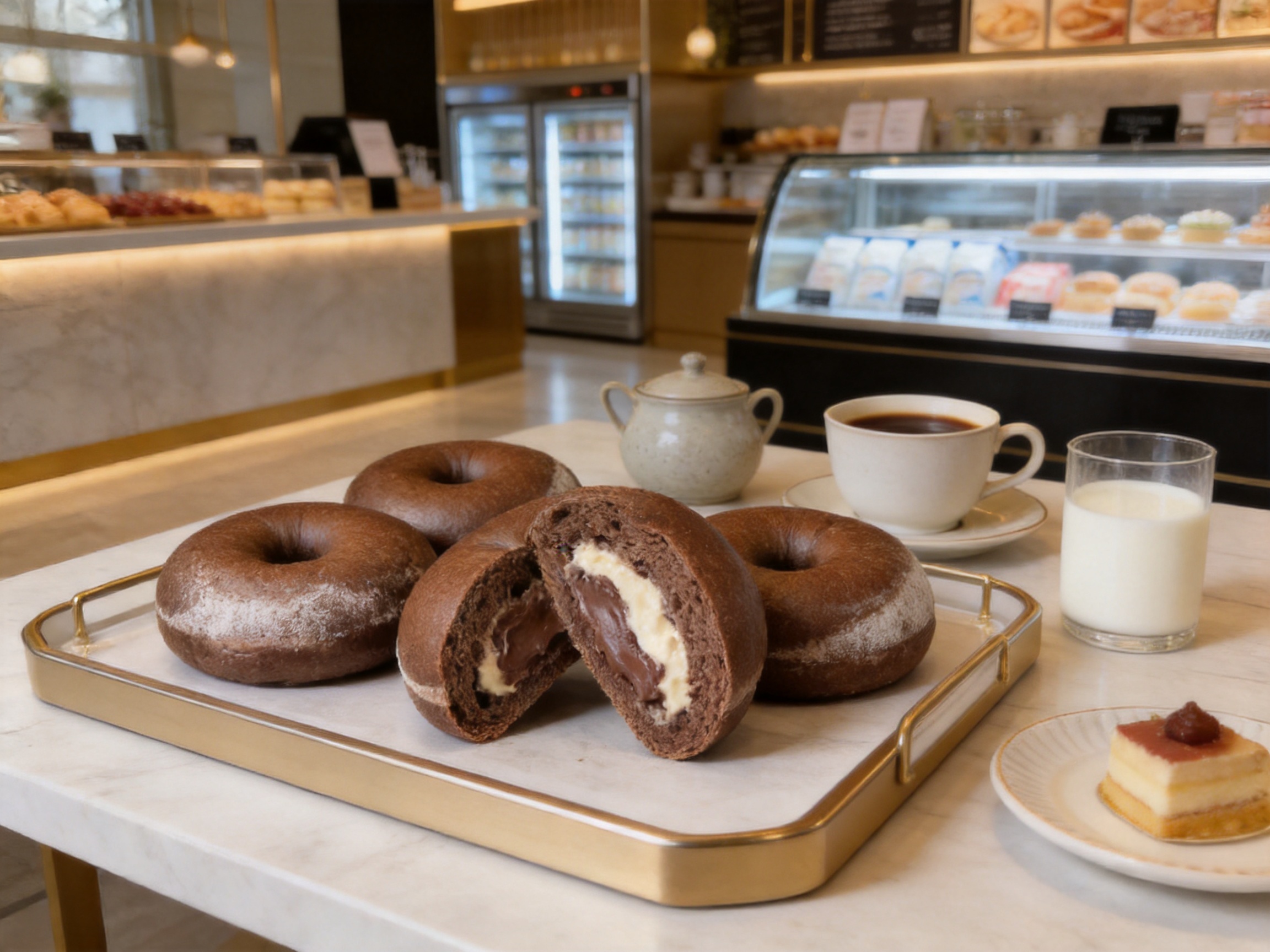
The cocoa chocolate cream cheese bagel combines the familiar convenience of a bagel with the indulgent appeal of chocolate and cream cheese. Designed for frozen distribution and ready-to-eat enjoyment after thawing, it offers a practical solution for retailers, cafés, bakery operators, foodservice businesses, and private-label brands seeking differentiated bakery products.
At the center of this product is a carefully developed contrast of textures and flavors. The exterior is made with premium wheat flour and Malaysian-imported cocoa powder, while the interior contains a filling that blends Anchor cream cheese with chocolate. The result is a soft cocoa bagel with a creamy, smooth center that delivers richness without becoming excessively heavy or sweet.
Unlike many conventional chocolate bakery products that rely primarily on a sweet filling or chocolate coating, this bagel builds its cocoa identity into the dough itself. That approach gives the product a more balanced flavor profile and allows the chocolate character to remain present from the first bite through the finish. The cream cheese contributes dairy richness and a mild tang, helping to create a layered taste rather than a one-dimensional sugary impression.
With a stated product weight of 90 grams, the bagel is suitable for individual retail packaging, café menus, breakfast programs, afternoon snack ranges, dessert displays, and frozen bakery assortments. Its thaw-and-eat format also reduces preparation requirements, making it suitable for operators that need speed, consistency, and minimal equipment.
A Distinctive Product Concept in the Frozen Bagel Market
The bagel category has expanded beyond traditional plain, sesame, and savory varieties. Consumers increasingly look for bakery products that combine convenience with more distinctive flavor experiences. Cocoa, chocolate, and cream cheese provide a familiar but appealing combination, while the bagel format gives the product greater versatility than a standard pastry or cake.
The Cocoa Chocolate Cream Cheese Bagel is positioned between breakfast bakery and everyday indulgence. It can be served as a morning product with coffee, presented as an afternoon snack, or included in a dessert-inspired menu. This broad usage supports a wider range of sales channels and gives distributors more opportunities to introduce the product to different customer groups.
Its core proposition is simple: a fluffy cocoa bagel base and a smooth chocolate cream cheese center, delivered in a frozen format that protects product quality during storage and distribution. The concept is easy for consumers to understand, while the sensory details create a more premium experience than a basic filled bun.
For business buyers, the product also offers a way to expand beyond standard bagel flavors without requiring a completely unfamiliar format. Customers already understand the bagel shape and eating occasion. The cocoa dough and dairy-chocolate filling add novelty while retaining the convenience and recognizability of a familiar bakery item.
Malaysian-Imported Cocoa Kneaded Into the Dough
One of the product’s most important advantages is that cocoa is incorporated directly into the dough. The cocoa is not treated as a surface decoration or added only through a separate filling. Instead, premium wheat flour is kneaded with Malaysian-imported cocoa powder, allowing the cocoa flavor to become part of the bagel’s structural foundation.
This process creates a deeper and more integrated chocolate profile. When cocoa is used only as a topping, the flavor may be concentrated on the outer surface and disappear quickly as the product is eaten. When it is used only in the filling, the outer bread may taste neutral. By kneading cocoa into the dough, the product delivers a consistent cocoa note throughout the base.
The Malaysian origin of the cocoa powder supports the product’s aromatic identity. It contributes a deep cocoa character with warm, toasted sweetness and a pleasant touch of bitterness. These characteristics help keep the product from tasting overly sugary, particularly when combined with the mild tang of cream cheese.
The cocoa dough also provides visual differentiation. Its darker color immediately communicates the chocolate flavor and helps the product stand out in a freezer cabinet, bakery display, or café case. For retailers, this visual identity can make the product easier to recognize and easier to position within a premium or dessert-inspired bakery range.
From a formulation perspective, incorporating cocoa into the dough requires attention to flour balance, hydration, mixing, fermentation, shaping, and baking performance. Cocoa can influence dough color, aroma, moisture behavior, and perceived softness. A well-developed process is therefore important to ensure that the finished bagel remains tender and pleasant instead of becoming dry, dense, or excessively firm.
A Softer and Fluffier Bagel Texture
Traditional bagels are often associated with a dense and chewy texture. That quality is desirable in many classic applications, but it may not be ideal for every consumer or every eating occasion. The Cocoa Chocolate Cream Cheese Bagel is designed with a softer and fluffier texture, making it more approachable for customers who prefer tender bakery products.
The softer structure allows the cocoa aroma to develop gently as the product is chewed. Instead of requiring a strong bite, the bagel opens more easily and pairs naturally with the smooth filling. This creates a contrast between a light, tender exterior and a creamy interior.
The texture is particularly relevant for frozen bakery distribution. A product intended to be thawed and eaten must retain an appealing mouthfeel after freezing and thawing. The formulation and manufacturing process need to account for moisture migration, storage conditions, packaging, and thawing time. Maintaining softness after thawing gives operators greater flexibility and helps consumers enjoy a more consistent experience at home or in foodservice environments.
Compared with harder or denser competing products, this texture can broaden the target market. It may appeal to consumers who enjoy the flavor of bagels but do not prefer a strongly chewy bite. It may also be more suitable for snack occasions, where customers expect a soft and immediately enjoyable product.
The fluffy texture also supports efficient portion consumption. At 90 grams, the product is large enough to feel satisfying but compact enough for single-serving use. It can function as a complete snack, a small breakfast, or a dessert-style accompaniment to coffee and tea.
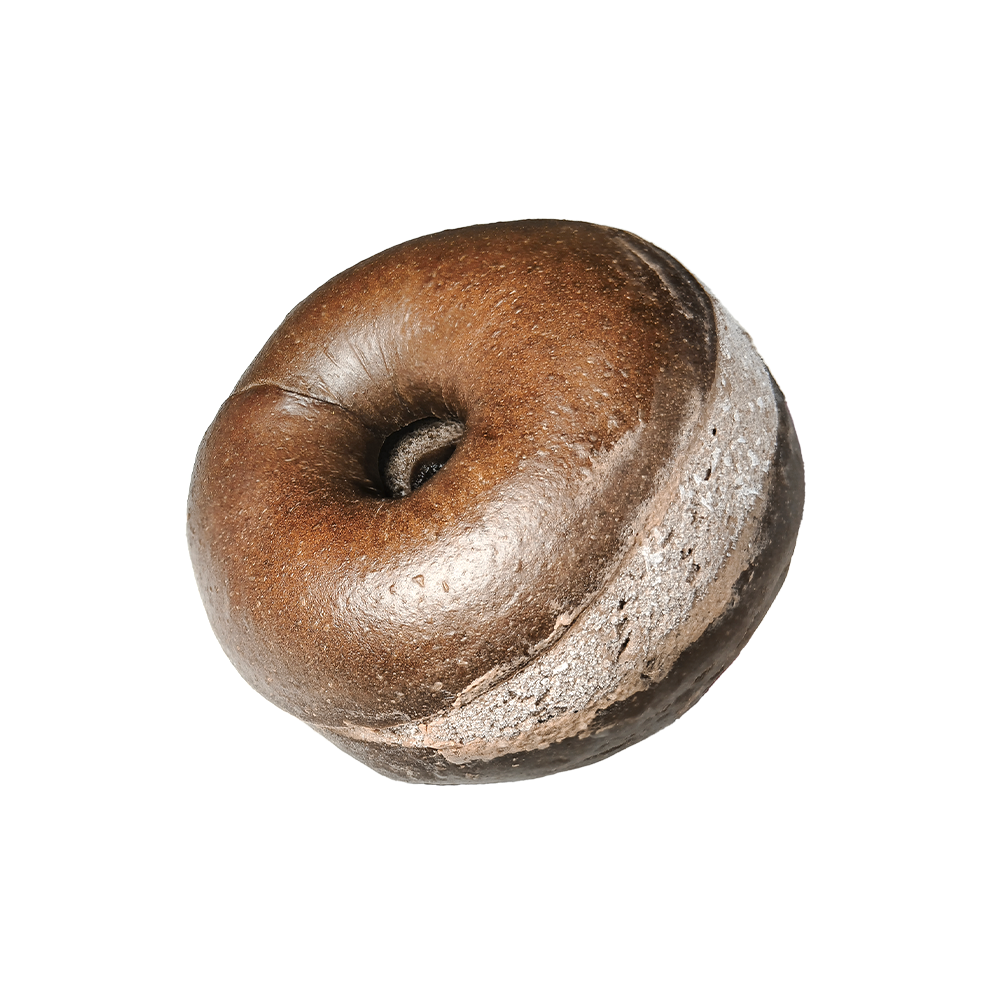
Cocoa Chocolate Cream Cheese Bagel
Anchor Cream Cheese and Chocolate in a Balanced Filling
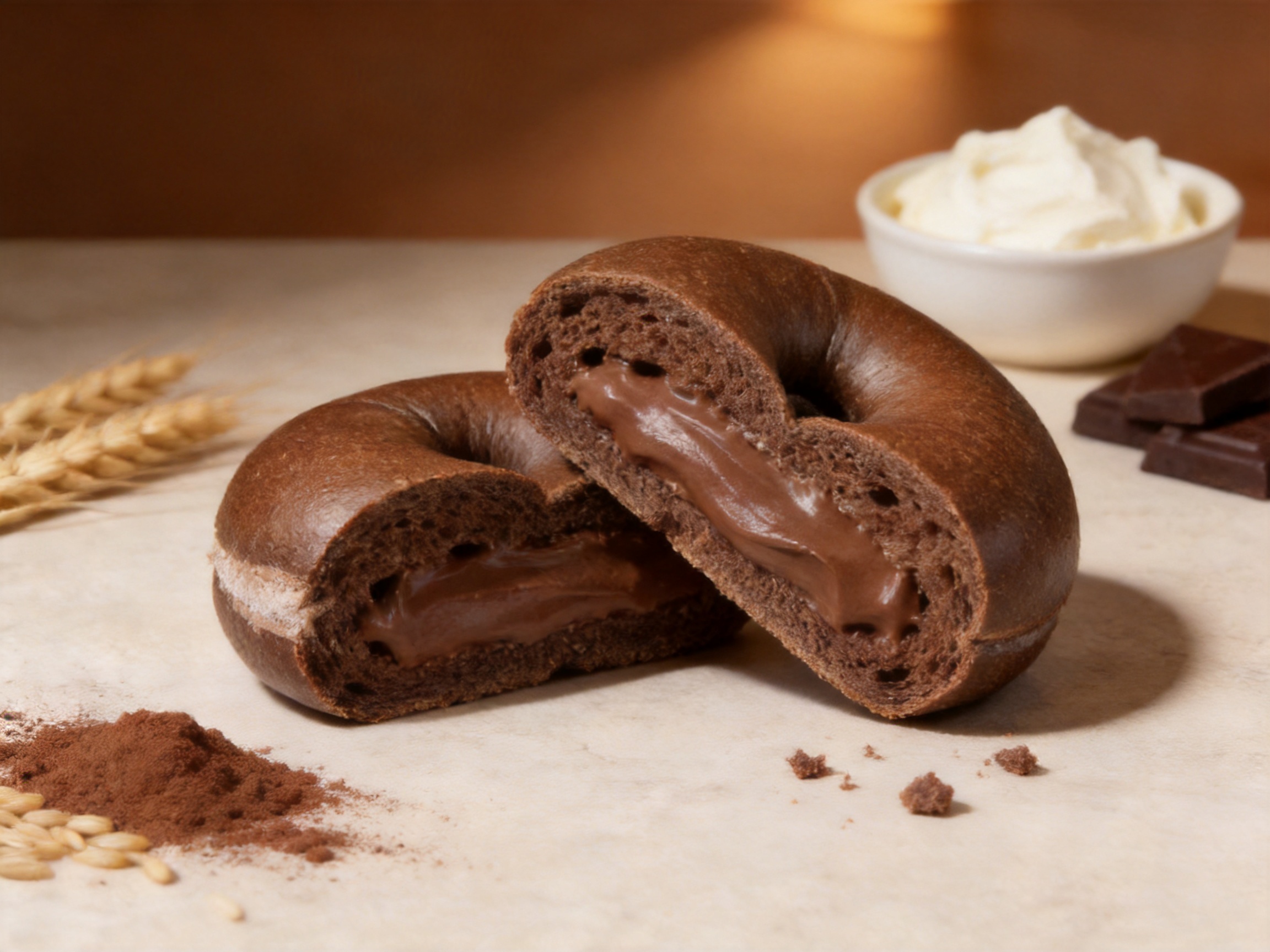
The filling is developed around the relationship between Anchor cream cheese and chocolate. These two ingredients provide contrasting but complementary characteristics. Cream cheese brings a smooth dairy profile, buttery richness, and a subtle tang. Chocolate adds depth, fullness, and a more indulgent finish.
The balance between the ingredients is essential. If chocolate dominates, the filling can become heavy or excessively sweet. If cream cheese dominates, the chocolate identity may become unclear. The formulation described for this product is intended to ensure that both components remain recognizable without competing with one another.
The result is a creamy center with clear flavor layers. The initial impression is rich and smooth, followed by the familiar depth of cocoa and chocolate. A mild tang at the end helps refresh the palate and prevents the filling from feeling flat. This balance is one of the product’s strongest points when compared with filled bakery products that rely on sweetness alone.
The filling also creates a valuable textural contrast. The cocoa bagel base provides a soft, bread-like bite, while the center is silkier and more delicate. This contrast increases sensory interest and gives the product a more premium character.
For consumers, cream cheese provides familiarity and reassurance. Many bakery customers already associate cream cheese with bagels, making the product concept intuitive. Chocolate adds an indulgent dimension, while the dairy component keeps the flavor grounded in a recognizable bagel tradition.
For business customers, the combination has strong menu versatility. It can be described as a chocolate-filled bagel, a dessert bagel, a cream cheese bagel, or a premium breakfast snack. This flexibility allows retailers and foodservice operators to adapt product descriptions to different customer segments without changing the underlying product.
Thaw-and-Eat Convenience
The product is designed to be ready to eat after thawing, without reheating. This feature simplifies preparation for both consumers and commercial operators. After thawing, the filling becomes exceptionally soft, with an ice-cream-like sensation that melts quickly on the palate.
This thaw-and-eat approach distinguishes the bagel from frozen products that require oven baking, microwave heating, or specialized preparation. Consumers can remove the product from frozen storage, follow the appropriate thawing procedure, and enjoy it without additional cooking equipment.
For cafés, this can reduce preparation time during busy service periods. Staff can manage portions in advance, organize thawed inventory according to expected demand, and serve the product quickly. For convenience stores and retail counters, the format can support simple grab-and-go sales. For hotels, offices, and catering operations, it offers a practical way to provide a premium bakery item without extensive kitchen labor.
The filling’s soft texture after thawing is an important part of the eating experience. Rather than remaining firm or stiff, it becomes smooth and delicate. This allows it to pair naturally with the fluffy cocoa base. The product therefore does not simply offer convenience; it uses the frozen format to preserve a specific texture that supports its sensory identity.
Thaw-and-eat products also help operators reduce the need for on-site baking expertise. Businesses that do not have a full bakery kitchen can still offer a more sophisticated filled product. This makes the bagel suitable for coffee shops, specialty beverage stores, small-format retailers, and foodservice businesses with limited preparation space.
Why the Product Can Stand Out Against Conventional Competitors
The frozen bakery market includes many plain bagels, savory filled buns, sweet pastries, and chocolate breads. The Cocoa Chocolate Cream Cheese Bagel competes by combining several desirable characteristics in one product: a recognizable bagel format, an integrated cocoa dough, a premium dairy-chocolate filling, a soft texture, and thaw-and-eat convenience.
| Product characteristic | Potential customer benefit | Commercial advantage |
|---|---|---|
| Cocoa incorporated into the dough | Consistent chocolate aroma and flavor throughout the base | Clear product identity and strong visual differentiation |
| Anchor cream cheese and chocolate filling | Balanced richness, cocoa depth, and mild tang | Premium positioning without relying only on sweetness |
| Soft and fluffy texture | Easier bite and broader consumer appeal | Suitable for breakfast, snack, dessert, and café occasions |
| Thaw-and-eat format | No reheating required after proper thawing | Lower preparation complexity and faster service |
| 90-gram individual portion | Convenient serving size and satisfying snack format | Simple portion control and packaging suitability |
| Frozen distribution model | Extended planning flexibility compared with fresh-only products | Supports wholesale, retail, foodservice, and private-label programs |
Many chocolate bakery products are highly sweet and lack flavor balance. This product offers a more layered profile in which cocoa bitterness, chocolate richness, wheat-based bakery notes, and cream cheese tang work together. That balance can appeal to consumers who want an indulgent product that remains comfortable to eat regularly.
Some filled products also have an indistinct exterior. A plain bread shell may not communicate the flavor inside, creating a weaker visual connection at the point of sale. The cocoa-colored dough gives this product a clear appearance that matches its flavor promise.
Another competitive advantage is category flexibility. A standard pastry may be associated primarily with dessert, while a traditional bagel may be associated primarily with breakfast. This product can occupy both spaces. It can be marketed as a breakfast bagel, a café snack, a sweet filled bread, or a frozen dessert-style bakery item.
Manufacturing Strengths Behind the Product
Jiangsu Goobagel Food Technology Co., Ltd. has specialized in bagel research and manufacturing since 2019. The company operates as a modern frozen bakery producer with an integrated supply chain covering raw materials, research and development, production, and nationwide distribution.
This integrated structure is important for a product such as the Cocoa Chocolate Cream Cheese Bagel. The final eating experience depends on more than the recipe alone. Ingredient selection, dough development, filling preparation, forming, baking, cooling, freezing, packaging, storage, and distribution all influence quality.
By connecting these stages within a coordinated manufacturing system, the company can better manage product development and production consistency. An integrated supply chain also supports communication between research teams, production personnel, quality management, and commercial partners.
Goobagel Food has developed more than 100 clean-label bagel varieties for retail, foodservice, café chains, tea brands, and bakery operators. This product development experience indicates a broad understanding of bagel formulation, flavor innovation, frozen bakery requirements, and commercial applications.
A portfolio of more than 100 varieties can also support customized programs. Different customers may require varied flavors, filling styles, portion sizes, packaging formats, or usage recommendations. A manufacturer with established research and production capabilities is better positioned to support these needs than a supplier focused on only a small number of standard products.
The company’s stated product strengths include stable quality, consistent performance, and reliable supply. These qualities are particularly important for business buyers. A product that performs well in testing but varies significantly between batches can create operational and brand risks. Consistency helps retailers and foodservice operators maintain the same taste, texture, appearance, and preparation expectations across locations and delivery cycles.
Research and Development for Commercial Bagel Applications
Research and development is central to the company’s manufacturing model. The Cocoa Chocolate Cream Cheese Bagel requires coordination between flavor design and process design. The cocoa must contribute a recognizable aroma without making the dough too dry or overly bitter. The filling must remain creamy after freezing and thawing. The finished product must also retain its shape, softness, and portion integrity during handling.
Product development for commercial use differs from small-batch bakery experimentation. A commercial product must be scalable, repeatable, packable, transportable, and suitable for the customer’s operating environment. Ingredient performance must be assessed not only immediately after production but also after frozen storage and thawing.
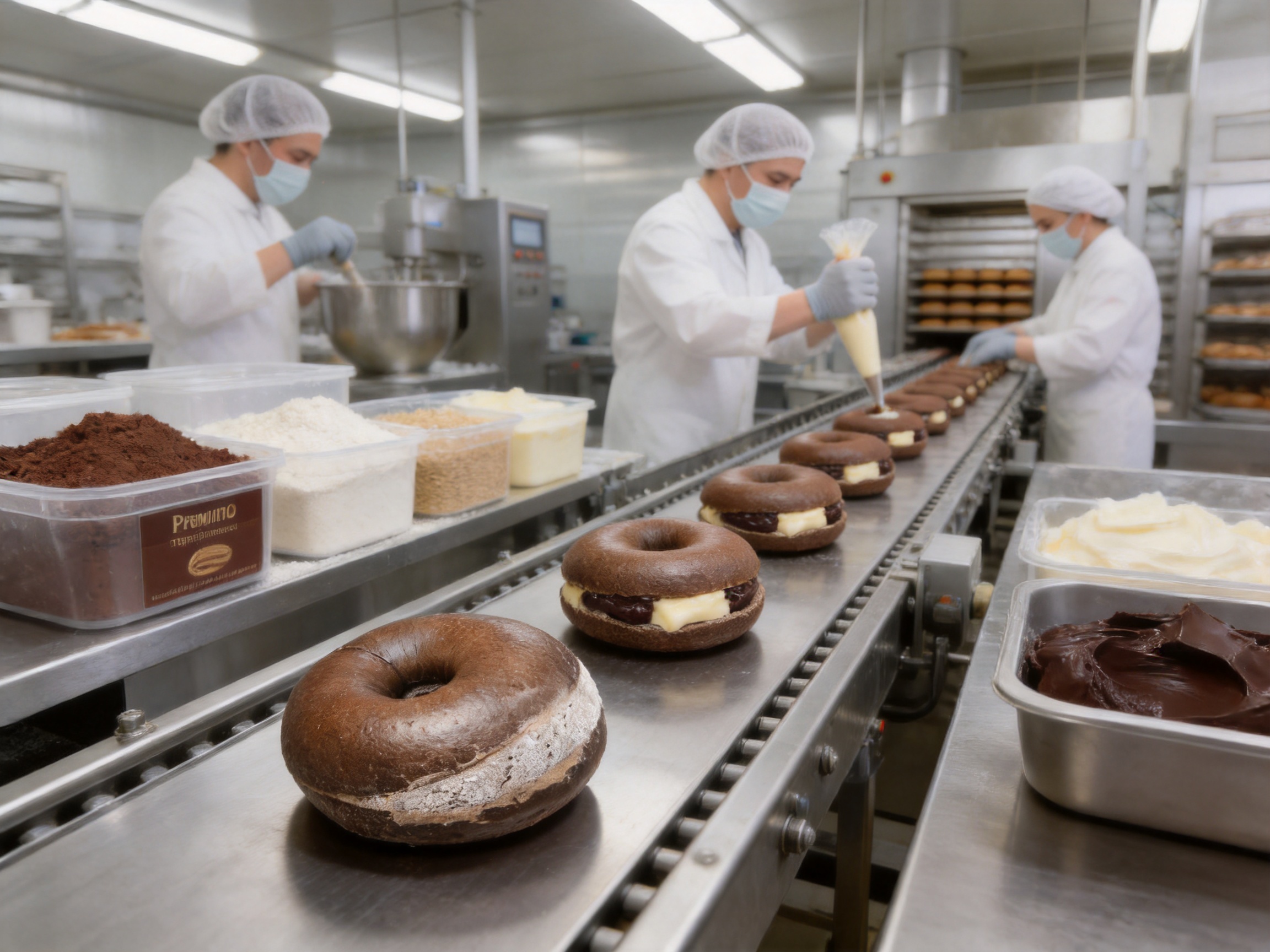
The development process may involve evaluating flour performance, cocoa dispersion, dough hydration, mixing conditions, dough temperature, proofing behavior, filling placement, sealing, baking parameters, cooling time, freezing speed, and thawing performance. Each factor can influence the final product.
For a filled bagel, accurate filling placement is especially important. The center must remain enclosed during forming and baking, while the dough must be distributed evenly around the filling. This helps deliver a consistent ratio of cocoa base to cream cheese-chocolate center in every serving.
Product consistency also benefits from standardized production procedures. When dough mixing, portioning, shaping, filling, baking, cooling, and freezing are managed according to defined processes, the finished goods can achieve greater uniformity. This is valuable for customers operating multiple retail locations or café branches.
The company’s experience with a broad range of bagel varieties can support faster development of new products. A proven understanding of dough systems and frozen bakery processing provides a foundation for adapting flavors, fillings, toppings, and formats to different market requirements.
Process Control from Raw Materials to Finished Goods
The quality of a frozen bagel begins with raw material management. Wheat flour, cocoa powder, cream cheese, chocolate, yeast, water, and other ingredients must be selected and handled in a way that supports flavor, texture, and production reliability.
For this product, cocoa quality is particularly important because the cocoa is part of the dough rather than an incidental garnish. Its aroma, color, bitterness, and dispersion characteristics affect the finished product. Cream cheese and chocolate also need to work together in a filling that remains smooth and appealing after freezing and thawing.
Once ingredients are prepared, dough mixing must distribute the cocoa evenly throughout the flour system. Uneven distribution could lead to inconsistent color or pockets of stronger bitterness. Proper mixing also supports dough development and helps create the soft, fluffy structure expected from the product.
Portioning and shaping influence both appearance and baking performance. A well-formed bagel should have a consistent size and a balanced distribution of dough around the filling. This is essential for the stated 90-gram format and helps ensure that customers receive a predictable product.
Baking must develop the cocoa aroma and set the exterior while protecting the softness of the interior. Excessive baking may reduce moisture and create a firm texture, while insufficient baking may affect structural stability. Controlled cooling is also important before freezing, as it helps manage condensation and protects product quality.
Freezing is a defining stage in the production of this product. The goal is to preserve the bagel’s structure, filling quality, flavor, and texture during frozen storage. A controlled frozen supply chain supports the company’s ability to distribute products to different regions and serve a variety of commercial customers.
Packaging and logistics complete the manufacturing process. Frozen bakery products must be handled in a manner that protects them from temperature abuse, physical damage, and unnecessary moisture changes. Reliable distribution helps ensure that the product reaches customers in the intended condition.
Benefits for Retailers and Distributors
Retailers can use the Cocoa Chocolate Cream Cheese Bagel to add variety to frozen bakery, breakfast, snack, or dessert sections. Its appearance and flavor are immediately understandable, which can reduce the educational effort needed to introduce it to consumers.
The product is also suitable for private-label programs. Retail brands can use a distinctive filled bagel to develop a premium frozen bakery line, a café-inspired range, or a chocolate-focused seasonal assortment. The manufacturer’s experience with OEM and private-label bagel solutions can help business customers explore these opportunities.
A frozen format provides inventory planning advantages. Retailers can manage stock according to demand and prepare products for sale after thawing, subject to appropriate storage and food-handling procedures. This can be more flexible than relying exclusively on fresh daily production.
The 90-gram portion supports straightforward pricing and merchandising. It can be sold individually, in multipacks, or as part of a mixed bagel assortment. Retailers can also combine it with coffee, milk, tea, or other breakfast and snack products in promotional campaigns.
The product’s broad usage occasions can increase the number of times it is considered by shoppers. A customer may purchase it for breakfast, while another may choose it as an afternoon snack. The same product can also be positioned as a small dessert after a meal.
For distributors, the product adds a differentiated item to a frozen bakery portfolio. It can help expand beyond traditional bagels and conventional sweet breads while remaining within a familiar category. Its suitability for cafés, tea brands, bakeries, convenience stores, and foodservice operators creates multiple potential customer channels.
Benefits for Cafés, Tea Brands, and Foodservice Operators
Cafés can serve the bagel alongside espresso, brewed coffee, milk-based beverages, cocoa drinks, or tea. The chocolate and cream cheese flavor profile naturally complements beverage menus, especially during breakfast and afternoon service periods.
Tea brands and beverage chains can use the product as a food pairing that increases the value of a drink purchase. A soft cocoa bagel with a creamy filling can provide a more substantial accompaniment than a small cookie while remaining convenient for grab-and-go consumption.
Foodservice operators can benefit from the product’s simple preparation model. Since it is intended to be eaten after thawing without reheating, staff can focus on portion handling and presentation rather than cooking. This may be particularly helpful in locations with limited kitchen equipment or high service volume.
Hotels and institutional caterers may use the product in breakfast buffets, snack stations, meeting catering, or individually packaged meal programs. Its single-serving format makes it easy to plan and distribute, while the cocoa flavor offers an alternative to savory breakfast items.
Bakery operators can incorporate the product into a broader frozen product selection. It may be displayed as a filled bagel, a dessert bagel, or a specialty cocoa bakery item. Businesses can also add simple presentation elements such as powdered sugar, fruit, yogurt, or beverage pairings, provided that such additions fit their food-safety and service procedures.
For multi-location businesses, consistency is a major operational benefit. A centrally manufactured frozen item can help each outlet offer a similar product without requiring every location to reproduce the recipe independently.
Clean-Label Product Development and Consumer Expectations
Goobagel Food describes its portfolio as including more than 100 clean-label bagel varieties. Clean-label expectations vary between markets and should always be evaluated through the final ingredient declaration and applicable regulations, but the broader direction reflects growing consumer interest in understandable, quality-focused bakery products.
For the Cocoa Chocolate Cream Cheese Bagel, the ingredient story is relatively clear: wheat flour, cocoa, cream cheese, chocolate, and the supporting ingredients required for a frozen filled bakery product. This straightforward concept can help business customers communicate the product’s primary appeal.
Consumers often want indulgence without an unnecessarily complicated flavor profile. The combination of cocoa and cream cheese provides a recognizable taste experience, while the balanced sweetness and cocoa bitterness help the product feel more refined.
Commercial buyers should review the complete ingredient list, allergen declaration, nutrition information, storage instructions, and regulatory requirements before market launch. These details may vary according to the target country, customer specifications, packaging format, and private-label program.
Packaging, Storage, and Serving Considerations
Because the bagel is supplied in a frozen format, storage and handling instructions are important parts of the product experience. Customers should maintain the recommended frozen storage conditions and follow the supplier’s thawing guidance. Proper temperature control helps protect the texture and filling quality.
After thawing, the filling is intended to become soft and creamy. Operators should plan thawed inventory carefully and avoid holding products beyond the recommended service window. Retailers and foodservice businesses should apply their own approved food-safety procedures and comply with local regulations.
Packaging can be adapted to different channels. Individual wrapping may suit convenience stores, cafés, hotel service, and grab-and-go retail. Multipacks may be appropriate for supermarkets and online grocery distribution. Mixed-flavor assortments can help customers explore several varieties from the wider product portfolio.
Clear front-of-pack communication can emphasize the product’s main strengths: cocoa dough, chocolate cream cheese filling, soft texture, 90-gram portion, and ready-to-eat-after-thawing convenience. Product descriptions should accurately reflect the preparation method and storage requirements.
For private-label customers, packaging design can be developed around different market positions. A premium design may highlight Malaysian-imported cocoa and Anchor cream cheese. A family-oriented design may focus on the soft texture and snack convenience. A café-oriented design may emphasize pairing with coffee and tea.
Suitable Market Positioning
The product can be positioned in several ways depending on the customer’s business model. In a supermarket, it may appear within the frozen breakfast or bakery category. In a café, it can be listed as a chocolate cream cheese bagel or specialty filled bagel. In a tea shop, it may be promoted as a snack pairing. In a hotel, it can be offered as part of a breakfast or refreshment program.
Its strongest positioning is likely to be premium everyday indulgence. The product is more distinctive than a plain bagel but less formal than a plated dessert. This makes it suitable for regular consumption as well as occasional treats.
The flavor also supports seasonal promotions. Chocolate products are often attractive during winter, holiday, gifting, back-to-school, and café promotion periods. However, the familiar cream cheese and bagel format gives the product year-round relevance.
Retail and foodservice businesses can create bundles featuring the bagel with coffee, tea, milk, hot chocolate, or fruit beverages. Bundling can make the product easier to trial and can increase the perceived value of a complete snack or breakfast combination.
Quality and Supply Reliability for Business Customers
Business buyers need more than an attractive recipe. They need dependable supply, repeatable specifications, clear communication, and the ability to support growth. Goobagel Food’s manufacturing model is designed around these requirements, with capabilities covering research, production, and distribution.
The company’s focus on bagels since 2019 provides category-specific experience. Bagels require specialized attention to dough texture, shaping, baking, filling integration, and frozen performance. A manufacturer dedicated to the category can build process knowledge that supports more reliable product development.
The company works with leading brands across China and provides bagel solutions for retail, foodservice, café chains, tea brands, and bakery operators. This commercial orientation is relevant for international buyers seeking a supplier that understands different operating models.
Stable quality is especially important for products with a strong sensory promise. The customer expects the cocoa aroma, softness, creamy filling, and balance of chocolate and cream cheese to remain consistent. Manufacturing systems that prioritize standardized procedures and coordinated supply chain management can help support this expectation.
Reliable supply is also important when a product becomes part of a permanent menu or retail range. Disruptions can affect customer satisfaction, promotional planning, and brand credibility. A supplier with integrated raw material, production, and distribution capabilities may be better positioned to coordinate ongoing orders and product expansion.
OEM and Private-Label Opportunities
The Cocoa Chocolate Cream Cheese Bagel can serve as a ready-made product for wholesalers and distributors, but it may also provide a foundation for OEM and private-label development. Businesses may wish to launch the product under their own brand identity while maintaining a proven bagel concept.
Private-label customers can consider different packaging sizes, visual styles, language requirements, and sales formats. Depending on market needs, the product may be sold as a single serving, in a multipack, or within a mixed specialty bagel collection.
Customization discussions may include target weight, filling ratio, flavor intensity, packaging material, carton configuration, storage instructions, case quantity, and delivery schedule. The feasibility of any change should be confirmed with the manufacturer through formal product development and commercial review.
OEM partnerships can also support flavor extensions. The same cocoa dough platform may be adapted for different cream fillings, chocolate intensities, toppings, or seasonal concepts. Goobagel Food’s wider portfolio and research experience can provide a starting point for such development.
For a brand owner, this reduces the need to build a complete bagel manufacturing operation from the beginning. Instead, the brand can focus on positioning, packaging, distribution, and customer relationships while working with an experienced frozen bakery producer.
Consumer Experience from First Bite to Finish
The eating experience begins with the appearance of the cocoa-colored bagel. Its visual identity communicates a richer flavor than a plain or lightly topped bagel. The product then delivers a soft bite, followed by cocoa aroma from the dough and a creamy filling at the center.
The cocoa character is intended to be deep and aromatic rather than aggressively bitter. Warm, toasted sweetness gives the product comfort, while the mild bitterness adds complexity. The cream cheese introduces a smooth dairy body and a gentle tang that keeps the flavor balanced.
As the filling melts quickly on the palate, it creates an ice-cream-like sensation without requiring the product to be served as a frozen dessert. This sensory effect makes the bagel more memorable and separates it from ordinary chocolate bread.
The finish is designed to remain satisfying but not overwhelming. The combination of wheat, cocoa, chocolate, and cream cheese creates a complete flavor journey that can pair naturally with coffee, tea, milk, and other beverages.
This balance is important for repeat purchase. A product that is excessively sweet may be appealing once but less suitable for everyday consumption. A product with enough richness and complexity to feel indulgent while remaining comfortable can support broader and more frequent usage.
Frequently Asked Questions
What is the Cocoa Chocolate Cream Cheese Bagel?
It is a 90-gram filled bagel made with cocoa kneaded into the dough and a center filling combining Anchor cream cheese with chocolate. It is supplied as a frozen bakery product and is designed to be eaten after thawing.
Does the bagel require reheating?
The product is designed as a thaw-and-eat item, so reheating is not required after proper thawing. Customers and operators should follow the manufacturer’s recommended thawing and handling instructions.
What does the filling taste like?
The filling combines the creamy, buttery richness and mild tang of cream cheese with the deeper flavor of chocolate. The formulation is intended to keep the two flavors balanced rather than allowing one to overwhelm the other.
Is the bagel very sweet?
The product is designed with a balanced sweetness level. Cocoa contributes aromatic depth and a pleasant bitterness, while cream cheese adds tang and helps prevent the overall flavor from becoming excessively sugary.
How is the cocoa flavor created?
Malaysian-imported cocoa powder is kneaded directly into the wheat-based dough. This creates a cocoa identity throughout the bagel base rather than relying only on a chocolate filling or exterior topping.
How does the texture differ from a traditional dense bagel?
The product is developed to be softer and fluffier rather than strongly dense or chewy. This makes it easier to bite and allows the tender dough to complement the smooth filling.
What happens to the filling after thawing?
After thawing, the filling becomes very soft, silky, and delicate. It is described as having an ice-cream-like softness that melts quickly on the palate.
Who can purchase or use this product?
The bagel is suitable for wholesalers, retailers, cafés, café chains, tea brands, bakeries, hotels, foodservice operators, and companies developing private-label frozen bakery products.
Can the product be used for private-label sales?
Goobagel Food provides OEM and private-label bagel solutions. Businesses interested in launching the product under their own brand should discuss packaging, specifications, order quantities, regulatory requirements, and customization options with the manufacturer.
What is the manufacturer’s experience?
Jiangsu Goobagel Food Technology Co., Ltd. has specialized in bagel research and manufacturing since 2019. The company reports a portfolio of more than 100 clean-label bagel varieties and an integrated supply chain covering raw materials, research and development, production, and distribution.
What should business buyers confirm before ordering?
Buyers should confirm product specifications, ingredient and allergen information, nutrition data, frozen storage requirements, thawing instructions, packaging format, case quantity, minimum order quantity, production lead time, shipping conditions, and target-market compliance.
Can the product be sold in different channels?
Yes. Its format supports frozen retail, café service, breakfast programs, snack menus, tea-shop pairings, hotel catering, bakery distribution, and private-label product lines. The final presentation and sales method should match the operator’s equipment, storage, and food-handling procedures.
Conclusion
The Cocoa Chocolate Cream Cheese Bagel is a differentiated frozen bakery product built around a clear and appealing combination: Malaysian-imported cocoa kneaded into a soft bagel dough and a balanced filling made with Anchor cream cheese and chocolate.
Its advantages come from the relationship between flavor, texture, and convenience. Cocoa in the dough provides a deeper and more consistent chocolate identity. The cream cheese-chocolate center creates a layered flavor with dairy richness, cocoa depth, and a mild tang. The softer and fluffier texture broadens consumer appeal, while the thaw-and-eat format simplifies preparation for both households and commercial operators.
For retailers and distributors, the product offers visual differentiation, portion convenience, and flexible positioning across breakfast, snack, dessert, and café categories. For foodservice businesses, it provides a premium filled item without the need for complex on-site preparation. For brand owners, it represents a practical foundation for OEM and private-label development.
Behind the product is a manufacturer focused on bagel research, frozen bakery production, integrated supply chain management, and commercial product development. Since 2019, Jiangsu Goobagel Food Technology Co., Ltd. has built a broad portfolio of bagel varieties for retail, foodservice, café chains, tea brands, and bakery operators. Its emphasis on stable quality, consistent performance, and reliable supply supports the requirements of professional buyers.
As consumer demand continues to move toward convenient but more distinctive bakery experiences, a cocoa bagel with a soft chocolate cream cheese center offers a strong response. It is familiar enough for easy adoption, innovative enough to stand out, and versatile enough to serve multiple markets and occasions.
References
1. Product specification and description for the Cocoa Chocolate Cream Cheese Bagel, including product weight, category, ingredients concept, texture, filling, and thaw-and-eat positioning.
2. Company information supplied by Jiangsu Goobagel Food Technology Co., Ltd., including manufacturing history, integrated supply chain structure, research and development capabilities, product portfolio, and commercial applications.
3. General principles of frozen bakery product development, including dough formulation, filling stability, freezing, thawing, packaging, storage, and distribution management.
4. General guidance for retail and foodservice product positioning, portion control, menu development, private-label bakery programs, and commercial frozen-food operations.
5. General food manufacturing and food-handling principles applicable to frozen filled bakery products, including ingredient declaration, allergen review, temperature control, and local regulatory compliance.
