
 中文简体
中文简体
 English



postmaster@goobagelfood.com
Content
- 1 Product Concept and Market Positioning
- 2 Key Product Specifications
- 3 Deep Cocoa Character from the Dough
- 4 Balanced Chocolate and Cream Cheese Filling
- 5 Thaw-and-Eat Convenience
- 6 Advantages Over Conventional Competitor Products
- 7 Manufacturing Strengths and Integrated Supply Chain
- 8 Advanced Process Considerations for Frozen Filled Bagels
- 9 Quality Control from Raw Materials to Delivery
- 10 Applications Across Retail and Foodservice
- 11 Private Label and OEM Opportunities
- 12 Merchandising and Consumer Communication
- 13 Why Manufacturing Experience Matters
- 14 Commercial Benefits for Buyers
- 15 Responsible Product Evaluation
- 16 Suggested Serving Experience
- 17 Long-Term Product Development Potential
- 18 Conclusion
- 19 Questions and Answers
- 19.1 What is a cocoa chocolate cream cheese bagel?
- 19.2 What is the product weight?
- 19.3 Does the bagel need to be reheated?
- 19.4 What does the filling taste like?
- 19.5 What makes the dough different from a plain bagel?
- 19.6 Is the bagel dense and chewy like a traditional bagel?
- 19.7 Who can purchase this product commercially?
- 19.8 Can the product be used for private label?
- 19.9 What should operators check before placing an order?
- 19.10 How can cafés serve the bagel?
- 19.11 What beverages pair well with the product?
- 19.12 Why is frozen distribution useful?
- 19.13 What manufacturing capabilities support the product?
- 19.14 Does the product contain allergens?
- 19.15 How should the product be evaluated by a wholesale buyer?
- 20 References
- 21 Product: Cocoa Chocolate Cream Cheese Bagel
The cocoa chocolate cream cheese bagel combines a soft cocoa-enriched dough with a smooth chocolate and cream cheese filling. Designed for thaw-and-eat convenience, it offers a distinctive alternative to ordinary plain bagels, sweet pastries, and conventional cream-filled bakery products. The product brings together several qualities that are increasingly important in modern retail and foodservice: recognizable ingredients, convenient frozen storage, consistent portion control, attractive flavor contrast, and a refined eating experience.
With a net weight of 90 grams, this filled bagel is suitable for breakfast counters, café menus, dessert displays, afternoon snack programs, hotel buffets, convenience stores, and packaged retail. Its format is practical for both individual consumption and foodservice applications. Customers can enjoy it as a quick morning product, a sweet cold sandwich-style bagel, or a small indulgence during the day.
The product is categorized as a cold sandwich bagel because it is intended to be enjoyed after thawing rather than heated before serving. This preparation method preserves the delicate texture of the filling and allows the cream cheese and chocolate to become soft, silky, and almost ice-cream-like. The result is different from a toasted bagel with a firm spread. It is a complete filled bakery item in which the dough and filling are developed to work together.
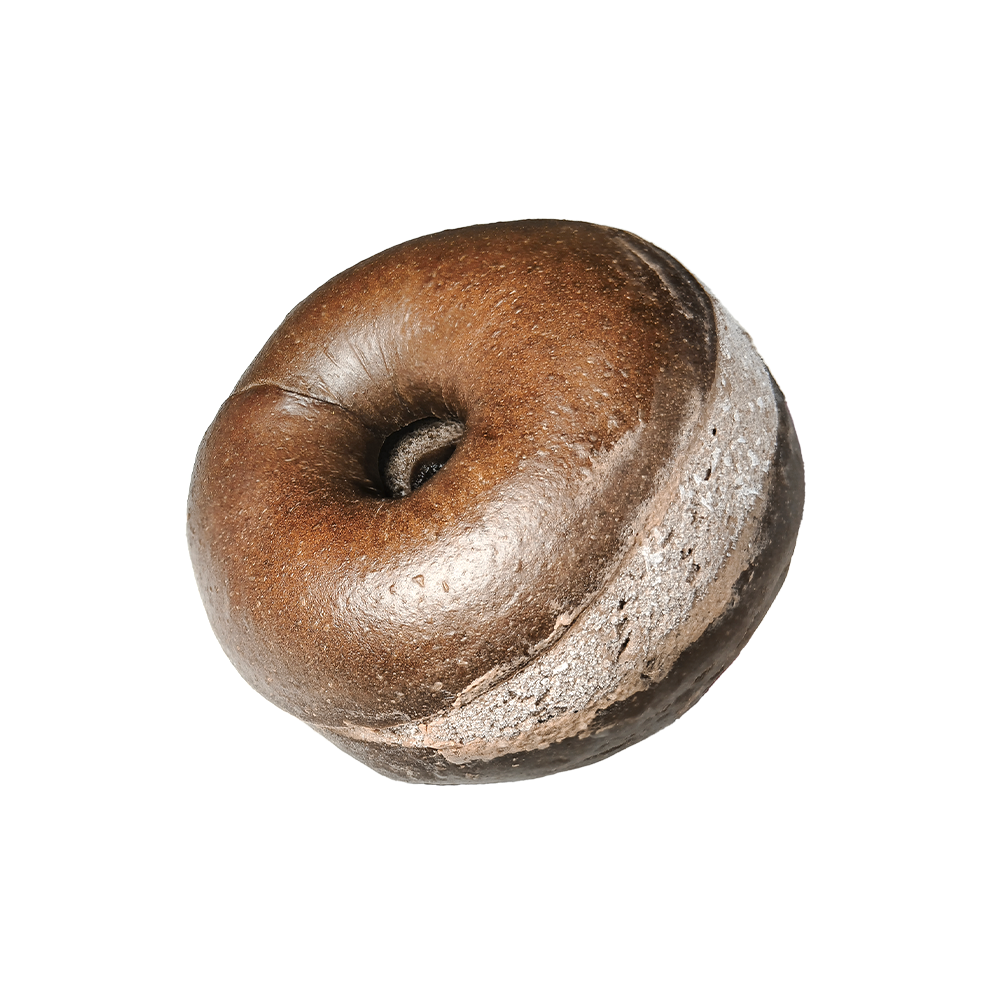
Cocoa Chocolate Cream Cheese Bagel
Product Concept and Market Positioning
The cocoa chocolate cream cheese bagel is built around a simple but effective concept: use cocoa in the dough, place a balanced chocolate cream cheese filling inside, freeze the finished product, and allow the consumer to enjoy it after controlled thawing. Every part of this concept contributes to product differentiation.
Many bagels compete primarily through shape, size, or a topping. A plain bagel may offer versatility, but it often requires an additional spread or filling. A chocolate pastry may offer sweetness, but its texture can become heavy or overly rich. A standard sandwich bagel may be convenient, yet it may not provide a dessert-like experience. This product occupies a space between these categories by delivering the bagel structure of a bakery staple with the softness and indulgence of a filled dessert.
The cocoa flavor begins in the dough rather than being applied only as a topping. This creates a more integrated flavor profile. Instead of relying on a surface coating that can be unevenly distributed or easily separated during handling, the cocoa is kneaded into the dough with premium wheat flour. Each bite therefore includes the aroma of cocoa from the outer bakery layer.
The filling adds a second level of flavor. Cream cheese contributes dairy richness, smoothness, and a gentle tang, while chocolate supplies depth, roundness, and a warm roasted character. The two elements are carefully balanced so that the filling does not become excessively sweet or dominated by a single flavor. This balance supports repeated consumption and makes the product suitable for customers who prefer sophisticated sweetness rather than a strongly sugary dessert.
Key Product Specifications
| Item | Specification | Commercial Significance |
|---|---|---|
| Product type | Filled cocoa bagel | Combines a bakery staple with a dessert-style filling |
| Category | Cold sandwich bagel | Designed for thaw-and-eat service without reheating |
| Net weight | 90 grams | Supports portion control, menu planning, and retail pricing |
| Dough flavor | Cocoa | Provides chocolate aroma throughout the bagel base |
| Filling | Cream cheese and chocolate | Creates a creamy, layered flavor with dairy richness and cocoa depth |
| Serving condition | Thawed | Enables convenient preparation and preserves the intended soft filling texture |
| Primary applications | Retail, cafés, foodservice, hotels, bakery counters, and snack programs | Allows flexible use across several sales channels |
The 90-gram format is particularly useful for commercial operators. A consistent weight allows buyers to estimate food cost, establish menu prices, plan inventory, and manage serving expectations. It is substantial enough to feel satisfying while remaining convenient as a single-serve snack or light breakfast item.
Deep Cocoa Character from the Dough
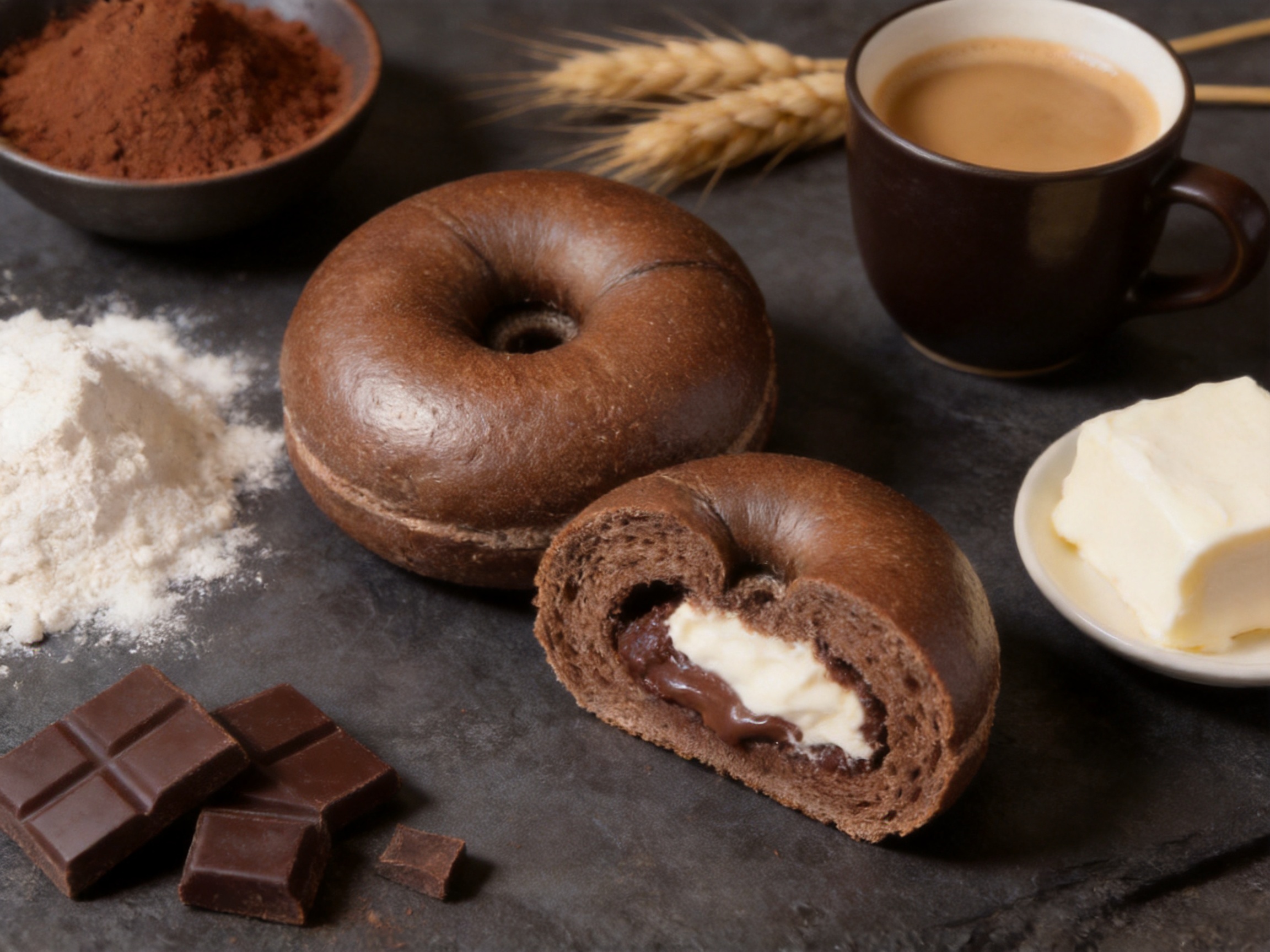
One of the product’s principal advantages is the use of Malaysian-imported cocoa powder in the dough. The cocoa is kneaded with premium wheat flour, creating a base with a deeper aromatic profile than a plain bagel finished with a small amount of chocolate decoration.
Using cocoa within the dough supports flavor distribution. When the bagel is cut or bitten, the cocoa character is present across the interior rather than being limited to the surface. This helps deliver a more coherent eating experience and reduces the risk of an inconsistent flavor impression from one portion to another.
The cocoa profile is designed to be deep and aromatic without becoming harsh. Cocoa naturally contributes roasted notes, mild bitterness, and a rich chocolate aroma. When incorporated into a balanced dough system, these characteristics can complement the sweetness of the filling. The slight bitterness is important because it keeps the overall profile from becoming flat or excessively sweet.
The dough is also described as softer and fluffier rather than dense or excessively chewy. Traditional bagels are known for a firm, elastic bite, but a filled cold sandwich bagel needs a different textural balance. If the outer shell is too hard or dense, it can overpower a delicate cream cheese filling. A softer cocoa bagel creates a more harmonious contrast: enough structure to hold the filling, but sufficient tenderness for a comfortable bite.
This softer texture can widen the product’s consumer appeal. Customers who already enjoy traditional bagels may appreciate the cocoa flavor and filled center, while customers who usually prefer soft bakery products may find the product more approachable than a highly chewy bagel. The product therefore combines the recognizable identity of a bagel with a texture that is suitable for indulgent, ready-to-eat consumption.
The warm, toasty sweetness of cocoa also works well across different dayparts. In the morning, it can be paired with coffee, milk, or tea. In the afternoon, it functions as a snack with a dessert-like profile. In an evening setting, it can serve as a compact sweet item that does not require plating or additional preparation.
Balanced Chocolate and Cream Cheese Filling
The filling is the central sensory feature of the product. It combines Anchor cream cheese with chocolate in a carefully tuned ratio, allowing the dairy and cocoa components to complement rather than compete with one another.
Cream cheese contributes a smooth, buttery body and a subtle tang at the finish. That tang is valuable in a chocolate product because it adds contrast and prevents the filling from tasting one-dimensional. The dairy character also creates a fuller mouthfeel, helping the product feel satisfying even though the sweetness is controlled.
Chocolate provides depth, aroma, and a rounded sense of indulgence. When paired with cream cheese, chocolate becomes softer and more layered. The dairy notes can moderate the intensity of cocoa, while the chocolate gives the cream cheese a more familiar dessert character. This interaction creates a flavor progression rather than a single dominant note.
The intended sweetness level is comfortable for everyday enjoyment. This is an important advantage in a market where extremely sweet bakery products may attract initial attention but have limited repeat appeal. A balanced product can be consumed more frequently and can fit into breakfast, snack, and café occasions without being restricted to special desserts.
The texture of the filling is equally important. After thawing, it becomes soft, silky, and quick to melt on the palate. This creates a contrast with the fluffy cocoa dough. The outer layer provides structure and a gentle chew, while the center delivers a creamy release of flavor. Product differentiation comes not only from the ingredient combination but also from the way the texture changes during preparation and consumption.
Compared with a dry chocolate bagel or a plain bagel served with a separate spread, the filled format offers convenience and consistency. The consumer does not need to open a package of cream cheese, measure a portion, or assemble the product. The manufacturer controls the filling distribution during production, allowing the finished bagel to be served as a complete item.
Thaw-and-Eat Convenience
The cocoa chocolate cream cheese bagel is designed for consumption after thawing and does not require reheating. This preparation method is a significant operational advantage for retailers and foodservice businesses. Products that require ovens, grills, or specialized equipment can create longer service times and increase labor requirements. A thaw-and-eat item can be transferred from frozen storage to a controlled thawing area and then displayed or served when ready.
For cafés, this format can support fast service during busy periods. Staff members can prepare a planned quantity in advance, reducing the need to assemble individual orders. For retail stores, the product can be offered from a chilled or thawed display according to the operator’s food safety procedures. For hotels and catering programs, it can be included in breakfast or snack selections with limited kitchen preparation.
The thawing process also serves a sensory purpose. The filling is intentionally formulated to become soft after thawing. When consumed at the correct condition, it has a delicate, almost ice-cream-like texture. This characteristic separates the product from many frozen bakery items that are merely stored frozen and reheated before service.
Not reheating the product helps preserve the intended contrast between filling and dough. Excessive heating could soften the dough too much, alter the cream cheese texture, or change the flavor balance. A cold or cool serving condition allows the filling to remain silky while the cocoa bagel retains its structure.
Frozen distribution can also support inventory management. Businesses may store products in frozen conditions and thaw quantities according to expected demand. This can help reduce daily production pressure and provide a more consistent product offering. Instead of relying entirely on same-day baking, an operator can maintain a planned stock of portion-controlled filled bagels.
For consumers, thaw-and-eat preparation is easy to understand. The product can be moved from frozen storage to thawing, then consumed when the center reaches the intended texture. Clear handling instructions, storage guidance, and appropriate food safety controls should be provided in commercial packaging and operating procedures.
Advantages Over Conventional Competitor Products
The cocoa chocolate cream cheese bagel has several positioning advantages when compared with common alternatives. These advantages should be understood as product characteristics that can help a business create a distinct market offering rather than as universal claims about every competing product.
Integrated Cocoa Flavor
Many chocolate-flavored bakery products rely on coatings, chips, drizzles, or fillings for their main flavor identity. In this product, cocoa is incorporated into the dough itself. This creates flavor continuity throughout the bagel and gives the product a more complete cocoa identity.
Two-Layer Flavor Experience
A plain chocolate bagel may deliver cocoa but lack a contrasting center. A conventional cream cheese bagel may offer dairy richness but not a dessert-style flavor. The combination of cocoa dough and chocolate cream cheese creates two coordinated layers. The outer dough introduces cocoa aroma, and the center adds creamy chocolate richness with a mild tang.
More Convenient Than Build-Your-Own Products
A bagel served with a separate spread requires assembly. Operators must portion the spread, manage additional packaging, and maintain a separate ingredient supply. The filled format arrives as a finished unit, making it easier to serve consistently and reducing the number of preparation steps.
More Refined Than an Overly Sweet Pastry
Pastries can deliver strong sweetness, but some customers are looking for a more balanced snack. The cream cheese component adds a subtle savory and tangy dimension, while cocoa contributes mild bitterness. This flavor structure can appeal to consumers who prefer complexity over intense sweetness.
Designed for Cold Consumption
Many bakery products are intended to be heated. This bagel is designed specifically for thaw-and-eat service. Its preparation method can support café counters, retail chillers, office snack programs, and other locations where heating equipment may be limited or unavailable.
Portion Control and Operational Consistency
The 90-gram specification gives operators a defined serving unit. This makes it easier to calculate food costs and maintain consistent customer expectations. Portion control is particularly valuable for chain cafés, institutional catering, hotel operations, and private-label retail programs.
Broad Daypart Use
The product is not limited to dessert menus. Its cocoa flavor can work at breakfast, during coffee breaks, as an afternoon snack, or as a small evening treat. This flexibility gives operators multiple opportunities to place it on menus and in displays.
Manufacturing Strengths and Integrated Supply Chain
The product is manufactured by Jiangsu Goobagel Food Technology Co., Ltd., a frozen bakery producer that has specialized in bagel research and manufacturing since 2019. The company operates an integrated supply chain covering raw materials, research and development, production, and nationwide distribution.
An integrated supply chain is important for filled frozen bakery products because quality depends on the coordination of many stages. Ingredient selection, dough preparation, filling development, forming, baking, cooling, freezing, packing, and distribution must work together. A weakness at one stage can affect the texture, appearance, flavor, or storage performance of the finished product.
Control over raw material selection supports consistent product development. Cocoa powder, wheat flour, cream cheese, chocolate ingredients, and other components must be evaluated for flavor, functionality, and performance in a frozen bakery system. Ingredient consistency helps the manufacturer maintain a reliable product profile across production batches.
Research and development capabilities are equally important. A filled bagel is more complex than a plain dough product because the dough and filling must remain compatible during forming, baking, freezing, thawing, and consumption. The filling must be sufficiently stable for manufacturing while becoming soft and pleasant after thawing. The dough must hold the filling securely without becoming too dense or dry.
The company has developed more than 100 bagel varieties, according to the supplied company information. This product development experience can support a deeper understanding of dough systems, flavor combinations, filling formats, and commercial applications. It also suggests the ability to adapt product concepts for different customers and channels.
Production standardization is especially valuable for wholesale buyers. A commercial customer needs products that perform consistently from one delivery to the next. Stable size, filling distribution, texture, packaging, and preparation behavior help reduce operational uncertainty and protect the customer experience.
Nationwide distribution capabilities further support commercial supply. Frozen bakery products depend on reliable temperature-controlled logistics. Coordinated distribution helps protect product quality during transportation and supports regular replenishment for retail and foodservice accounts.
Advanced Process Considerations for Frozen Filled Bagels
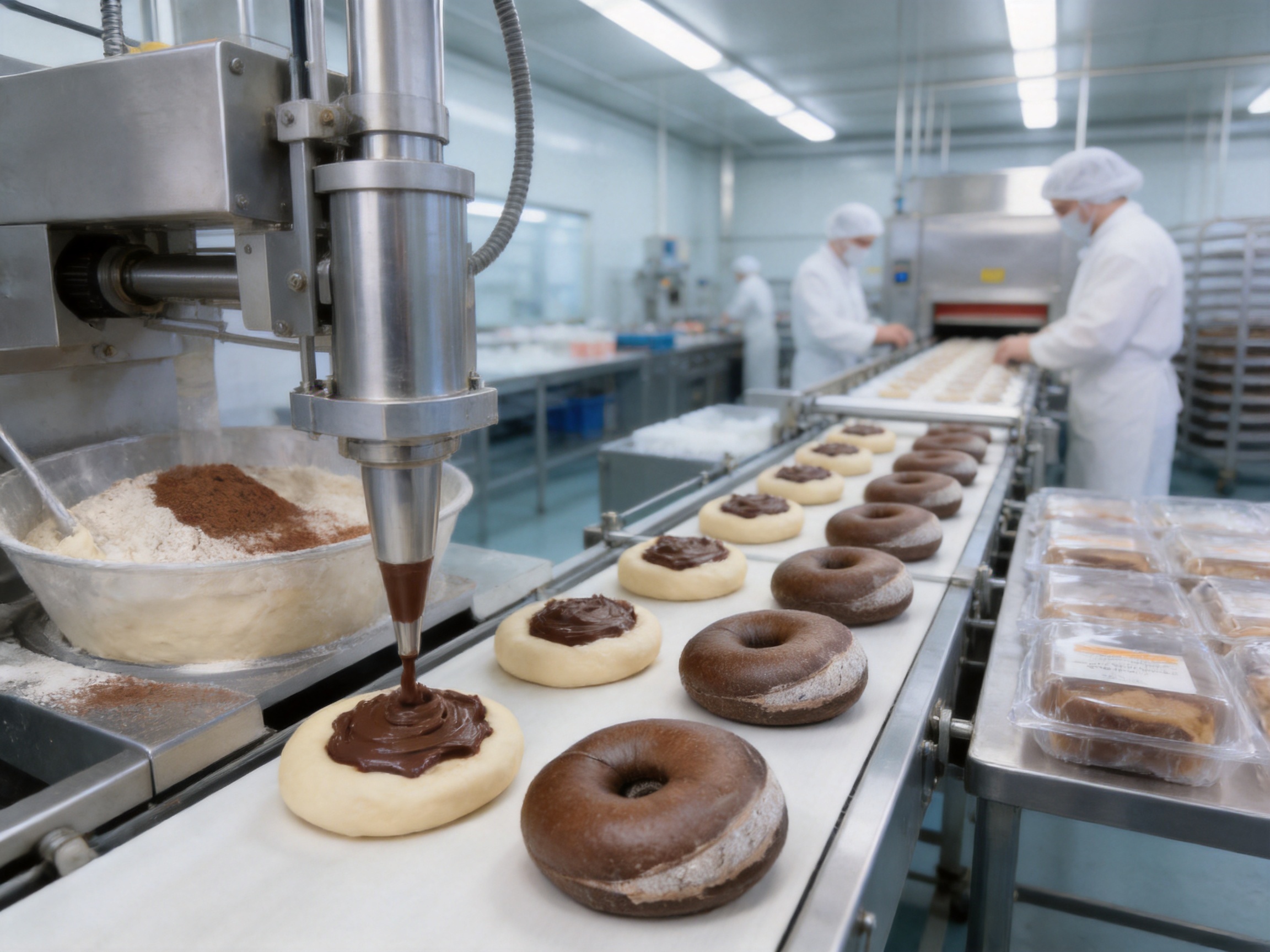
The manufacturing process for this type of product involves several carefully coordinated stages. Although exact production parameters may vary according to formulation and customer requirements, the general process begins with ingredient preparation and controlled dough mixing.
Ingredient Preparation
Premium wheat flour and Malaysian-imported cocoa powder are selected as the principal dry ingredients for the dough. Proper weighing and batching are essential because changes in flour absorption, cocoa concentration, or liquid balance can influence dough handling and final texture.
The cream cheese and chocolate filling components are prepared separately. A uniform filling system supports consistent flavor and helps ensure that the filling remains properly positioned inside the bagel. The target balance between dairy richness and chocolate depth must be maintained throughout the batch.
Dough Mixing and Cocoa Incorporation
The cocoa is kneaded into the dough rather than simply placed on the surface. Controlled mixing helps distribute the cocoa evenly and supports a uniform color and flavor profile. Mixing must be sufficient to develop the dough while avoiding excessive processing that could negatively affect softness.
The dough is developed to provide enough elasticity for forming and enough tenderness for cold consumption. This is a key process objective. A bagel intended for thaw-and-eat service requires structural integrity, but it should not become so firm that it overwhelms the creamy filling.
Filling Preparation
The cream cheese and chocolate components are blended to create a smooth filling. The ratio is important because too much chocolate may mask the cream cheese tang, while too much cream cheese may reduce the desired cocoa depth. A controlled mixing process helps create a consistent texture and prevents unwanted separation.
The filling should also be suitable for depositing or portioning during production. A filling that is too fluid may leak during forming or baking, while a filling that is too firm may be difficult to distribute evenly. Product development must therefore balance manufacturing performance with the desired soft texture after thawing.
Forming and Filling
The prepared dough is portioned according to the target 90-gram finished product specification. Filling placement must be controlled so that the center remains enclosed and the final product maintains a consistent appearance. Accurate forming supports both consumer satisfaction and manufacturing efficiency.
Uniform filling distribution is particularly important in a premium filled product. Customers expect the center to be present in each serving, and commercial operators need predictable portions for menu and cost planning. Automated or semi-automated equipment can assist with repeatable depositing, while production inspections can verify shape and filling integrity.
Baking and Cooling
The filled dough is baked under controlled conditions to set the structure and develop the cocoa aroma. Baking must be sufficient to create a stable outer layer while preserving a soft interior. Excessive baking may dry the dough, whereas insufficient baking may compromise structure and product safety.
Cooling is also a critical stage. The product must be cooled appropriately before freezing and packaging. Managing the transition from baking to cooling helps protect texture and reduces the risk of unwanted condensation during frozen storage.
Freezing and Packaging
Rapid and controlled freezing helps preserve the product’s intended quality. Frozen bakery production requires attention to temperature, timing, packaging integrity, and cold-chain continuity. The purpose is to maintain the soft cocoa dough and cream cheese filling until the product is thawed for service.
Packaging should protect the bagel from moisture loss, freezer exposure, physical damage, and odor transfer. It should also communicate the product name, net weight, storage requirements, thawing instructions, ingredient information, and applicable allergen declarations. For private-label customers, packaging can be adapted to market requirements and brand guidelines.
Quality Control from Raw Materials to Delivery
Quality control is not limited to the final visual inspection. It begins with supplier qualification and incoming ingredient checks. Flour, cocoa, dairy ingredients, chocolate components, and packaging materials should be evaluated according to established specifications.
During production, control points may include dough weight, dough consistency, cocoa distribution, filling weight, sealing integrity, product shape, baking condition, cooling performance, and freezing temperature. Monitoring these points helps identify variation before the product enters distribution.
Finished-product evaluation can include appearance, aroma, texture, filling distribution, thawing behavior, and flavor. Sensory testing is particularly relevant for this product because the intended experience depends on the interaction between the fluffy cocoa dough and the softened filling.
Cold-chain management is essential after freezing. Storage and transportation conditions should be controlled according to the product’s technical requirements. Retailers and foodservice operators should also maintain appropriate freezer practices and use controlled thawing procedures.
Consistent quality creates value for both the buyer and the consumer. A retailer can build a reliable display and reduce complaints. A café can serve the product with confidence. A private-label brand can maintain a predictable customer experience across different locations.
Applications Across Retail and Foodservice
Café and Coffee Shop Menus
The product pairs naturally with coffee, tea, milk, and cocoa beverages. A café can offer it as a ready-to-serve sweet bagel, a breakfast add-on, or part of a beverage bundle. The cocoa profile gives it strong visual and menu appeal, while the filling provides a premium point of difference.
Because it does not require reheating, the product can help cafés serve customers quickly. It can be placed in a chilled display or prepared in controlled quantities for peak periods. Operators may also use it in combination deals, such as a bagel-and-coffee breakfast set or an afternoon beverage promotion.
Convenience Stores and Retailers
Convenience stores can use the bagel as a frozen or thawed single-serve snack. The 90-gram portion is suitable for grab-and-go merchandising, provided that storage and display conditions meet the applicable requirements. The product’s filled format makes it easy for shoppers to understand: it is a complete cocoa and cream cheese snack rather than a plain item requiring additional ingredients.
Supermarkets and specialty food retailers may position it in frozen bakery sections, chilled snack displays, or premium breakfast ranges. Attractive packaging and clear thawing instructions can support consumer confidence and reduce preparation uncertainty.
Hotels and Catering
Hotels can include the bagel in breakfast buffets, executive lounges, meeting packages, and room-service snack selections. The product offers menu variety without requiring extensive kitchen preparation. Catering companies may also use it for boxed breakfasts, coffee breaks, and individually portioned dessert or snack assortments.
Tea Brands and Dessert Counters
The chocolate and cream cheese profile can complement milk tea, fruit tea, coffee, and other beverage programs. Tea shops may use the product as a secondary food item that increases average order value. Its portion size makes it suitable for customers who want a snack without ordering a full meal.
Office and Institutional Food Programs
Corporate cafeterias, school food programs, hospitals, and institutional operators may value the product’s portion control and frozen storage format. It can be included in planned menus or snack programs, subject to the operator’s nutritional, allergen, storage, and food safety requirements.
Private Label and OEM Opportunities
The product format is suitable for OEM and private-label development. A buyer may choose to launch the bagel under its own brand while working with an experienced manufacturer on formula adjustment, packaging, portion size, flavor direction, and supply planning.
Private-label development can begin with the existing cocoa chocolate cream cheese concept and then be adapted for a specific market. Possible areas of adjustment include sweetness level, cocoa intensity, filling ratio, bagel size, packaging format, case configuration, and preparation instructions.
Different customer groups may have different priorities. A café chain may require a consistent unit size and fast thawing performance. A supermarket brand may focus on packaging presentation, retail shelf life, and consumer instructions. A hotel group may prefer a smaller portion or a multi-pack format. A foodservice distributor may require case quantities and standardized logistics.
An experienced bagel manufacturer can support these projects through product sampling, pilot production, sensory evaluation, cost analysis, packaging coordination, and scale-up. The ability to manage research and development together with manufacturing is valuable because it allows the product concept to be tested under commercial conditions rather than only in a small laboratory batch.
OEM buyers should define their target market, expected annual volume, delivery requirements, regulatory obligations, packaging language, and quality standards at the beginning of the project. Clear communication helps align the product with the buyer’s commercial strategy.
Merchandising and Consumer Communication
The product should be presented as a premium filled cocoa bagel rather than simply as a chocolate bread. This distinction helps communicate its value. Key messages may focus on cocoa kneaded into the dough, smooth chocolate cream cheese filling, soft texture, thaw-and-eat convenience, and balanced sweetness.
Display presentation can reinforce the product’s two-layer experience. Packaging imagery may show the cocoa-colored exterior and the creamy filling inside. Product descriptions should explain that the bagel is intended to be thawed before eating and does not require reheating.
For cafés, menu language can highlight the contrast between a fluffy cocoa bagel and a silky cream cheese center. For retail packaging, concise benefit statements can help customers understand why the product is different from a plain bagel or standard pastry.
Serving suggestions may include pairing the bagel with black coffee, latte beverages, milk tea, hot chocolate, or unsweetened tea. These pairings can emphasize the product’s cocoa aroma and moderate sweetness. Retailers may also create seasonal promotions around breakfast, back-to-school snacks, office treats, or afternoon coffee occasions.
Clear handling information is essential. The package should identify frozen storage conditions, thawing guidance, serving expectations, and relevant food safety information. Commercial operators should follow their own hazard control programs and local regulations when storing and serving the product.
Why Manufacturing Experience Matters
Bagel manufacturing requires more than a basic bread-making capability. Dough hydration, shaping, filling placement, baking, cooling, freezing, and thawing all influence the final result. A company focused specifically on bagel research and production can build specialized knowledge across these stages.
Experience with more than 100 bagel varieties provides a broad development base. Different flavors and fillings require different approaches to dough structure, ingredient compatibility, and process control. This experience can help a manufacturer identify practical solutions when developing new products for commercial customers.
A modern frozen bakery producer must also understand the relationship between product quality and supply reliability. Large buyers need stable specifications, repeatable production, dependable delivery, and responsive technical communication. An integrated operation covering raw materials, research and development, production, and distribution can make it easier to coordinate these requirements.
The company’s stated values of persistence, craftsmanship, respect, and science are relevant to this type of product. Persistence supports continuous product improvement. Craftsmanship relates to sensory quality and attention to detail. Respect supports long-term cooperation with customers and partners. Science supports controlled formulation, process development, testing, and quality management.
These strengths are especially important when a product is sold across multiple regions or under different private labels. The customer needs confidence that the product will retain its intended flavor and texture despite production scale, transportation time, and changes in demand.
Commercial Benefits for Buyers
| Buyer Need | Product or Manufacturing Response | Potential Business Benefit |
|---|---|---|
| Distinctive menu item | Cocoa dough with chocolate cream cheese filling | Creates a differentiated premium snack or breakfast offering |
| Fast service | Thaw-and-eat preparation | Reduces dependence on ovens and shortens assembly time |
| Portion consistency | 90-gram product specification | Supports food-cost planning and standardized serving |
| Frozen inventory management | Frozen bakery format | Allows planned stock control and replenishment |
| Product development flexibility | Bagel R&D and broad flavor experience | Supports OEM, private-label, and customized projects |
| Supply reliability | Integrated raw material, production, and distribution capabilities | Helps coordinate quality and delivery requirements |
For wholesale buyers, the product can provide both sensory and operational value. It offers a flavor concept that can attract consumers while also fitting into a controlled frozen supply system. This combination is often more commercially useful than a product that is interesting but difficult to store, prepare, or serve.
Responsible Product Evaluation
Buyers should evaluate the product through samples and structured testing before making a commercial decision. Sensory evaluation should be performed after following the intended thawing method. The test should consider cocoa aroma, cream cheese tang, chocolate intensity, sweetness, dough softness, filling distribution, mouthfeel, and overall balance.
Operational trials can measure thawing time under the buyer’s actual storage and display conditions. Staff should confirm how the product fits into existing workflows, how many units can be prepared at once, and how display quality changes during the planned service period.
Packaging and logistics should also be reviewed. Buyers should confirm case dimensions, frozen storage requirements, minimum order quantities, delivery schedules, labeling needs, and documentation. Private-label customers should review artwork, regulatory information, allergen statements, and language requirements before production.
Because the product contains wheat and dairy ingredients and may include other relevant allergens depending on the final formula, buyers should obtain the complete ingredient declaration and allergen information for the specific production version. Nutritional and regulatory details should be confirmed through official product documentation.
A structured evaluation protects both parties. It allows the buyer to confirm that the bagel meets its market needs and allows the manufacturer to understand the buyer’s technical and commercial expectations.
Suggested Serving Experience
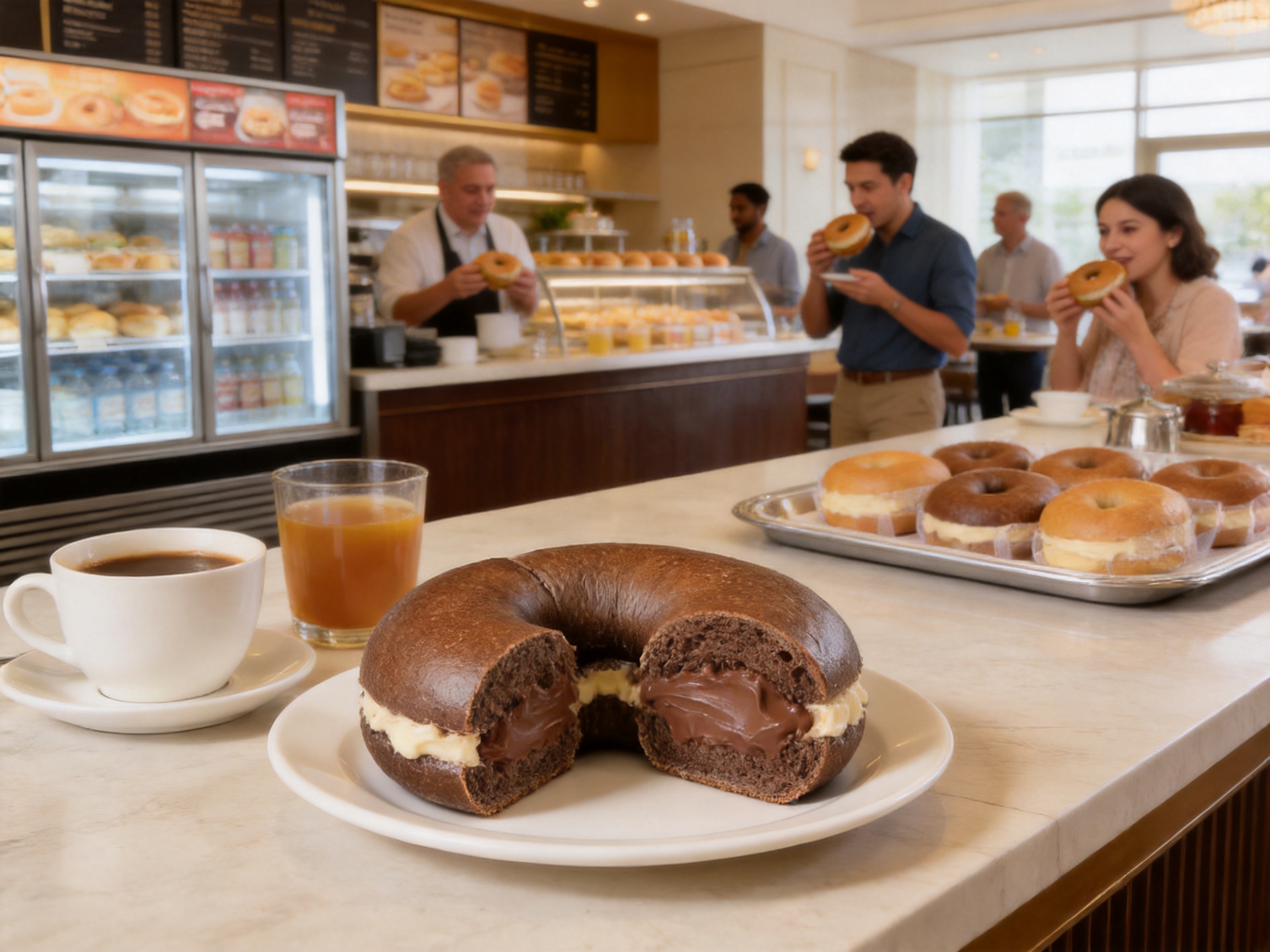
The ideal eating experience begins with a properly thawed bagel. The cocoa dough should feel soft and fluffy, while the center should be smooth and easy to bite through. The first impression is the aroma of cocoa from the dough. The filling then adds creamy dairy richness, chocolate depth, and a gentle tang at the finish.
The product can be served whole as a grab-and-go snack or cut open to display the filling. Cutting the bagel may be useful in cafés and retail displays because it makes the internal chocolate cream cheese layer visible to customers. A visible filling can strengthen the product’s premium positioning and help shoppers understand the difference between this item and a plain cocoa bread.
Pairing choices can be adjusted according to the desired flavor balance. Unsweetened coffee can emphasize the product’s chocolate notes. Milk-based beverages can reinforce its creamy character. Black tea can provide a clean contrast, while milk tea can create a more indulgent combination.
The product can also be incorporated into set menus. A breakfast set may include the bagel, fruit, and coffee. An afternoon snack set may pair it with tea. A hotel buffet can place it alongside plain bagels, pastries, and fresh fruit to provide variety across different customer preferences.
Long-Term Product Development Potential
The cocoa chocolate cream cheese bagel demonstrates how a familiar bakery format can be developed into a more specialized product. The same development approach can be applied to other flavor directions, fillings, sizes, and packaging formats. This creates opportunities for seasonal launches, limited editions, regional flavor adaptations, and branded product lines.
Future variations could explore different cocoa intensities, nut-inspired profiles, fruit and chocolate combinations, or alternative cream-based fillings, subject to formulation and allergen requirements. The key principle would remain the same: the dough, filling, freezing method, and thawing experience must be designed as one system.
Product development should focus on consumer relevance as well as novelty. A new flavor should be easy to understand, operationally practical, and suitable for repeat purchase. The cocoa chocolate cream cheese combination has a strong foundation because chocolate and cream cheese are familiar flavors, while the bagel format provides a point of difference.
For business customers, innovation can also involve packaging and channel adaptation. Single units may suit convenience retail, multi-packs may suit supermarkets, and individually wrapped products may suit hotels or institutional foodservice. Different channels can use the same core product while presenting it in a format that matches customer behavior.
Conclusion
The cocoa chocolate cream cheese bagel offers a carefully layered experience built from cocoa-enriched dough, balanced chocolate cream cheese filling, soft texture, and thaw-and-eat convenience. Its 90-gram portion supports commercial consistency, while its flavor profile gives retailers and foodservice operators a premium alternative to plain bagels and heavily sweet pastries.
Its principal competitive advantages include cocoa kneaded directly into the dough, a filling that balances dairy richness with chocolate depth, a soft and fluffy texture, and a preparation method that does not require reheating. These features make the product suitable for cafés, supermarkets, convenience stores, hotels, catering companies, tea brands, and private-label programs.
The manufacturing strengths behind the product are equally important. Specialized bagel research, experience with more than 100 varieties, integrated supply chain management, product development capabilities, standardized production, and frozen distribution support reliable commercial performance.
For buyers seeking a distinctive frozen bakery product, this bagel can provide a practical combination of sensory appeal and operational efficiency. It is a complete filled snack that can be stored frozen, thawed as needed, served conveniently, and adapted to multiple market applications.
Questions and Answers
What is a cocoa chocolate cream cheese bagel?
It is a filled bagel made with cocoa kneaded into the dough and a chocolate cream cheese filling inside. The product is designed to be thawed before consumption and is categorized as a cold sandwich bagel.
What is the product weight?
The specified product weight is 90 grams per bagel. This supports portion control, food-cost calculation, retail pricing, and consistent service.
Does the bagel need to be reheated?
No. It is designed for thaw-and-eat consumption. Reheating is not required, and the intended texture of the filling is achieved after thawing.
What does the filling taste like?
The filling combines smooth cream cheese with chocolate. It is designed to provide dairy richness, a subtle tang, chocolate depth, and a comfortable level of sweetness.
What makes the dough different from a plain bagel?
Malaysian-imported cocoa powder is kneaded into the dough with premium wheat flour. This gives the dough a deeper cocoa aroma and a chocolate-colored appearance throughout the bakery base.
Is the bagel dense and chewy like a traditional bagel?
The product is developed to be softer and fluffier rather than excessively dense or chewy. This texture is intended to complement the delicate cream cheese and chocolate filling.
Who can purchase this product commercially?
Potential customers include wholesalers, cafés, foodservice distributors, supermarkets, convenience stores, hotels, catering companies, tea brands, bakery operators, and businesses developing private-label products.
Can the product be used for private label?
The product concept is suitable for OEM and private-label development. Specific options such as packaging, portion size, formulation, case configuration, and labeling should be confirmed with the manufacturer according to the buyer’s requirements.
What should operators check before placing an order?
Operators should confirm product specifications, ingredient and allergen information, storage requirements, thawing procedures, case quantities, minimum order quantities, delivery conditions, packaging requirements, and applicable regulatory documentation.
How can cafés serve the bagel?
Cafés can serve it as a breakfast item, coffee pairing, afternoon snack, or dessert-style bagel. It may be served whole or cut open to show the filling, provided that the handling process follows the operator’s food safety procedures.
What beverages pair well with the product?
Coffee, latte beverages, black tea, milk tea, hot chocolate, and milk can all pair well with the cocoa and cream cheese profile. Unsweetened drinks can provide contrast, while milk-based drinks can create a richer combination.
Why is frozen distribution useful?
Frozen distribution allows businesses to store planned inventory and thaw quantities according to demand. It can help reduce dependence on same-day production and support consistent availability across multiple locations.
What manufacturing capabilities support the product?
The manufacturer has specialized in bagel research and manufacturing since 2019 and operates an integrated supply chain covering raw materials, research and development, production, and distribution. The company has also developed more than 100 bagel varieties.
Does the product contain allergens?
The product includes wheat-based dough and dairy ingredients such as cream cheese. Buyers should obtain the official ingredient and allergen declaration for the specific production version before sale or service.
How should the product be evaluated by a wholesale buyer?
A buyer should test samples after proper thawing, review flavor and texture, conduct an operational trial, confirm storage and logistics requirements, and verify labeling and regulatory documentation before commercial launch.
References
1. Product specification and descriptive materials supplied for the cocoa chocolate cream cheese bagel.
2. Company information supplied for the frozen bakery manufacturing operation and its bagel research and development capabilities.
3. General principles of frozen bakery production, including dough processing, filling control, cooling, freezing, packaging, and cold-chain management.
4. General foodservice practices for portion control, thaw-and-eat bakery products, retail display, and commercial menu development.
5. General sensory evaluation principles for assessing bakery aroma, texture, sweetness, filling distribution, and flavor balance.
