
 中文简体
中文简体
 English




postmaster@goobagelfood.com
Content
- 1 A New Interpretation of the Fruit Bagel
- 2 Product Profile and Core Specifications
- 3 The Sensory Experience: From Crunch to Creaminess
- 4 Advantages Compared with Conventional Bagels
- 5 Manufacturing Strengths Behind the Product
- 6 How the Product Supports Different Commercial Channels
- 7 OEM and Private-Label Opportunities
- 8 Production Considerations for Commercial Consistency
- 9 Serving and Menu Development Ideas
- 10 Why the Product Fits Current Consumer Preferences
- 11 Business Value for Buyers
- 12 Recommended Evaluation Process for Importers and Distributors
- 13 Q&A: Toasted Almond Mango-Coconut Bagel
- 13.1 Q1: What kind of product is the Toasted Almond Mango-Coconut Bagel?
- 13.2 Q2: What makes the flavor different from a traditional bagel?
- 13.3 Q3: Is the product suitable for breakfast?
- 13.4 Q4: Can it also be served as a dessert or snack?
- 13.5 Q5: What is the role of the toasted almond topping?
- 13.6 Q6: What do mango and coconut contribute to the product?
- 13.7 Q7: Why are cream cheese and dairy butter used?
- 13.8 Q8: Is the bagel suitable for café chains?
- 13.9 Q9: Can the product be used for private-label programs?
- 13.10 Q10: What manufacturing strengths support the product?
- 13.11 Q11: What should buyers confirm before placing an order?
- 13.12 Q12: How can retailers market this product?
- 14 Conclusion
- 15 References
- 16 Product: Toasted Almond Mango-Coconut Bagel
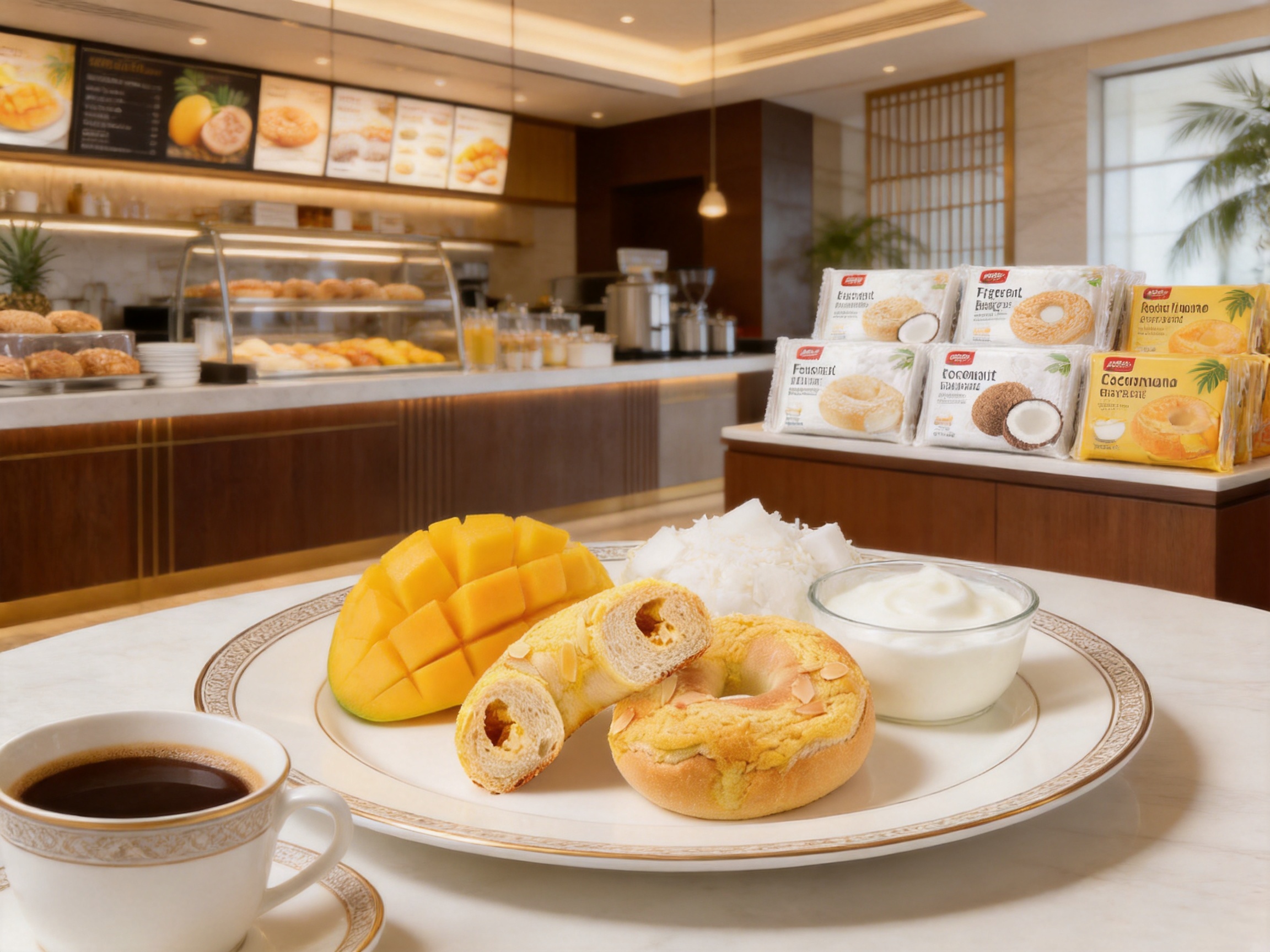
The bagel market continues to evolve as consumers look for products that combine convenience, indulgence, visual appeal, and distinctive flavor. Traditional plain and savory bagels remain popular, but fruit-forward varieties are creating new opportunities for cafés, bakery chains, retailers, hotel breakfast programs, and foodservice operators. The Toasted Almond Mango-Coconut Bagel answers this demand with a layered flavor profile that brings together tropical fruit, creamy dairy richness, toasted nuts, and the familiar chew of a quality bagel.
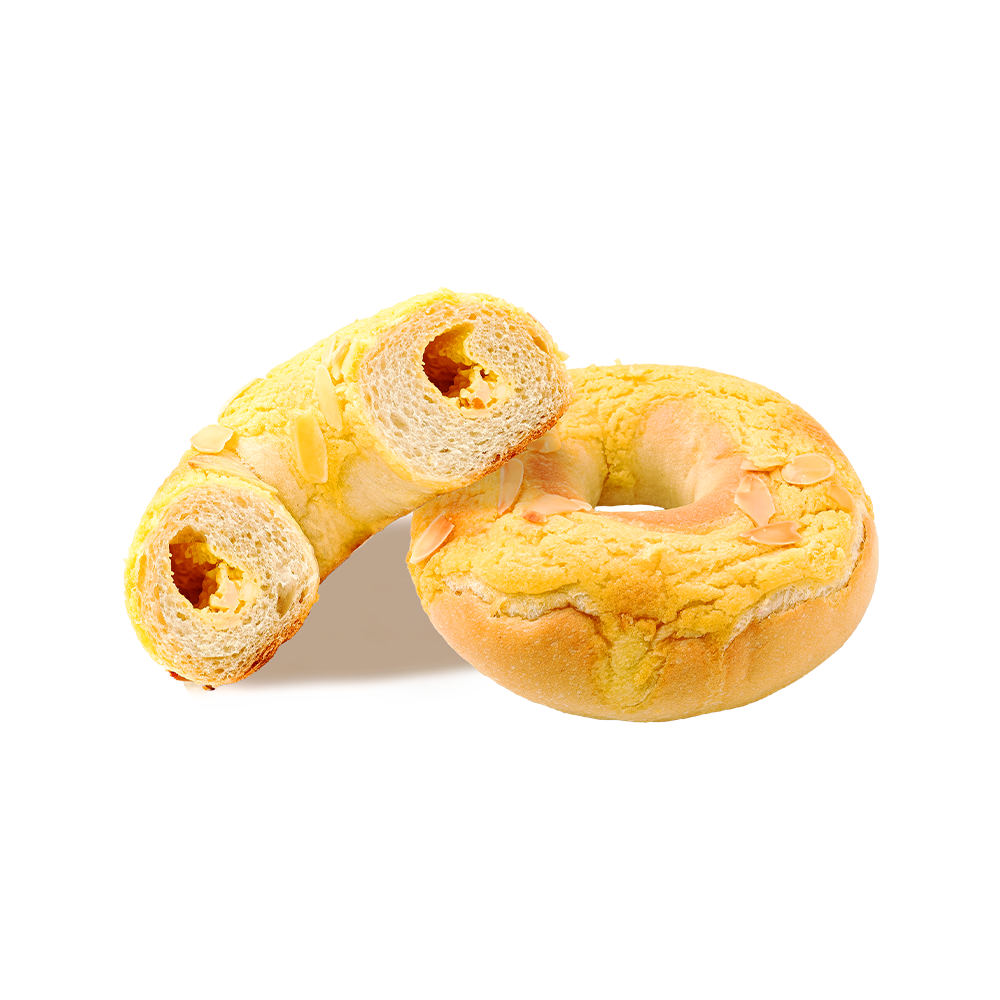
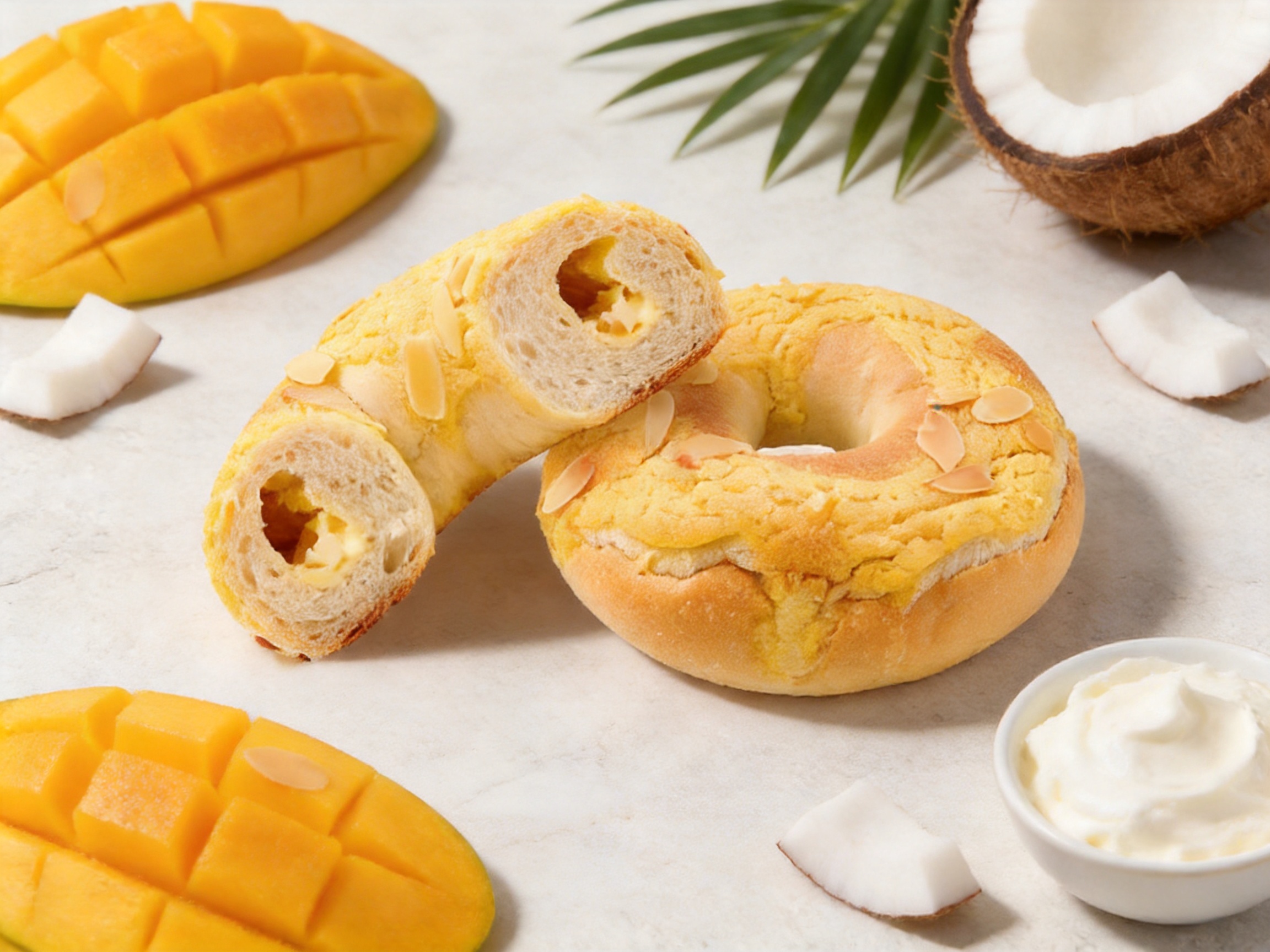
Weighing approximately 78 grams, this product belongs to the Fruits Bagel category and is designed to deliver a refined eating experience in a compact, commercially practical format. It combines bright mango and smooth coconut with Anchor cream cheese, real dairy butter, and a generous topping of thin toasted almond flakes. The result is a product that moves beyond the standard bagel experience: crisp on the surface, soft inside, creamy in the center, fruity on the palate, and fragrant throughout.
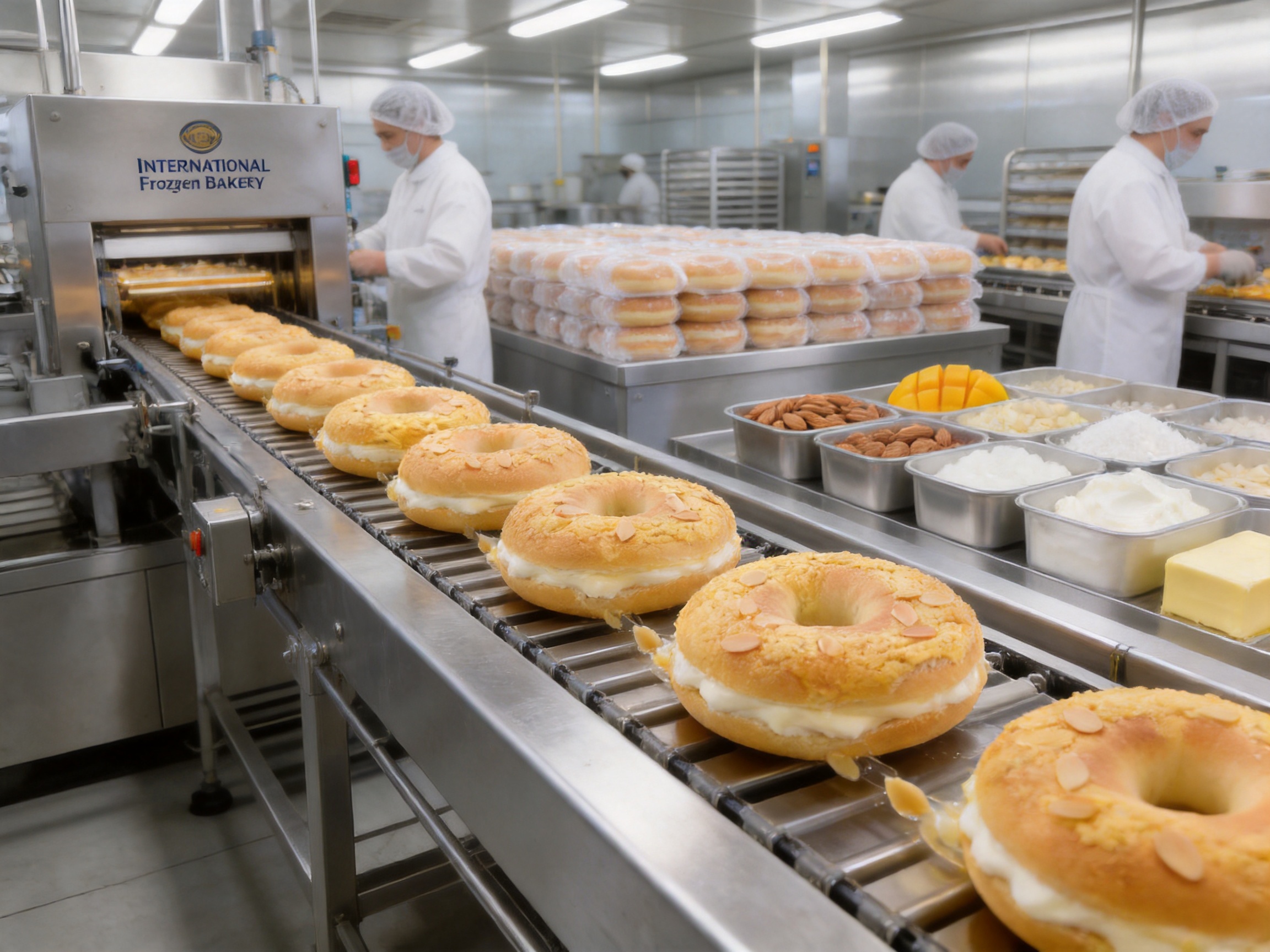
For professional buyers, the product also offers more than an appealing recipe. It is supported by the manufacturing capabilities of Jiangsu Goobagel Food Technology Co., Ltd., a modern frozen bakery producer specializing in bagel research, product development, production, and distribution. Since 2019, the company has developed more than 100 clean-label bagel varieties for retail, foodservice, café chains, tea brands, and bakery operators. Its integrated supply chain and dedicated product development approach help customers access stable, scalable, and adaptable bagel solutions.
A New Interpretation of the Fruit Bagel
Fruit bagels are often presented as sweet bakery items, but their success depends on balance. If the fruit flavor is too weak, the product feels ordinary. If the sweetness is too strong, the bagel can become heavy or one-dimensional. If the topping lacks texture, the eating experience may not feel premium. The Toasted Almond Mango-Coconut Bagel is developed around contrast, using several sensory layers to create a more complete flavor journey.
The first layer is visual and textural. Thin crispy toasted almond flakes are placed on top of the bagel, forming an attractive surface that immediately signals craftsmanship. The flakes provide a delicate crunch that contrasts with the tender interior. Their roasted aroma also introduces a warm, nutty character before the tropical fruit notes fully develop.
The second layer comes from mango and coconut. Mango contributes a bright, recognizable fruit flavor with a gentle sweet-tart quality. Coconut adds a silky tropical fragrance and a rounder, creamier impression. Together, they create a profile that is refreshing rather than excessively sugary. The flavor progression can be understood as “crisp to creamy” and “fragrant to pleasantly tangy-sweet.”
The third layer is the dairy foundation. Anchor cream cheese and real dairy butter bring richness, softness, and a gradual milky aroma. Rather than overwhelming the fruit, the dairy components help connect the almond, mango, coconut, and wheat notes. The result is a product that feels indulgent while remaining balanced and suitable for different serving occasions.
Product Profile and Core Specifications
The Toasted Almond Mango-Coconut Bagel is positioned as a premium fruit-flavored bagel for customers who want something more distinctive than a plain, sesame, or savory alternative. Its format is convenient for individual serving, café display, retail packaging, breakfast menus, and creative dessert applications.
| Product Attribute | Specification or Positioning | Commercial Significance |
|---|---|---|
| Product name | Toasted Almond Mango-Coconut Bagel | Communicates the key ingredients and premium sensory profile |
| Category | Fruits Bagel | Suitable for fruit bakery, breakfast, café, and dessert-oriented menus |
| Approximate weight | 78 grams | Practical for portion control, packaging, and menu pricing |
| Primary topping | Thin crispy toasted almond flakes | Provides visible premium appeal, aroma, and textural contrast |
| Fruit profile | Mango and coconut | Offers bright tropical flavor with creamy fragrance |
| Dairy components | Anchor cream cheese and real dairy butter | Adds milky richness, tenderness, and a smooth finish |
| Product format | Frozen bakery bagel | Supports inventory management, planned preparation, and consistent service |
| Application areas | Retail, foodservice, cafés, tea brands, bakery operators, and hotel breakfast | Allows flexible use across multiple business models |
The 78-gram format is especially useful for commercial operators. It can function as a complete breakfast item, a premium snack, or a base for a more elaborate plated serving. Portion consistency also helps businesses calculate food costs, manage menu pricing, and maintain a uniform customer experience across stores or locations.
The Sensory Experience: From Crunch to Creaminess
Toasted Almond Flakes for Immediate Impact
The toasted almond topping is one of the product’s most important differentiating elements. Many fruit bagels rely primarily on flavor inclusions or fillings, while this product builds part of its identity through a visible and audible textural feature. The thin almond flakes create a light surface crunch rather than a dense or hard bite.
Toasting brings out the natural nutty aroma of almonds. This aroma works particularly well with wheat-based bakery products because it reinforces the warm, roasted notes associated with freshly baked goods. When combined with coconut, the almond also adds depth, preventing the tropical profile from feeling overly light or simplistic.
From a merchandising perspective, the almond topping enhances visual recognition. Customers can see that the bagel is different before tasting it. The flakes create a handmade, generously finished appearance, which can support premium positioning in bakery displays, café cases, and retail packaging.
Mango for Brightness and Fruit Character
Mango gives the product a clear fruit identity. Its flavor is naturally aromatic, familiar to consumers in many markets, and associated with tropical freshness. In this formulation, mango contributes a gentle sweet-tart lift that helps brighten the richer components of cream cheese and butter.
The mango note is valuable because it creates contrast with the grain-based bagel structure. Wheat and dairy provide warmth and comfort, while mango contributes energy and freshness. This combination makes the product suitable not only for breakfast but also for afternoon snacks, brunch menus, dessert pairings, and seasonal promotions.
Coconut for Smoothness and Fragrance
Coconut adds a soft, silky fragrance that extends the tropical character of the bagel. Unlike a sharp fruit note, coconut is rounded and lingering. It helps connect mango with the creamy dairy components, creating a smooth transition between fruit and richness.
The coconut element also supports broad menu creativity. The product can be served with fresh fruit, yogurt, whipped cream, tropical beverages, iced coffee, milk tea, or light dessert sauces. Its flavor profile is distinctive enough to stand alone but balanced enough to pair with other ingredients.
Cream Cheese and Butter for a Full Finish
Anchor cream cheese and real dairy butter provide the foundation for the product’s rich mouthfeel. Cream cheese contributes a mild tang and soft dairy character, while butter adds roundness and a lingering sense of comfort. Together, they help the fruit and nut notes feel integrated rather than placed separately on top of a plain bagel.
The dairy profile is designed to bloom gradually during chewing. The exterior can develop a lightly satisfying crispness during heating, while the interior remains soft and tender. This contrast makes the product more engaging than a uniformly soft sweet bun or a dry, dense bakery item.
The combination is also commercially meaningful. A premium product must provide a sensory reason for consumers to choose it again. The gradual release of dairy richness, supported by fruit aroma and almond crunch, gives customers several points of enjoyment in every bite.
Toasted Almond Mango-Coconut Bagel
Advantages Compared with Conventional Bagels
The Toasted Almond Mango-Coconut Bagel has several advantages over conventional plain, savory, or single-flavor bagels. These advantages are not limited to taste; they also involve product presentation, menu flexibility, consumer appeal, and suitability for modern commercial operations.
More Distinctive Than Plain and Standard Flavored Varieties
Plain bagels are versatile, but their neutral flavor usually requires an additional spread, filling, or topping to create a complete eating experience. Sesame, onion, and cheese bagels offer stronger identities, yet they are commonly associated with traditional breakfast or savory applications. The Toasted Almond Mango-Coconut Bagel offers a different direction by combining tropical fruit, dairy, and toasted nuts in one finished product.
This makes it easier for operators to create a premium menu item without adding multiple ingredients during service. The flavor is already built into the product, reducing the need for complex assembly. A café can serve it warm with minimal preparation, while a retailer can present it as a specialty frozen bakery item with a clear point of difference.
More Layered Than a Single Fruit Flavor
Some fruit-flavored bakery products focus on one dominant note, such as strawberry, blueberry, or raisin. Although these flavors are familiar, they may not provide enough complexity to justify a premium position. The mango-coconut combination creates a more layered profile, while toasted almond and dairy add additional aromatic dimensions.
The product therefore appeals to consumers who enjoy variety within a single serving. The first impression comes from the almond crunch, followed by tropical fragrance, fruit brightness, creamy dairy richness, and the soft wheat character of the bagel. This progression can encourage repeat purchase because the product remains interesting after the first bite.
More Premium in Appearance
Visual presentation is increasingly important in bakery purchasing decisions. Thin toasted almond flakes provide immediate evidence of finishing and attention to detail. The topping can also photograph well for digital menus, food delivery platforms, social media promotions, and retail catalogues.
A product with strong visual identity is easier for customers to remember. It can become a recognizable signature item for a café or private-label brand. Compared with an unadorned bagel, the finished surface communicates more value before the product is even heated or served.
More Flexible for Sweet and Breakfast Applications
The product’s flavor profile allows it to occupy several menu positions. It can be marketed as a breakfast bagel, a tropical snack, a brunch specialty, a dessert-inspired bakery item, or a premium coffee pairing. This versatility gives operators more opportunities to use the same product throughout the day.
For breakfast, it pairs naturally with coffee, tea, yogurt, or fresh fruit. For brunch, it can be served with a light salad, smoothie, or sparkling beverage. For afternoon service, it can be paired with iced coffee, milk tea, or fruit tea. For dessert menus, it can be warmed and served with coconut cream, mango pieces, or a small amount of powdered sugar.
Manufacturing Strengths Behind the Product
A distinctive recipe is valuable, but commercial success also depends on reliable manufacturing. Jiangsu Goobagel Food Technology Co., Ltd. has specialized in bagel research and manufacturing since 2019. Its business model combines product development with a fully integrated supply chain covering raw materials, research and development, production, and nationwide distribution.
Integrated Supply Chain Management
An integrated supply chain can improve coordination between ingredient sourcing, formulation, production scheduling, quality control, storage, and delivery. For frozen bakery customers, this coordination is especially important because product performance depends on more than the recipe alone. Dough behavior, topping application, freezing, packaging, storage, and reheating must work together.
By managing a connected production structure, the manufacturer can support more consistent supply and respond more efficiently to customer requirements. This is valuable for café chains and retail customers that need repeatable products across different regions or locations.
Supply chain integration can also support better planning for seasonal demand. Tropical flavors such as mango and coconut may be used in summer campaigns, limited-time menus, or promotional launches. A capable manufacturing partner can help customers plan production volumes and maintain product availability during high-demand periods.
Dedicated Bagel Research and Development
Bagels require specialized knowledge because their identity depends on the relationship between dough structure, chewiness, tenderness, surface finish, topping adhesion, and heating performance. A product that looks attractive but becomes dry after reheating will not meet professional expectations. Similarly, a soft product that lacks structure may not deliver the characteristic bagel experience.
The manufacturer’s focus on bagel research supports the development of products with different flavor directions, textures, and application requirements. Its portfolio of more than 100 clean-label bagel varieties demonstrates an ability to work across classic, stuffed, fruit, and sandwich-oriented categories.
For customers seeking a private-label or OEM product, this product development background can reduce the time needed to move from concept to commercial sample. Instead of starting with a general bakery supplier unfamiliar with bagels, buyers can work with a specialist that understands the technical and market requirements of the category.
Broad Product Development Capability
More than 100 bagel varieties indicate a broad development platform rather than a single-product manufacturing approach. This gives customers access to a wider range of options when building a product line. A buyer may begin with the Toasted Almond Mango-Coconut Bagel and later add classic, savory, stuffed, or sandwich formats.
A broad portfolio also helps manufacturers understand consumer preferences across different applications. Retail consumers may prefer individually packaged products, cafés may require fast reheating, and foodservice operators may prioritize portion control and reliable bulk supply. Product development experience across these channels strengthens the ability to adapt formulations and specifications.
Clean-Label Product Direction
The company describes its bagel varieties as clean-label products. Clean-label expectations vary by market and should always be confirmed through the final ingredient declaration and regulatory documentation. However, the broader direction reflects growing demand for recognizable ingredients, transparent communication, and products that fit modern consumer expectations.
For buyers, a clean-label development approach can be useful when creating premium retail ranges, health-conscious café menus, or products for consumers who pay close attention to ingredient information. It can also support clearer marketing communication, provided all claims are verified for the target market.
Frozen Bakery Expertise
Frozen bakery production gives commercial operators greater flexibility than fully fresh production. Products can be stored according to approved conditions, prepared according to demand, and served without requiring every location to maintain a complete bakery operation.
For retailers, frozen distribution can support inventory planning and reduce the pressure associated with short shelf life. For cafés and restaurant groups, it can help standardize products across locations. For bakery operators, it can provide a dependable base product that can be heated, finished, or combined with additional ingredients as needed.
Frozen products still require disciplined handling. Customers should follow the manufacturer’s storage, thawing, heating, and food safety instructions. When the cold chain is properly maintained, frozen bagels can offer a practical balance between convenience and quality.
How the Product Supports Different Commercial Channels
Retail and Supermarket Applications
In retail, a specialty bagel must communicate its value quickly. The name Toasted Almond Mango-Coconut Bagel clearly identifies the major flavor components, while the visual topping provides shelf appeal. The product can be introduced as a premium frozen breakfast item, a tropical snack, or a bakery product for home heating.
Retail packaging can emphasize the combination of almond crunch, mango brightness, coconut fragrance, and creamy dairy richness. Preparation instructions should be clear and practical. The package may also suggest serving occasions, such as breakfast, brunch, afternoon tea, or a warm snack with coffee.
Because the product has a distinctive flavor identity, it may work well in seasonal or themed promotions. Tropical flavor campaigns, summer bakery collections, and premium breakfast assortments can all provide appropriate merchandising contexts.
Café Chains and Coffee Shops
Café operators often need food items that can be prepared quickly and served consistently. The Toasted Almond Mango-Coconut Bagel can be heated and served as a standalone item or used as part of a beverage-and-food combination.
Its tropical profile pairs with black coffee, espresso-based drinks, cold brew, milk tea, fruit tea, coconut beverages, and smoothies. A café can offer it as a signature pairing with a seasonal beverage, helping create a higher-value combination than a standard plain bagel and cream cheese.
For chains, product consistency is particularly important. A centralized frozen supply can help multiple stores offer the same product specification, weight, flavor, and appearance. This supports brand consistency while reducing the need for extensive in-store preparation.
Tea Brands and Beverage Retailers
Tea shops and beverage brands increasingly expand into snacks and light bakery products. The mango-coconut flavor of this bagel is naturally compatible with fruit tea, coconut drinks, iced tea, and milk-based beverages. Its sweet-tart fruit character can balance the freshness of tea, while the almond topping creates a more substantial snack experience.
A tea brand could offer the product as part of a tropical afternoon set or as an add-on item in online ordering. The 78-gram portion is suitable for individual consumption and can be included in promotional bundles without becoming excessively large or difficult to handle.
Hotels and Breakfast Programs
Hotels require breakfast products that are recognizable, easy to portion, and suitable for different guest preferences. The product can add variety to a breakfast buffet, especially when placed alongside plain, whole-grain, and savory bagel options.
Its fruit and coconut profile may be attractive in international breakfast settings where tropical flavors are familiar and popular. It can be served warm with butter, cream cheese, fruit preserves, fresh mango, or yogurt. The product may also help hotels create a more distinctive breakfast presentation without introducing a complicated made-to-order process.
Bakery Operators and Foodservice Distributors
Independent bakeries and foodservice distributors can use the product as a premium component within a wider bakery range. It may be sold directly, used in catering, included in breakfast boxes, or incorporated into dessert-inspired platters.
For distributors, a product with a clear flavor story is easier to present to potential customers. The combination of toasted almond, mango, coconut, and dairy provides a straightforward sales narrative. It also helps distinguish the product from conventional bagels that compete mainly on price or familiarity.
OEM and Private-Label Opportunities
Many food businesses want products that fit their own brand identity rather than selling a generic item. OEM and private-label manufacturing allow customers to develop a product under their own packaging, positioning, and channel strategy. The manufacturer’s bagel specialization makes it a suitable partner for businesses seeking a fruit-forward bagel concept.
The Toasted Almond Mango-Coconut Bagel can serve as a starting point for private-label development. Customers may explore packaging design, serving recommendations, market-specific flavor communication, and product-line extensions. Depending on project requirements, buyers may also discuss adjustments to format, topping style, filling balance, portion size, or other commercial specifications.
Any customization should be evaluated through technical sampling, sensory testing, production trials, packaging review, and regulatory confirmation. A successful OEM program requires cooperation between the buyer and manufacturer, especially when the product will be distributed across multiple regions.
Private-label customers can also use the product as part of a broader collection. For example, a premium breakfast line may include the mango-coconut bagel as its fruit option, a savory cheese or herb bagel as its lunch option, and a classic bagel as its everyday staple. This approach helps create a coherent range while serving different consumption occasions.
Production Considerations for Commercial Consistency
Consistency is one of the most important advantages of working with a specialist frozen bakery manufacturer. Commercial customers need each batch to deliver a similar appearance, weight, texture, and flavor. This is particularly important for products with visible toppings and multiple flavor components.
Dough Structure and Interior Tenderness
The interior of a quality bagel should maintain enough structure to feel substantial while remaining tender after heating. The dough must support the toppings and flavor components without becoming dry or overly dense. A specialist manufacturer can evaluate dough performance during mixing, shaping, baking, freezing, storage, and reheating.
For the Toasted Almond Mango-Coconut Bagel, interior tenderness is important because the dairy richness and fruit aroma should be released gradually. If the crumb were excessively dry, the creamy and tropical elements would be less effective. If it were too soft, the product might lose the satisfying identity associated with a bagel.
Topping Application
Almond flakes must be distributed attractively and remain attached during handling, packaging, transport, and preparation. Uneven application can affect both appearance and eating quality. A controlled production process helps ensure that the topping contributes consistently to each unit.
The topping also needs to work with the frozen format. It should maintain its visual appeal through storage and develop a pleasant crispness when the product is heated according to instructions. These requirements illustrate why topping selection and application are important elements of frozen bagel manufacturing.
Freezing and Storage Performance
Frozen bakery production involves more than placing baked goods into a freezer. The product must be prepared and packaged in a way that supports stable quality during its intended storage period. Temperature management, packaging protection, inventory rotation, and handling procedures all contribute to the final result.
Customers should maintain the recommended cold chain and use the product according to the manufacturer’s technical guidance. Retailers and foodservice operators should also train staff to avoid unnecessary temperature fluctuations and to follow appropriate preparation procedures.
Quality Control and Documentation
Professional buyers commonly require product specifications, ingredient information, allergen declarations, packaging details, storage requirements, and preparation instructions. These documents help retailers and foodservice operators manage compliance, staff training, and customer communication.
Because the product contains almonds and dairy ingredients, allergen management is particularly important. Final labeling and allergen statements should be reviewed for the target market before commercial launch. Buyers should also confirm shelf-life, packaging, minimum order quantity, shipping conditions, and other project-specific details during the procurement process.
Serving and Menu Development Ideas
The product is designed to be enjoyable on its own, but it also provides a strong base for creative serving concepts. Its tropical fruit, toasted nut, and creamy dairy profile can support both simple and premium presentations.
Warm Breakfast Pairing
Serve the heated bagel with coffee, tea, yogurt, or a side of fresh fruit. This is a straightforward presentation that allows the product’s own flavor to remain the focus. A small amount of additional cream cheese may be offered separately for customers who prefer extra dairy richness.
Tropical Brunch Plate
Pair the bagel with fresh mango, pineapple, coconut yogurt, and a light fruit salad. The fresh fruit reinforces the tropical character while the bagel provides a more filling grain-based component. This presentation is suitable for hotels, brunch cafés, and premium breakfast boxes.
Afternoon Café Set
Combine the product with iced coconut coffee, mango tea, or a lightly sweetened milk tea. The almond topping complements roasted coffee notes, while mango and coconut connect naturally with fruit and tea beverages. A café can present this as a signature afternoon set or limited-time seasonal offer.
Dessert-Inspired Service
Warm the bagel and serve it with a small amount of coconut cream, mango compote, vanilla yogurt, or whipped dairy topping. The additional components should be used carefully so that the product does not become overly sweet or heavy. The goal is to enhance the tropical character while preserving the balance between crispness, creaminess, and fruit brightness.
Breakfast Box and Catering Use
The 78-gram portion works well in individual breakfast boxes. It can be packaged with fruit, yogurt, a beverage, and a small portion of spread. This format may be suitable for corporate catering, school or university foodservice, hotel room service, transportation catering, and event hospitality.
Why the Product Fits Current Consumer Preferences
Consumers increasingly seek food products that offer convenience without feeling generic. Frozen products are accepted more readily when they provide an experience that resembles freshly prepared bakery food. The Toasted Almond Mango-Coconut Bagel addresses this expectation through recognizable ingredients, an attractive topping, and a multi-layered flavor profile.
There is also growing interest in global and tropical flavor combinations. Mango and coconut are familiar across many regions, but their combination with almond and bagel dough creates a less common format. This provides novelty without making the product difficult to understand.
Texture is another important part of modern bakery appeal. Consumers often respond positively to products that combine contrasting sensations, such as crisp and soft, creamy and chewy, or fragrant and tangy. The product’s toasted almond flakes, tender interior, and gradual dairy finish are designed around these contrasts.
At the same time, foodservice businesses are looking for operational efficiency. A frozen bagel can help reduce preparation complexity, support consistent portioning, and simplify inventory planning. These operational benefits allow businesses to offer a more distinctive menu without requiring extensive in-store baking expertise.
Business Value for Buyers
For a buyer, product quality must be considered together with supply reliability, development support, and commercial flexibility. A premium recipe is only useful if the manufacturer can deliver it consistently and help the customer adapt it to a real sales channel.
Jiangsu Goobagel Food Technology Co., Ltd. provides a combination of bagel specialization, product variety, integrated supply chain management, and OEM and private-label capability. These strengths can reduce the challenges involved in sourcing specialty bagels from multiple suppliers.
The company’s experience serving retail, foodservice, café chains, tea brands, and bakery operators also reflects an understanding of different commercial requirements. Each channel has different expectations for packaging, preparation, logistics, pricing, and presentation. A manufacturer familiar with these differences can contribute more effectively during product selection and project development.
The company’s stated values—persistence, craftsmanship, respect, and science—also reflect the importance of long-term product development. Bagel manufacturing requires attention to detail, while frozen bakery supply requires disciplined systems. These values are relevant to customers seeking a stable partner rather than a one-time product source.
Recommended Evaluation Process for Importers and Distributors
Businesses considering the Toasted Almond Mango-Coconut Bagel should evaluate the product through a structured process. First, buyers should review the product specification, ingredient list, allergen information, packaging format, storage conditions, and preparation instructions.
Second, the product should be tested in the intended service environment. A café may evaluate reheating speed, display quality, and beverage pairing. A retailer may test package communication, freezer presentation, and consumer response. A hotel may assess buffet holding, portion suitability, and compatibility with breakfast service.
Third, buyers should conduct sensory evaluation with a representative group. Important criteria include almond aroma, tropical fruit clarity, coconut fragrance, dairy richness, crust texture, crumb tenderness, overall sweetness, and aftertaste. Since consumer preferences vary by market, local testing is recommended.
Fourth, commercial terms should be confirmed. These may include minimum order quantity, lead time, production capacity, shipping arrangements, packaging options, shelf life, payment terms, and documentation. For private-label projects, artwork approval and packaging development should be planned early.
Finally, businesses should create a launch plan. Product photography, menu descriptions, staff training, preparation instructions, promotional bundles, and seasonal positioning can all influence market performance. A distinctive product receives stronger results when its story is communicated clearly.
Q&A: Toasted Almond Mango-Coconut Bagel
Q1: What kind of product is the Toasted Almond Mango-Coconut Bagel?
It is a fruit-flavored frozen bagel weighing approximately 78 grams. It combines toasted almond flakes, mango, coconut, cream cheese, butter, and a soft bagel interior. It is designed for retail, foodservice, cafés, tea brands, bakery operators, and other commercial applications.
Q2: What makes the flavor different from a traditional bagel?
Traditional bagels often focus on neutral, savory, or single-flavor profiles. This product combines bright mango, silky coconut, toasted almond aroma, and creamy dairy richness. The flavor moves from crisp and nutty to fragrant, fruity, creamy, and gently tangy-sweet.
Q3: Is the product suitable for breakfast?
Yes. It can be served warm with coffee, tea, yogurt, fruit, or additional cream cheese. Its portion size and frozen format make it suitable for breakfast menus, hotel buffets, breakfast boxes, and café service.
Q4: Can it also be served as a dessert or snack?
Yes. The tropical flavor profile works well for afternoon snacks, brunch, dessert-inspired plates, and beverage pairings. It can be served with coconut cream, mango compote, yogurt, whipped topping, or fresh fruit, provided the overall sweetness remains balanced.
Q5: What is the role of the toasted almond topping?
The toasted almond flakes provide visible premium appeal, a light crunch, and a warm nutty aroma. They contrast with the soft bagel interior and add depth to the mango and coconut flavor profile.
Q6: What do mango and coconut contribute to the product?
Mango contributes bright fruit flavor and a gentle sweet-tart lift. Coconut adds a smooth tropical fragrance and helps connect the fruit notes with the dairy components. Together, they create a refreshing yet creamy profile.
Q7: Why are cream cheese and dairy butter used?
Cream cheese contributes mild tanginess and a soft dairy character, while real dairy butter adds richness and roundness. These ingredients help the tropical fruit and almond notes develop into a fuller, more satisfying flavor.
Q8: Is the bagel suitable for café chains?
Yes. Its frozen format can support consistent supply and preparation across multiple locations. It can be paired with coffee, cold brew, fruit tea, milk tea, smoothies, and other beverages. Chain operators should follow the recommended storage and heating procedures.
Q9: Can the product be used for private-label programs?
The manufacturer supports OEM and private-label bagel development. Buyers can discuss packaging, commercial specifications, product-line planning, and possible customization according to project requirements. Final options depend on technical evaluation and production feasibility.
Q10: What manufacturing strengths support the product?
The manufacturer has specialized in bagel research and production since 2019. It operates an integrated supply chain covering raw materials, research and development, manufacturing, and distribution. It has also developed more than 100 clean-label bagel varieties for different commercial channels.
Q11: What should buyers confirm before placing an order?
Buyers should confirm the ingredient declaration, allergen information, packaging, storage conditions, shelf life, preparation instructions, minimum order quantity, lead time, shipping requirements, and target-market compliance documents. Almond and dairy allergens should receive particular attention.
Q12: How can retailers market this product?
Retailers can position it as a premium tropical breakfast bagel, a specialty frozen bakery item, or a fruit-and-nut snack. Packaging and promotional materials can highlight the toasted almond crunch, mango brightness, coconut fragrance, creamy dairy finish, and convenient frozen format.
Conclusion
The Toasted Almond Mango-Coconut Bagel offers a distinctive combination of flavor, texture, appearance, and commercial practicality. Its toasted almond flakes create a premium first impression, while mango and coconut provide a bright tropical identity. Cream cheese and real dairy butter add a gradual, comforting richness that supports the fruit rather than overpowering it.
Compared with conventional bagels, the product stands out through its layered sensory experience and flexibility across breakfast, café, snack, brunch, dessert, retail, and foodservice applications. Its approximately 78-gram format supports portion control and convenient serving, while the frozen format can help commercial operators manage inventory and maintain consistent preparation.
Behind the product is a manufacturer focused specifically on bagel research and production. Jiangsu Goobagel Food Technology Co., Ltd. brings together an integrated supply chain, extensive product development experience, more than 100 clean-label bagel varieties, and support for OEM and private-label programs. These capabilities make the product relevant not only as a finished specialty bagel but also as a potential foundation for customized commercial solutions.
For buyers seeking a fruit-forward bagel that can help create a memorable menu or retail offering, the Toasted Almond Mango-Coconut Bagel provides a strong balance of novelty and familiarity. It delivers tropical flavor in a recognizable bakery format, supported by manufacturing expertise designed for dependable commercial supply.
References
1. Product specification and sensory description for the Toasted Almond Mango-Coconut Bagel, supplied by the manufacturer.
2. Company information regarding bagel research, frozen bakery manufacturing, product development, and distribution.
3. General principles of frozen bakery handling, storage, preparation, and foodservice operations.
4. General bakery product development principles concerning texture, flavor layering, topping application, portion control, and commercial consistency.
5. General foodservice and retail considerations for OEM, private-label, café, hotel, and bakery product applications.
Product: Toasted Almond Mango-Coconut Bagel