
 中文简体
中文简体
 English

postmaster@goobagelfood.com
Content
- 1 A Fruit Bagel Built on a Strong Wheat Foundation
- 2 Real Cranberries for Meaningful Fruit Presence
- 3 Low-Fat Formulation for Contemporary Eating Habits
- 4 Resilient Exterior and Tender Interior
- 5 Product Advantages Compared with Conventional Competitor Options
- 6 Manufacturing Expertise Behind the Product
- 7 Raw Material Selection and Ingredient Control
- 8 Dough Development and Cranberry Distribution
- 9 Baking, Cooling, and Frozen Bakery Performance
- 10 Commercial Applications Across Multiple Channels
- 11 Serving Ideas for Consumers and Operators
- 12 Why Consistency Matters to B2B Buyers
- 13 OEM and Private-Label Potential
- 14 Quality and Product Development Philosophy
- 15 How the Product Supports Better Menu Design
- 16 Consumer Expectations and Sensory Positioning
- 17 Recommended Evaluation Points for Buyers
- 18 Q&A: Healthy and Low-Fat Cranberry Bagel
- 18.1 What makes this cranberry bagel different from a standard fruit bread?
- 18.2 Is the product suitable for health-conscious consumers?
- 18.3 Does the bagel contain real cranberries?
- 18.4 How does the product taste?
- 18.5 What is the texture of the finished bagel?
- 18.6 How can the bagel be served?
- 18.7 Who can purchase this product?
- 18.8 Why is a frozen format useful for foodservice?
- 18.9 Can the product be customized for OEM or private-label projects?
- 18.10 What manufacturing experience supports the product?
- 18.11 What should buyers confirm before placing an order?
- 19 Conclusion
- 20 References
- 21 Product: Healthy And Low-Fat Cranberry Bagel
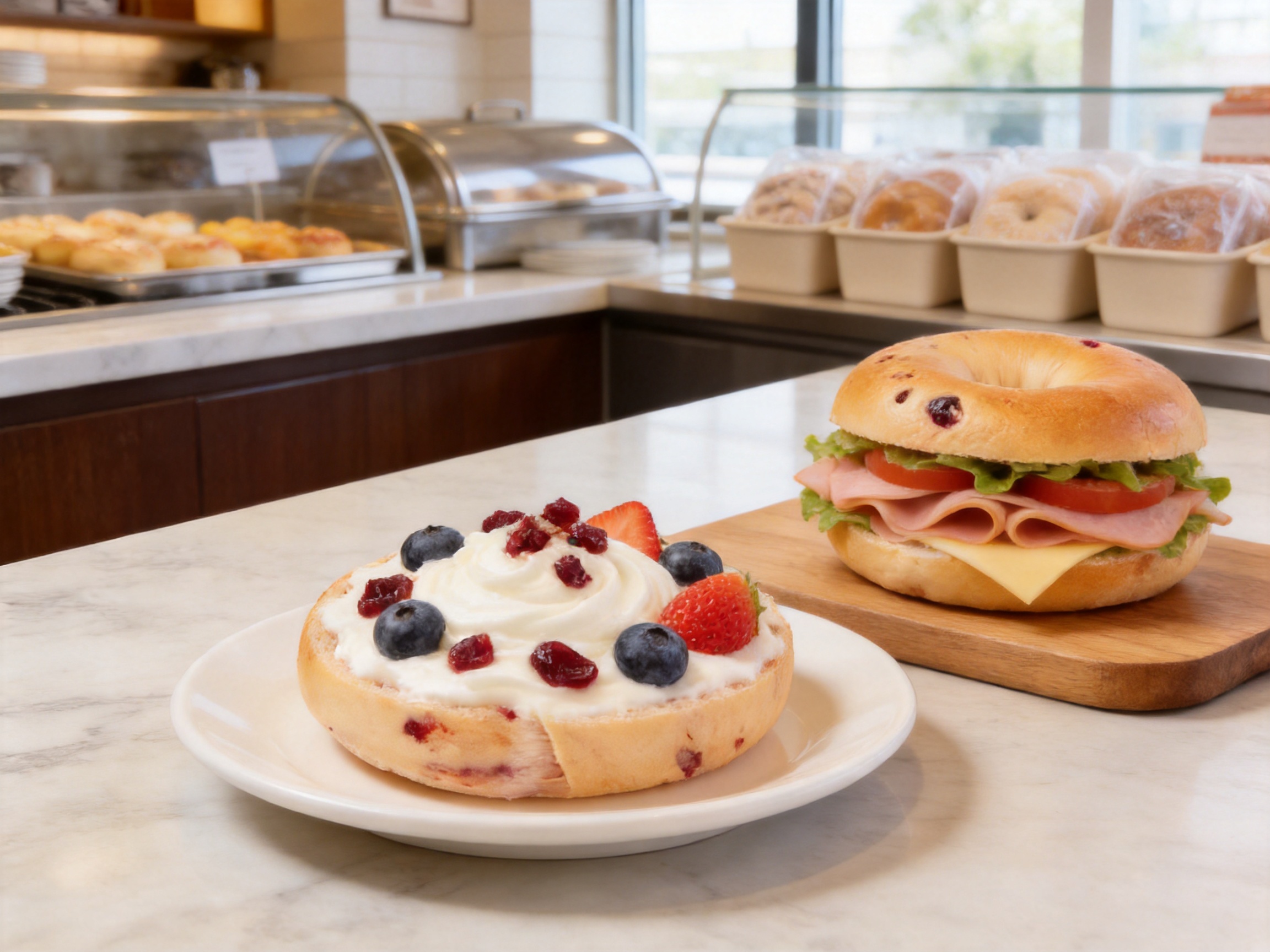
The Healthy and Low-Fat Cranberry Bagel combines the familiar structure of a classic bagel with the bright flavor of real dried cranberries. It is designed for consumers and commercial buyers who want a satisfying bakery product with a balanced nutritional profile, dependable texture, and flexible serving potential. Instead of relying on excessive sweetness, heavy fillings, or rich coatings, this bagel builds its character from a premium wheat base, generous cranberry inclusion, and a low-fat formulation.
Its appeal begins with a simple but important principle: a successful fruit bagel must still taste and perform like a bagel. The product needs a recognizable wheat aroma, a resilient exterior, a tender interior, and enough substance to support breakfast, light meals, snacks, and post-workout eating occasions. At the same time, the fruit should not be used merely as a decorative ingredient. Cranberries need to make a meaningful contribution to the flavor, texture, and visual identity of every serving.
This balance makes the product suitable for a wide range of markets. Retailers can present it as a convenient breakfast option. Cafés can serve it toasted with cream cheese, yogurt-based spreads, or fresh fruit. Foodservice operators can use it in grab-and-go programs, hotel breakfast service, school meal solutions, workplace catering, and health-oriented menus. Private-label brands can also adapt the product to their own packaging, portioning, and positioning strategies.
Produced by Jiangsu Goobagel Food Technology Co., Ltd., the bagel reflects the capabilities of a modern frozen bakery manufacturer specializing in research, development, production, and distribution. The company has focused on bagel research and manufacturing since 2019 and has developed more than 100 bagel varieties for retail, foodservice, café chains, tea brands, and bakery operators. This product therefore represents not only a single flavor concept, but also a manufacturing platform capable of supporting consistent, scalable, and commercially practical bagel supply.
A Fruit Bagel Built on a Strong Wheat Foundation
The first distinguishing feature of the Healthy and Low-Fat Cranberry Bagel is its grain foundation. Wheat is not treated as a background ingredient. It forms the backbone of the product’s aroma, chew, and overall eating experience. A well-developed wheat profile provides warmth and fullness before the fruit notes appear, giving the bagel a more complete flavor progression than products that depend primarily on sugar or artificial fruit flavoring.
When a customer opens the package or slices the bagel, the expected experience is a clean grain fragrance followed by the recognizable sweet-tart character of cranberry. This sequence matters because it creates a more natural sensory impression. The product does not overwhelm the palate with a single intense note. Instead, it moves from toasted wheat to fruit brightness and then to a lingering, gently sweet finish.
The wheat-centered approach also gives the bagel broader pairing potential. Some fruit bakery products are so sweet that they can only be eaten as standalone snacks. This cranberry bagel is more versatile. It can be toasted and paired with cream cheese, cottage cheese, Greek yogurt, nut butter, lean turkey, grilled chicken, smoked fish, or fresh greens. Its flavor can support both sweet and savory applications, allowing operators to build more menu combinations from one frozen stock-keeping unit.
For consumers, the wheat foundation creates a sense of substance. A bagel should feel filling and satisfying rather than light and insubstantial. The product’s resilient exterior and tender interior provide the familiar bite associated with a traditional bagel while allowing the cranberries to create points of softness and flavor contrast within the dough.
Real Cranberries for Meaningful Fruit Presence
Cranberries are generously folded into the dough so that the fruit contributes more than color. The aim is to create a noticeable cranberry experience throughout the serving. With a meaningful level of inclusion, the fruit can be seen in the cut surface, encountered during chewing, and recognized in the finished flavor.
The cranberry profile is naturally suitable for bagels because it combines sweetness with acidity. The gentle tang keeps the product from tasting flat or overly sugary, while the fruit’s natural sweetness complements the mild richness of wheat. This sweet-tart relationship is especially valuable in a lower-fat product, where flavor balance must come from ingredient quality, baking control, and well-managed sweetness rather than from a heavy fat component.
Fruit distribution is also important for consistency. If cranberries are concentrated in only a few sections, the customer may experience alternating bites of plain dough and overly intense fruit. A carefully controlled folding process helps spread the inclusions more evenly, supporting a dependable eating experience from the first bite to the last.
The cranberries also contribute textural variety. The bagel offers a resilient exterior and tender interior, while the fruit introduces a slightly chewy, moist, and pleasantly concentrated element. This combination prevents the product from feeling monotonous and makes each bite more engaging without requiring additional toppings or fillings.
Compared with products that use only fruit flavoring, a real-cranberry formulation can provide a more authentic sensory identity. Consumers increasingly look for recognizable ingredients and straightforward product descriptions. The presence of real dried fruit gives retailers and foodservice operators a clear story to communicate: a wheat-based bagel with visible cranberry pieces and a naturally balanced sweet-tart profile.

Healthy And Low-Fat Cranberry Bagel
Low-Fat Formulation for Contemporary Eating Habits
The low-fat positioning responds to a growing demand for bakery products that offer comfort and convenience without feeling unnecessarily heavy. Many consumers want a filling breakfast, but they also pay closer attention to ingredient choices, portion balance, and everyday dietary habits. A low-fat bagel can fit naturally into these routines when it retains enough texture and flavor to remain satisfying.
Low-fat does not need to mean dry, bland, or fragile. The product is designed to preserve the core characteristics expected from a bagel: a substantial bite, a stable shape, a pleasant chew, and a tender center. The formula works together with the dough development and baking process to achieve a more balanced result. Wheat quality, hydration, mixing, fermentation, cranberry distribution, and baking conditions all influence the final eating experience.
For consumers, this makes the product suitable for breakfast before work, a snack between meals, or a post-workout refueling option. It can be served plain, toasted, or combined with protein-rich and fruit-based toppings. The low-fat concept also works well for foodservice menus that highlight lighter choices, wellness, active lifestyles, or convenient nutrition.
For commercial buyers, a low-fat cranberry bagel can help expand a bakery range beyond traditional plain, sesame, or cheese varieties. It gives operators a fruit-forward option with a health-conscious message while maintaining the familiar format of a bagel. This balance may be particularly useful in cafés, hotel buffets, corporate dining, fitness-oriented foodservice, and retail freezer programs.
Resilient Exterior and Tender Interior
Texture is one of the most important quality indicators for a bagel. A product may have attractive ingredients, but if the structure is weak, gummy, overly hard, or dry, customer satisfaction will suffer. The Healthy and Low-Fat Cranberry Bagel is developed around a contrast between a resilient outside and a tender inside.
The outer layer should provide enough resistance to create a recognizable bagel bite. This structure supports slicing, toasting, spreading, and sandwich assembly. It also helps the bagel maintain its identity after thawing and reheating. The interior, meanwhile, should remain soft enough to chew comfortably and to complement the cranberry pieces.
This textural contrast gives the product flexibility across preparation methods. A customer can eat it at room temperature after suitable thawing, warm it gently for a softer experience, or toast it for a firmer crust and intensified wheat aroma. Foodservice staff can prepare it using standard bakery equipment without needing a complicated finishing procedure.
Texture stability is particularly important in frozen bakery. Frozen products must be designed not only for the moment they leave the production line, but also for storage, distribution, thawing, and final preparation. A reliable structure helps reduce variability between batches and supports more predictable performance for retailers and operators.
Product Advantages Compared with Conventional Competitor Options
The cranberry bagel competes in a market that includes plain bagels, sweet fruit bagels, filled bagels, enriched bakery rolls, and flavored breakfast breads. Its advantage is not based on one isolated feature. Instead, it combines several commercially relevant qualities in a single product.
First, it offers a recognizable bagel identity while adding fruit interest. Some fruit breads are soft and cake-like, while some filled bakery products are dominated by a sweet center. This product preserves the structural character of a bagel, making it more suitable for customers who want chew and substance rather than a dessert-style bread.
Second, the product uses a low-fat positioning to serve consumers who may avoid richer bakery choices. The product can therefore sit between a traditional indulgent sweet bagel and a plain, minimally flavored bagel. It provides a more interesting flavor experience without depending on a heavy formulation.
Third, the inclusion of real dried cranberries gives the bagel a clear ingredient story. Visible fruit can make the product more appealing on a retail shelf, in a café display, or on a breakfast buffet. The cranberry pieces also help communicate flavor immediately, reducing the need for complicated menu explanations.
Fourth, the bagel has broad pairing potential. A heavily sweet product may limit the operator to cream cheese or dessert-style applications. The sweet-tart cranberry profile can work with dairy, lean proteins, nuts, seeds, vegetables, and fresh greens. One bagel can therefore support multiple menu concepts and different consumer preferences.
Fifth, frozen supply offers convenience and inventory flexibility. Commercial users can store the product according to appropriate frozen-bakery procedures and prepare quantities based on demand. This approach may help reduce the operational pressure associated with producing fresh dough and finished bagels every day at every location.
| Product Attribute | Healthy and Low-Fat Cranberry Bagel | Commercial Benefit |
|---|---|---|
| Flavor profile | Warm wheat aroma followed by sweet-tart cranberry notes | Creates a balanced flavor suitable for breakfast, snacks, and café menus |
| Fruit inclusion | Generous real dried cranberries folded into the dough | Provides visible ingredient appeal and a more authentic fruit experience |
| Fat positioning | Developed as a low-fat bagel option | Supports lighter menu concepts and health-conscious product ranges |
| Texture | Resilient exterior with a tender interior | Performs well when sliced, toasted, spread, or used in sandwiches |
| Serving flexibility | Suitable for sweet, savory, and plain applications | Allows retailers and foodservice operators to create multiple offerings |
| Supply format | Frozen bakery format | Supports planned inventory, centralized supply, and convenient preparation |
Manufacturing Expertise Behind the Product
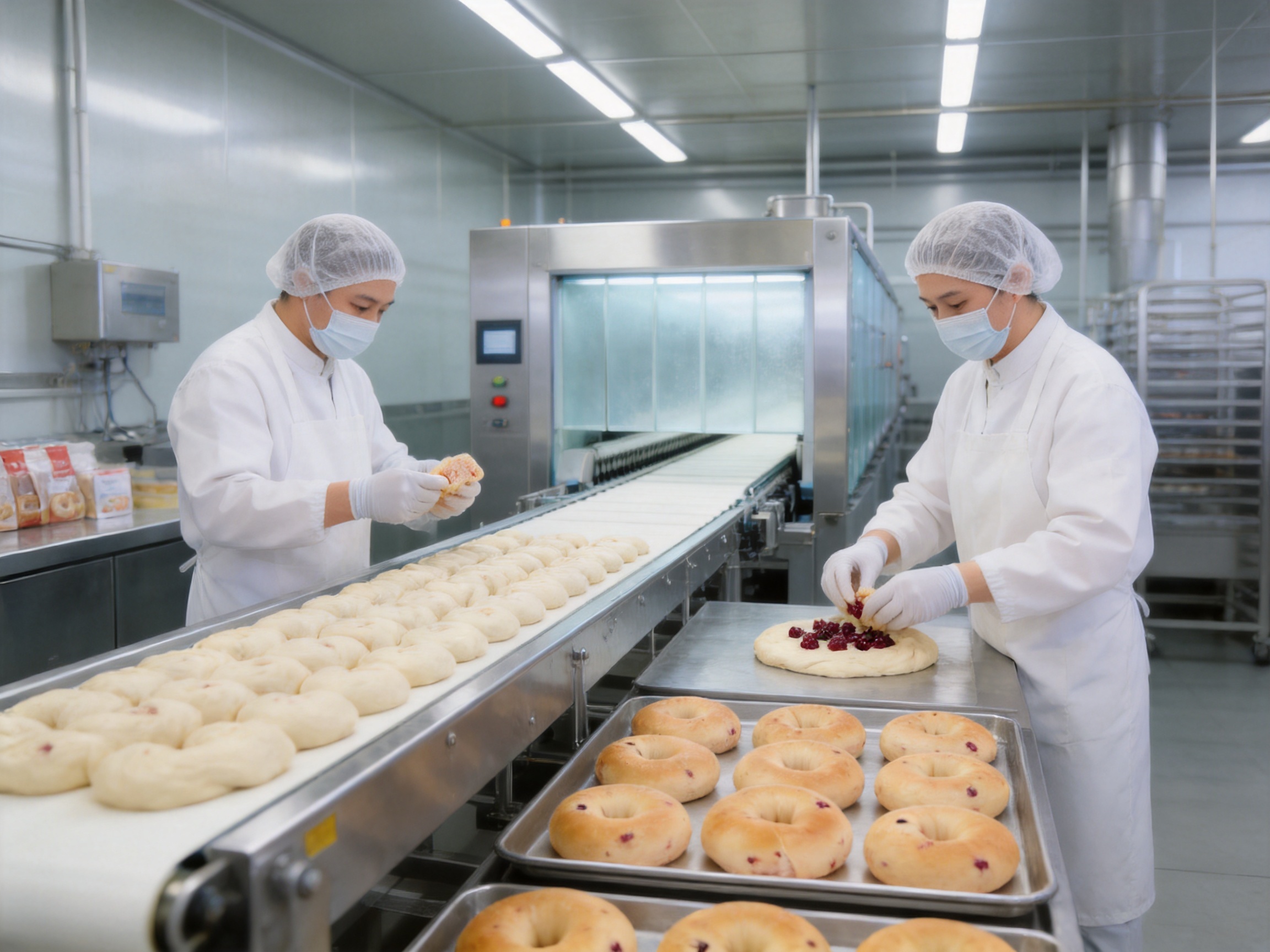
A successful commercial bagel requires more than an attractive recipe. It depends on a controlled manufacturing system that can reproduce the intended quality at scale. Jiangsu Goobagel Food Technology Co., Ltd. operates as a modern frozen bakery producer with an integrated supply chain covering raw materials, research and development, production, and nationwide distribution.
This integrated structure supports coordination between product concept and manufacturing reality. Ingredient selection can be evaluated alongside dough behavior, baking performance, frozen storage requirements, packaging needs, and end-user preparation. As a result, the product is developed not only for flavor, but also for commercial practicality.
The company’s specialization in bagel research and manufacturing since 2019 provides a focused base of experience. Bagels have distinct processing requirements compared with ordinary bread rolls. Dough strength, shaping, surface development, cooking or pretreatment conditions, baking, cooling, freezing, and reheating performance all influence the final product. A manufacturer dedicated to bagels can refine these stages around the expectations of retail and foodservice buyers.
The company has created more than 100 clean-label bagel varieties. This range indicates experience with different flavor directions, inclusions, formats, and market applications. Such a product portfolio can help the manufacturer understand how ingredients influence dough behavior and how different customer groups evaluate texture, appearance, convenience, and value.
For private-label and OEM buyers, this background is especially valuable. A customer may need a standard cranberry bagel, a customized fruit ratio, a specific size, a retail pack, or a foodservice case configuration. A broad research and manufacturing platform can provide a stronger starting point for adapting products to commercial requirements.
Raw Material Selection and Ingredient Control
Quality begins before mixing. Selecting suitable wheat and other raw materials helps establish a stable base for the entire product. Wheat characteristics influence dough strength, water absorption, chew, volume, crumb structure, and the final grain aroma. Consistent raw material control is therefore important for delivering the same experience across production batches.
For a cranberry bagel, ingredient control must also address the dried fruit. Cranberries can vary in moisture, size, sweetness, acidity, and physical condition. These factors may influence mixing, distribution, dough hydration, and finished texture. A professional production system evaluates fruit suitability so that the inclusion remains compatible with the dough and the intended product profile.
Clean-label development further supports transparent product positioning. While final labeling depends on the specific formulation and applicable regulations, the company’s portfolio is described as consisting of clean-label bagel varieties. This orientation aligns with consumer interest in recognizable ingredients and straightforward food communication.
Ingredient management also involves storage and handling. Wheat, fruit, and other materials need appropriate conditions to preserve quality before they enter production. Organized supply-chain control helps reduce fluctuations and supports more dependable output for customers who require regular delivery.
Dough Development and Cranberry Distribution
Dough development is a central stage in achieving the product’s resilient exterior and tender interior. Mixing must create sufficient structure to support shaping and fruit inclusion while avoiding a texture that becomes excessively tough. Hydration and mixing intensity need to be balanced with the characteristics of the selected wheat and the condition of the dried cranberries.
The timing of cranberry incorporation is also important. Fruit should be distributed through the dough without being excessively damaged during mixing. A controlled process helps preserve the visible identity of the cranberries and reduces the risk of uneven concentration. Proper distribution contributes to a more consistent flavor and appearance after slicing.
Shaping is another point at which manufacturing precision affects the customer experience. A bagel needs a recognizable form, a central opening or defined profile where applicable, and enough structural strength to survive handling. Uniform shaping supports consistent baking and helps retail and foodservice operators present a professional finished product.
Because the cranberry bagel is intended for commercial use, process repeatability is essential. A recipe may perform well in a small test batch but behave differently when scaled. Research and development experience allows the manufacturer to adjust mixing, forming, proofing, and baking parameters so that the product remains stable at production volume.
Baking, Cooling, and Frozen Bakery Performance
Baking transforms the developed dough into a finished bagel with a firm outer layer, tender interior, and developed grain aroma. Time and temperature must be managed carefully. Underbaking can create structural weakness or an underdeveloped interior, while excessive baking can reduce tenderness and produce a dry or overly firm result.
The cranberries add another consideration. Fruit contains its own moisture and sugars, which can influence browning and localized texture. A suitable baking profile helps the fruit remain pleasant to chew while allowing the wheat-based structure to develop properly.
After baking, cooling is necessary before freezing and packing. Controlled cooling helps stabilize the bagel’s internal structure and limits unwanted condensation. This stage is part of the broader quality system rather than an afterthought. A well-managed cooling process can contribute to better frozen storage performance and a more consistent result after preparation.
Freezing is a major advantage of the product format. Frozen bagels can support centralized manufacturing and distribution, allowing customers to receive a consistent product without operating a full bagel production line at every location. Retailers can plan inventory, while cafés and foodservice businesses can prepare the quantity needed for daily demand.
Frozen bakery products must be handled according to appropriate storage and food-safety procedures. Temperature control, packaging integrity, stock rotation, and preparation instructions all contribute to quality. When these practices are followed, the cranberry bagel can offer reliable convenience without sacrificing the characteristics expected from a finished bakery product.
Commercial Applications Across Multiple Channels
The product is suitable for retail, foodservice, cafés, tea brands, bakery operators, and other commercial customers. Its flexible flavor and preparation profile allow different channels to build distinct serving concepts around the same bagel.
Retail and Supermarket Applications
In retail, the bagel can be presented as a frozen breakfast item, a better-for-you bakery choice, or a fruit-forward alternative to plain bagels. Packaging can emphasize the cranberry inclusion, low-fat positioning, wheat foundation, and preparation convenience. Sliced or whole-bagel formats may be considered according to the needs of the target market.
Retail customers often value products that can be stored and used gradually. A frozen format allows households to prepare individual portions rather than consuming an entire fresh package immediately. This can support breakfast planning, school lunches, weekend brunch, and quick snacks.
Café and Coffee Shop Menus
Cafés can toast the bagel and serve it with cream cheese, whipped yogurt spread, fruit preserves, or nut butter. For a more substantial offering, it can be combined with turkey, chicken, egg, or fresh greens. The cranberry flavor adds differentiation to a menu that may otherwise rely heavily on plain or savory bagels.
The bagel can also complement coffee, tea, smoothies, and yogurt drinks. Its moderate fruit sweetness makes it suitable for morning service without positioning it exclusively as a dessert. A café can offer it as a standalone item, a breakfast combination, or part of a seasonal menu.
Hotels and Institutional Foodservice
Hotels can include the product in breakfast buffets where guests expect a choice of breads, pastries, fruit, dairy, and spreads. Its distinctive flavor helps add variety while its frozen format supports planned supply and controlled preparation.
Institutional foodservice operators may also find value in a low-fat fruit bagel that can be paired with lighter toppings. Schools, workplaces, hospitals, and wellness-focused facilities can build balanced meal combinations using yogurt, fresh fruit, lean protein, and vegetables.
Bakery and Private-Label Programs
Bakery operators and private-label brands can use the product as a foundation for their own market positioning. They may choose specific packaging designs, case quantities, serving sizes, or preparation recommendations. The product can be sold under a retailer or foodservice brand when the relevant OEM and private-label requirements are agreed upon.
Private-label development may also involve adjustments to flavor intensity, cranberry quantity, product weight, shape, or packaging. A manufacturer with an established R&D team can help evaluate the technical feasibility of these changes and align them with production capabilities.
Serving Ideas for Consumers and Operators
The simplest serving method is to thaw or heat the bagel according to the applicable preparation instructions and enjoy it plain. This allows the wheat aroma and cranberry flavor to remain the focus. Toasting can intensify the grain fragrance and add a lightly crisp surface.
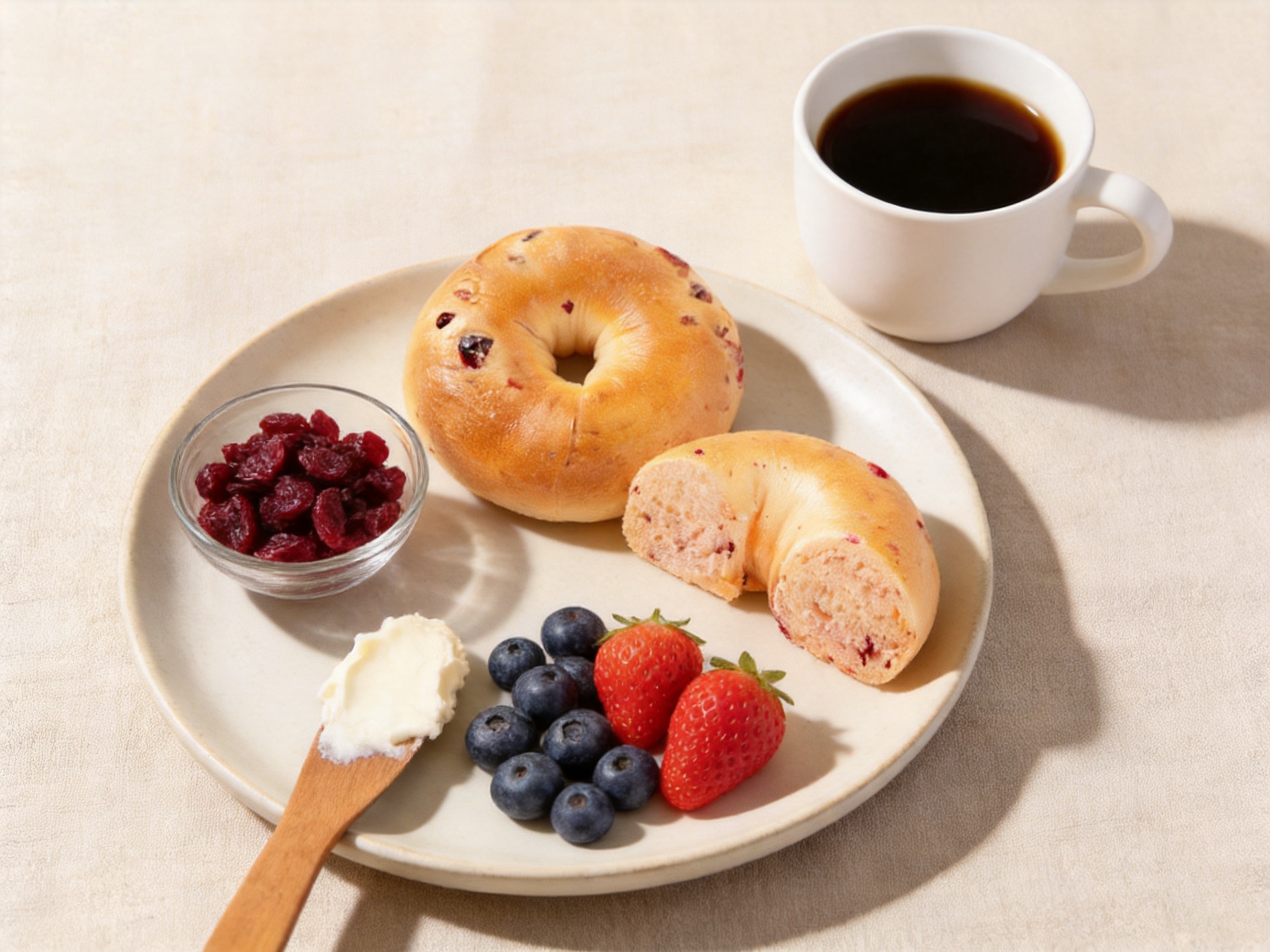
Cream cheese is a classic pairing. A plain spread highlights the sweet-tart cranberry notes, while honey, cinnamon, orange zest, or chopped walnuts can create a more elaborate breakfast combination. A whipped or reduced-fat cream cheese option may reinforce the product’s lighter positioning.
Greek yogurt or strained yogurt offers a tangy and protein-rich pairing. Adding sliced banana, apple, pear, or fresh berries can transform the bagel into a complete breakfast plate. For a nut-based application, almond butter or peanut butter can provide richness and contrast with the cranberry acidity.
The bagel can also support savory combinations. Lean turkey, chicken, egg, or low-fat cheese can be balanced with lettuce, spinach, cucumber, tomato, or fresh herbs. A cranberry bagel used in this way creates a sweet-savory sandwich with more personality than a standard white bread base.
For foodservice, portion control and menu consistency are important. Operators can establish standard topping weights, toasting times, and assembly procedures. Since the bagel itself has a clear flavor identity, the number of additional ingredients can remain relatively small, helping control food cost and preparation complexity.
Why Consistency Matters to B2B Buyers
Commercial customers need more than a product that tastes good during a sample evaluation. They need confidence that the same product will perform across deliveries, locations, and preparation teams. Consistent size, weight, texture, appearance, and fruit distribution help reduce training requirements and support predictable customer expectations.
Consistency is especially important for chains and multi-location operators. A café brand may need the same cranberry bagel to be served in different cities or regions. A centralized frozen bakery supply can make it easier to maintain product uniformity than relying on local production at every location.
Reliable supply also supports promotional planning. Retailers may schedule seasonal breakfast campaigns, back-to-school promotions, wellness programs, or new product launches. Foodservice businesses may need regular replenishment based on weekly sales. An integrated manufacturer with nationwide distribution experience can support these requirements more effectively than a small, inconsistent supplier.
Jiangsu Goobagel Food Technology Co., Ltd. describes its products as offering stable quality, consistent performance, and reliable supply. These qualities are directly relevant to buyers seeking a long-term supplier rather than a one-time purchase. They also support product expansion, since a customer may begin with one flavor and later add additional bagel varieties from the manufacturer’s broader portfolio.
OEM and Private-Label Potential
The Healthy and Low-Fat Cranberry Bagel can serve as an OEM or private-label product for companies building a customized bakery range. OEM cooperation can be useful for supermarkets, café chains, restaurant groups, distributors, food brands, and regional bakery businesses that want to offer a distinctive bagel without establishing their own production facility.
Customization may involve product specification, packaging, labeling, carton configuration, serving weight, or market positioning. Buyers can discuss whether they need a standard product or a tailored version that fits a specific brand strategy. For example, a retailer may want a family-size pack, while a café chain may need a case format optimized for daily thawing and toasting.
A private-label product also gives a brand more control over its customer relationship. The bagel can be incorporated into a broader wellness, breakfast, convenience, or premium bakery program. Cranberry flavor may serve as an accessible starting point for a fruit-based range that later includes other fruits, grains, seeds, or specialty formulations.
Effective OEM cooperation depends on clear communication. Buyers should define target markets, package sizes, expected order volumes, storage conditions, preparation methods, labeling obligations, and delivery schedules. The manufacturer can then evaluate the requirements through its R&D and production systems.
Quality and Product Development Philosophy
Goobagel Food’s stated values include persistence, craftsmanship, respect, and science. These values are relevant to the development of a product that must combine sensory appeal with technical reliability. Persistence supports continuous improvement. Craftsmanship reflects attention to dough, shaping, baking, and presentation. Respect encourages consideration for customers, partners, and end consumers. Science supports controlled development and evidence-based process decisions.
The company’s mission is to provide customers with high-quality and healthy products while providing partners with opportunities to realize their dreams. The cranberry bagel fits this mission through its low-fat concept, fruit inclusion, convenient frozen format, and potential for commercial customization.
The stated vision is to strive for a better life. In product terms, this can be interpreted as creating bakery foods that fit modern routines more comfortably. Consumers want convenience, but they also want flavor, recognizable ingredients, and choices that align with their personal health goals. Commercial buyers want products that are attractive to customers, operationally practical, and supported by dependable supply. The product addresses these needs at the intersection of taste, nutrition positioning, and manufacturing capability.
How the Product Supports Better Menu Design
A strong menu product should provide flexibility without creating unnecessary complexity. The cranberry bagel can be placed in several menu categories: healthy breakfast, fruit bakery, light meal, vegetarian option, post-workout snack, café bakery, or premium frozen bakery. This range gives operators opportunities to test different price points and customer occasions.
For a breakfast menu, it can be offered with yogurt, fruit, or a hot beverage. For a lunch menu, it can become a sandwich base with lean protein and salad vegetables. For an afternoon menu, it can be toasted and paired with a lighter spread. For a catering menu, it can be sliced into smaller portions and arranged with assorted spreads and fruit.
The cranberry flavor can also support seasonal merchandising. It may be suitable for autumn and winter promotions, holiday breakfast packages, or wellness campaigns at the beginning of a new year. However, the product is not limited to a seasonal role. Its wheat-and-fruit profile can remain relevant throughout the year.
Because it is available as a frozen bakery item, operators can reduce the number of separate dough-making steps at the point of sale. Staff can focus on thawing, heating, slicing, topping, and presentation. This can make the product useful for businesses that want a fresh bakery impression but do not have the space, equipment, or labor for full-scale bagel production.
Consumer Expectations and Sensory Positioning
Modern consumers often evaluate bakery products through several questions at once. Does the product taste good? Is it filling? Does it contain an ingredient they recognize? Can it fit into a busy routine? Is it suitable for the way they prefer to eat? The Healthy and Low-Fat Cranberry Bagel is designed to answer these questions through a combination of flavor, texture, and convenience.
The wheat aroma creates familiarity. The cranberries create interest. The low-fat positioning provides a lighter point of entry. The resilient exterior and tender interior deliver satisfaction. The frozen format supports storage and preparation flexibility. Together, these attributes give the bagel a broader value proposition than a product based on flavor alone.
The product should not be understood as a compromise between health and enjoyment. Instead, it aims to make the two qualities work together. A low-fat bakery item still needs a pleasurable texture. A fruit-forward item still needs a strong grain foundation. A convenient frozen item still needs to perform like a finished bagel after suitable preparation.
Recommended Evaluation Points for Buyers
When evaluating the product for commercial purchase, buyers should consider more than the package appearance. A complete assessment may include flavor balance, cranberry distribution, bagel size, sliceability, thawing performance, toasting response, topping compatibility, packaging, storage requirements, and delivery capability.
Sampling should include several preparation methods. The bagel can be evaluated plain, toasted, paired with a dairy spread, and assembled with a savory topping. This allows buyers to determine whether the product fits their intended menu applications.
Texture should be examined immediately after preparation and after a reasonable holding period. Foodservice operators may need to know how the bagel performs during breakfast rushes, buffet service, or delivery. Retail buyers may focus on home preparation and package convenience. Different channels will prioritize different characteristics.
Buyers should also discuss commercial details with the manufacturer, including minimum order quantities, packaging options, product specifications, lead times, storage conditions, logistics, and OEM development procedures. These details help ensure that the product’s technical qualities align with the customer’s business model.
Q&A: Healthy and Low-Fat Cranberry Bagel
What makes this cranberry bagel different from a standard fruit bread?
The product is developed as a bagel rather than a cake-like fruit bread or soft sweet roll. It is built around a wheat-based bagel structure with a resilient exterior and tender interior. Real dried cranberries are folded into the dough to provide sweet-tart fruit flavor while maintaining the chew and substance associated with a bagel.
Is the product suitable for health-conscious consumers?
The bagel is positioned as a low-fat option and is designed for consumers seeking a lighter bakery choice. Its suitability for individual dietary needs depends on the complete ingredient declaration, serving size, and personal nutritional requirements. Buyers should review product specifications and labeling before making specific dietary claims.
Does the bagel contain real cranberries?
The product description states that real dried cranberries are generously folded into the dough. This provides a more substantial fruit experience than a product relying only on fruit flavoring.
How does the product taste?
The intended flavor sequence begins with a warm, full-bodied wheat aroma. Cranberry notes then provide gentle tang and lingering sweetness. The result is balanced rather than excessively sugary, allowing the bagel to work with both sweet and savory toppings.
What is the texture of the finished bagel?
The product is designed to have a resilient outside and a tender inside. This structure supports slicing, toasting, spreading, and sandwich assembly while retaining a substantial bagel bite.
How can the bagel be served?
It can be served plain or toasted. Sweet pairings include cream cheese, yogurt, honey, nut butter, fresh fruit, and fruit spreads. Savory applications may include egg, turkey, chicken, low-fat cheese, spinach, lettuce, tomato, and other fresh vegetables.
Who can purchase this product?
The bagel is suitable for retailers, distributors, cafés, tea brands, restaurant groups, hotels, foodservice operators, bakery businesses, and private-label brands. It can be considered for both consumer retail and commercial menu applications.
Why is a frozen format useful for foodservice?
A frozen format can support planned inventory and centralized supply. Operators can store the product according to proper frozen-bakery procedures and prepare quantities based on demand. This may reduce the need for on-site dough production while supporting a consistent finished product.
Can the product be customized for OEM or private-label projects?
The manufacturer offers OEM and private-label bagel capabilities. Depending on the project, buyers may discuss specifications such as packaging, product size, case configuration, labeling, flavor profile, inclusion level, and supply requirements.
What manufacturing experience supports the product?
Jiangsu Goobagel Food Technology Co., Ltd. has specialized in bagel research and manufacturing since 2019. It operates an integrated supply chain covering raw materials, R&D, production, and distribution, and has developed more than 100 bagel varieties for different commercial channels.
What should buyers confirm before placing an order?
Buyers should confirm the product specification, ingredient and allergen information, serving weight, packaging format, minimum order quantity, frozen storage requirements, shelf-life information, lead time, shipping conditions, and any OEM or private-label requirements. Final details should be agreed directly with the manufacturer.
Conclusion
The Healthy and Low-Fat Cranberry Bagel offers a balanced answer to the changing demands of the bakery market. It combines a premium wheat foundation, generous real dried cranberries, low-fat positioning, and a resilient-outside, tender-inside texture. These qualities make it more versatile than a heavily sweet fruit bread and more distinctive than a plain bagel.
Its value extends beyond the consumer eating experience. Retailers can use it to strengthen frozen breakfast ranges. Cafés can build sweet and savory menu items around it. Foodservice operators can benefit from convenient preparation and reliable portion planning. Private-label brands can explore customized packaging and product development through an experienced bagel manufacturer.
The manufacturing capabilities of Jiangsu Goobagel Food Technology Co., Ltd. provide the foundation for commercial application. With focused bagel expertise, an integrated supply chain, broad product development experience, and a stated commitment to quality and healthy products, the company is positioned to support customers seeking dependable OEM, private-label, and wholesale bagel solutions.
For consumers, the product provides a flavorful and satisfying way to enjoy a fruit-based breakfast or snack. For B2B buyers, it offers a practical combination of sensory appeal, menu flexibility, health-conscious positioning, and frozen supply convenience. That combination gives the cranberry bagel a strong place in modern retail and foodservice portfolios.
References
1. Jiangsu Goobagel Food Technology Co., Ltd. Product information for Healthy and Low-Fat Cranberry Bagel.
2. Jiangsu Goobagel Food Technology Co., Ltd. Company information and manufacturing profile.
3. General principles of frozen bakery manufacturing, including dough development, baking, cooling, freezing, storage, and preparation control.
4. General food product development principles for fruit inclusion, texture management, ingredient consistency, and commercial scale production.
5. General nutrition communication principles concerning low-fat product positioning and responsible dietary labeling.
