
 中文简体
 English





postmaster@goobagelfood.com
Content
- 1 Product Overview
- 2 The Science and Craft of the Pretzel-Style Crust
- 3 A Carefully Balanced Eating Experience
- 4 Advantages Over Conventional Bagels
- 5 Advantages Over Conventional Pretzels
- 6 Manufacturing Strengths and Integrated Production
- 7 Frozen Bakery Advantages for Commercial Buyers
- 8 Applications Across Retail and Foodservice
- 9 Menu Pairing Ideas
- 10 Private Label and OEM Potential
- 11 Quality, Consistency, and Supply Reliability
- 12 Why This Product Can Support Premium Positioning
- 13 Operational Considerations for Buyers
- 14 Brand and Product Storytelling
- 15 Sustainability of Use Through Menu Versatility
- 16 Frequently Asked Questions
- 16.1 What is a High-Temperature Baking Pretzel Bagel?
- 16.2 What makes the crust different from a regular bagel crust?
- 16.3 Why is high-temperature baking important?
- 16.4 Is the product closer to a bagel or a pretzel?
- 16.5 What does the bagel taste like?
- 16.6 What texture should customers expect?
- 16.7 Can the product be used for sandwiches?
- 16.8 Can it be served as a simple bakery item?
- 16.9 Who manufactures this product?
- 16.10 What manufacturing capabilities does the company offer?
- 16.11 Is the product suitable for OEM or private-label programs?
- 16.12 Why is a frozen bakery format useful for businesses?
- 16.13 What types of businesses can use the Pretzel Bagel?
- 16.14 How can the product be positioned on a menu?
- 16.15 What makes the product competitive?
- 17 Conclusion
- 18 References
- 19 Product: High-Temperature Baking Pretzel Bagel
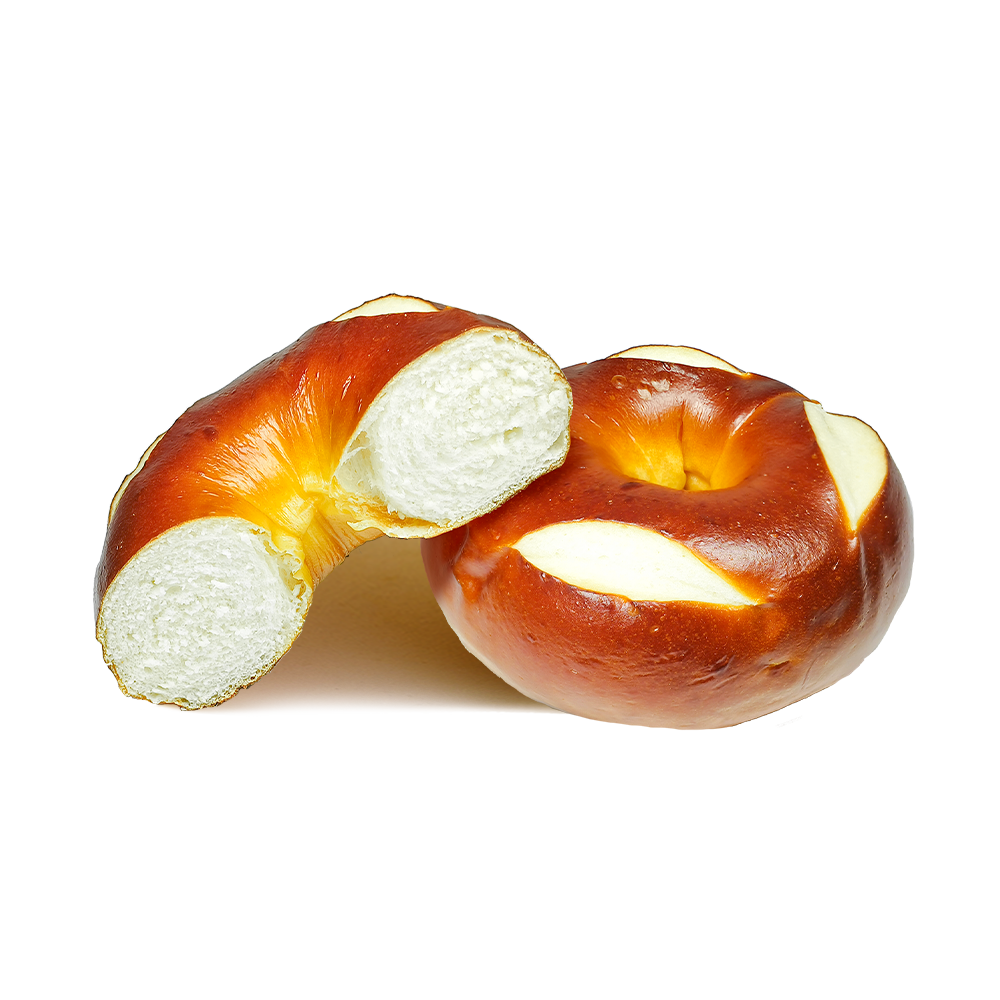
The High-Temperature Baking Pretzel Bagel brings together two highly recognizable bakery experiences: the chewy, resilient structure of a classic bagel and the glossy, savory crust associated with a traditional pretzel. Designed for retail, foodservice, cafés, sandwich shops, bakery operators, and branded food chains, this 100-gram product offers a distinctive eating experience while maintaining the consistency required for commercial use.
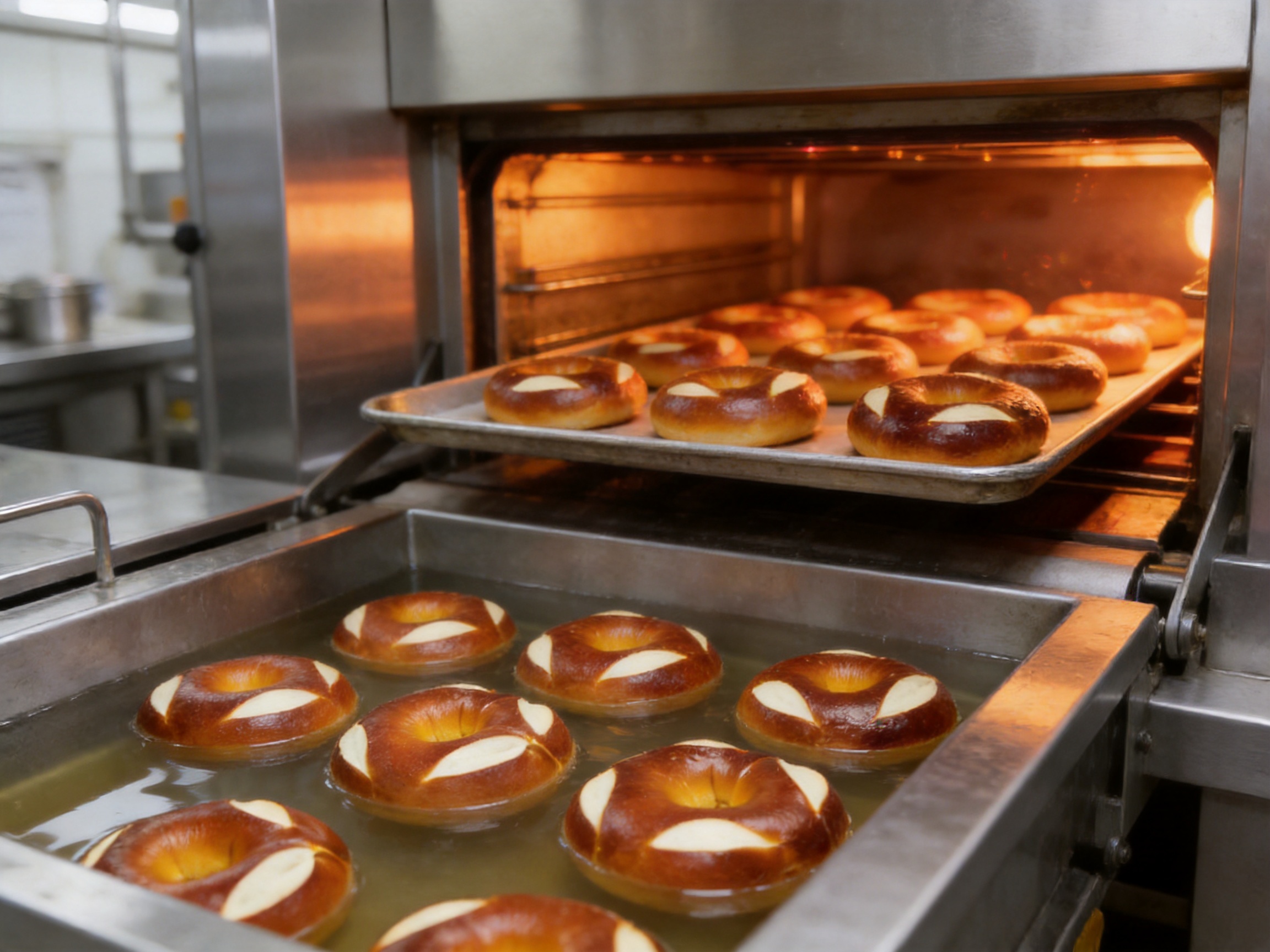
Its identity begins with a carefully controlled lye bath lasting more than 30 seconds. This stage is not simply a surface treatment. It prepares the dough for the characteristic pretzel finish by influencing the outer structure, color development, aroma, and crust texture during baking. The bagels are then baked at high temperature to encourage a full Maillard reaction, creating a deep brown, glossy crust with a noticeable roasted grain fragrance.
Compared with an ordinary plain bagel, the product offers a stronger visual identity and a more pronounced savory profile. Compared with a conventional pretzel, it delivers the familiar round format, interior chew, and menu versatility associated with a bagel. The result is a hybrid product that can function as a signature bakery item, a premium sandwich carrier, a breakfast base, or an ingredient for creative menu development.
High-Temperature Baking Pretzel Bagel
Product Overview
The High-Temperature Baking Pretzel Bagel is classified as an original bagel and is supplied in a convenient 100-gram format. Its proportions make it substantial enough for breakfast and sandwich applications while remaining suitable for individual retail packaging, café service, buffet presentation, and portion-controlled foodservice menus.
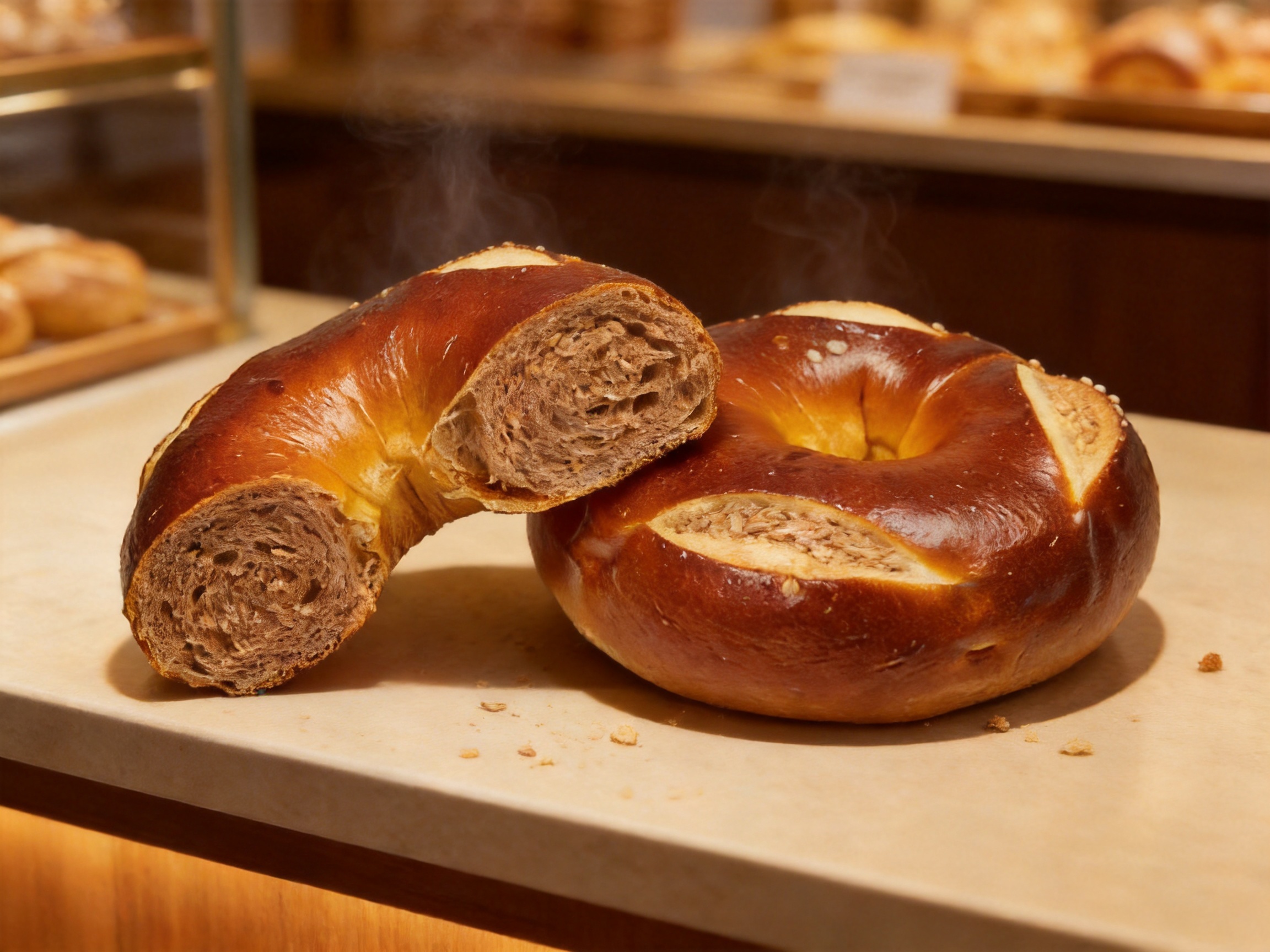
The most prominent feature is the deep, glossy crust. The surface has a rich brown appearance that immediately communicates a pretzel-style baking process. This visual quality can help the product stand out in a bakery display, freezer case, prepared-food counter, or online product catalogue. In a competitive bakery market, appearance is especially important because customers often make their first purchasing decision before tasting the product.
Under the crust, the bagel offers a wheat-forward interior with a resilient, pleasantly elastic bite. The product is designed to avoid the two extremes that can reduce customer satisfaction: an exterior that is excessively hard and an interior that is soft without structure. Instead, the eating experience moves from a lightly crisp surface to a chewy and fragrant center.
| Product Attribute | Product Characteristic | Commercial Benefit |
|---|---|---|
| Product type | Pretzel-style bagel | Combines two familiar bakery formats in one distinctive item |
| Declared weight | 100 grams | Suitable for individual serving and portion planning |
| Surface treatment | Lye bath lasting more than 30 seconds | Supports pretzel-style color, aroma, and crust development |
| Baking method | High-temperature baking | Promotes deep browning and a roasted savory profile |
| Texture | Lightly crisp exterior with resilient chew | Creates a memorable first bite and supports sandwich use |
| Flavor direction | Wheat-forward, toasted, salty-savory | Pairs with sweet, savory, creamy, and fresh ingredients |
| Application range | Retail, cafés, sandwiches, spreads, and creative foodservice | Allows operators to use one product across multiple menu sections |
The Science and Craft of the Pretzel-Style Crust
The defining stage of production is the lye bath. Each piece is immersed for more than 30 seconds before baking. In a controlled bakery process, this step helps prepare the dough surface for the visual and sensory characteristics expected from a pretzel-style product. The treatment contributes to the formation of a surface that can develop a pronounced sheen, deeper color, and more recognizable savory aroma in the oven.
The timing of the immersion matters. A process that is too short may not provide the desired surface development, while an uncontrolled or inconsistent treatment can produce uneven color and texture. For commercial manufacturing, the objective is repeatability. Every unit should receive a consistent treatment so that products supplied to retail and foodservice customers maintain a recognizable appearance from batch to batch.
Following the lye bath, the bagels enter a high-temperature baking process. The combination of surface preparation and intense oven heat supports the Maillard reaction, a series of chemical reactions responsible for much of the color and aroma associated with baked and roasted foods. In this product, the process contributes to a deep brown crust and a savory, toasted fragrance that is noticeable as soon as the bagel leaves the oven.
The baking stage must balance color development with moisture retention. Excessive heat or an unsuitable baking profile can result in a crust that is too dry, too hard, or bitter. Insufficient heat can leave the product pale and reduce the visual impact of the pretzel character. A well-managed process aims for a glossy, richly colored exterior while protecting the resilient structure of the interior.
Why the Glossy Exterior Matters
A glossy crust is more than a decorative feature. It communicates process, flavor, and quality before the customer takes a bite. A shiny deep-brown exterior suggests a carefully treated and well-baked surface, giving the product a stronger premium impression than a standard pale bagel.
The sheen also helps distinguish the product in a crowded display. Classic plain, sesame, onion, and multigrain bagels can all be appealing, but their visual language is familiar. A pretzel-style crust offers an immediate point of difference. It can attract customers who are looking for a more savory, indulgent, or bakery-crafted option without requiring an unfamiliar shape or complicated product explanation.
For foodservice operators, the product’s appearance can support menu storytelling. It may be presented as a signature pretzel bagel, a premium breakfast sandwich base, or a house specialty. The dark surface provides contrast against pale cream cheese, bright vegetables, sliced meats, smoked fish, and melted cheese, helping finished menu items look more visually developed.
A Carefully Balanced Eating Experience
The first bite is intended to deliver a lightly crisp and resilient exterior rather than an excessively hard shell. The crust provides a clean snap and a salty-savory impression, followed by the toasted aroma of wheat. As the bite moves inward, the texture becomes more elastic and chewy, reinforcing the bagel identity.
This progression is important because a successful hybrid product must preserve the strengths of both formats. If the product were only crisp and firm, it could resemble a hard pretzel roll and lose the satisfying chew expected from a bagel. If it were only soft and bread-like, it would not deliver a convincing pretzel experience. The intended balance allows the product to communicate both identities clearly.
The flavor is deliberately versatile. The wheat-forward base provides a warm grain character without overwhelming the ingredients added later. Its savory crust can support rich spreads, salty proteins, melted cheese, fresh vegetables, smoked ingredients, and sweet-savory combinations. This makes the bagel suitable for both simple preparation and more developed menu concepts.
Texture Performance Across Applications
Texture is one of the most important factors in commercial bakery products. Consumers expect a product to remain enjoyable from the first bite to the last, while operators need it to tolerate slicing, filling, holding, and service. The resilient structure of this bagel helps it function as more than a product eaten plain.
When sliced, the bagel provides two stable halves that can carry spreads and fillings. The interior should offer enough strength to support ingredients without collapsing immediately under moisture or weight. At the same time, it remains approachable for customers who prefer a substantial but not excessively dense bakery item.
In breakfast service, the bagel can be toasted and paired with cream cheese, eggs, cheese, or breakfast meats. In lunch service, it can carry sliced proteins, vegetables, sauces, and salads. In café service, it can be served warm as a simple bakery item or incorporated into a plated meal. The product’s structure gives operators flexibility without requiring a different bread format for every daypart.
Advantages Over Conventional Bagels
Classic bagels remain popular because of their chewy texture and broad compatibility with spreads and fillings. However, a conventional plain bagel may not provide enough visual or flavor distinction for operators seeking a signature offering. The High-Temperature Baking Pretzel Bagel addresses this opportunity with a more developed crust and a stronger savory identity.
Its deep color can increase shelf and display appeal. A customer scanning a bakery case may notice the product quickly because it looks different from a standard pale or lightly topped bagel. The pretzel-style surface also creates a clear product story that sales staff can communicate easily: the dough receives a lye bath of more than 30 seconds and is then baked at high temperature for a glossy, deeply browned crust.
The flavor profile offers another point of distinction. A plain bagel typically serves as a neutral base, while this product contributes roasted wheat, toasted grain, and savory crust notes. Those characteristics can reduce the need for aggressive toppings or heavy sauces, allowing operators to build balanced products with fewer components.
The bagel also offers an opportunity for premium positioning. The combination of specialized treatment, high-temperature baking, and controlled texture can be presented as a more crafted alternative to an ordinary bakery staple. This does not mean that every application must be expensive or elaborate. The same product can support a simple cream cheese serving and a premium composed sandwich.
| Comparison Point | Standard Plain Bagel | Pretzel-Style Bagel |
|---|---|---|
| Visual identity | Familiar, generally light-colored surface | Deep brown, glossy crust with strong pretzel recognition |
| Flavor contribution | Neutral wheat base | Toasted grain and savory pretzel-style notes |
| Consumer impression | Reliable everyday staple | Distinctive, premium, and bakery-crafted |
| Menu differentiation | Often requires toppings or fillings to stand apart | Provides differentiation before additional ingredients are added |
| Pairing range | Broad compatibility | Broad compatibility with an added savory crust dimension |
| Display impact | Depends heavily on toppings | Strong visual presence from the crust itself |
Advantages Over Conventional Pretzels
The product also differs from a conventional pretzel in ways that expand its commercial use. Traditional pretzels are often associated with snack occasions, dipping sauces, stadium service, and casual eating. The round bagel format makes this product more adaptable to breakfast, lunch, café, and bakery menus.
A bagel format naturally supports slicing and filling. It can be prepared as a sandwich without the need to adapt the product to a different serving style. This makes it easier for operators to add pretzel flavor to existing bagel menus, breakfast programs, and sandwich lines.
The interior chew also contributes to a more substantial eating experience. While pretzels can be satisfying as snacks, a bagel-style product can be positioned as a complete meal carrier when paired with eggs, cheese, vegetables, deli meats, smoked fish, or plant-based proteins.
For retailers, the product can occupy a useful middle ground between a snack pretzel and a traditional bagel. It is recognizable enough for broad consumer acceptance but distinctive enough to create curiosity. This balance can support trial among customers who already purchase bagels as well as those who enjoy pretzel-style bakery products.
Manufacturing Strengths and Integrated Production
Jiangsu Goobagel Food Technology Co., Ltd. has specialized in bagel research and manufacturing since 2019. The company operates as a modern frozen bakery producer with an integrated supply chain covering raw materials, research and development, production, and nationwide distribution.
This integrated structure is important for a product that depends on consistent treatment and baking performance. A pretzel-style bagel requires coordination between dough preparation, shaping, surface treatment, oven settings, cooling, packaging, storage, and distribution. When these stages are managed within a coordinated production system, the manufacturer can work toward greater uniformity in weight, appearance, texture, and supply.
Manufacturing integration also supports product development. Research and development teams can evaluate ingredients, process conditions, dough behavior, baking profiles, and application performance as part of a connected workflow. This allows the company to improve products not only for flavor but also for commercial practicality.
Research and Development Capability
Goobagel Food has developed more than 100 clean-label bagel varieties for retail, foodservice, café chains, tea brands, and bakery operators. This breadth indicates experience working with different flavor directions, textures, formats, and menu requirements.
For customers seeking an OEM or private-label product, a broad development portfolio can be valuable. It suggests that the manufacturer is familiar with the process of translating a general product idea into a repeatable commercial item. The Pretzel Bagel can serve as a foundation for additional development, including different topping systems, packaging presentations, serving suggestions, or menu-specific specifications where appropriate.
Product development for commercial bakery requires more than creating a good sample. The product must be repeatable at scale, stable within the intended supply chain, and practical for the customer’s preparation method. A manufacturer with experience across numerous varieties is better positioned to consider these requirements during development.
Process Control from Dough to Distribution
The product’s quality depends on the relationship between every stage of manufacturing. Dough preparation influences the final crumb and chew. Shaping affects thickness and visual uniformity. The lye bath affects the crust. Baking determines color, aroma, and moisture balance. Cooling and handling influence the condition of the finished surface. Frozen distribution must preserve the product until it reaches the customer.
Goobagel Food’s integrated model brings these stages into a coordinated supply chain. This supports the company’s stated focus on stable quality, consistent performance, and reliable supply. For buyers, reliable supply is as important as flavor because menu planning, retail availability, and promotional campaigns depend on receiving products according to schedule.
In a commercial environment, even a highly appealing bakery product can become difficult to use if specifications fluctuate. Variations in weight may affect portion costs. Variations in crust color may affect display consistency. Variations in texture may affect customer expectations. An organized manufacturing system helps reduce these operational concerns.
Frozen Bakery Advantages for Commercial Buyers
The frozen bakery model offers practical advantages for businesses that need dependable supply and flexible inventory management. Retailers and foodservice operators can plan production around demand instead of relying only on daily fresh-baked output. This can be especially useful for businesses with multiple locations, changing traffic patterns, or seasonal demand.
A frozen format can also simplify menu expansion. An operator may introduce the Pretzel Bagel without installing a complete dough production line or adding specialized pretzel-making equipment. The product can be incorporated into an existing preparation workflow according to the buyer’s operational requirements.
For café chains and food brands, centralized purchasing can help maintain a common product experience across locations. Consistent supply from a specialized manufacturer supports standardized recipes, training materials, photography, menu descriptions, and promotional campaigns.
Frozen bakery supply may also help reduce unnecessary preparation losses. Operators can manage inventory according to expected volume and prepare products in line with demand. Although each business must establish its own storage and handling procedures, a frozen supply model can provide greater flexibility than a fully fresh, production-intensive approach.
Applications Across Retail and Foodservice
Retail Bakery and Grocery
In retail, the Pretzel Bagel can be sold as a premium bakery item, a packaged frozen product, or part of a prepared-food program. Its crust provides strong shelf appeal, while its familiar round format makes it easy for customers to understand.
Retailers can position it alongside classic bagels, specialty breads, breakfast pastries, and pretzel products. It may be sold individually, in multipacks, or as part of a themed bakery assortment. The product’s identity is clear enough to support simple merchandising, while its versatility allows retailers to promote serving ideas such as breakfast sandwiches or cream cheese pairings.
A retail label can emphasize the more than 30-second lye bath, high-temperature baking, glossy crust, toasted wheat aroma, and resilient chew. These details give customers a concise explanation of what makes the product different.
Cafés and Coffee Shops
Cafés can use the bagel as a breakfast or all-day bakery item. Served warm with butter, cream cheese, or a savory spread, it can provide a satisfying companion to coffee and other beverages. Its toasted grain notes can complement roasted beverage flavors without requiring complicated preparation.
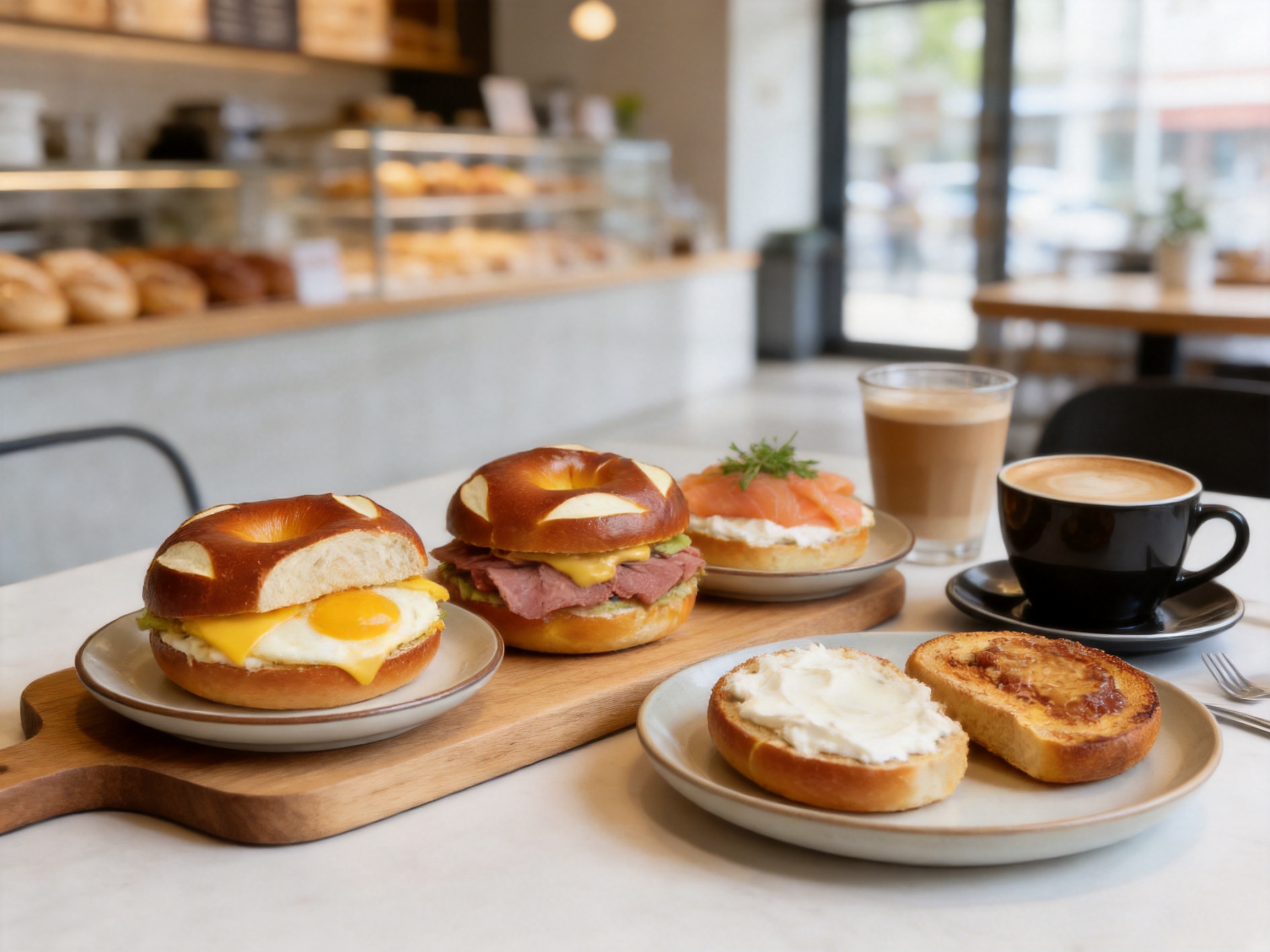
For cafés that offer sandwiches, the bagel can serve as a premium carrier for eggs, cheese, bacon, sausage, smoked salmon, chicken, vegetables, or plant-based fillings. The dark crust adds visual contrast to menu photography and can make a familiar sandwich appear more distinctive.
The product may also support limited-time offers. A café could introduce a seasonal filling, a regional flavor combination, or a new spread while keeping the same bagel base. This provides menu variety without changing the core bakery supply.
Breakfast and Brunch Menus
The Pretzel Bagel is naturally suited to breakfast and brunch because it combines a substantial bread format with a savory crust. A simple preparation might include scrambled eggs and melted cheese. A more premium version could include smoked fish, cream cheese, pickled vegetables, herbs, or fresh greens.
Its structure can support both handheld and plated presentations. For handheld service, the bagel can be sliced and filled. For plated brunch, it can be served toasted alongside eggs, salads, potatoes, or a dipping sauce. The product’s wheat-forward flavor allows it to connect with both traditional and contemporary breakfast concepts.
Sandwich Shops and Quick-Service Restaurants
Sandwich operators can use the product to create a signature carrier that differentiates their menu from standard buns and rolls. The pretzel-style crust can add perceived value without requiring an unfamiliar bread shape.
Possible applications include roast beef and cheese, turkey and mustard, grilled chicken, vegetarian fillings, egg salad, tuna salad, and roasted vegetable combinations. Rich fillings pair well with the savory crust, while fresh ingredients can provide contrast to the toasted grain character.
The product may also work well in combination meals. A pretzel bagel sandwich can be served with soup, salad, potatoes, or a beverage, giving operators another way to organize menu bundles.
Tea Brands and Contemporary Beverage Concepts
Tea brands and modern beverage shops increasingly use baked foods to expand average transaction value and encourage longer visits. The Pretzel Bagel can fit these environments because it is recognizable, portable, and suitable for both simple and premium preparation.
A small café-style menu might offer a plain toasted version with a savory spread, while a larger concept could develop a full sandwich range. The product’s visual appeal can support social-media-friendly presentation, particularly when the dark crust is paired with colorful fillings or neatly layered ingredients.
Menu Pairing Ideas
The product’s toasted wheat and savory crust provide a strong foundation for a wide range of pairings. Creamy ingredients soften the crust’s saltiness, while fresh or acidic ingredients add brightness. Rich proteins create a hearty meal, and sweet-savory combinations can highlight the contrast between the baked crust and a more delicate filling.
| Menu Direction | Suggested Components | Why the Pairing Works |
|---|---|---|
| Classic breakfast | Egg, melted cheese, and breakfast meat | Creates a familiar, filling sandwich with a more distinctive bread base |
| Café classic | Cream cheese, butter, or savory whipped spread | Allows the crust and wheat flavor to remain central |
| Premium seafood | Smoked fish, cream cheese, herbs, and fresh vegetables | Balances rich ingredients with the bagel’s toasted grain character |
| Deli-style lunch | Roast beef, turkey, cheese, mustard, or pickles | Matches the savory crust with robust sandwich flavors |
| Vegetarian | Grilled vegetables, hummus, greens, and tomato | Uses fresh textures and color to contrast with the dark crust |
| Sweet-savory | Soft cheese, fruit preserve, honey, or roasted nuts | Creates contrast between the savory surface and gentle sweetness |
| Modern snack | Toasted slices with dips or spreads | Turns the bagel into a shareable or casual snack format |
Private Label and OEM Potential
The product is suitable for businesses that want to develop a branded bagel program without building a dedicated manufacturing operation. OEM and private-label cooperation can allow a retailer, café chain, distributor, or foodservice company to introduce a distinctive pretzel-style bagel under its own market identity.
A successful OEM project begins with clear product specifications. Buyers may define target weight, crust appearance, texture, packaging format, intended application, distribution requirements, and preparation instructions. The manufacturer’s research and production capabilities can then support the process of converting those requirements into a repeatable product specification.
The 100-gram format provides a practical starting point for portion planning. Depending on the customer’s market and menu strategy, development discussions may also address pack configuration, labeling, cooking or reheating procedures, and compatibility with retail or foodservice operations.
Private-label customers benefit when the underlying product has a strong independent identity. A glossy pretzel crust and high-temperature baking story can give a private-label range a clear point of difference. The buyer does not need to rely only on a logo or packaging design; the product itself provides a recognizable reason for customers to choose it.
Quality, Consistency, and Supply Reliability
Consistency is central to the value of any commercial bakery product. Customers expect the same appearance and eating experience each time they purchase a familiar item. Operators expect products to perform predictably during preparation and service.
The manufacturing approach behind this Pretzel Bagel is designed around repeatability. The more-than-30-second lye bath provides a defined treatment stage. High-temperature baking provides a clear thermal direction for crust development. Integrated production connects these steps with raw-material management, research, manufacturing, and distribution.
Consistency does not mean the product lacks character. In this case, repeatability protects the character. The deep color, glossy surface, toasted aroma, and resilient bite should remain recognizable across batches. That makes it easier for a retailer to build customer loyalty and for a foodservice operator to maintain a dependable menu item.
Goobagel Food’s experience in developing more than 100 bagel varieties also supports a broader understanding of commercial quality. Different product types require different balances of moisture, chew, aroma, crust, and handling performance. Experience across a broad portfolio can help a manufacturer identify the process controls needed for each style.
Why This Product Can Support Premium Positioning
Premium positioning is often built from several connected details rather than one expensive ingredient. In this product, the position is supported by the visible crust, the specialized lye-bath stage, high-temperature baking, developed aroma, controlled texture, and broad application potential.
The product looks crafted because the crust has a distinct glossy finish. It smells appealing because high-temperature baking encourages toasted and roasted notes. It feels substantial because the interior retains a resilient chew. It remains commercially useful because the format works across breakfast, lunch, snack, retail, and café occasions.
This combination gives operators flexibility in pricing and presentation. The bagel may be sold as an accessible everyday item with a more distinctive profile, or it may be developed into a premium sandwich with carefully selected fillings. The product can therefore support different market positions without losing its core identity.
Operational Considerations for Buyers
Businesses evaluating the Pretzel Bagel should consider how it will fit into their existing workflow. Important factors may include frozen storage capacity, preparation equipment, thawing or baking procedures, slicing methods, packaging, and expected sales volume.
The product should be evaluated not only on its appearance when first received but also on its performance in the intended service environment. Buyers may test how the crust responds to reheating, how the interior holds fillings, how the product behaves during slicing, and how long the finished sandwich remains appealing during service.
Menu developers should also consider ingredient balance. Because the crust has a noticeable savory profile, fillings should either complement that character or intentionally provide contrast. Heavy sauces may be unnecessary when the product is paired with rich ingredients, while acidic or fresh components can help create a more balanced sandwich.
Retail buyers may focus on packaging visibility, product naming, consumer instructions, and freezer organization. Foodservice buyers may focus more on preparation speed, yield, portion consistency, and cross-menu applications. The product can support both channels, but the communication and operating procedures may differ.
Brand and Product Storytelling
A strong product story helps customers understand why a bakery item is different. The Pretzel Bagel has a concise and credible story: each piece receives a lye bath for more than 30 seconds, then undergoes high-temperature baking to develop a glossy brown crust and toasted savory aroma.
This story can appear in menu descriptions, retail packaging, staff training, promotional materials, or product photography. It gives sales teams a simple explanation that connects the process with the final eating experience.
For example, a menu description might emphasize a glossy pretzel crust, resilient bagel chew, and toasted wheat flavor. A retail package might focus on the high-temperature baking method and versatile serving suggestions. A foodservice brochure might focus on the product’s ability to perform across breakfast, sandwiches, and creative applications.
The most effective storytelling remains connected to what customers can see, smell, and taste. The deep crust is visible. The roasted aroma is noticeable. The chewy interior is experienced immediately. This alignment between process story and sensory result helps the product feel authentic rather than over-explained.
Sustainability of Use Through Menu Versatility
Menu versatility can contribute to more efficient product use. When one bakery item works across several dayparts, operators may be able to simplify purchasing and reduce the number of separate bread products required for different recipes.
The Pretzel Bagel can support breakfast sandwiches in the morning, deli-style sandwiches at lunch, a toasted snack in the afternoon, and a casual meal or takeaway item later in the day. The same base product can therefore serve multiple occasions while maintaining a consistent identity.
Versatility also gives businesses room to respond to changing consumer preferences. A café may highlight cream cheese and spreads during one season, introduce a vegetable-forward sandwich during another, and offer a limited-time protein combination later. The bagel remains familiar while the menu application changes.
Frequently Asked Questions
What is a High-Temperature Baking Pretzel Bagel?
It is a 100-gram bagel with a pretzel-style surface treatment and high-temperature baking process. The result is a glossy, deep-brown crust combined with a resilient, chewy bagel interior and toasted wheat flavor.
What makes the crust different from a regular bagel crust?
Each piece is immersed in a lye bath for more than 30 seconds before baking. This treatment helps create the characteristic pretzel-style surface, including a deeper color, noticeable sheen, and savory aroma when baked.
Why is high-temperature baking important?
High-temperature baking encourages a full Maillard reaction on the prepared surface. This supports the development of deep brown color, roasted grain aromas, and a more pronounced savory crust.
Is the product closer to a bagel or a pretzel?
It combines characteristics of both. The crust expresses a pretzel-style identity, while the round format, interior chew, and slicing potential make it function as a bagel. This hybrid profile is one of its main commercial advantages.
What does the bagel taste like?
The flavor is wheat-forward with toasted grain notes and a salty-savory crust impression. It is distinctive enough to stand on its own but balanced enough to pair with spreads, proteins, cheese, vegetables, smoked ingredients, and selected sweet-savory components.
What texture should customers expect?
The intended texture begins with a lightly crisp and resilient crust, followed by a chewy and elastic interior. The product is designed to avoid an excessively hard exterior or a weak, overly soft center.
Can the product be used for sandwiches?
Yes. Its round format and resilient structure make it suitable for breakfast sandwiches, deli sandwiches, café offerings, plant-based builds, seafood combinations, and other filled applications.
Can it be served as a simple bakery item?
Yes. It can be presented with cream cheese, butter, savory spreads, or other toppings. Its glossy crust and toasted wheat flavor give it enough character to be served with minimal additional ingredients.
Who manufactures this product?
The product is manufactured by Jiangsu Goobagel Food Technology Co., Ltd., a frozen bakery producer that has specialized in bagel research and manufacturing since 2019.
What manufacturing capabilities does the company offer?
The company operates an integrated supply chain covering raw materials, research and development, production, and nationwide distribution. It has developed more than 100 clean-label bagel varieties for retail, foodservice, café chains, tea brands, and bakery operators.
Is the product suitable for OEM or private-label programs?
Yes. Its clear product identity and the manufacturer’s development and production capabilities make it suitable for businesses exploring OEM or private-label bagel programs. Specific specifications, packaging, and supply arrangements should be confirmed during commercial discussions.
Why is a frozen bakery format useful for businesses?
A frozen format can support inventory planning, centralized purchasing, multi-location consistency, and flexible preparation. It may also help businesses introduce a specialty bagel without establishing a complete in-house dough production operation.
What types of businesses can use the Pretzel Bagel?
Potential users include grocery retailers, bakery shops, cafés, coffee shops, breakfast and brunch operators, sandwich shops, quick-service restaurants, tea brands, catering companies, and foodservice distributors.
It can be positioned as a signature pretzel bagel, premium breakfast carrier, toasted café item, sandwich base, bakery snack, or versatile foodservice staple. The best position depends on the operator’s customer base and menu structure.
What makes the product competitive?
Its competitive strengths include the recognizable pretzel-style crust, more-than-30-second lye bath, high-temperature baking method, deep color, toasted aroma, resilient chew, 100-gram format, and ability to support multiple menu applications.
Conclusion
The High-Temperature Baking Pretzel Bagel is designed to provide more than a familiar bread format. Its specialized surface treatment and high-temperature baking process create a deep, glossy crust with a savory aroma and lightly crisp texture. Beneath that crust, the product retains the chewy, resilient structure expected from a bagel.
This balance gives the product a strong position between the classic bagel and the traditional pretzel. It offers the visual distinction and roasted flavor of a pretzel while preserving the slicing, filling, and meal-building advantages of a bagel.
For commercial buyers, its value extends beyond sensory appeal. The product is supported by a manufacturer with bagel research and production experience, an integrated supply chain, a broad portfolio of more than 100 clean-label varieties, and capabilities serving retail, foodservice, café chains, tea brands, and bakery operators.
Whether presented simply with a spread, built into a premium breakfast sandwich, used as a deli carrier, or developed for a private-label program, the Pretzel Bagel offers a dependable way to create a more distinctive bakery menu. Its glossy crust, toasted wheat character, resilient chew, and flexible application range make it a compelling staple for businesses seeking both product identity and commercial practicality.
References
Bakery and Baking Science Reference Materials. Principles of dough development, crust formation, and commercial bread production.
Food Chemistry Reference Materials. Maillard reaction, browning, aroma development, and thermal processing in baked foods.
Commercial Frozen Bakery Industry Studies. Frozen distribution, inventory planning, foodservice applications, and product consistency.
Jiangsu Goobagel Food Technology Co., Ltd. Product information for the High-Temperature Baking Pretzel Bagel.
Jiangsu Goobagel Food Technology Co., Ltd. Corporate information concerning bagel research, manufacturing, product development, and supply-chain capabilities.
Professional Bakery Formulation and Process-Control Guides. Bagel texture, crust development, manufacturing repeatability, and commercial product evaluation.
