
 中文简体
 English





postmaster@goobagelfood.com
Content
- 1 1. Product Overview and Market Position
- 2 2. The Core Differentiator: Pretzel Technique Applied to a Bagel
- 3 3. High-Temperature Baking and Maillard Development
- 4 4. Sensory Profile
- 5 5. Advantages Over Conventional Bagels
- 6 6. Advantages Over Conventional Pretzels
- 7 7. Manufacturing Strengths and Integrated Supply Chain
- 8 8. Applications Across Foodservice and Retail
- 9 9. OEM and Private-Label Potential
- 10 10. Quality, Handling, and Commercial Performance
- 11 11. Clean-Label and Product Development Orientation
- 12 12. Competitive Comparison
- 13 13. Brand and Menu Storytelling
- 14 14. Practical Considerations for Buyers
- 15 15. Frequently Asked Questions
- 15.1 Q1: What makes this product different from a regular bagel?
- 15.2 Q2: Why is a lye bath used?
- 15.3 Q3: Does the product taste exactly like a traditional pretzel?
- 15.4 Q4: What is the product weight?
- 15.5 Q5: What types of fillings work well with the bagel?
- 15.6 Q6: Can it be used for breakfast and lunch?
- 15.7 Q7: Is it suitable for frozen bakery distribution?
- 15.8 Q8: Can the product be used in private-label programs?
- 15.9 Q9: How does high-temperature baking affect the product?
- 15.10 Q10: Is the crust hard or soft?
- 15.11 Q11: Who manufactures the product?
- 15.12 Q12: What manufacturing strengths support the product?
- 15.13 Q13: Can the bagel become a signature menu item?
- 15.14 Q14: What should buyers evaluate before placing a commercial order?
- 16 16. Overall Value Proposition
- 17 17. Conclusion
- 18 References
- 19 Product: High-Temperature Baking Pretzel Bagel
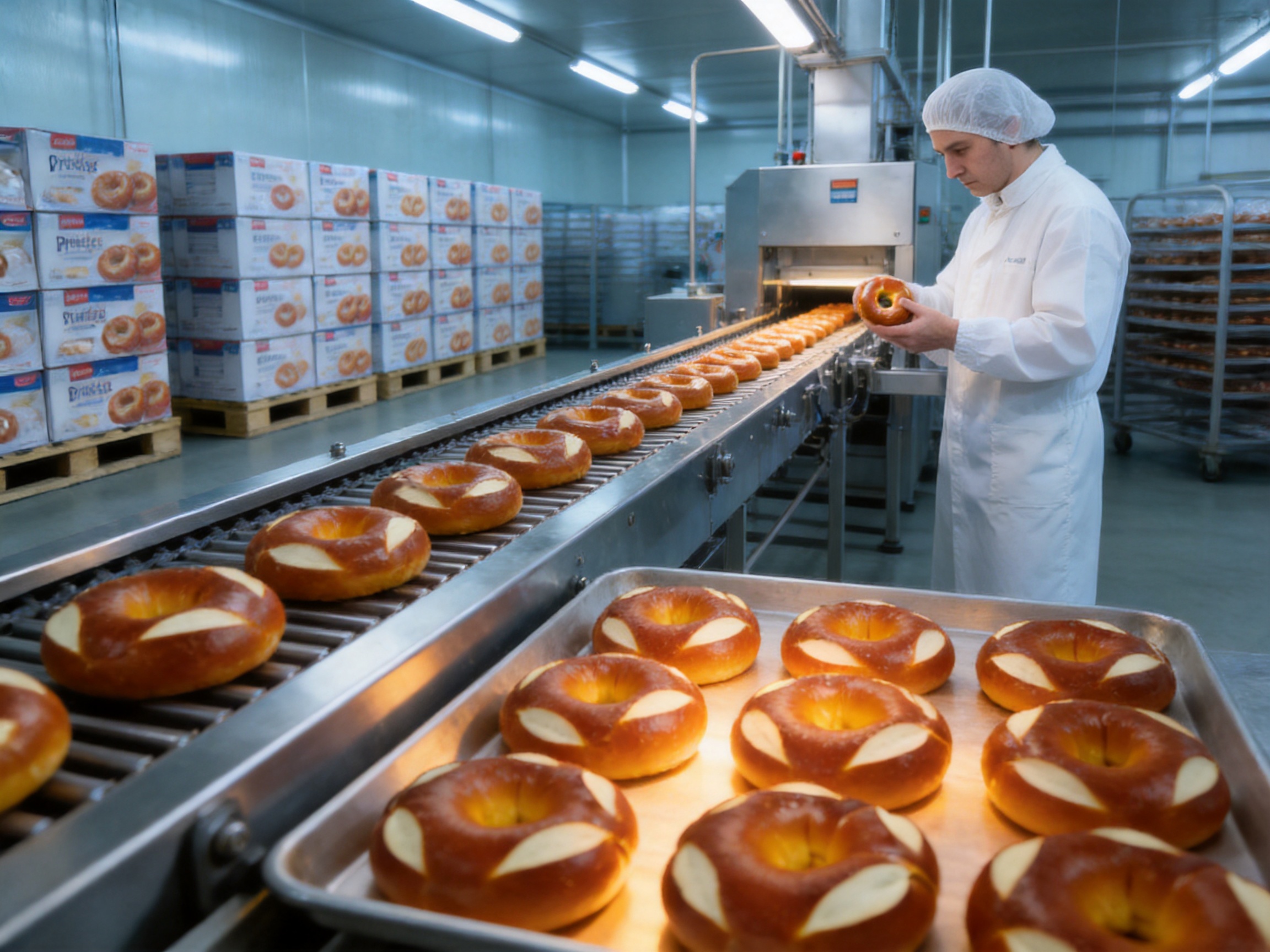
In a competitive bakery and foodservice market, a bagel must offer more than a familiar shape. It must deliver a recognizable eating experience, maintain quality after production and distribution, and provide enough versatility for different menus and customer preferences. The High-Temperature Baking Pretzel Bagel is designed around these requirements. It combines the chewy structure associated with a traditional bagel with the deep color, glossy finish, lightly crisp texture, and savory character of a pretzel.
Weighing 100 grams per piece, this product is positioned as a substantial, flexible bakery item for retail stores, cafés, restaurants, sandwich operators, foodservice distributors, and private-label programs. Its identity comes from a carefully controlled lye bath followed by high-temperature baking. This process gives the surface a distinctive pretzel-like appearance and flavor while preserving an elastic, wheat-forward interior.
The product is manufactured by Jiangsu Goobagel Food Technology Co., Ltd., a Chinese frozen bakery producer specializing in bagel research and manufacturing since 2019. The company has developed more than 100 clean-label bagel varieties for retail, foodservice, café chains, tea brands, and bakery operators. Its integrated approach covers raw material management, research and development, production, and distribution, supporting stable supply and consistent product performance.
This article examines the product’s formulation concept, processing technology, sensory advantages, commercial applications, quality consistency, frozen bakery value, and suitability for OEM and private-label cooperation. It also explains why a high-temperature pretzel bagel can provide a stronger point of differentiation than a conventional plain bagel or an ordinary sandwich bun.
1. Product Overview and Market Position
The High-Temperature Baking Pretzel Bagel is an original bagel product with a pretzel-inspired exterior. It is not simply a standard bagel with a darker crust. Its surface is developed through a dedicated alkaline treatment and high-heat baking process that changes the visual and sensory identity of the product.
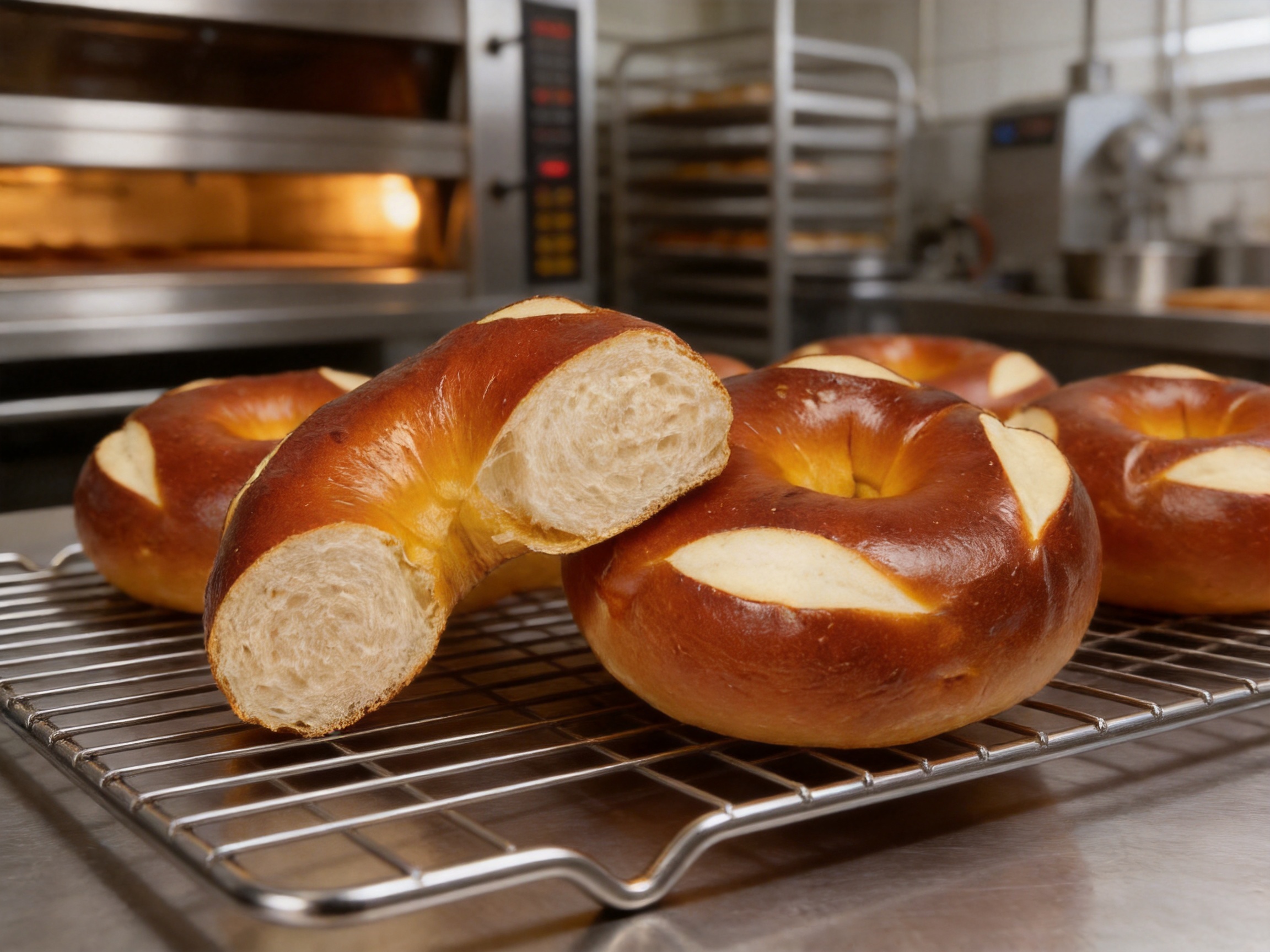
The result is a bagel with a deep glossy brown crust, a lightly crisp surface, a resilient bite, and a toasted wheat aroma. The product retains the round, approachable format and broad menu compatibility of a bagel, while introducing the savory, lightly alkaline character normally associated with pretzel bakery products.
This combination gives operators an opportunity to offer a premium signature item without requiring a completely unfamiliar product format. Customers who already understand bagels can recognize how to use the product, while customers attracted to pretzel flavors can discover a new application through breakfast sandwiches, lunch sandwiches, spreads, snack plates, or creative café menus.
At 100 grams, the product provides a practical serving size for many commercial uses. It can function as a complete breakfast base, a satisfying sandwich carrier, or a portion-controlled bakery item. The weight also helps operators plan purchasing, preparation, and menu costing with greater clarity.
| Product Attribute | Commercial Value | Customer Experience |
|---|---|---|
| 100-gram format | Supports portion planning and menu costing | Provides a substantial and satisfying serving |
| Lye bath treatment | Creates a differentiated premium product | Delivers recognizable pretzel-style flavor and color |
| High-temperature baking | Develops an attractive finished appearance | Produces a glossy brown crust and toasted aroma |
| Lightly crisp exterior | Works well in retail and foodservice applications | Offers a clear first-bite contrast |
| Elastic interior | Supports spreads and sandwich fillings | Creates a satisfying bagel chew without a dull bite |
| Frozen bakery format | Supports broader distribution and inventory planning | Enables convenient preparation when needed |
| Original bagel identity | Can be used as a signature menu staple | Combines familiarity with novelty |
2. The Core Differentiator: Pretzel Technique Applied to a Bagel
The defining feature of this product is the application of a lye bath before baking. In traditional pretzel production, an alkaline bath is used to influence crust development, color, aroma, and flavor. The same principle is applied here to a bagel format, allowing the product to bridge two established bakery categories.
Each piece is immersed in a lye bath for more than 30 seconds before entering the oven. This immersion gives the alkaline solution sufficient contact with the surface to create the desired structure. The treatment is a process-control stage rather than a decorative step. It helps establish the conditions required for the crust to become glossy, deeply colored, lightly crisp, and distinctly savory during baking.
Compared with a conventional bagel, the pretzel-style treatment gives the product a stronger visual identity. A standard plain bagel may depend on toppings, fillings, or packaging to attract attention. This product carries its own surface appeal. Its brown sheen and bakery aroma can communicate quality immediately at the point of display or service.
Compared with a conventional pretzel, the product offers a more versatile format. The round bagel structure is especially suitable for slicing, filling, toasting, and building layered sandwiches. It can support cream cheese, butter, deli meats, eggs, vegetables, seafood fillings, plant-based proteins, and sweet-savory combinations.
This dual identity is one of the product’s most important competitive advantages. It brings together the familiarity of a bagel and the sensory excitement of a pretzel. Operators can present it as a premium bagel, a pretzel bagel, a breakfast carrier, a sandwich bread, or a signature baked snack depending on their target market.
2.1 Why Surface Treatment Matters
The surface of a bakery product strongly influences consumer expectations. Color, gloss, aroma, and initial bite all contribute to the perception of freshness and quality. The lye bath supports these characteristics by preparing the dough surface for a distinctive baking response.
The treatment encourages the surface to develop a more pronounced brown color during high-temperature baking. This appearance is not merely cosmetic. It is connected with the development of roasted and toasted flavor notes that make the product more aromatic and satisfying.
A controlled alkaline bath can also help create the clean snap associated with pretzel crusts. For this product, the desired result is not an excessively hard shell. Instead, the goal is a lightly crisp and resilient exterior that transitions into a more elastic interior.
This balance is important. If a product becomes too hard, it may be difficult to bite and unsuitable for delicate sandwich fillings. If the surface is too soft, it may lose the pretzel character that makes the product distinctive. The High-Temperature Baking Pretzel Bagel is designed to occupy the middle ground: crisp enough to be recognizable, yet flexible enough for everyday menu use.
3. High-Temperature Baking and Maillard Development
After the lye bath, the bagel is baked at high temperature. The purpose is to drive a full and controlled Maillard reaction across the treated surface. The Maillard reaction is a complex set of chemical reactions between amino compounds and reducing sugars that occurs during heating. It contributes to browning, roasted aroma, toasted notes, and increased flavor complexity.
High-temperature baking is particularly important for a pretzel-style bagel because the surface must develop sufficient color and aroma without compromising the structure of the interior. The baking process therefore requires coordination among dough formulation, piece size, immersion time, oven temperature, baking duration, and cooling conditions.
The product concept emphasizes a deep, glossy brown crust rather than a pale or matte finish. This visual quality helps the bagel stand out in display cases, frozen product catalogs, café counters, and menu photography. A strong surface color can also communicate the presence of a carefully developed baking process rather than a basic bread formula.
The high-temperature stage contributes to a savory aroma that becomes noticeable as the bagel leaves the oven. This aroma can be valuable in foodservice environments, where the smell of freshly heated bakery products influences customer appetite and purchase decisions. It can also help create a stronger sense of preparation and freshness when the product is served warm.
Importantly, high-temperature baking must be managed with precision. Excessive heat or an unbalanced baking profile can lead to over-darkening, dryness, or uneven crust development. The strength of a professional manufacturer lies in its ability to control the full process instead of relying only on a single temperature setting.
3.1 Managing Color, Gloss, and Texture
The visual and textural quality of the finished bagel depends on several connected variables. The dough must have enough strength to retain its shape. The surface must receive consistent alkaline treatment. The oven must provide adequate heat transfer. The baking time must be long enough to develop flavor while preserving the desired interior.
Professional production allows these variables to be evaluated together. A bagel with attractive color but a dry interior is not a successful product. Similarly, a soft and chewy interior cannot compensate for a weak surface if the product is intended to deliver a pretzel experience.
The stated product objective is a surface that is glossy, lightly crisp, and resilient, with a wheat-forward interior. This indicates a focus on textural contrast. Consumers should feel an identifiable surface bite first, followed by the more substantial chew and grain character of the bagel itself.
This contrast is also beneficial in sandwiches. The crust provides structure and a slight bite, while the interior can absorb sauces and complement fillings. The bagel is therefore more than a flavored bread carrier; its surface and interior contribute different functions to the complete eating experience.

High-Temperature Baking Pretzel Bagel
4. Sensory Profile
The High-Temperature Baking Pretzel Bagel is designed to provide a clear sequence of sensory impressions. The first is visual: a deep brown, glossy surface that immediately suggests pretzel craftsmanship. The second is aromatic: a savory, toasted wheat fragrance produced during high-temperature baking. The third is tactile: a lightly crisp crust followed by an elastic and satisfying interior.
4.1 Appearance
The product’s brown color is deeper than that of many ordinary plain bagels. The gloss gives the crust a polished appearance that can support premium positioning. This makes it suitable for open display, branded packaging, café service, and menu photography.
Appearance consistency is also important for commercial operators. A product that varies widely from batch to batch can make portion presentation and customer expectations difficult to manage. A controlled manufacturing process helps support a more uniform appearance across production runs.
4.2 Aroma
The aroma is characterized by toasted grain, warm baking notes, and a savory pretzel-like quality. This profile is broad enough to work with breakfast ingredients while remaining strong enough to support lunch and snack applications.
For cafés and bakery counters, aroma can be part of the customer experience. Heating or finishing the bagel near service time can release its baked character and reinforce the perception of freshness. For distributors and retailers, the product’s aroma profile gives consumers another reason to choose it over a standard bagel.
4.3 Flavor
The flavor is intended to be wheat-forward rather than dominated by excessive sweetness. Its savory profile allows the bagel to serve as a neutral but distinctive foundation. It can be paired with salty proteins, creamy spreads, vegetables, cheese, herbs, and sauces without creating an overly sweet or competing taste.
The pretzel character is recognizable but flexible. This is an advantage over strongly flavored specialty breads that may be limited to one type of filling. The product can support classic combinations as well as creative concepts developed for regional or brand-specific menus.
4.4 Texture
The desired bite begins with a lightly crisp exterior. The crust should offer a clean, savory snap without becoming excessively hard. After the surface, the texture transitions to a resilient and elastic interior that reflects the structure expected from a bagel.
This textural contrast can improve the eating experience of both simple and complex applications. With a spread, the crust adds interest to an otherwise smooth bite. With a sandwich filling, the interior provides chew and the crust helps the product maintain its form.
5. Advantages Over Conventional Bagels
Conventional bagels remain popular because they are familiar and versatile. However, a plain bagel can face intense competition and may require toppings or filling combinations to create a strong point of difference. The High-Temperature Baking Pretzel Bagel addresses this challenge by building a distinctive sensory identity into the product itself.
Its glossy brown crust attracts attention without relying on heavy toppings. Its pretzel aroma creates a recognizable flavor proposition. Its lightly crisp surface adds textural variation. These features can help operators develop a signature product that is easier to describe and remember.
The product also offers a wider positioning range. It can be sold as a premium breakfast bagel, a savory lunch sandwich base, a warm café snack, a retail bakery item, or a limited-time seasonal product. A plain bagel can perform these roles, but the pretzel profile gives each application a stronger marketing story.
Another advantage is menu efficiency. Operators do not necessarily need separate bread products for every use. One pretzel bagel format can serve breakfast, lunch, snack, and catering programs. This may simplify purchasing and reduce the need to manage too many individual bakery SKUs.
6. Advantages Over Conventional Pretzels
The product also compares favorably with standard pretzels in several applications. Traditional pretzels are often associated with snack service, beer halls, sporting events, and casual food. Although these are valuable markets, the pretzel shape and structure may be less suitable for certain sandwich and breakfast formats.
The bagel format expands the pretzel flavor into more occasions. It can be sliced horizontally and filled in the same way as a regular bagel. It can also be toasted, plated with spreads, or used as a foundation for a composed meal.
The round form offers a stable platform for ingredients. This is useful for cafés and quick-service operators that require fast assembly and consistent presentation. It can also support packaging formats designed for takeaway and delivery.
Because the product retains bagel functionality, it can enter menus that would not normally include a pretzel. This broadens its commercial potential while preserving the sensory appeal of a traditional alkaline crust.
7. Manufacturing Strengths and Integrated Supply Chain
Jiangsu Goobagel Food Technology Co., Ltd. has specialized in bagel research and manufacturing since 2019. The company operates as a modern frozen bakery producer with an integrated supply chain covering raw materials, research and development, production, and nationwide distribution.
This integrated structure is important for a product that depends on process precision. The quality of a pretzel-style bagel is influenced by raw material performance, dough handling, alkaline treatment, baking conditions, cooling, freezing, storage, and final preparation. Managing these stages as a connected system can help reduce variation.
An integrated supply chain also supports product development. The company can evaluate new concepts, adjust formulations, conduct production trials, and organize commercial manufacturing within a coordinated framework. This is valuable for customers seeking more than a standard catalog item.
The company’s experience with more than 100 clean-label bagel varieties indicates a broad product-development base. Different bagel varieties require attention to flavor, shape, inclusions, texture, process stability, and end-use performance. This accumulated knowledge can support continuous improvement of the pretzel bagel and related products.
7.1 Research and Development Capability
Research and development is central to creating a product that combines two bakery identities. The manufacturer must understand how bagel dough behavior interacts with alkaline surface treatment and high-temperature baking. It must also consider how the final product performs after freezing, storage, heating, slicing, and filling.
Product development may involve evaluating dough strength, hydration, fermentation behavior, surface response, crust development, interior elasticity, and reheating performance. Each factor contributes to the final experience. A product that tastes good immediately after baking but loses its structure after frozen storage would be less valuable for commercial use.
The company’s broad bagel portfolio provides a platform for testing and comparing different product approaches. This can help customers request variations in size, flavor, surface finish, packaging format, or application suitability, subject to technical and commercial evaluation.
7.2 Production Consistency
Consistency is one of the most important advantages of working with a specialized manufacturer. Foodservice customers need products that perform similarly from one delivery to the next. Retail customers also expect a familiar appearance, texture, and flavor when they repurchase an item.
For the Pretzel Bagel, consistency means maintaining the intended relationship among crust color, surface gloss, lye character, interior elasticity, and 100-gram portion size. A specialized production system can establish operating procedures and quality checks around these attributes.
Stable quality is especially valuable when a product is used across multiple outlets. Café chains, restaurant groups, tea brands, and retail networks may serve the same product in different locations. A consistent bakery item helps protect the brand’s menu experience across the distribution network.
7.3 Frozen Bakery Advantages
The frozen bakery model can support efficient inventory management and broader distribution. Instead of requiring every outlet to produce bagels from raw dough, operators can receive a prepared product and finish it according to their service model.
Frozen bakery products may help businesses plan stock more effectively, reduce dependence on local production skills, and maintain a consistent menu item across locations. They can also make specialty products more accessible to smaller cafés or restaurants that do not have extensive bakery equipment.
For distributors, frozen formats can support organized logistics and supply planning. For foodservice operators, they can provide greater flexibility in matching preparation volumes to daily demand. Proper handling, storage, and preparation procedures remain essential, but the format offers practical operational benefits.
8. Applications Across Foodservice and Retail
The versatility of the High-Temperature Baking Pretzel Bagel is one of its strongest commercial qualities. Its surface character is distinctive enough for signature menu positioning, while its bagel structure is familiar enough for fast adoption.
8.1 Breakfast Menus
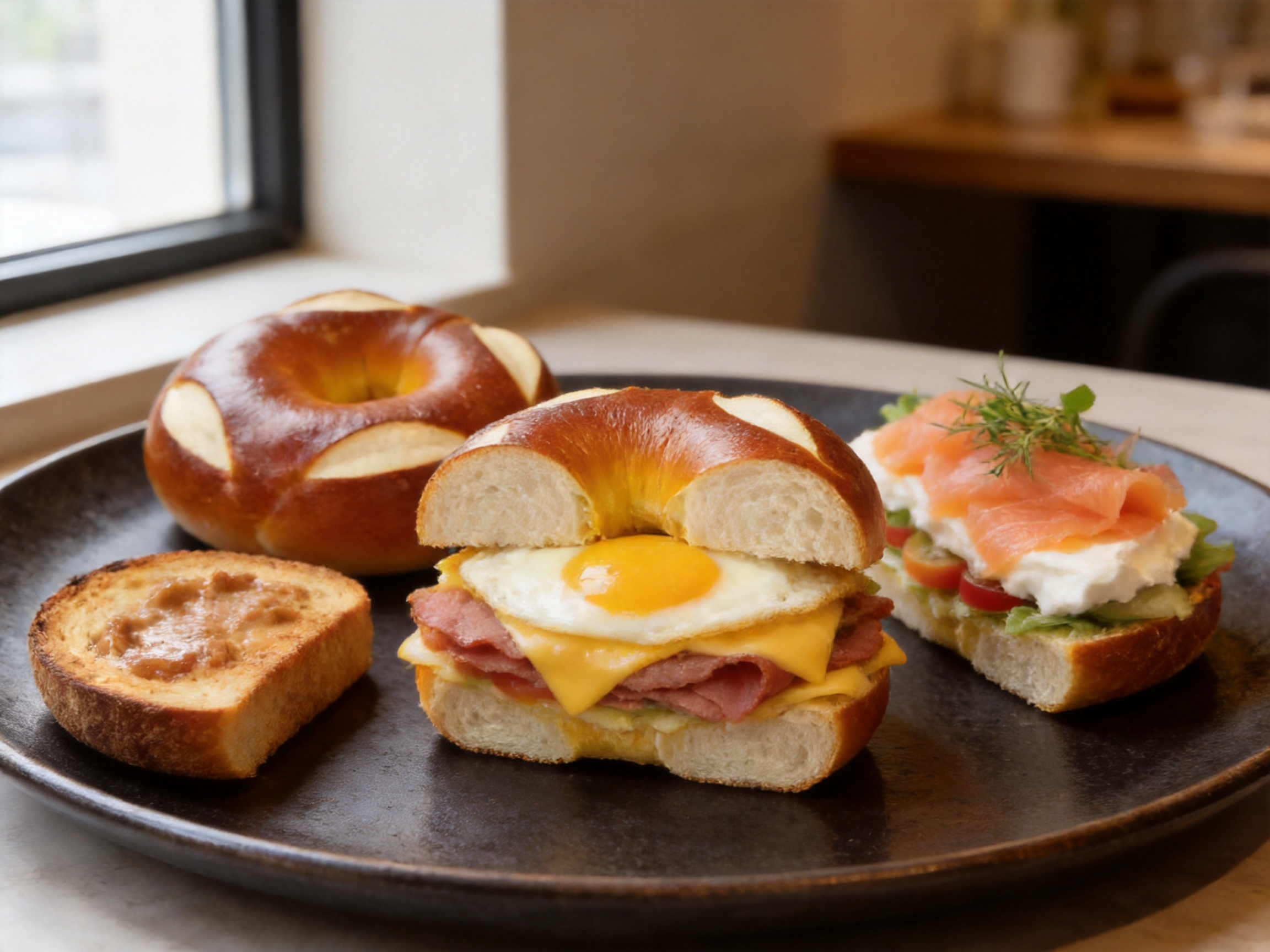
The product can serve as the foundation for breakfast sandwiches featuring eggs, cheese, bacon, sausage, ham, smoked fish, or vegetables. Its savory crust complements breakfast ingredients without requiring a sweet flavor profile.
The 100-gram format can provide a substantial base for a complete meal. The bagel’s structure also helps support warm fillings and sauces, making it suitable for takeaway breakfast programs. Operators may offer it as an alternative to ordinary English muffins, toast, or plain bagels.
For a premium breakfast menu, the product can be combined with specialty eggs, artisan cheese, roasted vegetables, or seasoned proteins. Its pretzel character can give familiar ingredients a more distinctive presentation.
8.2 Café and Coffee Shop Menus
Cafés can use the product in both savory and simple snack applications. It can be served warm with butter, cream cheese, herb spreads, or flavored dips. It can also be paired with coffee, tea, or cold beverages as a filling bakery snack.
The product’s appearance can support display-case appeal. Its deep brown crust looks different from pale bread products and can create visual variety within a bakery assortment. A café may also promote it as a house signature or as a limited-time featured item.
8.3 Lunch Sandwiches
The bagel can carry deli meats, chicken, tuna, egg salad, roasted vegetables, cheese, and plant-based fillings. Its elastic interior helps provide a satisfying bite, while the crust adds structure and flavor.
Because the flavor is wheat-forward and savory, the product can support many sandwich profiles. It can work with mustard, mayonnaise, cream cheese, spicy sauces, pickled vegetables, fresh greens, and roasted ingredients. The surface character is noticeable but not so narrow that it restricts menu creativity.
8.4 Retail Bakery and Packaged Food
Retail bakeries can present the product as a premium flavored bagel with a clear point of difference. Packaged food brands can use it in frozen or prepared meal programs, subject to the relevant packaging, storage, and labeling requirements of their target markets.
The pretzel concept is easy for consumers to understand. A product name and visual presentation can communicate the expected flavor through the words “pretzel” and “bagel” without requiring a long explanation. This clarity may help support trial among customers who are looking for something familiar but new.
8.5 Catering and Institutional Foodservice
The product can be included in breakfast catering, office meal programs, hotel buffets, school foodservice, and institutional menus. Its portion size and sandwich compatibility make it practical for prepared meal assembly.
For catering, the bagel can be sliced and filled in advance, provided that the operator uses suitable preparation and holding procedures. It can also be offered as part of a varied bread selection, adding a darker, more savory option to a breakfast or lunch spread.
8.6 Creative and Seasonal Applications
Chefs and product developers can use the bagel in applications that emphasize contrast. Examples include a pretzel bagel with smoked salmon and whipped cheese, a roast beef sandwich with horseradish cream, a vegetable sandwich with hummus and pickles, or a breakfast stack with egg and spicy sauce.
Seasonal menus can also benefit from the product. A winter menu may emphasize warm, hearty fillings, while a summer menu may use fresh vegetables, herbs, and lighter spreads. The bagel’s basic flavor profile is flexible enough to adapt to regional preferences.
9. OEM and Private-Label Potential
The product is well suited to OEM and private-label cooperation because it has a clear technical concept and broad application range. A customer may choose to launch it under a retail brand, café brand, restaurant group, or distributor label while using the manufacturer’s research and production capabilities.
Private-label development can involve adjustments to product size, packaging, surface finish, flavor intensity, toppings, or serving instructions. Any changes must be evaluated for their effect on dough behavior, baking performance, frozen stability, and final quality.
For brand owners, a pretzel bagel can provide a distinctive product platform without requiring the development of an entirely new bakery category. It can be positioned as a premium staple, a signature sandwich carrier, or a limited-edition innovation.
For distributors, the product can expand an existing frozen bakery range. It may appeal to customers seeking differentiated items that are easy to explain and suitable for multiple channels. For chain operators, it can support menu standardization across stores.
A successful OEM program requires clear communication regarding target market, serving method, package format, expected shelf life, logistics, labeling, and quality standards. The manufacturer’s integrated R&D and production structure can support this type of development discussion.
10. Quality, Handling, and Commercial Performance
A premium bagel must be evaluated not only at the moment of production but also throughout its commercial journey. Product quality includes appearance, weight, structure, flavor, storage stability, reheating performance, and compatibility with the customer’s operating environment.
The High-Temperature Baking Pretzel Bagel is designed to maintain its distinctive lye character and crust integrity across spreads, sandwich builds, and creative applications. This is important because a specialty product loses its value if the crust becomes indistinct or the interior fails under normal use.
Operators should establish clear procedures for frozen storage, thawing or heating, slicing, filling, and service. The exact procedures will depend on the product format and customer’s equipment. Consistent handling can help preserve the intended balance between the lightly crisp exterior and elastic interior.
When used in sandwiches, the bagel should be matched with fillings that complement rather than overwhelm its flavor. Moist ingredients can add contrast, but excessive moisture or prolonged holding may affect crust texture. Operators can optimize performance through portion control, assembly timing, and suitable packaging.
For retail and foodservice customers, quality also includes supply reliability. A consistent product specification supports forecasting, purchasing, recipe standardization, and customer satisfaction. These operational advantages can be as important as the product’s taste when a bakery item is used at scale.
11. Clean-Label and Product Development Orientation
The company has developed more than 100 clean-label bagel varieties for different commercial applications. Clean-label expectations vary by market and customer, so specific formulation and labeling requirements should be confirmed for each project. Nevertheless, the company’s product portfolio demonstrates an emphasis on creating bakery solutions that align with contemporary consumer and operator expectations.
Modern customers increasingly look for products that are understandable, reliable, and suitable for different eating occasions. A bagel that combines a clear process story with flexible menu usage can support this demand. The pretzel-style surface treatment gives the product a simple, recognizable identity that can be communicated through packaging and menu language.
Product development should also consider the relationship between sensory appeal and operational practicality. A highly innovative product may be difficult to prepare or explain, while a completely ordinary product may lack differentiation. The High-Temperature Baking Pretzel Bagel occupies a practical middle position: it offers a new eating experience within a familiar format.
12. Competitive Comparison
The following comparison illustrates how the product can be positioned against common bakery alternatives. Actual performance will depend on formulation, preparation, storage, and application conditions, but the product concept provides clear points of difference.
| Product Type | Typical Strength | Potential Limitation | Positioning Advantage of the Pretzel Bagel |
|---|---|---|---|
| Plain bagel | Familiar, versatile, widely accepted | May lack strong visual or flavor differentiation | Adds glossy color, pretzel aroma, and crisp crust character |
| Flavored bagel | Offers a clear taste variation | Some flavors may limit filling combinations | Provides savory distinction while remaining broadly compatible |
| Standard pretzel | Recognizable alkaline crust and savory flavor | May be less convenient for sandwich formats | Combines pretzel character with a sliceable bagel structure |
| Soft sandwich bun | Easy to use in foodservice | May have a less memorable eating experience | Offers stronger crust identity and a more substantial bite |
| Artisan bread roll | Premium appearance and texture | May require more specialized production or handling | Provides a specialty appearance in a practical bagel format |
| Sweet breakfast bread | Appeals to sweet-oriented consumers | Less suitable for savory lunch and dinner applications | Supports breakfast, lunch, snack, and savory menu development |
The product’s main competitive advantage is not that it replaces every other bakery item. Rather, it fills a useful space between categories. It offers the menu flexibility of a bagel, the surface appeal of a pretzel, and the operational potential of a frozen bakery product.
13. Brand and Menu Storytelling
A product with a visible process story can be easier for foodservice operators to promote. The High-Temperature Baking Pretzel Bagel has several clear talking points: more than 30 seconds in a lye bath, high-temperature baking, deep glossy color, toasted wheat aroma, lightly crisp crust, and elastic interior.
These details can be adapted to different communication formats. A restaurant menu may describe it as a “glossy pretzel-crust bagel.” A café may present it as a “high-heat baked savory bagel.” A retailer may emphasize the contrast between the crisp surface and chewy center.
Storytelling should remain accurate and aligned with the final product. The goal is to explain why the bagel looks, smells, and tastes different, not to make unsupported claims. Clear communication can help customers understand the value of the process and recognize the product as more than a darker-colored bagel.
The product can also support visual merchandising. Its surface color creates contrast among lighter bread products, and its round format is easy to display in baskets, trays, packages, and sandwich photographs. This can help operators build a recognizable visual identity around a signature bakery item.
14. Practical Considerations for Buyers
Wholesale and foodservice buyers evaluating the product should consider how it fits their current operation. Important questions include expected weekly volume, frozen storage capacity, preparation equipment, serving occasions, packaging needs, and target customer profile.
Buyers should also determine whether they want a standard catalog product or a customized OEM/private-label solution. A standard product may allow faster adoption, while a customized program may provide greater control over size, packaging, branding, and market positioning.
Menu testing is recommended before a broad launch. Operators can evaluate the bagel with different fillings, preparation methods, holding times, and packaging formats. Sensory testing should include appearance, aroma, first bite, chew, filling balance, and overall satisfaction.
Cost evaluation should include more than the purchase price. Buyers may also consider preparation labor, storage requirements, waste reduction, menu versatility, and the potential to use one product across multiple dayparts. A versatile bagel can create value by supporting several menu items without requiring separate bread inventories.
For international or regional distribution, buyers should confirm relevant specifications and documentation, including ingredient information, packaging requirements, storage conditions, transportation arrangements, and market-specific regulatory expectations. These details should be addressed during the commercial development process.
15. Frequently Asked Questions
Q1: What makes this product different from a regular bagel?
The product receives a pretzel-style lye bath for more than 30 seconds before high-temperature baking. This process creates a deep glossy brown crust, a lightly crisp surface, a savory aroma, and a recognizable pretzel character while retaining the elastic structure of a bagel.
Q2: Why is a lye bath used?
The alkaline bath prepares the dough surface for the desired pretzel-style crust. It contributes to the product’s color, gloss, surface structure, aroma, and savory flavor development during baking.
Q3: Does the product taste exactly like a traditional pretzel?
It is designed to have a recognizable pretzel-like crust and flavor, but it also retains the wheat-forward chew and round format of a bagel. The result is a hybrid bakery experience rather than a simple replacement for a traditional pretzel.
Q4: What is the product weight?
The stated product weight is 100 grams per piece. This format can support portion planning for cafés, restaurants, retail programs, and sandwich menus.
Q5: What types of fillings work well with the bagel?
The bagel can be paired with eggs, cheese, bacon, sausage, smoked fish, deli meats, chicken, vegetables, cream cheese, hummus, savory sauces, and other sweet-savory or savory ingredients. Its wheat-forward flavor and pretzel crust support a broad range of combinations.
Q6: Can it be used for breakfast and lunch?
Yes. Its structure and flavor are suitable for breakfast sandwiches, café snacks, lunch sandwiches, catering items, and prepared meal applications. The product can serve multiple dayparts from one bakery SKU.
Q7: Is it suitable for frozen bakery distribution?
The product is developed within a frozen bakery manufacturing system. Buyers should confirm the specific storage, transportation, preparation, and handling requirements for their market and operating model.
Q8: Can the product be used in private-label programs?
It can be considered for OEM and private-label cooperation. Customization may involve packaging, branding, size, product specifications, or application requirements, subject to technical evaluation and commercial discussion.
Q9: How does high-temperature baking affect the product?
High-temperature baking supports the development of a deep brown glossy crust and helps drive Maillard reactions that contribute toasted aroma and flavor. The process must be controlled carefully to balance crust development with interior moisture and elasticity.
Q10: Is the crust hard or soft?
The intended texture is lightly crisp and resilient rather than excessively hard. The surface should provide a clean pretzel-style bite before transitioning to a more elastic bagel interior.
Q11: Who manufactures the product?
The product is manufactured by Jiangsu Goobagel Food Technology Co., Ltd., a frozen bakery producer that has specialized in bagel research and manufacturing since 2019.
Q12: What manufacturing strengths support the product?
The company operates an integrated supply chain covering raw materials, research and development, production, and distribution. It has also developed more than 100 clean-label bagel varieties for retail, foodservice, café chains, tea brands, and bakery operators.
Yes. Its glossy brown appearance, pretzel-style flavor, and flexible bagel format give operators a strong basis for developing a signature breakfast, sandwich, café, or retail product.
Q14: What should buyers evaluate before placing a commercial order?
Buyers should evaluate product specifications, storage capacity, preparation procedures, menu applications, packaging, expected volume, logistics, labeling requirements, and market-specific compliance needs. Product testing with intended fillings and service methods is also recommended.
16. Overall Value Proposition
The High-Temperature Baking Pretzel Bagel is designed to solve several commercial challenges at once. It offers a strong visual identity, a distinctive crust, a flexible flavor profile, and a practical bagel format. It can help operators create a more memorable menu without moving into an unfamiliar or difficult-to-use bakery category.
Its process is central to its value. More than 30 seconds in a lye bath prepares the surface for pretzel-style development, while high-temperature baking drives color, aroma, and flavor through controlled Maillard reactions. The intended outcome is a glossy brown crust that is lightly crisp and resilient, paired with a wheat-forward and elastic interior.
The product also benefits from the strengths of a specialized frozen bakery manufacturer. Research and development experience, a portfolio of more than 100 bagel varieties, integrated supply chain management, and commercial production capability provide a foundation for stable quality and scalable supply.
For retail, foodservice, café, restaurant, catering, and private-label customers, the product offers multiple routes to market. It can be sold as a premium bagel, used as a sandwich carrier, promoted as a savory snack, or developed into a branded menu signature.
In a market where differentiation is increasingly important, the product’s greatest strength is its ability to combine familiarity and novelty. Customers understand the bagel format, but the pretzel crust gives them a reason to try something new. Operators gain a flexible bakery item with a clear product story and broad application potential.
17. Conclusion
The High-Temperature Baking Pretzel Bagel represents a thoughtful combination of pretzel processing and bagel functionality. Its more-than-30-second lye bath, high-temperature baking, glossy crust, toasted wheat aroma, lightly crisp surface, and elastic interior create a product that stands apart from ordinary bagels and conventional pretzels alike.
Its 100-gram size and versatile format make it suitable for breakfast sandwiches, café menus, lunch applications, retail bakery programs, catering, and creative foodservice concepts. Its flavor is distinctive but not restrictive, allowing it to work with both classic and innovative fillings.
Behind the product is a manufacturing organization focused on bagel research, frozen bakery production, integrated supply, and commercial product development. The company’s broad portfolio and experience with more than 100 clean-label bagel varieties support its ability to serve different customer requirements and market channels.
For buyers seeking a premium bakery product with strong visual appeal, reliable menu flexibility, and a clear process-based point of difference, this pretzel bagel offers a compelling solution. It is not merely a darker bagel or a reshaped pretzel. It is a purpose-developed product that brings the crust character of a pretzel into a practical, scalable, and highly adaptable bagel format.
References
1. Product specification materials for the High-Temperature Baking Pretzel Bagel, including product weight, processing concept, sensory profile, and application positioning.
2. Company information provided by Jiangsu Goobagel Food Technology Co., Ltd., including manufacturing history, product development capabilities, supply chain structure, company mission, and commercial market focus.
3. General food science references concerning alkaline surface treatment in pretzel production and the role of high-temperature baking in crust formation.
4. General bakery technology references concerning the Maillard reaction, browning, toasted aroma, dough structure, and texture development.
5. General frozen bakery industry references concerning commercial distribution, foodservice preparation, inventory planning, and product standardization.
