
 中文简体
中文简体
 English


postmaster@goobagelfood.com
Content
- 1 A Distinctive Product Concept Built Around Flavor Contrast
- 2 Product Composition and Sensory Experience
- 3 Advantages Over Conventional Filled Bagels
- 4 Manufacturing Strengths Behind the Product
- 5 Frozen Bagel Manufacturing and Commercial Convenience
- 6 Applications Across Retail and Foodservice
- 7 OEM and Private Label Opportunities
- 8 Quality, Reliability, and Customer Value
- 9 Packaging, Merchandising, and Communication Strategy
- 10 Why Citrus Bakery Products Continue to Attract Attention
- 11 Operational Considerations for Buyers
- 12 Comparison of Product Benefits
- 13 Strategic Value for Wholesale Customers
- 14 Building a Long-Term Product Partnership
- 15 Frequently Asked Questions
- 15.1 What is the Orange Cream Cheese Bagel?
- 15.2 What gives the product its orange flavor?
- 15.3 Is the product designed for breakfast only?
- 15.4 What is the advantage of using cream cheese as the base?
- 15.5 Why is diced orange peel used instead of only orange flavoring?
- 15.6 What is the purpose of the candied orange slice?
- 15.7 Can the product be used by cafés and coffee shops?
- 15.8 Is this product suitable for private label programs?
- 15.9 What types of companies can purchase the product?
- 15.10 What does the frozen format offer to foodservice operators?
- 15.11 How does the product differ from a plain cream cheese bagel?
- 15.12 How does the product differ from a conventional sweet pastry?
- 15.13 Does the manufacturer provide other bagel varieties?
- 15.14 What should buyers confirm before ordering?
- 15.15 Can the product be used as a seasonal item?
- 16 Conclusion
- 17 References
- 18 Product: Sweet And Refreshing Orange Cream Cheese Bagel
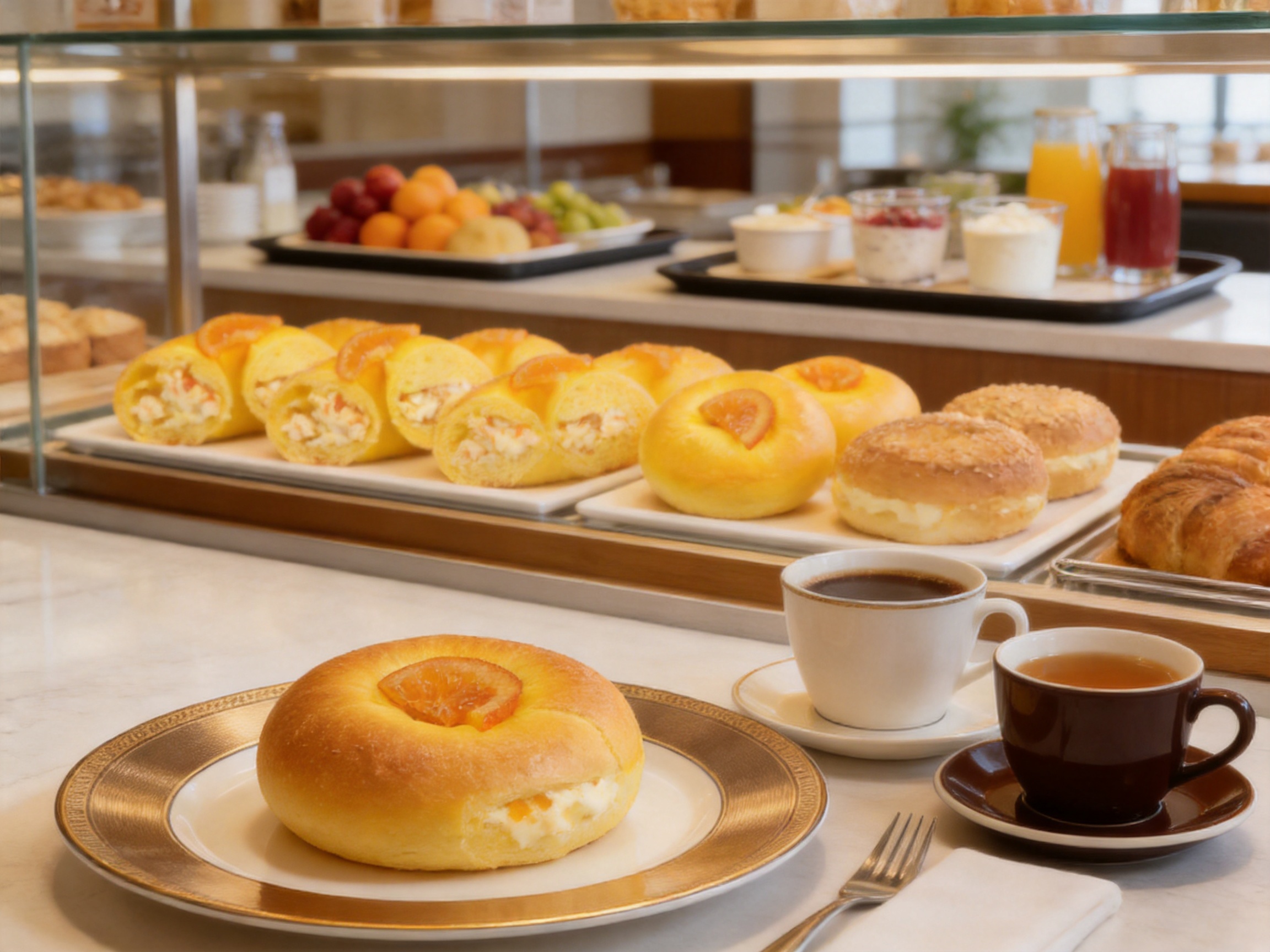
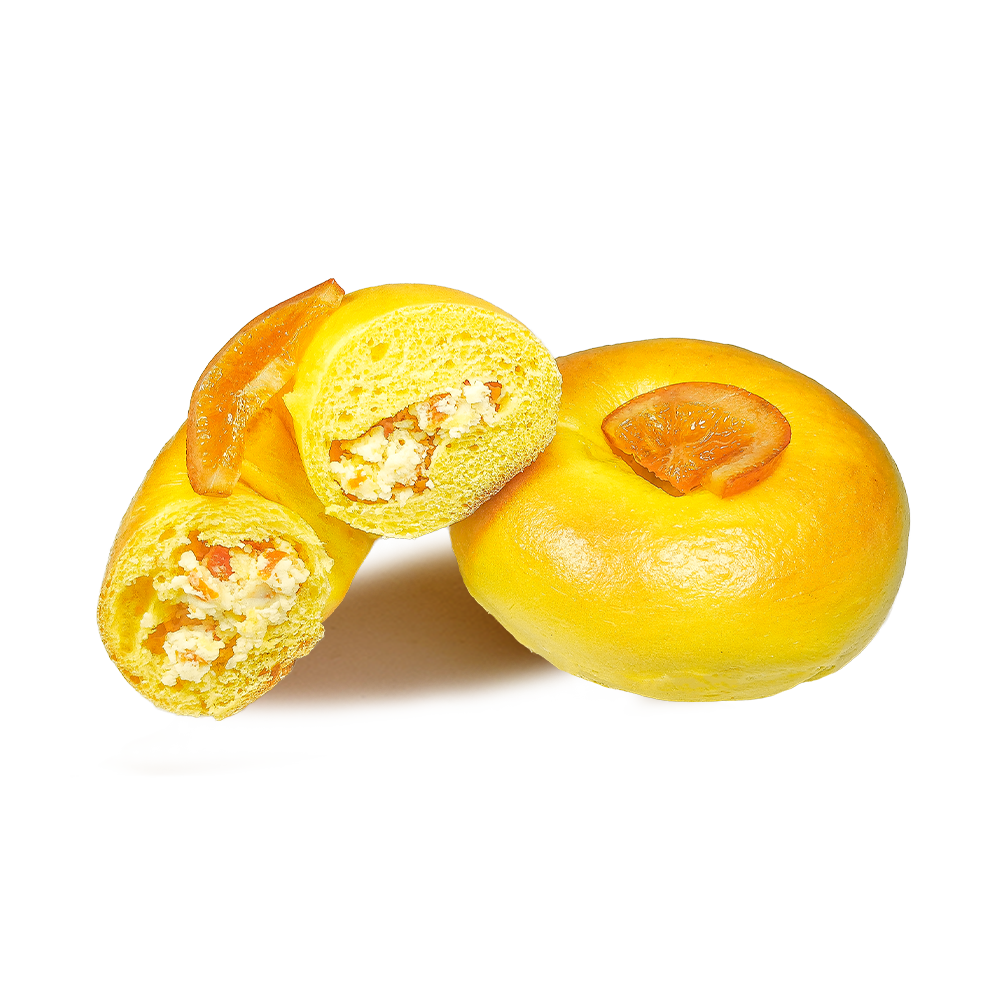
The Sweet and Refreshing Orange Cream Cheese Bagel brings together three qualities that consumers increasingly seek in convenient bakery products: creamy indulgence, recognizable ingredients, and a bright, refreshing flavor profile. Designed for breakfast, café service, retail bakery displays, and foodservice applications, this 90-gram bagel combines a substantial cream cheese filling with diced orange peel and a candied orange slice topping.
Instead of relying on a single sweet note, the product is built around contrast. The cream cheese provides a smooth, rich, and lightly savory foundation. Diced orange peel contributes aromatic citrus intensity and a gentle bitterness that helps balance the dairy richness. The candied orange slice adds visual appeal, a soft baked sweetness, and a clear orange aroma that reaches the consumer even before the first bite.
This layered flavor design gives the product an advantage over ordinary filled bagels and standard sweet bakery items. Many conventional bagels depend mainly on plain dough, heavy spreads, or a single topping. This product is developed as a complete flavor experience, with the filling, inclusion, topping, and bagel structure working together.
Manufactured by Jiangsu Goobagel Food Technology Co., Ltd., the product is supported by an integrated frozen bakery supply chain that includes raw material sourcing, research and development, production, and distribution. Since 2019, the company has specialized in bagel research and manufacturing, developing more than 100 clean-label bagel varieties for retail, foodservice, cafés, tea brands, and bakery operators.
For buyers looking for an OEM bagel, private label bagel, or frozen bagel wholesale solution, the Orange Cream Cheese Bagel offers both consumer appeal and commercial practicality. Its distinctive flavor can help retailers expand beyond conventional savory bagels, while its frozen bakery format supports consistent preparation and dependable supply.
A Distinctive Product Concept Built Around Flavor Contrast
The product’s primary strength is its balance between richness and freshness. Cream cheese is naturally associated with indulgence, softness, and satiety. Orange is associated with brightness, fragrance, and refreshment. Combining these two profiles creates a product that feels satisfying without becoming excessively heavy.
The first impression comes from the appearance and aroma. A candied orange slice positioned on top gives the bagel a recognizable visual identity. Its warm citrus color immediately communicates the intended flavor. During baking or reheating, the orange topping releases a sweet, fragrant aroma that helps distinguish the product from plain cream cheese bagels and other filled bakery products.
The second impression comes from the filling. Anchor cream cheese is used as the flavor foundation, giving the product a smooth and rounded dairy character. The cream cheese is not treated merely as a hidden filling. It serves as the central body of the product, creating a creamy mouthfeel that remains present throughout the eating experience.
The third impression comes from the diced orange peel folded into the cream cheese. These small citrus inclusions bring aromatic lift, textural variation, and a more authentic orange character. Instead of producing a generic sweet cream flavor, the diced peel helps create a profile that is recognizably citrus-based.
This progression—from fragrant topping to creamy center to citrus inclusion—creates a more complete sensory experience than products that use only orange flavoring or a plain sweet filling. The result is a bagel that can be positioned as an everyday breakfast item, a premium café offering, an afternoon snack, or a distinctive addition to a bakery assortment.
Product Composition and Sensory Experience
Cream Cheese as the Flavor Foundation
The cream cheese base gives the product its body and richness. Its creamy texture helps soften the chew of the bagel and creates a smooth transition between the bread and the citrus elements. The dairy profile is rounded rather than aggressively salty, allowing the orange components to remain clear and noticeable.
A well-developed cream cheese filling must perform several functions at once. It must provide flavor, contribute moisture, remain attractive after heating, and work harmoniously with the surrounding dough. In this product, cream cheese is used to establish a dependable foundation on which the citrus notes can be built.
The cream cheese also provides a subtle savory depth. This is important because a product made entirely from sweet elements may taste flat or overly sugary. The light savory character of cream cheese creates a counterpoint to the candied orange slice and helps keep the overall flavor more balanced.
For consumers, this balance can make the bagel suitable for multiple occasions. It can be served as a sweet breakfast with coffee, offered as a snack alongside tea, or included in a mixed bakery box with both savory and sweet products. Its flavor is distinctive enough to attract attention but familiar enough to remain approachable.
Diced Orange Peel for Aromatic Brightness
Diced orange peel adds a form of citrus character that is different from juice, syrup, or artificial flavoring. The peel contains aromatic oils and provides a gentle bittersweet quality that gives the product additional depth. When folded into the cream cheese, it distributes small bursts of orange flavor throughout the filling.
The diced format is also important for sensory consistency. Rather than concentrating all the citrus flavor in one area, small pieces can create repeated points of contact as the consumer eats the bagel. This makes the orange character feel integrated into the cream cheese rather than applied as a separate afterthought.
Orange peel also supports product differentiation. Many filled bakery products use vanilla, chocolate, red bean, cheese, or fruit jam. Orange peel creates a more refreshing alternative that can stand out in a refrigerated or frozen bakery display. Its natural visual and aromatic associations also make the flavor easy for consumers to understand.
Candied Orange Slice as a Premium Finishing Element
The candied orange slice serves both a decorative and functional purpose. Visually, it gives the product an identifiable signature. A consumer can recognize the flavor before reading a label or cutting the bagel open. This is particularly useful in cafés, bakery counters, hotel breakfast displays, and retail packaging, where appearance influences purchase decisions.
When lightly baked, the candied orange slice develops a soft, fragrant sweetness. The heat helps release citrus aroma while integrating the topping with the surface of the bagel. The result is not simply a decorative garnish but part of the product’s overall flavor architecture.
The topping can also support premium positioning. A plain filled bagel may be perceived as a familiar basic product, while a bagel finished with a visible fruit element appears more carefully developed. This allows foodservice operators and retailers to present the item as a specialty bakery product without requiring complicated preparation at the point of sale.
The 90-Gram Format
With a listed weight of 90 grams, the product provides a practical individual serving size. It is substantial enough to function as a breakfast item or snack while remaining easy to package, store, display, and serve. The format can fit a variety of commercial applications, including single-serve retail packs, café menus, office catering, hotel breakfast service, and mixed bakery assortments.
A defined portion weight also supports operational consistency. Foodservice buyers can plan inventory, menu pricing, and serving sizes more accurately. Retailers can organize products by standardized unit weight, and private label customers can develop packaging and promotional materials around a clear product specification.
The portion size is also suitable for consumers who want a satisfying bakery item without selecting a large meal. It can be paired with coffee, tea, yogurt, fruit, or other breakfast products. This versatility increases the number of occasions in which the bagel can be sold.
Sweet And Refreshing Orange Cream Cheese Bagel
Advantages Over Conventional Filled Bagels
More Layered Than a Plain Cream Cheese Bagel
A traditional cream cheese bagel generally depends on the contrast between chewy bread and a spreadable dairy filling. Although this combination is familiar and popular, it may offer limited flavor variation. The Orange Cream Cheese Bagel adds citrus peel and a candied orange topping to create more aroma, color, and flavor progression.
The added citrus elements make the product feel more complete without abandoning the familiarity of cream cheese. Consumers who already enjoy cream cheese bagels can understand the product immediately, while consumers seeking something new receive a more distinctive experience.
More Refreshing Than Heavily Sweet Bakery Products
Many sweet bakery products are based on sugar-forward profiles such as chocolate, caramel, custard, or sweet bean paste. These flavors can be appealing, but they may become rich or repetitive when consumed frequently. Orange introduces a brighter direction that helps relieve the perception of heaviness.
The product is not positioned as a dessert-only item. Its creamy dairy base, citrus aroma, and moderate sweetness allow it to occupy the space between breakfast bread and sweet pastry. This wider positioning can help operators sell the same product across more dayparts.
More Visually Distinctive Than Standard Bagels
In a crowded bakery case, visual differentiation is valuable. A visible candied orange slice gives the product a clear identity and communicates its flavor without requiring extensive explanation. The orange color can also create contrast when displayed with plain, sesame, cheese, onion, or whole-grain bagels.
Visual recognition matters in self-service retail environments. Consumers often make quick decisions based on color, shape, and toppings. A product with a recognizable fruit element can attract attention more effectively than a filled product whose key feature remains hidden inside.
More Consistent Than Made-to-Order Assembly
Freshly assembled bagels with cream cheese require labor, refrigeration, portioning, and staff time. The amount of filling may vary between operators or locations, and the preparation process may slow service during busy periods. A manufactured filled bagel provides a more standardized product format.
For cafés and foodservice businesses, a frozen bagel can be stored and prepared according to operating requirements. This supports more predictable portion control and reduces the need for several separate ingredients at the service counter. The topping and filling are already incorporated into the product design, helping simplify execution.
Manufacturing Strengths Behind the Product
Integrated Supply Chain Management
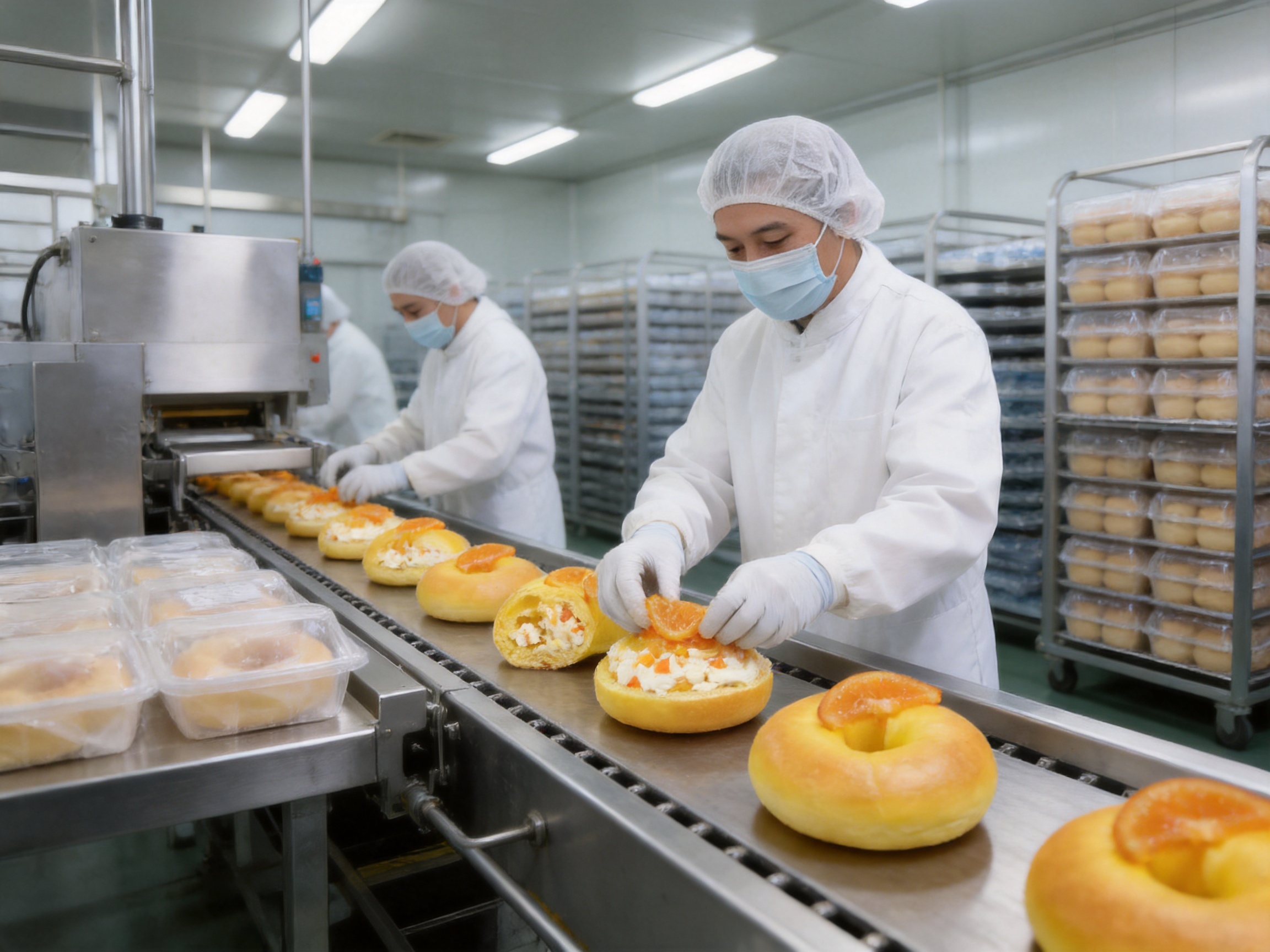
Jiangsu Goobagel Food Technology Co., Ltd. operates an integrated supply chain covering raw materials, research and development, production, and nationwide distribution. This structure gives the company a broader view of product quality and supply continuity than a business focused only on one stage of manufacturing.
Control across multiple stages can help improve coordination between ingredient selection, formula development, production scheduling, packaging requirements, and delivery planning. For commercial customers, this is important because a successful bagel program depends not only on taste but also on dependable availability and repeatable performance.
An integrated model also supports faster communication when customers request adjustments. OEM and private label projects may involve changes to flavor, packaging, portion size, product assortment, or target market. A manufacturer with research, production, and supply functions working together is better positioned to evaluate such requests efficiently.
Specialization in Bagel Research and Manufacturing
Since 2019, Goobagel Food has specialized in bagel research and manufacturing. Specialization allows the company to concentrate on the technical and commercial requirements of bagel production rather than treating bagels as a minor extension of a general bakery portfolio.
Bagels require attention to dough development, shaping, texture, filling placement, topping adhesion, baking behavior, freezing stability, and reheating performance. A product that looks attractive before freezing must also maintain acceptable texture and flavor after storage and preparation. Dedicated experience in bagel development helps address these requirements as part of one coordinated process.
The company’s development of more than 100 clean-label bagel varieties demonstrates a broad product-development capability. A large variety portfolio can provide useful experience across sweet, savory, filled, topped, classic, stuffed, and sandwich-oriented product concepts. This background supports the development of more specialized combinations such as orange and cream cheese.
Research and Development for Commercial Applications
Product development for retail and foodservice is different from creating a one-time bakery item. Commercial products must be repeatable, scalable, packable, transportable, and suitable for the customer’s operating environment. The research and development process therefore needs to consider more than flavor alone.
For this Orange Cream Cheese Bagel, development involves coordinating the cream cheese foundation, diced orange peel, candied orange topping, dough structure, portion weight, and frozen supply format. Each component must contribute to the final product without creating unnecessary complexity for the customer.
R&D also helps manufacturers develop products for different channels. A café may need a bagel that performs well after warming. A retail customer may focus on packaging, shelf presentation, and consumer instructions. A hotel or catering operator may prioritize batch preparation and serving consistency. The same core product can be evaluated against these different commercial needs.
Consistent Production for Multi-Location Customers
Brands with several cafés, stores, or foodservice locations need products that taste and perform consistently across sites. Variations in employee technique, equipment, and preparation time can affect a made-to-order product. A standardized manufactured bagel can reduce some of these differences.
Consistency is particularly important for a specialty flavor. Consumers who purchase an orange cream cheese bagel at one location expect a similar experience at another. Stable formulation and controlled production help support brand trust and simplify staff training.
For private label customers, manufacturing consistency is also essential to protecting the customer’s own brand identity. The product may appear under the buyer’s brand name, but its quality reflects directly on the retailer or foodservice operator. A reliable manufacturing partner therefore becomes an important part of the customer’s brand strategy.
Frozen Bagel Manufacturing and Commercial Convenience
Frozen bakery products offer a practical way to provide consistent items while managing production and labor demands. Instead of producing every unit from scratch at each location, a business can centralize purchasing and prepare the product according to local demand.
The frozen format can help reduce waste when compared with highly perishable fresh products that must be sold within a narrow time window. Operators can plan stock more flexibly and prepare units as needed. This can be particularly valuable for products with a specialty flavor, where demand may vary by daypart, season, promotion, or location.
Frozen distribution also supports wider market coverage. A manufacturer can produce in a centralized facility and supply customers across different regions. The company’s nationwide distribution capability is relevant for customers seeking a stable supply partner rather than a small local production arrangement.
For foodservice teams, frozen products can simplify inventory planning. Instead of sourcing bagels, cream cheese, orange peel, and toppings separately, operators can purchase a finished product with the principal components already assembled. This reduces the number of preparation steps and may help streamline storage and ordering.
The frozen format can also assist menu innovation. A café or retailer may test a new flavor in selected stores without investing in new equipment or training for complex in-house production. If customer response is positive, the product can be expanded through a wider rollout.
Preparation Flexibility
The Orange Cream Cheese Bagel can be positioned for warming before service, depending on the customer’s equipment and product instructions. Warming can help release the aroma of the candied orange slice and soften the relationship between the dough and filling.
Different operators may choose different service styles. A café may warm the bagel and serve it with coffee. A hotel may include it in a breakfast buffet. A retailer may present it as a packaged frozen or ready-to-heat item. A bakery operator may place it in a mixed specialty display.
Because the product already includes its principal filling and topping, preparation can be more straightforward than assembling a cream cheese bagel from separate ingredients. This can be valuable during peak service periods when speed and consistency are important.
Applications Across Retail and Foodservice
Café and Coffee Shop Menus
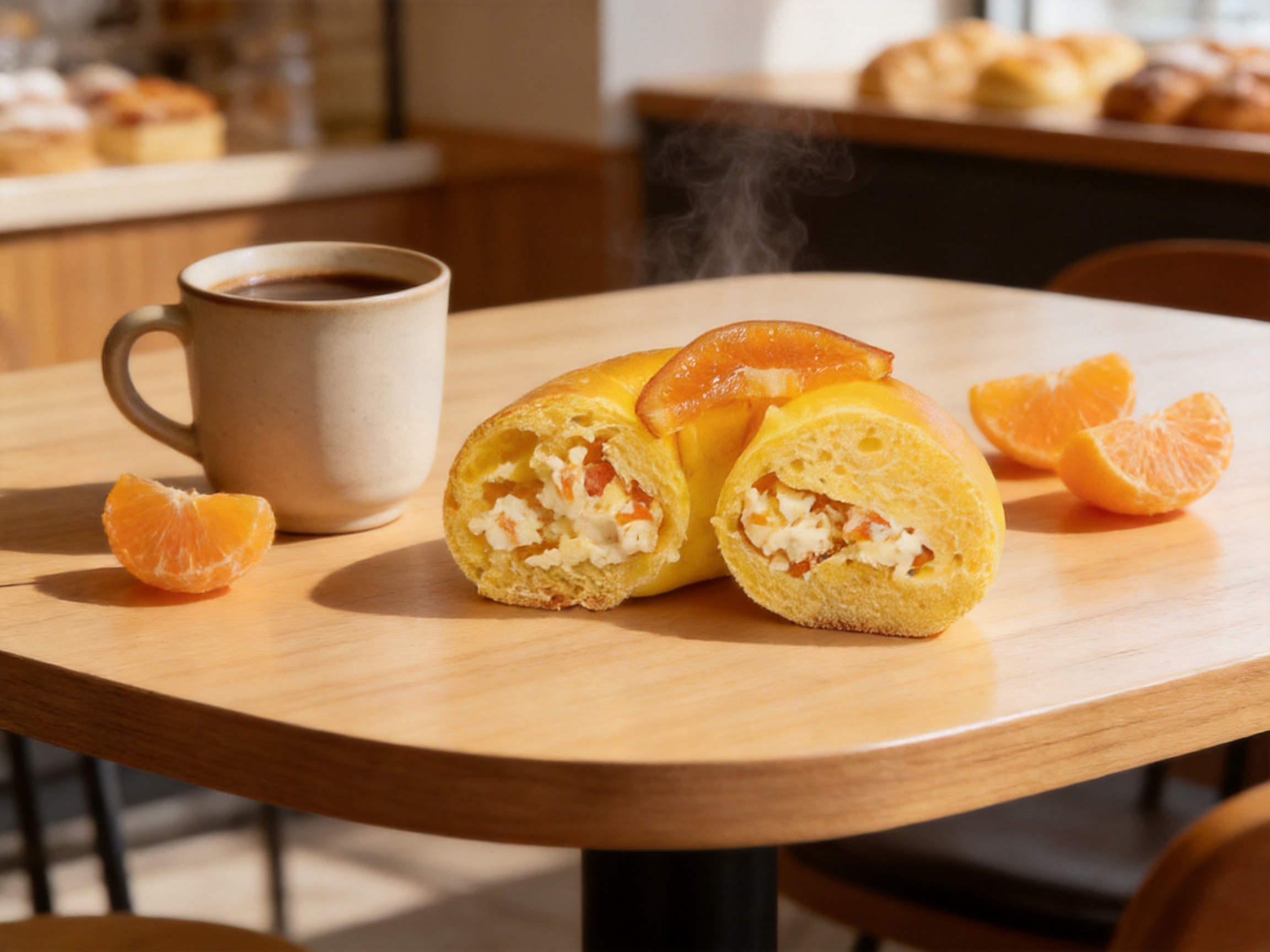
The citrus and dairy profile is naturally compatible with coffee and tea. Its sweetness is noticeable but not limited to dessert occasions, making it suitable for morning menus and afternoon snack periods. Cafés can offer it as an alternative to muffins, croissants, sweet buns, and plain cream cheese bagels.
The bright orange appearance can also enhance a café display. When placed beside dark coffee beverages, green tea drinks, or neutral-colored bakery items, the topping creates a strong visual accent. This can encourage impulse purchases and make the product easier for staff to identify.
For cafés operating with limited kitchen labor, a frozen filled bagel can provide a specialty product without requiring an extensive pastry production team. The operator can focus on preparation, presentation, and service while relying on the manufacturer for product development and standardized production.
Retail Bakery and Supermarket Channels
Retailers can use the product to expand a bagel category beyond plain, sesame, onion, and cheese varieties. The orange cream cheese concept adds a sweet specialty option that can attract shoppers seeking something different.
The product may be sold individually, in multipacks, or as part of a mixed assortment, depending on the buyer’s packaging strategy. Its distinctive appearance can support front-of-pack imagery and seasonal merchandising, especially during spring, summer, breakfast promotions, or citrus-themed campaigns.
Retailers can also position it within a premium frozen bakery section. The visible orange topping and named flavor profile help communicate a more developed product concept than an unfilled basic bagel.
Hotels and Hospitality
Hotels often need breakfast products that are easy to portion, store, prepare, and replenish. A specialty bagel can bring variety to a buffet while maintaining the familiar convenience of a bread-based breakfast item.
The Orange Cream Cheese Bagel can be presented with coffee, tea, fruit, yogurt, or other breakfast selections. Its individual format can support straightforward handling, and its flavor can help create a more memorable breakfast offering than a selection consisting only of plain bread and standard spreads.
Tea Brands and Café Chains
Tea brands and café chains often seek bakery products that pair with beverages and can be standardized across locations. The orange and cream cheese combination works well with black tea, green tea, herbal tea, and coffee-based drinks.
For chains, the product’s value extends beyond flavor. A standardized supplier can support menu consistency, centralized purchasing, and more efficient product rollouts. The company’s OEM and private label capabilities can allow a chain to present the product under its own brand architecture.
Office Catering and Events
At meetings, conferences, and corporate catering events, individual bakery portions are convenient to distribute. A 90-gram bagel can be included in breakfast boxes, snack trays, or coffee-break assortments.
The product’s visual appeal and distinctive flavor may help create variety in an otherwise standard catering menu. It can be paired with fruit, beverages, or savory sandwiches to create a balanced selection of sweet and savory items.
OEM and Private Label Opportunities
OEM and private label customers increasingly seek products that are differentiated enough to support their own market positioning. A generic bagel may be difficult to distinguish, while a recognizable flavor combination can give a retailer or foodservice brand a stronger product story.
The Orange Cream Cheese Bagel provides a ready-developed concept that can be adapted to a customer’s category strategy. It may be introduced as a premium breakfast product, a seasonal citrus item, a café-exclusive flavor, or part of a broader filled bagel range.
Product Portfolio Expansion
Customers that already sell classic bagels can use this product to create a more varied portfolio. It can sit alongside savory items such as cheese, onion, or meat-filled products while offering a sweeter alternative for consumers who want a different occasion.
Customers with existing cream cheese or fruit bakery lines can also use the product to connect categories. It combines familiar cream cheese with a bright fruit profile, allowing a buyer to create a unified story around indulgent yet refreshing bakery products.
Private Label Positioning
Private label programs can use packaging, naming, and merchandising to communicate different value propositions. A retailer may emphasize convenience and breakfast. A café chain may emphasize handcrafted flavor inspiration. A premium bakery brand may highlight the layered citrus and cream cheese experience.
The manufacturer’s experience with retail, foodservice, café chains, tea brands, and bakery operators provides a foundation for understanding these different applications. Customers can work with a supplier that is familiar with the operational requirements of multiple channels.
Customization and Development Support
OEM projects may require discussion of product weight, filling ratio, topping format, packaging configuration, delivery requirements, and assortment planning. A specialized bagel manufacturer can assess these requirements together rather than treating each one as an isolated request.
Customization should preserve the product’s central identity: a creamy foundation lifted by orange peel and finished with a candied orange slice. Within that framework, customers may explore different commercial presentations according to their target market and sales channel.
Quality, Reliability, and Customer Value
For commercial buyers, product quality is only one part of supplier value. Reliability, communication, development capability, and supply coordination also influence the success of a bakery program.
Goobagel Food’s stated focus on stable quality, consistent performance, and reliable supply addresses these practical concerns. A customer purchasing frozen bagels needs confidence that the product can support regular operations, not merely perform well in a sample evaluation.
Stable quality helps operators maintain a consistent consumer experience. Consistent performance helps staff prepare and serve the product more predictably. Reliable supply helps protect menu availability and reduces the risk of unexpected product interruptions.
The company’s values—persistence, craftsmanship, respect, and science—also reflect a manufacturing approach that combines practical production discipline with product development. Persistence supports long-term improvement. Craftsmanship supports attention to product details. Respect supports cooperation with customers and partners. Science supports structured development and process evaluation.
Clean-Label Product Development
The company has developed more than 100 clean-label bagel varieties. Clean-label expectations vary by market and customer, so buyers should confirm the specific ingredient statement, allergen declaration, storage instructions, and regulatory requirements for the intended destination.
From a product-development perspective, clean-label positioning can help manufacturers create products that are easier for consumers to understand. In the Orange Cream Cheese Bagel, recognizable elements such as cream cheese, orange peel, and candied orange provide a clear flavor narrative.
For retail and foodservice buyers, a transparent product story can support menu descriptions and promotional communication. The product can be described through its core ingredients and sensory qualities rather than relying on an overly complicated flavor concept.
Packaging, Merchandising, and Communication Strategy
The product should be presented in a way that makes its main benefits immediately clear. The name should communicate the three central ideas: orange, cream cheese, and bagel. Product photography should make the candied orange slice visible and show the filled interior when appropriate.
Packaging can emphasize the contrast between creamy and refreshing. Suitable language may include “smooth cream cheese,” “diced orange peel,” “candied orange topping,” and “ready-to-heat frozen bagel,” subject to the buyer’s labeling and regulatory requirements.
In a foodservice setting, the product can be displayed near coffee and tea pairings. In retail, it may be merchandised with breakfast bakery products, frozen specialty breads, or seasonal citrus promotions. In a café, menu descriptions can focus on the sensory sequence: creamy center, aromatic orange peel, and sweet citrus topping.
Because the product has a visible topping, presentation quality matters. Operators should follow appropriate storage and preparation procedures so that the orange slice remains attractive and the product maintains its intended texture. Buyers should also evaluate packaging formats that protect the topping during transport and handling.
Menu Description Example
A concise menu description could read: “A soft bagel filled with smooth cream cheese and diced orange peel, finished with a fragrant candied orange slice.” This description communicates the product’s key components without making unsupported nutritional or health claims.
For a premium café menu, a longer description could emphasize the layered eating experience: “Rich cream cheese meets bright orange peel in a specialty bagel finished with a lightly baked candied orange slice.” The wording highlights contrast and craftsmanship while remaining accessible.
Why Citrus Bakery Products Continue to Attract Attention
Citrus flavors have broad consumer familiarity and strong sensory recognition. Orange is associated with freshness, warmth, color, and fragrance. It can be used in both sweet and savory products and pairs effectively with dairy, chocolate, nuts, grains, and tea.
In bakery applications, citrus can help create a lighter impression. Cream, butter, and cheese-based products often benefit from a bright aromatic component that prevents the flavor from feeling too dense. Orange peel is especially useful because it offers fragrance and complexity in addition to sweetness.
The Orange Cream Cheese Bagel uses this familiarity in a format that remains differentiated. Consumers do not need to learn an unfamiliar flavor category, but they may still be interested because the combination is less common than plain cream cheese or standard fruit pastry.
This balance between familiarity and novelty is valuable for product launches. Extremely unusual flavors can attract attention but may limit repeat purchases. Familiar flavors in a new format can be easier to introduce, explain, and distribute.
Operational Considerations for Buyers
Before placing a commercial order, buyers should evaluate the product against their specific channel requirements. Important considerations include storage conditions, case configuration, minimum order quantities, delivery schedule, preparation method, packaging format, shelf-life expectations, and destination-market compliance.
Buyers should also review the ingredient and allergen information because the product contains dairy-based cream cheese and may be manufactured in an environment handling other allergens. Final labeling and regulatory documentation should be confirmed directly with the supplier before market launch.
Foodservice operators should test the product using the equipment available at their locations. Ovens, rapid-heating equipment, and holding conditions may influence texture and topping appearance. A structured test can help determine the best preparation time and serving temperature for each operation.
Retail buyers should examine how the product performs in packaging, transportation, freezer storage, and display. Product visibility is especially important because the candied orange slice is a major part of the product’s identity.
Chain customers should consider whether the item will be used as a permanent menu product, seasonal promotion, limited-time offer, or pilot program. Its citrus profile may be especially suitable for promotional campaigns, but its balanced flavor also supports year-round positioning.
Comparison of Product Benefits
| Product Attribute | Orange Cream Cheese Bagel Benefit | Commercial Value |
|---|---|---|
| Cream cheese foundation | Provides a smooth, rich, and lightly savory base | Creates a satisfying product that pairs with coffee, tea, and breakfast menus |
| Diced orange peel | Adds aromatic citrus brightness and gentle complexity | Differentiates the product from plain cream cheese bagels |
| Candied orange slice | Provides visible decoration, sweet aroma, and a premium finish | Supports display appeal and easier flavor recognition |
| 90-gram portion | Offers a practical individual serving format | Supports portion control, packaging, and menu planning |
| Frozen bakery format | Allows planned storage and preparation | Helps manage labor, inventory, and product availability |
| Specialized manufacturing | Benefits from bagel-focused research and production experience | Supports consistent product quality and commercial scalability |
| OEM and private label suitability | Can be incorporated into different customer brand strategies | Enables portfolio expansion and market-specific positioning |
| Integrated supply chain | Connects raw materials, R&D, production, and distribution | Improves coordination and supports reliable supply planning |
Strategic Value for Wholesale Customers
Wholesale customers need products that can produce repeat sales, not simply generate initial curiosity. The Orange Cream Cheese Bagel has several characteristics that can support repeat purchasing: a recognizable flavor, a satisfying cream cheese base, a visually distinctive topping, and a flexible serving occasion.
Its flavor can be introduced to consumers through a simple message. Customers understand orange and cream cheese as individual ingredients, and the bagel format is familiar. This reduces the educational effort required compared with a product built around obscure or highly specialized ingredients.
The product can also support category segmentation. A wholesaler may supply it to café customers seeking premium breakfast items, retailers seeking specialty frozen bakery products, or hotels seeking differentiated breakfast selections. The same product concept can therefore serve several customer groups.
For distributors, a wider range of potential end users can improve sales flexibility. Instead of relying on one narrow channel, the product can be introduced to businesses with different operating models and consumer bases.
Building a Long-Term Product Partnership
A successful supplier relationship involves more than a single shipment. Buyers benefit from manufacturers that can support product selection, specification review, sample evaluation, packaging coordination, production planning, and future portfolio development.
Goobagel Food’s focus on research, manufacturing, and commercial supply provides a basis for long-term cooperation. Its experience with more than 100 bagel varieties can help customers compare formats, explore complementary flavors, and plan a broader product range.
A customer may begin with the Orange Cream Cheese Bagel as a specialty product and later develop additional filled or topped bagels. A manufacturer with an established R&D function can help organize these projects around the customer’s target market, production requirements, and brand direction.
Long-term cooperation can also help improve forecast planning. As sales data becomes available, customers and manufacturers can review demand patterns, promotional periods, packaging needs, and delivery schedules. This may support more efficient production and reduce avoidable supply pressure.
Frequently Asked Questions
What is the Orange Cream Cheese Bagel?
It is a 90-gram specialty bagel built with a cream cheese filling, diced orange peel folded into the filling, and a candied orange slice baked on top. The flavor combines creamy dairy richness with bright citrus aroma and moderate sweetness.
What gives the product its orange flavor?
The product uses diced orange peel in the cream cheese filling and a candied orange slice as a topping. These components provide both integrated citrus flavor and visible orange aroma.
Is the product designed for breakfast only?
No. It can be offered at breakfast, as an afternoon snack, with coffee or tea, in hotel hospitality service, in catering, or as part of a retail bakery assortment.
What is the advantage of using cream cheese as the base?
Cream cheese provides a smooth, rich, and lightly savory foundation. It balances the sweetness of the candied orange slice and gives the bagel a satisfying mouthfeel.
Why is diced orange peel used instead of only orange flavoring?
Diced orange peel contributes aromatic citrus notes, gentle bittersweet complexity, and small textural inclusions. It helps the orange character feel integrated into the cream cheese filling.
What is the purpose of the candied orange slice?
The candied orange slice adds visual differentiation, a sweet citrus aroma, and a premium finishing detail. It also helps consumers recognize the product’s flavor before tasting it.
Can the product be used by cafés and coffee shops?
Yes. Its cream cheese and citrus profile pairs naturally with coffee and tea. The frozen format can also help cafés manage preparation and inventory while offering a specialty bakery item.
Is this product suitable for private label programs?
Yes. The manufacturer offers OEM and private label bagel solutions. Buyers can discuss packaging, product presentation, assortment planning, and other commercial requirements according to their market strategy.
What types of companies can purchase the product?
Potential customers include retailers, supermarkets, cafés, coffee chains, tea brands, hotels, caterers, bakery operators, foodservice distributors, and other businesses that purchase frozen bakery products.
What does the frozen format offer to foodservice operators?
It can support planned storage, portion consistency, flexible preparation, and reduced dependence on in-store assembly. Operators should follow the supplier’s storage and preparation instructions for the best result.
How does the product differ from a plain cream cheese bagel?
A plain cream cheese bagel generally offers bread and dairy richness. This product adds diced orange peel and a candied orange slice, creating a brighter aroma, more visual appeal, and a more layered flavor experience.
How does the product differ from a conventional sweet pastry?
It retains the familiar chew and structure of a bagel while combining cream cheese with citrus rather than relying entirely on a sugar-forward pastry profile. This makes it suitable for both breakfast and snack occasions.
Does the manufacturer provide other bagel varieties?
Yes. The company has developed more than 100 clean-label bagel varieties and works with retail, foodservice, café, tea, and bakery customers on different bagel solutions.
What should buyers confirm before ordering?
Buyers should confirm specifications such as ingredient declarations, allergen information, packaging, storage requirements, preparation instructions, shelf-life expectations, case configuration, minimum order quantities, delivery arrangements, and destination-market compliance.
Can the product be used as a seasonal item?
Yes. Its orange color and citrus profile can support seasonal promotions, limited-time menus, spring campaigns, summer bakery selections, or holiday gift and breakfast assortments. It can also be positioned as a year-round specialty product.
Conclusion
The Sweet and Refreshing Orange Cream Cheese Bagel is designed around a clear and commercially relevant idea: combine the richness of cream cheese with the brightness of orange in a convenient, visually distinctive bagel format.
Its advantages come from the interaction of several carefully selected elements. The cream cheese foundation creates a smooth and satisfying center. Diced orange peel provides aromatic lift and citrus complexity. The candied orange slice adds a visible premium finish and releases a sweet orange fragrance during preparation.
Compared with plain filled bagels, the product offers greater flavor layering and stronger visual identity. Compared with heavily sweet bakery items, it provides a more refreshing and balanced direction. Compared with made-to-order assembly, the frozen manufactured format can support consistency, inventory planning, and operational efficiency.
The product is also supported by a manufacturer with experience in bagel research, clean-label product development, integrated supply chain management, OEM production, private label cooperation, and commercial distribution. Since 2019, Jiangsu Goobagel Food Technology Co., Ltd. has developed a broad range of bagel products for customers across retail and foodservice channels.
For buyers seeking a differentiated frozen bagel, a specialty café product, or a private label opportunity, the Orange Cream Cheese Bagel offers a practical combination of consumer appeal and manufacturing support. It is familiar enough to be accessible, distinctive enough to attract attention, and flexible enough to serve multiple commercial occasions.
References
1. Product specification and sensory description for the Sweet and Refreshing Orange Cream Cheese Bagel, supplied in the project materials.
2. Company profile and manufacturing information for Jiangsu Goobagel Food Technology Co., Ltd., supplied in the project materials.
3. General principles of frozen bakery product development, including portion control, preparation consistency, storage planning, and foodservice application.
4. General sensory evaluation principles for balancing dairy richness, citrus aroma, sweetness, texture, and visual presentation in bakery products.
5. General guidance on OEM and private label food manufacturing, including specification coordination, packaging development, supply planning, and commercial product positioning.
