
 中文简体
 English






postmaster@goobagelfood.com
Content
- 1 A Layered Product Concept Built Around Familiar Flavors
- 2 Golden-Baked Exterior and Premium Visual Appeal
- 3 Three-Stage Eating Experience
- 4 Key Product Advantages Over Conventional Bakery Options
- 5 Ingredient Roles and Flavor Balance
- 6 Frozen Bakery Convenience for Professional Buyers
- 7 Manufacturing Strengths Supporting Consistency
- 8 Research and Development as a Commercial Advantage
- 9 Advanced Production Considerations for Frozen Bagels
- 10 OEM and Private-Label Potential
- 11 Applications Across Multiple Sales Channels
- 12 Merchandising and Menu Positioning
- 13 Quality, Reliability, and Supply Partnership
- 14 Why This Product Is Suitable for Global Market Development
- 15 Preparation and Service Considerations
- 16 Q&A
- 16.1 What is the Golden and Crispy Potato Bacon Bagel?
- 16.2 What makes the product different from a plain bagel?
- 16.3 How does the product compare with a conventional breakfast sandwich?
- 16.4 What role does the potato filling play?
- 16.5 Why is mozzarella used in the product?
- 16.6 What flavor does the bacon provide?
- 16.7 Who can purchase or use this product?
- 16.8 Can the product be used for private-label programs?
- 16.9 Why is frozen distribution useful for foodservice operators?
- 16.10 Does the product work for more than breakfast?
- 16.11 What should buyers confirm before ordering?
- 16.12 What manufacturing strengths support the product?
- 16.13 How can operators improve the serving experience?
- 17 Conclusion
- 18 References
- 19 Product: Golden And Crispy Potato Bacon Bagel
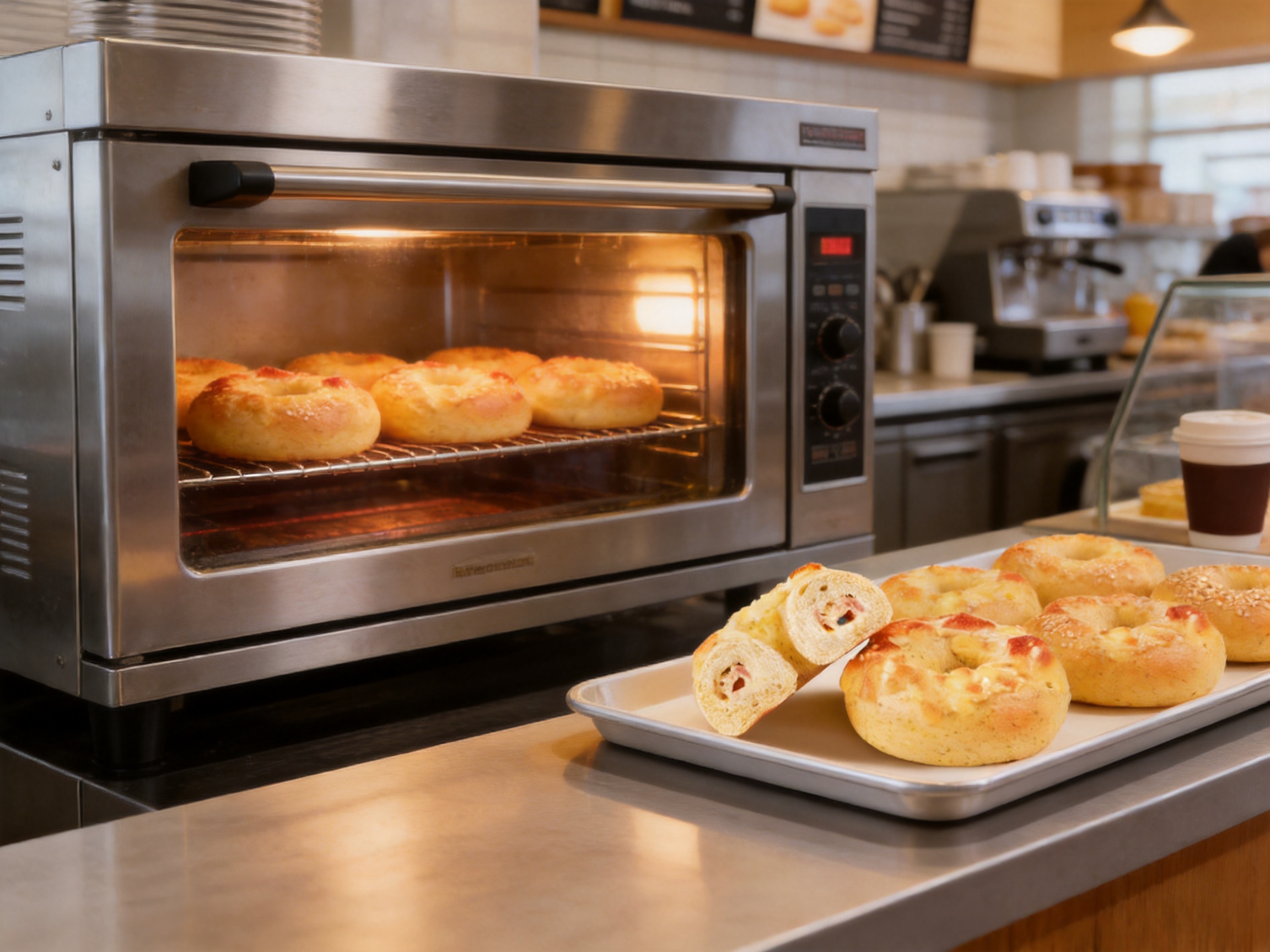
The Golden and Crispy Potato Bacon Bagel is designed for customers who want more than an ordinary bread product. It combines the chewy character of a traditional bagel with the comfort of fluffy potato mash, the savory appeal of bacon, and the rich melt of imported mozzarella. Finished with a golden-baked surface, this filled bagel delivers contrasting textures, layered flavor, and convenient preparation in one commercially efficient product.
For retailers, cafés, restaurants, bakery chains, convenience stores, and foodservice operators, the product provides a practical way to offer a substantial savory item without building a complicated kitchen operation. It can function as a breakfast option, a quick lunch, a light meal, an afternoon snack, or a grab-and-go product. Its familiar ingredients make it accessible, while its layered construction gives it a more premium impression than a plain bagel or a basic filled pastry.
The product weighs 78 grams, creating a portion size that is easy to merchandise, package, prepare, and price. Its format is also suitable for frozen distribution, allowing operators to maintain product availability while reducing the daily labor associated with preparing dough, fillings, cheese, and bacon separately. This combination of taste appeal, operational stability, and supply-chain convenience makes the bagel particularly suitable for professional buyers seeking scalable bakery solutions.
A Layered Product Concept Built Around Familiar Flavors
The strongest advantage of the Golden and Crispy Potato Bacon Bagel is its clear flavor architecture. Each ingredient contributes a distinct role rather than simply adding richness. The bagel provides a toasted grain character and a satisfying chew. The potato mash creates a smooth, fluffy center. Bacon adds a salty, smoky, and lightly crisp accent. Mozzarella contributes creamy dairy notes and an attractive melted finish.
Many filled bakery products rely on one dominant flavor. They may be heavily sweet, strongly salty, or overly rich. This product is designed with a more balanced progression. The first impression comes from the golden surface and browned cheese aroma. The middle of the bite reveals soft potato. The finish is driven by savory bacon. Because the flavors appear in stages, the eating experience remains interesting from the first bite to the last.
The combination also responds to broad consumer preferences. Potato is familiar, comforting, and naturally compatible with bakery products. Bacon provides an immediately recognizable savory signal. Mozzarella is widely accepted across markets and adds visual appeal through melting and stretch. Together, these ingredients create a flavor profile that can be understood quickly by consumers without requiring extensive product education.
For product developers and foodservice buyers, this familiarity reduces market-entry risk. A highly unusual filling may attract attention but can also limit repeat purchases. The Golden and Crispy Potato Bacon Bagel takes a different approach: it uses recognizable ingredients in a distinctive format. The result feels innovative enough to stand out while remaining approachable enough for everyday consumption.
Golden-Baked Exterior and Premium Visual Appeal
Appearance plays an important role in the success of frozen bakery products. Consumers frequently make their first judgment before tasting, based on color, surface texture, filling visibility, aroma, and the overall impression of freshness. The Golden and Crispy Potato Bacon Bagel is developed to create an appealing golden-baked appearance after preparation.
The crisp exterior communicates heat, freshness, and craftsmanship. It also creates a useful contrast with the soft interior. A product that looks golden and lightly toasted is more likely to be perceived as freshly prepared than one with a pale or uneven surface. In a café display, bakery case, breakfast counter, or online food photograph, this appearance can support premium positioning.
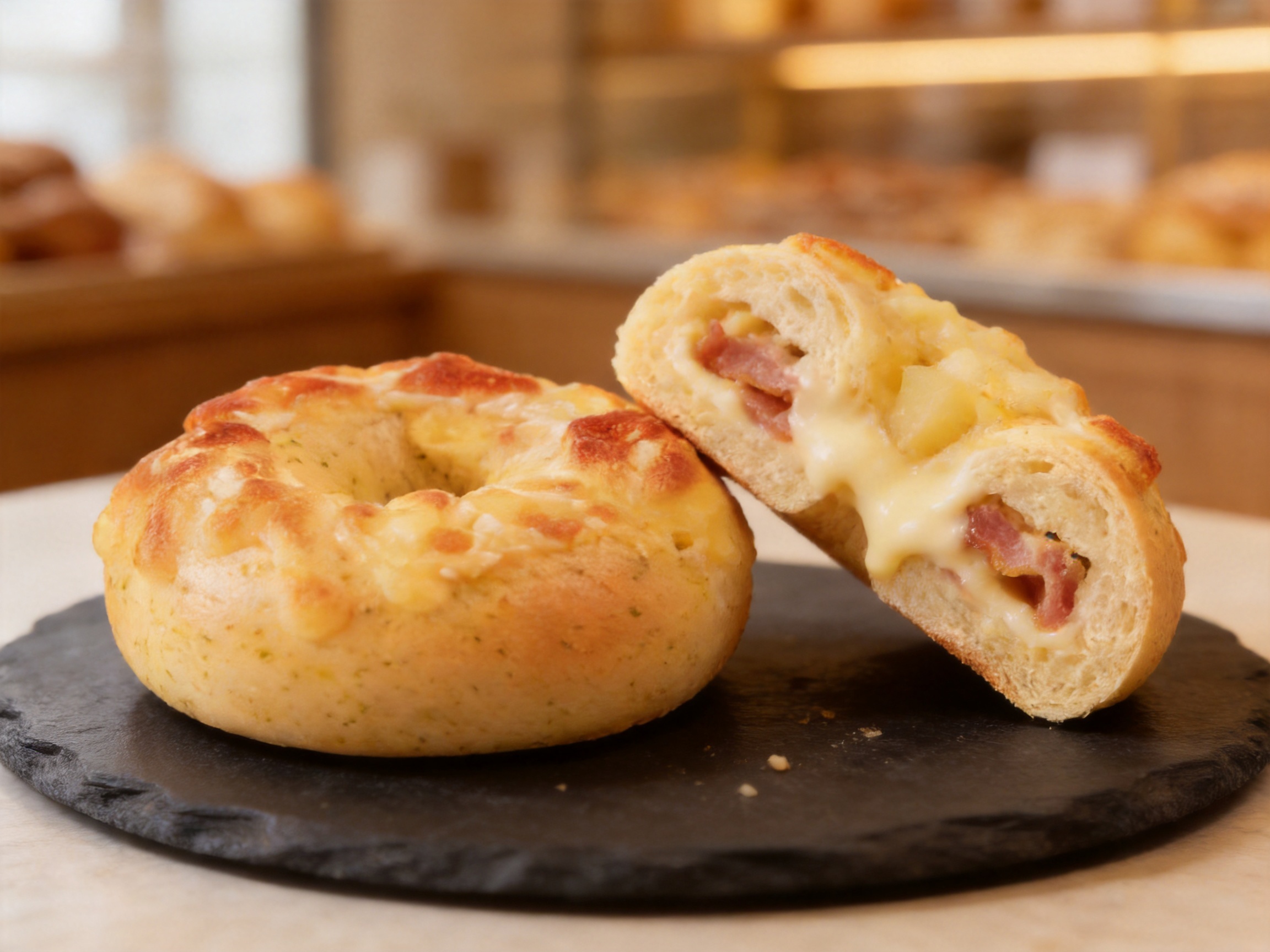
The mozzarella finish strengthens the visual effect. When heated, the cheese melts into the surface and can develop lightly browned or charred aromatic edges. This creates the kind of visual detail associated with oven-baked food. The melted cheese can also provide a stretchy texture that consumers often connect with indulgence and quality.
Compared with an unfilled plain bagel, the product offers more visual and sensory cues. Compared with a conventional sandwich, it presents the filling in a compact, self-contained format. Compared with a standard filled bun, the bagel structure gives it a more substantial and recognizable identity. These distinctions can help retailers and foodservice operators build a product range with greater variety.

Golden And Crispy Potato Bacon Bagel
Three-Stage Eating Experience
Stage One: Toasted Grain and Melted Mozzarella
The opening stage of the bite is defined by the baked bagel exterior and the mozzarella topping. The bagel surface contributes a roasted grain aroma and a firm, lightly crisp texture. This initial texture is important because it gives the product structure and prevents the eating experience from becoming soft or uniform.
The mozzarella adds a smooth dairy impression and a richer mouthfeel. As it melts, it can connect the exterior with the interior filling, allowing the cheese to function not only as a topping but also as a bridge between the bagel and the savory center. The combination of toasted dough and melted cheese creates an aroma that is especially suitable for breakfast and hot-snack occasions.
Stage Two: Fluffy Potato Mash
After the initial crispness, the consumer encounters a soft potato center. The potato mash gives the product body and comfort. Its texture is designed to be smooth and fluffy rather than dry or coarse, making it a natural partner for the chewy bagel dough.
Potato also contributes gentle sweetness. This mild sweetness helps soften the saltiness of the bacon and cheese, creating a more rounded profile. It makes the filling feel substantial without requiring an aggressive seasoning approach. In practical terms, the potato provides a cost-effective and familiar base that supports consistent flavor across different serving occasions.
Stage Three: Savory Bacon Finish
Bacon brings the strongest savory signal to the filling. Its salty and smoky character adds depth and helps the product finish with a memorable flavor. The bacon also introduces a more dynamic mouthfeel, particularly when a small crisp or firm element contrasts with the smooth potato mash.
The bacon is not intended to overpower the other components. Instead, it acts as a flavor accent that gives the potato filling a more appetizing personality. This balance is important for commercial use because a product that is too salty or smoky may have limited appeal, while a product without sufficient savory impact may be perceived as bland.
Key Product Advantages Over Conventional Bakery Options
More Complete Than a Plain Bagel
A plain bagel can be versatile, but it often requires additional preparation. Operators may need to slice it, add spreads, prepare fillings, and assemble a finished serving. The Golden and Crispy Potato Bacon Bagel integrates the main components into one unit. This reduces assembly steps and provides a more complete eating experience immediately after heating.
The filled format also helps operators create a stronger value proposition. Instead of selling a basic bread item, a retailer can present a hot savory product with cheese, potato, and bacon. This makes it easier to position the bagel as a meal or substantial snack rather than merely an accompaniment.
More Convenient Than an Assembled Sandwich
A conventional breakfast sandwich may require several separate ingredients, including bread, meat, cheese, sauces, and vegetables. Each component has its own storage, handling, preparation, and shelf-life requirements. The Golden and Crispy Potato Bacon Bagel simplifies this model by combining the major filling elements before distribution.
Fewer separate components can reduce preparation time and help minimize assembly errors. It can also reduce the number of ingredients that must be opened and managed during a busy service period. For locations with limited kitchen space or restricted labor availability, this operational advantage can be significant.
More Distinctive Than a Basic Filled Bun
Filled buns are familiar in many markets, but the bagel format provides a firmer chew and a more recognizable premium bakery identity. The product is not simply a soft bun with filling. It combines the dense, chewy character associated with a bagel and the comfort of a hot filled snack.
This distinction can help businesses expand beyond common sandwiches and pastries. A café can place the product in its breakfast range. A convenience retailer can include it in a hot-food program. A bakery chain can use it as a signature savory item. A distributor can offer it as a differentiated frozen bakery product rather than another generic filled bread.
Stronger Sensory Contrast
Texture contrast is one of the product’s most important competitive strengths. The outer layer is golden and crisp, the bagel interior is chewy, the potato is soft, and the bacon provides a savory accent. Mozzarella adds melt and stretch. These differences help keep the bite engaging and reduce the risk of a monotonous eating experience.
A product with multiple textures can also create stronger consumer memory. The crisp surface establishes the first impression, the creamy potato creates comfort, and the bacon delivers a recognizable finish. This sensory sequence can increase perceived quality and support repeat purchase when the preparation result is consistent.
Ingredient Roles and Flavor Balance
| Component | Primary Function | Consumer Benefit | Commercial Advantage |
|---|---|---|---|
| Bagel dough | Provides chew, structure, and toasted grain character | Creates a satisfying bakery base | Supports a familiar and versatile product format |
| Imported mozzarella | Adds dairy richness, melt, and stretch | Improves aroma, appearance, and mouthfeel | Supports premium positioning and visual merchandising |
| Potato mash | Creates a soft, fluffy filling with gentle sweetness | Delivers comfort and fullness | Provides a consistent, familiar filling base |
| Bacon | Adds saltiness, smokiness, and savory depth | Creates a strong appetizing finish | Improves product differentiation in the savory-snack category |
| Golden-baked finish | Creates crispness, color, and roasted aroma | Signals freshness and careful preparation | Enhances display appeal after heating |
The product’s balance depends on the relationship between these components. Mozzarella adds richness, but the potato prevents the cheese from becoming too heavy. Potato contributes softness, but bacon provides a stronger savory counterpoint. The bagel adds substance, while the golden exterior keeps the product from feeling overly dense.
This balance gives the product broad daypart potential. At breakfast, it can serve as a filling alternative to a sweet pastry. At lunchtime, it can complement a beverage, soup, salad, or side dish. In the afternoon, it can function as a warm snack. In a late-day convenience setting, it can provide a quick savory option for customers seeking something more substantial than a packaged snack.
Frozen Bakery Convenience for Professional Buyers
The product is positioned as a frozen bakery solution, which offers several advantages for commercial operations. Frozen distribution can extend availability across regions, simplify inventory planning, and reduce the need for daily fresh production at each point of sale. Operators can store stock and prepare portions according to actual demand.
This model is especially useful for businesses with fluctuating traffic. A café near an office district may experience strong weekday demand but lower weekend sales. A convenience store may see different patterns in the morning, afternoon, and evening. A foodservice distributor may serve multiple customers with different ordering cycles. Frozen stock gives each operator more flexibility than a fully fresh, short-life supply model.
Portion control is another important benefit. At 78 grams, the product has a defined unit size that can support standardized pricing, menu planning, nutrition calculation, packaging selection, and service procedures. Consistent portioning also helps operators estimate food cost more accurately and reduce variation between servings.
The filled format can improve workflow efficiency. Staff do not need to portion potato mash, cook bacon, grate cheese, or assemble individual bagels during peak periods. Instead, preparation can focus on heating and presentation. This may shorten service time and make the product suitable for sites with limited culinary equipment or staffing.
Frozen bakery products also allow businesses to test new concepts with lower operational risk. An operator can introduce the bagel in selected stores, monitor sales, evaluate consumer response, and expand distribution without immediately investing in a complete in-store production line. This makes the product suitable for pilot programs, seasonal menus, private-label launches, and menu rotations.
Manufacturing Strengths Supporting Consistency
Jiangsu Goobagel Food Technology Co., Ltd. has specialized in bagel research and manufacturing since 2019. The company operates as a modern frozen bakery producer with an integrated supply chain covering raw materials, research and development, production, and nationwide distribution. This structure supports a more coordinated approach to product development and supply than a fragmented purchasing model.
An integrated supply chain can help connect product formulation with manufacturing requirements. Ingredients, filling ratios, dough characteristics, freezing behavior, packaging considerations, and distribution conditions can be evaluated as parts of the same product system. This is important for filled bakery products because the final consumer experience depends on more than flavor alone.
For example, a filling must remain compatible with the dough during forming and baking. The cheese must provide an appealing melt after heating. The potato must retain a pleasant texture after freezing and reheating. The finished product must also withstand handling, storage, transportation, and preparation at the customer’s location. Coordinated research and production capabilities can help address these requirements more effectively.
The company has developed more than 100 clean-label bagel varieties for retail, foodservice, café chains, tea brands, and bakery operators. This product-development experience is a significant strength for buyers seeking more than a single stock item. A supplier with a broad portfolio can support menu development, category expansion, seasonal innovation, and customized product programs.
Product variety also suggests experience in working with different flavor systems and commercial formats. Sweet bagels, savory bagels, filled bagels, sandwich-style bagels, and classic bagels each require different approaches to dough, filling, baking, freezing, packaging, and preparation. A wide range of developed products can give a manufacturer a stronger foundation for adapting specifications to different market needs.
Research and Development as a Commercial Advantage
Research and development is valuable when it leads to practical improvements in the finished product. For the Golden and Crispy Potato Bacon Bagel, development must address the interaction of several elements: dough chew, filling softness, cheese melt, bacon flavor, surface browning, frozen storage, and reheating performance.
A successful formulation must remain appealing after the product moves through the commercial supply chain. It is not enough for the bagel to taste good immediately after production. It must also be suitable for freezing, transportation, storage, preparation, and service. These stages can affect moisture migration, texture, aroma, and appearance.
The product’s layered design gives the development team multiple sensory targets. The exterior should become golden and crisp. The mozzarella should melt attractively. The potato should remain smooth and fluffy. The bacon should retain its savory identity. The overall product should be satisfying without becoming excessively greasy, salty, or dense.
For customers considering OEM or private-label development, a manufacturer’s R&D capability can shorten the path from concept to launch. Buyers may have a target weight, ingredient direction, shape, packaging format, or preparation method. A capable development partner can help translate those commercial requirements into a product that can be manufactured consistently.
Goobagel’s experience serving retail, foodservice, cafés, tea brands, and bakery operators also supports application-oriented development. Each channel has different priorities. Retail products may require strong packaging appeal and consumer convenience. Cafés may prioritize rapid preparation and menu compatibility. Foodservice buyers may focus on case configuration, consistency, and labor savings. Private-label customers may require a distinctive specification aligned with their brand identity.
Advanced Production Considerations for Frozen Bagels
Modern frozen bakery manufacturing involves more than mixing ingredients and freezing finished goods. The production system must coordinate formulation, dough handling, filling control, shaping, baking, cooling, freezing, packaging, storage, and distribution. Each step can influence the final eating experience.
Dough Development and Structure
The bagel dough must provide enough strength to hold the filling while retaining a pleasant chew after heating. If the dough is too weak, the product may lose its shape or fail to contain the filling. If it is too dense, the finished bagel may feel heavy. If it is too soft, it may not deliver the characteristic bagel bite.
For a filled format, dough thickness and filling placement must be carefully coordinated. The dough should provide protection around the center while remaining proportionate to the potato, bacon, and cheese. This balance helps ensure that consumers encounter filling in each bite rather than receiving a large amount of plain bread around a small center.
Filling Distribution
Uniform filling distribution is central to product consistency. Every unit should deliver a comparable relationship between potato, bacon, and mozzarella. Commercial buyers depend on this consistency because it affects consumer satisfaction, food-cost calculations, and brand reputation.
Controlled production can also help reduce leakage, uneven shaping, and irregular appearance. A product with a stable structure is easier to package, transport, heat, and display. It is also more suitable for foodservice procedures in which staff need predictable preparation results.
Baking and Surface Development
Baking must create the desired golden color and exterior texture while protecting the filling. The surface should communicate a freshly baked impression without becoming overly hard. The cheese finish must develop aroma and browning without losing its attractive melt.
The baking stage is therefore connected to both sensory quality and presentation. A well-developed surface can improve the product’s appearance in photographs, display cases, and serving trays. It can also create the roasted aromas that encourage impulse purchase in cafés and convenience stores.
Freezing and Cold-Chain Stability
Freezing is essential to the product’s commercial model. The goal is to preserve the product’s quality during distribution and storage while allowing the operator to restore a satisfying texture and flavor through the recommended preparation method.
A reliable cold chain supports product stability from the manufacturing facility to the customer’s freezer. Integrated supply-chain management can help coordinate raw-material sourcing, production scheduling, frozen storage, and nationwide distribution. This is particularly important for wholesale customers that require dependable supply across multiple locations.
For buyers, cold-chain performance is closely connected to inventory confidence. Stable frozen products allow operators to plan purchasing, maintain safety stock, and serve customers consistently. They can also reduce the pressure to sell every unit immediately, as would be necessary with a highly perishable fresh product.
OEM and Private-Label Potential
The Golden and Crispy Potato Bacon Bagel can serve as a finished product for wholesale purchase, but its broader value lies in the possibilities of OEM and private-label cooperation. Businesses may want a savory filled bagel under their own brand, with their own packaging, target market, or menu positioning.
A private-label version may be adapted in several ways. The customer could request a different unit weight, case quantity, filling ratio, packaging design, preparation instruction, or flavor intensity. The product might be introduced as a breakfast bagel, a premium café item, a convenience-store hot snack, or a foodservice component.
The existing flavor combination offers a strong starting point because it is easy to understand and broadly appealing. At the same time, the format can be extended into a wider range of concepts. Potato could be paired with other savory proteins or vegetables. Mozzarella could be combined with different cheese systems. The bagel could be adjusted for different portion sizes or menu occasions.
OEM development should always be guided by specific commercial requirements. Important considerations may include target retail price, ingredient standards, allergen declarations, packaging regulations, storage conditions, distribution distance, preparation equipment, and desired shelf life. A structured development process can align these requirements with product performance.
For chain operators, private-label manufacturing can support menu consistency across locations. Instead of relying on each store to prepare the product independently, the operator can distribute a standardized item. This helps protect taste, appearance, portion size, and preparation time while allowing local stores to focus on service and sales.
Applications Across Multiple Sales Channels
Cafés and Coffee Shops
The bagel is well suited to café menus because it pairs naturally with coffee, tea, milk-based drinks, and cold beverages. Its savory flavor can balance a menu that is otherwise dominated by sweet pastries. It can also be sold as a breakfast set, lunch combination, or afternoon snack.
Cafés may benefit from the product’s compact preparation process. A heated bagel can be served on its own, wrapped for takeaway, or placed on a plate with a side salad or fruit. Its visual appeal also supports counter merchandising, particularly when customers can see the golden surface and melted cheese.
Convenience Stores
Convenience stores require products that are fast to prepare, easy to handle, and suitable for impulse purchase. The Golden and Crispy Potato Bacon Bagel can be positioned in a hot-food cabinet, heated snack area, or chilled-to-hot preparation program according to the operator’s equipment and procedures.
The product’s portion size makes it practical for grab-and-go service. It can be sold individually or as part of a beverage combination. The familiar bacon-and-cheese profile may help attract customers who want a warm savory item but do not want a full meal.
Bakery Chains
Bakery chains can use the bagel to expand their savory range. It can be displayed alongside croissants, buns, toast products, and other filled bakery items. The bagel format adds variety while maintaining a clear connection to the bakery category.
Because the product arrives as a frozen solution, stores may not need to produce the filling from scratch. This can support consistent quality across branches and make it easier to introduce the product to locations with different levels of kitchen capability.
Tea and Beverage Brands
Tea brands and beverage shops increasingly benefit from offering light food items that encourage customers to purchase more than a drink. The Golden and Crispy Potato Bacon Bagel can complement milk tea, fruit tea, coffee, and other beverages as a savory add-on.
Its flavor intensity is strong enough to feel satisfying but familiar enough to pair with a broad beverage menu. A beverage operator can offer the bagel as a simple snack bundle, a breakfast promotion, or a limited-time savory feature.
Institutional and Foodservice Operations
Foodservice operators may use the product in employee dining, school-adjacent retail where appropriate, catering, hotel breakfast programs, or large-scale meal solutions subject to local dietary and regulatory requirements. The defined portion and frozen format can simplify production planning and service management.
For institutional buyers, consistency is often as important as novelty. The product can be heated in batches, incorporated into set menus, or offered as an alternative to traditional sandwiches. Its compact size can help with portion planning and menu rotation.

Merchandising and Menu Positioning
Product positioning should emphasize the complete sensory experience rather than listing ingredients alone. A description such as “golden-baked bagel with fluffy potato, savory bacon, and melted mozzarella” communicates appearance, texture, and flavor in a concise way.
Menu language can also highlight the product’s flexibility. Phrases such as “hot savory breakfast,” “crispy filled bagel,” “cheesy potato and bacon center,” or “grab-and-go meal snack” may be suitable depending on the sales channel. The final wording should match local regulations and the operator’s brand style.
Visual merchandising is particularly important for this product. Images should show the golden surface, the melted cheese, and the interior filling where possible. A cross-section display can help consumers understand that the product contains more than a plain bagel. In a physical store, warm aroma and visible browning can further support impulse purchase.
Bundle strategies may increase average transaction value. The bagel can be paired with coffee for breakfast, tea for an afternoon snack, soup for lunch, or a cold beverage for convenience-store service. Operators can also offer two-unit combinations for customers seeking a more substantial meal.
Pricing should reflect the product’s filled construction, mozzarella component, bacon content, preparation convenience, and premium appearance. It should not be compared only with the price of a plain bagel. Its closer competitive set includes assembled breakfast sandwiches, filled buns, savory pastries, and hot ready-to-eat snacks.
Quality, Reliability, and Supply Partnership
Wholesale buyers need more than an attractive sample. They need a supplier capable of supporting repeat orders, consistent specifications, and dependable communication. A manufacturer with an integrated supply chain and established product-development experience can provide a stronger foundation for long-term cooperation.
Goobagel Food has built its business around bagel research and manufacturing since 2019. Its focus on bagels allows the company to develop category-specific expertise rather than treating bagels as a minor extension of a broader bakery portfolio. This specialization can be valuable when buyers require technical support, product customization, or a wider bagel program.
The company’s portfolio of more than 100 clean-label bagel varieties demonstrates a commitment to product development. For commercial customers, a broad portfolio can create opportunities for assortment planning. Buyers may begin with the Golden and Crispy Potato Bacon Bagel and later add classic, sweet, filled, or sandwich-oriented products to create a complete range.
Reliable supply also helps businesses protect customer expectations. If a successful product becomes unavailable, operators may lose sales and weaken consumer habits. A structured manufacturing and distribution network can help reduce this risk by supporting planned production and wider delivery capability.
At the same time, buyers should confirm all commercial details before placing an order. These may include minimum order quantities, case pack, storage temperature, preparation instructions, ingredient and allergen documentation, delivery schedule, packaging format, certifications, and market-specific compliance requirements. Clear communication helps ensure that the product is suitable for the intended sales environment.
Why This Product Is Suitable for Global Market Development
The Golden and Crispy Potato Bacon Bagel has several characteristics that support international commercialization. Its core ingredients are globally recognizable, its format is easy to understand, and its usage occasions are not limited to one meal period. These features can reduce the need for extensive consumer education when entering new markets.
The product can also be localized through serving style. One market may emphasize breakfast and coffee. Another may position it as a convenience-store snack. A third may serve it in a café with salad or soup. The basic product remains the same while the menu context changes.
Its frozen format supports export and regional distribution more effectively than a short-life fresh product, provided all applicable cold-chain, labeling, import, and food-safety requirements are satisfied. For international buyers, the manufacturer’s ability to coordinate raw materials, production, and distribution is an important consideration.
Market adaptation may involve seasoning intensity, packaging language, preparation equipment, portion expectations, and ingredient declarations. OEM and private-label capabilities can help buyers address these differences while retaining the central product concept of a golden, cheesy, potato-and-bacon filled bagel.
Preparation and Service Considerations
The ideal preparation method should follow the manufacturer’s technical instructions and the operator’s food-safety procedures. Different locations may use ovens, convection ovens, air fryers, or other approved heating equipment. The goal is to restore a crisp surface, melt the mozzarella, and heat the center evenly.
Operators should validate preparation settings before commercial launch. Equipment varies in power, airflow, loading capacity, and temperature accuracy. A short preparation test can help determine the best time and temperature for the specific site. It can also reduce the risk of an underheated center or an overly browned exterior.
Holding time should be controlled because texture can change after heating. The bagel is designed to offer a contrast between a golden exterior and a soft filling. Extended holding may reduce crispness or affect cheese texture. Businesses should establish a practical production rhythm that matches customer traffic and equipment capacity.
Packaging should protect the product while allowing the surface to remain appealing. For takeaway service, wrapping or containers should be selected with attention to heat retention, condensation, handling, and presentation. If steam becomes trapped for too long, the exterior may soften. A suitable packaging design can help maintain a better balance between warmth and crispness.
Q&A
What is the Golden and Crispy Potato Bacon Bagel?
It is a 78-gram filled bagel combining a golden-baked bagel exterior with imported mozzarella, fluffy potato mash, and savory bacon. The product is designed to provide a crisp surface, chewy bagel texture, creamy potato filling, melted cheese, and a smoky bacon finish.
What makes the product different from a plain bagel?
A plain bagel generally requires additional ingredients and assembly before it becomes a complete savory meal or snack. This product integrates the main components into one ready-to-heat unit, offering greater convenience and a more substantial flavor profile.
How does the product compare with a conventional breakfast sandwich?
The product provides a similar combination of bread, cheese, and savory filling in a compact bagel format. It can reduce assembly work because the potato, bacon, and mozzarella are incorporated before distribution. Its bagel structure also offers a distinct chew compared with ordinary sandwich bread.
What role does the potato filling play?
The potato mash creates a smooth and fluffy center. It adds substance and gentle sweetness, softens the saltiness of the bacon and cheese, and provides a comforting texture that complements the chewy bagel.
Why is mozzarella used in the product?
Mozzarella contributes dairy richness, melt, and stretch. When heated, it can create an attractive browned surface and a more aromatic first impression. It also connects the exterior with the soft filling.
What flavor does the bacon provide?
Bacon contributes saltiness, smokiness, and savory depth. It gives the product a memorable finish while balancing the mild potato and creamy mozzarella.
Who can purchase or use this product?
The product is suitable for retail stores, cafés, coffee shops, convenience stores, bakery chains, tea brands, restaurants, foodservice distributors, and other commercial operators seeking a frozen filled bagel solution.
Can the product be used for private-label programs?
It can serve as a starting point for OEM or private-label development, subject to commercial discussion and technical evaluation. Possible areas for customization may include weight, filling ratio, packaging, preparation instructions, branding, and market positioning.
Why is frozen distribution useful for foodservice operators?
Frozen distribution can improve inventory flexibility, extend product availability, reduce daily preparation work, and support more predictable portion control. Operators can prepare products according to demand instead of producing every component from scratch.
Does the product work for more than breakfast?
Yes. Its savory flavor and substantial filling make it suitable for breakfast, lunch, afternoon snacking, takeaway service, convenience retail, and other occasions when consumers want a warm bakery item.
What should buyers confirm before ordering?
Buyers should confirm minimum order quantities, case configuration, storage requirements, preparation instructions, ingredient and allergen information, packaging, certifications, delivery arrangements, lead times, and any market-specific compliance requirements.
What manufacturing strengths support the product?
The manufacturer has specialized in bagel research and manufacturing since 2019 and operates an integrated supply chain covering raw materials, R&D, production, and distribution. Its portfolio includes more than 100 clean-label bagel varieties for retail and foodservice applications.
How can operators improve the serving experience?
Operators can validate heating settings, avoid excessive holding time, use packaging that limits condensation, and merchandise the product where customers can see its golden surface. Pairing it with coffee, tea, soup, salad, or a cold beverage can also increase its menu versatility.
Conclusion
The Golden and Crispy Potato Bacon Bagel combines recognizable ingredients with a distinctive filled-bagel format. Its golden exterior, melted mozzarella, fluffy potato mash, and savory bacon create a layered eating experience that is more complete than a plain bagel and more operationally convenient than an assembled sandwich.
Its competitive strengths extend beyond flavor. The product offers portion control, frozen-storage flexibility, broad daypart potential, simplified preparation, and strong visual appeal. These features can help retailers, cafés, foodservice operators, and bakery chains create a dependable savory offering with manageable labor requirements.
The manufacturing foundation further strengthens its commercial potential. Since 2019, Jiangsu Goobagel Food Technology Co., Ltd. has focused on bagel research and production, building an integrated supply chain and developing more than 100 clean-label varieties. This experience supports consistent production, product innovation, OEM cooperation, private-label development, and distribution for multiple commercial channels.
For buyers seeking a frozen bagel that can deliver comfort, convenience, and premium sensory appeal, this product presents a practical solution. It is familiar without being ordinary, indulgent without relying on a single heavy flavor, and flexible enough to fit breakfast menus, snack programs, café counters, convenience stores, and broader foodservice applications.
References
1. Product specification and sensory description for the Golden and Crispy Potato Bacon Bagel, supplied in the commercial product materials.
2. Company profile and manufacturing information for Jiangsu Goobagel Food Technology Co., Ltd., including its bagel research, frozen bakery production, integrated supply chain, and product portfolio.
3. General principles of frozen bakery manufacturing, including dough development, filling control, baking, freezing, storage, and reheating performance.
4. General foodservice product-development practices for portion control, menu positioning, private-label production, and commercial bakery distribution.
5. General sensory evaluation principles concerning appearance, aroma, texture contrast, flavor progression, and consumer acceptance of filled bakery products.
6. General retail and foodservice merchandising practices for hot snacks, breakfast bakery products, café items, and grab-and-go foods.
